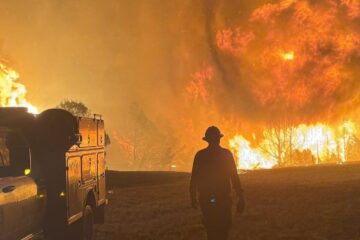
Lukins Brothers Water Company achieves Firewise recognition through community–led risk reduction Press release from the California Water Association: The California...
By Rachel Becker from CalMatters. Amy Alonzo, of The Nevada Independent; Robert Chaney, of Montana Free Press/Mountain Journal; Mike Koshmrl, of WyoFile; Brooke Larsen, of The Salt Lake Tribune; Joseph T. O’Connor, of Montana Free Press/Mountain Journal; and Olivia Prentzel,...
In an overheating era, the old ways of keeping fires from raging out of control may no longer work By Leia Larsen, Grist This story was originally published by Grist. Sign up for Grist’s weekly newsletter here. Officials from the...
Hot, dry conditions set the stage, but it takes a short-lived local window of opportunity to produce an extreme wildfire By David Hosansky, NCAR Hot and dry conditions have become synonymous with the risk of extreme wildfires. But a new...
By: Dmitri Kalashnikov, University of California, Merced; Cong Yin, University of California, Merced; Madhulika Gurazada, University of California, Merced, and...
By Annie MacKeigan, The Water Desk Western wildfires start and spread because of a whole host of factors—wind, temperature, drought, forest health. But scientists are finding that the most important indicator of where the next big fire might ignite isn’t...
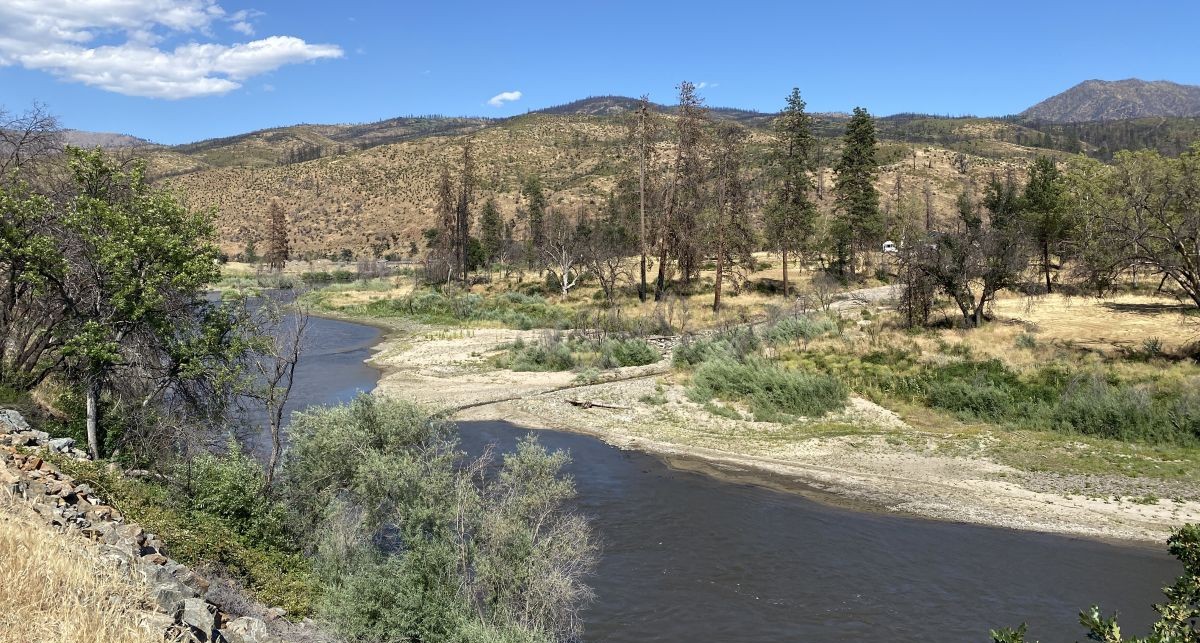
USGS study highlights how storm-driven sediment and ash from the 2022 McKinney Fire caused lethal water-quality conditions for resident fish and juvenile salmon From the USGS: Runoff from a high-intensity storm during the 2022 McKinney Fire depleted oxygen in the...