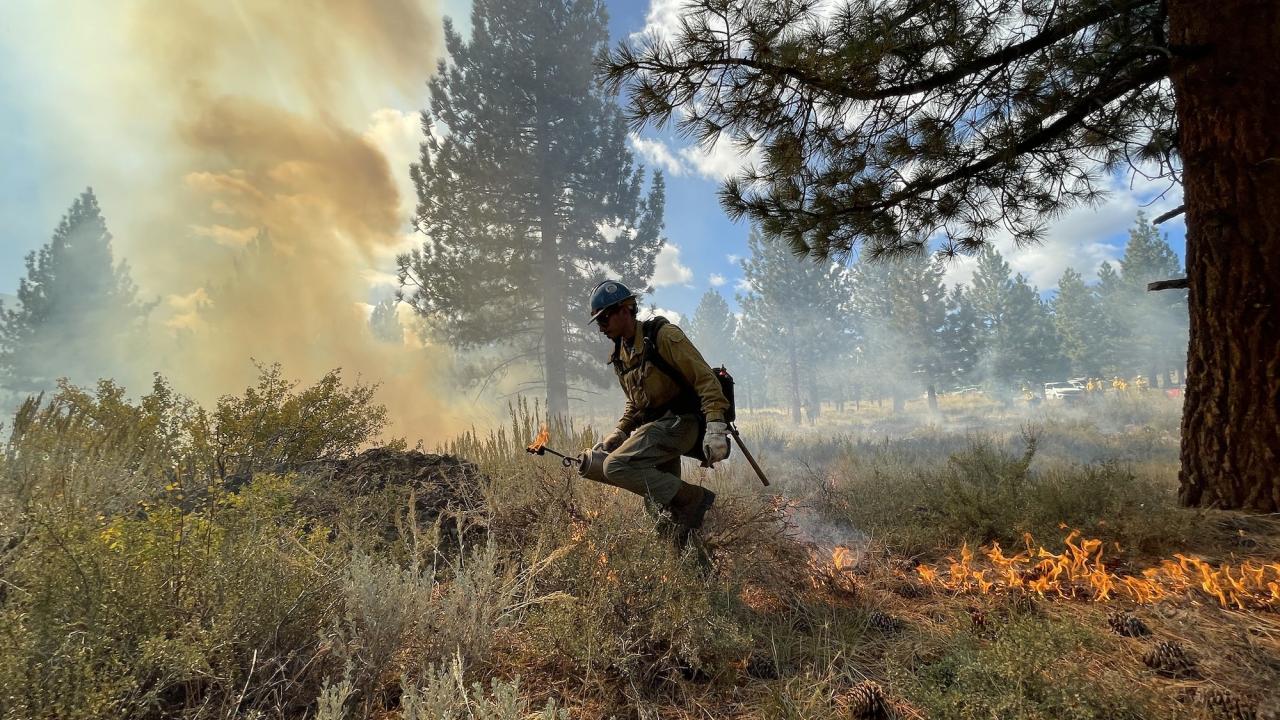
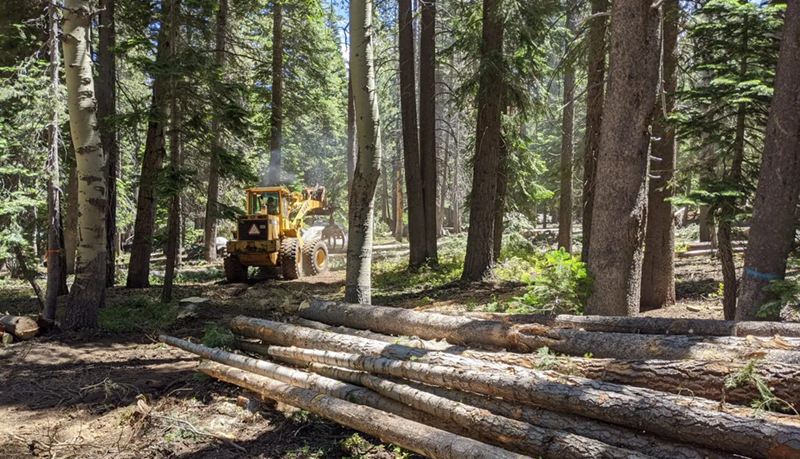
Large-scale study finds every $1 spent on prevention saves $3.75 By Amy Quinton, UC Davis Every dollar spent on forest fuel treatments saves about $3.75 in wildfire damages, according to a new study, led by researchers at the University of...
Publication examines the two-way relationship between fire-adapted invasive plants and wildfire regimes — and offers science-based tools for integrated management...
A new study connects satellite data on vegetation condition, topography, and weather conditions to examine the predicted versus actual burn severity of the 2025 Los Angeles wildfires. By Rebecca Owen Urbanization, climate change, and fire suppression practices are contributing to...
Reforestation efforts fall far behind rate of loss By Kat Kerlin, UC Davis California has one of the highest rates of wildfire-driven deforestation in the world, and the trend has accelerated over the past three decades, according to a study...
The agency is poised to shutter 57 stations in 31 states. By Alex Brown, Stateline The U.S. Forest Service’s plan to close scores of research stations could threaten the nation’s wildfire readiness, many foresters fear, and erode decades of work...
Scientists have shown how actively managing forests to prevent wildfires can also boost the snowpack, a critical source of hydration in the American west. By Matt Simon, Grist This story was originally published by Grist. Sign up for Grist’s weekly...