
Several news sources featured in the Daily Digest may limit the number of articles you can access without a subscription. However, gift articles and open-access links are provided when available. For more open access California water news articles, explore the main page at MavensNotebook.com.
On the calendar today …
- PUBLIC MEETING: California Water Plan 2028 – Advisory Committee Meeting 2 from 1pm to 5pm. The California Department of Water Resources (DWR) invites you to join us for the 2nd Advisory Committee meeting for the California Water Plan 2028. The meeting will be held in-person in Los Angeles at the Los Angeles County Public Works over two half days on August 25 and 26, 2026. All Committee meetings are open to the public. A YouTube livestream option will also be available for viewing purposes. Click here for the agenda. View the meeting on YouTube.
In California water news today …
Data centers use more water than California cities, study says
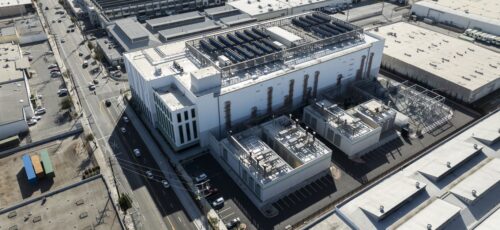
“Electric power generation for data centers is a threat to water supplies even in states outside the arid Southwest, according to a report published Tuesday by the think tank Ceres. Data centers in the seven states with the highest concentrations of them use about 3.4 trillion gallons of freshwater for electric power generation every year, but few electric power producers have connected increasing power demand to water supply risks, says the report, “The Water Behind the Watts.”. That volume of water adds up to 10.4 million acre-feet—greater than the 8 million-acre-foot average annual urban water demand in California that the state’s Legislative Analyst’s Office reported in 2021. It’s the equivalent to 12-times the annual water use of Los Angeles, Phoenix, and Washington, DC, combined, the think tank that advocates for clean energy and sustainable development found. … ” Read more from Bloomberg Law.
How much of a problem is AI’s water use?
““Protect our water,” “Water for people not AI,” “Don’t mess with our water,” declare protest signs from Texas to New Mexico to Arizona. Angered by water use, energy consumption and pollution, locals are increasingly protesting the rapid expansion of data centers in the United States as tech companies work to rapidly expand capacity for AI. Many data centers rely at least partly on water to absorb heat from air or surfaces, and then cause cooling as it evaporates, just like sweating keeps our bodies cool. The processors inside data centers can reach internal temperatures of up to 176 degrees Fahrenheit, for the same reasons that an overtaxed laptop heats up. But while there’s little doubt that data centers are consuming significant amounts of energy, water consumption is more complicated. Claims circulating online bring scant clarity, ranging from articles claiming that chatbots can consume 500 ml of water per query to some online commentators declaring AI’s water issue to be nonexistent. And the consumption data from large tech companies themselves are often incomplete and inconsistent. … ” Read more from Knowable.
Data centers’ deep political unpopularity enters debate over CEQA reform measure
“Opponents of Proposition 45, which creates new rules under the California Environmental Quality Act for some building projects, are arguing the so far well-polling ballot measure would grease the skids for the construction of data centers, which poll very badly. The allegation comes as a large and growing coalition of environmental groups, joined by some labor unions and the California Democratic Party, mount a pitched campaign against what they call a corporate power grab clothed as an affordability measure. “It is a way for data center giants, oil, gas and utility corporations to build what they want where they want,” Mabel Tsang, political director of the California Environmental Justice Alliance, said in a rally on the statehouse steps last week. … ” Read more from the Sacramento Bee.
Proposition 45 draws fire amid fears of data center environmental exemptions
“A debate over whether Proposition 45 could ease environmental review for data centers is emerging as a major fault line in the campaign over the California ballot measure, as opponents seek to connect proposed changes to the California Environmental Quality Act with growing public resistance to the massive facilities. Proposition 45 would establish new timelines and legal standards for environmental review of certain housing, infrastructure, energy, transportation and digital access projects. Supporters argue the measure would reduce delays and costs associated with CEQA, while opponents contend it would weaken environmental protections and limit the ability of communities to challenge development. … ” Read more from the Davis Vanguard.
SEE ALSO:
- The three lies prop 45 opponents keep telling and telling, commentary from Cal Chamber
- Podcast: Monterey Park Becomes a Role Model for Banning Data Centers, from KQED
The biggest carbon polluters are to blame for half of U.S. Western water lost to climate change, ‘groundbreaking’ paper says
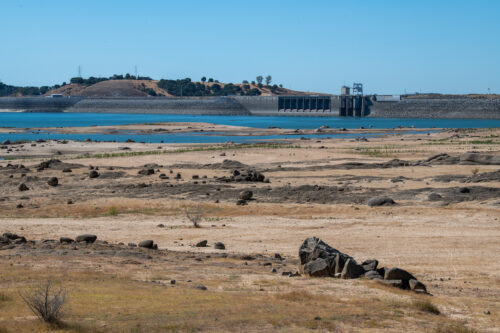
“Some of the largest fossil fuel companies on Earth are disproportionately responsible for the water crisis in the American West, according to a first-of-its-kind study published Tuesday. From 2014 to 2024, climate change sapped over a third of the region’s typical annual snowpack and decreased streamflows by about 13 percent, the authors found in the paper, which appeared in Nature’s Communications Earth and Environment journal. About half of those losses are attributable to emissions from “carbon majors,” 122 fossil fuel companies and cement producers, the study concluded. That carbon-major pollution has drained the West of trillions of gallons of water, about the full capacity of Lake Mead, the largest reservoir in the U.S., the study found. “There are millions of people that rely on these water resources,” said Carly Phillips, a senior research scientist at the Union of Concerned Scientists and one of the study’s co-authors. “The consequences of these changes are really evident for people on the ground.” … ” Read more from Inside Climate News.
SEE ALSO:
- New study shows emissions from major climate polluters worsening water scarcity in California, press release from the Union of Concerned Scientists
- California’s water shortages partly due to climate pollution from big oil and gas, study finds, from the San Francisco Chronicle
California likely to get the worst of El Niño
“In February 1998, almost a year’s worth of rain fell in downtown Los Angeles, as a series of powerful Pacific storms rocked California amid a “Super” El Niño. Deadly landslides struck Southern and Central California, wiping out hillside homes, and powerful waves pounded the state’s shoreline. These waves destroyed a large section of the famous Santa Monica Pier and caused widespread coastal flooding in San Francisco Bay communities. Many Californians who experienced that event still consider it to be the benchmark for how a Super El Niño can alter life in their state. Now, with another Super El Niño setting in — this time likely to be the strongest on record — many are calibrating their expectations based on what happened then. However, El Niños of the past are not necessarily an accurate guide to El Niños of the future, experts say. The 2015-2016 Super El Niño, for example, didn’t drop near as much rain on California as its predecessor. And this current El Niño is especially a wildcard given the simultaneous influence of global warming due to climate pollution, which could worsen some of El Niño’s impacts. … ” Read more from CNN.
This year’s record-breaking El Niño in 3 charts
“This year’s El Niño is already intense, and it’s not done growing. Scientists expect that by December, when El Niño events typically reach their peak, this one will wind up as the strongest in at least 80 years of precise record keeping. And perhaps as the most powerful in centuries. The event will alter weather patterns across the planet and could drive an additional 49 million people into hunger, according to a projection by the United Nations’ World Food Program. It will also temporarily boost global temperatures that were already rising because of climate change. Here are three charts that show the power of this El Niño. … ” Read more from the New York Times.
Pop-up wetlands for birds expand into Suisun Marsh

“It’s a hot, mid-summer day but a welcome breeze keeps a team of bird conservationists cool as they walk along an earthen levee in Suisun Marsh, a flat expanse between San Francisco Bay and the Delta. Mount Diablo rises to the south and the Vaca Mountains ring the horizon to the north. The deep blue waters of Grizzly Bay are on one side of the levee, and wetlands managed by the privately-owned Island Duck Club are on the other. The team is here to track the effectiveness of a program called BirdReturns, which helps birds in California’s vast Central Valley. The valley is a key stopover for waterbirds and shorebirds migrating along the Pacific Flyway, which extends from Alaska to South America. “They’re pretty incredible journeys,” says Ashley Seufzer, Working Lands Program Manager at Audubon California, which is a BirdReturns partner. “It’s a feat of strength, especially for small birds.” … ” Read more from Robin Meadows at Maven’s Notebook.
Beaver dam analogs: Let’s fix that flow!
“Across the country, Trout Unlimited and partners have built thousands of artificial beaver dams, reconnecting historic channels, recharging groundwater and providing year-round flow to small headwaters streams. Known as Beaver Dam Analogs (BDAs), these human-made beaver dams are essentially a porous wall of sticks, logs and leaves that slows the flow of water in one part of the stream and retains much of this flow behind the “dam,” allowing some of this backed-up water to seep into the floodplain. This beaver-like engineering helps promote channel aggradation, or in other words, prevents channels from incising themselves and away from the natural floodplain. … ” Read more from Trout Unlimited.
Survival of endangered Sacramento River salmon hinges on 15-day window of cold water
“The journey home for a Sacramento River winter-run Chinook salmon is a long one. After spending most of its adult life in the ocean, the fish is drawn eastward, back to the river of its birth and eventual death. To get there, it dodges fishing boats and sea lions as it passes beneath the Golden Gate Bridge, making its way to the Sacramento-San Joaquin Delta and up the Sacramento River, where it travels hundreds of miles to the foot of Shasta and Keswick dams. Historically, the fish kept going, up into the cool mountain creeks where it would spawn. Now hulking dams block its passage, forcing it to spawn in the warmer, less predictable Sacramento River. In part because of that, the fish’s overall population has plummeted, leading wildlife managers to designate the Sacramento River winter-run Chinook an endangered species. … ” Read more from PBS Abridged.
California Water Plan Committee returns for second meeting
“The California Department of Water Resources will convene on August 25 and August 26 for its second Advisory Committee meeting on the California Water Plan 2028. The committee will meet in Los Angeles at the LA County Public Works departmental office, but the meeting will also be livestreamed on YouTube. The Advisory Committee provides recommendations to DWR and informs development of the California Water Plan. According to the agenda, the first day of the meeting will provide an overview of California’s water system and the statewide water challenges that will be addressed in the 2028 plan, DWR’s modeling approach for California Water Plan 2028 and 2033, and the Advisory Committee’s feedback on baseline assumptions. A panel discussion on the Colorado River will also take place, with input from local water agencies and Tribes. … ” Read more from Valley Ag Voice.
Coalition urges California court to consider wildfire implications on public water systems
“A coalition of organizations representing state and national water providers have filed a joint legal brief with the California Second District Court of Appeal in response to a lawsuit seeking to hold a water utility responsible for wildfire damage. The lawsuit, Grigsby et al. v. City of Los Angeles et al.1, was filed in January 2025 following the Palisades wildfires. The joint brief emphasizes the unique operational and regulatory responsibilities of water agencies and the importance of preserving workable legal standards for agencies responsible for providing water service under extraordinary circumstances. A California Court of Appeal is on the verge of making a decision that will pose significant implications for water providers and customers. … ” Read more from ACWA’s Water News.
Assembly leaders reject elements of Newsom’s utility wildfire proposal in counter
“Leaders of the California Assembly are rejecting elements of Gov. Gavin Newsom’s bid to change the way California handles the financial aftermath of utility-caused wildfires. But lawmakers appear committed to reaching a deal on the issue in the final week of the legislative session. Assembly leaders are rejecting any proposed limits on the claims wildfire survivors can bring against electrical utility companies, according to an outline of their proposal obtained by The Sacramento Bee. They are also rejecting Newsom’s call to block insurance companies from suing the utilities to recoup their own losses after paying out claims in a utility-caused wildfire. … ” Read more from the Sacramento Bee.
Federal wildfire crews are stretched thin. California is stepping in to help
“California’s last working nuclear power plant sits cradled in a landscape that would worry any firefighter when the wind picks up. The Pacific Ocean and its perpetual fog lick the western edge of the coastal bluffs holding the Diablo Canyon Power Plant. But the Irish Hills rise steeply to its east — their slopes rugged, dark with scrub and oak. Difficult to access, and full of fuel. “Any fire within the Diablo power plant area could be catastrophic,” said Dave Erickson, a division chief and forester with the Cal Fire San Luis Obispo unit. The property, he said, is in a very high fire severity zone. “So we just take precautions.” … ” Read more from Cal Matters.
Solano County Supervisors to weigh legislation on shipbuilding
“California Forever’s hopes of bringing shipbuilding and maritime manufacturing to Collinsville will again take center stage Tuesday as the Solano County Board of Supervisors considers whether to take a position on proposed state legislation designed to facilitate development in the area. The text of the proposed legislation, known as the Solano Maritime and Manufacturing Act, was released late Monday, giving the county and the public a first look at a measure that would make significant changes to how the Collinsville Special Study Area could be developed. The board is scheduled to discuss the proposed legislation as the final item on its agenda Tuesday, with the discussion not scheduled to begin until 2 p.m. The public will have an opportunity to comment before the board deliberates. Several opponents of California Forever have taken to social media to encourage the community to turn out and share input. … ” Read more from the Vacaville Reporter.
SEE ALSO:
- Democratic lawmakers to push Solano County shipyard in new California Forever bid, from the Sacramento Bee
- California Forever’s billionaire backers face slow-walk on resi component, from The Real Deal
Blue state’s water failures could threaten food supplies across US, lawmaker warns
“California’s aging infrastructure is helping fuel a clean water crisis that could have ramifications across the country, a key House Republican warned. Rep. Harriet Hageman, R-Wyo., accused California Gov. Gavin Newsom of playing politics with the management of the Colorado River, a major body of water that millions of people in the Western United States depend on. She’s arguing that the Golden State’s bloated bureaucracy and environmental regulations are making it more reliant on the Colorado River, thus stressing its supply and affecting the other six states through which it runs. “The system is now becoming very, very stressed because California has not kept up with the infrastructure demands and needs of its citizens,” Hageman told Fox News Digital. “Pinedale, Wyoming, may be a long way removed from Southern California, but when there are calls on the river and when there are demands that we reduce the amount of water that we are able to use in order to meet a demand downstream, that isn’t fair.” … ” Read more from Fox News.
In commentary today …
SGMA is reshaping the San Joaquin Valley
Jules Martella writes, “It will change what we grow, where we farm, who can remain in agriculture, and what happens to land that has been productive for generations. Its effects will move through farmworker families, agricultural businesses, schools, local governments, and rural communities. Groundwater sustainability is necessary. The consequences of achieving it will be enormous. We have spent years talking about how to balance the aquifer. We now need an equally serious conversation about what will happen to the Valley above it. … ” Read more from Jules Martella.
In regional water news and commentary today …
SIERRA NEVADA
Lake Tahoe developer agrees to penalty for stormwater permit violations
“Furthering its efforts to protect Lake Tahoe’s water clarity, the Lahontan Regional Water Quality Control Board has reached a proposed $156,000 settlement with a housing developer that failed to follow stormwater regulations at a lakeside construction site. During a 2025 site inspection, Lahontan Water Board staff found that Alpine View Estates LLC did not conduct stormwater site inspections or submit monitoring and reporting as required under its construction permit. Under the terms of the proposed agreement, the company will settle the alleged violations by paying the penalty to the State Water Resources Control Board’s Cleanup and Abatement Account, which provides funding for emergency responses statewide to clean up or mitigate toxic spills or pollution. “Construction sites are a major contributor of stormwater pollution in the Lake Tahoe Basin, making it critical for developers to take the necessary precautions at their sites,” said Jan Zimmerman, Lahontan Water Board assistant executive officer. “We’re increasing our attention to construction sites in particular as we enforce stormwater regulations near the lake’s shoreline and throughout the entire region.” … ” Continue reading from the Water Boards.
Bijou Park Creek SEZ Enhancement Project implementation
“In coordination with the City of South Lake Tahoe, the U.S. Forest Service Lake Tahoe Basin Management Unit will begin work on the Bijou Park Creek Stream Environment Zone Enhancement Project over the next few weeks. This project is linked to the City of South Lake Tahoe’s Bijou Park Creek Watershed Restoration Project and involves stream and meadow restoration along Bijou Creek. A joint National Environmental Policy Act/California Environmental Quality Act analysis for this project was completed in 2025. This week, Forest Service crews are scheduled to begin removing hazard trees and vegetation in preparation for restoration work and will install Best Management Practices around the project area. Restoration work is expected to wrap up in early October. For public safety, access to some areas may be temporarily disrupted when work is taking place. The public should be aware of tree removal activity and keep a safe distance from equipment. Hazards may be present even when operations have ceased for the day. … ” Read more from the Tahoe Daily Tribune.
Column: Collaboration connects Lake Tahoe’s story
Hayley Williamson and Vince Hoenigman write, “Lake Tahoe has many important stories to tell. If it could speak, it could recount its formation millions of years ago, its sculpting by glaciers, how forests and wetlands came to protect its crystal-clear waters, and the centuries of stewardship by the wá∙šiw (Washoe people — the people from here). More recent chapters include environmental damage from logging, grazing, and unmanaged development, which combined to steal some of Lake Tahoe’s famed water clarity. Today, the story is marked by collaborative efforts to protect and restore its unique environment. From the groundbreaking Bi-State Tahoe Regional Planning Compact in 1969, to science-based environmental thresholds and growth management policies in the 1980s, Lake Tahoe has become an international leader in conservation. Each key milestone has been connected to the next by consensus-building, commitment, and a shared passion for Lake Tahoe. … ” Read more from South Tahoe Now.
Surging Tahoe visitation could lead to new, higher fees at popular trails
“Lake Tahoe has become so busy with visitors that the U.S. Forest Service intends to implement new use fees, and increase existing ones, at some of the region’s most popular hiking trails and campgrounds — prospects some Tahoe locals say they vehemently oppose. Emerald Bay, Echo Summit, Desolation Wilderness and Kiva Beach are just a few of about 40 recreation destinations around the lake where the forest service is proposing to raise the price of access — a change that would be felt by hikers, campers, wilderness backpackers, picnickers, beachgoers and dog-walkers alike. “These are places where a lot of us locals stop by for, you know, 30 to 45 minutes for a walk on the way home from work,” said South Lake Tahoe resident Sandy Mathiesen. “Certainly you can’t afford to do that several times a week if you have to pay each day — especially if no annual pass is going to be offered.” … ” Read more from the San Francisco Chronicle.
PCWA Board approves formation of RiverArc Joint Powers Authority
“The Placer County Water Agency (PCWA) Board of Directors last week approved a Joint Powers Agreement with the cities of Sacramento and Roseville, establishing the RiverArc Joint Powers Authority (JPA) and formalizing a regional water supply partnership that has been years in the making. RiverArc is a long-term regional water supply project that would use an existing intake structure on the Sacramento River to draw water for treatment at a new regional water treatment plant and delivery through new and existing pipelines. By creating another pathway for water to reach the region, the project would diversify water supplies, improve reliability and reduce reliance on the smaller American River, which currently serves as a major water source for the Sacramento region. RiverArc improves water supply while also helping the fishery of the lower American River by leaving more water in Folsom Reservoir. … ” Read more from the Placer Sentinel.
SACRAMENTO VALLEY
Photos: Salmon spawning gravel project completed in Feather River in Oroville
” The Department of Water Resources completed a salmonid habitat improvement project earlier this month that placed about 8,000 cubic yards of salmon spawning gravel in the most heavily used spawning locations in the lower Feather River in Oroville. … ” Read more and view pictures at the Chico Enterprise-Record.
BAY AREA
Fishing vessel grounded in Point Reyes: North Beach remains closed as teams respond
“Several agencies are responding to an incident involving a fishing vessel that was grounded in Point Reyes National Seashore, leaving North Beach temporarily closed to the public. The 58-foot fishing vessel, named Lake Bay, ran aground Friday morning, Aug. 21, according to the United States Coast Guard Southwest District, and could be seen stuck on the shore. The unified command was formed between the U.S. Coast Guard and National Park Service, Marin County Fire, the National Oceanic and Atmospheric Administration and the California Department of Fish and Wildlife’s Office of Spill Prevention and Response. … ” Read more from the Press Democrat.
USGS: In San Francisco Bay, even an exceptionally wet year can’t supply enough sediment to keep pace with rising seas, new study finds
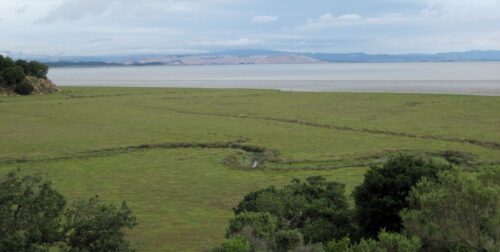
“Extreme rainfall can send huge amounts of sediment rushing off hillsides and into streams. But a new USGS study finds that even an exceptionally wet year may deliver only a small fraction of that sediment to San Francisco Bay—far short of what is needed to help coastal wetlands and shorelines keep pace with rising sea levels. That finding highlights a paradox for coastal managers: climate change may produce more intense rainfall and more landslides, but the additional sediment generated by those events is still not enough, and does not necessarily reach the coast quickly enough, to bring much benefit to vulnerable Bay shorelines and wetlands. “This research leveraged an intensive mapping effort by Corbett and Collins (with the USGS Landslide Hazards Program) in the 2017 extreme wet winter, when they identified more than 8,900 landslides in eastern Bay Area coastal watersheds,” said USGS Research Geologist Amy East, lead author of the study. … ” Read more from the USGS.
A ‘super’ El Niño is here. What does it mean for the Bay Area?
“El Niño is here, already bringing a storm surge of superlatives: Super. Strongest ever. Gob-smacking. Godzilla. The potential images are dire: storms, big rains, floods, warm winter, stranded seabirds. Yet Godzilla (Gojira, for purists) has been invoked before. Eleven years ago, that’s exactly what people were predicting for the 2015–2016 El Niño. And that year, the Bay Area actually experienced a drier winter than average. So maybe this will be no big deal? Sorry, no. It is a big deal, according to climate scientists. “This is really going to profoundly affect California for the next six to 12 months,” says Daniel Swain, a climate scientist who writes the Weather West blog and has been on a tireless climate-communications spree warning people about El Niño. Swain’s doing it because he’s worried. “There’s a lot of misleading stuff out there floating around right now,” he says. This could be the strongest El Niño ever — and even so, there’s still lots of uncertainty about what will happen in the San Francisco Bay Area. In this explainer, we’ll give you a refresher on what El Niño is and unpack some of the possible local impacts. … ” Read more from Berkeleyside.
CENTRAL COAST
Monterey: Lovers Point closed due to high level of bacteria
“Lovers Point is currently closed to the public and people are being asked to avoid the water after bacteria levels exceeded health standards, according to the Monterey County Health Department. On Thursday, the health department issued a beach water quality advisory for Lovers Point. Water contact is not recommended until the advisory has been lifted. … ” Read more from the Monterey Herald.
5-year Carpinteria salt marsh flood control plan approved
“A five-year maintenance plan to help with flood control in the Carpinteria Salt Marsh was approved by the California Coastal Commission earlier this month. The Santa Barbara County Flood Control District’s plan would allow the periodic dredging and removal of sediments in the 250-acre marsh, which is located just outside of city of Carpinteria limits. Walt Deppe, commission environmental scientist, said all three components of the current plan had already been separately approved by the commission in some form or another over the years. Those three components include the periodic dredging; as-needed mechanical opening of the marsh’s mouth, where a sandbar has caused low dissolved oxygen levels, to help with tidal flow and water flow improvements; and as-needed maintenance in the south part of the marsh’s drainage system. … ” Read more from Noozhawk.
SAN JOAQUIN VALLEY
California water treatment plant’s simpler solar setup is already outperforming forecasts
“A new solar installation at a Fresno water treatment plant is exceeding its expected output by 101% and paving the way for better large-scale solar installations. The installation showed how a simpler design can make clean energy cheaper and more practical for public infrastructure. The array places solar panels directly on the ground, eliminating the logistical and financial headache of relying on rows of steel racking. … ” Read more from The Cool Down.
Not all Fresno County water board races – even the giant Westlands Water District – will be on the ballot. Here’s why
“There are dozens of Fresno County water board seats up for election this November but one of the most consequential won’t be on this, or any future ballots. Westlands Water District is the largest agricultural water district in the United States. It covers more than 1,000 square miles in western Fresno and Kings Counties and provides water to 700 farms. Because of increasing surface and groundwater restrictions, Westlands is also poised to become home to the largest – 136,000 acres – solar installation in the country, substantially changing the use and tax base of a huge swath of Fresno County. But, general voters do not get to vote on who the directors are that make decisions about how Westlands operates. Why? … ” Read more from SJV Water.
EASTERN SIERRA
Major Restoration Project will Revive Reds Meadow Valley
“The JMT Wilderness Conservancy (JMT Wild) will officially break ground this fall on a vital, high-elevation meadow and riparian terrain restoration project in Reds Meadow Valley, west of Mammoth Lakes. The groundbreaking this September will launch a four-year effort to restore the ecological health of two large meadows and four recreation sites located along six miles of the Middle Fork of the San Joaquin River. These ancestral lands of the North Fork Mono and Bishop Paiute Tribes are a gateway to iconic landscapes along the John Muir Trail (est. 1915) and the high Sierra Nevada. … ” Read more from the Sierra Wave.
SOUTHERN CALIFORNIA
Los Angeles heat wave may extend to end of August
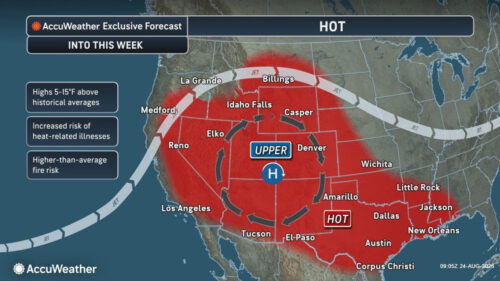 “The major heat wave in progress over Southern California is forecast to continue to nearly the end of August as a dome of high pressure over the interior Southwest extends toward the Pacific Coast. In the Los Angeles area, a heat wave occurs when high temperatures reach or exceed 90 degrees Fahrenheit for at least three consecutive days. So far, the highest temperature during the current heat wave in the city core has been 98 degrees on Sunday, which matched the high mark of March 17, set during the record-setting late-winter heat dome. Temperatures on Wednesday and Thursday of this week should set new high temperature marks for the year with 100 degrees possible. “At this time, we are projecting a 13-day stretch with highs of 90 or greater,” AccuWeather Meteorologist Elizabeth Danco said. … ” Read more from AccuWeather.
New North Hollywood groundwater treatment facilities to deliver drinking water to the community
“The completion of the North Hollywood Central and North Hollywood West Groundwater Treatment Facilities was celebrated today, as city leaders say they will help supply drinking water locally to communities across the city, reducing dependence on imported water. The Los Angeles Department of Water and Power San Fernando Valley Groundwater Remediation Program includes a third facility in Tujunga, scheduled for completion by 2027. The facilities are one of the city’s largest investments in local water infrastructure. “These state-of-the-art facilities will help restore up to 43 million gallons of contaminated groundwater daily to supply hundreds of thousands of homes with reliable drinking water – all while reducing our dependence on imported water and launching us forward to meet our bold climate goals,” Los Angeles Mayor Karen Bass said. Her Climate Action Plan sets a goal of reaching a 70% local water supply by 2035. … ” Read more from CBS News.
Santa Ana River Enhanced Recharge Project recognized for innovative, team-based approach to water supply reliability
“A collaborative, solutions-based approach to water infrastructure has earned the Santa Ana River Enhanced Recharge Phase 1-B Project statewide recognition for innovation while significantly expanding the region’s ability to capture and store local stormwater. Delivered through collaboration among San Bernardino Valley Municipal Water District (San Bernardino Valley), Western Water, Riverside Public Utilities, and the San Bernardino Valley Water Conservation District, Enhanced Recharge increases the capacity to capture and store up to 88,000 acre-feet, or 28.7 billion gallons, per year of local stormwater from the Santa Ana River for use during dry years. The California Municipal Utilities Association (CMUA) recently awarded the Enhanced Recharge Project first place in the medium-size utility category for Innovative Projects and Programs as part of its 2026 CMUA Impact Awards. The awards recognize innovative ideas and best practices in California’s water and energy industries. … ” Read more from the San Bernadino Valley MWD.
California Supreme Court halts SoCal town’s water utility takeover
“The California Supreme Court dealt a blow to a local government’s ability to seize water utilities on Monday, ruling that courts get the final say on whether a public utility is necessary. Apple Valley, located in San Bernardino County, California, will have to go back to the drawing board for its plans to take over the privately owned water utility, Apple Valley Ranchos Water Company. In a unanimous decision sending the case back down to a California appeals court, the California Supreme Court sided with the utility company in the latest in a decade-long eminent domain dispute between Apple Valley and the utility company. “The town of Apple Valley, which seeks to take over a privately owned water utility, argues that its decision to take the utility is subject to the usual standard governing judicial review of a resolution of necessity — meaning, in effect, that the court can disallow the taking only if it concludes that the town has grossly abused its discretion,” Supreme Court Justice Leondra Kruger wrote in the 7-0 decision. “The Court of Appeal accepted this argument. We do not.” … ” Read more from the Courthouse News Service.
Trump wants to open more public lands to logging. What does that mean for SoCal forests?
“Four million acres of California’s wildest backcountry could soon be opened to paving roads and logging. The Trump administration announced last week that it’s pushing forward with a proposal to scrap a 2001 rule that blocks logging, road building and other construction in parts of national forests. The administration argues repealing the so-called “roadless rule” is key to managing vegetation to better prevent wildfires on public lands. Environmental advocates and other groups worry rescinding the rule would harm pristine habitat and the wildlife it supports, and open up more public land to industrial activities and human access that can cause more wildfires. And locals are worried about losing access to some of the last protected natural lands in the region. … ” Read more from LAist.
SAN DIEGO
Brown water at Coronado Beach: Algae bloom or Tijuana sewage?
“Patches of brown, green, bubbling water have been washing ashore at Coronado Beach, catching the attention of beachgoers and raising questions about the source. Water samples taken at Dog Beach came back below the threshold for an advisory, according to Coronado Lifeguard Captain Sean Carey, who said he has been in contact with the county’s Department of Environmental Health and Quality. Carey said the county has reassured him the discolored water is the result of harmless algae blooms potentially triggered by higher-than-average water temperatures. However, just a mile and a half south, at Avenida Lunar, an advisory is in effect because bacteria levels are exceeding health standards … ” Read more from Channel 10.
Coronado challenges county in sewage water testing methods
“Coronado Mayor John Duncan challenged the validity of San Diego County’s public health safety testing for ocean water at the Aug. 18 City Council meeting. The tense conversation focused on a relatively new testing protocol implemented in May 2022 to check the sewage levels coming from Tijuana. Before adopting the method, known as Polymerase Chain Reaction (ddPCR), the county relied on Enterolert – a culture-based protocol standardized nationwide by the Environmental Protection Agency (EPA). The EPA approved a pilot program for the ddPCR protocol in 2021 and stated that a study had “found good agreement” between the two methods. However, beach closures in Coronado jumped significantly after the county started using the ddPCR testing. … ” Read more from the Coronado Times.
Along the Colorado River …
Nevada sues feds over Colorado River cuts
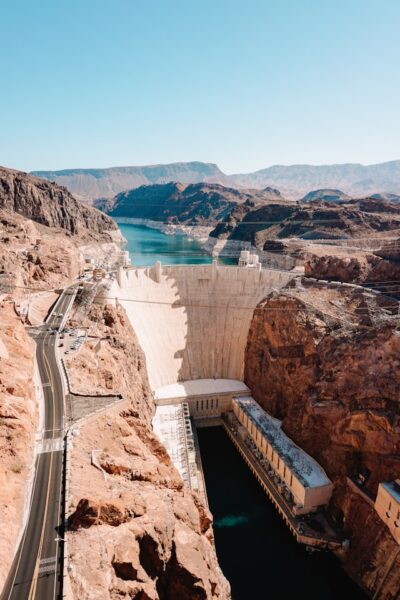 “Nevada officials have filed the first lawsuit challenging the Trump administration’s Colorado River plan, a plan that would require Nevada to cut water use by about 17% over the next two years and authorizes even larger cuts during dry years. The lawsuit filed Monday, comes three days after the Trump administration released its 10-year plan for managing the Colorado River, and the nation’s two largest reservoirs, Lake Powell and Lake Mead, amid ongoing drought and record low water storage. Under the plan, Nevada will have to give up 50,000 acre-feet of its Colorado River allocation over the next two years. … But if conditions worsen, Nevada could have its 300,000 acre-foot Colorado River entitlement cut by more than 213,000 acre-feet or about 71% of its allocation. Nevada already has the smallest allocation of Colorado River water among the tree Lower Basin states. … ” Read more from the Nevada Current.
SEE ALSO:
- ANALYSIS: Nevada leaders say water lawsuit is a fight for the state’s survival, from Channel 5
- Nevada files suit over Colorado River plan, from the Courthouse News Service
- Nevada sues Trump administration over its Colorado River plan, from the LA Times
- Nevada sues in federal court to block Colorado River cuts, from the Colorado Sun
Nevada sues to block federal Colorado River cuts. Is Arizona next
“Nevada has sued to block a new federal plan for reducing Southwestern water deliveries from the Colorado River, arguing it unfairly jeopardizes the Las Vegas economy. The state, the Colorado River Commission of Nevada and the Southern Nevada Water Authority seek to block the U.S. Interior Department’s imposition of a shortage framework reducing deliveries out of Lake Mead. They filed suit in federal district court in Nevada on Aug. 24, three days after Interior Secretary Doug Burgum signed the plan to restrict water use in Arizona, California and Nevada, collectively known as the Lower Basin states. “The Department of the Interior can’t roll Nevada and solve the entire Colorado River shortage on the backs of the Lower Basin states,” Nevada Gov. Joe Lombardo said in a statement. “We’ve already shown that we’re willing to do our part, but the Colorado River is a shared resource, so the solution needs to involve everybody. Until that happens, we are prepared to fight for as long as it takes.” … ” Read more from the Arizona Republic.
SEE ALSO:
- Nevada goes to court over Colorado River water. Arizona is still weighing its options, from KJZZ
- Arizona water use up in the air pending Nevada lawsuit, from the Courthouse News Service
- Podcast: Arizona’s water director on drastic cuts to Colorado River access, from WBUR
Arizona can survive Colorado River cuts for now, but will need help
“Arizona water officials reviewing a federal plan to curb Colorado River use say it has “fundamental legal flaws” but also offers a short reprieve from worse cuts and time to adapt or find new sources. The Arizona Reconsultation Committee met Aug. 24 to provide its member representatives from the state’s water users a rundown of a federal plan that calls for reducing the state’s 2.8 million-acre-foot share of the river by 760,000 acre-feet per year, with the prospect of deeper cuts after two years. Members of the state’s river advisory panel voiced both anger and resolve for using the two years to adapt and find new water sources. “The people of Arizona deserve an Arizona solution,” said Sandy Fabritz, a committee member representing Phoenix-based mining company Freeport-McMoRan. She urged Gov. Katie Hobbs and state legislators to fund programs to develop other water sources. “We need money.” … ” Read more from the Arizona Republic.
Utah House speaker criticizes Nevada’s Colorado River lawsuit for making a ‘difficult situation more difficult’
“Utah and other Upper Basin states “are not required to contribute a drop” of their Colorado River water to a federal plan for the region’s reservoirs, Nevada’s governor objects, while the southern half of his state faces a potential cut of more than 70 percent. But the speaker of Utah’s House wasn’t sympathetic Monday, as Nevada filed a lawsuit against the Trump administration over what it alleges are “numerous legal and technical shortcomings” in the new 10-year framework for managing lakes Powell and Mead. “Nevada is making an already difficult situation more difficult,” Utah House Speaker Mike Schultz said in a statement. “Reaching an agreement requires every state to come to the table, respect the process and recognize its responsibility to be part of the solution. Litigation doesn’t move us closer to an agreement.” … ” Read more from the Salt Lake Tribune.
In national water news today …
Interior moves to speed historic reviews as bigger rewrite looms
“Interior Secretary Doug Burgum issued an order last week aimed at speeding up historic preservation reviews often required for energy development and other projects on federal land. The Thursday secretarial order instructs agency officials to be timely in their processing of reviews, to create lists of activities that can be exempted from historic evaluations and use alternative arrangements to accelerate reviews. “We’re cutting red tape, clearing bureaucratic roadblocks, and making sure government isn’t standing in the way of American communities,” an Interior spokesperson said Monday. “This Secretary’s Order will allow the Department to consider any effects on historic properties in a more meaningful and timely fashion, and require the same of states and tribes.” … ” Read more from E&E News.

