Successful management of California’s freshwater resources requires balancing consumptive and non-consumptive water use with fish species that depend critically on...
Researchers find that maintaining genetic variation is critical to allowing wild populations to survive, reproduce, and adapt to future environmental changes. From NOAA Fisheries: A new paper shows that genetic variation is crucial to a population’s short- and long-term viability....
Late migration of outgoing juvenile fish is a crucial life history strategy for survival of spring-run Chinook salmon during drought years By Michael Milstein (NOAA) In drought years and when marine heat waves warm the Pacific Ocean, late-migrating juvenile spring-run...
By Danny Merkley, California Farm Bureau Federation As a fourth-generation Sacramento Valley farmer and the California Farm Bureau’s director of water resources for nearly 14 years, I have learned that California’s farmers and ranchers are the real environmentalists. That title...
At least 700 sub-adult and adult winter-run Chinook salmon (winter Chinook) returned this year to Battle Creek. Although monitoring efforts were curtailed, 47 redds were also observed with juveniles now being captured in the U.S. Fish and Wildlife Service’s rotary...
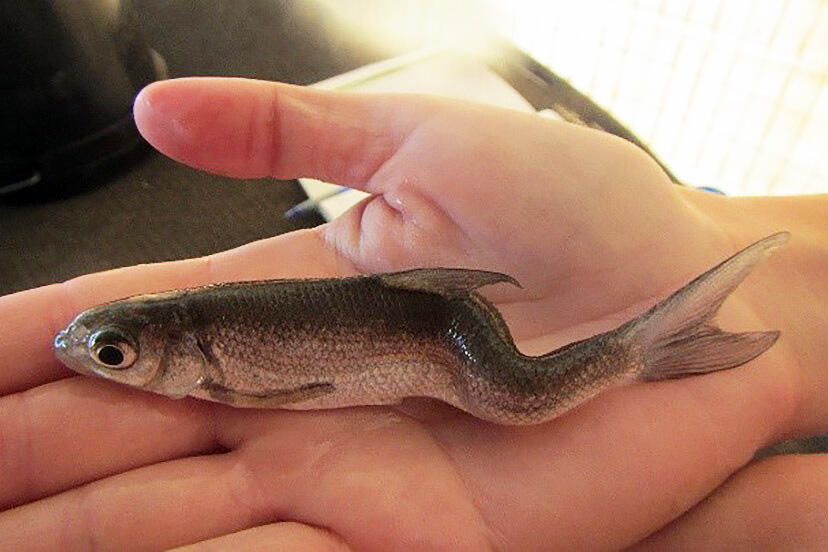
Spinal deformities in California native fish species, the Sacramento Splittail, were first seen in the Sacramento-San Joaquin Delta in 2011. It is now known that this is due to exposure to the chemical element selenium. By the USGS, California Water...