
Several news sources featured in the Daily Digest may limit the number of articles you can access without a subscription. However, gift articles and open-access links are provided when available. For more open access California water news articles, explore the main page at MavensNotebook.com.
In California water news today …
San Joaquin Valley water vision highlights urgent need for coordinated action
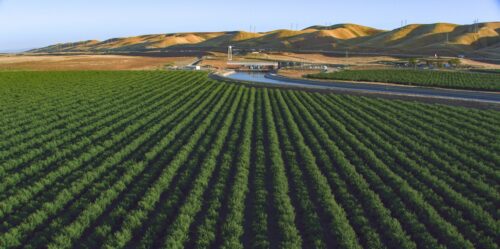
“The San Joaquin Valley is one of the world’s most productive agricultural regions and a cornerstone of the nation’s food security. Water underpins the region’s economy, communities, and environment, yet the San Joauin Valley faces some of California’s most complex and interconnected water challenges, including depleted aquifers, land subsidence, stressed ecosystems, unreliable surface water supplies, and increasing flood risk. Climate change is expected to intensify many of these pressures. To address these challenges, the Department of Water Resources (DWR) developed A Vision for the San Joaquin Valley (Vision), an integrated plan outlining near- and long-term strategies to improve water management and climate resilience. The Vision provides a framework for aligning local, state, and federal partners around coordinated investments, policy improvements, and climate-resilient water management. Other Valley-led efforts, including the Unified Water Plan and the San Joaquin Valley Water Collaborative Action Plan, are also helping define priorities for the region. At the California Water Commission’s August meeting, a panel of DWR officials and Sam Joaquin Valley stakeholders shared perspectives on aligning plans with action, centering community needs, addressing urgent funding and subsidence challenges, and building consensus around regional solutions. … ” Read more from Maven’s Notebook.
California Water Institute releases Unified Water Plan for San Joaquin Valley
“The California Water Institute at Fresno State, in coordination with the Water Blueprint for the San Joaquin Valley, released the Unified Water Plan for the San Joaquin Valley. The plan outlines a coordinated approach to address the region’s water supply, infrastructure and long-term water management needs. The plan estimates the San Joaquin Valley could face a water supply-demand gap of about 2.5 million acre-feet per year by 2040. It provides a framework for moving regional water projects from planning to implementation by identifying strategies involving existing infrastructure, local water management, additional water supplies, funding and partnerships. Originally authorized in 2009 through U.S. Bureau of Reclamation funding, the Unified Water Plan was developed to coordinate and integrate subregional water management plans into a regional framework. The updated effort reflects changes in the Valley since then, including implementation of the Sustainable Groundwater Management Act, infrastructure constraints, land transition pressures, ecosystem needs and flood and drought resilience. … ” Read more from Morning Ag Clips.
California agriculture faces growing pressure on labor, water and regulations
“California agriculture is facing growing pressure from labor shortages, immigration uncertainty, water challenges, rising production costs and an increasingly complicated regulatory environment. On the AgNet News Hour, “The Ag Meter” Nick Papagni sat down with Manuel Cunha, president of the Nisei Farmers League, for a wide-ranging conversation about the challenges facing California farmers and the future of the state’s agricultural industry. Papagni opened the program by discussing several issues affecting agriculture, including rising California fuel prices, concerns about diesel costs and the potential role of propane as an alternative for some farm operations. He also touched on trade tensions involving Canada and their potential impact on California wine and citrus. In the almond industry, Papagni noted that prices were climbing as the crop appeared to be coming in lighter than expected, while California shipments reached 190 million pounds in August, up 20 percent from the previous year, with exports leading the way. … ” Read more from AgNet West.
Edward Ring: California water crisis demands action
“California’s water crisis is about more than drought. It is also about whether the state has enough infrastructure to capture, store and manage water when it is available. That was a central theme when Edward Ring, director of Water and Energy Policy at the California Policy Center, joined “The Ag Meter” Nick Papagni for a wide-ranging discussion about California water, agriculture, Delta management, desalination, groundwater recharge, energy and the state’s political future. Ring’s message was direct: California has opportunities to improve water reliability, but political divisions, regulatory delays and a reliance on studies rather than construction are preventing the state from moving quickly enough. … ” Read more from AgNet West.
Potter Valley dam comments close Friday as Southern California district keeps fighting to join case
“Anyone who wants a say in what federal regulators study before two Eel River dams come out has until 2 p.m. Friday to put it in writing, according to a Federal Energy Regulatory Commission notice. … The Elsinore Valley Municipal Water District in Riverside County asked to intervene July 9. The commission turned it down July 27, saying the district “did not provide any explanation for the untimeliness of its motion.” On Aug. 26, the last day it could, the district asked the commission to rehear that denial and filed a renewed motion to intervene late. Its attorney, former FERC Chairman Curtis L. Hébert Jr., cited a July 24 federal appeals court ruling that threw out a commission denial of late intervention in another hydroelectric license surrender. … ” Read more from the Mendocino Voice.
NEW REPORT: Wetlands for Climate Partnership Report
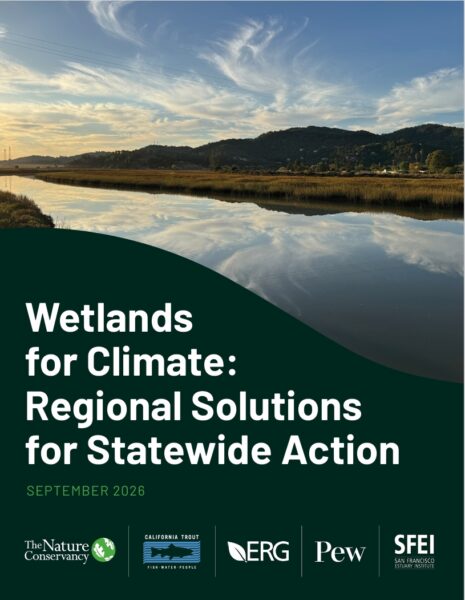 “The Wetlands for Climate (W4C) Partnership released a new report examining the successes and challenges in wetland restoration across California, as well as the most promising opportunities to close the gap between policy commitments and on-the-ground delivery in our state. California has lost over 90% of its historic coastal and deltaic wetlands, which play a critical role in storing carbon, buffering communities from flooding, filtering water, and supporting biodiversity. Despite a strong state policy framework, there remains a gap between policy and actual on-the-ground implementation due to unstable funding, permitting. The Wetlands for Climate (W4C) Partnership, established by The Nature Conservancy (TNC), San Francisco Estuary Institute (SFEI), Pew Charitable Trusts, and California Trout, aims to close this gap by connecting a wide range of practitioners – from state and local agencies to academic institutions and Tribes – to learn from one another and advance collective action. … ” Click here to access the report.
Officials are draining Shasta Lake’s cold water pool to keep salmon eggs alive
Timing is everything for a salmon egg, and this year the Sacramento River’s winter-run Chinook got the timing wrong through no fault of their own. State wildlife scientists are closely tracking river conditions below Shasta Dam as a heat dome pushes temperatures well above normal across much of California. The concern is the winter-run, a federally endangered fish that spawned several weeks later than usual this summer. Late eggs sit in the gravel into the hottest stretch of the year, exactly when flows drop and water warms. The Department of Fish and Wildlife says it is working with state and federal partners to give those eggs a fighting chance, mostly by managing the cold water pool behind Shasta and how it gets released. … ” Read more from Active NorCal.
El Niño-born ‘Kelvin waves’ are sneaking towards California. What to know
“If you have not heard the term “Kelvin wave” before, you are not alone. The waves are a feature of fluid dynamics that the vast majority of the population rarely needs to worry about. But you might be hearing that term more and more in the next month. That is because something unusual is sliding up the west coast of Mexico right now, and it is aimed squarely at California. A mass of warm, elevated ocean water hundreds of miles long is moving north at roughly 6 mph — about the pace of a jogger — and currently less than 350 miles from Southern California’s beaches. And yes, it’s a Kelvin wave of sorts. To be more scientifically correct, this is a “coastally trapped wave” and it is one of El Niño’s signature features. … ” Continue reading from the Sacramento Bee.
The Super El Niño has arrived
“This year’s El Niño is coming in hot: The weekly Niño 3.4 Index reached +2.7°C on August 12, far higher than previous already warm cycles and earning the title “super El Niño” by moving past the 2° barrier. There is a 90 percent chance of it being a very strong event. Global climate scientists say the natural climate warming pattern may break records, as it traditionally peaks in December. A new study in Science may explain why this year’s and previous ones have been so strong. Similar to using tree ring samples to reconstruct previous geological events, University of Michigan climate scientist Julia Cole turned to core samples of ancient and young corals, both dead and alive, from the Galápagos, “the heart of El Niño country.” In the coral, Cole examined the ratio of atomic elements—strontium to calcium—and the abundance of oxygen-16 and oxygen-18 isotopes, which document temperature shifts in an environment. The samples showed that warming patterns in the past 40 to 50 years are stronger than they were before the industrial era, which spanned between 1760 and 1914. … ” Read more from the Sierra Club.
A melting glacier caused Nepal’s devastating floods. Could it happen in the Sierra Nevada?
“A partial collapse of a glacier was likely the trigger of a devastating flash flood in Nepal that has so far left over 1,000 dead and another 4,000 missing. The disaster a world away from California has raised a question for people who live along the state’s Sierra Nevada mountain range, where glaciers still populate its highest peaks: Could something like that happen here Andy Jones, a paleoclimatologist at the University of Wisconsin-Madison who has spent years studying California’s glaciers, said a catastrophic event such as the one in Nepal is extremely unlikely in California – mainly because glaciers here are smaller and the region is generally drier. “It doesn’t seem like a similar event could happen in the Sierra Nevada,” Jones said. … ” Read more from KVPR.
Byron Sher, veteran lawmaker who wrote many of California’s landmark environmental laws, dies at 98
“Byron Sher, a collegial Stanford University law professor who ran for Palo Alto city council in the 1960s after losing a battle over the widening of a local street, then rose to the state Legislature, writing many of California’s landmark environmental laws over three decades, has died. Known for his affable, easy-going manner, Sher died Saturday of natural causes at his home, on a pear and apple ranch in the Sierra foothills near Placerville. He was 98. Over a career that stretched from 1980 to 1996 in the state Assembly, and from 1996 to 2004 in the state Senate, Sher passed dozens of groundbreaking bills that made California a national leader in environmental policy. … ” Read more from the San Jose Mercury News.
In commentary today …
How Colorado River shortages could hit the San Joaquin Valley
Thomas Holyoke, a professor at California State University, Fresno’s Department of Political Science, and Laura Ramos, director of the California Water Institute at Fresno State, write, “The Colorado River is in trouble and the San Joaquin Valley should be concerned. On Aug. 21, the U.S. Department of the Interior, which manages the river, announced that California, Arizona and Nevada had to cut their take from the river. Even though folks in the Valley don’t receive any of the river’s water, they ought to care. Why? All things in Western water tend to be interconnected in one way or another. And this is no exception. The Imperial Valley by the U.S.-Mexican border gets the largest cut of the Colorado River for irrigated agriculture, and Los Angeles and other southern cities get some via the Metropolitan Water Agency. The San Joaquin Valley? Not a drop. But what happens in Southern California rarely stays in Southern California. … ” Read more from the Sacramento Bee.
Editorial: Stop watering ornamental grass
The SoCal News Group editorial board writes, “California will save a lot of water in the new year when a law takes effect that bars some property owners from watering grass with drinking water. Homeowners have nothing to fear, but public bodies need to step up. Lawmakers passed and Gov. Gavin Newsom signed Assembly Bill 1572 three years ago. It tells cities, counties, school districts and other public agencies to stop watering “nonfunctional turf” with potable water starting Jan. 1, 2027. Nonfunctional turf is grass that no one walks on, such as the median strips, parking lot islands and spaces between office buildings. Trees and other perennial plantings will remain eligible for some watering. In 2028, commercial and industrial properties as well as colleges and universities will have to comply with the law. In 2029, that expands to homeowners association common areas. Noncompliance could result in penalties up to $1,000 per day. … ” Continue reading at the Santa Rosa Press Democrat.
The end of endangered species habitat protections in California?
Eric Biber, a specialist in conservation biology, land-use planning and public lands law, writes, “California likes to portray itself as an environmental leader, and in many ways it is. But in the context of one of the most important areas of environmental law – protecting endangered species – California is on the verge of eliminating most of its protections for the habitat of endangered species. That is the result of the double-punch of retrenchment by the Trump Administration on the federal Endangered Species Act (ESA), and the impacts of the likely passage of Proposition 45 this fall. First, why habitat protections for endangered species matters. There are many different threats to endangered species globally, in the US, and in California. Climate change, invasive species, overhunting or over collection. But one of the most important ones is the destruction of endangered species habitat. While many laws, including California’s Endangered Species Act (CESA) protect against hunting and harvesting of endangered plants and animals, protecting individual plants and animals from direct take is only of limited benefit of those plants and animals do not have habitat to occupy. And that is what is under threat right now. … ” Read more from Legal Planet.
In regional water news and commentary today …
NORTH COAST
The Yurok Tribe planted 17 billion seeds where four Klamath Dams used to stand
“Pulling four dams off the Klamath River left behind a problem nobody sees in the celebratory drone footage: roughly 2,200 acres of bare, silty reservoir bottom that had been underwater for the better part of a century. The Yurok Tribe’s answer has been to bury it in seeds. Seventeen billion of them. The Yurok Fisheries Department has been building the revegetation effort since 2019 under riparian ecologist Joshua Chenoweth. The crew started by collecting native seed from the Klamath Basin, then worked with Resource Environmental Solutions and local nurseries to multiply that stock into the 17 billion seeds now spread across 890 hectares behind the former Iron Gate, Copco, and J.C. Boyle dam sites. … ” Read more from Active NorCal.
Lower Klamath River quota met
“Based upon California Department of Fish and Wildlife (CDFW) projections of the recreational fall-run Chinook Salmon catch on the Klamath River, anglers will have met the Lower Klamath River adult fall-run Chinook salmon quota below the Highway 96 Bridge near Weitchpec for the 2026 season as of 11:59 p.m. Sunday, September 13. This triggers the closure of the adult Chinook salmon fishery on the main stem of the Klamath River from the Highway 96 Bridge to the mouth of the Klamath River at the Pacific Ocean. The fishery at the mouth of the Klamath closed Wednesday, Sept. 2 and will remain closed to all fishing for the rest of the calendar year. The rest of the lower main stem of the Klamath River below the Highway 96 Bridge at Weitchpec will remain open to the harvest of jack (2-year-old) Chinook salmon (less than or equal to 23 inches). All adult Chinook salmon caught must be immediately released. … ” Read more from CDFW.
‘A rough winter’ ahead? Humboldt communities prepare for flooding and disasters
“Natural disasters are becoming more frequent and local preparation includes a funding request for development of a disaster shelter in Arcata’s Valley West. Humboldt Community Organizations Active in Disaster (COAD), a non-profit group coordinating disaster prevention, response and recovery, is collaborating with the Arcata House Partnership on it. The two non-profit groups are co-applicants for funding from the Strategic Growth Council of California. The council’s website says its Community Resilience Center program will fund construction of “neighborhood-level resilience centers” providing “shelter and resources during climate and other emergencies.” … ” Read more from the Redheaded Blackbelt.
NAPA/SONOMA
‘It’s a s—t show’: St. Helena residents enraged by brown tap water
“A wealthy Napa County city famous for its wine and fine dining is facing an ongoing water crisis as taps run brown, leaving hoteliers reaching for bleach to clean sheets and at least one restaurant owner saying it’s an embarrassment to the tourism-focused community. Residents and business owners in St. Helena, a city about 20 miles north of Napa, have complained for months over the city’s brown and often smelly tap water, which worsened in July when a bus ran over a fire hydrant. The city says the dirty water is safe but still advised people not to drink the discolored tap water following the hydrant leak. Rachel Williams, the owner of Ray Ray’s Tacos in St. Helena, said she now offers bottled water to guests and feels that having to explain why the local tap water is brown has smudged the wealthy city’s image. … ” Read more from SF Gate.
BAY AREA
‘Full-on backlash’ against data centers occurring as San José courts them
“Santa Clara has quietly become California’s data center capital. The sleepy suburb known for its quiet streets and professional football stadium is home to 60 data centers — more than any other city on the West Coast. Cheap electricity sold by the city’s own power company has for years attracted major tech firms and data center developers seeking millions of dollars in savings over PG&E rates as they build out the hulking, cube-like structures full of computers, networking and cooling equipment. The city and its planners have also made it easy on developers seeking guidance and approvals, which are largely handled by the city’s planning commission. But now some local lawmakers are raising concerns. Kevin Park, a council member and tech worker who is running for mayor, said the city has gone too far, as the power company’s supply is strained and it has raised rates on residents to pay for major infrastructure upgrades. “Let’s stop building data centers. And the water and the electricity and all the things that we’ll save, let’s use them for other things,” he said. … ” Read more from KQED.
CENTRAL COAST
Unearthing Morro Bay’s historical landscapes
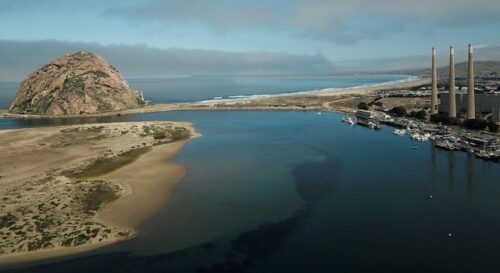 “Morro Bay was historically a busy tableau of life under Indigenous stewardship. Sea otters played in the surf, steelhead swam in the streams, and grizzly bears abounded. In the Bay, broad expanses of shallow open water and tidal flats were bordered by tidal salt and brackish marshes. The water connected to open ocean through channels on either side of Morro Rock. Extensive sand dunes supported a mix of sparsely vegetated mobile dunes, coastal dune scrub, and maritime chaparral. In the surrounding river valleys, creeks were lined with riparian forests, willow groves, wet meadows, and freshwater marshes, while Tribes managed broad coastal prairies through cultural burning and other practices. Today, communities seeking to revitalize Morro Bay face the question: how can we heal the landscape if we don’t understand how it functioned prior to European colonization and disruption? Answering that question drove the research for the Morro Bay Historical Ecology Study, which SFEI conducted in partnership with the Morro Bay National Estuary Program. … ” Read more from the San Francisco Estuary Institute.
SOUTHERN CALIFORNIA
California wildfire survivors told to use organic mulch as El Niño raises flood, toxic runoff risks
“As Southern California heads into an El Niño winter, people recovering from the Eaton and Palisades fires are being told to prepare for the possibility of heavy seasonal rain. On lots where the Eaton and Palisades fires destroyed homes or businesses, exposed ground can flood or erode more easily, and contaminants left in the soil may be carried downstream as storms intensify. According to LAist, experts say fire survivors should start getting their properties ready for rain. Burned parcels face added risk once plants and root systems are gone, because there is less to hold the soil in place. Rain can also pick up toxic metals that may still be present in the soil and move them into downstream areas. One method being examined by University of California Agriculture and Natural Resources soil scientist Natalie Levy is using organic mulch. … ” Read more from The Cool Down.
SAN DIEGO
San Diego officials tout water investments while other Southwest communities brace for Colorado River cuts
“The Department of the Interior last month announced Colorado River supply cuts affecting the basin states of Arizona, Nevada and California, leaving many communities bracing for reduced water access. San Diego, though, says decades of costly investments — some criticized for driving up water bills — have positioned the region to avoid the pain other Southwest communities now face. For decades county water agencies have invested in water resources and procurement — securing independence from a cut from any one source, sometimes at a steep price. “Over the last 30 plus years, we have been developing and investing in new and alternative water supplies and rights for the San Diego region,” said Jeremy Crutchfield, the water resources manager for San Diego County Water Authority. “We are at a point now where we have abundant water supply and we can meet the demands of this region even during dry drought periods, even extended drought periods. We have access to enough water to meet our demands, so we’re in a very unique spot compared to the rest of California, Southern California and the Southwest in general.” … ” Read more from the Times of San Diego.
‘A steady input of these chemicals’: report finds cocktail of pollution in Tijuana River
“A steady stream of industrial chemicals, heavy metals and pesticides are flowing into the Tijuana River on a regular basis, according to a new water quality report from San Diego Coastkeeper, a pattern the nonprofit’s executive director says points to ongoing, unregulated discharges from manufacturing plants across the border. “The fact that we’re finding them in the water just on a regular basis and we’re finding a range of different ones suggests that there’s a steady input of these chemicals,” said Phillip Musegaas, Coastkeeper’s executive director. “And that’s a huge cause for concern because we don’t know how long this has been going on.” The Tijuana River Valley has been the site of a decades-long transboundary pollution crisis, driven by untreated sewage, industrial discharges and stormwater runoff crossing the U.S.-Mexico border. The pollution has caused years of beach closures in Imperial Beach and closures as far north as Coronado, along with chronic public health impacts for South County residents living near the river valley. … ” Read more from the San Diego Union Tribune.
Along the Colorado River …
How drought and demand pushed the Colorado River toward crisis
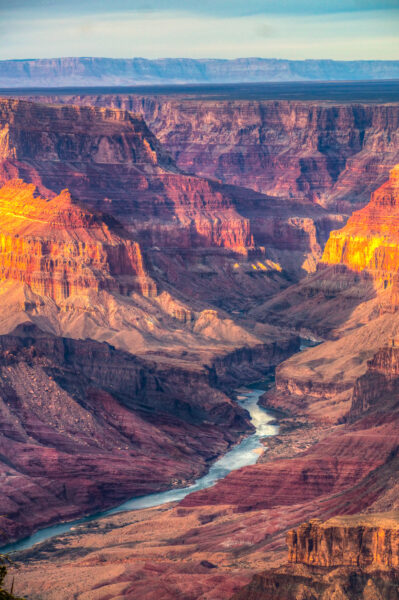
“On August 21, the U.S. Bureau of Reclamation cut the allotment of river water to Arizona, California and Nevada. Due to a nearly three-decade-long drought, overconsumption of the available water and the inability of the seven states along the Colorado River to agree on how to share the resource, the federal government has cut water deliveries to the three lower-basin states — Nevada, Arizona and California — over the next two years. For most of the 20th century, water use stayed well below what the river carried. Dams completed in 1935 (Hoover) and 1964 (Glen Canyon) created Lakes Mead and Powell — below and above the Grand Canyon — generating hydropower and functioning together as one giant reservoir. Water use peaked in the late 20th century. Consumption has eased since, but the U.S. still draws more from the Colorado than the river provides — a gap widened over the past two decades by a megadrought that has pulled reservoir levels sharply lower. … ” Read more from Reuters.
A Drought, the Colorado River, and the Hoover Dam
“At Lake Mead’s Callville Bay Marina, exposed-rock bluffs now rise above the shoreline where the lake once covered the land. A brown-and-white sign marks a vanished 2000 shoreline—and the beginning of a decades-long regional megadrought. Farther downslope, the marina and boat slips come into view, but reaching them on foot requires a hike through 100-degree heat. The drought has transformed the man-made lake into a shrunken version of itself, with no end in sight. The falling water level threatens supplies and hydroelectric power for millions and has forced some boat ramps to close. “It’s getting pretty scary. You know, the water’s dropping to a level where they can’t keep up with marking the hazards,” a marina employee told The Epoch Times, requesting anonymity. … ” Read more from the Epoch Times.
What will happen to the Grand Canyon as water levels drop?
“In August 29, monsoon storms sat over northern Arizona, pelting the north rim of the Grand Canyon. The rain unleashed flash floods that picked up momentum in the burn scar from the 2025 Dragon Bravo Fire. With burned trees, boulders and unanchored sediment in tow, the water pummeled down Bright Angel Creek, finding the fastest way to the Colorado River below. The floodwaters wiped out bridges, buildings and at least two human lives. It eliminated beaches and built new rapids. This summer, and for the foreseeable future, the canyon is changing. In addition to increasingly catastrophic seasonal floods, a warming climate means the Grand Canyon will more often have too little water. The Glen Canyon Dam, which is located just above the canyon, is consistently releasing its lowest water levels in decades, and the Colorado River’s flows are projected to drop even lower. This is already impacting recreation, the river’s ecology and local tribes. … ” Read more from High Country News.
Research: Upper Colorado droughts cut flows, affect water quality
“A new study of the Upper Colorado River Basin offers a detailed look at something water users already know in broad terms: drought means less water in rivers. But the research goes further. It shows that drought can change not only how much water is flowing, but also the temperature and concentration of dissolved salts in that water. And the effects can vary considerably from one watershed to another. Researchers examined conditions in the Upper Colorado River Basin from 1998 through 2022, focusing on four severe drought events: 2001-2002, 2012, 2018 and 2020-2021. The study was published in Communications Earth & Environment. The Upper Basin includes Colorado River headwaters in Colorado, Wyoming, Utah and New Mexico. Those waters eventually flow toward Lees Ferry in Arizona. … ” Read more from Western Water.
Could desalination help offset Arizona’s Colorado River water cuts?
“Maybe you’ve heard the news: People are fighting over the Colorado River. For years, the seven Western states — and 30 tribes — that share its flows have not been able to agree on how to modify a 2007 shortage plan that was based on agreements set out a century ago when there was simply more water in the river. Negotiators missed deadline after deadline until, in late August, the federal government stepped in and finalized necessary cuts. … Readers of The Arizona Republic have been following this reshaping of water policy in the American West like the condors circling watchful over the Colorado River’s meanderings. And they have not been shy about swooping in with suggestions. The latest, answered here, is whether desalination could be a meaningful part of the solution. … ” Read more from the Arizona Republic.
Making chips takes water. Arizona wants to reuse it
“Arizona’s semiconductor industry is booming as the state faces a future with less water. Researchers are hoping to make every drop used in the water-intensive industry count — and then count again. Arizona State University researchers are working on ways to reuse wastewater in chip manufacturing, a process that requires high-quality water, and lots of it. The university recently received $2 million in congressionally directed spending through the National Institute for Standards and Technology to support the work. Paul Westerhoff, an environmental engineer in the School of Sustainable Engineering and the Built Environment at ASU, has worked with various municipalities and companies on water quality and reuse. Chip manufacturers are drawn to Arizona’s arid climate, Westerhoff said. Moisture is bad for computer chips, and dehumidification can be expensive — so the state’s dry air is a plus. But water scarcity is a double-edged sword. Chip manufacturing is water-intensive: The fine layers have to be rinsed with tap water treated to an incredibly high level of purity. That water is used for just a flash, but the consumption adds up. … ” Read more from the Arizona Daily Star.
Farmers and researchers are learning how to keep fertilizer out of pristine Colorado rivers
“Colorado ranchers who own some of the state’s most scenic landscapes are joining new research efforts to better understand emerging water quality issues in the Yampa and Gunnison basins, among others. Pressured by rising stream temperatures and shrinking flows due to climate change, rivers and lakes across the state are starting to show signs of distress, including algae blooms, some of which are toxic. At the same time, the Colorado Department of Public Health and Environment and Colorado State University, among others, are analyzing water quality and testing how best management practices, rather than strict regulations, can protect these hallmark mountain lakes and streams. Philip Rossi grows hay and runs a cattle operation in the Upper Yampa River Basin above Stagecoach Reservoir. He is among the first ranchers to agree to allow scientists to monitor the water quality, and soon the temperature, of the irrigation water that runs off from his hay meadows. So far the news has been good, Rossi said. Little if any of the fertilizer he applies to his hay reaches the stream and in the years he’s been working with the CSU researchers, the use of nonfertilized grass strips along the creek that runs through his property has reduced that number even further. … ” Read more from the Colorado Sun.
In national water news today …
Most people don’t think about culverts. Their failure can be deadly.
“Culverts aren’t nearly as inspiring as bridges. Looking for the Golden Gate Culvert? Well, it doesn’t exist. Neither do any romances about the culverts of Madison County, or tender folk songs about culverts over troubled water. These utilitarian tunnels or pipes that divert or direct streams and storm runoff under roadways don’t enjoy much public affection. But if a culvert doesn’t do its job, it can mean catastrophe: Failed culverts leave people stranded and cut off from emergency services. And failures are looking more likely. Almost two-thirds of the nation’s six million culverts “were built to standards insufficient for today’s storms,” according to Headwaters Economics, a nonprofit research organization. That’s why Jessica Boakye, an assistant professor of civil and environmental engineering at the University of Massachusetts at Amherst, decided to undertake an unusually thorough case study of simulated culvert failures, the results of which were recently published in the journal Risk Analysis. … ” Read more from the New York Times.
E.P.A. expected to erase limits on climate pollution from power plants
“The Trump administration plans to announce Monday that the United States will no longer limit the planet-warming pollution that power plants pump into the air while burning coal and gas, according to two people familiar with the proposal. The shift by the Environmental Protection Agency would complete the administration’s erasure of the most consequential climate policies of Presidents Joseph R. Biden Jr. and Barack Obama. If the move survives expected legal challenges, it could also prevent future administrations from regulating greenhouse gas emissions from power plants. The power sector is the second largest source of carbon dioxide and other greenhouse gases in the United States. This pollution accumulates in the atmosphere, where it traps the sun’s heat, raising temperatures and supercharging extreme weather events around the globe. … ” Read more from the New York Times.
As the fight for a key climate goal falters, some begin a fight for survival
“The most ambitious part of the 2015 Paris climate agreement, to limit global warming to 1.5 degrees Celsius, only came about because of a campaign by some of the world’s poorest and most defenseless countries. Caribbean participants tacked up posters saying “1.5 to stay alive,” and the prime minister of Tuvalu said any temperature rise beyond that mark would “spell the total demise” of his and other low-lying island nations. In the final stage of negotiations, some were chanting, “1.5.” The acknowledgment last week from the United Nations that the planet is going to breach that limit was not a surprise to anyone tracking global temperatures, which keep rising. But it nonetheless formalized a dire outcome: Amid scant progress from global powers to cut pollution from fossil fuels, vulnerable countries will now spend decades, or perhaps centuries, confronting the very climate scenario they’d once said would be untenable. … ” Read more from the New York Times.

