
Several news sources featured in the Daily Digest may limit the number of articles you can access without a subscription. However, gift articles and open-access links are provided when available. For more open access California water news articles, explore the main page at MavensNotebook.com.
Department of Interior releases Colorado River operations plan …
As Colorado River reservoirs plummet, the Trump administration orders water cuts
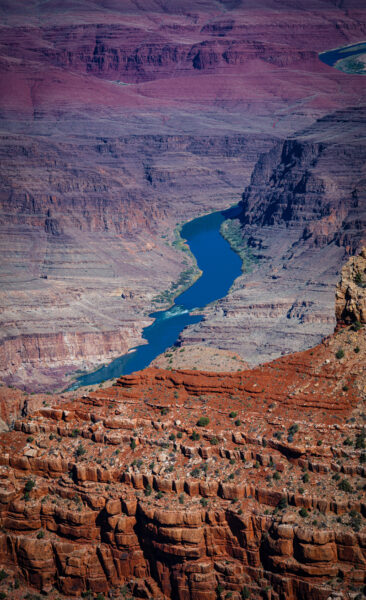 “The Colorado River, a critical water lifeline for seven states, has shrunk dramatically. And the nation’s largest reservoirs, Lake Mead and Lake Powell, have dropped to their lowest levels on record. In an effort to prevent the reservoirs from reaching critically low levels, the Trump administration has released a plan that orders substantial water cutbacks in California, Arizona and Nevada over the next two years and outlines possible larger cuts if deemed necessary over the next decade. The Interior Department has accepted an offer the three states made to reduce the amount of water they take from the river by about 3.2 million acre-feet between now and the end of 2028. California will cut its use of Colorado River water by about 12%, while Arizona will take about 31% less and Nevada 28% less. “We’ve been in this 26-year prolonged drought period,” said Andrea Travnicek, the Interior Department’s assistant secretary for water and science. “We continue to see a prolonged drought in our future. So continuing to work together as a whole within the basin is going to be extremely important.” … ” Read more from the LA Times. | Read via AOL News.
California officials respond to Colorado River operations plan
“On Friday, the Department of the Interior released a Record of Decision and a two-year operations plan that will guide Colorado River management in 2027 and 2028. The plan is intended to provide short-term stability while California and the other basin states continue negotiating a longer-term framework for a river system strained by drought, climate change and declining reservoir levels. Under the newly released guidelines, California and the other Lower Basin states are expected to carry the largest near-term reductions, with the operating rules relying heavily on a Lower Basin proposal submitted earlier this year. The federal announcement drew responses from California officials and water agencies, who emphasized both the importance of near-term certainty and the need for a broader, basin-wide agreement. Click here for statements from Governor Newsom, JB Hamby of the Colorado River Board, Imperial Irrigation District, and the Metropolitan Water District.
SEE ALSO:
- What will latest Colorado River cuts mean for the Coachella Valley?, from the Desert Sun
- Interior Department finalizes New Colorado River Operating Rules for 2027-2028, from the Desert Review
Arizona Mirror: Arizona to bear the brunt of Colorado River cuts for two years as long-term talks continue
“Arizona and the other Lower Basin states will bear the brunt of cuts to Colorado River water over the next two years, while they continue to negotiate a longer-term agreement with the Upper Basin, the federal government announced Friday morning. But for now, Arizona will avoid the massive cuts to the Central Arizona Project, a series of canals that supplies Colorado River water to the metropolitan Phoenix and Tucson areas, that the federal government proposed earlier this year. … The Lower Basin states praised the federal government for releasing a two-year plan that would give those that rely on the river more stability and for allowing them to implement their own plan for dealing with the cuts. That plan would still put the biggest burden on Arizona to cut 760,000 acre-feet per year, with annual reductions of 440,000 and 50,000 acre-feet to California and Nevada, respectively. But the Lower Basin states also insisted that, over the coming decade, the Upper Basin states — Colorado, New Mexico, Utah and Wyoming — would have to offer up some mandatory cuts of their own. … ” Read more from the Arizona Mirror.
Statement from the Arizona Department of Water Resources
“After more than three years of difficult negotiations over post-2026 Colorado River Operations guidelines, Arizona and the Lower Basin states have created a level of stability for the Colorado River system with the adoption of the 2027-2028 operating guidelines in the Record of Decision. While the framework for years 3-10 continues to be of concern, we applaud the Department of the Interior for clarifying the decision-making process for operations beyond 2028. That outcome allows for continued negotiations for years 3-10 while preserving our ability to protect Arizona’s legal rights to Colorado River water. We will continue to work with our partners in Arizona, the Lower Basin and Interior, to finalize the agreements necessary to implement the Lower Basin Plan. With the Record of Decision, the 2027-2028 Operating Guidelines and the supporting agreements in place, we can focus on a longer-term, equitable, basin-wide outcome that includes shared sacrifices along with our Upper Basin partners in an effort to avoid protracted litigation. The actions in the Lower Basin in recent decades to protect the system have demonstrated how much we can accomplish when we all join together as part of the solution.” – Tom Buschatzke, Director of the Arizona Department of Water Resources
SEE ALSO:
- Colorado River Plan Gives Arizona Part of What it Wants, from the Arizona Farm Bureau
- Arizona leaders are encouraged by new Colorado River plan, but uneasy about its future, from KJZZ
- Arizona will take big Colorado River water cuts — but they could’ve been worse, from KJZZ
- A new Colorado River plan is here — and Arizona will take the biggest water cuts, from Arizona Public Media
Nevada Current: Feds announce water cuts under new Colorado River plan
“The Bureau of Reclamation released its two-year operating plan on Friday detailing how the agency will manage the Colorado River, and the nation’s two largest reservoirs Lake Powell and Lake Mead, amid ongoing drought and record low water storage. … The federal decision “provides little certainty for Nevada and other Lower Basin users,” said Nevada Gov. Joe Lombardo in a statement late Friday. “Looking into years three through 10 of the decision framework, the federal government is positioning to short Nevada — the state with the smallest river allocation at only 1.8% – sacrificing the health and safety of Nevadans before requiring equal water responsibility for our shared water resources from the Upper Basin.” “Southern Nevada has done its part to mandate common sense water conservation and efficiency measures,” added John Entsminger, Souther Nevada Water Authority general manager and chief Colorado River negotiator for Nevada, in the statement released by the governor’s office. “Our conservation achievements are unmatched. Seven-state consensus plans remain Nevada’s preferred path for this river. But, in the absence of science-based operating regimes that demand reasonable water use reductions by all seven states, Nevada will fight to protect our community’s water supply.” … ” Read more from the Nevada Current.
SEE ALSO:
Tribes push back on federal plan for Colorado River water cuts
“The Department of the Interior Friday announced future cuts to Colorado River water deliveries to three lower river basin states, adopting a plan already slammed by two Southwest tribes. When the plan was released in draft form last month, the tribes argued they were not sufficiently party to the decision making process and that the proposed use plan does not reflect their rights. The Colorado River Indian Tribes “holds water rights to over 23 percent of Arizona’s entire allocation of Colorado River water,” the tribes’ Attorney General Rebecca Loudbear wrote to the Bureau of Reclamation earlier this month when the preliminary water cut plans were released. “Our limited role in this process does not reflect the nature and extent of our water rights.” … ” Read more from Indian Country Today.
Utah: Trump admin finalizes a short-term Colorado River plan. Here’s what it means for Lake Powell.
“The Trump administration won’t force Utah and other Upper Basin states to cut their Colorado River water use over the next two years, but Lower Basin states like California will collectively slash their consumption by over 1 million acre-feet per year. … In the new plan, Reclamation upped its target elevation at Lake Powell from 3,500 feet to 3,510 feet. Glen Canyon Dam’s power pool elevation is at 3,490 feet. Below that level, water can no longer flow through the dam’s penstocks and generate hydropower, and water must be released through tubes not designed for longterm releases. Increasing the target elevation to 3,510, “gives a little bit more decision space to see what might be happening while we continue to be in this prolonged drought,” Travnicek told reporters Friday morning. … ” Read more from the Salt Lake Tribune.
Colorado: 3 downstream Colorado River states will bear the brunt of water cuts under new 2-year plan
“The federal government released Friday its near-term management plan for the river system, which provides vital water supplies to nearly 40 million people. … [D}ownstream states will bear the brunt of those mandatory water cuts, totaling 1.25 million acre-feet, under the new river plan for 2027 and 2028. Upstream states, like Colorado, are being called on to conserve water and help avoid crisis lows at the river basin’s key reservoirs, but do not have to cut their water use. … “We remain committed to developing a solution that works for all the Colorado River states, tribes, and interests,” wrote Becky Mitchell, Colorado’s top negotiator and Commissioner to the Upper Colorado River Commission in a prepared statement Friday. “We also acknowledge that the Upper Division States face mandatory cuts already, including water rights that predate the 1922 Colorado River Compact by decades.” … ” Read more from the Colorado Sun.
SEE ALSO:
- Colorado is spared from mandatory cuts as feds finalize Colorado River rules for next two years, from Colorado Public Radio
- Burgum OKs Colorado River plan, sparing cuts to Wyoming water use, from the WyoFile
Commentary: Let’s let the market help solve Colorado River woes
Vince Bzdek writes, “Negotiators for the seven states along the Colorado River Basin have had two years to reach an agreement on how to manage the river, which is at dangerously low water levels. They came up with zilch. That left solving the crisis in the hands of the U.S. Bureau of Reclamation, which has been without an executive director since President Donald Trump took office in 2025. So that left negotiations to U.S. Interior Secretary Doug Burgum, who has met with the governors of all seven states but has also come up empty-handed, according to our lead reporter on water issues, Marianne Goodland. Last month, the Interior Department announced its own plan, which drew criticism from just about everyone involved in the negotiations, Goodland reported. If state governments and the federal government can’t figure this out, maybe it’s time to let the open market give it a try. … ” Read more from the Denver Gazette.
EXPLORE MORE COVERAGE:
- Government will cut water to Ariz., Calif., Nevada as Colorado River runs low, from the Washington Post
- U.S. Announces Colorado River Cuts for 3 States Amid Drought, from the New York Times
- The US has a plan to save the Colorado River. Experts say it won’t be enough to stop the crisis, from The Guardian
In other California water news this weekend …
Water agencies respond to Delta plan
“A group of water agencies in the state have responded to the plan announced on how the state wants to govern the pumping of water from the Sacramento-San Joaquin River Delta, continuing their stance the Healthy Rivers and Landscapes Program be followed. The State Water Resources Control Board released its final draft for the Delta on Wednesday and a press release essentially stated the plan will implement the Healthy Rivers and Landscapes Program. The press release stated the plan “facilitates $2.9 billion in restoration and related actions through the Healthy Rivers and Landscape Program.” But state officials also described the plan as a new approach, stating it’s “an innovative approach that pairs voluntary actions” that are part of the Healthy Rivers and Landscape Program “with a strong regulatory backstop.” … ” Read more from the Porterville Recorder.
New California maps show the likelihood of a wet El Niño winter
“The El Niño building this winter is expected to be historically strong. And the rain forecast for California just jumped. In data released this week, the National Oceanic and Atmospheric Administration significantly ramped up its precipitation forecast for the winter months in California. The agency now expects above-normal precipitation across much of the state in December, January and February — which tend to be the rainiest months. The odds for major rainfall are highest in the southern half of the state. Just last month, NOAA’s outlook only showed elevated rain chances for Southern California. The rest of the state, including the Bay Area, sat at equal chances. That changed dramatically in this week’s update. The shift puts NOAA in line with what the European Centre for Medium-Range Weather Forecasts projected two weeks ago. Both agencies now point to a wetter-than-normal California winter, driven by an El Niño that NOAA gives a 69% chance of becoming the strongest in its modern record dating back to 1950. … ” Read more from the San Francisco Chronicle. | Read via Yahoo News.
Kings County judge allows state to move ahead with groundwater fees for most farmers in the region
“Invoices for state groundwater pumping fees could be headed to the mailboxes of most Kings County farmers in the near future after a judge’s ruling last week. Fees of $20 per acre foot pumped had been in limbo pending the outcome of a second preliminary injunction request made by the Kings County Farm Bureau as part of its ongoing lawsuit alleging the Water Resources Control Board exceeded its authority when it placed the Tulare Lake subbasin on probation in 2024. This latest ruling allows the Water Board to begin charging fees to most farmers in the subbasin, which covers most of Kings County. That doesn’t include those pumping less than 20 acre feet a year, who were excluded from probationary measures by the Water Board last March. … ” Read more from SJV Water.
New State Water Board measurement and reporting rules: What water rights holders need to know by October 2026
“California water rights holders should be preparing now for substantial changes to the State Water Resources Control Board’s (State Board) water diversion measurement and reporting framework. Earlier this year, the State Board adopted a rulemaking package that significantly amends prior water diversion measurement and reporting regulations in place since 2016. The revised regulations clarify who must measure water diversions, what must be measured, how data must be submitted, and how the State Board will administer compliance through its new electronic water rights reporting platform, CalWATRS. Persistent drought conditions in California over the past decade underscored the original need to collect accurate data on the volume of surface water diverted by water right holders statewide. The State Board’s revised regulations build on that effort to improve clarity and standardize how measurement data must be submitted. … ” Read more from Allen Matkins.
From water to wine, invasive species costing California millions in crops, infrastructure
“If not managed properly, invasive species in California could further harm local ecology, damage infrastructure and impact economic activity, state officials and experts said during a virtual briefing Thursday. The golden mussel and the glassy-winged sharpshooter were among invasive species discussed in the briefing by representatives from the California Natural Resources Agency, Department of Water Resources, Department of Food and Agriculture, and the Department of Pesticide Regulation. Golden mussels are an invasive freshwater species of mussel, originally from Southeast Asia. The species was first detected in the Sacramento-San Joaquin Delta in October 2024, and authorities do not know how they arrived in California, said Kristopher Jones, an assistant manager at the California Department of Water Resources. … ” Read more from Piedmont Exedra.
Firefighters sound alarm as US faces critical staffing shortage: ‘We don’t have enough people’
“The U.S. has faced a critical shortage of firefighters at the Forest Service, or USFS, this summer as thousands of fires erupted across the country. Despite officials’ claims that the firefighting workforce was stronger than ever, the agency has failed to keep pace with escalating conditions and the catastrophic fires fueled by them, according to nine firefighters who spoke to the Guardian anonymously, because they are barred from disclosing the information to the public. Several people familiar with internal hiring data at the agency said there were also large gaps in important leadership roles, which had caused bottlenecks and operational challenges during a busy and dangerous year. … ” Read more from Grist.
In commentary this weekend …
California is home to the rarest trout in North America. It’s now in danger from Trump
Ted Williams, a former columnist for Audubon magazine and the Nature Conservancy’s Cool Green Science blog, writes, “Had Donald Trump been president in 1973 when the Endangered Species Act became law, California’s Paiute cutthroat trout — the rarest trout in North America — would not exist. Thanks to the Endangered Species Act, for the past half a century, environmental “harm” has been defined by law not just as human-caused death and damage to individual plants and animals, but also “significant modification or degradation” of their critical habitat. That definition has helped save 99% of organisms listed in the act from extinction. The federal government wasn’t motivated to protect and restore these habitats by goodwill; the act required it to develop recovery plans. There is arguably no species for whom this provision of the law is more essential than the Paiute cutthroat trout. Its entire native habitat consists of 11 miles of Silver King Creek in the Carson-Iceberg Wilderness high in the Sierra Nevada. … ” Read more from the San Francisco Chronicle.
Podcasts …
NY TIMES DAILY: El Niño is back. And worse than ever.
The global chaos agent known as El Niño is back, and this year it’s already on track to be, by far, the strongest and most severe on record, wreaking havoc on weather across the world. Today, Chico Harlan, the global climate reporter for The New York Times, goes over El Niño’s history, its inner workings and its increasingly destructive fallout.
WATER IS A MANY SPLENDOR’ED THING: Batten Down the Hatches – Levee Protection
 I scratch my head wondering if the California public has shown enough interest in financing projects that will protect us during this year’s significant El Nino Fall and Winter seasons and subsequent years of extreme weather. Making decisions on how to maximize the benefits of the California levees into the future is a function of engineering and economics. Cost for these projects are nine digits long. We are talking about one to four billion dollars. But there is a far greater price if the levees are not improved. Water is a Many Splendor’ed Thing brings you another water relationship that has a personally significant impact to your life. Produced by Stephen Baker, Bringing People Together to Solve Water Problems, water@operationunite.co 530-205-6388
INSIGHT: Sacramento Valley Groundwater Damage
California’s water system is complicated, ranging from reservoirs to the snowpack, to a significant amount of groundwater. Those underground aquifers are critical for the Golden State’s agricultural communities to tap into when conditions get dry, but overpumping is causing communities to significantly sink over the years. A new study shows that irreparable sinking is now happening in parts of the northern Sacramento Valley, from Woodland up to Redding, caused by major droughts from 2020-2022. J.T. Reager heads the Water and Ecosystems group at NASA’s Jet Propulsion Laboratory in Pasadena, and spoke with Insight about the study’s findings and what can be done to prevent future damage.
THE CLIMATE DISPATCH: California Forever: Little metropolis on the prairie
A group of Silicon Valley billionaires says it has a bold vision for the future of California: a brand-new city built from the ground up on the Solano County prairie. But behind the glossy renderings and promises of sustainability lies a story of secretive land deals, political maneuvering, and growing concerns over public accountability. In this episode, we investigate the California Forever project, examining the opaque tactics used to quietly acquire more than 50,000 acres of farmland, the allegations surrounding Flannery Associates’ efforts to sidestep meaningful public input, and the questions local residents and conservationists are asking about who gets to shape the future of the region. We also explore what’s at stake for one of California’s rarest ecosystems. The proposed development sits alongside fragile vernal pool habitat that supports endangered and threatened species, including the California tiger salamander and vernal pool tadpole shrimp. As pressure to build accelerates, we ask whether these unique landscapes, and the wildlife that depends on them, can survive another wave of development. Who gets to build the future? And who pays the price when it’s built in the dark?
SUSTAINABILITY SOUNDBITES: California water contracts gain certainty after ruling
A Ninth Circuit ruling strengthens Central Valley Project contract certainty for water districts while leaving businesses exposed to annual water supply risk.
KPBS MIDDAY EDITION: What is driving cyberattacks on US water systems?
In recent weeks, at least seven U.S. states have been hit with cyberattacks that appear to be targeting critical infrastructure — like water and wastewater utilities. The FBI is investigating the attacks and has not publicly identified a culprit. However, many experts say Iranian-backed hackers are responsible. We sit down with a cybersecurity expert about what makes water systems vulnerable to attacks and what message hackers are trying to send.
TALKING UNDER WATER: Navigating microplastics in drinking water: The challenges of potential regulations
In this episode Talking Under Water co-host Mandy Crispin speaks with Brent Alspach, Vice President and Director of Applied Research at Arcadis, about the evolving science of microplastics in drinking water and the challenges facing future regulation. Recorded at ACE26, the conversation explores what has changed over the past year in the industry’s understanding of microplastics and why policymakers, utilities, and researchers are still searching for answers. Brent explains why defining microplastics for regulatory purposes is far more complex than defining traditional contaminants, given the wide range of particle sizes, polymer types, and characteristics involved. He also discusses concerns that public and political pressure could outpace the scientific research needed to support effective regulations.
Sunday reads …
BOOK REVIEW: Toms River: A Story of Science and Salvation
 Jim Lauria writes, “Toms River: A Story of Science and Salvation (Bantam, 2013) by Dan Fagin is one of those rare books that manages to be part detective story, part scientific case study, and part moral reckoning. It is no surprise that Fagin won the Pulitzer Prize for this work. This is investigative journalism at its absolute peak —meticulous, humane, and relentless. The book resonated deeply with me because my early career ambition was shaped by chemistry and its promise. I became a chemical engineer believing in DuPont’s famous motto, “Better Living Through Chemistry.” As a kid at the 1964 World’s Fair in Queens, I stood mesmerized inside the DuPont pavilion. Forget the singing and dancing…the real magic was watching a man on stage make nylon before our eyes. In that moment, chemistry felt like pure wonder. … ” Continue reading this book review.
In regional water news this weekend …
NORTH COAST
Klamath Basin irrigators curb avian botulism outbreak; Flow-Through project moves water through wetlands
“Irrigators in the Klamath Basin moved fast to stop an avian botulism outbreak that threatened to kill up to 140,000 ducks, saving most of the birds by using the basin’s flow-through system. The outbreak killed around 13,000 birds. Irrigators used part of the basin’s flow-through system to circulate water and prevent the disease from spreading further. “Our managers and our staff have done a phenomenal job of moving water around, circulating it, trying to keep water moving,” said Scott Seus, president of the Klamath Water Users Association. “Dead water is dead ducks.” Low water levels created stagnant conditions that allowed the botulism to develop. By moving water into refuges, irrigators began solving the problem. … ” Read more from KDRV.
SIERRA NEVADA
30 years of activism celebrated at Tahoe Summit; leaders discuss the next 30
“Team Tahoe is now looking to the next 30 years after celebrating the 30th Tahoe Summit at Sand Harbor State Park on Wednesday, Aug. 19. U.S. Senator Jacky Rosen (D-NV) hosted the annual event at the park’s amphitheater, where attendees heard from other lawmakers and regional leaders on the successes over the last three decades and their vision for the next 30. Participants also heard from U.S. rock climber and Tahoe resident, Tommy Caldwell, who provided the summit’s keynote speech. The first Tahoe Summit was held in July of 1997, sparking a three-decade legacy of transformative action for Lake Tahoe. That’s where the late U.S. Senator Dianne Feinstein, who was instrumental in organizing the first summit, along with U.S. Senator Harry Reid, coined the term Team Tahoe. Many speakers used the term Team Tahoe throughout the summit to refer to the collaboration that has preserved the lake over the last 30 years. … ” Read more from the Tahoe Daily Tribune.
Yuba Water Agency tests drones, 3D mapping to preemptively solve problems
“A new pilot project introduced by the Yuba Water Agency is testing the waters in diagnosing the durability of levees to reduce flooding in the Mid-Valley. The ongoing project is the result of research conducted at several UC campuses funded by a $360,000 grant from the agency, according to a Yuba Water announcement earlier this week. “Anything that gives us a little more confidence and security in our levee system is really a great benefit,” Yuba Water Board Director and County Supervisor Renick House said. “Having grown up in Arboga, which suffered significant flooding in 1997, there is no question that having this information at our fingertips is invaluable.” … ” Read more from the Appeal Democrat.
SACRAMENTO VALLEY
Tehama County flood control board taking on debt
“On Monday, the Tehama County Flood Control and Water Conservation District Board of Directors held a considerably shorter, less dramatic meeting than its two previous meetings. In the last meeting, the board again chose to table the setting of fees for groundwater operations and projects and instead set up two committees to further discuss areas of concern. At Monday’s meeting, the board authorized the Groundwater Sustainability Agency, or GSA, to take on up to $250,000 in debt, in $50,000 increments and with clearly presented budget plans. The funding will be to continue operations and maintain solvency as grant funding runs out, and in light of the lack of revenue without fees in place. … ” Read more from the Red Bluff Daily News.
That sinking feeling: How excessive groundwater usage is damaging the Sacramento Valley
“California’s water system is a complicated mix of reservoirs, snowpacks, and groundwater aquifers that supplies the Golden State throughout the year. Groundwater is especially critical for the state’s agricultural communities to tap into when conditions get dry, but overpumping those aquifers comes with significant consequences. For years, the San Joaquin Valley has experienced subsidence as those water reserves are drained. But a new study published last month shows this is not the only region watching the ground sink beneath their feet. Part of the Northern Sacramento Valley, from Woodland up to Redding, also sank between 2020-2022 as the state experienced widespread droughts — and that damage is irreversible. J.T. Reager is an earth scientist leading the Water and Ecosystems Group at NASA’s Jet Propulsion Laboratory in Pasadena. He spoke with Insight Host Vicki Gonzalez about the study’s findings, and what can be done to limit future damage. … ” Read more from Capital Public Radio.
BAY AREA
Highway 37 traffic and flood projects secure key funding
“A long delayed and hard-fought plan to relieve gridlock and protect against rising seas on Highway 37 is moving forward. The California Transportation Commission approved more than $300 million toward the projects when it met Friday in San Diego. The key funding decision greenlights several fixes on the flood-prone commuter route that links Marin, Sonoma, Napa and Solano counties. Highway 37 carries an estimated 40,000 commuters daily. The highway is notorious for its congestion and frequent flooding that sometimes forces closures lasting days. More than 100 letters of support were submitted ahead of the hearing. On Friday, labor and advocacy group leaders urged the commission to approve the funding, specifically about $95 million for what is called the Sears Point-to-Mare Island project. … ” Read more from the Marin Independent Journal.
SEE ALSO: California approves $100M plan to prevent Highway 37 from sinking, from KGO
CENTRAL COAST
California American Water comments on possible modification of water connection moratorium on the Monterey Peninsula
“Today, California American Water submitted written testimony to the State Water Resources Control Board (Water Board) regarding the Monterey Peninsula Water Management District’s (District) application to modify the cease-and-desist order limiting new water connections on the Monterey Peninsula. “California American Water shares the District’s goal of a thriving Peninsula and welcomes the opportunity to chart a responsible path toward easing these restrictions without threatening existing water supplies,” said Sarah Leeper, president of California American Water. “Successful expansion of Aquifer Storage and Recovery, coupled with continued regulatory progress on the desalination project, means Monterey Peninsula is on a path toward better water security, and we can support a temporary suspension of the moratorium on new water connections to allow more flexibility for the community while maintaining key protections for the Carmel River.” The Water Board instated the cease-and-desist order in 2009, banning new water connections until sufficient new water sources could be developed to reduce Carmel River pumping. While the pause on new connections has supported the recovery of the Carmel River watershed and its steelhead population, it has also stunted the Monterey Peninsula’s ability to build affordable housing, grow businesses and develop its economy for nearly two decades. … ” Continue reading this press release.
New web portal monitors Monterey Bay Sanctuary
“Monterey Bay National Marine Sanctuary encompasses over 6,000 square miles of protected waters. It is a place of wonder, home to kelp forests, deep-sea canyons and a staggering array of marine life. But how do we track the health of such a vast, dynamic environment? And how can managers, residents and visitors alike keep their finger on the pulse of the sanctuary? An answer has arrived with the launch of the new Sanctuary Watch web portal, a digital gateway designed to bring the sanctuary’s complex monitoring data directly to sanctuary managers and the public. “We are incredibly fortunate to live adjacent to such a vibrant, ecologically rich system,” said Andrew Devogelaere, Monterey Bay National Marine Sanctuary research ecologist. “A primary goal of NOAA’s Office of National Marine Sanctuaries is to pay attention to their health and see if there are things we can do to protect them. With Sanctuary Watch, we’re essentially opening up research and science to the community. We want people to understand how the sanctuary is functioning and how it’s changing over time and space.” … ” Read more from the Monterey Herald.
A plan to develop Cal Poly’s west campus puts agricultural land at risk
“For generations of Cal Poly agriculture students, some of the university’s most important classrooms haven’t had walls. Their classrooms are the lemon groves and crop fields stretching along the western edge of campus, where students can walk out of a lecture and, within minutes, find themselves laying irrigation pipe, planting crops, driving tractors, studying pests, or harvesting what they grew. Now, some of that land could become something very different. Cal Poly is exploring a mixed-use development on agricultural land near Highland Drive that could bring housing, a hotel and conference center, senior living, restaurants, retail, and other amenities to what the university is calling the West Campus District. … ” Read more from New Times SLO.
SAN JOAQUIN VALLEY
Riverbank sees a flurry of interest from data center developers. A project emerges
“Riverbank has attracted interest from developers about putting data centers at or near the former Army ammunition plant on Claribel Road. According to records obtained by The Modesto Bee, Aemetis, a renewable-fuels company, is working on plans for a 60-megawatt data center at the former ammo plant. A company representative said it’s not part of a large data center proposal, just east of the plant, that seems to be indicated in records. One document shows that Aemetis inquired about getting power for the data center from the nearby Hetch Hetchy overhead transmission lines. In another possible project, the city was contacted in March by Modesto Roadsters owner Dave Heller about a data center on land north of the old munitions plant. Heller’s email March 18 said he was asking on behalf of a friend who’s an accomplished builder of data centers. … ” Read more from the Modesto Bee.
Gustine council to consider updated sewer master plan
“The Gustine City Council on Tuesday will hear a presentation on a newly updated Sewer Master Plan, a document outlining how the city’s aging sewer system must be repaired and expanded as the community grows toward full buildout. The plan, prepared by City Engineer Mario Gouveia and Gouveia Engineering, updates the city’s 2003 sewer master plan and incorporates the 2025 zoning map, the 2024–2032 housing element and current annexation areas. According to the report, Gustine’s sanitary sewer service area is expected to more than double — from 870 acres today to roughly 1,825 acres — with population increasing from 6,138 residents to an estimated 11,616. The plan identifies several deficiencies in the existing system, including the need to replace 80 brick manholes and nearly 43,000 feet of vitrified clay pipe. Three locations currently experience surcharging during peak flows and require upgrades: North Avenue, Laurel Avenue and the Linden Sewer Pump Station. … ” Read more from Westside Connect.
Homeowners to vote on parcel tax for Mid-Kings River Groundwater Sustainability Agency
“Ballots were mailed to property owners throughout the Mid-Kings River Groundwater Sustainability Agency (GSA) last week, inviting them to vote on a proposed annual assessment to fund local efforts to achieve a sustainable groundwater supply. For many residents, particularly those within the City of Hanford and other communities, this may be the first time they have received information or a ballot from the Mid-Kings River GSA. The ballot is part of a public process giving affected property owners an opportunity to weigh in on the proposed funding plan. Groundwater is a shared resource that supports communities, businesses, and agriculture across Kings County. While residents within the city and communities may not pump groundwater directly from a private well, the public water systems serving these areas rely on groundwater wells to provide water to their customers. … ” Read more from the Hanford Sentinel.
SOUTHERN CALIFORNIA
Southern California water bills could climb 30% more by 2030 amid proposed rate hike
“Southern California households could soon face another sharp increase in water bills. According to the Los Angeles Daily News, Golden State Water proposed a rate hike of about 30% by 2030. The plan is raising concerns that the cost of essential utilities is increasing faster than many families can comfortably absorb. The average residential customer in Los Angeles and Orange counties could pay roughly $25 more per month if California approves Golden State Water’s request. The proposal as the cost of living in Southern California continues to climb, the Daily News reported. A UCLA study found that water bills in L.A. County increased by nearly 60% from 2015 to 2025, outpacing inflation and hitting low-income families the hardest. … ” Read more from The Cool Down.
A LEAP toward water conservation: How LADWP’s lawn transformations aim to change California’s future
“The Landscape Efficiency Assistance Program, known as LEAP, is a free initiative by the Los Angeles Department of Water and Power that transforms high-water-use and outdated front lawns into sustainable, drought-tolerant landscapes. LEAP is offered to those who live in a single-family residence within disadvantaged communities as defined by the State of California Department of Water Resources. Potential customers are required to have 500 to 3,000 square feet of green grass in their front yard and be officially registered as the Owner of Record or receive written permission to transform their lawn from the Property Owner. LADWP Customer Susanne Hall said her lawn was transformed through LEAP into a completely different landscape with more than 50 new and thriving plants. “We already see bugs and bees,” Hall said. “The wildlife is finding its way to our yard.” … ” Read more from the LA Times.
Along the Colorado River …
The Nature Conservancy: How we hold on to water in the Colorado River Basin
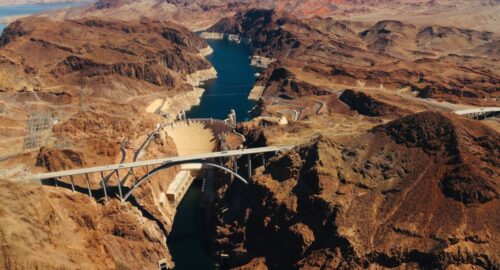 “The Colorado River Basin is facing one of the driest summers on record. Snow that came too little, too late—or not at all—has depleted water supplies heading into the dry season. Throughout the West, communities are grappling with water shortages, wildfire risk and the growing impacts of a hotter, drier climate. In a summer like this, the work doesn’t change—but the urgency does. Many of the solutions are already in motion, shaped by years of collaboration across the basin. Across the Western U.S., TNC staff and partners are stepping up efforts to protect our forests, conserve water and help balance water needs for the communities, businesses and wildlife that need it most. … ” Read more from The Nature Conservancy.
Monsoon brings patchy relief to Colorado River Basin drought
“The latest U.S. Drought Monitor, released August 20, 2026, describes a country split between the soaked and the parched. Storm after storm rolled through the nation’s midsection, while a stubborn dome of high pressure baked much of the South. … For the seven states that share the Colorado River, the week landed somewhere in the middle. Some corners caught a break. Others fell further behind. No part of the basin escaped the report entirely unchanged. The monsoon delivered the good news. Southern Arizona and southern Utah saw enough rain to nudge small areas toward improvement, according to the report. … ” Read more from Western Water.
As Lake Mead shrinks, its body count rises
“As the water level at Lake Mead has plunged to a historic low, more human remains are emerging from the depths of the nation’s largest reservoir. It is an eerie trend that began about four years ago, with some remains belonging to drowning victims and others likely murder victims. The latest discovery came Sunday at Boulder Beach on the western part of the Lake Mead National Recreation Area in Nevada, according to national park officials. “At this time, there is no indication of criminal activity,” park officials wrote in an email response to The Times. “The investigation remains ongoing and no additional information is available.” … ” Read more from the LA Times.
Lake Powell faces low-elevation operations in 2027
“The Colorado River is heading into another difficult operating year, and the latest federal projections show why. The Bureau of Reclamation released its August 2026 24-Month Studies on August 21. The studies examine possible conditions at Lake Powell, Lake Mead and other reservoirs across the Colorado River system. One finding stands out. Lake Powell is projected to fall below elevation 3,510 feet during water year 2027. As a result, the reservoir will be operated within what Reclamation calls the Low Elevation Infrastructure Protection Range. … ” Read more from Western Water.
Composting offers water-saving solution as Arizona faces Colorado River cuts
“Arizona is set to take a cut in its share of Colorado River water over the next two years. Years of high demand and severe drought have dropped the country’s two largest reservoirs to historic lows, and experts say there is also something people can do at home to help the Valley use less water. Water-saving habits often include taking shorter showers, watering lawns early and running a full dishwasher load. Experts say turning food scraps into compost can be added to that list for conserving groundwater. Composting means healthy soil and better water retention around homes. Denali, located on 27th Avenue and Lower Buckeye, is Arizona’s biggest composting plant. It collects material from hundreds of businesses across the state. Staff members say composting could be a lifeline for water retention as Arizona faces water cuts. … ” Read more from Arizona Family.
Nevada: Plaintiffs say turf-removal crackdown exceeds law, seek injunction against SNWA program
“A sweeping legal challenge to Southern Nevada’s effort to eliminate “useless grass” is asking a Clark County judge to treat the dispute as a valley-wide class action ahead of a key 2026 deadline. A 40-page motion filed in Clark County District Court asks the court to certify three injunctive classes in a lawsuit against the Southern Nevada Water Authority over enforcement of Nevada’s “Useless Grass Acts,” AB 356 and AB 220. The plaintiffs are not seeking individualized money damages. Instead, they want a single, valley-wide court ruling and injunction governing SNWA’s turf-designation and enforcement practices before the Dec. 31, 2026, compliance deadline. … ” Read more from Channel 3.
In national water news this weekend …
Lawsuit seeks to block closure of top federal climate research center
“One of the nation’s largest environmental groups is challenging the Trump administration’s closure of a leading climate institute, filing a lawsuit Thursday in federal court saying the closure is unlawful. The administration had announced in December that it would dismantle the Colorado-based National Center for Atmospheric Research, or NCAR, which conducts advanced climate and weather modeling. The closure is part of a broader assault on climate science by the White House. But the lawsuit filed by the Environmental Defense Fund also says it was an illegal act of political retribution against Colorado. The lawsuit, filed in federal district court in Colorado, says the closure will deprive scientists at the environmental organization and across the globe of critical research that underpins their work trying to protect people from the harms of climate change. … ” Read more from Inside Climate News.
Amid record heat and wildfire, countries resort to drastic steps
“The world is staggering under climate extremes this summer that have forced governments to take drastic steps to deal with record-setting heat and wildfire. On Europe’s Danube River, Romania blew up a rock outcrop and Hungary sank two barges this month to keep the dwindling water flowing to nuclear power plants downstream. France conducted its largest evacuation outside wartime when it ordered 220,000 people in July to leave an area in the country’s west where wildfire was raging. After record-setting heat killed more than 20 this month in South Korea, President Lee Jae Myung ordered a massive government response. “Heat wave conditions once seen only in foreign news reports have now become our reality,” Lee said, according to Reuters. … ” Read more from E&E News.

