
New Colorado River guidelines offer short-term certainty, but long-term questions remain
On Friday, the Department of the Interior released a Record of Decision and a two-year operations plan that will guide Colorado River management in 2027 and 2028. The plan is intended to provide short-term stability while California and the other basin states continue negotiating a longer-term framework for a river system strained by drought, climate change and declining reservoir levels. Under the newly released guidelines, California and the other Lower Basin states are expected to carry the largest near-term reductions, with the operating rules relying heavily on a Lower Basin proposal submitted earlier this year.
The federal announcement drew responses from California officials and water agencies, who emphasized both the importance of near-term certainty and the need for a broader, basin-wide agreement. Their statements follow.
Governor Gavin Newsom:
 “This is a necessary step to protect a river that 40 million Americans depend on, at a time when climate change is driving a regional water crisis that makes every drop of water count,” said Governor Gavin Newsom. California continues to lead the way forward, growing our economy while cutting our Colorado River water use to the lowest level since 1949. I appreciate Secretary Burgum’s work with California and all seven basin states to get to this point. That said, this operations plan provides only short-term stability. In the coming months, each state across the basin must step up to conserve water and continue to work together across the basin to achieve a durable long-term approach that positions our region for future prosperity. Any long-term solution must share responsibility fairly across all seven states in recognition of the new reality of the Colorado River.”
JB Hamby, Colorado River Board of California:
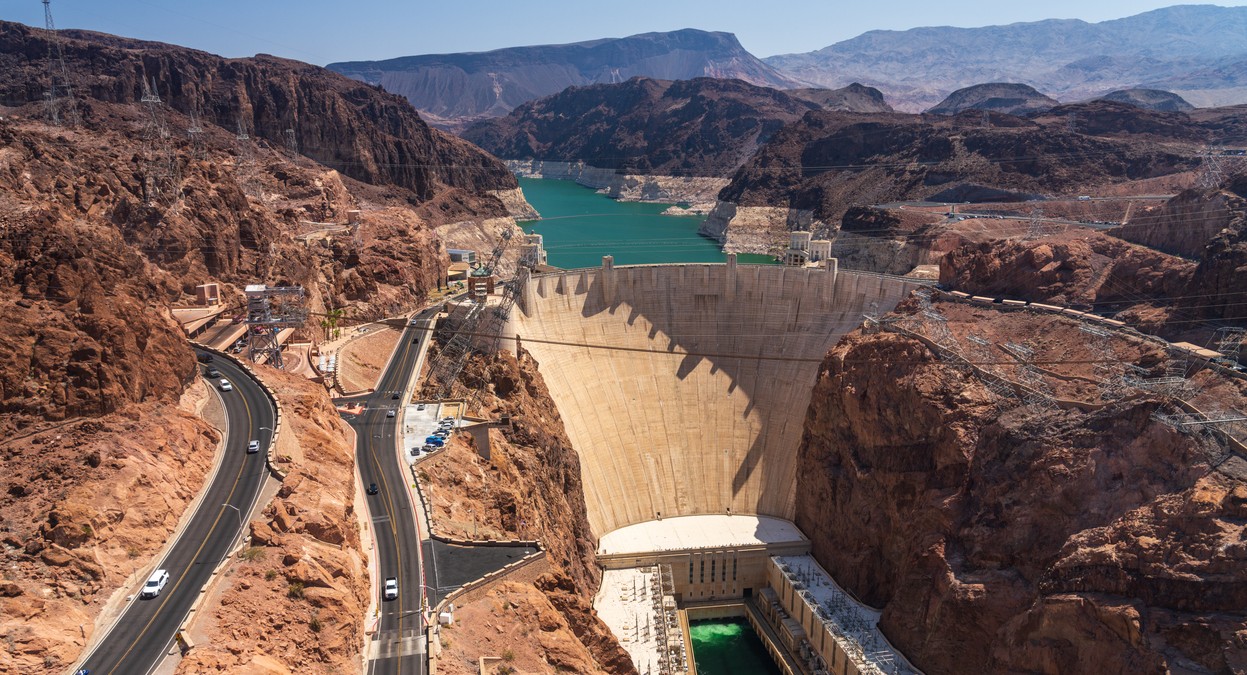
 “Today’s Record of Decision and two-year guidelines give the Colorado River some badly needed near-term certainty at a moment of extraordinary risk. Lake Mead is at its lowest level since Hoover Dam was built, and 30 million people downstream depend on it. We cannot wait for conditions to get worse before acting.
California, Arizona, and Nevada have stepped up. Under this plan, the Lower Basin will reduce use by 1.25 million acre-feet each year in 2027 and 2028, more than twice the maximum reductions required under the expiring 2007 Guidelines, while also providing an additional 700,000 acre-feet of system conservation through 2028. That is an extraordinary commitment, and it shows how seriously the Lower Basin is taking the condition of the river.
I appreciate Assistant Secretary Andrea Travnicek and the Department of the Interior for helping move this difficult process forward and establishing a workable path for the next two years.
But this is a bridge, not a permanent solution. California, Arizona, and Nevada have shown that states can compromise, make difficult decisions, and reduce water use when the river demands it. But three states cannot carry the responsibility of all seven.
California is prepared to discuss greater flexibility for the Upper Basin than the Colorado River Compact otherwise affords. That flexibility must be matched by robust action from Colorado, Utah, Wyoming, and New Mexico to bring demand in line with what the river can supply and maintain sustainable deliveries to the Lower Basin and Mexico.
The reality is simple: there is less water in the Colorado River, and the reductions ahead may be greater than anything we have faced before. A durable agreement must spread that responsibility fairly across the basin, with all seven states and both countries doing their part.
The next two years give us an opportunity to reach that agreement. The Lower Basin has shown what meaningful action looks like. Now we need the entire basin to do the same.”
The Imperial Irrigation District:
 “This is an important step for the Colorado River and those who rely on this resource,” said IID Board Chairwoman Karin Eugenio. “The Lower Basin is putting substantial, measurable water reductions and conservation on the table to help stabilize the system, and we now have greater clarity on how Interior will operate federal reservoirs for the next two years. Our work now turns to implementation, and IID will remain fully engaged as those actions and agreements are developed.”
Given extreme drought conditions, the Guidelines seek to achieve a balanced approach to managing Lake Powell and Lake Mead by defining criteria to establish annual release volumes while protecting critical infrastructure elevations. The Guidelines also provide for additional drought operations at the Upper Initial Units above Lake Powell when reservoir elevations require additional protection, either through a separate agreement involving the Upper Division States or, absent agreement, under Interior’s existing authorities.
“The Colorado River has to be sustainably managed as a system to provide for long-term resilience,” said IID General Manager Jamie Asbury. “Lake Powell’s operations directly affect Lake Mead, which IID and its communities rely on for their water supply.”
Consistent with the Lower Basin proposal, California, Arizona and Nevada are anticipated to take a combined 1.25 million acre-feet reduction in both 2027 and 2028, including 440,000 acre-feet from California, 760,000 acre-feet from Arizona and 50,000 acre-feet from Nevada. The plan also provides for at least 700,000 acre-feet of additional Lower Basin system conservation across 2026–2028 utilizing federal cost-share funding.
IID and Imperial Valley growers have a longstanding record of demonstrating that protection of senior water rights and voluntary cooperation can work together. Since 2003, IID conservation programs will have generated more than 9.8 million acre-feet of conserved Colorado River water through agricultural efficiency, system improvements and voluntary agreements by the end of the year, including 726,000 AF of conservation in 2025. In 2026 a portion of IID’s Deficit Irrigation Program conservation created by its growers using federal funding will count toward California’s share of the 700,000 acre-feet commitment under the 2027-2028 Guidelines, resulting in IID adding more than 12 feet of elevation to Lake Mead from IID’s conservation efforts over the last four years.
With the release of these federal documents, the next steps include the development of actions and agreements to implement the Operating Guidelines within the Lower Basin states. A separate intra-California agreement will also be needed to implement California provisions. IID continues to be actively involved in these discussions and negotiations, and any final agreements will be subject to approval by the IID Board of Directors.
While the 2027–2028 Guidelines provide an important near-term bridge, they do not resolve the Colorado River’s longer-term challenges. IID will continue advocating for a durable path that protects Imperial Valley’s senior water rights, preserves accountability under the Law of the River and includes meaningful and verifiable water contributions from every state that relies on the Colorado River.
Metropolitan Water District:
 “The guidelines and Record of Decision released today, which call for 3.2 million acre-feet in contributions from the Lower Basin through 2028, are necessary to help the Colorado River Basin manage through the immediate challenges we’re facing after record-low snowpack. But they are only a first step toward a short-term solution. Critical work remains to prevent our shared reservoirs from reaching levels that would jeopardize the water and power supplies of millions of people, in the immediate future and long term.
“First, in the coming months, California agricultural and urban water users must work to develop agreements on how reductions will be shared within the state. Then, water users across the basin must make a renewed effort to forge a longer-term agreement that produces additional reductions, including through participation of all seven Basin states. Renegotiating these issues every year means we could be one dry year away from crisis and one legal battle away from system failure.
“Metropolitan is prepared to do our part to support California’s share of shortages. For more than two decades, we have invested in storage, conservation, recycled water and groundwater recovery, allowing Southern California to cut its use of imported water in half, from 2.5 million acre-feet a year to about 1.2 million acre-feet. Thanks to these investments – along with smart planning and the collective effort of Southern Californians to use water efficiently – we have managed previous cuts. And we are prepared to make additional reductions, with our agricultural partners in California, just as water users across the Basin must do their part to improve the sustainability of the river that we all rely on.
“The guidelines released today can be a start. In addition to the Lower Basin contributions, they include provisions for water users like Metropolitan to store water in Lake Mead as Intentionally Created Surplus, a tool that makes reductions in use more manageable. They also create a pathway for interstate exchanges, allowing water users to build cross-state partnerships and pool funding to develop new large-scale water supply projects, like Metropolitan’s Pure Water Southern California. Tools like these improve the sustainability of the Colorado River system by increasing operational flexibility and minimizing the pain of cuts. Through creative problem solving, shared sacrifice and a renewed commitment to collaboration, a long-term agreement is possible. That remains our goal, and the best way to avoid a crisis.”

