
A wrap-up of posts published on Maven’s Notebook this week …
Note to readers: Sign up for weekly email service and you will receive notification of this post on Friday mornings. Readers on daily email service can add weekly email service by updating their subscription preferences. Click here to sign up!
In California water news this week …
In search of water, farmers undermined the San Joaquin Valley. Can collective effort raise their fields, canals – and prospects?
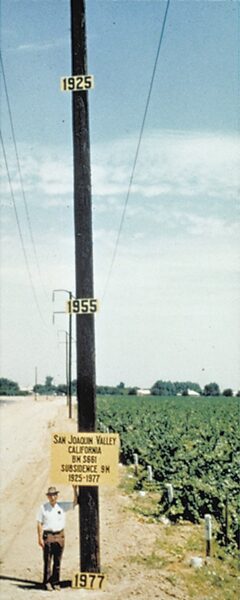
“Of all the risks farmers face in the San Joaquin Valley – floods, droughts, fluctuating commodity prices, labor and its costs – one now dominates their lives. The very land they work is sinking beneath their feet. This phenomenon, known as subsidence, threatens agricultural and other infrastructure and incurs staggering repair costs. Subsidence has been an ongoing drama in two acts. The first act of sinking took place in the mid-20th century, when aggressive groundwater pumping lowered aquifers and, in many areas, the land lying above them. It abated in the early 1970s when surface water from major river systems – the Sacramento and the San Joaquin – flowed downhill scores or even hundreds of miles to San Joaquin Valley farms through new aqueducts and canals. The water deliveries ended subsidence’s first act. The second act began three decades later around the turn of the millennium. Water sent into those aqueducts and canals can no longer be counted on to flow downhill; some sections were deformed as the land fell away and water pooled in new gulches, limiting deliveries. The second act won’t end until farmers sharply cut back on pumping. … ” Read more from … and the West.
Salmon are at risk with federal plans to give farmers more water from Shasta Lake, critics warn
“The Trump administration says it will increase the water it’s sending to Central Valley farmlands this year from Shasta Lake, the state’s largest reservoir. The U.S. Bureau of Reclamation said agricultural water agencies south of the Sacramento-San Joaquin River Delta will receive 25% of their total contracted amount, up from an initial 20%. Cities and towns will also get more from the federal canals that are part of the Central Valley Project. The agency cited “modest improvements” in reservoir levels after some rainstorms in April. Environmental and fishing groups reacted to Tuesday’s announcement with concern, saying that taking too much water out of Shasta Lake threatens to harm Chinook salmon by depriving them of vital cold water in the Sacramento River in the late summer and fall. … ” Read more from the LA Times. | Read via AOL News.
State Water Board urges stronger salmon protections in Reclamation’s draft Sacramento River Temperature Plan
“The State Water Resources Control Board is warning that the Bureau of Reclamation’s draft Sacramento River Temperature Management Plan may not do enough to protect winter-run and fall-run Chinook salmon, citing concerns that low end-of-September storage in Shasta Reservoir could leave too little cold water for spawning. On May 15, the Board submitted comments on the April 29 draft plan, which Reclamation is preparing under State Water Board Order 90-5. The order requires Reclamation to manage Sacramento River temperatures to protect fish species, including winter-run and fall-run Chinook salmon. The Board’s letter points to Reclamation’s projection that Shasta Reservoir could end September with 2.2 million acre-feet of storage, despite relatively high storage earlier in the spring. The draft plan also indicates that the volume of the coldest water in Shasta could be similar to 2015, which was a difficult year for temperature management. “There is significant uncertainty this year in the level of protection that will be provided to winter-run and fall-run Chinook salmon and the actions that should be implemented to improve conditions this year, as well as going into next year,” the letter states. … ” Continue reading at Maven’s Notebook.
New California water coalition breaks with century-old playbook, releases “Water Renaissance” vision for the state’s water future
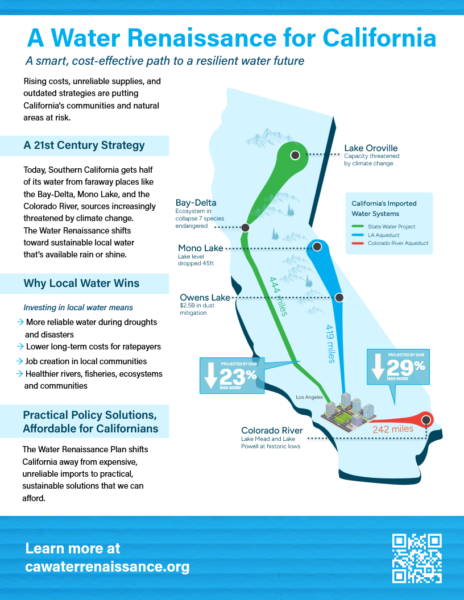
“In an online press conference today, leaders from conservation groups and Tribes announced the release of a Water Renaissance Plan for California. The plan lays out a vision, including specific goals and metrics, for prioritizing local water resilience in California’s urban areas – especially in Southern California – to support a pivot away from the state’s overreliance on unreliable imported water. Among other findings, the plan identifies the opportunity to secure 1.8-2 million acre-feet of drought-proof water supplies in Southern California by 2045 through sustainable technologies like stormwater capture, wastewater recycling, conservation, and groundwater cleanup. The total cost for such investments would be approximately $44 billion. In comparison, the proposed Delta Conveyance Project is only projected to yield 0.4 million acre-feet of water annually at a likely cost upwards of $60 billion. … ” Continue reading this press release.
SEE ALSO:
- Coalition proposes alternate plan to address state water needs, from NorCal Public Radio
- New California water coalition releases “Water Renaissance” vision for the state’s water future that rules out the Delta Tunnel, by Dan Bacher at the Daily Kos
DELTA CONVEYANCE PROJECT: DWR dismisses its second attempt to validate a Delta tunnel bond financing plan
“Following its failed attempt to obtain judicial approval of its first Delta Tunnel bond financing plan, the California Department of Water Resources (DWR) has now dismissed its second “Validation Action,” by which it had sought judicial approval of its second Tunnel financing scheme. DWR’s first attempt began with its 2020 bond resolutions and a Validation Action to secure judicial approval for those resolutions. Delta Counties, cities, and public agencies, as well as public interest groups, opposed DWR’s first Validation Action, warning of major adverse economic and environmental consequences should the financing scheme be validated. Ruling against DWR in the first Validation Action, the trial court found that DWR had exceeded its delegated authority. DWR and its allies among the State Water Contractors appealed. In a unanimous Decision, the Court of Appeal later affirmed the judgment against DWR. (Department of Water Resources v. Metropolitan Water District of So. Calif., et al. (2025) 117 Cal.App.5th 751.) DWR then petitioned the California Supreme Court in an effort to overturn the Court of Appeal’s Decision. Last month, the Supreme Court, sitting en banc, denied DWR’s petition for review and its alternative request for depublication of the Decision. On May 19, 2026, DWR dismissed its second Validation Action, which had been filed during DWR’s appeal in its first Validation Action. … ” Continue reading this press release.
HEALTHY RIVERS & LANDSCAPES UPDATE: Tribal Engagement Plan, Tribal Involvement in HRL Governance and Science; Highlights from the 2025 HRL Flow Measures Trial Run
“The Healthy Rivers and Landscapes (HRL) Program continues to advance and plan for engagements with California Tribes. Recognizing the cultural and spiritual significance of the Bay-Delta watershed to Tribal communities, HRL parties are focused on providing meaningful engagement opportunities as the Program moves toward implementation. In 2025, HRL parties undertook a primary outreach phase with Tribal entities and organizations. This initial work was designed to better understand Tribal perspectives regarding the watershed and to identify potential barriers to participation. Based on the findings from this phase, several recommendations were provided to HRL leadership for consideration in future planning. These suggestions include exploring culturally appropriate engagement approaches, establishing formal structures to compensate Tribal representatives for their technical expertise, and considering a Tribal liaison to serve as a bridge between HRL leadership and Tribal communities. … ” Read more from the Natural Resources Agency.
PPIC Report: Tribal water rights in California
“Tribal water rights play an increasingly significant role in regional water management in California and on the Colorado River, benefiting both Tribal members and other water users. This report and accompanying appendix offer an overview and analysis of the Tribal water rights in California that have been quantified to date. The principal Tribal water rights in Californiaare “federal reserved rights.” Federal reserved rights are associated with the creation of Indian reservations and may include both surface water and groundwater. They provide each Tribe with enough water to maintain a permanent home and to support Tribal economies and traditional practices. Of the 109 federally recognized Tribes in California, only 16 have water rights that have been quantified under federal law. … ” Read more from the PPIC.
SEE ALSO: PPIC Fact Sheet: Tribal Water Rights and Water Use in California
State Water Project allocation increases to 45%
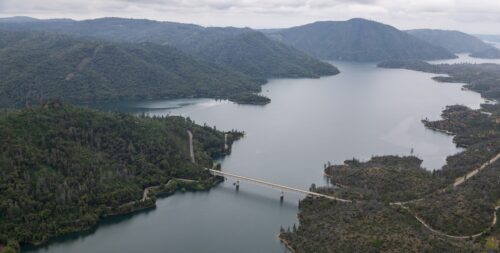
On this date, the water storage was 3,355,264 acre-feet (AF), 98 percent of the total capacity. Andrew Nixon / DWR
“Today, the Department of Water Resources (DWR) announced an increase to the State Water Project (SWP) allocation for 2026. The allocation is now 45 percent of requested supplies, up from the previous allocation of 30 percent announced on January 29. The allocation establishes how much water the State plans to deliver to the 29 public water agencies served by the SWP, which provides water to 27 million Californians and 750,000 acres of farmland. In the spring, SWP allocations are based on current hydrological conditions, existing reservoir storage, and remaining snowpack. While California saw record heat in March and early snowmelt, consistent rainstorms in April provided critical runoff through the system that allowed DWR to capture more water and meet environmental regulations without using stored water. Currently, the SWP’s largest reservoir, Lake Oroville, is at 99 percent of capacity. Statewide, reservoirs are 117 percent of average for this time of year. The challenge remains that California’s snowpack, the state’s frozen reservoir, is essentially gone. As of today, the statewide snowpack is just 12 percent of average. The snowpack peaked in mid-February and has since melted off. “California’s reservoirs are full, but most snowpack melted off weeks ago. We must use this stored water carefully because there’s no backfill until next season,” said DWR Director Karla Nemeth. … ” Read more from the Department of Water Resources.
‘This is exploratory’: Southern California water agencies ramp up interest in Northern California’s Eel River dam
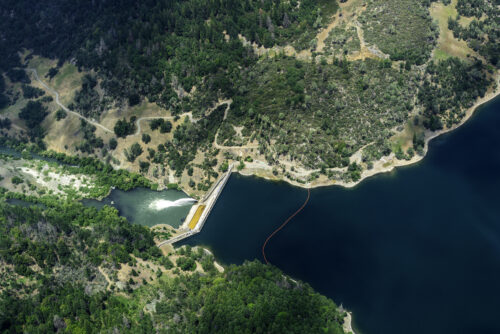
“Directors of a Riverside County water agency said to be interested in a pair of Eel River dams, 600 miles away from their jurisdiction, held a public meeting Thursday night that proved revelatory. It shed light on a recent trip by Elsinore Valley Municipal Water District directors and representatives of a neighboring water agency to the North Coast waterworks. It also gave both supporters and opponents of dam removal on the Eel River a chance to weigh in on the seemingly far-fetched, Trump-era move by the Southern California entities in a complex Northern California water dispute. The updates and public input came in a May 14 board meeting of the Elsinore Valley Municipal Water District, which now has an ad hoc committee dedicated to “exploring opportunities associated with Potter Valley,” according to Director Chance Edmondson. … ” Read more from the Santa Rosa Press Democrat.
Deep in the San Diego County desert, new research has this town at loggerheads on what to do about water
“Just off Palm Canyon Drive in Borrego Springs, a dead honey mesquite tree remains rooted in the hot sand. It’s lifeless but not yet useless — not to the creatures that find shade under its branches or the plants that count on its nutrients. Over the last year, mesquite has been at the heart of a growing water war in Borrego Springs, a tiny but scenic town deep in the San Diego County desert that for years seemed blessed with a rare combination of blazing sun and a font of available groundwater. A century ago, abundant green mesquite blanketed the landscape. But in the decades since, the forest the trees form has deteriorated — just as the town has pumped too much water out of its underground subbasin to sustain its farms, resorts, golf courses and some 3,000 residents. Now, controversy has broken out over whether that mesquite forest relies on the same water as the town. Last year, a study led by UC Irvine scientists concluded it does — research that met with hostility from Borrego Springs’ top industries, which control a large swath of its water rights. … ” Read more from the San Diego Union-Tribune.
DWR releases Spring 2026 Semi-Annual Groundwater Update
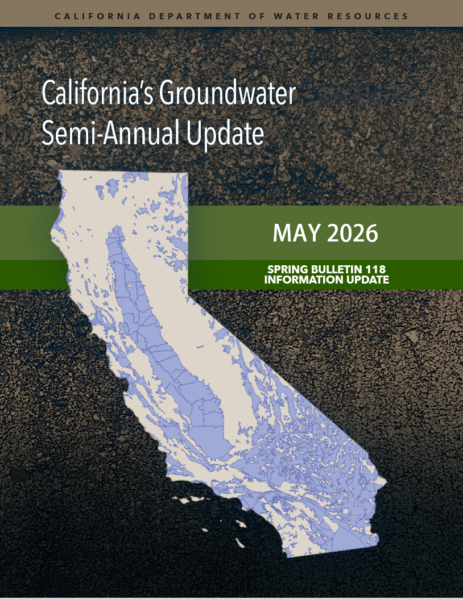 “The Department of Water Resources (DWR) has released the Spring 2026 Semi-Annual Groundwater Update, which provides a look back at California’s groundwater conditions during Water Year 2025 and early Water Year 2026. The groundwater update released today includes Water Year 2025 Groundwater Sustainability Plans (GSP) and GSP Alternative annual report data reported across 101 groundwater basins, which make up over 90 percent of the groundwater use in the state. This information is helping provide an increasingly clearer picture of groundwater conditions, including the amount of change in groundwater storage, groundwater extractions, and managed recharge that occurs each year. … ” Read more from the Department of Water Resources.
Data transparency is key to California achieving groundwater sustainability
Paul Gosselin, DWR Deputy Director for Sustainable Water Management, writes, “Beneath the feet of millions of Californians lies one of the most critical pieces of our state’s water supply – groundwater. This hidden resource provides about 40 percent of California’s total annual water supply and serves as an important buffer during dry periods, supplying up to 60 percent of the state’s water in drought years. As California’s hydrology becomes more variable, long-term sustainability will require adaptive management, including improving recharge during high-flow periods, better coordinating surface water and groundwater use, managing demand, and consistently tracking progress. In a future increasingly defined by swings between intense wet and dry years, managing this largely unseen resource will require strong science, reliable data, enhanced monitoring and forecasting tools, and continued collaboration across local, regional, and state partners. Data transparency is the key to sustainable groundwater management because of its ability to tell California’s groundwater story. From monitoring wells to aerial surveys to GPS monitoring stations tracking subsidence, state and local agencies are working hard to expand the state’s groundwater data network to help water managers make better-informed decisions. … ” Read more from DWR.
Advocates demand restored funding to combat carcinogenic water contamination in rural California
“Clean water advocates are launching a coordinated push to restore full funding mechanisms for California’s Safe and Affordable Funding for Equity and Resilience (SAFER) program. The effort comes amid growing concern that recent state budget adjustments will leave vulnerable rural communities without the necessary resources to transition away from contaminated groundwater wells. The SAFER program’s base budget was established at 130 million dollars, utilizing revenue generated by the state’s cap-and-invest program. According to Brandon Bollinger of the Community Water Center, previous legislative agreements included protective language that automatically backfilled any funding shortfalls if cap-and-invest revenues underperformed. However, state lawmakers recently removed that backfill provision, raising alarms that long-term infrastructure projects in unincorporated areas may stall. … ” Read more from NBC Palm Springs.
SEE ALSO: Advocates call for restored funding to address contaminated water in rural California, from Action News Now
Reclamation increases Central Valley Project 2026 water supply allocations for south-of-Delta contractors to 25%; Westlands responds
“The Bureau of Reclamation is increasing Central Valley Project 2026 water supply allocations for south-of-Delta contractors following continued modest improvements in reservoir storage and spring runoff conditions across California’s water system. This allocation update reflects improved operational flexibility and hydrologic conditions resulting from April storm activity, strong carryover storage, and coordinated reservoir management efforts that allowed water managers to capture additional runoff while continuing to meet environmental and flood control requirements … Irrigation water service and repayment contractors south-of-Delta are increased from 20% to 25% of their contract total. Municipal and Industrial water service and repayment contractors are increased from 70% to 75% of their historic use, or public health and safety needs, whichever is greater. Eastside Division contractors are increased from 0 to 49,000 acre-feet. … ” Read more from the Bureau of Reclamation and Westlands Water District.
El Niño could supercharge this year’s Pacific hurricane season
“Eastern Pacific hurricanes are likely to be stronger and more frequent this summer, potentially affecting California weather as an intense El Niño brews. In the northeast Pacific, the National Oceanic and Atmospheric Administration forecasts 15 to 22 named storms, or tropical cyclones, which includes hurricanes and tropical storms. Nine to 14 of these storms are predicted to reach hurricane strength, with five to nine exceeding major hurricane strength, defined as sustained winds of 111 mph or stronger. The agency released its hurricane season forecast Thursday morning. A normal year averages 15 named storms, eight hurricanes, and four major hurricanes. The eastern Pacific hurricane season officially runs from May 15 to Nov. 30. … ” Read more from the San Francisco Chronicle.
Column: Aging dams, Super El Nino, flood insurance and you
Teri Sforza writes, “Our survival depends on water. And, in California, our water supply depends heavily on dams. They store the stuff. They generate electricity. They reduce flood risk. And they are, on average, older than your grandmother and potentially far more dangerous. California has more than 1,200 dams, according to data from the National Inventory of Dams kept by the U.S. Army Corps of Engineers. Their average age is about 77. And the majority of those dams have what the engineers describe as “high hazard potential,” while another 165 carry “significant hazard potential.” Don’t panic (yet). Those labels refer to the amount of mayhem they’d cause if they failed, not to their actual conditions. So, what are their conditions, you ask? … ” Continue reading at the OC Register.
Slowing Atlantic circulation may intensify atmospheric rivers
“The majority of California’s water comes from the Pacific Ocean. Atmospheric rivers build over the sea, ride the jet stream east, and slam into the Sierra. When forecasters track wet winters, they watch ocean temperatures off the coast to predict weather conditions. However, they may need to look beyond what is proximate. A new study finds that one driver of California’s wettest storms sits half a world away – in the Atlantic Ocean. The Atlantic Meridional Overturning Circulation (AMOC) carries warm water north toward the Arctic, where the water cools, sinks, and eventually flows back south. The flow helps regulate climate across the Northern Hemisphere. Multiple lines of evidence now suggest it is slowing down. … ” Read more from Earth.com.
Why an immense marine heatwave off the US west coast has alarmed scientists
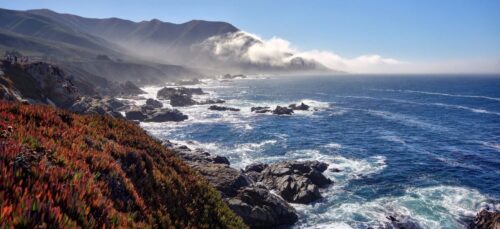
“An enormous marine heatwave off the US west coast is ringing alarm bells among ocean and atmospheric scientists as new data shows its ecological and environmental effects are intensifying. The unusual area of warm water has persisted since peaking in size during September 2025 and still stretches thousands of miles from the California coastline – more than halfway across the Pacific – affecting a vast triangle-shaped region of oceanic habitats from Hawaii to British Columbia and southward to Mexico. As recently as early April, marine scientists had hoped that the heatwave might diminish and the worst of its effects might be avoided. However, new projections released last week by the National Oceanic and Atmospheric Administration (Noaa) show it is now expected to expand and strengthen in the months to come. … ” Read more from the Guardian.
As wildfires burn, rainfall can strip oxygen from rivers, killing fish
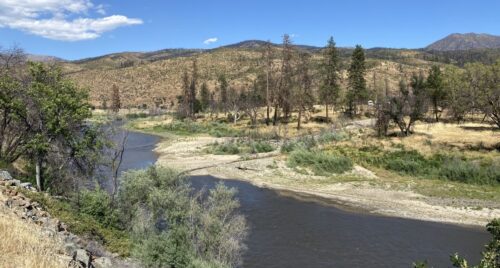
“Runoff from a high-intensity storm during the 2022 McKinney Fire depleted oxygen in the Klamath River to levels lethal to fish, killing aquatic life along nearly 60 miles of one of California’s most culturally significant waterways, according to a U.S. Geological Survey study. The study, conducted in cooperation with the Karuk Tribe, the Yurok Tribe and two universities, is the first published documentation of a rain-on-wildfire event directly linked to lethal water-quality conditions in a large river. The research highlights how continuous water-quality monitoring, uncommon in fire-prone areas, is critical for detecting sudden changes. Using high-frequency monitoring data, scientists revealed how the initial flood wave of stormwater moved quickly downstream while a concentrated pulse of fire-scar material, including ash, charcoal, and sediment left behind by burned hillslopes, arrived later. This caused dissolved oxygen in the water to drop to zero for more than five hours, creating a condition called anoxia, a total loss of oxygen that can quickly kill fish. … ” Read more from the USGS.
Prescribed burns and forest thinning averted millions of tons of emissions and billions in damages
“Work to reduce excess flammable vegetation in forests warded off the release of 2.7 million tons of carbon dioxide, averted nearly 60 premature deaths and avoided $2.8 billion in damages in the Western U.S., according to a new study from the University of California, Davis. The study, published May 7 in the journal Science, also found forest fuel treatments—prescribed burns and mechanical forest thinning operations—during a six-year span prevented more than 25,000 tons of fine particle pollution from being released into the air. The research was supported by the U.S. Forest Service and the University of California’s Giannini Foundation for Agricultural Economics. The findings come as weather forecasters and first response agencies predict an extremely active wildfire season across the West, with record-low snowpack, drought-stricken lands, extreme heat and the ever-looming threat of windy conditions. As of May 8, more than 25,000 wildfires had burned over 1.8 million acres nationwide, well above the 10-year average for acreage burned to that date, according to the National Interagency Fire Center. … ” Read more from Inside Climate News.
In commentary this week …
Chuck Bonham: What does California salmon fishing signify? Not a return to normal
For the first time in three years, California is allowing commercial and increased recreational salmon fishing to resume. For coastal communities, tribal nations and fishermen, that decision brings real relief. It should also sharpen our sense of responsibility. The closure of the fishery was painful for everyone. I know because I was there helping to make those decisions. But it reflected a reality California could not ignore: Salmon runs that once ranked among the most abundant on the West Coast had been pushed to the brink by drought, warming rivers, shifting ocean conditions and long-standing pressure on habitat and water management. Conditions have improved enough to allow limited harvest. That’s welcome news, but it would be a mistake to see this rebound as a full recovery. What we are witnessing is not an overnight return to normal, but a fragile reprieve that requires care and attention. … ” Read more from the Sacramento Bee.
Edward Ring: Differentiating between capacity and yield
“Whether it’s an energy project or a water project, it’s important to avoid conflating capacity with actual production, or yield. With energy projects, that difference is much more certain than with water projects. … The other big source of electricity generation in California is hydroelectric, but the annual yield is not nearly as certain. With nuclear, natural gas, wind, and solar, the reported differences in yield from year to year are insignificant, because the input is relatively predictable. But while California’s big hydroelectric generators yielded 23 percent of hydroelectric capacity in 2024 (25.2 TWh) and 25 percent of capacity in 2023 (27.1 TWh), their output in 2022 was only 14 percent (14.6 TWh), and was only 11 percent in 2021 (12.0 TWh). Obviously, the uncertainty with hydroelectric power is the result of uncertain weather, and that carries over to most water projects. Desalination and wastewater recycling are immune from the vagaries of weather, but that’s about it. The ratio of capacity to yield with water projects is also subject to the related uncertainty of what environmental policies may apply and how they may evolve over time. Even in a very wet year, there may be regulations that limit the utilization of a water project’s capacity. The proposed Sites Reservoir offers a dramatic example of just how wide the range of yield scenarios can get. … ” Read the full commentary from Edward Ring.
California’s best chance for enough water in the future is to bolster local supplies today
Sean Bothwell, executive director of California Coastkeeper Alliance, writes, “Imagine turning on your tap and not being sure it’s safe to drink what comes out. For one million Californians, this scenario is not hypothetical. In disadvantaged communities, including some in the Central Valley, families have been told for years to boil their tap water for safety or buy bottled water they cannot afford. Their water systems consistently fail to meet safe drinking water standards. Yet no meaningful action has been taken to fix this known problem. Meanwhile, 30,000 miles of the state’s coastlines, lakes and rivers fail basic water quality standards. How does a state at the forefront of environmental leadership fail to ensure clean, reliable water for its people? The short answer: California is managing 21st century water challenges with 20th century technology under 19th century law. And state leaders, including Gov. Gavin Newsom, continue promoting infrastructure projects designed for precipitation patterns that climate change is already erasing. … ” Continue reading this commentary at Cal Matters.
California’s water answer may be hiding in plain sight: The Pacific Ocean
Greg Walcher, president of the Natural Resources Group and author of “Smoking Them Out: The Theft of the Environment and How to Take it Back,” writes, “The Wall Street Journal headline said “San Diego Now Has So Much Water That It’s Selling It.” The article said San Diego generates enough water to rescue Arizona, though that’s jumping the gun just a bit. No such deal has actually been finalized yet, but the fact that the conversation is underway marks a new era in Colorado River negotiations. And not a minute too soon. The latest optimism is not based on any change in the historically low flow of the Colorado River. It’s based on the realization – at long last – that California does not need Colorado River water. That realization has finally come not only to Upper Basin states like Colorado (which has been making this point for decades) but to all of the seven states in the Colorado River Basin, which are entitled to various amounts of river water allocated by a century-old interstate compact and several other legal agreements. California occupies 840 miles of coastline on the world’s largest body of water, the Pacific Ocean. The issue of desalination has risen to the top of the agenda for other Basin States now for two reasons. … ” Read more from the Rocky Mountain Voice.
Coastal desalination could save Colorado’s water. The pushback? Cost
Michael Badagliacco, Editor of USA Liberty Report, writes, “The 1922 Colorado River Compact apportioned 7.5 million acre-feet annually to the Upper Basin, including Colorado, and the same amount to the Lower Basin states. The 1928 Boulder Canyon Project Act fixed specific Lower Basin shares: California 4.4 million acre-feet, Arizona 2.8 million acre-feet, and Nevada 0.3 million acre-feet. The 1948 Upper Colorado River Basin Compact later assigned Colorado roughly 51.75% of the Upper Basin’s share, or about 3.86 million acre-feet. … Reverse osmosis desalination has operated commercially for more than fifty years. The Carlsbad Desalination Plant, completed in 2015 at roughly $1 billion, produces 50 million gallons per day (approximately 56,000 acre-feet annually) using about 3,500 kilowatt-hours per acre-foot. It supplies roughly 7% of San Diego County’s needs. Multiple coastal facilities could generate millions of additional acre-feet yearly for direct delivery to the Los Angeles Basin or for pumping into Lake Powell and Lake Mead, restoring storage without further taxing Colorado’s apportionment. … ” Continue reading at Rocky Mountain Voice.
Concerns about data centers deserve a closer look
The Bloomberg editorial board writes, “For a bunch of unremarkable warehouses, they’re generating a lot of controversy. Data centers — low-slung facilities that house the server racks and energy systems that underpin the digital economy — have become a heated issue on the campaign trail. Politicians from both parties are pushing bills to restrict them. Some want a nationwide “moratorium.” That would be a historic mistake. About 4,000 data centers now dot the U.S., according to one estimate, with 3,000 more on the way. Global capital expenditure exceeded $450 billion in 2024. Such facilities sustain much of modern life: cloud computing for communications, finance and healthcare; consumer services such as YouTube, TikTok and Zoom; and, increasingly, the training, fine-tuning and inference processes used by artificial-intelligence models. … ” Read more from the Marin Independent Journal.
In regional water news this week …
CDFW rescues nearly 6,000 Eagle Lake rainbow trout stranded in Pine Creek
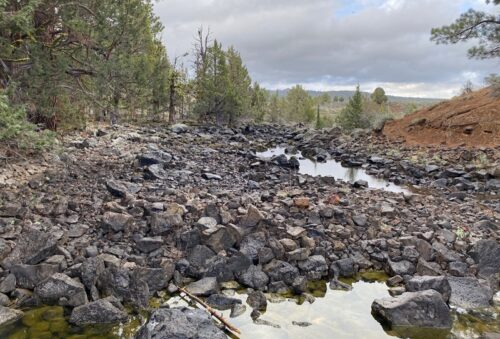
“The California Department of Fish and Wildlife (CDFW) this spring conducted the largest rescue of Eagle Lake rainbow trout in more than a decade, returning approximately 5,800 adult fish to Eagle Lake that were at risk of becoming stranded in the lake’s main tributary, Pine Creek. The emergency efforts occurred over four days in March and April and involved more than 25 CDFW biologists, hatchery staff and several community volunteers. “These fish are long-lived so there’s a very good chance that fish returned to the lake could return in subsequent years to spawn again,” said Paul Divine, CDFW’s District Fisheries Biologist for Lassen and Modoc counties. “And it’s also putting adult-sized fish back in the lake that could be enjoyed by anglers to catch as well.” … ” Read more from the Department of Fish and Wildlife.
‘Green rush is over’: What happens to hundreds of abandoned cannabis grow sites?
“A soft orange sunset settled over Humboldt Bay on Wednesday evening as attendees stepped into the Humboldt Association of Realtors’ meeting room, greeted by a table of cookies, coffee, and a low hum of conversation. Close to three dozen people took their seats, a crowd primarily composed of realtors, deeply invested in what happens next for the county’s abandoned cannabis grow sites. The forum brought together four agency representatives whose work intersects at the point where cannabis permitting ends and remediation begins — folks from the Humboldt County Building and Planning Department, the California Department of Fish and Wildlife, and the North Coast Regional Water Quality Control Board. … ” Read more from the Eureka Times-Standard.
Clearlake residents affected by historic sewage spill file lawsuits against Lake County, sewer agency
“Brian Cunningham wants to use his air conditioning when the extreme heat of summer strikes. Cassandra and Joe Hulbert have burned through $3,000 since January on bottled water for their family. And Shawn and Lindsay Heape want to know when they’ll finally be able to turn on the tap and be confident that what’s coming out of their well in Clearlake is safe to drink. “My mother cannot use her own home because it was saturated with raw sewage,” Cunningham said. “My wife, Nancy, and I had planned on retiring this month … but that is unlikely to happen now.” May marks the fourth month since 2.9 million gallons of untreated wastewater spilled onto unpaved Robin Lane, leading through the Burns Valley area of Clearlake, where the fallout has upended daily life for nearly 500 rural residents. The 16-inch force main pipe that burst Jan. 11 spewed raw sewage across the ground for more than 37 hours. … ” Read more from the Santa Rosa Press Democrat.
CEA Foundation wins pollution judgement against Rise Gold
“On Tuesday, United States District Judge William B. Shubb ruled that Rise Grass Valley is violating the law by discharging pollutants from the Idaho-Maryland Mine into Wolf Creek without a permit. The ruling establishes Rise’s liability for the pollution. This is a major victory for the plaintiff, CEA Foundation. The Idaho-Maryland Mine, situated in Grass Valley, CA, ceased operations in 1956 and became flooded with water. Water has been flowing out of the mine into Wolf Creek since then. A series of tests of the discharge in 2018 and 2019 identified that the discharge is polluted, exceeding lawful values of arsenic, iron, and manganese. Rise Grass Valley, a wholly owned subsidiary of Rise Gold Corp, applied for a Use Permit to reopen the mine in 2019. Included in the project proposal was a water treatment facility to eliminate the polluted mine water. After the Nevada County Board of Supervisors denied a vested rights claim in December 2023 and denied the Use Permit application in February 2024, there were no indications that the ongoing pollution of Wolf Creek was being addressed. … ” Read more from The Union.
SEE ALSO: Rise Gold Provides Litigation Update, from Market Screener
Viral video makes false claims on toxic chemicals in Lake Tahoe
“A viral video garnering 1.6 million views has made false claims, using organizations and people in the Lake Tahoe area, that toxic waste barrels, human remains, and dumped cars litter the bottom of the lake. Footage from both Lake Tahoe and several other bodies of water, AI-generated images and voices as well as false citations of quotes to organizations and people has led to those organizations taking steps to address this and multiple other videos of that nature. The video in question, produced by a content farming account called Optic Expedition, sits along others produced in rapid succession: claiming proof of aliens in The Last Supper painting, anti-gravity technology and multiple conspiracies about Hitler. While it shows real news footage, videos of Lake Tahoe, pictures from the Tahoe Environmental Research Center (TERC) and even ROV footage from the Tahoe Fund and Restoring the Lake’s Depths dive from last year, it’s intercut with AI-generated footage and images and videos taken out of context. The video description itself even has a disclaimer, as required by YouTube, that the sounds or visuals were significantly edited or digitally generated. … ” Read more from the Tahoe Daily Tribune.
Where the little fish play
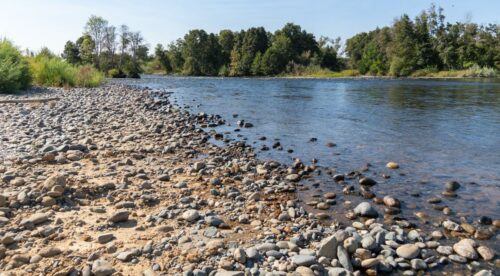 “Seeing a dry-suited man face-down in the shallows, American River hikers could be excused their alarm. The snorkeler is Tyler Brownell, one of a biological team surveying salmonid habitat in the river. “I often get startled reactions,” Brownell told this reporter. “And dogs go crazy at the sight of me.” Employed by Cramer Fish Sciences, Truett and fellow technicians partner with the Sacramento Water Forum. They identify places where small-fry salmonids shelter to prepare for their migration to the Pacific Ocean. Because the American River has been greatly altered – first by gold diggers, then by dams – Chinooks and steelhead face reproductive challenges. … “Habitat for adult and juvenile salmon is limited in the American River,” explained Water Forum program manager Erica Bishop. “Snorkel surveys focus on gathering information about juveniles.” … ” Read more from the Carmichael Times.
Napa Valley groundwater pumping remains at unsustainable levels, report finds
“Long-term groundwater pumping in Napa Valley remains at unsustainable levels, according to a recent county report. Groundwater pumping totaled about 16,580 acre-feet in the 2025 water year — from October 2024 through September 2025 — according to the annual groundwater report, surpassing the 15,000 acre-feet the county considers sustainable for the Napa Valley subbasin and representing about 40% of total water use. Precipitation during the same period was 21.59 inches, a normal “below average” amount, according to the county report. The county’s average annual pumping over the past seven water years is 17,700 acre-feet, beyond the 15,000 acre-feet and considered an “undesirable result” under the county’s state-approved groundwater sustainability plan, an effort to reduce groundwater use by 10%. … ” Read more from the Santa Rosa Press Democrat.
Commentary: The Tragedy of the Commons in Napa: When exactly will we meter groundwater usage?
Dan Mufson writes, “For over a decade, we at Napa Vision 2050, and several Napa County Grand Juries have been concerned about our environment and, in particular, the depletion of our precious groundwater. “This Grand Jury (2014-2015) would stress that there are some troubling issues and that the County would be better served planning for a potential future disaster vs. waiting for it to happen and then trying to put a plan together quickly. Citizens should expect their governmental officials to be prepared for all potential outcomes and have procedures or policies in place that they may rely on when needed.” (“Management Of Groundwater And Recycled Water: Is Napa County In Good Hands?” published March 2015.) … ” Read more from the Napa Valley Register.
San Francisco: These pipes are a seismic shift in keeping the water flowing
“An earthquake can strike at any moment, and the San Francisco Public Utilities Commission (SFPUC) works hard to be quake-ready. Recently, the SFPUC finished replacing some of the water system’s oldest pipelines with earthquake-resistant pipes along a critical four-mile route connecting College Hill Reservoir to San Francisco General Hospital, the city’s primary trauma center. This helps ensure that first responders and San Francisco’s most vulnerable residents will have water when they need it most. Completed over 11 years, the project strengthened the system from the source, with seismic upgrades to College Hill Reservoir. College Hill is San Francisco’s oldest working reservoir and holds 13 million gallons of water, enough to fill more than 19 Olympic-size swimming pools! Much of the City’s aging water system is over a century old, and the project was a test case in applying e
New data on salmon-killing chemical in San Francisco Bay
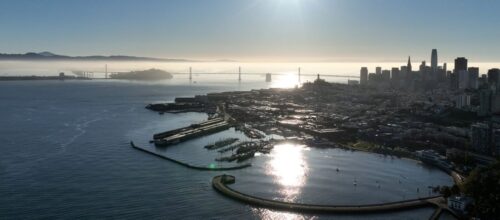 “The chemical, called 6PPDQ, forms in the environment from an ingredient in tires and was first identified in urban stormwater runoff and streams in 2020 by a team of scientists that included SFEI. “To my knowledge, this is one of the first accounts of this compound in an estuary,” says SFEI senior scientist Ezra Miller. “So we are on the forefront of this as we have been since the beginning.” Estuaries are areas where freshwater and saltwater meet, and the Bay is part of one of the nation’s largest estuaries. 6PPDQ is highly toxic to coho salmon, which are extinct in the Bay but are returning to streams as a threatened species just outside the Bay. Steelhead trout, a threatened Bay species, are also sensitive to the chemical. The data, which were collected by the Regional Monitoring Program for Water Quality in San Francisco Bay (RMP) by SFEI scientists from 2021 to 2024, show the highest 6PPDQ levels close to shore after winter storms—the same time of year that steelhead return from the ocean to their birth streams to spawn. Previous RMP data found even higher levels of 6PPDQ in Bay Area stormwater runoff and urban streams. … ” Read more from the San Francisco Estuary Institute.
Port of Stockton’s DeJesus says resolving dredging challenges will increase growth
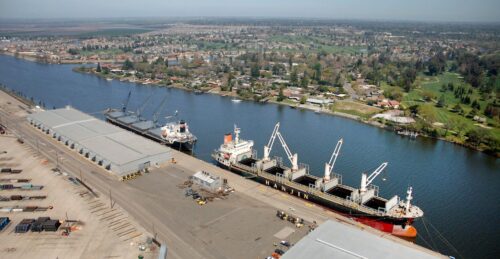
“Continued dredging issues related to U.S. Army Corps of Engineer (USACE) practices have frustrated the Port of Stockton’s ability to reach its legally mandated 35-foot draft undermining waterborne transport volumes of import and export cargoes, according to Kirk DeJesus, Executive Director, Port of Stockton. Resolving these challenges will increase cargo volumes and growth, he said. In an interview with AJOT on April 20th, DeJesus described problems getting the US Army Corps of Engineers San Francisco District to fully dredge the Stockton Ship Channel which stretches along the San Joaquin River to Stockton, an inland river port that is a major import/export link for warehouses and agricultural growers in California’s San Joaquin Valley: “So, we are authorized at 35 feet of draft for the ship channel to Stockton. We are one of two river ports in the state. So, we get a lot of attention, and we get a lot of support… Congressman Josh Harder (D-CA) is great. He bangs the door as much as we need him to… I am in D.C. four or five times a year. We have a great relationship with the Corps…” … ” Continue reading at the American Journal of Transportation.
Water Blueprint for the SJ Valley: Behind the numbers of the San Joaquin Valley’s growing water crisis — and a regional plan to address it.
“If you farm in the San Joaquin Valley, you already feel it. Wells are deeper than they used to be. Water deliveries are less reliable. The cost of water in a dry year can break a season before it starts. The gap between what you need and what shows up is growing. If you manage water infrastructure, you are watching canals lose capacity to the same sinking ground that your predecessors built those canals to fix. The gap between what these systems were designed to deliver and what they can actually carry today is measured in feet of lost elevation and billions of dollars in repairs. If you lead a community here, you know that the people who can least afford another water crisis are the ones closest to it. The gap between a working well and a dry tap is the difference between a healthy community and one that hollows out. Everyone living and working in this Valley is feeling the gap between the water we have and the water we need. It’s a big gap, and it’s going to get bigger. How much bigger? That depends on us. … ” Read more from the Water Blueprint for the SJ Valley.
Creating public website declared “hardship” for powerful Kings County water district
“There has never been a website offering the public a glimpse into the basic workings of the Tulare Lake Basin Water Storage District – a public agency – and that’s not going to change any time soon. The board voted at its May 12 meeting on a recurring resolution that declares creating a public website to provide such items as meeting times, locations and agendas is a “hardship.” There was no discussion prior to the unanimous vote. SJV Water sent emails and left phone messages seeking comment from Tulare Lake Basin WSD Manager JJ Westra but did not receive a reply. Assistant Manager Chantal Ouellet directed SJV Water back to Westra. Senate Bill 929, passed in 2018, mandates all public agencies, including special districts, create and maintain a website that includes contact information, agendas and financial reports, all posted 72 hours prior to meetings. … ” Read more from SJV Water.
Conservation Groups and Magic Mountain announce agreement to make critical improvements to the Santa Clara River watershed

“Today Friends of the Santa Clara River, Los Angeles Waterkeeper, Wishtoyo Foundation’s Ventura Coastkeeper announced an agreement with Six Flags Entertainment Corporation and Magic Mountain to virtually eliminate polluted runoff from the theme park. The agreement will also restore and enhance habitat on the Santa Clara River. The Santa Clara River is one of Southern California’s largest remaining natural river systems, flowing 100 miles from the San Gabriel Mountains in Los Angeles County to the Pacific Ocean near Ventura. The river is home to endangered southern California steelhead and unarmored threespine stickleback. Restoring flows and water quality in this river system is crucial to the recovery of steelhead regionally. “We’re excited to see a commitment by Six Flags Magic Mountain to get this work done,” said Bruce Reznik, executive director of Los Angeles Waterkeeper. “Magic Mountain shares our goal of improving water quality in the Santa Clara River, and the settlement provides substantial benefit to wildlife like endangered southern steelhead trout.” … ” Continue reading this press release.
Feds declare Eaton fire was a cleanup success. Their testing shows otherwise
“Despite finding nearly 1 in 5 homes had excessive levels of lead, the U.S. Environmental Protection Agency this week claimed that recent soil testing in Altadena proved that expedited federal cleanup efforts had effectively removed toxic ash and debris from homes destroyed by the deadly Eaton fire. Earlier this year, the EPA announced it would perform a limited soil sampling at 100 destroyed homes across the burn zone in order to verify that contractors had thoroughly mitigated toxic substances. In a recent news release, the EPA said that testing revealed median lead concentrations below federal standards, and “confirmed that cleanup methods successfully addressed contamination and verified cleanup protocols.” The EPA soil sampling comes amid mounting pressure from residents and environmentalists who claim that a hasty federal cleanup effort had left behind or spread hazardous fire debris. Internal government reports also raised questions about the thoroughness of the cleanup. … ” Read more from the LA Times. | Read via AOL News.
Altadena’s latest roadblock to rebuilding: Sewage
“Michele Hanisee has been doing everything in her power to expedite the arduous process of rebuilding her Altadena home. But after navigating permitting delays, insurance stalemates and design flaws, there’s still one big unresolved issue that’s complicating her progress: sewage. Hanisee owns one of nearly 700 properties in Altadena that’s never had sewer lines, instead operating for decades on now-outdated septic tanks or even more archaic and environmentally hazardous cesspools. L.A. County officials — and many residents, included Hanisee — would like to connect these pockets of Altadena to the county sewage system. But the cash-strapped county government said it simply cannot afford the estimated $70 million the new lines would cost. And although officials hope the county can eventually acquire state and federal funding for the project, the lack of certainty on the issue has left hundreds of fire survivors in a stalemate. … ” Read more from the LA Times. | Read via Yahoo News.
How polluted is your favorite California beach? New report shows this year’s cleanest, dirtiest
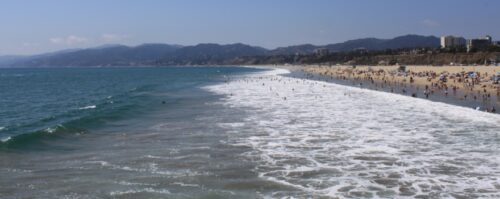 “California is home to some of the most pristine beaches in America – if not the world – but some rank better than others when it comes to pollution. That’s according to Heal the Bay, the non-profit environmental advocacy group that releases a Beach Report Card each year. They measure how rainfall, urban runoff and chronic pollution impact water quality at Golden State beaches. The report also looks at bacterial pollution at rivers, streams and lakes in L.A. County. According to officials, the results of the 2025-2026 Heal the Bay Beach Report Card show that California’s water quality “remained generally strong” over the last year; however, wetter conditions and urban runoff led to slight statewide declines compared to the previous dry year, Heal the Bay officials said in a press release issued before a press conference held to discuss the findings on Wednesday. … ” Read more from KTLA.
Magic Mountain agrees to new treatment efforts for theme park’s water pollution
“After more than a decade in court, Six Flags Magic Mountain has reached a new agreement to manage its water pollution, at the behest of Southern California environmental advocates. As part of the settlement, Magic Mountain has agreed to a new system for treating the polluted water that comes from the theme park and committed millions to projects that is intended to help restore the Santa Clara River’s ecosystem. The three environmental groups that brought the suit against the theme park — Los Angeles Waterkeeper, Friends of the Santa Clara River and the Wishtoyo Foundation — are represented by Sycamore Law founder Daniel Cooper. … ” Read more from The Signal.
Details of first-of-its kind, short-term Colorado River plan revealed
“The Trump administration is nearing intervention in the yearslong standstill between the seven states that share the Colorado River at a historic point of crisis. A 10-year federal plan would require the states to return to the negotiation table every two years — something that Arizona officials revealed the first details about last week during a public meeting. This shift to a new, short-term agreement in the face of record low reservoir levels was a central tenet of Nevada’s recent proposal for a stopgap measure. “There’s a lot of energy around the idea,” said John Entsminger, general manager of the Southern Nevada Water Authority. “I think that’s where most of the most productive discussions are occurring at the moment.” … ” Read more from the Las Vegas Review-Journal.
Announcements, notices, and funding opportunities …
NOTICE: Proposition 4 DWR CIMIS Project – Release of Draft Guidelines and Public Comment Period Open

