Plants that grow under the water surface are known as submerged aquatic vegetation (SAV). Some species of SAV have been introduced from other regions of the world and outcompete many native species. These invasive species of SAV often disrupt waterways...
In California’s Central Valley, studies have found that increased streamflow can improve the survival of imperiled juvenile salmon populations during...
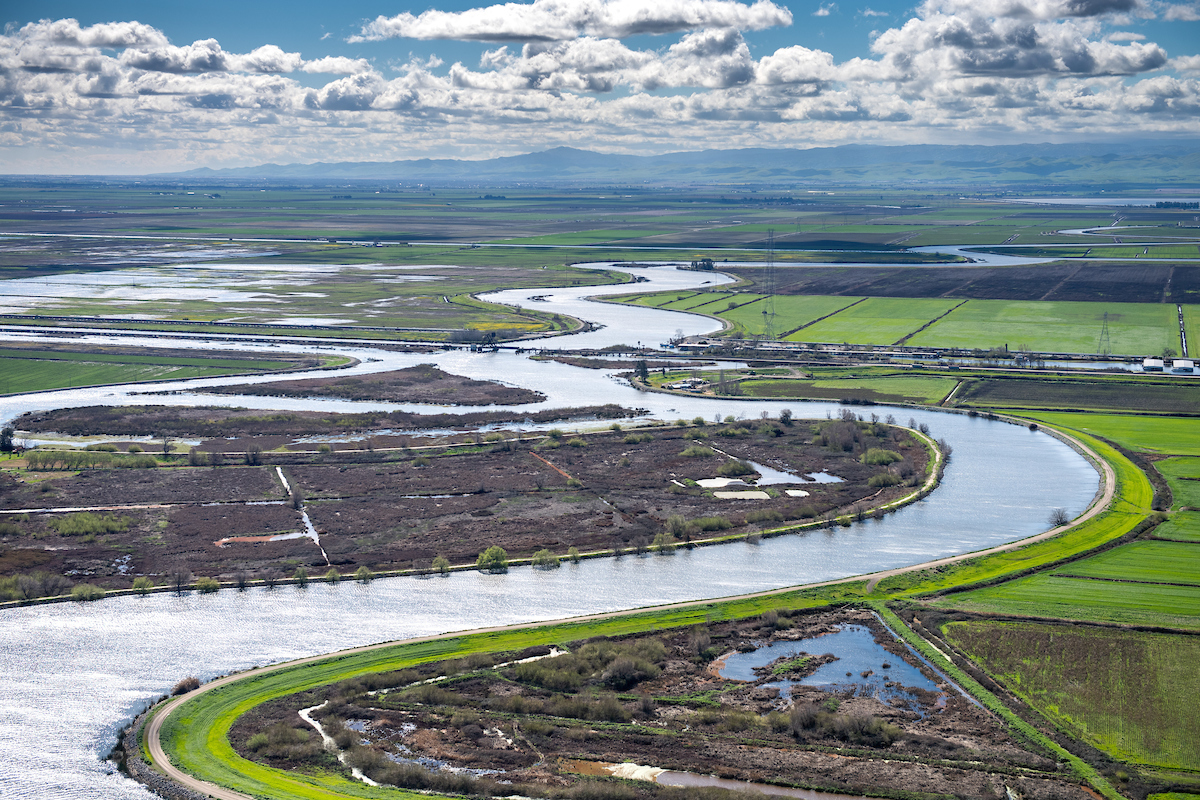
Two centuries ago, the floor of the Central Valley was primarily a marshy wetland. In the springtime, the snowpack would melt, swelling the rivers beyond their banks and casting the young fish out onto the floodplains. There they would stay...
Chinook salmon have long thrived in California’s variable climate, including prolonged drought periods, by utilizing the historical Delta’s vast habitat mosaic and their adaptable life history. However, changes to the estuary from reclamation and development as well as climate change...
Landscape transformation in the Delta has far-reaching implications, including the loss of primary production that forms the basis for the food web. A recent study quantified the loss of primary production in the Delta and how much would be restored...
In recent decades Americans’ attitudes about environmental issues have become polarized along partisan lines. Yet, while significant research demonstrates this...
Governance of cross-scale dependent systems such as estuaries requires integrating knowledge about biophysical and ecological connectivity in its multiple forms and scales. While scientists, managers, and policymakers increasingly recognize the importance of connectivity, ecosystems with strong cross-boundary dependencies challenge current...