
Several news sources featured in the Daily Digest may limit the number of articles you can access without a subscription. However, gift articles and open-access links are provided when available. For more open access California water news articles, explore the main page at MavensNotebook.com.
On the calendar today …
- MEETING: Groundwater Recharge Working Group Kick-Off Meeting from 9am to 11am. The California Department of Water Resources (DWR) invites you to participate in the Groundwater Recharge Working Group’s (GRWG) kick-off meeting. The GRWG brings together experts from local agencies, academia, Tribes, and organizations that are actively implementing groundwater recharge projects and informing recharge policy throughout California. The GRWG will help advise the development of actionable recommendations to advance groundwater recharge as part of California Water Plan (CWP) 2028. Click here to register.
- MEETING: Delta Conservancy Proposition 4 Applicant Webinar from 9:30 to 11:00am. As part the Sacramento-San Joaquin Delta Conservancy’s dedication to environmental and economic protection of the Delta and Suisun Marsh, we are now accepting concept proposals for the first cycle of our Climate Bond Grant Program. Prospective applicants can attend this webinar to learn more about the program, which will fund projects that focus on at least one of three priorities: Community Enhancement, Ecosystem Restoration and Climate Adaptation, and Nature Based Solutions. Click here to register.
- MEETING: Delta Independent Science Board (Locke/Walnut Grove) beginning at 1:30am. The meeting will be held at the Jean Harvie Community Center (14273 River Road, Walnut Grove, CA 95690). The DISB will discuss its reviews and activities. This will include a debrief of the tour and a discussion on the contaminants monitoring and nature-based solutions reviews. The meeting will be hybrid. Click here for more information.
In California water news today …
A California river has dried up. Critics say the state should do more to protect its salmon
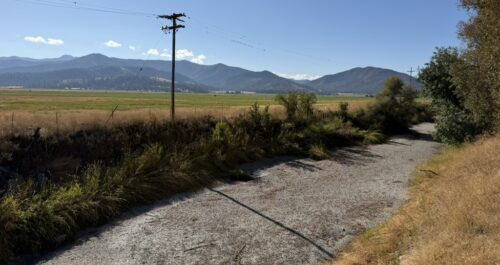 “The Scott River, which flows out of mountain forests into a broad valley near the California-Oregon border, provides vital habitat for salmon that swim upstream from the ocean to spawn in the fall and winter. But this year, portions of the river have been transformed into stretches of dry sand and gravel, while farmers have kept hayfields green by running their wells and pumps. Environmental advocates are accusing regulators at the State Water Resources Control Board of failing to do enough to prevent the river from running dry. “They didn’t do their job,” said Regina Chichizola, who leads the nonprofit group Communities United for Water Protection. “It’s a free-for-all in the Scott River, and the water board has the authority and the laws in place to manage the water withdrawals, and they need to start doing it.” … ” Read more from the LA Times. | Read via Yahoo News.
Despite new water rules, one of the Klamath’s most important tributaries, the Scott River, is running dry
“The Scott River, one of the Klamath Basin’s most important salmon-producing tributaries, is again running critically low after spending much of the summer below California’s emergency minimum-flow requirements. Recent photographs and drone footage show dry river reaches in a valley where irrigated fields remain green. Quartz Valley Indian Reservation, Communities United for Water Protection, Friends of the Shasta River, Water Environmental Protection Information Center, Water Climate Trust, and the Northern California Council, Fly Fishers International today called on the State Water Resources Control Board to conduct a comprehensive water use and the instream flow program audit in Scott Valley, including the use of Local Cooperative Solutions (an alternative to curtailment of diversions). As of September 1, 47 of the 49 Scott River LCS proposals remained pending, representing at least 18,597 acres. The Water Board is allowing groundwater LCS measures to be implemented before final approval, allowing groundwater diversions to continue while applications remain pending. “You can’t deny that there’s something wrong with this picture, a dry river surrounded by green fields. We have record low snowpack in the Scott River Watershed yet the minimal stream flow requirements designed to guarantee that every use gets a fair share are being ignored,” said Vivian Helliwell, Commercial Fisherman and Policy Analyst for Friends of the River. “The state needs to act to protect one of the most important areas for salmon along the California coast and all those who depend on a healthy river.” … ” Continue reading this press release.
California rushes to prepare for massive ‘Kelvin’ wave and predicted sea level rise
“Communities across California are rushing to prepare for the imminent arrival of the so-called “Kelvin wave”, a massive underwater band of warm water threatening to inundate swaths of the vast North American shoreline. The wave is nearing southern California and expected to reach the San Francisco Bay Area by early October, as it crawls toward Alaska. Waters could rise by a foot along the California coast, according to scientists, who have warned that this could dramatically double the 8-12in rise in sea levels already caused by climate change over the last century. The Kelvin wave doesn’t climb and crash like a typical ocean wave; rather, it swells the tides from beneath the surface. It’s effectively a massive slosh of warm water, driven by El Niño conditions, that moves across the Pacific before colliding with the South American coastline and surging north. It also won’t transport water in the way a tsunami might, but creates conditions that enable higher sea levels to linger. … ” Read more from The Guardian.
SEE ALSO:
- A Kelvin Wave Is Heading Toward the California Coast, Bringing Trouble, from the New York Times
- Why the Kelvin Wave Won’t Really Affect California Surf, from Surfline
California may see dreaded ‘perfect storm’ at terrible time: Thanksgiving and Christmas
“Thanksgiving and Christmas could bring a travel nightmare around the Bay Area this year. Government officials have hinted at it, and scientists are increasingly concerned. The problem is extremely high tides — potentially record-setting and thus higher than the disastrous early January tides this year. Already, tides are considerably higher than normal around the Bay Area and California. There are several reasons for that: El Niño has heated up and expanded Pacific Ocean waters; the moon’s gravitational pull is near its 18.6-year peak; and global warming continues to melt ice sheets worldwide. Those factors alone ensure that the highest forecast king tides, peaking Nov. 24-26 and Dec. 23-25, could cause moderate flooding. But things could get far worse. If a storm occurs during those events — what the San Francisco Bay Conservation and Development Commission calls a “perfect storm” scenario — sea levels could be 3 or 4 feet higher than an average high tide, smashing the previous record. A storm is far more likely in December than in November. … ” Read more from the San Francisco Chronicle.
Strongest El Niño on record triggers California state of emergency and is already affecting global weather patterns
“Well, it’s official: we’re already observing the strongest El Niño on record. The ocean surface temperature in the Niño 3.4 region, an ocean area in the eastern Tropical Pacific where we track El Niño, reached a record high anomaly compared with its 30-year average. In other words, this region has never been warmer. On top of this record-breaking news, California declared a state of emergency in anticipation of the upcoming El Niño. The declaration directs state agencies “to begin protecting vulnerable communities, prepare roads and critical infrastructure, stage emergency supplies, and help local partners reduce flood, landslide, and coastal risks.” This Super El Niño will no doubt significantly impact the Southwestern US this winter, with effects from record-high sea levels and coastal erosion to the potential for excessive rainfall and consequent flash flooding throughout the southern half of the country. … ” Read more from the Union of Concerned Scientists.
DWR completes major rehabilitation of Oroville Dam’s River Valve Outlet System
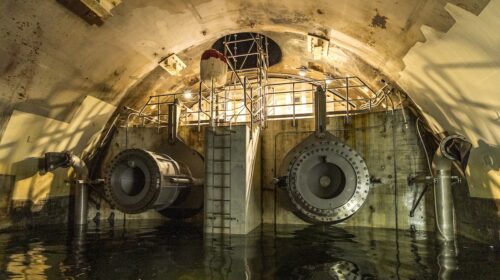
“The California Department of Water Resources (DWR) announced today the completion of a $235 million project to rehabilitate Oroville Dam’s river valve outlet system (RVOS), ensuring the continued operation of a critical feature of the dam for decades to come. This upgrade improves operational reliability, protects fish populations, and strengthens the State Water Project’s resilience to climate-driven extreme heat and drought. Oroville Dam, the tallest dam in the United States at 770 feet, is a cornerstone of the State Water Project, providing flood protection to downstream communities, water supply, clean energy generation, and recreation while supporting Feather River habitat for endangered and threatened fish species. Constructed between 1961 and 1967, the earthen dam towers over the northern Sacramento Valley. The RVOS is located deep within one of the dam’s early diversion tunnels and allows DWR to release cold water from the deeper portions of Lake Oroville into the Feather River. That capability is especially important during periods of extreme heat and drought, when colder releases can help reduce downstream water temperatures and support fish populations. “This investment in Oroville Dam’s infrastructure ensures the reliable and safe operation of the State Water Project’s largest flood protection and water supply facility,” said John Yarbrough, Deputy Director of DWR’s State Water Project. “DWR will continue to prioritize modernization projects to improve aging infrastructure in an ever-changing climate.” … ” Read more from DWR.
SEE ALSO: $235M Oroville Dam upgrade complete, protecting Feather River fish, from Action News Now
How new research could make on-farm nitrogen management easier
“Nitrogen is the most consequential nutrient to manage on a California farm. Underapplication of nitrogen (N) could mean reduced yields, while overapplication risks contaminating local waterways and aquifers and cutting unnecessarily into growers’ bottom lines. Despite its importance, most fertility monitoring of fields relies on laboratory analysis. California dairies often store liquid manure in lagoons until it’s needed to fertilize forage crops. Lagoon samples are collected quarterly in the field, shipped off, and tested for total nitrogen, ammonium, and other key nitrogenous compounds. The process can be cost-prohibitive and too slow to accurately describe the changing nitrogen concentrations in liquid manure. The nitrogen content of a lagoon can vary significantly across seasons or between irrigation events, and outdated data may mean that farmers and their advisers make nutrient management decisions based on a test result that no longer reflects the manure being applied to fields. … ” Read more from Sustainable Conservation.
Sacramento Delta gates shut for 24 hours to save salmon run
“The Bureau of Reclamation will temporarily close the Delta Cross Channel gates on Thursday at approximately 10 a.m. The gates will reopen on Friday at approximately 10 a.m. According to the Bureau of Reclamation, the temporary closure is intended to help protect adult fall-run Chinook salmon passage and maintain river flows that help guide migrating salmon toward the lower Mokelumne River. Reclamation may conduct a similar temporary gate closure next week. Any additional gate operations will depend on Delta conditions and will be coordinated based on current hydrologic and fisheries information. The Delta Cross Channel, located near Walnut Grove, is a controlled diversion channel that connects the Sacramento River with the interior Delta. … ” Read more from Action News Now.
Governor Newsom ignores water-sector consensus and fails to make water affordable in California
“Yesterday, California Governor Gavin Newsom vetoed Senate Bill 1125 (SB 1125), groundbreaking legislation that would have established a statewide Low-Income Water Rate Assistance Program, the first of its kind in the nation. The bill, authored by Senator Caroline Menjivar, would have addressed water affordability and ensured that all families have access to safe and affordable water. “At a time when gas, food, and utilities are rising across the country, no one should have to go into debt simply for wanting access to clean water. I was proud to author SB 1125. We had the opportunity to set a precedent for a first in the nation Statewide Water Affordability Program but weren’t able to fulfill the promise to keep California leading on affordability. This bill advanced generations of frontline communities and advocates who have called for water to become a human right, and its veto is contrary to their lived experiences.” said Senator Caroline Menjivar (D–San Fernando Valley). … ” Continue reading this press release.
Senate committee advances bipartisan Padilla bill to support desalination and safe drinking water
“Today, the Senate Committee on Energy and Natural Resources advanced U.S. Senator Alex Padilla’s (D-Calif.) bipartisan bill to reauthorize desalination projects and research. Padilla’s Desalination Reauthorization Act cleared committee by voice vote, along with a bipartisan amendment that was also adopted by voice vote. “Access to safe and clean drinking water is a human right, and investments in desalination projects provide promising pathways to meet our water needs,” said Senator Padilla. “The bill will help strengthen investments into desalination research and development so that every American can access safe, clean water. This is a critical step in addressing California’s water crisis and building new pathways for water security across the country.” …, ” Read more from Senator Padilla.
At the top of the Golden Gate Bridge, Governor Newsom signs his final bill — investing in California’s next generation of innovation
“For generations, California has been the birthplace of new ideas and new industries – from the Gold Rush era, the creation of the internet, to becoming the global epicenter of the artificial intelligence industry. Building on that legacy, Governor Gavin Newsom today announced his final bill signing of his last regular legislative session by investing in the people and institutions that will drive California’s success for generations to come. Standing at the top of the Golden Gate Bridge, the Governor signed Senate Bill 895 by Senator Scott Wiener (D-San Francisco), which puts a $7.5 billion science and health research bond before voters in March 2028, supporting research at California universities and institutions in medicine, public health, climate, wildfire prevention, agriculture and other fields. “California doesn’t settle for what’s possible — we shape what comes next,” said Governor Newsom. “Great companies start small, big ideas start with a risk, and every generation of innovators has helped build this state into the fourth-largest economy in the world. We owe those dreamers and doers the opportunity to compete, succeed and thrive — because the future will always happen here first.” … ” Read more from Governor Newsom.
In commentary today …
California needs more than water usage reports. It needs water solutions.
Michelle Paul, Executive Director of the California Farm Water Coalition, writes, “With the rise of AI and the expansion of data centers, water is getting more attention. What industry is using too much? Are users reporting? Who is using water most efficiently? These are fair questions, and water stewardship depends on all users being good actors. But this conversation should not distract from the larger challenge: California needs more water supply, and state and federal agencies should support, not impede, the projects that can provide it. For decades, California agriculture has been asked to do more with less, and farmers and ranchers have delivered. Since 1980, California’s farmers and ranchers have increased farm GDP by 23% while reducing water use by 15%. That means the local, nutritious food at your grocery store is being grown with less water than ever before, while working lands continue to provide the open space and environmental benefits Californians cherish. Today, more than half of irrigated acres in California use drip, micro or subsurface irrigation. … ” Read more from Capitol Weekly.
In regional water news and commentary today …
NORTH COAST
CalTrout secures NOAA funding to advance multi-year restoration of the East Fork Scott River
“CalTrout has been awarded funding from NOAA’s Community-Based Restoration Program, to restore streams and reconnect floodplains for coho salmon along the East Fork Scott River — a primary tributary to one of California’s largest salmon-producing rivers. The award leverages funding from WCB and CalTrans to restore the majority of the preserve’s anadromous habitat on the East Fork Scott, as part of a broader vision to revive the entire East Fork Scott River watershed. … This award builds on years of planning and accelerates the pace of on-the-ground work across the 6,094-acre Beaver Valley Headwaters Preserve, owned by The Wildlands Conservancy (TWC). It also furthers restoration momentum in the region, with TWC recently securing a state grant to permanently protect the 14,177-acre AP Ranch in the Klamath Mountains along 8 miles of the East Fork Scott River, one of the oldest cattle ranches in Northern California. … ” Read more from Cal Trout.
State sends skunk train owner back to the drawing board on toxic mill ponds
“The California Department of Toxic Substances Control (DTSC) has rejected, as written, Mendocino Railway’s draft Feasibility Study Addendum for the contaminated ponds on the former Georgia-Pacific mill site, issuing fifty comments and requiring a revised document and a written response to every comment within 90 days of receipt of its letter. In an August 19, 2026 letter to the railroad’s consultant, DTSC found that the railroad’s proposal for the contaminated sediments in the Operable Unit E ponds, Pond 6, Pond 7, Pond 8 and the North Pond, rests on unsupported assumptions and on risk figures more than a decade old. … ” Read more from the Redheaded Blackbelt.
‘Deeply, deeply my home’: Residents rally against offshore drilling at Big River Beach
“For Liz Helenchild, the fight against offshore oil drilling isn’t abstract policy. It’s personal. “This is deeply, deeply my home, and it is clear to me that I have to go to the mat to protect and maintain the territory, protect and maintain the food supply, protect and maintain the scenic beauty,” said Helenchild, who has lived on the Mendocino Coast since 1970 after moving from Texas. “Our economy here absolutely depends upon it.” Helenchild was one of hundreds who turned out at Big River Beach in Mendocino on Saturday for “Hands Across the Sand,” a demonstration against offshore oil drilling from noon to 2 p.m. The event was organized locally by the Sierra Club Redwood Chapter. Other California chapters set protests all along the state’s coast. With posters in hand, participants posed for a group photo in front of a giant hand-painted sign spelling out “NO OFFSHORE DRILLING” to visually document their opposition. … ” Read more from Local News Matters.
Commentary: We have a once-in-a-generation chance to own our water future
Mo Mulheren, the Second District Supervisor for the County of Mendocino, writes, “For more than a century, water from the Eel River has flowed through PG&E’s Potter Valley Project into the Russian River watershed, filling Lake Mendocino, supporting farms in Potter Valley, and supplying homes and businesses across Mendocino, Sonoma, and Marin counties. PG&E has decided it no longer wants to operate the Potter Valley Project and has filed a plan to decommission it, including removing Scott Dam and Cape Horn Dam. That wasn’t a decision made by Mendocino County or our local water districts, but our responsibility now is to make sure water continues flowing to our communities and that the infrastructure controlling it stays in local hands, not in the hands of an outside investor. … ” Read more from the Mendocino Voice.
Fort Bragg vice mayor Marcia Rafanan tastes water from desalination buoy with no pipeline to shore
“Fort Bragg Vice Mayor Marcia Rafanan told the City Council on Monday night that she went out to the city’s wave-powered desalination buoy, which makes fresh water from ocean water, to taste it. “I got to go on the taste test out in the middle of the ocean to go taste fresh ocean water with staff and our city manager,” Rafanan said during council members’ reports. The water “tastes just like well water … because it was out of a hose, but it tasted fresh,” she reported. “Hopefully we can incorporate that if we ever need it.” The city’s 12-month pilot with Oneka Technologies, a company based in Sherbrooke, Quebec, was designed with pipelines carrying fresh water from the buoy to the city’s wastewater treatment plant, according to the Coastal Commission, which approved the project with conditions in December 2025. The pipeline part of the project has since been dropped. … ” Read more from the Mendocino Voice.
SIERRA NEVADA
Flights above Tahoe spark candid conversations on a forest protection, now being rescinded
“The Roadless Rule is often discussed in maps, stats, policy and debate, but a plane ride above the Tahoe Basin sparked a different conversation. As the full six-seater plane rumbled off the tarmac and into the air on a mid-September Tuesday morning, it simultaneously put distance from the earth while drawing in a holistic view of Tahoe. Passengers looked up from their map printouts with stats and numbers and out through the encircling windows at the Jeffrey pine-textured landscape, embellished by rock outcroppings, Donner Lake, and divided by the meandering Truckee. And eventually, after getting to elevation, Lake Tahoe dawned into view. The conversation through the microphones and over the headphones crowning everyone’s head organically veered toward the intersections of humans and roadless land. … ” Read more from the Tahoe Daily Tribune.
New solar-powered cleaning stations aim to protect Lake Tahoe from invasive species
“Environmental advocates and public land managers have installed new permanent, solar-powered watercraft cleaning stations across the Lake Tahoe basin in a growing push to stop devastating aquatic invasive species from entering local waterways. The “CD3 Outpost Blue” units are designed to help outdoor recreationists clean, drain, dry, and dispose of aquatic hitchhikers and were installed at Baldwin Beach and along the shores of Fallen Leaf Lake. The effort is a partnership between nonprofit Keep Tahoe Blue, the U.S. Forest Service Lake Tahoe Basin Management Unit (LTBMU), and concessionaire ExplorUS. … ” Read more from KOLO.
One Tahoe resort is using new tech to make snow earlier than ever before
“Temperatures at Donner Pass this week are hovering in the low 70s, and yet Sugar Bowl Resort is already laying down a base of snow on one of its slopes. Ahead of what resorts are hoping will be a banner Super El Niño winter, the resort has deployed a mobile European-engineered apparatus called the TechnoAlpin SnowFactory. It’s a cargo container-sized freezer unit, run through with tubes and blowers, capable of “producing top-quality snow regardless of air temperature,” according to the company’s website. A recent Instagram post from Sugar Bowl shows the unit spitting out heaps of artificial snow on Sugar Bowl’s otherwise bare dirt tubing zone in 60-degree temperatures. … ” Read more from the San Francisco Chronicle.
SACRAMENTO VALLEY
CalTrout completes Iron Canyon Fish Passage Project
“A historical breeding ground for chinook salmon and steelhead trout in Chico is finally open after decades of their passage being blocked by non-functioning fish ladders. After four years of planning, the environmental nonprofit CalTrout completed in-stream work this month for the Iron Canyon Fish Passage Project, restoring 8.5 miles of spawning grounds previously inaccessible to migratory fish. Holly Swan, regional manager of CalTrout, said Tuesday the nonprofit completed the project Sept. 15 removing 17 concrete fish barriers total that were installed in 1956 and repositioning massive boulders to help fish swim during low flows. Now that the passage is undammed, fish can now swim up the creek at flows above 30 cubic feet per second, whereas previously the fish barriers prevented passage below 500 cubic feet per second, according to Swan. … ” Read more from the Chico Enterprise-Record.
BAY AREA
Fact Brief: Is Anderson Dam the largest water reservoir in the county?
“Yes. The Anderson Dam and Reservoir is the largest dam complex of Santa Clara County’s 10 reservoir and dam systems. Built in the 1950s, Anderson Dam holds a maximum of 90,373 acre-feet of water, or roughly equal to 29 billion gallons of water for residents. Second to Anderson Dam is Coyote Dam and Reservoir with 23,244 acre-feet of water. In 2011, a seismic evaluation found the downstream and upstream embankments could be at risk during a large earthquake. In 2020, the Federal Energy Regulatory Commission directed Valley Water to reduce Anderson Reservoir to “dead pool,” or as low as possible, until the seismic work was completed. … ” Read more from the San Jose Spotlight.
CENTRAL COAST
Big Sur locals and officials prepare for a strong El Niño post-fires.
“Conditions are lining up for a potentially rough winter in Big Sur, a fact not lost on the community as the Timber and Plaskett fires simmer down. On the back patio of the Big Sur River Inn on Monday, Sept. 28, dozens of residents and local and state officials gathered for a Big Sur Multi-Agency Advisory Committee meeting to discuss lessons from this summer’s fires. The Plaskett and Timber fires, the third- and fourth-largest fires in the state this year, have burned more than 55,000 acres combined and are 99- and 88-percent contained, respectively. Attention has now turned to the burn scars, potential debris flows during heavy rains, and what needs to be done to prepare. “You can put a fire out with a fire hose,” said Kirk Gafill, Nepenthe owner and president of the Big Sur Chamber of Commerce. “You cannot stop a debris flow with your vehicle, a tractor, or sandbags, so people need to look at those in a very different way.” … ” Read more from Monterey Now.
Montecito: California residents pack flood-control meeting as ‘Super El Niño’ muddies winter outlook
“Flood concerns drew Montecito residents to a packed school auditorium, where many came seeking answers about how the next major storm could affect a community still living with the aftermath of the deadly 2018 debris flows, Noozhawk reported. Officials from local agencies and the federal government said El Niño could add risk, while stressing that it’s still too early to know exactly how wet the season will be. The Montecito meeting focused on winter storm readiness, the area’s ongoing flood vulnerability, and the uncertain implications of a possible “Super El Niño.” … ” Read more from The Cool Down.
SAN JOAQUIN VALLEY
Water Blueprint for the San Joaquin Valley: What the valley can hold from a strong El Niño winter
“The National Oceanic and Atmospheric Administration (NOAA) now puts the odds of a very strong El Niño this fall and winter above 90 percent, with a 75 percent chance the event ranks as the strongest on record since the year 1950. Its seasonal outlook tilts California toward a wetter than normal winter, with the strongest odds near the coast from December through March. For the San Joaquin Valley, a wet winter is an opportunity with a time limit. Storm runoff that passes through the Valley in January will be gone by July unless there is somewhere to put it. Warmer winters also mean more precipitation arrives as rain rather than snow, so the Sierra Nevada snowpack holds less for the summer. Water Year 2026 showed the pattern: statewide precipitation landed near average, snowpack was unusually low, and reservoirs still stood above their average at the end of the wet season, carried by three years without drought. That is the fork. … ” Read more from the Water Bleuprint for the San Joaquin Valley.
Almonds take top spot in San Joaquin County crop report as farmers face rising costs
“Farming remains one of the cornerstones of California’s economy, particularly in the Central Valley and San Joaquin County. The San Joaquin County Office of the Agricultural Commissioner released its 92nd annual crop report, which shows almonds have climbed to the top of the county’s agricultural industry by value. But for the farmers growing them, the milestone comes with mixed emotions. The report shows the value of the county’s almond crop reached $584 million in 2025. That’s up from more than $492 million in 2024, an increase of more than $90 million. CBS News Sacramento got an inside look at almond harvest season with a Ripon father-and-son farming team, who say the numbers are encouraging but also reflect broader challenges facing farmers across the region. … ” Read more from CBS Sacramento.
Why are data centers controversial? Valley experts explain water, power and jobs
“Data centers can look like little more than large, windowless warehouses. But the questions they create for a city can extend far beyond where to put the building, or if beauty is indeed in the eye of the beholder. Where will the electricity come from? How much water will be needed for cooling? Who pays if the electrical grid needs upgrades? How many permanent jobs will remain after construction? And what happens to nearby neighborhoods and future development? Those questions are becoming increasingly relevant in the Central Valley as demand grows for the computing infrastructure behind artificial intelligence, cloud computing and other digital services. Patterson approved a 45-day moratorium on data center development in July after a developer expressed interest in building a facility there, giving officials time to study potential effects before allowing projects to move forward. Riverbank also moved in September to pause data center development amid interest in a project at the former Army ammunition plant. … ” Read more from the Modesto Bee.
Kern River hearing moved to San Francisco, state AG to weigh in
“The California Supreme Court hearing on Kern River flows has been changed from Redding to the justices’ home court in San Francisco, according to the court’s website. The hearing will still be held Oct. 7 at 9 a.m. The California Attorney General’s office and Department of Fish and Wildlife also accepted an offer from the Supreme Court to make their own arguments in support of the plaintiffs, Bring Back the Kern and Water Audit California. This case has generated significant interest as it hinges on a key statute used in numerous conservation cases, California Fish and Game Code 5937. Bring Back the Kern and Water Audit sued the City of Bakersfield in 2022 over how it operates the Kern River. They argued the city needed to study those operations under the Public Trust Doctrine, which requires all state waters be used for the highest, beneficial use, including public recreation and the environment. Because the river is dry through Bakersfield most of the time, plaintiffs argued, Bakersfield had been derelict in its Public Trust duty. … ” Read more from SJV Water.
EASTERN SIERRA
IWVGA and Water District to develop residential water loss relief program
“The Indian Wells Valley Groundwater Authority board voted unanimously to authorize staff to work with the Indian Wells Valley Water District on developing a program that could provide limited billing relief to residents facing unexpected water losses from concealed leaks, broken water lines or similar events. The proposed Unanticipated Residential Water Use Relief Program would provide limited relief from replenishment fees associated with verified, one-time residential water losses. Eligible losses would not represent ongoing demand or require long-term replenishment through imported water supplies. “For us, this is an opportunity to work with the water district on a solution that helps the residents we both serve,” said April Keigwin, general manager of the Indian Wells Valley Groundwater Authority. “By developing the program together, we can establish clear guidelines for providing limited relief when an unexpected water loss leaves a household facing a significant bill.” … ” Read more from the Indian Wells Valley Groundwater Authority.
SOUTHERN CALIFORNIA
Strange visitors and starving pups: What El Niño means for California’s coast
Lila Seidman writes, “The fierce El Niño forecast for this winter may well be hard on the flippered and scaled creatures that share our beaches and waters. Yet some headlines are hopeful, even awe-inspiring. Take the account of a giant, gentle whale shark gliding through the blue waters off the Southern California coast. I wondered if these dots could be connected, so I turned to experts and The Times’ extensive coverage to try to break down what El Niño means for local ecosystems. Here’s what I found out. … ” Read more from the LA Times. | Read via Boiling Point newsletter.
State issues audit over LA County response to landfill crisis
“The California State Auditor issued a report Tuesday criticizing the L.A. County Department of Public Health’s handling of the environmental crisis at Chiquita Canyon Landfill, a facility targeted by thousands of people in an ongoing lawsuit over health concerns. Residents have complained about a lack of understanding and clear information about the problems at Chiquita Canyon Landfill since 2023, while county, state and federal regulators have worked to determine the problem. There’s been no official root cause given. And Chiquita has challenged regulators’ reports numerous times. Since the issues actually began in May 2022, Chiquita Canyon Landfill has seen the underground incident grow from about 40 acres to more than double that size, producing more than 1 million gallons of leachate per week and overwhelming odors. A recent estimate is that it could take decades to resolve. … ” Read more from The Signal.
New bill in Congress seeks to investigate toxic dump off California coast
“Two members of Congress are ramping up efforts to investigate the consequences of DDT pollution off the Southern California coast — an issue that has horrified scientists and policymakers since they learned that as many as half a million barrels of toxic waste had been dumped into the ocean after World War II. A bill introduced this week in both the Senate and the U.S. House of Representatives lays out a long-awaited proposal on how to reckon with California’s poisoned marine environment. Officially named the “Ocean Protection and DDT Reduction Act,” the legislation has been years in the making and seeks to address many of the concerns raised by Californians and others around the world. “I was shocked … I know firsthand how much our communities depend on a healthy ocean — from our fishermen and maritime workers to our tourism and coastal economies. We have a responsibility to protect these waters,” said U.S. Rep. Salud Carbajal (D-Santa Barbara,) who introduced the bill with U.S. Sen. Alex Padilla (D-Calif.) and cited The Times coverage of the issue. … ” Read more from the LA Times. | Read via Yahoo News.
Lake Arrowhead CSD tackles ‘forever chemicals’ in water, potential mussel threat
“Pacific Hydrotech received an $18.5 million contract Sept. 22 to remove long-lasting chemicals from the Lake Arrowhead Community Services District water infrastructure. The CSD board approved the contract for up to $18,503,300, with up to 15% in change orders, to remove PFAS — chemicals used worldwide in a range of projects. Their components break down very slowly and have been linked to health problems in humans and animals. The CSD submitted its first reimbursement request to the state water board Aug. 31, for a little over $1 million on a project to remove PFAS from surface water, Engineering Manager Gus Albarran said. “That was for planning, design and administrative costs dating back to July 1, 2023. So, the Division of Finance is reviewing that request, and then once they approve it, we expect to get reimbursed for that first request, probably in the coming weeks,” Albarran said. … ” Read more from the Mountain News.
IMPERIAL/COACHELLA VALLEYS
Our most lethal body of water – The New River
“The New River, one of the longest year-round rivers in Southern California, flows green and murky through the heart of the Imperial Valley on its three-day journey from Mexicali, Mexico, to the brackish Salton Sea, a lake with no outlet. The New River is reputed to be the most polluted and lethal river in California. December 1986, CBS’s 60 Minutes suggested the New River could be the filthiest river on the planet. Early this past October, Governor Pete Wilson officially declared the New River a disaster. In fact, this was just another in a series of similar pronouncements that date back at least to the 1940s, when the New River first began to attract attention as a major source of pollution and disease. … ” Read more from the San Diego Reader.
SAN DIEGO
Nearly $1 million in binational grants will address Tijuana River sewage crisis and help restore coastal habitats
“San Diego Foundation (SDF) today announced $983,439 in Binational Resilience Initiative (BRI) grants for 10 projects bringing together 21 nonprofit organizations in the United States and Mexico. Several projects directly address the Tijuana River sewage crisis by reducing pollution and flooding, improving wastewater treatment and making water quality information easier for communities to understand, while others will restore coastal habitats and support research and education across the broader Cali-Baja region. The Tijuana River sewage crisis affects water quality, public health and communities on both sides of the U.S.-Mexico border. While major infrastructure improvements are critical, addressing the crisis also requires coordinated work throughout the watershed to reduce pollution, prepare for flooding and better understand water conditions. … ” Read more from the San Diego Foundation.
Along the Colorado River …
The Colorado River nears a worrisome threshold. These farmers are worried.
“As one of the Colorado River’s worst water years on record comes to a close on Wednesday, experts warn that the disputed waterway is approaching a critical threshold that could set the stage for a prolonged legal fight. The 1922 Colorado River Compact, which divided the river’s flows among the four Upper Basin states (Colorado, New Mexico, Utah and Wyoming) and three Lower Basin states (Arizona, California and Nevada), requires a certain amount of water to pass through a bend in the river called Lee’s Ferry — roughly the midpoint between the two basins. But experts widely expect average flows to fall below that level sometime in October, a consequence of decades of overuse and a years-long drought worsened by climate change. This would give Lower Basin states grounds to sue their Upper Basin counterparts, potentially triggering a Supreme Court case that could upend the byzantine “Law of the River” that has governed the Colorado for more than a century. … ” Read more from the Washington Post.
Hot summers, vegetation can drain Colorado River headwaters
“A new study published September 14, 2026, in Communications Earth & Environment found that summer heat can reduce streamflow in the Upper Colorado River Basin even when the preceding winter produced a large snowpack. The reason is something easy to overlook: thirsty vegetation. Researchers Harry Stone and Reed Maxwell found evidence that trees and other plants in Colorado’s mountain headwaters can switch water sources as the landscape dries. When moisture near the soil surface becomes scarce, vegetation can tap shallow groundwater that might otherwise help feed streams. The researchers found that summer temperature can affect late-season streamflow as much as snowpack itself. … ” Read more from Western Water.
New Colorado River rules start today, but questions linger about Arizona water cutbacks
“New rules for the Colorado River officially go into effect on Thursday, but they won’t bring changes to Arizona’s water quite yet. The state is still working on a three-way deal with California and Nevada to spread out the pain of water cutbacks. Arizona’s water cuts will become official on Jan. 1, 2027, and Arizona’s top water negotiator told KJZZ he’s “very optimistic” about progress on the three-state deal that must be signed by then. To understand the complicated timeline for new water rules, it helps to take a step back and look at the Colorado River’s complicated calendar. Federal rules for the Colorado River and its major reservoirs typically run on a different calendar than the rest of the world. The “water year” runs from Oct. 1 to Oct. 1. So, starting Thursday, a controversial federal plan will start changing the amount of water sent from Lake Powell downstream to Lake Mead. … ” Read more from KJZZ.
Arizona enters new water year ahead of historic Colorado River cuts
“Arizona enters a new water year Oct. 1 as major changes loom for how the Colorado River is managed and how much water the state will receive in the years ahead. But Arizona’s water supply won’t immediately drop. “Our water supplies are not changed for the remainder of 2026,” Arizona Department of Water Resources Director Tom Buschatzke said in a statement to ABC15. “The beginning of the new Water Year, Oct 1, begins a new ‘Lake Powell to Lake Mead’ release pattern. But any impact to Arizona’s water supplies under the new guidelines don’t occur until Jan 1 2027.” … ” Read more from Channel 15.
The Arizona Water Banking Authority undergoes a change of direction
“Not long ago, the Arizona Water Banking Authority operated in a more peaceful corner of the Arizona water world. The Water Bank’s managers performed their primary duty, including storing excess Central Arizona Project water from the Colorado River underground to create long-term storage credits, or LTSCs, to mitigate the effects of future river shortages on municipal and industrial water users, as well as other duties. And all seemed well. Oh, for those halcyon days of simply arranging for storing “excess” water. A system created to beneficially utilize the State’s full entitlement of Colorado River water by storing unused water for future use has been thrown into reverse. With reductions in excess CAP water supplies and an increased probability of Colorado River shortages continuing, the AWBA is transitioning to its next phase, which is focusing on making its credits available to mitigate shortages. On July 17, the Water Bank’s Commission approved extending the Bank’s current “firming” approach (that is, assisting CAP water users experiencing shortage) through 2027, which will be the first year that shortages will impact many of the Central Arizona Project’s urban water users. … ” Read more from the Arizona Department of Water Resources.
Arizona enters new water year ahead of historic Colorado River cuts
“Arizona enters a new water year Oct. 1 as major changes loom for how the Colorado River is managed and how much water the state will receive in the years ahead. But Arizona’s water supply won’t immediately drop. “Our water supplies are not changed for the remainder of 2026,” Arizona Department of Water Resources Director Tom Buschatzke said in a statement to ABC15. “The beginning of the new Water Year, Oct 1, begins a new ‘Lake Powell to Lake Mead’ release pattern. But any impact to Arizona’s water supplies under the new guidelines don’t occur until Jan 1 2027.” … ” Read more from Channel 15.
Las Vegas Valley Water District proposes fines, strict rules on non-functional turf
“The Las Vegas Valley Water District on Wednesday initiated the process to amend its service rules, moving to impose restrictions on decorative commercial grass and classifying its irrigation as illegal water waste. Under the proposed amendments, properties not zoned exclusively for single-family residences — including shopping centers, business parks, multi-family complexes, and homeowner association common areas — that continue irrigating non-functional turf will face escalating fines that can climb past $5,100 per violation beginning Jan. 1, 2027. Water managers said the measures are tied to Southern Nevada’s response to reductions in Colorado River water. “The Water District is in the process of amending its service rules. We’ve started that process today,” Colby Pellegrino, Deputy General Manager of Resources for the Southern Nevada Water Authority and the Las Vegas Valley Water District, told FOX5. … ” Read more from Fox 5.
Drought has decimated Colorado’s biggest reservoir, and the livelihoods of those who depend on it
“Anyone can see that something is deeply wrong at Blue Mesa Reservoir on the Western Slope. It’s historically been the biggest body of water in the state. But not anymore. The deep, long-lasting drought has shrunk it so much it lost that title to Lake Granby up north. Now it looks like someone’s opened the drain on a gigantic, rocky bathtub, with only a bit of shiny blue water pooled at the bottom. Amy Riser stood on the long boat ramp at Elk Creek Marina, which her family has run for more than 40 years. It was a sunny and hot August day, when this place should have been “jamming with people,” she said. Instead, the water was empty. Blue Mesa stood at less than 20% full, lower than it had ever been. “It is very, very heartbreaking right now,” Riser said, looking at water rings left on the dry, sandy soil and exposed anchors that usually hold docks. A lone lawn chair was stuck in the mud. … ” Read more from the Colorado Public Radio.
A new legal path for stream restoration in Colorado runs into old water conflicts
“After the 2020 Pine Gulch Fire scorched 95,000 drought-stricken acres of High Lonesome Ranch in Garfield and Mesa Counties, the rainstorms that followed eroded hillsides and washed mud and rocks into the Dry Fork Creek valley bottom. “It was a major impact to operations here,” said High Lonesome’s General Manager Travis Brooks. “The wildlife habitat obviously was erased, populations disappeared… The flooding, the debris flows, the devastation that comes after the fire is almost as bad as the fire itself and we’re still seeing the effects of that.” Brooks has overseen work to repair the riparian corridor and control erosion; now the area is green and wildlife – including beavers – have returned to the watershed. The area’s recovery is due, in part, to a piece of 2023 legislation that cleared the way for minor stream restoration projects in Colorado. High Lonesome Ranch is the site of one of the first of these types of projects completed since the passage of Senate Bill 270. … ” Read more from Aspen Journalism.

