
Press release from Quartz Valley Indian Reservation, Friends of the River. Communities United for Water Protection, Environmental Protection Information Center, Friends of the Shasta River, Northern California Council, Fly Fishers International, Water Climate Trust
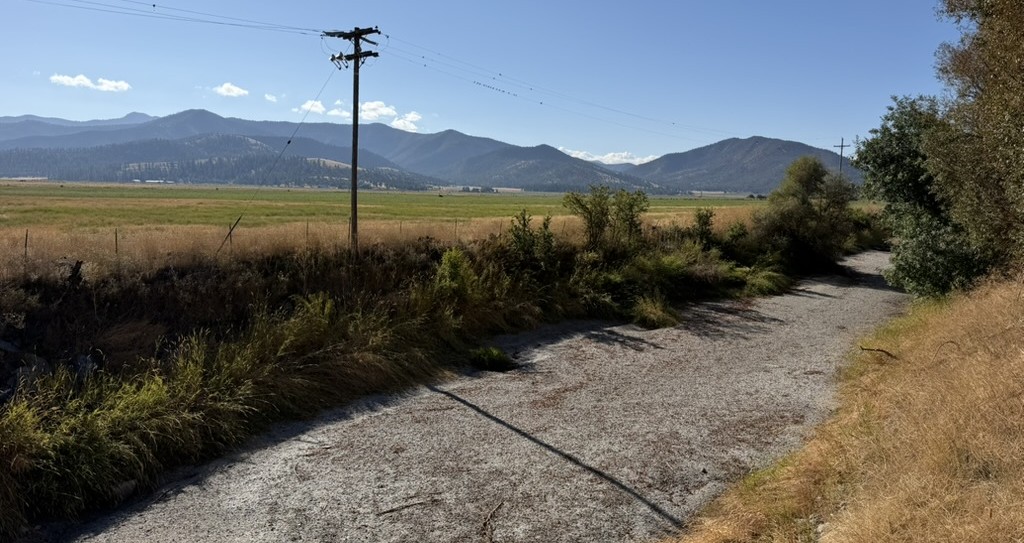
The Scott River, one of the Klamath Basin’s most important salmon-producing tributaries, is again running critically low after spending much of the summer below California’s emergency minimum-flow requirements. Recent photographs and drone footage show dry river reaches in a valley where irrigated fields remain green.
Quartz Valley Indian Reservation, Communities United for Water Protection, Friends of the Shasta River, Water Environmental Protection Information Center, Water Climate Trust, and the Northern California Council, Fly Fishers International today called on the State Water Resources Control Board to conduct a comprehensive water use and the instream flow program audit in Scott Valley, including the use of Local Cooperative Solutions (an alternative to curtailment of diversions). As of September 1, 47 of the 49 Scott River LCS proposals remained pending, representing at least 18,597 acres. The Water Board is allowing groundwater LCS measures to be implemented before final approval, allowing groundwater diversions to continue while applications remain pending.
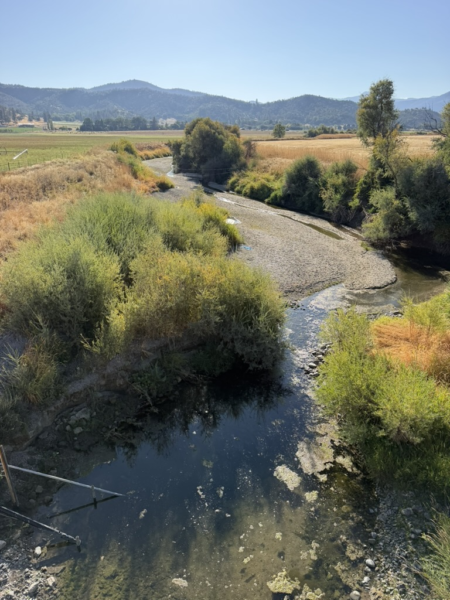
“You can’t deny that there’s something wrong with this picture, a dry river surrounded by green fields. We have record low snowpack in the Scott River Watershed yet the minimal stream flow requirements designed to guarantee that every use gets a fair share are being ignored,” said Vivian Helliwell, Commercial Fisherman and Policy Analyst for Friends of the River. “The state needs to act to protect one of the most important areas for salmon along the California coast and all those who depend on a healthy river.”
On September 27, flow in the Scott River near Fort Jones was approximately 8 cubic feet per second. The State Water Board’s minimum September flow requirement is 33 cfs. Despite a court adjudication, state regulations, water-right curtailments and enforcement actions, the Scott River situation raises a basic question California has yet to answer: Where is the water going?
“The Scott River is one of the most important salmon producing rivers in the Klamath watershed,” stated Regina Chichizola from Communities United for Water Protection. “California just committed significant resources to dam removal in the Klamath. To allow such an important tributary to run dry as the salmon are returning is indefensible.”
The Scott River’s water rights were adjudicated by the Siskiyou County Superior Court in 1980. That decree established rights to surface water, underflow and groundwater within a specifically delineated interconnected-groundwater area. It also adjudicated a right for fish and wildlife in the river that has never been honored. It did not address the rights and needs of local Tribes who rely on the salmon, and much has changed in the 46 years since that decree was entered.
Groundwater development has expanded, points of diversion have changed, some users have shifted from surface water to groundwater, and decades of additional hydrologic research have greatly improved understanding of the relationship between groundwater pumping and Scott River flows. Tribes who depend on the Scott and Klamath Rivers say it is time to take action.
“A healthy river must be included in the water budget-not treated as an afterthought. We are fighting for a river our children and grandchildren will still recognize,” said Quartz Valley Indian Reservation Chairman, Leonard Lincoln. “The river’s health reflects the health of our people and the Scott River cannot remain a vital salmon nursery without cool clean water. We are Fix the Earth people, and it is our responsibility to save this keystone species that we depend upon.”
The State Water Board itself has acknowledged that changes since 1980 have made it difficult to verify some rights described in the original adjudication. Modern groundwater studies also provide substantially more information about how groundwater and surface water interact throughout Scott Valley.
That leaves two possibilities, both of which demand action. If water users are diverting or pumping more water than allowed under existing rights and laws, the State Water Board should identify those violations and enforce the existing decree and California water law. If water users are complying with their rights and the Scott River is nevertheless being depleted to levels that threaten salmon and other public-trust resources, California must confront a different problem: a water-rights system based on a 46-year-old understanding of groundwater hydrology may no longer adequately describe the interconnected water resources of Scott Valley. If this is the case, the state needs to revisit the Scott River adjudication using the best available modern groundwater science.
The consequences extend beyond the river. The Scott River provides critical habitat for Klamath Basin salmon, including ESA listed Southern Oregon/Northern California Coast coho salmon.
Extremely low summer and fall flows can disconnect habitat, increase water temperatures and delay access to spawning grounds as adult salmon return from the Pacific. This is a problem for Chinook salmon, the driver of Tribal and commercial fisheries. It is also a problem for local communities, as it creates harmful algal blooms and keeps people from being able to use the river.
“Aama (Salmon) holds a significant place in Karuk Culture; it is our lifeline. Generational trauma stemming from the loss of abundance in our rivers remains prevalent in our daily lives”, said S.J. Jerry, member of the Karuk Tribe, and representative for Communities United for Water Protection. “Why is the Scott river drying up normal and expected? Tributaries such as the Scott are spawning grounds for many different species and without water levels where salmon can swim, we have a big issue. Without water, my Karuk relatives that once lived solely off the river, will no longer have access to a super food that they have eaten since time immemorial.”
The problem persists despite increasing state intervention. California has established emergency minimum flows for the Scott River. In 2025, the Legislature enacted AB 263, extending the Scott and Shasta emergency regulations while the State Water Board develops permanent instream flow requirements, which are currently underway. In some years it has helped. This year, however, the board did not take the action needed.
“We can debate new flow standards and new regulations indefinitely,” said David Webb, Board member for Friends of the Shasta River. “But if we don’t know whether water use on the ground matches the water rights that legally exist, or whether the 1980 adjudication accurately reflects what we now know about how groundwater connects to the river, we’re managing this watershed with at best one hand tied behind our back.”
Tribes, fishermen and river advocates are calling on the Water Board to:
1. Conduct a comprehensive water audit comparing actual surface-water diversions and groundwater pumping with the rights recognized under the Scott River adjudication and other applicable water rights.
2. Verify wells and points of diversion, including wells developed or modified since the 1980 decree, to determine whether they are extracting water that is already adjudicated.
3. Enforce existing rights and restrictions wherever diversions or pumping exceed lawful rights or violate applicable curtailment orders.
4. Evaluate modern groundwater science to determine whether the interconnected-groundwater area identified in 1980 accurately reflects current scientific understanding of groundwater-surface water connectivity in Scott Valley.
5. If compliance with existing rights is confirmed but those rights still allow depletion of the river, initiate the appropriate legal proceedings to update the adjudication so that water management reflects modern hydrologic science and protects the Scott River and the communities, farms, Tribes and fisheries that depend upon it.
“We have an opportunity to get this right,” said Amber Jamieson, Water Advocacy Director for the Environmental Protection Information Center. “There are important opportunities right now for the public to weigh in on the future of the Scott and Shasta Rivers. The North Coast Water Board is considering agricultural waste discharge requirements, and before the end of this year, the State Water Board plans to release a proposed range of minimum flows for the Scott River along with a new hydrologic model examining groundwater and surface-water interactions. Each of these processes will include opportunities for public comment. Now is the time to pay attention and participate.”

