
Several news sources featured in the Daily Digest may limit the number of articles you can access without a subscription. However, gift articles and open-access links are provided when available. For more open access California water news articles, explore the main page at MavensNotebook.com.
In California water news this weekend …
California’s biggest reservoir project in decades clears major obstacle
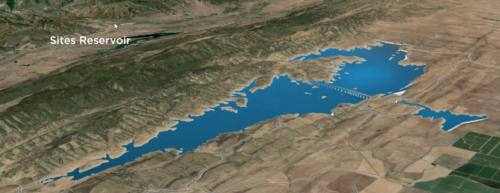
“The developers of a new, massive Northern California reservoir say they’ll have enough water to pursue their $6 billion venture, laying to rest their previous concerns that the project 70 miles northwest of Sacramento might not be viable. The proposed Sites Reservoir, billed as a remedy for the state’s chronic water shortages, appeared to be at risk earlier this year when state regulators outlined how much water the facility could draw from the Sacramento River, and when those draws could occur. Supporters of the reservoir said the terms would yield as little as half the water needed to make the project worth the cost. The state’s terms were established to protect river flows and ensure fish, wildlife and other water users wouldn’t be harmed by the facility. But two weeks ago, after pushback from Gov. Gavin Newsom and other advocates, the State Water Resources Control Board relaxed the conditions laid out in the reservoir’s proposed water right, allowing more water to be taken. Regulators said new data suggested that they’d been overly restrictive. … ” Read more from the San Francisco Chronicle.
Sites Project Authority responds to revised water right permit: “We can see a path forward that allows the Project to advance”
“Today, the Sites Project Authority (Authority) issued the following statement regarding the revised water right decision and permit for the Sites Reservoir Project (Project) released by the State Water Resources Control Board’s (State Board) Administrative Hearings Office (AHO): “The revised permit represents another significant milestone in the steady progress of Sites Reservoir, one of California’s most significant water storage projects. We appreciate the revisions that were made and can see a path forward that allows the Project to advance. We recognize the substantial work undertaken by the AHO and appreciate the thoughtful consideration of the Authority’s and others’ feedback on the March 2026 draft. The revised draft terms and conditions can potentially support a viable Project. The revisions strike a better balance between competing beneficial uses of water, which better serves the public interest; without this, the Project would not be able to advance. … ” Continue reading from the Sites Project Authority.
Here’s when and where California could get the most rain this winter as powerful El Niño builds
“California’s winter prospects are unusually wet as the potentially historic El Niño looms, and the latest forecasts are starting to put numbers on what that could mean. Along parts of the California coast, federal forecasters now put the odds of a top-third precipitation season as high as 50% to 60%. One of Europe’s leading seasonal models goes considerably further, projecting January rainfall around 4 inches above normal in San Francisco and more than 6 inches above in Santa Rosa. An updated long-range forecast released Thursday by the Climate Prediction Center adds to mounting evidence favoring above-normal precipitation across California this winter. More importantly, the CPC and international weather agencies’ long-range models are building a consensus on when the wettest periods could be and how much precipitation may fall. … ” Read more from the San Francisco Chronicle.
El Niño may bring more water to California than reservoirs can hold
“New precipitation outlooks published by the National Oceanic and Atmospheric Administration (NOAA) Climate Prediction Center (CPC) on Thursday imply that a strengthening El Niño will likely bring above-average precipitation across Southern California this winter. Although the forecast is widely considered good news for a region that often struggles with a fluctuating water supply, some of the reservoirs in this part of the state are already close to capacity, meaning more rain might not have a place to go. On Thursday, the CPC issued its seasonal precipitation outlooks through December 2027. The predictions come as forecasters track a strengthening El Niño in the Pacific Ocean. The developing El Niño, which is the warm phase of the El Niño-Southern Oscillation (ENSO) cycle, has already broken numerous records and is on track to become a “super” El Niño by this winter. The strength of the climate pattern could influence weather across the globe, including in the U.S., where a wet winter is expected in the Southwest. … ” Read more from Newsweek.
UC Santa Cruz researchers launch real-time study on kelp resilience as a super El Niño unfolds

“A rapid-response team of students and their professor at the University of California, Santa Cruz, are doing real-time research to measure how the region’s iconic giant kelp forests respond to ocean warming expected during a powerful “super El Niño” that is set to surge across the Pacific. The Nearshore Ecology Research Group, led by UC Santa Cruz professor Joshua Smith, is treating this forecasted extreme climate event as a natural opportunity. The team is studying the effects of acute ocean warming on these undersea forests, which are still recovering from widespread losses that occurred during a marine heatwave over a decade ago. “We now have a rare, time-sensitive opportunity to understand, and potentially mitigate, another large-scale ecosystem shift as it unfolds,” said Smith, an assistant professor of ecology and evolutionary biology. “This project will deliver actionable science in near to real time” … ” Read more from UC Santa Cruz.
Planetary waves are creeping into California right now
“Oceanographers are tracking a deep ocean wave set to arrive in California waters in October. Unlike the surfable waves that crash along the beach, this so-called Kelvin wave — or “planetary wave” — can travel thousands of miles in the Pacific Ocean and raise the height of the water by up to a foot. El Niño, the climate phenomenon that is expected to reach historic strength this fall, drives these waves. “There’s currently a Kelvin wave, which is pretty significant… [that] probably won’t arrive in most of California until October,” Daniel Swain, a climate scientist for the University of California’s Agriculture and Natural Resources group, said during an online briefing. “… This will be an additional half-a-foot elevation on top of what we’ve currently got once that arrives, and we’re anticipating additional large Kelvin waves later this winter.” … ” Read more from SF Gate.
The end is coming for California’s untouchable grass
 “Just a few months remain before swaths of California grass irrigated with potable water must be eliminated, browned, or converted to less water-intensive landscaping. The impending shift stems from a new rule, passed in 2023, that prohibits using drinkable water to irrigate nonfunctional turf. The law — AB 1572 — takes effect on the first day of January 2027 and applies to local government properties. Other property types will come under the law’s scope in the following years — commercial, industrial, and institutional properties in 2028 and common areas of homeowner association properties in 2029. Fines for noncompliance can reach up to $1,000 per day that the violation continues. The new law, according to estimates from the Oakland-based water conservation thinktank Pacific Institute, could cut urban water use by more than a fifth. A report from the State Water Resources Control Board states that grass is “the largest component of vegetation water demand” year-round and statewide. … ” Continue reading at Knee Deep Times.
Newsom rejects effort to roll back CEQA exemptions for advanced manufacturing
“Gov. Gavin Newsom on Friday vetoed legislation that would have narrowed exemptions to the California Environmental Quality Act for advanced manufacturing facilities amid pushback from business and industry groups. Senate Bill 954 from state Sen. Catherine Blakespear (D-Encinitas) would have rolled back parts of last year’s controversial overhaul of CEQA, which fast-tracked approvals for a broad array of housing and infrastructure projects in an effort to ease new construction in the state. Critics said the overhaul opened up a path for advanced manufacturing facilities such as strip miners, chemical producers, battery recyclers and semiconductor plants to open in communities without any environmental review. Dozens of environmental groups including the Sierra Club, the Natural Resources Defense Council and California Environmental Voters urged the governor to sign the legislation into law, arguing that it would have provided essential protections for communities that already experience the worst pollution from industrial facilities. … ” Read more from the LA Times.
UC Davis environmental law expert argues Prop. 45 could speed data center development
“A UC Davis environmental law expert is warning that Proposition 45 could accelerate data center development across California by allowing some projects to take advantage of streamlined environmental review and more limited court challenges — an interpretation disputed by supporters of the November ballot measure. Richard Frank, senior fellow at the California Environmental Law & Policy Center at the UC Davis School of Law, joined land use attorney Matthew McKerley in making the argument in a Daily Journal column. Frank and McKerley contend that the initiative’s language covering broadband internet access projects and “related and ancillary” infrastructure is broad enough to encompass at least some data centers. Proposition 45 supporters dispute that interpretation, arguing that the measure’s definition of broadband internet access applies to infrastructure providing retail internet service to consumers, not conventional data centers. … ” Read more from the Davis Vanguard.
In commentary this weekend …
State’s voluntary agreements threaten Klamath-Trinity salmon recovery
Regina Chichizola, a co-founder and director of Communities United for Water Protection, writes, “Right now, water is being released from Trinity River reservoirs to aid struggling salmon on the Klamath River. This federal action, part of the Lower Klamath Long Term Plan, and coordinated with the Hoopa and Yurok Tribes, should help avoid an otherwise imminent fish kill from low flows and warm temperatures. It will also help wash out toxic and attached algae, which plague the Hoopa Valley Tribe’s drinking water supplies and Klamath and Trinity River swimming and fishing activities. Governor Newsom says this is the type of action that California supports. Working with Tribes, counties, and the federal government to protect rebounding salmon runs after a major dam removal project is a win-win. However these types of flow releases are threatened by California’s Bay Delta water quality decisions. If California’s Water Quality Control Board does not act to protect the Trinity River, and/or deny the Bay Delta Voluntary agreements, this water may not be available in future years. The fact is the Governor and Water Board are letting politics and power decide who gets water, and that is a much bigger threat to the Klamath River, and salmon recovery, than people realize. … ” Read more at the Eureka Times-Standard.
C-WIN: Voluntary agreements are unjustified and do not satisfy the board’s duty to protect the Bay-Delta ecosystem
“The California Water Impact Network (C-WIN) has submitted comments to the State Water Resources Control Board on the Final Draft Bay-Delta Plan, emphasizing that approval of the plan’s Voluntary Agreements without evidence for their effectiveness would be arbitrary, capricious, catastrophic to the Bay-Delta ecosystem, and unfair to ratepayers. C-WIN also noted that the Board must follow the law and reject Trump administration claims that the US Bureau of Reclamation is not subject to state rules for operating the Central Valley Project, which supplies massive quantities of water to Central Valley agriculture. Max Gomberg, C-WIN’s Senior Policy Advisor and Board Secretary, said the Board pursued voluntary agreements for a decade without ever presenting evidence for why they would be more effective than regulation for restoring California’s salmon populations. The plan’s voluntary agreements allow large contractors to provide limited additional river flows and habitat restoration rather than submit to standard regulation that requires more flows to maintain healthy fish populations. … ” Read more from C-WIN.
California Never: Why tech billionaires can’t build their new city
“I can’t count the number of times I’ve heard people flying over the vast American West for the first time exclaim: “Who says we don’t have plenty of room for millions more people? There’s nothing but empty space down there!” Now, these are not necessarily people with master’s degrees in urban planning, to be sure. Empty space is one thing; water is another. … Could we build a California city today? We certainly need one—or five, or 10. There’s not enough housing for those of us here already, not to mention for our grandchildren. Civilizations have been building cities ever since we emerged from the caves. Can-do Americans can do anything we put our minds and backs to, right? Wrong. You can’t build a new city in our state, at least not easily. … ” Read more from the LA Daily News.
Gov. Newsom should veto biomass bill
Shaye Wolf, Ph.D., climate science director at the Center for Biological Diversity, writes, “What would you think if Gov. Gavin Newsom signed a bill declaring that junk food was healthy, and that funneled millions from health programs to the junk food industry? That would be absurd. But a costly, pro-industry biomass energy bill now on the governor’s desk does something similar. If signed into law, Assembly Bill 706 would prop up the state’s dirtiest, most expensive, most inefficient electricity source — biomass energy made by burning or gasifying trees — by declaring it clean. The bill would raid the state’s Greenhouse Gas Reduction Fund — meant for investments in clean energy and climate resiliency — to pay the biomass energy industry to expand its polluting operations. This would waste up to tens of millions of dollars each year. … ” Read more from Capitol Weekly.
In people news this weekend …
Promotions, passings, profiles – submit people news items to maven@mavensnotebook.com.
California’s water chief takes the mic
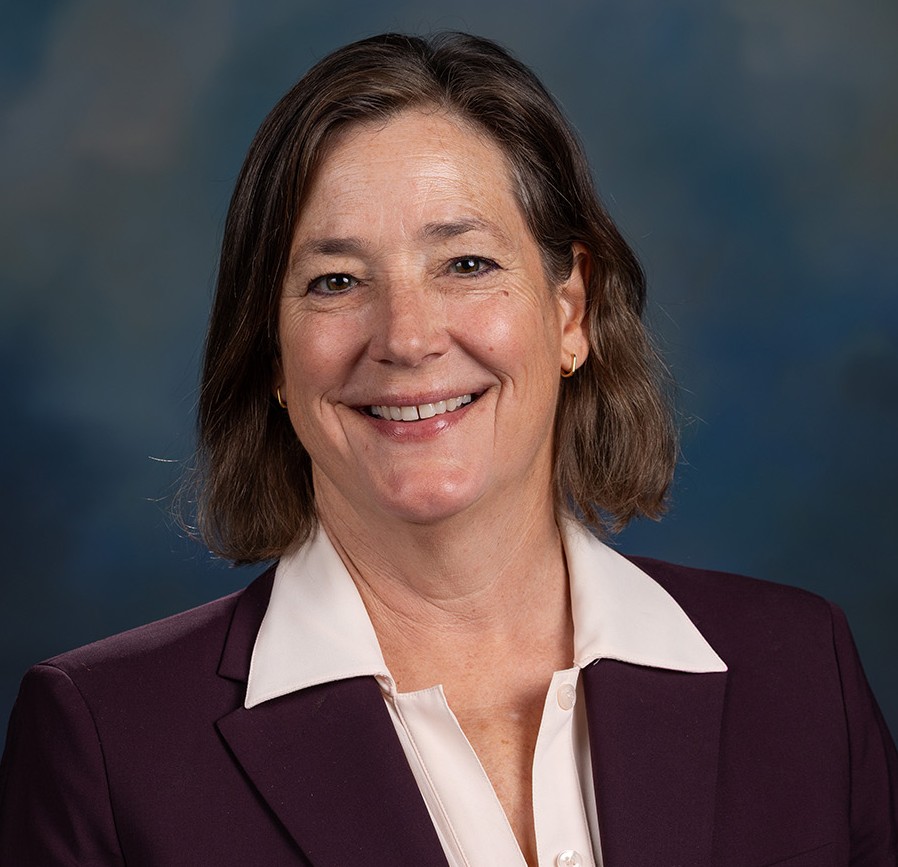 “Karla Nemeth spent eight years atop California’s water bureaucracy, trying to make the state’s vast, creaky system work in a hotter, more volatile climate. Now she’s continuing the fight from outside government. Nemeth, who was first appointed director of the California Department of Water Resources by Gov. Jerry Brown in 2018, oversaw the state’s pumps, canals and reservoirs to deliver water to roughly two thirds of the state’s population. She also became a key adviser to Gov. Gavin Newsom, helping him consider how to adapt to climate change and prepare for a shrinking Colorado River. Newsom is winding down his term, and Nemeth left her position in July. Earlier this month, she took over as executive director of the Association of California Water Agencies, the state’s largest water trade group. From that perch, she’ll be pushing the next administration and the Legislature to do more about water storage, flood protection, affordability and the Colorado River. In an interview with POLITICO, she reflected on her time in the executive branch and the challenges ahead for California and its next governor. … ” Read more from Politico.
New DWR director discusses water resiliency plans
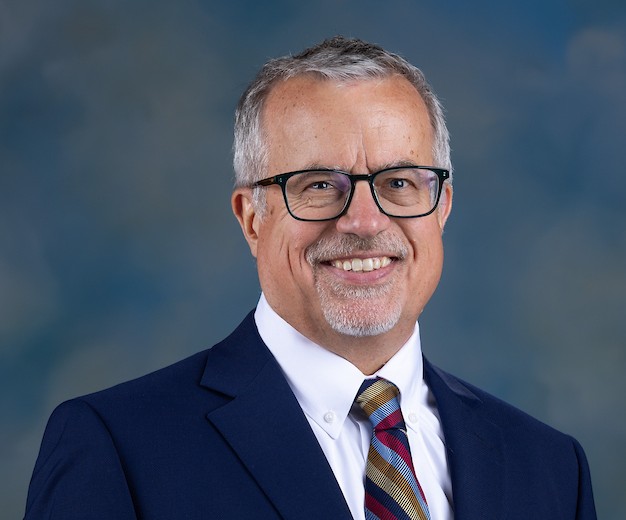 “The California Department of Water Resources swore in its new director, Thomas Gibson, in July. He previously worked in various state agencies addressing water issues, including stints at the state Department of Fish and Wildlife and Natural Resource Agency. Gibson spoke with Ag Alert® about his priorities as he steps into his new role. How has your past experience informed how you think about California’s water issues? I’ve worked in water for most of my career at this point. I was a lawyer in private practice that worked on some water matters for about a decade and then came to work at the state department. At the time, it was called the Department of Fish and Game; now it’s the Department of Fish and Wildlife. I was the general counsel there for a number of years. Then I went to the California National Resources Agency and held a few positions there before joining the Department of Water Resources about five years ago. … ” Read more from Ag Alert.
Byron Sher, veteran lawmaker who wrote many of California’s landmark environmental laws, dies at 98
“Byron Sher, a collegial Stanford University law professor who ran for Palo Alto city council in the 1960s after losing a battle over the widening of a local street, then rose to the state Legislature, writing many of California’s landmark environmental laws over three decades, has died. Known for his affable, easy-going manner, Sher died Saturday of natural causes at his home, on a pear and apple ranch in the Sierra foothills near Placerville. He was 98. Over a career that stretched from 1980 to 1996 in the state Assembly, and from 1996 to 2004 in the state Senate, Sher passed dozens of groundbreaking bills that made California a national leader in environmental policy. … ” Read more from the San Jose Mercury News.
Former U.S. Sen. Jon Kyl of Arizona, a ‘workhorse’ who shaped water policy, dies at 84
“Former U.S. Sen. Jon Kyl, a longtime Republican lawmaker from Arizona who shaped landmark water policies in the U.S. West and guided the confirmation of Supreme Court Justice Brett Kavanaugh, has died. He was 84. Kyl died Wednesday night from a neurological disorder, said Gordon James, a communications professional who is a longtime friend of the Kyl family. Kyl had withdrawn from public life in December 2025 after announcing he had been diagnosed with dementia. Kyl spent almost three decades in Congress, serving in both chambers, and watched his party undergo a drastic transformation, with his career spanning Ronald Reagan’s presidency to President Trump’s first term. Former Republican Arizona Gov. Doug Ducey, who considered Kyl a mentor, described the former senator in a February 2025 interview with the Associated Press as a true statesman and a “workhorse” among Washington, D.C.’s “showhorses.” … ” Read more from the LA Times.
Podcasts …
WHAT MATTERS: AI, data centers, and water
Artificial intelligence is transforming the way we live, work, and connect. But behind every AI query, streamed video, uploaded photo, and cloud-based application lies a vast network of data centers that require significant amounts of energy and water to operate. In Episode 31 of What Matters Water TV & Podcast, we explore the critical intersection of AI, data centers, energy, and water resources.
WATER IS A MANY SPLENDOR’ED THING: Local Governance is Critically Important
 Imagine turning on the shower or the kitchen tap and not finding any water. After calling your neighbors, you find, they have no water. The neighborhood is experiencing what many have warned us about. Our aquifers are going dry. How do we manage our groundwater aquifers? Water is a Many Splendor ’ed Thing brings you another water relationship that has a personally significant impact to your life. Produced by Stephen Baker, Bringing People Together to Solve Water Problems, water@operationunite.co 530-205-6388
SUSTAINABILITY SOUNDBITES: The Colorado River is becoming an industrial location risk
Lake Powell has dropped to a quarter of capacity, and the rules governing the river expire this year, reshaping site decisions for chipmakers and data centers.
VOICES OF THE VALLEY: Why good food gets left behind
This episode of Voices of the Valley takes a closer look at an often-overlooked part of the food system: food loss on the farm. Join Western Growers’ Jeana Cadby as she sits down with Leigh Prezkop of the World Wildlife Fund (WWF) to learn more about why perfectly edible produce may be left in the field, from market signals and buyer specifications to the economic realities that influence what gets harvested.
TALKING UNDER WATER: From patchwork to progress: Advancing water reuse regulations
n this episode Talking Under Water host Mandy Crispin discusses the upcoming water reuse regulatory guide, an effort led by the Water Reuse Association to help states develop or modernize water reuse regulations. Joined by Bruno Pigott, executive director of the association, and Tricia Kilgore of Beaufort Jasper Water and Sewer Authority, the conversation explores why the guide was created and how it can help states navigate the often complex process of adopting reuse regulations.
Sunday reads …
Book Review: Unquenchable: America’s Water Crisis and What To Do About It
 Jim Lauria write, “I’m looking at the photo of my signed copy of Unquenchable: America’s Water Crisis and What To Do About It (Island Press, 2010), inscribed by Robert Glennon in December 2010 (see below). The note reads, “Let’s confront the crisis and avert a catastrophe.” Fifteen years later, that line lands with even more weight than it did when the ink was fresh. Rereading the book, what strikes me most is just how prescient Glennon was. Long before “water resilience” became a buzzword, he framed the problem in terms every real estate agent understands: location, location, location. For water, that reality translates into reallocation, reallocation, reallocation. The water is often in the wrong place, at the wrong time, serving the wrong uses, and Glennon never lets us look away from that uncomfortable truth. … ” Continue reading this book review.
Old readings on California water
Jay Lund writes, “Today’s water struggles have deep roots. Here is a small collection of older writings on California water, the youngest of which is still older than me. Beyond historical interest, these early writings have useful perspectives on water problems today, in the future, and outside California. These writings illustrate how a society of poor disorganized immigrants experienced abrupt climate change when they moved to California and had to change how they did agriculture, built cities and water systems, and organized water laws and institutions in a new (to them) climate and land. We still struggle with this condition today, and will in the future. California society is mostly much richer today, and somewhat more organized. … ” Read more from the California Water Blog.
In regional water news this weekend …
NORTH COAST
Sammy Gensaw: The restorative revolution and a river of reciprocity
“In this keynote address delivered at the Bioneers Conference in 2024, Sammy Gensaw, a dynamic young Yurok leader, shares some of his experiences working for ecological and cultural revival along the Klamath River, central to his people’s identity and livelihood. He discusses how the epic struggle to remove destructive dams required drawing deeply from ancestral wisdom, modern science, and cutting-edge activism, and how Indigenous leadership can play a central role in rekindling our connections to land and water and ushering in a restorative, resilient future for all of us. Sammy Gensaw is a leader in environmental and cultural preservation in his Yurok community. Director of the Ancestral Guard, a nonprofit focused on teaching traditional fishing and farming methods to Indigenous youth, his approach is deeply rooted in food sovereignty, cultural preservation, community resilience, and self-sufficiency. … ” Read more from Resilience.org.
SIERRA NEVADA
Conservancy awards El Dorado County $2M for new trail over Upper Truckee River
“The California Tahoe Conservancy Board authorized a $2 million grant for El Dorado County to build a critical missing section of the south shore shared-use trail network. The Johnson Meadow Greenway Connector Project will provide a safe route for people biking, walking, and rolling between South Lake Tahoe neighborhoods east and west of the Upper Truckee River. “It’s exciting to see this transformative project move forward,” said Conservancy Vice Chair and El Dorado County Supervisor Brooke Laine. “By tying together our neighborhoods and visitor destinations, this new trail crossing will provide lasting benefits for residents and visitors, and even for wildlife.” … ” Read more from South Tahoe Now.
SACRAMENTO VALLEY
Grant fund use on Tehama water flood control agenda
“When the Tehama County Flood Control and Water Conservation District meets Monday afternoon, it will discuss grant funds. The district Board of Directors will meet at 1 p.m. in the board chambers at 727 Oak St., Red Bluff. At the meeting, the board will hear from a recently formed committee with recommendations from meetings so far and will receive a presentation on the use of $15 million in grant funds. The grant-fund review will come first on the board’s agenda. The information for the item states that the district has been awarded over $15 million in grant funds for use in Sustainable Groundwater Management Act, or SGMA, projects. The board previously requested a review of how the district applied these funds. The Monday presentation will be shared by consultants Luhdorff & Scalmanini Consulting Engineers. … ” Read more from the Red Bluff Daily News.
Reclamation District 1500 helps restore salmon spawning habitat on the Feather River
“Reclamation District 1500, led by Roger Cornwell, is putting its expertise to work to help improve spawning habitat for Chinook salmon and steelhead in the Feather River. Working with the California Department of Water Resources, RD 1500 helped implement a project that placed approximately 8,000 cubic yards of spawning gravel in the river near Oroville ahead of the fall spawning season. The project builds on more than a decade of RD 1500’s work supporting salmon restoration and other habitat improvement projects throughout the Sacramento River Basin. … ” Read more from the Northern California Water Association.
Lake Oroville update: Routine spillway cleaning underway, Feather River Gravel Project, Salmon Festival
Following another winter season that required flood control releases from Oroville Dam’s main spillway, DWR has begun cleaning the spillway in preparation for routine annual inspections. Inspections of the concrete spillway chute are scheduled Oct. 12-16. Members of the public should expect to see crews using pressure washers, brooms, and small equipment to remove debris, followed by engineers walking the spillway surface to conduct inspections. Each year, DWR engineers perform comprehensive inspections of the main spillway. These inspections evaluate the condition of concrete slabs and walls, joint sealants, and dentates (energy-dissipating structures at the base of the spillway). Routine maintenance activities, including joint sealant replacement, are expected to occur this fall based on inspection results and reservoir levels. … ” Read more from the Department of Water Resources.
BAY AREA
Major S.F. waterfront site may become 160,000-square-foot data center
“A little-known real estate firm seeking to build data centers appears to have quietly eyed one of San Francisco’s largest remaining privately held industrial properties on the central waterfront. Nestory Park Capital launched in late 2024 in El Sobrante with an ambitious mission: transforming underused properties into data centers for major technology tenants. The company, which is headed by David Flaherty of Flair Diversified Properties, lists the 160,000-square-foot flagship San Francisco project on its website, which would rise on 1.6 acres at an undisclosed location. But public records show that last month Nestory Park and its lobbyist, Boe Hayward, met with Ned Segal, Mayor Daniel Lurie’s chief of housing and economic development, to discuss permits for 1215 Michigan St. … ” Read more from the San Francisco Chronicle.
CENTRAL COAST
Greenfield cuts nearly $5M from wastewater treatment contract
“Greenfield City Council on Sept. 8 unanimously approved a nearly $5 million reduction to a contract for equipment for the city’s wastewater treatment plant upgrade. The amendment reduces the city’s procurement agreement with Cloacina LLC from $31.08 million to $25.94 million for a packaged membrane bioreactor, or MBR, treatment system. The MBR system will be part of the city’s planned wastewater treatment plant upgrade, which has an overall estimated cost of $111.3 million. The project is being funded through the Clean Water State Revolving Fund program, which includes grants and loans for planning, design, environmental work and construction. Public Works Director Jamie Tugel said the reduced contract will help the city manage costs across the project. “The renegotiated contract (saves) us almost $5 million,” said Tugel, adding that it “will also free up funds to be able to ensure that we can fund the remainder of the wastewater treatment upgrade project.” … ” Read more from the Salinas Valley Tribune.
Moss Landing battery storage fire flares up again, raising new safety fears in California
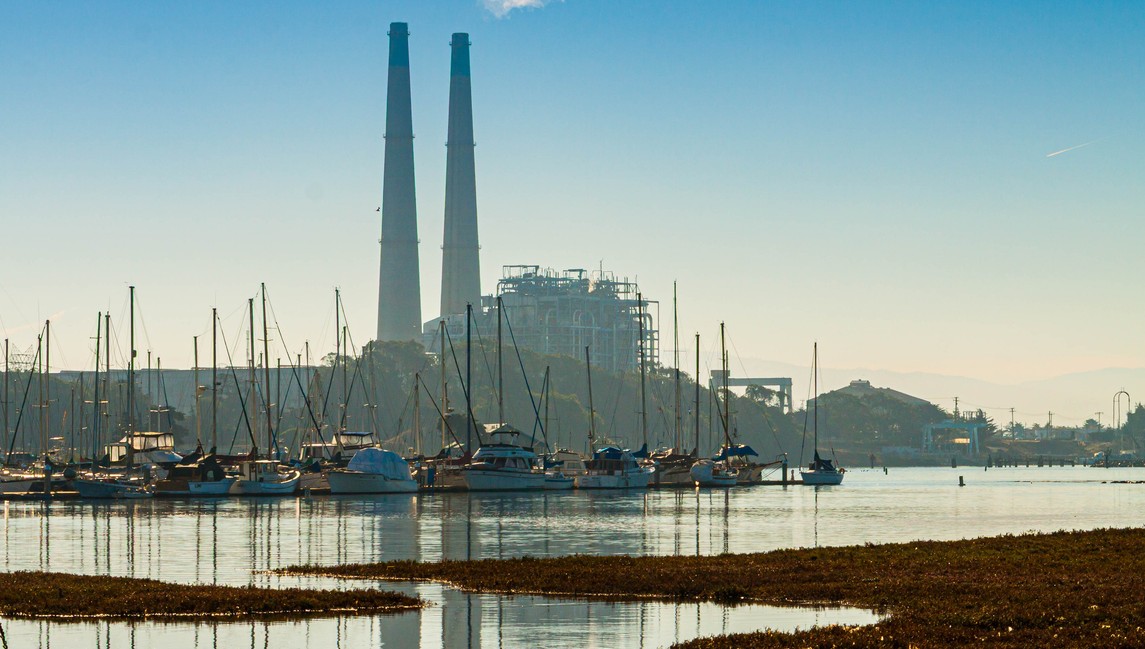
“The burned remains of the Moss Landing Power Plant battery energy storage facility caught fire again Friday morning, prompting Monterey County officials to issue a shelter in place order — less than two years after it became one of the largest battery storage facility fires in history. Workers for Vistra, the plant’s Texas-based operator, noticed a flare-up early Friday morning against the wall of a building that burned in the initial January 2025 fire. The cause: roughly 1,200 inaccessible battery modules, still charged, spontaneously ignited, said Chief Jess Cortez with the North County Fire Protection District. “They’re in the smoldering stage right now,” Cortez said at a briefing Friday afternoon, adding that at that point there was no active fire. “The incident is very dynamic. There could be possible flare-ups.” Local authorities lifted the order to shelter in place later Friday afternoon. Still, the flare-up reignites fears about battery storage facilities — even as California comes to increasingly rely on them. The state now has “the nation’s largest battery energy storage fleet,” the California Energy Commission announced in August. “If we had only known the worst-case scenarios of how not to build batteries, we wouldn’t have built Moss Landing,” said Dustin Mulvaney, a professor at San Jose State University in the school of planning, policy and environmental studies. “Because it keeps coming back to haunt us.” … ” Read more from Cal Matters.
SEE ALSO:
- Moss Landing fire concerns under control, for now, from the Monterey Herald
- Officials link Friday’s Moss Landing fire to 2025 fire, from the Monterey Herald
EASTERN SIERRA
DWP gets new local water, still refuses to let Mono Lake rise
“New groundwater treatment facilities are indeed worth celebrating, and the Mono Lake Committee raises a glass to all those involved in getting the Los Angeles Department of Water & Power’s (DWP) North Hollywood Central and North Hollywood West Groundwater Treatment Facilities completed and treating 48,000 acre-feet of contaminated drinking water per year. Now it’s time to raise a glass to save Mono Lake. At the August ribbon-cutting, leaders highlighted decreasing LA’s dependence on imported water, increasing climate resilience, and better water security as major achievements. Mayor Karen Bass said, “While the impact of the climate crisis is local, so too are the solutions. These state-of-the-art facilities will help restore up to 43 million gallons [48,000 acre-feet per year] of contaminated groundwater daily to supply hundreds of thousands of homes with reliable drinking water—all while reducing our dependence on imported water and launching us forward to meet our bold climate goals.” … ” Read more from the Mono Lake Committee.
SOUTHERN CALIFORNIA
LA County issues temporary ban on mega data centers, with ordinance in the works
“Los Angeles County is moving forward with an ordinance that would permanently ban AI hyperscale data centers in unincorporated areas, according to county officials on Friday. The L.A. County Department of Regional Planning enacted a moratorium on large scale data centers, also known as hyperscale data centers serving generative AI, that went into effect for all zones in unincorporated county areas on Thursday, Sept. 17. Signed by Amy Bodek, director of Regional Planning, the memo puts in place a temporary ban until an ordinance is prepared, vetted and goes before the Board of Supervisors. A motion by First District Supervisor and board chair Hilda Solis to kickstart that ordinance will be heard on Sept. 23 at the Community Services Cluster Agenda Review virtual meeting. … ” Read more from the LA Daily News.
Las Virgenes-Triunfo PFA secures $335 million in state and federal financing for Pure Water Project
“The Las Virgenes-Triunfo Public Financing Authority (PFA) has secured more than $335 million in low-cost state and federal financing for the Pure Water Project Las Virgenes-Triunfo, marking a major milestone in a yearslong strategy to reduce the cost of one of the region’s most significant infrastructure investments, while building its first local source of drinking water. The financing includes $84 million in loans and grants through the State Water Resources Control Board, $50 million of which comes from the Clean Water State Revolving Fund (CWSRF), and a $251 million Water Infrastructure Finance and Innovation Act (WIFIA) loan through the U.S. Environmental Protection Agency. Together, the two financing packages allow the JPA to take advantage of favorable loan terms, grants and flexible repayment terms that significantly reduce the amount customers would otherwise pay to finance the $466 million Pure Water Project. … ” Read more from the Las Virgenes Municipal Water District.
A California frog is on the brink of extinction. Long Beach’s aquarium has a plan to save it
“Inside three water tanks in a tucked-away room at the Aquarium of the Pacific, biologists are tasked with bringing back a population of frogs that once thrived across the state’s mountainous streams but has since reached the brink of extinction. It’s a program that’s nearly closed out its fifth year with a major milestone: more than 1,000 frogs raised and released into the wild. That’s more than five times as many mountain yellow-legged frogs — named for the lemon-hued streak along their hind legs — believed to be in the wild when last recorded in 2019, reduced to small pockets of wild streams in the San Gabriel, San Bernardino and San Jacinto Mountains. By the time the frog was listed under the federal Endangered Species Act in 2002, fewer than 100 adults remained in Southern California. A count in 2020 put the number at about 188 in the wild, though biologists say that figure has almost certainly shifted since. … ” Read more from the LAist.
IMPERIAL/COACHELLA VALLEYS
Calexico enacts permanent data center ban
“Calexico has now become the first city in Imperial County, and the third city in the entire state of California, to enact a permanent data center ban. Following several months of discussion, the Calexico City Council voted on Wednesday, Sept. 16, to permanently prohibit the establishment of data centers citywide. This decision adopts an ordinance that adds Article XII to Chapter 17.11 of the city’s Municipal Code, outlining the definition of data centers and allowing a citywide ban to be established. The process to ban data centers in Calexico can be traced back to June 3, 2026, when the council directed staff to return with an item for consideration regarding a potential data center moratorium during its meeting. … ” Read more from the Calexico Chronicle.
Along the Colorado River …
Leaders debate Colorado water and river management
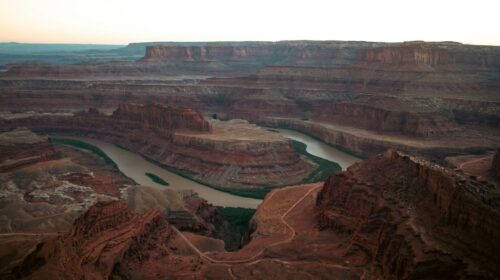 “U.S. Sen. Michael Bennet and U.S. Rep. Jeff Hurd joined state officials and hundreds of Western Slope residents at Colorado Mesa University on Friday for a water assembly organized by the Colorado River District. The leaders gathered in the university ballroom to deliberate on water allocation, infrastructure needs and ongoing river management challenges facing the state. The assembly focused on critical Colorado water issues, including the Shoshone Permanency Project, the Arkansas Conduit Act and negotiations with Lower Basin states. Leaders emphasized bipartisan cooperation to secure funding and infrastructure for Colorado’s agricultural and municipal water needs amid ongoing regional supply constraints. U.S. Sen. Bennet and U.S. Rep. Hurd reviewed recent progress concerning state water projects, highlighting collaborative efforts such as the Shoshone Permanency Project. Bennet praised the community effort required to achieve the agreement. … ” Read more from Western Slope Now.
SEE ALSO: Colorado River District hosts annual water seminar at CMU, from KJCT
NASA images show Lake Powell’s decline, part of the West’s water story
“Satellite images from NASA show how much Lake Powell has dropped since 2017, reflecting the water shortage in the Southwest U.S. On Sept. 1, 2017, Lake Powell was about as full as it has been over the past 10 years, but nine years later, it’s been hitting record lows this summer after an extremely dry winter in the Upper Colorado River Basin. NASA’s Earth Observatory shows the difference between then and now using images acquired with the OLI (Operational Land Imager) on Landsat 8. The new photo showing Lake Powell’s low level is from Sept. 10, 2026. Use the slider on the image below to compare the photos. … ” Read more from KLAS.
CRIT reaches agreement with water district on Colorado River water
“The Colorado River Indian Tribes and the Central Arizona Water Conservation District reached an agreement on Colorado River, CRIT officials announced. The CRIT and CAWCD agreement will deliver more than 9,000 acre-feet of CRIT Intentionally Created Surplus, or ICS, water to the district. An acre-foot of water is the volume of water required to cover one acre to a depth of one foot and is equal to 325,851 gallons, according to the Arizona Department of Water Resources. In Arizona, one acre-foot is typically enough water to serve three single-family homes for a year. CRIT officials said the afreement with the CAWCD represents the last remaining water CRIT made available as part of a Drought Contingency Plan that was agreed to in 2019. … ” Read more from KAWC.
Data center leaders, ASU water expert say the facilities use less water than assumed
“Members of Arizona’s data center industry are aware the public is concerned about their water use. At an event hosted by the Arizona Data Center Alliance on Thursday, companies touted progress they are making to reduce water use in data center cooling, while representatives from SRP and the Kyl Center for Water Policy helped put this in the context of Arizona’s water system. Tom Sullivan, chief operating officer of Air2O, a local heavy industry HVAC manufacturer, says most Arizona data center developers have changed their ethos when choosing cooling systems to focus on saving as much water as possible, rather than trying to save on their energy bill. … ” Read more from KJZZ.
Utah enters new water year with drought, low reservoirs
“Utah is approaching the end of its water year with drought covering the entire state, reservoirs below normal and some rivers carrying only a fraction of the water needed to satisfy direct flow rights. But one encouraging sign is emerging heading into winter. August monsoon storms improved mountain soil moisture across much of Utah. That moisture could become important when the snow begins to melt next spring. The Utah Division of Water Resources reported the conditions Sept. 17, as the state prepared for the beginning of a new water year on Oct. 1. Utah’s reservoirs average 50% full, excluding Lake Powell and Flaming Gorge. … ” Read more from Western Water.
In national water news this weekend …
EPA withdraws guidance preventing PFAS from entering drinking water
“In the latest regulatory rollback on toxic chemicals, the US Environmental Protection Agency (EPA) has withdrawn Biden-era guidance on how to prevent PFAS pollution in drinking water. In a memo dated August 11, 2026, the agency’s Office of Water identified several documents it deems “appropriate for rescission,” including a 2022 memo that encouraged states to use existing Clean Water Act authorities to prevent toxic per- and polyfluoroalkyl substances (PFAS) from entering drinking water. The memo also said that, while not legally binding, the agency has a responsibility to ensure that its guidance “reflects existing law, regulations, Executive Orders, and current policies, and that such guidance is informed by stakeholder engagement and public comment, as appropriate.” … ” Read more from The New Lede.

