
California Water Commission hears how state planning, local priorities, and funding gaps are shaping the Valley’s water future.
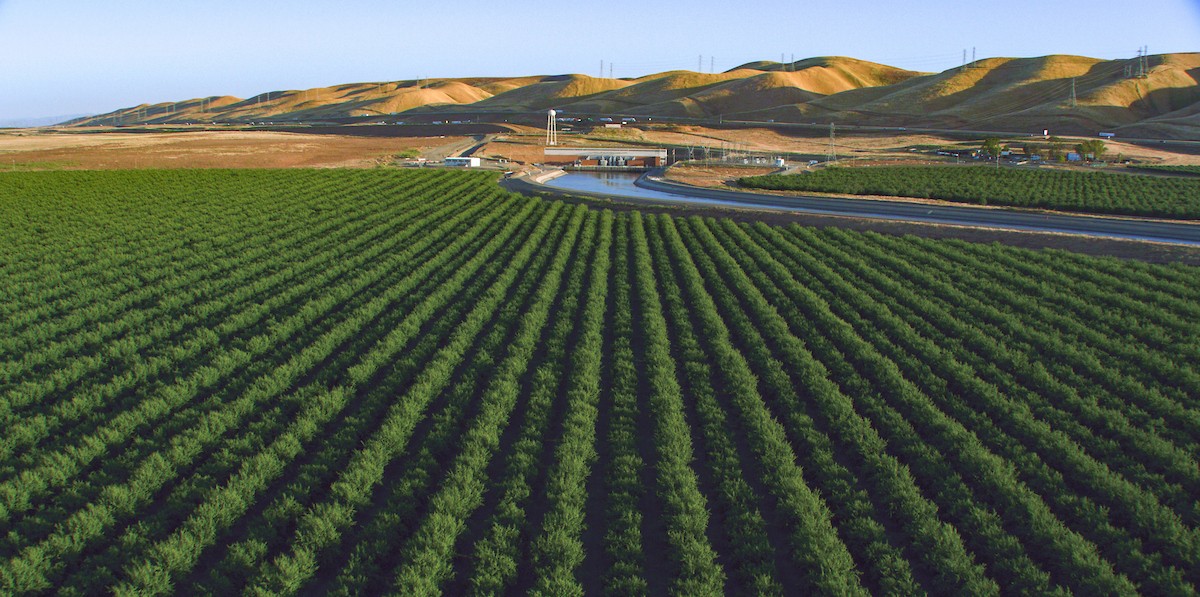
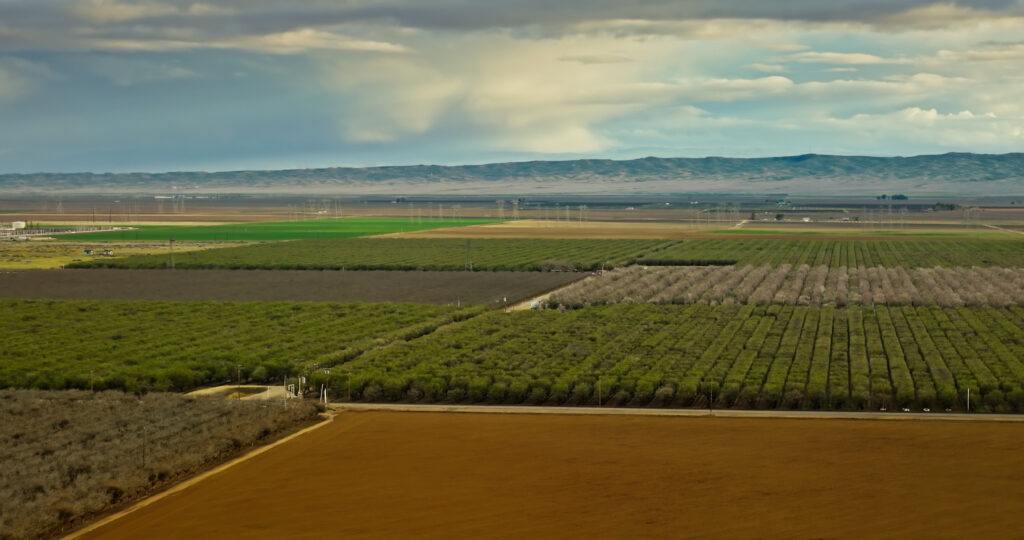
The San Joaquin Valley is one of the world’s most productive agricultural regions and a cornerstone of the nation’s food security. Water underpins the region’s economy, communities, and environment, yet the San Joauin Valley faces some of California’s most complex and interconnected water challenges, including depleted aquifers, land subsidence, stressed ecosystems, unreliable surface water supplies, and increasing flood risk. Climate change is expected to intensify many of these pressures.
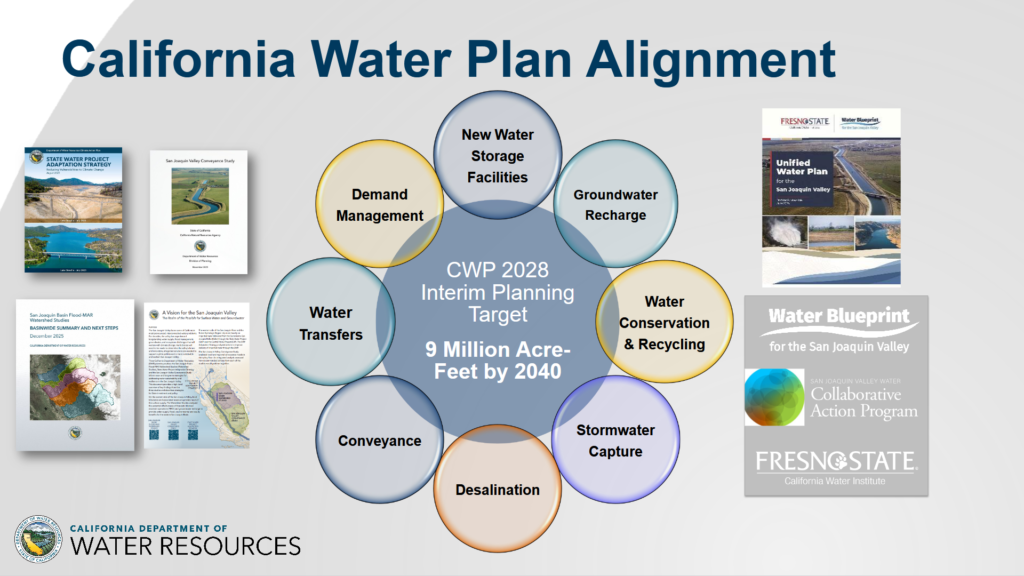
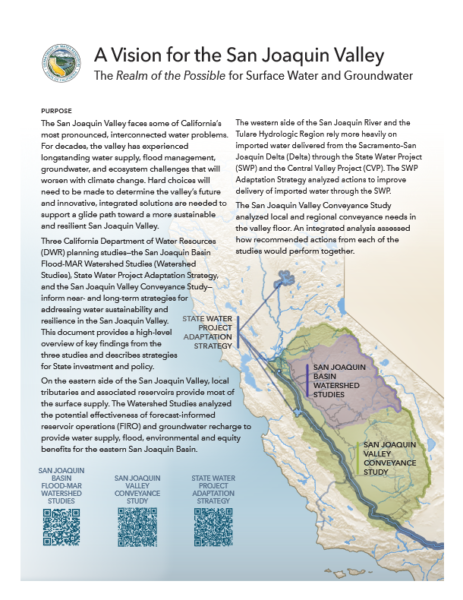 To address these challenges, the Department of Water Resources (DWR) developed A Vision for the San Joaquin Valley (Vision), an integrated plan outlining near- and long-term strategies to improve water management and climate resilience. The Vision provides a framework for aligning local, state, and federal partners around coordinated investments, policy improvements, and climate-resilient water management. Other Valley-led efforts, including the Unified Water Plan and the San Joaquin Valley Water Collaborative Action Plan, are also helping define priorities for the region.
At the California Water Commission’s August meeting, Joel Metzger, Deputy Director of DWR’s Statewide Water Resources Planning and Enterprise Management, and Eric Tsai, Supervising Engineer, opened with an overview of DWR’s Vision document. Laura Ramos, Director of the California Water Institute; Eddie Ocampo, Director of Self-Help Enterprises; Geoff Vanden Heuvel, Director of Regulatory and Economic Affairs for the Milk Producers Council; and Kyle Jones, Facilitator of the San Joaquin Valley Water Collaborative Action Plan, then shared perspectives on aligning plans with action, centering community needs, addressing urgent funding and subsidence challenges, and building consensus around regional solutions.
DWR’s Integrated Vision for San Joaquin Valley Water Resilience
DWR recently completed three planning studies focused on different parts of the San Joaquin Valley: the State Water Project Adaptation Strategy, the San Joaquin Valley Conveyance Study, and the San Joaquin Basin Flood-MAR Watershed Studies. Together, the studies quantify water availability, identify climate adaptation strategies, and establish a foundation for pilots, projects, and policies that can strengthen Valley-wide resilience.
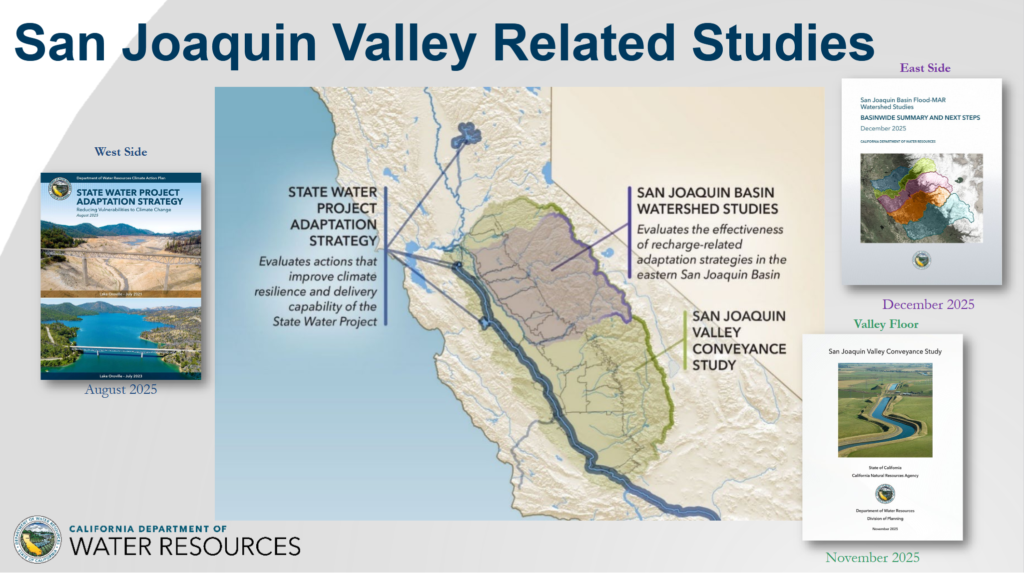
 The State Water Project Adaptation Strategy identifies restoration of California Aqueduct and San Luis Canal capacity lost to subsidence as the top priority because continued subsidence would substantially reduce SWP deliveries. Mr. Tsai also described the Delta Conveyance Project as a promising way to increase floodwater diversions within existing regulatory limits while supporting other adaptation strategies. Forecast-informed reservoir operations at Oroville Reservoir could provide modest, safe, and cost-effective drought resilience by allowing greater storage under more variable hydrology. Additional south-of-Delta storage could also serve as a strategic dry-year reserve, especially when paired with the Delta Conveyance Project, through either aboveground or underground storage.
 The San Joaquin Valley Conveyance Study found that restoring capacity lost to subsidence is a priority for both the State Water Project and Central Valley Project systems, especially along the Delta-Mendota Canal and Friant-Kern Canal. The study warned that subsidence can create a downward spiral: reduced conveyance capacity limits wet-year surface water deliveries, reduces groundwater recharge opportunities, increases reliance on groundwater, and can worsen subsidence. The study identified minimizing or stopping subsidence near SWP and CVP conveyance facilities as the valley’s top conveyance priority, requiring groundwater levels to recover above critical head—the level below which subsidence occurs. It also found that, in most years, inadequate water supply is a greater constraint than conveyance capacity across much of the valley, making reliable surface water supplies a higher need than new or expanded conveyance outside subsided areas.
 The San Joaquin Basin Flood-MAR Watershed Studies evaluated recharge-related actions in the eastern San Joaquin Basin and found that pairing forecast-informed reservoir operations with groundwater recharge could benefit flood management, water supply, groundwater sustainability, ecosystems, and equity. Strategically located recharge sites could also provide localized benefits for disadvantaged communities and subsidence-prone areas. However, FIRO-MAR could reduce SWP exports because San Joaquin River flows affect Old and Middle River reverse-flow regulations; upstream recharge can reduce river flows and, in turn, limit exports. The studies quantified the physical water available for recharge and found that implementation would require changes to regulations and water rights, along with new partnerships between upstream and downstream water users to manage long-term effects.
DWR’s A Vision for the San Joaquin Valley highlights key risks and opportunities and summarizes findings from the three studies. The document is intended to support stronger federal, state, and local alignment around coordinated action in the San Joaquin Valley.
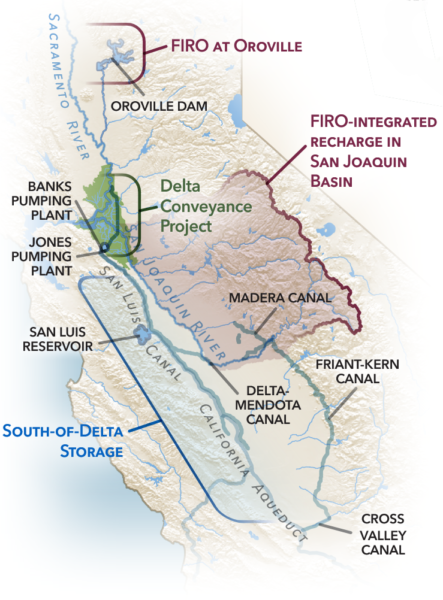 DWR’s integrated analysis for the Vision document found that flood risk and depleted groundwater aquifers present an opportunity to recharge floodwaters for dry-year supply. The analysis combined recommendations from the State Water Project Adaptation Strategy—including the Delta Conveyance Project, forecast-informed reservoir operations at Oroville, and south-of-Delta storage—with watershed study recommendations integrating FIRO and groundwater recharge in five watersheds.
“We did this to see how they would perform together,” said Mr. Tsai. “In short, there appears to be a synergistic effect across the recommendations.”
Mr. Tsai noted that FIRO-MAR can reduce long-term average Delta exports because of Old and Middle River flow regulations. However, State Water Project Adaptation Strategy actions, particularly the Delta Conveyance Project, could significantly reduce the net long-term average reduction in SWP exports caused by FIRO-MAR.
“The reason is that FIRO-MAR reduces San Joaquin River flows, which then reduces SWP exports because of regulations that prevent reverse flows on Old and Middle River. But DCP provides the ability to divert water using North Delta diversions during high-flow events without impacting these Old and Middle River flows, and our modeling shows that DCP seems to blunt the potential negative impacts of upstream groundwater recharge in the San Joaquin Valley when paired with reservoir operations. This really shows that integrated strategies can potentially provide a robust range of benefits and should be explored and analyzed together.”
The Vision document notes that effective implementation of these recommendations will require unprecedented collaboration and coordination among local, state, and federal agencies. Significant demand management will still be needed in the San Joaquin Valley to bring groundwater basins into sustainability. Other recommendations address drinking water, environmental needs, and through-Delta conveyance. DWR plans to release the final Vision document in September.
The Vision document and other San Joaquin Valley planning efforts will inform the California Water Plan. “Through SB 72, the California Water Plan has new mandates to both set water supply targets and develop strategies, actions, policies, and programs to meet those targets,” said Mr. Tsai. “So all this work that explores the realm of the possible for San Joaquin surface water and groundwater will be applied in this California Water Plan when we are developing actionable strategies.”
Unified Water Plan and Valley-Led Priorities for Action
Laura Ramos, director of the California Water Institute at Fresno State, discussed the Unified Water Plan and the recent San Joaquin Valley Water Resilience Summit. The Unified Water Plan, led by the California Water Institute in partnership with the Water Blueprint for the San Joaquin Valley and funded by the Bureau of Reclamation, outlines a coordinated approach to the region’s water supply, infrastructure, and long-term water management needs.
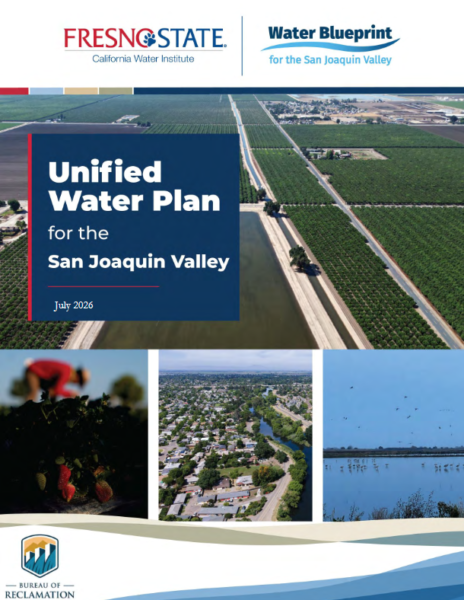 The planning effort examined more than 80 groundwater sustainability agencies, 42 groundwater sustainability plans, 16 subbasins, and about 800 local projects and actions. The plan brings water supply, ecosystem recovery, and flood protection into a unified framework to help narrow the region’s projected 2.5 million acre-foot deficit.
The California Water Institute hosted the San Joaquin Valley Water Resilience Summit to connect state planning efforts with valley-led work and shift the conversation toward action. After two days of discussion about the various visions and the Unified Water Plan, participants identified eight near-term priorities.
- Create sustainable, ongoing funding rather than relying on one-time sources tied to bonds or legislation.
- Restructure regulations to improve effectiveness.
- Protect people and the environment.
- Create a safe space to test multi-benefit solutions and evaluate benefits, tradeoffs, and feasibility without setting unwanted precedents.
- Allocate sustainable supply.
- Develop effective incentives.
- Tell the San Joaquin Valley’s story through a stronger collaborative effort.
- Gather complete, concise data to support informed decisions.
Ms. Ramos said success will depend on what happens after the summit. The goal is to sustain dialogue across planning efforts, maintain momentum, expand participation to communities and stakeholders not included in the original process, and connect policy, funding, implementation, permitting pathways, and accountability around shared priorities.
“The summit was not about choosing a winning vision or which one was more encompassing, but it was a way to bring them all together to see the shared path and turn all of these visions into actions in the San Joaquin Valley,” said Ms. Ramos.
Community-Centered Implementation and the Water Blueprint
Mr. Ocampo is director of public affairs for Self-Help Enterprises, a San Joaquin Valley-based organization that works with families on housing, drinking water, basic infrastructure, and community needs. Mr. Ocampo also serves as chair of the Water Blueprint for the San Joaquin Valley, which seeks to improve coordination and alignment among regional and state efforts.
Mr. Ocampo emphasized the importance of community engagement and involvement. When a family lacks safe drinking water or a well goes dry, the effects ripple through every part of daily life.
“The biggest question that we should have in front of us is: how does this show up in our communities? All these planning efforts that we’re engaged with, how do they affect small towns? How do they affect the failing systems, and maybe some of the systems that don’t necessarily exist for some of the communities that we’re trying to serve? And what gaps do we have to fill?”
With many planning efforts already underway, Mr. Ocampo said the Water Blueprint process is focused on turning those efforts into implementable actions. “One thing that we’ve learned is that there is already a lot of really good stuff happening. The challenge is that a lot of this really good stuff is sometimes disconnected.”
Mr. Ocampo offered four recommendations for next steps.
First, local communities should remain close to the work, not only by receiving information but by participating directly in the planning process.
Second, planning efforts should focus on measurable results. As plans move forward, investments should be monitored for real benefits to communities, including regional infrastructure resilience, local jobs, housing opportunities, and recharge projects. Demonstrating tangible progress can build confidence and show what is working, why it is working, and how it can be expanded.
Third, local capacity needs sustained investment. Smaller communities often need additional technical assistance, support, and capabilities to access resources and opportunities as they emerge.
Finally, regional partners should continue building on existing successes by supporting efforts such as the Water Blueprint, partnerships with DWR and CAP, and advocacy organizations working together to advance a more resilient and sustainable future.
“In the valley, people pay attention to what actually changes for them on a day-to-day basis,” Mr. Ocampo said. “As things get better, we’ll start getting more and more support, and I think we’ll start building up more and more capacity within the folks that we really need to hear more from—the folks that live in our communities.”
Collaborative Action Program: Building Consensus for Valley Water Resilience
The San Joaquin Valley Water Collaborative Action Program, or CAP, was formed in 2021 to bring together valley parties with differing views on water issues and build consensus around solutions. Its roughly 80 members are organized into five caucuses: safe drinking water, environmental, agriculture, water supply, and local government.
CAP’s vision is to ensure a sustainable and resilient water supply for the San Joaquin Valley that supports multiple benefits, including safe, reliable, and affordable drinking water; productive farms and ranches; healthy communities; and thriving terrestrial and freshwater ecosystems.
But the Valley remains far from that vision, Mr. Jones said. “Too many residents lack safe and affordable drinking water in the San Joaquin Valley, and the gap between sustainable water use and current demands is substantial and changing by the day with climate change. Existing natural areas are insufficient to sustain fish and wildlife populations in the valley. Infrastructure is out of date, and investment policies at the local, state, and federal levels lack capacity to meet the needs of these challenges.”
Mr. Jones said inaction is not an option. An analysis found that doing nothing in the Kaweah subbasin would cost about $1 billion in regional economic impact, eliminate at least 3,700 jobs, and reduce county revenue by about $10 million a year, directly affecting public services. A recent Senate and Assembly agriculture committee hearing also highlighted growing problems caused by abandoned farmland, including pest issues. Without action, state costs will continue to rise while benefits decline.
CAP’s 10- to 15-year vision is to ensure safe drinking water for all Valley communities by building on the SAFER program, expanding technical assistance, and helping communities move from problems to solutions.
CAP seeks larger regional systems that create economies of scale and serve multiple communities. It also aims to protect drinking water from nitrate contamination by better coordinating related programs, including CV-SALTS and the ILRP, and aligning enforcement, drinking water, and agricultural interests.
CAP also seeks faster state permitting for ecosystem restoration while maintaining environmental protections. The Natural Resources Agency’s Cutting the Green Tape initiative and State Water Resources Control Board recharge permitting reforms could help, but continued state agency coordination will be needed.
CAP supports land transition efforts that reduce impacts on communities and agriculture. Securing resources now to transition at least 500,000 acres could help prevent abandoned fields and support habitat, parks, solar projects, and other economically beneficial uses.
CAP also seeks to meet habitat restoration obligations, maximize groundwater recharge, implement FIRO at major reservoirs, build capacity to recharge up to 1 million acre-feet per year depending on hydrology, and restore conveyance so water can reach recharge areas while limiting future subsidence.
“If we could get this done, it would mean safe drinking water for all in the Valley and that we preserve as much of the agricultural economy as we can,” said Mr. Jones. “We can prevent land fallowing from happening in a way that’s causing impacts on neighbors and communities across the Valley, and move toward a different economic model that is sustainable for the San Joaquin Valley. So we’re really excited to do this work.”
The San Joaquin Valley’s Water Crisis Is Already Here
Mr. Vanden Heuvel has spent decades with the Milk Producers Council, a dairy farmer trade association, and now serves as director of regulatory and economic affairs, where he tracks water supply issues for the dairy industry. The Unified Water Plan estimates that the San Joaquin Valley could face a water supply-demand gap of about 2.5 million acre-feet per year by 2040, but Mr. Vanden Heuvel emphasized that the problem is already urgent.
“We don’t have until 2040 to solve this problem,” he said. “This subsidence thing has in some ways snuck up on us, and with DWR’s new best management practice, we don’t have until 2040 to do it. They want it done right now, and the solutions are unfortunately just turn wells off and stop pumping water. The whole idea behind SGMA was that we were going to have a ramp down, and we were going to have some time to work our way into this.”
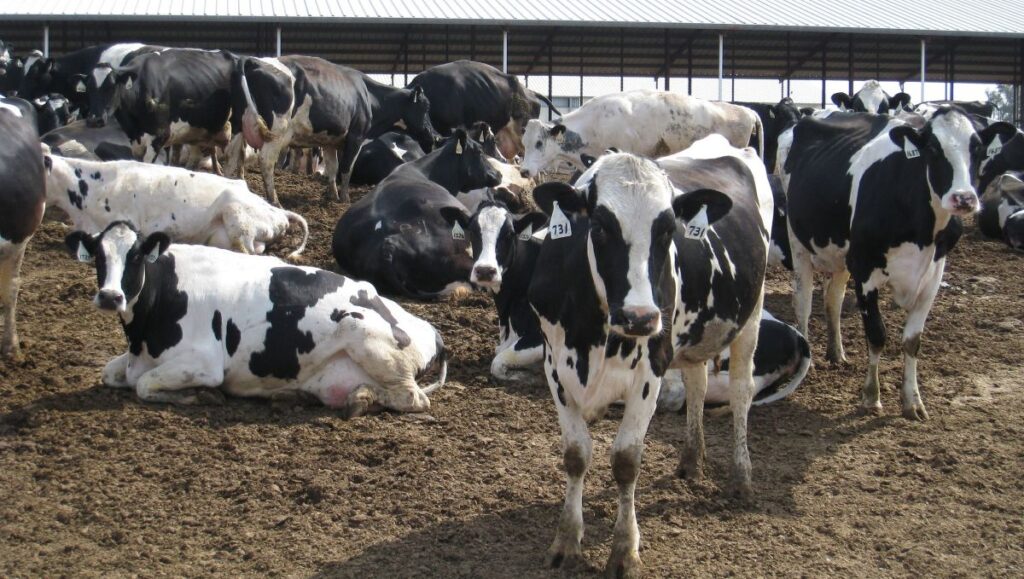
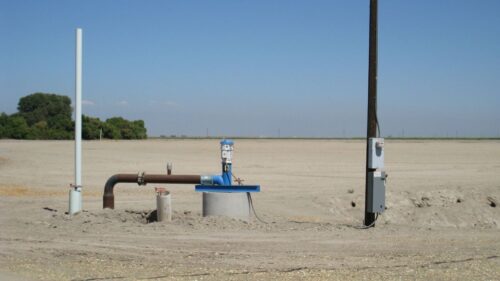 About one-third of California’s dairy industry is located in the southern San Joaquin Valley between Visalia and Bakersfield, one of the areas hardest hit by groundwater restrictions and subsidence. GSAs have begun using their authority to set pumping allocations for individual landowners and charge fees, creating new costs for farmers already facing a weak agricultural economy.
Mr. Vanden Heuvel said those costs are already substantial. The State Water Board placed the Tule subbasin on probation and recently sent invoices totaling about $13 million, giving farmers 30 days to pay. Other GSAs are also pursuing unpaid assessments: Turlock East GSA sent $2 million to the county assessor for placement on the tax rolls; Tri-County Water Authority sent $2.5 million; Greater Kaweah is sending $9 million; and Eastern Tule has about $7 million in unpaid fees.
“I tell you this because expecting these areas to solve these problems with these financial impacts is not realistic,” said Mr. Vanden Heuvel.
Mr. Vanden Heuvel pointed out that the State Water Contractors and others have invested hundreds of millions of dollars in science to support relief from environmental regulations that, in his view, have not produced demonstrated environmental benefits. He argued that the resulting water supply constraints are directly tied to the Valley’s ability to address subsidence. “Yet, it gets ignored by the Department of Fish and Wildlife to the tune of hundreds of millions of dollars. That water is what will get us to be able to solve our subsidence problem, and every year that we wait, every year that we delay, it just gets worse. And we are on the verge of a collapse in parts of the San Joaquin Valley, and I want you to understand that.”
Through Proposition 4, voters approved $386 million for SGMA implementation projects. So far, DWR requested $30 million last year and is requesting $20 million this year. Mr. Vanden Heuvel said the funding is urgently needed to help communities build projects, particularly ahead of a potentially wet year. The Blueprint’s Unified Water Plan estimates that fully developing local supplies could generate nearly 1 million acre-feet of additional supply, but local GSAs lack the resources to move ready projects forward. When DWR last offered project funding, less than $100 million was available, and demand from local GSAs far exceeded the available funding.
“So my plea to you is: this is not just academic, this is not just planning; this is real,” said Mr. Vanden Heuvel. “It’s impacting real people right now, and I don’t think there’s a big enough appreciation for what we’ve built in the San Joaquin Valley. There’s nothing like it in the world, and if we destroy it—or destroy big parts of it—we will not be judged very well by future generations.”
Commission Discussion
During the discussion period, commissioners and panelists emphasized the urgency, equity, and implementation challenges at the center of the San Joaquin Valley vision.
Commissioner Curtin praised the planning efforts but agreed conditions are deteriorating quickly. “I think we’re closer to disaster than anybody wants to believe,” he said.
Mr. Metzger agreed that a no-action scenario would harm California broadly and said the planning work is meant to help close the gap between current conditions and needed action. “That is why this work is so important,” he said. “I agree with what we’ve heard. We’re already behind. We need to catch up, and we need to get ahead. Our hope is that this water plan is going to be one of the vehicles that gets us there.”
Mr. Vanden Heuvel illustrated the immediate effect of reduced groundwater allocations on farm operations. “If you have 100 acres and you need 350 acre-feet of water to grow that crop, but you’re going to get one acre-foot per acre for your 100 acres,” said Mr. Vanden Heuvel. “What does that mean? That means of your 100 acres, you can farm about 30 of it. You know what it takes to run a farming operation. You needed all those acres. Now you have to try to figure out how to make that work with just a few acres.”
Mr. Vanden Heuvel said the pressure is already forcing difficult decisions, particularly for small and medium-sized farms. “This is happening right now as we speak,” he continued. “The small and medium-sized guys, they can’t cut that much. We thought we had until 2040; we don’t. This has all been accelerated, and the land is just getting basically abandoned in some cases, which becomes a huge nuisance. And there really isn’t a plan. So this is an area that needs a whole lot more funding … We need money for everything. Do we need money to get more supply? Yes. Do we need money to ease the transition? Yes. We need a lot more money, or we’re just going to basically turn it all into the dust bowl, and we are on our way to doing that.”
The discussion underscored a central theme of the agenda item: the Valley’s water challenges are no longer distant planning scenarios, but immediate problems requiring coordinated investment, regulatory flexibility, and implementation capacity.

