
Several news sources featured in the Daily Digest may limit the number of articles you can access without a subscription. However, gift articles and open-access links are provided when available. For more open access California water news articles, explore the main page at MavensNotebook.com.
On the calendar today …
- WEBINAR: Wetlands for Climate: Regional Solutions for Statewide Action from 11am to 12pm. California has set ambitious goals to conserve and restore wetlands as essential climate, biodiversity, and community infrastructure. Yet moving from statewide commitments to on-the-ground implementation remains difficult. The new Wetlands for Climate Partnership report draws on more than two years of engagement—including workshops across five California regions—to identify where restoration is gaining momentum, where systemic barriers persist, and what can be learned from regional models already delivering results. Join the Wetlands for Climate Partnership for a lively, solutions-focused conversation on the future of climate-resilient wetlands in California. Click here to register.
- IN-PERSON: California Biodiversity Day Open House from 11:30 to 1:30pm at the California Natural Resources Building in Sacramento. A time to honor the diverse lands, waters, wildlife, and ecosystems that define our state. At the Open House, you’ll have the chance to meet local Sacramento-area organizations and state agencies dedicated to conservation, restoration, and nature-based stewardship. Learn about current biodiversity projects, explore interactive displays, and discover ways you can get involved in the outdoors. This event is open to ALL—stop by, bring a friend and connect with partners doing extraordinary work!
- WEBINAR: Innovations in Sustainable Data Centers in Arid Environments from 12pm to 1:15pm. While AI has made data centers a water issue as well as an energy one, the most consequential efficiency work is happening upstream of the building — in chip architecture, advanced packaging, co-packaged optics, and AI methods that reduce the energy required per unit of computation. Because energy that is never consumed produces no heat to reject, these advances are water-conservation technologies as much as computing ones, a connection rarely made in public discussion. This WRRC Water Webinar presentation will trace that link from the transistor to the watershed. David Ebert will argue that arid regions hold an underappreciated advantage in cooling design, not only a disadvantage. The University of Arizona is unusual in spanning the full chain: semiconductor fabrication and packaging, photonics, AI research, high-performance computing operations, and water and climate science. The talk will close by showing where that combination can contribute. Click here to register.
In California water news today …
Reclamation Provides comments on State Water Board’s Bay-Delta Plan update
“The Bureau of Reclamation provided the following comments today to the California State Water Resources Control Board expressing concern with its most recent update to the Water Quality Control Plan for the San Francisco Bay/Sacramento-San Joaquin Delta. This letter follows a previously submitted letter to the State Water Board earlier this year, which voiced Reclamation’s initial concerns regarding the development of this draft plan. … The Bureau of Reclamation (Reclamation) writes to express its serious concern with the State Water Resources Control Board’s August 2026 Draft Water Quality Control Plan (Draft Plan) for the Bay-Delta. The Draft Plan, as written, threatens reliability of water supplies that support not only the Central Valley Project (CVP), but the entire fabric of California’s agricultural economy, rural communities, urban centers, and natural vitality. Millions of people and businesses depend on the certainty and reliability of these water supplies. … ” Read more from the Bureau of Reclamation.
SEE ALSO: Bureau of Reclamation raises issues over Bay Delta Plan, from the Daily Republic
Westlands Water District to end participation in Healthy Rivers and Landscapes Program absent reversal by the State
“Westlands Water District will not continue in the Healthy Rivers and Landscapes (HRL) Program under the terms set out in the State Water Resources Control Board’s final draft Bay-Delta plan. The final draft retains the HRL name while abandoning the commitments the parties negotiated in 2022. Formerly known as the Voluntary Agreements, the HRL Program grew out of a March 2022 Memorandum of Understanding (MOU) among state, local, and federal agencies and public water agencies after multiple years of analysis and collaboration. This innovative agreement envisioned the development of a comprehensive, basin-wide, science-based alternative to traditional regulation: one intended to improve environmental health and species conservation while providing water reliability for California communities and farms. … ” Read more from the Westlands Water District.
SF Baykeeper: State Water Board capitulates to special interests in new Sites Reservoir permit
“Yesterday, the California Water Resources Control Board (Board) issued a new draft of its water rights permit for the proposed Sites Reservoir project. The project plan consists of two major dams that would form a reservoir north of the Sacramento-San Joaquin Delta for the purpose of diverting large volumes of fresh water out of the watershed. The main proponents of the project are corporate agriculture interests and water utilities in Southern California. In March of this year, the Board’s Administrative Hearing Office (AHO) sided with the Sites Project developers, granting their request for a new water right, but required compliance with numerous conditions designed to better protect fish, wildlife, and water quality to reduce the environmental harms the project would cause. The AHO judge made this decision following an extensive two-year hearing process, including 34 days of testimony and cross-examination of 60 witnesses, a two-day site visit, and over 1,600 exhibits. … ” Read more from SF Baykeeper.
SEE ALSO:
- SITES: Procedural Ruling on Evidentiary Objection to Supplemental Evidence and Official Notice of AHO Exhibits, from the State Water Board AHO
- SITES RESERVOIR: Procedural ruling bifurcating Application 33534 and Notice of Public Hearing on Application 33534b, from the State Water Board AHO
CDFW scientists keeping an eye on river conditions to protect winter and fall-run salmon
“As California continues to feel the impacts of a heat dome that is bringing higher than normal temperatures to large portions of the state, it’s a good time to remember that fish and wildlife — especially salmon — need cold water, too. River temperature management is critical for salmon’s survival and spawning. Earlier this year, the California Department of Fish and Wildlife (CDFW) announced that commercial ocean salmon fishing was back after being closed for three straight years. To avoid salmon impacts that could result in a return to salmon season closures, we need to ensure cold water pools are preserved, when possible, to help preserve and protect California’s salmon populations. CDFW and federal and state partners are working to monitor river conditions to give endangered Sacramento River winter-run Chinook salmon eggs a chance for survival after their spawning was observed several weeks later than usual. The eggs of late-season spawning fish can be at risk due to decreases in river flows and warmer water temperatures. … ” Read more from the Department of Fish and Wildlife.
What is El Niño and what makes this a very strong El Niño?
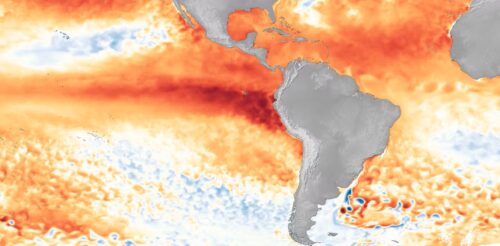
“NOAA declares an El Niño when temperatures in the equatorial Pacific are 0.5°C (0.9°F) above average for several consecutive months. As of August 2026, the National Oceanic and Atmospheric Administration (NOAA) issued an advisory that with ocean temperatures now 2.0°C (3.6°F) above average there is “a greater than 90% chance of a very strong event during the Northern Hemisphere fall and winter 2026-27.” El Niño’s effects can be powerful — the El Niño-driven ocean warming can increase global temperatures, alter atmospheric patterns, raise sea-levels along coastlines, and impact marine ecosystems. In this article,, we dive into what El Niño is, why this year could be a very strong El Niño, and the key observational programs led by Scripps Oceanography helping scientists detect, track and understand this event. … ” Read more from Scripps.
California sweated more and burned less this summer. Here are the numbers
“Labor Day weekend marks the unofficial end of summer — a summer that, in California at least, seemed to argue with itself. Southern California endured record mugginess, while the wildfire season remained unusually calm. No heat wave was especially long or intense. Around the Bay Area, the divide between the cool coast and inland heat was especially pronounced. These numbers tell the story of the season. Southern California’s famously dry heat turned sticky. Ventura, Orange and Santa Barbara counties recorded their highest average summer dew points in records dating to 1895. Los Angeles County had its second-muggiest summer on record, while San Diego County had its third-muggiest. … ” Read more from the San Francisco Chronicle.
The US is losing its ability to store water when it needs it most
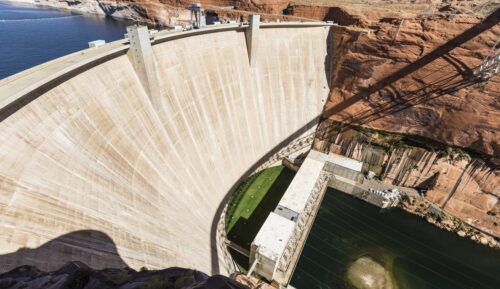 “Turn on a hose in Denver this summer and the water likely flows from the Strontia Springs Reservoir. The small manmade lake in the mountains just west of downtown stores the state’s precious snowmelt and distributes it through the dry months when rain grows scarce and farmers are irrigating frantically. But over its 44 years, Strontia has lost much of its storage capacity. Almost one-fifth of the reservoir is now filled with sediment – sand, silt and mud – the hidden vulnerability of America’s water system. Most of the country’s 90,000 or so storage reservoirs are facing a similar problem to some degree. Engineered decades ago to enable development in some of the country’s harshest conditions, these dams are in a self-propelling sediment loop. Climate change is exacerbating drought and wildfires, decimating vegetation that holds dirt in place. More extreme rainfall, meanwhile, is unleashing torrents of water and debris, as happened in the flash flood that killed two people and washed away bridges and trails in the Grand Canyon last month. … ” Read more from Bloomberg.
As droughts intensify and groundwater warms, contaminants can move into underground aquifers – threatening drinking water and agriculture
“Extreme heat and widespread drought related to climate change have been in the headlines this summer everywhere from Europe to the Colorado River Basin to Puerto Rico and Bangladesh. But drought is only the beginning of the problem for drinking water. Scientists say the depleted groundwater supplies that remain will warm by 2.1 degrees C globally by the end of this century – changing their chemistry and leading to contamination. And heat is just one concern. Droughts and fluctuating rainfall patterns are also altering groundwater quality. The good news is that around the world, local and regional authorities are experimenting with ways to replenish groundwater, including methods for collecting excess rainfall or surface runoff and channeling it to replenish aquifers. The work is in early stages, but some methods already are showing promise. … ” Read more from Yale Climate Connections.
The leadership a resilient California needs right now
“Austin Stevenot spent his first three years at River Partners as an Operations Manager in the San Joaquin Valley. Like the rest of the Central Valley, this region developed nearly all of its native riparian forest in the past two hundred years, and Stevenot is working to help restore lost habitat at a pace and scale that matters. When Stevenot (Northern Sierra Mewuk) was officially named River Partners’ first Director of Tribal Engagement in 2024, the task in front of him grew from making sure that habitat works for wildlife, people, and communities to ensuring Native voices are not just consulted in our river restoration work, but actively shaping and leading this work. … In his role as Director of Tribal Engagement, Stevenot has shared his unique perspective with thousands of people in the Tribal, NGO, public, and private sectors. Last month, Stevenot co-paneled at World Water Week in Stockholm, Sweden. In his presentation, “Trust and Collaboration as Preconditions for Water Stewardship,” Stevenot talked about his work with California Tribes and what it means to center Tribal voices in restoration and bring them to the forefront instead of relegating them to someone to consult with to check a box. … ” Read more from River Partners.
New digital tool shows where exactly California’s water goes — and how climate change might disrupt it
“Water has always been one of California’s most contested resources. For more than a century, battles have raged over how much of the state’s water should be diverted to farmland, pumped into cities or used to conserve aquatic ecosystems — and at times, these clashes have even led to violence. The state’s water system consists of a dizzying array of reservoirs, rivers, dams and aqueducts, making it challenging even for experts to understand the trade-offs of different management decisions. To top it off, climate change is intensifying California’s already dramatic dry and wet cycles. After surviving more than a decade of severe drought, the state is now bracing for the impact of this year’s super El Nino, which is likely to bring above average rainfall this winter. A UC Berkeley-led project aims to make it easier for all Californians to understand the state’s complex water system and have a say in how this critical resource is used. With the support of a California Climate Action Grant, the Collaboratory for Equity in Water Allocation (COEQWAL) team has spent the past three years working with stakeholders from around the state. They are creating tools that help illustrate where California’s water is going, the impacts of different water priorities, and how climate change will shift the water landscape. … ” Read more from UC Berkeley.
South Bay Salt Pond Restoration Project is one of the most ambitious nature-based solutions to sea level rise
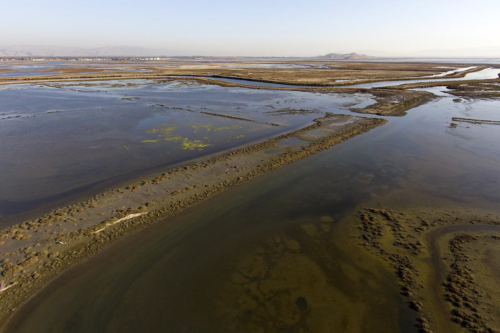 “Dave Halsing stood beneath shifting clouds and flocks of shorebirds next to California’s San Francisco Bay, looking out at the gray waters below. Beyond us, traces of sunlight flickered on the arc of the Dumbarton Bridge. Halsing is the executive project manager of the South Bay Salt Ponds Restoration Project. He invited me to the Ravenswood section of Menlo Park on a windy November day to see a small piece of the massive, puzzle-like initiative he has been involved with for the past seven years. He unlocked a gate, then we climbed into his car and drove onto an earthen levee. This parcel, which includes a section of Don Edwards National Wildlife Refuge, teemed with birdlife. Cormorants bobbed among whitecaps. On a small island, a flock of white pelicans huddled against the wind. To the untrained eye, the South Bay Salt Pond Restoration Project is easy to miss. During our visit, which coincided with a king tide, the ecological rejuvenation it has catalyzed was almost completely hidden underwater. Below the surface was the most ambitious wetland restoration project on the entire West Coast. … ” Read more from the Sierra Club.
Chasing ghost salmon through the Delta
“Variety is the spice of life for juvenile Chinook salmon, whose range of life-history strategies as they grow and migrate has helped them survive despite changing conditions. In California, most juvenile Chinook journey from their birth streams through the Sacramento-San Joaquin River Delta (Delta) and the San Francisco Bay (Bay) before reaching the ocean, where they mature before returning to spawn. Much of the research tracking this migration focuses on the survivors of this journey, which can introduce survivor bias. When results are based only on the fish that survive to adulthood, while ignoring juveniles that die during migration, this may make high-mortality life-history strategies appear less important than they actually are. As scientists increasingly recognize the value of understanding where and why fish die, studies focused on mortalities are becoming more common. A recent study looked at the juveniles that disappeared during their outmigration (“ghost salmon”) to explore what information can be gained by focusing on the fish that do not survive. … ” Read more from FishBio.
Golden mussels colonised the entire distribution system of the Arvin-Edison Water Storage District, forcing a 30-day chemical eradication that cost three million dollars
“The golden mussel arrived in California without warning. The first confirmed North American detection of Limnoperna fortunei came in October 2024, when specimens were found in the Sacramento-San Joaquin Delta near Stockton and at O’Neill Forebay. Within a year, reporting said the species had spread throughout the entire distribution system of the Arvin-Edison Water Storage District in Kern County. The response was a 30-day chemical treatment costing about $3 million. That is the compressed version of the story. The longer version is a case study in how quickly a freshwater bivalve the size of a fingernail can alter the operating budget of a water utility. … ” Read more from the Science Blog.
Can cloud seeding make people hate data centers less?
“Can drones carrying a few teaspoons of salt solve the public relations crisis around AI data centers? Some are betting that the controversial, 80-year-old practice of cloud seeding can make it rain for data centers — literally. Across the country, the push to build massive data centers to power the AI boom has run into growing resistance from locals and governments, who say the facilities are noisy and consume huge amounts of power and fresh water. The outcry is especially loud in drought-prone California. The Southern California cloud-seeding startup Rainmaker is in talks with Big Tech companies to stimulate rain near data centers and bring fresh water back to the ground, CEO Augustus Doricko told The Standard. The company has signed a deal with one data center provider, he said, declining to name the firm but saying it wasn’t among the largest builders. … ” Read more from the San Francisco Standard.
A shipyard? A bunch of new houses? In California, not this year.
 “California Forever, a company backed by Silicon Valley billionaires, calls its proposal to build a new city in Northern California a remedy to the state’s biggest problems. California needs homes; the company aims to put several thousand of them about an hour’s drive from San Francisco. The state is desperate for middle-class jobs; California Forever would create a shipyard and manufacturing center ready to hire. The plan is well funded, is backed by labor unions and has the implied support of Gov. Gavin Newsom. And yet a move that would have given the project a definitive push died quietly in a behind-the-scenes scramble during the final days of California’s legislative session, which ended this week. Although not before a stuffed monkey made an appearance and protesters delivered public comment in song. … ” Read more from the New York Times.
America is losing its war against wildfire
“Dan Dallas had defended these communities before. The little towns on the Karuk tribal land are nestled in a gorge along the Klamath River, amidst a million-acre wilderness of Northern California conifer and hardwood that makes up the Six Rivers National Forest. This time, August 2023, a fusillade of lightning strikes had ignited the web of steep canyons south of the town of Orleans in two dozen places, and as the fires expanded, they merged. As an incident commander for the U.S. Forest Service, Dallas wasn’t called up until fires got big. On the drive from Colorado, he considered the recent experiences that had begun to trouble him. “I’d been to multiple places, two, even three, sometimes four times,” he remembered in a recent interview. On each fire, he’d followed the Forest Service playbook. Keep the fire small. Contain it quickly. Box it in by throwing hardware at it, bulldozing the ridgetops and dropping fire retardant slurry or water from planes and helicopters. Don’t light the fuse on a megafire that could reach the nearest town. But he was starting to realize: Even if you don’t light the fuse, you still have the bomb. … ” Read more from Grist.
POLICY AND REGULATION
A new California law will ban watering decorative grass, even in non-drought years, starting Jan. 1
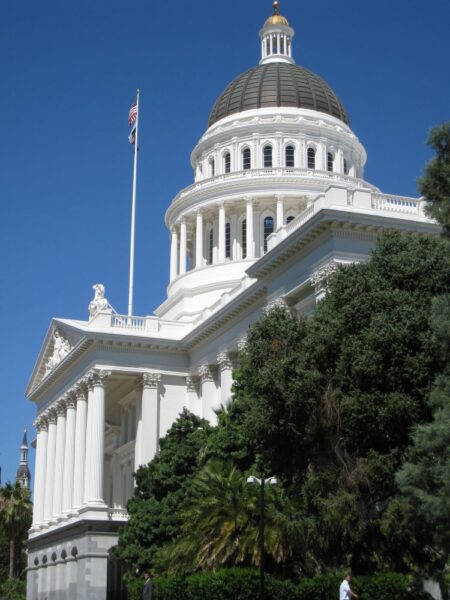 “It’s been more than three years since California was in a drought. Reservoirs are above average levels. A strong El Niño is brewing in the Pacific that could bring soaking storms this winter. But there’s a new endangered species across the state: grass. A broad new water conservation law will soon take effect in phases, banning the watering of “ornamental turf” at corporate, industrial, government and homeowners association properties with drinking water across California as a way to preserve supplies. Gov. Gavin Newsom signed the new state law in 2023 as California was emerging from a harsh three-year drought. Starting on Jan. 1, it will be illegal for local and regional government agencies across the state — including schools, cities, counties, courthouses, fire stations and libraries — to irrigate decorative grass with potable water whether or not California is in a drought. … ” Read more from the San Jose Mercury News.
AB 1572 – Prohibition on nonfunctional turf irrigation starts January 1, 2027
“Beginning January 1, 2027, California cities, counties and special districts will be prohibited from using potable water to irrigate nonfunctional turf on properties they own, unless the property is located in a disadvantaged community. With the deadline approaching, local governments should identify affected properties and begin implementing a property-by-property compliance plan. AB 1572 prohibits the use of potable water — not the continued existence of turf itself. “Nonfunctional turf” is turf that is not located in a recreational use area or community space. The statute expressly includes turf in street rights-of-way and parking lots, as well as turf behind fencing or other barriers that permanently prevent access for recreation or assembly. … ” Read more from Best Best & Krieger.
California water agencies may get a new defense in lawsuits over hydrants running dry in wildfires
“As the city of Los Angeles and the L.A. Department of Water and Power face lawsuits by residents who claim the city failed to ensure adequate water to fight the Palisades fire, California legislators have passed a bill that would give water agencies a new tool to defend themselves in such cases. The legislation, Senate Bill 1153, would clarify that public water agencies do not have a duty to design, build or maintain a water system for wildfire defense or suppression, and that the inability to maintain water supply or water pressure during a wildfire is not a “substantial cause” of fire damages. The bill, which is awaiting Gov. Gavin Newsom’s signature, also would require urban retail water suppliers in high or very high fire hazard zones to include specific response procedures for wildfires as part of their disaster preparedness plans, including equipment and actions that can lessen the impact of a fire on the water system. … ” Read more from the LA Times. | Read via Yahoo News.
Newsom can’t dodge the data-center backlash anymore
“California Governor Gavin Newsom is used to walking fine political lines. But how he navigates the one before him now will say a lot about whether he’ll be able to define himself as a populist or be cast as an elite in a likely campaign for president in 2028. Sitting on Newsom’s desk to sign or veto are seven bills that would tighten regulations on data centers, including by mandating new environmental reviews, requiring new energy- and water-use reporting, and imposing new electricity rates to prevent costs from being passed along to customers. More than 30 of the top 50 private artificial intelligence companies in the world are based in California. So until recently, Newsom and the Democrats who control the state legislature stayed mostly mum about data centers. But that has become untenable, given the public angst over their proliferation. In June, voters in Monterey Park, near Los Angeles, became the first in the US to ban them in their city. … ” Read more from Bloomberg.
Backlash over data centers hits California, and the midterms
“Darian Orduno bounced her baby boy on her chest, looking down at his thick black hair and bright eyes. What might pollution from a data center do, she wondered, to his growing lungs? That question had brought Orduno, 25, to a community meeting opposing a possible data center here, and her fears, she said, likely would influence her vote in the midterm election too. “I just had him, and now it’s concerning if he’s going to be able to grow up here,” Orduno said, or “if I’m going to have to relocate.” As about 100 residents filed into a church for the meeting in late August, under a Central Valley sky hazy with air pollution, many shared the same worries — that a facility pitched for the local fairgrounds could further worsen the area’s air quality and strain its water supply. Nationwide, such concerns are fueling a backlash to data centers from both the left and the right as tech companies flood the country with thousands of proposals for the facilities in nearly every state from California to Maine. … ” Read more from the LA Times. | Read via Yahoo News.
SEE ALSO: Data center backlash is sweeping California. This proposal met zero opposition, from SF Gate
Federal officials want to repeal the ‘roadless rule.’ What could that mean for California?
“Nearly half of California’s land is owned by the federal government, and for years a federal policy known as the roadless rule has protected millions of acres across the country. But those protections could soon come to an end. Last month, Agriculture Secretary Brook Rollins announced the U.S. Forest Service is proposing to rescind the roadless rule. The U.S. Department of Agriculture told CapRadio repealing the policy is “more important than ever” because of public safety issues, and to improve wildland firefighting access where forests meet communities. The department argues the goal is to remove heavy‑handed national restrictions, while maintaining local forest managers and environmental safeguards. But the announcement has also raised concerns from state officials and others that repealing the rule could open up land to construction, logging, and more wildfires. … ” Read more from Capital Public Radio.
In regional water news and commentary today …
NORTH COAST
Klamath County works to mitigate annual avian botulism outbreak, searching for new solutions to old problem
“This summer brought what has become a grim tradition to the Tule Lake National Wildlife Refuge: avian botulism. As of Thursday, the outbreak had led to the deaths of about 15,480 birds — 3% to 5.5% of the estimated waterfowl population at the refuge. Staff estimates that 30% to 40% of those birds hatched this year. “Watching a bird struggle to keep its head out of the water and realizing it’s not able to,” said Teresa Wicks of the Bird Alliance of Oregon, “and then seeing that from a baby and realizing that their short life on earth is just drowning to death, is traumatic.” “It’s not their fault that the system is messed up,” Wicks added. … ” Read more from the Herald & News.
Planning for sea level rise splits Humboldt commission
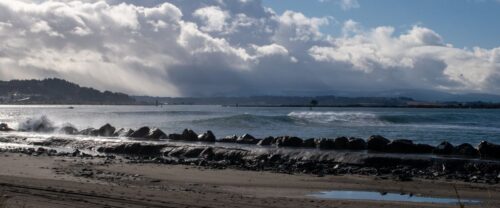
“While workshopping policies that will shape the future of Humboldt Bay, the county’s Planning Commission couldn’t reach consensus on how to address sea level rise. At its Sept. 3 meeting, the commission held its third workshop on the draft Humboldt Bay Area Plan, reviewing five sea level rise scenarios. There’s uncertainty on how to plan for it as it hinges on a variety of factors, including future degree of emissions reduction. A “high” risk scenario was in a previous draft of the plan but the categorization is brought down a notch in the current draft, to “intermediate high.” “The reason we went away from high is because there’s a 0.1 percent chance that it would ever be exceeded and so that is maybe an unrealistic chance that it would happen,” said Planning Director John Ford when asked about it. “Intermediate high itself has a fairly low chance of ever being exceeded, as I recall that’s at 20 percent.” … ” Read more from the Redheaded Blackbelt.
Judge halts logging above Dutch Charlie Creek with most of it already done
“Logging on 926 acres in the hills west of Laytonville is stopped under two court orders at once. The First District Court of Appeal froze most timber operations there on Aug. 17. Mendocino County Superior Court Judge Charlotte Scott granted a preliminary injunction, the second order, on Sept. 2, according to a Sept. 4 release from Friends of Dutch Charlie Creek, the citizens’ group that sued Cal Fire. A notice of Scott’s decision was filed in the group’s appeal the next day. The fight is over two timber harvest plans the California Department of Forestry and Fire Protection approved on July 2 and 3. The agency’s notices list Redwood Timber Company LLC as landowner and Redwood Forest Operating Company LLC as the plan submitter. The larger plan, called Hot Tuna, covers 594 acres. The smaller one, Lincoln Logs, covers 332. Both call for selection logging rather than clearcutting. Court papers also call Hot Tuna by a second name, Lincoln Ridge. … ” Read more from the Mendocino Voice.
Endangered salmon return to Mendocino rivers in incredible numbers: ‘Everybody’s just ecstatic’
“A record 30,000 coho salmon returned to central California rivers last season—up 10x from an average of 3,000 over the last decade—and double the total of last season. Running up the rivers which empty into the Mendocino coast, the proliferation among the fish is something that scientists studying the animals thought they’d never see in their careers. A March news release by the National Oceanic and Atmospheric Administration (NOAA) said they took it as a sign that targeted restoration efforts on private land can help move the needle for a species that was not long ago considered somewhere near the brink. … ” Read more from the Good News Network.
Clear Lake so far tests negative for invasive mussels
“Tests conducted so far on Clear Lake have shown no presence of the quagga and zebra mussels, but a county Water Resources official said the testing will continue over the coming months. The two invasive mussels, found earlier this year in Southern California water bodies, have spent several years moving toward the West Coast, as Lake County News previously reported. Water Resources Deputy Director Pam Francis told Lake County News that the county took samples from Clear Lake earlier this summer and sent them for testing. So far, the tests have been negative, said Francis, although signs of another shellfish were found. … ” Read more from the Lake County News.
SIERRA NEVADA
New trail master plan charts 500-plus-mile network from Tahoe to Lassen
“After nearly five years of planning, the Sierra Buttes Trail Stewardship has completed a master plan designed to connect 15 mountain communities across Northern California and western Nevada through a regional trail network. The Connected Communities Trails Master Plan lays out a community-driven vision for expanding outdoor recreation, improving ecological resilience and strengthening rural economies through a network of trails connecting six counties and two states. The plan, funded by the Sierra Nevada Conservancy, includes maps of existing and potential future trails, feasibility studies, community survey results, a “Fire Hardened” trails concept and best management practices intended to give other communities a blueprint for developing sustainable trail systems. … ” Read more from the Sierra Sun.
‘Epic’ new Tahoe trail through old-growth forest is being built right now
“An audacious plan to build a 6-mile trail in Lake Tahoe’s rugged backcountry was jolted to life after a local couple donated $250,000 to see it through. The Meeks Ridge Trail would connect hikers, mountain bikers and Class I e-bikers on the West Shore to a secluded alpine body of water called Lost Lake up and over the peaks west of Tahoe — an area with incredible Sierra scenery but without a maintained trail. The group behind the concept, Tahoe Area Mountain Biking Association, calls it “one of the organization’s most ambitious trail projects to date” as it would open a rare east-west pathway over the Tahoe rim and pass through “old-growth forest that few visitors have ever experienced.” “It’s epic,” said TAMBA Executive Director Drew Bray. “Beautiful views, granite boulders, alpine lake, old-growth forest — it checks a whole bunch of boxes.” … ” Read more from the San Francisco Chronicle.
Why a wet winter may still leave water in short supply
The Nevada Irrigation District writes, “As a strong El Niño forms in the Pacific, Nevada Irrigation District (NID) water managers are keeping a close eye on more than rainfall. This winter, the real story may be written in the Sierra snowpack. El Niño is a recurring climate pattern that alters ocean temperatures in the tropical Pacific and can influence winter weather across the West. The National Oceanic and Atmospheric Administration (NOAA) now forecasts a greater than 90 percent chance of a very strong El Niño through fall and winter. But while El Niño often shapes storm patterns, its impacts are far from guaranteed. And in the Sierra Nevada, a wet winter doesn’t automatically translate to a robust water supply next summer. … ” Read more from YubaNet.
Placer County Water Agency forester agreement helps protect watersheds, water infrastructure
“Trees may not be the first thing that comes to mind when thinking about reliable water service, but managing hazardous trees and vegetation is an important part of protecting the water system. On Sept. 3, the Placer County Water Agency (PCWA) Board of Directors approved a five-year professional services agreement with Mason, Bruce & Girard Inc. for on-call forestry and environmental services. The firm’s professional foresters will identify hazardous trees and vegetation around PCWA canals, water treatment plants, powerhouses, roads and other facilities, while supporting forest health and fuels reduction work. … ” Read more from Gold Mountain California News.
SACRAMENTO VALLEY
Shasta Lake levels dip from last year but remain above 2021 drought lows
“As the Labor Day weekend wrapped up, new state data showed Northern California’s two largest reservoirs are lower than they were a year ago, but still far above the levels seen during the 2021 drought. Shasta Lake held 2.51 million acre-feet of water, about 55 percent full, according to Sept. 6 data from the California Department of Water Resources. That is down about 300,000 acre-feet from Sept. 6 of last year, when the lake was about 62 percent full. The contrast is sharper than during the 2021 drought. During that period, Shasta Lake held 1.19 million acre-feet of water and was just 26 percent full. Boater Eric Gustafson said the lake has remained in good shape despite the year-over-year drop. … ” Read more from KRCR.
Tehama County column: We are light years behind our water managing neighbors
Columnist Shanna Long writes, “Would you like to know how far behind we really are in implementing the Sustainable Groundwater Management Act in Tehama County? Super duper far behind, would be the gentle answer. These past few weeks, I’ve been busy with harvest and number crunching so I’ve produced some pretty basic content for my Friday column contributions. Today, despite an air compressor in the background and a few other farm related distractions, I’m going to do my best to explain why we’re so far behind for a county whose main economy – outside government – is agriculture. First, our county government structure is built to politicize water, not to manage it properly or responsibly. We allowed an out of town consulting firm to run away with more than $11 million of a $15 million grant given, ironically, to create sustainable groundwater, because our flood control board never questioned the tasks or payments associated with the ‘free’ money. … ” Read more from the Red Bluff Daily News.
How Paradise Irrigation District restored water after the Camp Fire
“A feature video, “Water after Wildfire,” details the story of the recovery efforts by the Paradise Irrigation District to rebuild and restore the community’s water system following the 2018 Camp Fire. “We really wanted to document the recovery of the water system from an insider perspective,” said Kevin Phillips, district manager for Paradise Irrigation District. “The movie helps tell the story of how we were successful in getting the water cleared and safe for everyone coming back to Paradise.” A year in the making, the 27-minute video, produced by U.T.B. Studios, was released in July. Through financial support from Tri Counties Bank it was initially aired on KHSL Channel 12. The video was made permanently available to watch at the end of August on YouTube. … ” Read more from the Chico Enterprise-Record.
NAPA/SONOMA
In Napa’s hills, painstaking efforts to restore habitat for western monarchs could be paying off
“Getting to the monarch habitat at Sutro Preserve takes some work. Scientists and land stewards with the Land Trust of Napa County make the roughly 30-mile drive from their Soscol Avenue office into the hills east of Napa, following winding, motion sickness-inducing roads toward Atlas Peak before turning onto a gravel path through the nearly 1,400-acre preserve. From there, they head out on foot, checking patches of native milkweed for tiny eggs tucked onto leaves, striped caterpillars feeding on the plants and, if the timing is right, the unmistakable fluttering, orange-and-black wings of adult monarch butterflies. They have made the trip again and again, returning throughout the seasons to monitor the butterflies and the plants they depend on. Along the way, they have collected seeds, pulled invasive weeds, inspected young plants and worked with volunteers and conservation crews to expand patches of native milkweed and wildflowers across a 190-acre restoration area scarred by wildfire nearly 10 years ago. … ” Read more from the Santa Rosa Press Democrat.
Sonoma Water reviews operations, infrastructure vulnerabilities at Guerneville wastewater system
“With an approaching El Niño that could unleash heavy rains across the region and on the heels of a recent state settlement following a massive January spill, Sonoma Water officials are taking steps to make a Guerneville wastewater system more resilient to future weather impacts. Workers at the Russian River County Sanitation District have been analyzing potential vulnerabilities in the system, identifying places susceptible to water intrusion, and have begun securing manhole covers in flood-prone areas. The work is stipulated in an agreement the sanitation district and Sonoma Water, which operates the district, reached in August with state water regulators to settle violations tied to the discharge of roughly 5 million gallons of wastewater into the Russian River. The spill began on Jan. 6 and came at the tail-end of a series of atmospheric rivers that drenched the area and saturated the ground, causing wastewater at the district’s Neeley Road treatment plant to overflow, the largest such spill in more than 40 years. … ” Read more from the Santa Rosa Press Democrat.
BAY AREA
Grounded fishing boat on Point Reyes beach to be dismantled – after tons of rotten squid are removed from hold
“Work crews are well along in their unenviable and aromatic task involving the 58-foot Lake Bay, a fishing vessel that ran aground Aug. 22 on Point Reyes National Seashore’s North Beach. Once the boat had been pulled by bulldozers out of the surf zone, a feat that took five days, salvagers turned their attention to the next phase of job: removing between 30 and 50 tons of congealed squid that had begun decomposing in the catch tank, below the main deck. On Wednesday afternoon, workers in white hazmat suits could be seen maneuvering a small, orange backhoe up and down a sand ramp leading to the Lake Bay’s port-side hull. Scooping up the calamari in the backhoe’s bucket, salvagers have been depositing the catch in secure containers, then moving those containers off the beach “to prepare them for off-site disposal,” said Joshua Winchell, a spokesman for the National Park Service, which took over the salvaging operation from the Coast Guard once the Lake Bay was out of the surf zone. … ” Read more from the Santa Rosa Press Democrat.
Dam repair at Nicasio Reservoir estimated at $50M
“The estimated cost to rehabilitate Seeger Dam at Nicasio Reservoir is about $50 million — an expense that the Marin Municipal Water District hadn’t expected. The estimate was reported as the district board authorized spending up to $5.57 million to deliver a project work plan to the state by a Dec. 1 deadline. The California Division of Safety of Dams, or DSOD, set the due date when it ordered the district to repair the dam because a recent analysis showed declining performance. The contract with Black and Veatch also will buy the district a project alternatives analysis comparing different designs to narrow down a preferred option. Funds will be drawn from the approved capital improvement program and allocated over the next two-year budget cycle. … ” Read more from the Marin Independent Journal.
Marin Municipal Water District proposes ‘smart’ meter opt-out fee
“Marin Municipal Water District customers who choose not to upgrade their analog water meters to wireless “smart” technology could end up paying bimonthly fees under a new proposal. The district is in the beginning stages of its 10-year rollout to the new meters known as advanced metering infrastructure, or AMI. The transition aims to improve conservation, lower customer bills and reduce the staff time and costs involved in reading meters. For customers who opt out of the switch, the district is proposing a fee rate of $40 to offset the cost of in-person manual meter reads. With installation preparations underway, staff wants to get the policy on the books soon. “AMI is the most important modernization project we have undertaken in a long time,” said Jed Smith, president of the district board. “The agency will now have data to be smarter, our customers will be able to detect leaks earlier, and research shows we should be able to save 5% water waste.” … ” Read more from the Marin Independent Journal.
Tiburon allocates extra funds for El Niño defense
“Tiburon has approved a $75,000 budget amendment to purchase additional storm response and emergency preparedness supplies ahead of a potentially severe rain season. Meteorologists predict strong El Niño conditions in the region starting in October. The climate pattern and the prospect of king tides have Marin municipalities preparing for potential flooding. “Given the Town’s vulnerable drainage areas, numerous low-lying locations, public facilities, transportation corridors, and shoreline infrastructure, staff believes that additional investments in preparedness equipment and supplies are warranted to enhance the Town’s ability to respond to severe weather events,” Patrick Kerslake, a Tiburon public works manager, wrote in a staff report. … ” Read more from the Marin Independent Journal.
Sausalito poster child on how to handle sea level rise
“Even though the weather is pleasant right now, the year’s largest King Tides—driven by winter storms and a Super El Niño—are expected around Thanksgiving, Christmas Eve, Christmas Day, and late January. The resulting coastal flooding could substantially impact low-lying areas, with southern Marin bayside communities standing directly in harm’s way. Despite an average income that remains substantial, the City of Sausalito has only about 7,000 residents. Consequently, the municipality can ill afford major structural upgrades to combat rising sea levels. The community is quickly becoming a primary case study in how small coastal municipalities navigate climate adaptation. Ground zero for this crisis is Gate 5 Road, a residential, artistic, and light-industrial enclave that has experienced occasional flooding for decades. The neighborhood forms a core section of Marinship, a historic 200-acre working waterfront in northern Sausalito recognized for its industrial heritage and modern maritime operations. … ” Read more from KTVU.
California settles with more companies over use of hazardous waste landfill
“California reached a second settlement with more than 70 parties to recover additional funding to contain a closed hazardous waste landfill threatening to release hazardous substances into the environment. The Vine Hill Complex, located in California’s Contra Costa County, operated as a hazardous waste treatment, storage and disposal facility until 1989, accepting offsite waste including petroleum industry byproducts, metals, electronic equipment, pharmaceuticals and paints, according to California Attorney General Rob Bonta in a complaint filed against the parties Thursday. The facility stopped accepting offsite waste in 1987, and final closure plans were approved in 1995, with closure construction finishing in 1998, according to the IT Environmental Liquidating Trust, the entity overseeing the site following the 2002 bankruptcy of its original operators, IT Corporation. … ” Read more from the Courthouse News Service.
New calculations raise the odds of a major Bay Area earthquake. Here’s the risk by fault
“The last time federal scientists reported on the likelihood of a huge earthquake in the Bay Area was well over a decade ago. Now, the U.S. Geological Survey just redid the numbers at the request of the Chronicle. And the probabilities have inched up. Across all faults, the Bay Area has a 74.1% chance of experiencing an earthquake of magnitude 6.7 or stronger over the next 30 years, USGS research geophysicist Kevin Milner calculated. That’s an increase from the 72% chance reported in a previous 2014-2043 outlook by the Working Group on California Earthquake Probabilities. The probability has risen because time has passed without a major rupture, allowing more tectonic stress to build up. … ” Read more from the San Francisco Chronicle.
SEE ALSO: A Bay Area earthquake drought has increased the probability of a quake, USGS says, from The Inertia
SAN JOAQUIN VALLEY
California growers turn to agave as groundwater limits squeeze San Joaquin Valley farms
“With groundwater limits increasing across California’s San Joaquin Valley, agave, a spiky desert plant, is drawing interest from farmers, researchers, and schools as a possible way to adapt. Known mostly for its role in making tequila and mezcal, agave is gaining attention as a crop that can withstand drought and might help keep farmland in production as the climate becomes hotter and drier, according to The Business Journal. UC Merced doctoral student Calysta Ownby is researching whether agave can give Valley farmers a practical option as water supplies decline. Their soil work is meant to find out whether agave roots leave the ground better structured and fertile enough for future crops. … ” Read more from The Cool Down.
Getting the most from limited water in the San Joaquin Valley
“For several years, [UCANR has] been working on how to get the most from limited water in the San Joaquin Valley. Recent field trials at the UC Westside Research and Extension Center tested winter cereals under both average and dry conditions: about 9 inches of seasonal rainfall in 2023-24 and only 4 inches in 2024-25. During these seasons, we ran experiments designed to pinpoint best management practices under severely limited irrigation availability. We planted wheat, triticale and barley at dates ranging from mid-October to January and either applied 4 inches of irrigation at planting or supplied no irrigation (rainfed). The establishment irrigation made a big difference. Without it, rainfed crop productivity was limited in the wetter year (2023-24), and in the very dry season (2024-25) the rainfed crop failed. … ” Read more from UCANR.
Even Kings County districts that don’t pump may have to pay for groundwater management
“The directors of a Kings County water district didn’t like it, but they agreed to support a land assessment fee to pay for regulations to minimize the impacts of excessive groundwater pumping even though the district, itself, doesn’t actually contribute to the problem. Directors of the Lakeside Irrigation Water District agreed on Sept. 2 to support a land assessment fee being proposed by a separate entity, the Mid-Kings Groundwater Sustainability Agency (GSA), whose boundaries include the water district. That fee must be approved by landowners and agencies within the GSA through a Proposition 218 election. Mid-Kings GSA is proposing to establish an annual fee of $26.84 per acre, which would bring in $2,467,400 in 2027, so it can pay for its general operations, including its portion of a groundwater plan that the entire Tulare Lake subbasin hopes will meet state approval and get the region out of probation. … ” Read more from SJV Water.
The Valley’s next generation of farmers is learning how AI is changing the ag industry
“Inside Jason Ferreira’s honors agriculture science class at Hanford High School, students are dreaming up big goals for the year – showing animals at the county fair, volunteering on FFA judging teams, and working on their own projects. But they started the year small. For the first week of school, Ferreira and his students restored their on-campus farm to build a monarch butterfly sanctuary. They planted native plants – such as milkweed and verbena – to attract the fluttering insects as they make their way to the Valley in the fall. With those projects, students learned the importance of irrigation, data collection and analysis. “It will help them to see if there’s trends that are happening with the butterfly populations,” Ferreira said. “Like the number of butterflies, the eggs, the caterpillars, the time of year it’s all happening.” … ” Read more from Capital Public Radio.
SOUTHERN CALIFORNIA
Get ready for a hot and humid week after that weekend of rain
“Tropical Storm Marie dumped around an inch of rain in the Southern California region over the Labor Day weekend. Forecasters say we might see minimal rain on Tuesday in the region, and temperatures are expected to rise for a hot and humid week ahead. Coastal flood and high surf advisories are in effect for Los Angeles, Ventura, Orange and San Diego counties until Tuesday 11 p.m. Officials with the National Weather Service warned beachgoers that there was an increased risk of drowning in the ocean. “Rip currents will be widespread and very strong, potentially pulling swimmers and surfers out to sea,” the advisory read. … ” Read more from the LAist.
High tide, intense waves damage boardwalk, prompt evacuations in Long Beach
“Residents and city officials on Tuesday, Sept. 8 were preparing for the possibility of more coastal flooding along the Peninsula neighborhood of Long Beach after damage to a seawall and boardwalk led to the evacuation of nearly 20 residential buildings on Monday, Sept. 7, authorities said. Long Beach fire officials, along with building inspectors, planned to assess the damage to homes on Tuesday, Fire Department Capt. Jake Heflin said, with the possibility that at least some residents could return if the buildings are structurally safe. Heflin said 19 buildings were evacuated on Monday. He believed the buildings contained about 24 homes. Building Department assessors were out Monday night, but they could not survey the damage due to darkness and hazards, Heflin said. … ” Read more from the OC Register.
Wastewater can take harmful algal blooms from bad to worse
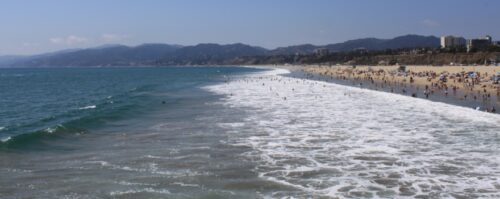 “Single-celled algae within delicate glass-like needles, Pseudo-nitzschia diatoms may be tiny, but they can play a huge role in the ecosystems they occupy. When types of Pseudo-nitzschia that make domoic acid proliferate during harmful algal blooms off California’s coast, marine mammals, seabirds, and humans who eat toxin-laced fish and shellfish can become gravely ill. “Domoic acid is rough. It’s a neurotoxin. It’s nerve damage,” said Dave Bader, chief operations and education officer at the Marine Mammal Care Center, which rescues and cares for sick and injured marine mammals in Los Angeles County. Mass strandings of domoic acid–poisoned California sea lions on the county’s beaches were once rare but have become common in recent years. The toxin spreads through the food web as animals eat the diatoms and each other, but only some animals suffer. In Southern California, Pseudo-nitzschia diatoms are a natural part of the phytoplankton community. For millennia, phytoplankton blooms have been tied to upwelled nutrients, which surge during La Niña and decline during El Niño. But the blooms have become more frequent and more toxic. “There’s just much more domoic acid than there used to be,” said Clarissa Anderson, an oceanographer at the University of California, San Diego’s Scripps Institution of Oceanography. … ” Continue reading from EOS.
Warm ocean waters bring unusual fishing boom off Southern California coast
“Southern California anglers are seeing an unusual abundance of warm-water fish species as elevated ocean temperatures linked to El Niño and marine heatwaves draw species typically found farther south into local waters. Fishermen operating near Marina del Rey and Santa Monica say they are catching species and sizes of fish rarely seen in the area. “Biggest yellowtail I’ve ever seen ever up here,” said Tony Villanueva, a boat captain. Alex Garcia, also a boat captain, said anglers have been landing unusually large catches. “We’ve been catching a bunch of big bonito,” Garcia said. … ” Read more from ABC LA.
New grant expands restoration impact across the Santa Ana River Wash
“A $3.28 million grant from the Wildlife Conservation Board will help the San Bernardino Valley Conservation Trust build on successful regional conservation work in the Santa Ana River Wash, restoring habitat for endangered wildlife, reducing wildfire risk and helping more water reach the Bunker Hill Basin, which provides drinking water for more than 700,000 San Bernardino Valley residents. The project draws on efforts by the San Bernardino Valley Water Conservation District (SBVWCD) at Plunge Creek and throughout the Wash. “This award allows us to take what we have learned through years of hands-on work and apply it much more broadly,” said Dr. Milan Mitrovich, Executive Officer for the San Bernardino Valley Conservation Trust and Land Resources Manager for SBVWCD. “Plunge Creek, our fuels management work and our collaboration throughout the Wash have shown us how restoring natural processes can benefit habitat and water resources at the same time. We can now apply that experience across a larger landscape and create lasting benefits for the species and communities that depend on it.” … ” Read more from the San Bernardino Valley Water Conservation District.
IMPERIAL/COACHELLA VALLEYS
Some like it hot: DWR scientists endure extreme heat to study desert pupfish at the Salton Sea
“Summer temperatures at the Salton Sea in southeastern California frequently exceed 110° F, making any time spent outdoors hazardous, let alone doing anything strenuous. Even so, DWR scientists Vanessa Velasco and Nicholas Burgos routinely brave the heat as they study one of the region’s most fascinating creatures, the desert pupfish. “The Salton Sea basin gets brutally hot at this time of year, but this is the peak of the breeding season for the pupfish and that’s when our research surveys are crucial,” said Burgos. “It’s a pretty harsh environment for most creatures, which is why their ability to survive here is so remarkable.” The Salton Sea’s only endemic fish species, the desert pupfish can tolerate an extreme range of environmental conditions: salinity levels ranging from fresh water up to almost double ocean water salinity; water temperatures as high as 108° F and as low as 40° F; and low levels of dissolved oxygen. … ” Read more from the Department of Water Resources.
SAN DIEGO
Will San Diego have a very wet winter? Maybe, maybe not
“We first learned of a major El Niño forming in the Pacific back in June, when the NOAA’s Climate Prediction Center issued an advisory for the pattern of warm Pacific Ocean water that can mean a wetter-than-usual winter. Today, the National Weather Service held the first of a planned series of weekly briefings to update the media on the status of El Niño. Warning Coordination Meteorologist Todd Hall from the LA/Oxnard office said it’s best to think of El Niño at this point as a scene setter. “The outcome is far from certain here. And the important point to remember going forward is that as El Niño sets the kind of the seasonal backdrop or the climate backdrop associated with this pattern,” he said. Hall said as we move into winter, forecasts will become more accurate and specific. But he said if weather warnings come, he and his fellow meteorologists want to be as certain as they can be, to avoid what you might call the “boy who cried wolf” syndrome. … ” Read more from KPBS.
Along the Colorado River …
NSF initiative seeks tech fixes for Colorado River water crisis
 “The worsening water crisis in the Colorado River Basin stems from a century of overuse and, more recently, a sustained drought. Short-sighted water allocation policies are responsible for the overuse, scientists say, and human-induced climate change is a major contributor to the drought. The National Science Foundation (NSF) is betting technology can relieve the crisis by better managing the water that remains and tapping new sources. The Energy Water Security Initiative (EWSI), now open for proposals, asks “multisector” research teams to propose technical fixes designed to ensure that the Colorado can continue to support both the economies of the seven states that rely on the water and the 60 million people living there. But many scientists who have spent their careers studying the basin say the initiative, launched with a $50 million down payment on an investment that could eventually exceed $100 million, is misguided. “These guys have completely missed the point,” says Jack Schmidt, a river scientist at Utah State University. “This initiative has nothing to do with addressing the actual crisis, which is the dwindling flow of water in the river.” … ” Read more from Science Magazine.
Years of Colorado River talks failed to produce a deal. How much should the public see?
“Two thick, orange, bound books sit on a library table at Colorado State University. “This is the original compilation,” said Patty Rettig, a water resources archivist at the university. She’s the keeper of the detailed records of another time when states were fighting over how to share the Colorado River. “You can see here, this is the first 18 sessions, and then we have another volume,” she said, pointing to the second book. These hundreds of pages hold the transcripts of the 27 meetings that led to the Colorado River Compact in 1922. They provide an important window into the rooms where Western water was divided up. The verbatim minutes reveal which officials were present – almost always the commissioners from the seven Colorado River states and the federally-appointed chairman Herbert Hoover, and often a handful of state engineers or other leaders. They also document when states disagreed and how, over more than a dozen meetings in Santa Fe in November, they eventually hammered out an agreement. … ” Read more from KUNC.
Measuring the use of Colorado River water is harder than it looks
“Most of the water from the Colorado River goes to agriculture, with sizable allotments going to municipal, industry and commercial uses, a months-long investigation from NPR’s Mountain West News Bureau found. Another large slice of water simply vanishes into the air annually, lost to evaporation from reservoirs dotted across the Colorado River Basin. There is less water available now in the Colorado River and negotiators are working to figure out how to distribute that water. Now that many users may see their water shares cut, it is important to understand how much water is actually in the system. The NMWB analyzed data from the federal Bureau of Reclamation (BOR) and best practices established by a team of water scientists published in a prominent environmental journal. The NMWB found that about 65% of all Colorado River water went to irrigating agriculture from 2000 to 2024 on average. From 2014 to 2024, that’s 9.57 million acre-feet a year, on average. That is slightly down from the previous decade’s average, but only by 2%. … ” Read more from Boise Public Radio.
Tribes along the Colorado River are still fighting for their rights
“The Colorado River stretches 1,450 miles across the U.S. And for just 17 miles, the river flows through the Fort Mojave Indian Tribe’s reservation, which spans across three states: Arizona, California, and Nevada. Fort Mojave Indian Tribe Chairman, Timothy Williams, on a humid triple digit day in the valley shows me around the tribe’s checkerboard farmland in Arizona. That’s the state in which the tribe has the most water rights. “Look over there, multi-million dollar homes that are right there across the river,” Williams said. “And here’s our infrastructure and trying to provide for an entire people.” The tribe has 133,000 acre-feet of water a year – enough to sustain over a quarter of a million households. Most of that goes to their alfalfa and upland cotton operation, which pays for healthcare services, housing, a state of the art elementary school, tribal utilities and other services. But as states, cities, and the federal government fight over the future of the river, all of that is at risk. And tribes like the Fort Mojave are often left out of the negotiations. … ” Read more from Nevada Public Radio.
Navajo Nation Council names confluence of Colorado River a sacred site under tribal law
“The Navajo Nation Council has taken a major step toward protecting one of its most precious water resources. A unanimously passed measure formally acknowledges the Confluence — where the Colorado and Little Colorado rivers meet — as a sacred site under tribal law. Doing so formally documents what Navajos already know — the spiritual and natural significance of where these two life-giving rivers converge in northern Arizona’s high desert. Tooh Ahidiilíní — the Diné phrase for the Confluence — is not only special to Navajos, but this landscape is also part of the ancestral homelands for Hopis, Zunis, Southern Paiutes and Apaches. The effort behind turning it into an officially recognized sacred site has been decades in the making. “This legislation is long overdue,” said Delegate Curtis Yanito, the bill’s sponsor amid an August special session. “It’s time for us to protect this area that’s been protected by the local people of the Colorado River.” … ” Read more from KJZZ.
Feds spare Upper Basin; states still feel water cuts pressure
“The Colorado River’s Upper Basin states are not required to make mandatory water cuts that the federal government imposed on the Lower Basin. But that piece of good luck doesn’t guarantee smooth sailing for Colorado, New Mexico, Utah and Wyoming. The four Upper Basin states’ leaders celebrated the U.S. Department of Interior’s decision late August, but called for continued negotiations and longer-term solutions. The move was made amid a hot and dry wildfire season across much of the West, with areas in the Upper Basin cutting back on planned water projects. “The water supply realities of the Basin cannot be ignored or papered over,” the four Upper Basin governors wrote in a statement after the Department of Interior’s Final Environmental Impact Statement in late July. “States in both the Upper and Lower divisions of the basin are feeling the pain of severe drought. This is a reality that all states, and the federal government, will need to address practically, which is why a seven-state agreement will provide the best outcome for all water users in the Colorado River Basin. We are committed to continued good-faith discussions with our counterparts.” … ” Read more from the Center Square.
These next steps will help Arizona adapt to Colorado River cuts, environmentalists say
” … Kevin Moran, a water policy expert with the Environmental Defense Fund, which co-authored the call to action, said it is now time to focus on the health of the river system, involve tribes in a substantive way and move away from a “cycle of depletion and crisis management.” “The only way we do that is to work proactively to find ways of using less water across all water use sectors and in all states,” he said. In a public statement, the group of seven conservation organizations is asking for a few measures that could make huge planned reductions more predictable and tolerable. “I think it can feel overwhelming when we see the headlines,” said Haley Paul, an Arizona-based water expert with the Audubon Society, which co-authored the statement. “But in the end, we still have agency and we still have choices we can make to improve our water outlook.” … ” Read more from KJZZ.
Colorado River cuts could force ‘unprecedented’ low water use for Arizona, new study finds
“A new paper from a group of independent water experts finds that proposed cuts to the Colorado River supplies for Arizona, California and Nevada would be “unprecedented.” It explains that recent water use in those states is already relatively low, and a new federal proposal for reining in demand even further has “no historical analogy.” The Colorado River is shrinking due to climate change, drought and steady demand from the seven Western states that use its water. As the nation’s two largest reservoirs shrunk to record lows, the seven states that use it failed to agree on a new plan for cutting back on demand. That forced the federal government to step in with its own plan. That plan allows the federal government to cut Colorado River water for Arizona, California and Nevada by about 40% each year between 2028 and 2036, with the sharpest cuts likely hitting Arizona. … ” Read more from KJZZ.
CAP leaders take a step toward legal action over Arizona’s Colorado River water share
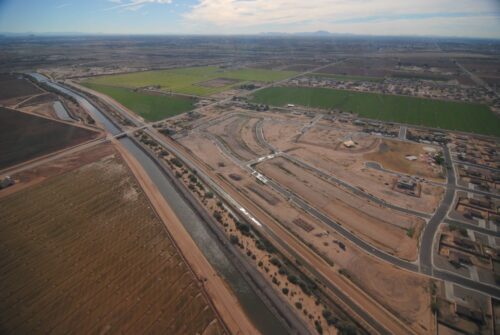
“The agency that brings Colorado River water to the Phoenix area has taken a step toward legal action over the river’s management. The Central Arizona Water Conservation District is not suing anybody yet, but voted to take a step that opens the door to a future lawsuit. The agency’s board, an elected group of 15 people, manages the Central Arizona Project. The CAP is a 336-mile canal that carries water from the Colorado River on Arizona’s Western border, across the desert, and into the Phoenix and Tucson areas. A new federal plan for managing the Colorado River deals big cuts to Arizona, California and Nevada. The CAP will be perhaps the hardest hit water system in the entire river basin, which spans seven states. Meanwhile, the plan does not force mandatory water cutbacks on Colorado, Utah, New Mexico or Wyoming. … ” Read more from KJZZ.
Arizona Republican lawmakers request more frequent briefings on Colorado River
“Arizona Republican state lawmakers want the state’s water agency to keep them apprised of all Colorado River negotiations, indicating that the governor is getting more updates than them. Gov. Katie Hobbs plans to call a special session gathering of the Legislature to vote on a water-sharing agreement between Arizona, Nevada and California. The state’s chief negotiator in Colorado River talks is Tom Buschatzke, the director of the Department of Water Resources. … ” Read more from KJZZ.
Phoenix says taps will keep flowing as Arizona’s 27% Colorado River cut hits water bills
“Phoenix will have to manage with a smaller share of Colorado River water through 2028, but city leaders say that does not mean homes are headed for dry faucets. The more immediate impact for residents is expected to be financial, with water providers around the region investing heavily to maintain supply in one of the nation’s hottest and fastest-growing metro areas. Under a new federal approach to the Colorado River, Arizona is set to take annual reductions equal to 27% of its allotment through 2028, and those cuts could become steeper after 2028, according to NPR. That matters greatly in Phoenix, where about 40% of the water delivered to customers comes from the Colorado River. … ” Read more from The Cool Down.
Willcox plan shakes up Arizona groundwater policy
Joanna Allhands writes, “There is no easy or painless way to solve Willcox’s groundwater problems. At least 150,000 acre-feet more water flows out of the southeastern Arizona basin than flows into it each year, according to state estimates. This decline has accelerated since 1990, drying up wells, cracking the earth and permanently damaging the aquifer’s capacity to store water. To cut that figure in half — a goal the Department of Water Resources has proposed for the basin — farmers could be required to slash use by roughly 75,000 acre-feet* by 2075. (Yes, the asterisk is on purpose. We’ll get to that.) Willcox is among the nation’s largest producers of pecans and pistachios. It grows most of the state’s wine grapes, as well as alfalfa for local dairies and a smattering of other crops. Fields here average some of the highest irrigation efficiency rates in the state. But crops require steady water to grow. And groundwater is all there is. … ” Read more from the Arizona Farm Bureau.
Could Colorado River cuts leave Nevada projects high and dry?
“Nevada industrial project activity could be blighted, and the Las Vegas area economy would be devastated, by mandatory cuts in water allocations from the Colorado River ordered by the U.S. Bureau of Reclamation, which is part of the reason the Silver State was the first state to sue that agency. Three states–California, Nevada and Arizona–face mandatory cuts in water allocations from the Colorado River in a decision finalized August 21 by the U.S. Bureau of Reclamation (USBR), a branch of the Department of the Interior (DOI). Nevada has the smallest allocation of water from that river, and the federal decision would reduce the Silver State’s share of that river 71%, or about 213,556 acre-feet (AF). Three days after the federal government ordered those mandatory water cuts for the year that begins October 1, the State of Nevada and the Southern Nevada Water Authority sued the USBR, alleging it violated the Administrative Procedure Act (APA) and the National Environmental Policies Act (NEPA). A 71% reduction in water from the Colorado River would devastate the economy of Southern Nevada, specifically the Las Vegas area, Nevada claimed in a lawsuit filed August 24 in Federal District Court in Nevada. Approximately 90% of the water used in Las Vegas comes from the Colorado River, the plaintiffs said. … ” Read more from Industrial Info Resources.
Nevada warns new Colorado River rules could slash Las Vegas water supplies by 71%
“Even as water problems across the West intensified, Nevada cultivated an image as a pragmatic broker on the Colorado River and cited falling water use in Las Vegas. That stance has now given way to a court fight: the state is suing the federal government, arguing that a new river management proposal could endanger water supplies for its largest metropolitan area, Grist reported. Nevada’s challenge centers on a new federal plan for the Colorado River that could force steep water cuts in the Lower Basin states — Arizona, Nevada, and California — as reservoir levels continue to fall. Nevada says the plan could reduce the Las Vegas area’s water supply by up to 71%. … ” Read more from The Cool Down.
Commentary: Is cloud seeding the answer to Utah’s water problems?
“In 2022, Utah made a drastic investment in cloud-seeding technology. Fueled by low Great Salt Lake levels and drought, the state increased funding from $350,000 to $5 million per year, along with a one-time investment of $12 million. Since then, the budget has risen to $7 million annually and $17 million in one-time funding. About 30% of Utah’s dedicated cloud-seeding funding goes toward research, according to Jonathan Jennings, a meteorologist with the Utah Division of Water Resources. One project in particular could help answer a question that has persisted for decades: How much additional water does cloud seeding actually produce? … To help answer that question, the Seeded Natural and Orographic Winter Storms and Catchment Processes Evaluation, or SNOWSCAPE, began in 2025 … ” Read the full commentary from the Deseret News.
More water being released from Flaming Gorge to help Lake Powell
“For as many times as Jack Lytle has been out on Flaming Gorge Reservoir, the Daggett County commissioner still has a tough time explaining what the lake means to him. “It’s a great place,” he said while taking in a boat across the reservoir. For Lytle, who calls this corner of northeastern Utah home, Flaming Gorge is more than a reservoir. “It does give you a place to come and relax, but also to have that peace,” he said. “I love being on the water.” These days, however, the reservoir is also playing an important role in a much larger and increasingly complicated issue facing the Colorado River. The U.S. Bureau of Reclamation is releasing between 660,000 and 1 million acre-feet of additional water from Flaming Gorge through April 2027 to help keep Lake Powell above critical elevations. … ” Read more from KSL.
Big Pivots: We can’t build our way out of this ‘drought’
Allen Best writes, “No place in Colorado that I have visited offers such blunt testimony to the warming, drying climate than Green Mountain Reservoir. It also poses a question to those politicians whose answer to non-winters and ever-hotter summers is more dams and reservoirs. The reservoir between Silverthorne and Kremmling was 14% full during Labor Day weekend, according to the U.S. Bureau of Reclamation, the operator. Put another way, it was 86% empty. That’s worse even than the roughly 78% empty at Lake Powell, the reservoir located roughly 700 river miles downstream from Green Mountain. Green Mountain was part of Colorado’s mission begun in the 19th century to put water to “beneficial use,” a central axiom of state water law. Pioneer settlers did an admirable job of this, in the beginning using nothing more than horses, oxen and human labor. … ” Read more from the Craig Daily Press.
In national water news today …
Is clean water a constitutional right? US appeals court issues ruling
“A federal appeals court ruled this month that the U.S. Constitution does not guarantee the right to clean drinking water. The U.S. 5th Circuit Court of Appeals made the ruling on Sept. 4, rejecting a lawsuit from residents in Jackson, Mississippi, over the city’s lead-contaminated water system. USA Today reports that the lawsuit against the City of Jackson stemmed from testing conducted by the Mississippi State Health Department between 2010 and 2013, showing rising levels of lead in the water. According to the 2022 lawsuit, the plaintiffs claimed that the City of Jackson knowingly exposed residents to lead-contaminated water. There were also claims that the city did not take measures to prevent further lead from entering the water supply and gave residents false assurance that the water was safe. … ” Read more from Channel 10.
EPA seeks more public comments as it struggles to devise water rule that limits scope on wetlands
 “The Environmental Protection Agency is seeking additional public comments as it tries to redefine the scope of the nation’s bedrock clean water law to significantly limit the wetlands it covers. The request, announced Friday, comes nearly a year after the agency proposed a rule defining “waters of the United States,” or WOTUS, based on a 2023 Supreme Court ruling that removed federal protections for vast areas. The plea for new information is highly unusual and reflects the complexity of the water rule, a contentious regulation that has been argued in the courts for decades and reached the Supreme Court twice since 2006. The latest proposal is a “supplemental” rule that EPA said will help it and the U.S. Army Corps of Engineers evaluate a wider range of options as they work toward a final rule that fully implements the Supreme Court’s decision in a case known as Sackett v. EPA. … ” Read more from the Associated Press.
EPA proposal could leave the public in the dark on data center plans
“A plan by the Environmental Protection Agency could make it harder for the public to learn about and comment on proposed AI data centers that have sparked backlash in communities across the United States and transformed the midterm election landscape. The EPA proposal would eliminate a federal requirement that states notify the public and seek comment before issuing air pollution permits for data centers and other industrial facilities. States could still offer opportunities for public comment, but the EPA would no longer mandate them as a condition for states to grant permits. Critics say the move could thwart local residents from learning about proposed data centers or making their voices heard before projects are approved and construction begins. The move comes during a widespread backlash as tech giants build hundreds of massive server warehouses to fuel artificial intelligence and cloud computing. … ” Read more from the Associated Press.

