
A wrap-up of posts published on Maven’s Notebook this week …
Note to readers: Sign up for weekly email service and you will receive notification of this post on Friday mornings. Readers on daily email service can add weekly email service by updating their subscription preferences. Click here to sign up!
In California water news this week …
State Water Board releases final draft plan to protect California’s Bay-Delta, water and wildlife
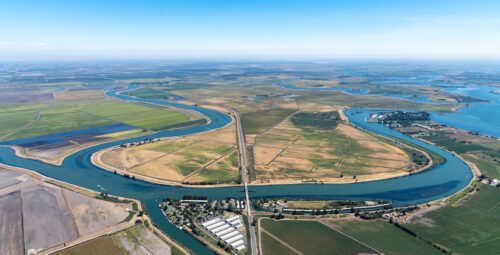
“California took a major step today to protect one of the state’s most important and threatened ecosystems as the State Water Resources Control Board released its final draft plan to modernize water quality protections for the Sacramento River and San Francisco Bay-Delta. The State Water Board will consider adopting the updated Water Quality Control Plan for the San Francisco Bay/Sacramento-San Joaquin Delta Watershed (Bay-Delta Plan) at a public hearing Oct. 28-29. The Bay-Delta is the heart of California’s water system. It supports some of the state’s most iconic and threatened fish and wildlife, sustains tribes and other local communities, and provides water for nearly 30 million Californians and 4 million acres of farmland. These benefits are essential to the economy and environment. But the Delta and its tributaries have long been under threat. Native fish populations have suffered, habitat has been lost, and the watershed faces increasing pressure from climate change and competing demands for water. … ” Read more from the State Water Board.
Amid controversy, California officials release long-awaited Delta water plan
“California regulators have released a plan to change how the state governs the pumping of water from the Sacramento-San Joaquin River Delta, a proposal that would give water agencies more leeway in how they comply with the rules. The Delta is the central hub of California’s water system, providing water for nearly 30 million people and 4 million acres of farmland. As the state has relied heavily on its water, the Delta’s ecosystem has suffered, and native fish populations have declined. “We believe we need a new approach,” said Eric Oppenheimer, executive director of the State Water Resources Control Board. “We need a plan that balances ecosystem needs and human water demands.” The draft Bay-Delta plan, which the board released Wednesday, takes “an innovative approach that pairs voluntary actions with a strong regulatory backstop” to protect the Sacramento River and the Delta, as well as San Francisco Bay, Oppenheimer said. … ” Read more from the LA Times. | Read via Yahoo News.
Solano County water officials say latest Bay Delta Plan does not address local concerns
“Some Solano County water officials are saying the latest Bay Delta water plan is better than other alternatives, but does not resolve all the local concerns. “The bottom-line assessment is that the August 2026 final draft is better than the earlier (55% unimpaired flow) proposal by the inclusion of Water Supply Adjustment factors for rainfall-fed watersheds. It also formally elevates Healthy Rivers and Landscapes (and) voluntary agreements into an enforceable pathway. But it does not resolve SID’s and Solano County agencies’ central concerns,” Cary Keaton, general manager of Solano Irrigation District, said in an email response to the Daily Republic. He noted that State Water Resources Control Board simply defended its own modeling and did not conduct the “requested Solano Project reliability analysis or deferring the regulatory pathway for Putah Creek.” “SID does not have concerns regarding the voluntary agreement provisions of the plan. This is a commitment to flow and habitat made by the Solano County Water Agency and other Solano County agencies. SID supports this commitment,” Keaton stated. … ” Read more from the Daily Republic.
STATEMENTS:
- Healthy Rivers and Landscapes Program could be the best path forward for California if key concerns are addressed, joint statement from HRL signatories
- Metropolitan issues statement on State Water Board release of Water Quality Control Plan
- Delta coalition slams State Water Board for failing to take tribal and environmental concerns seriously in updated Bay-Delta Plan, from Restore the Delta
- California State Water Board’s deeply flawed Bay-Delta Plan, from SF Baykeeper
Are Kings County farmers getting a bad rap from bad data?
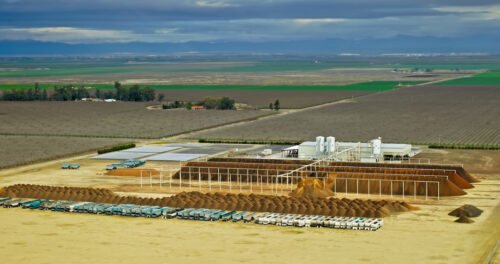 “Kings County farmers are either underreporting how much groundwater they pump – by a lot. Or bad data is to blame. According to the state Water Resources Control Board, farmers in the Tulare Lake subbasin, most of Kings County, have reported less than 35% of their actual groundwater extractions under a mandate aimed at measuring how much is being pumped in the critically over drafted region. Baloney, said one groundwater agency, pegging compliance at closer to 90%. “Bad data would be my official statement,” said El Rico Groundwater Sustainability Agency chair Jeof Wyrick at the board’s August 11 meeting. “We see that it’s closer to 90(%) plus and there’s a few (wells) that we don’t know about but they’re those small parcels. “The state board also said that we have over 150 domestic wells that are out there and I think they did a domestic wells per acre average that is made up out of thin air.” There are only 12 domestic wells in El Rico’s boundaries, Wyrick said. … ” Read more from SJV Water.
Oroville Dam license looms over water debate
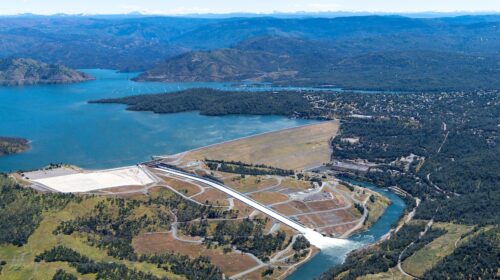
“Hundreds of comments and an overflow crowd brought concerns about potential data centers to the Butte County Water Commission, but commissioners and speakers were warned that a decades-old issue involving Oroville Dam could carry far greater consequences for the county’s water and economy. The commission received 592 electronic comments on data centers before its Aug. 5 meeting. County officials stressed that Butte County has received no application for a data center in its unincorporated area and has not been approached about one. By contrast, the unresolved federal relicensing of Oroville Dam involves an existing project that supplies water and power statewide while imposing costs county officials estimate at about $20 million annually. Jim Graden, the domestic well representative on the Vina Groundwater Sustainability Agency board, pointed to the California Water Plan and warned that future demands on Northern California’s surface and groundwater could dwarf those being discussed in connection with data centers. … ” Read more from the Gridley Herald.
Super El Niño is projected to douse California. Here’s how much extra rain to expect
“Strong El Niño events are commonly associated with wet winters for the Golden State. As the jet stream and atmospheric rivers that dowse the Pacific Northwest in normal winters get pulled south into California by El Niño, they also become supercharged thanks to warmer ocean temperatures. And as the ongoing “Super El Niño” continues to strengthen, long-range climate models are already studying this scenario and projecting what it could mean for California as winter nears. To understand the wet picture that is emerging, it is important to understand what climate models are. Weather models, such as the ones that feed the weather app you use on your phone, calculate specific conditions throughout the time of day. This includes any specific clouds or storms or fronts, and when and where any of those features might arise. Most of these models forecast out several days to a week or two. … ” Read more from the Sacramento Bee.
Clear Lake, Lake Tahoe, and the Salton Sea: Stories of restoration and renewal
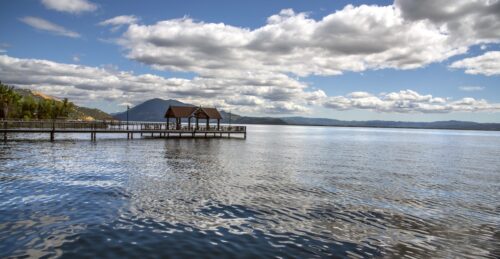
“California’s lakes tell the story of the state itself: breathtaking beauty, deep cultural history, complex environmental challenges, and communities working together to protect places that matter. From the volcanic basin of Clear Lake to the alpine clarity of Lake Tahoe and the desert expanse of the Salton Sea, each water body reflects a different part of California’s natural richness—and each is at a turning point. “We have the highest point in the country, the lowest point, the tallest trees, the largest trees, the oldest trees, all sorts of different ecosystems and different landscapes,” said Wade Crowfoot, Secretary of Natural Resources. “Part of this natural richness are very different water bodies, including really important water bodies from both an ecological environmental perspective as well as a cultural, recreation, community, and economic perspective.” That richness was the focus of a webinar hosted by Secretary Wade Crowfoot, which highlighted three priority lakes—Clear Lake, Lake Tahoe, and the Salton Sea—and the partnerships, restoration efforts, and community leadership shaping their futures. … ” Read more from Maven’s Notebook.
California’s drought irreversibly damaged Sacramento Valley aquifers
California Department of Water Resources
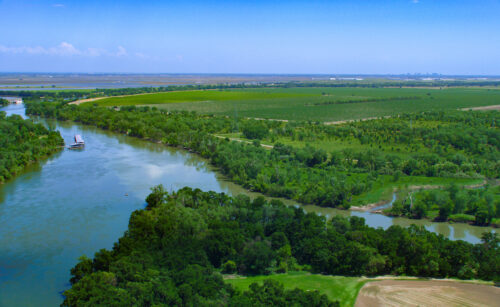
“From 2020 to 2022, California faced one of its driest periods on record, in part because of human-caused climate change. Though the drought has eased, scientists have noticed lasting effects on the state’s aquifers that may affect their ability to store water in the future. A new study published in the Proceedings of the National Academy of Sciences of the United States of America found that the drought and resulting overpumping of groundwater caused some aquifers in the Sacramento Valley to collapse and become irreversibly damaged. The study is the first to capture this kind of aquifer collapse in high-resolution satellite data and provides evidence in support of giving the Sacramento Valley’s aquifers additional protections, the authors write. “How fast part of the Sacramento Valley is subsiding was quite surprising to us,” said Stacy Larochelle, a geophysicist at the University of California, Los Angeles, and lead author of the new study. “This is really one of the first times we could capture this transition in so much detail.” “It’s sad that the Sacramento Valley is seeing more subsidence, but that it’s being recognized, documented, and looked at in more detail is a good thing,” said Claudia Faunt, a retired hydrologist at the U.S. Geological Survey California Water Science Center who was not involved in the new study. … ” Read more from EOS.
Low-water winter forage faces high-cost SGMA reality
“San Joaquin Valley growers are exploring low-water winter forage crops to keep land productive under tightening Sustainable Groundwater Management Act (SGMA) restrictions. Panelists at a recent Public Policy Institute of California (PPIC) event highlighted wheat, rye, and triticale as crops that rely primarily on winter precipitation. While these options help reduce groundwater demand, experts warned that crop shifts alone cannot fix the severe economic challenges in regions with limited surface water and accelerated land subsidence. The PPIC estimates that between 500,000 and 900,000 acres fallowed could occur by 2040 as the valley adjusts to new environmental and regulatory pressures. Geoffrey Vanden Heuvel of the Milk Producers Council noted that while dairies provide a natural market for these forages, quality remains a concern. … ” Read more from Agro News.
Cyclospora fallout hits California farmers
“California lettuce was not implicated in a sprawling cyclospora outbreak that sickened thousands of people and made frequent headlines this summer. But farmers in the state are shouldering much of the economic pain as wary consumers ditch lettuce and other fresh produce. “It’s been really bad,” said Ryan Kelly, vice president and general manager of Salinas-based Boutonnet Farms in Monterey County. On July 17, the U.S. Food and Drug Administration identified shredded iceberg lettuce from a Taylor Farms facility in Mexico as a possible source of the outbreak. The product was pulled from stores and restaurants after the company initiated a recall. But for many consumers, doubts about the safety of fresh produce persisted. Last month, lettuce prices declined 16.4%, the largest month-over-month drop on record, according to the U.S. Bureau of Labor Statistics. Meanwhile, market research firm NielsenIQ reported that from July 18 to Aug. 8, sales of iceberg lettuce fell 25.4% and prepacked salads dipped 34.2%. … ” Read more from Ag Alert.
Nonprofit program aims to bring more rice to Delta
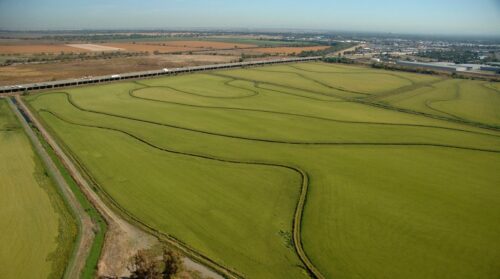
“Corn has long been a staple crop in the Sacramento-San Joaquin Delta. But in recent years, reports have shown a change in the region’s agricultural makeup as more delta farmers turn to rice—a move supported by state dollars. Jerred Dixon, manager of the Nature Conservancy’s 9,200-acre Staten Island Preserve in San Joaquin County, is a fifth-generation farmer whose family grew corn when he was growing up in the area. Now, he oversees the Staten Island farm’s rice crop, which spans 4,500 acres, and encourages other delta farmers to consider rice as well—for its financial potential and environmental benefits. “It’s economically viable, and it’s also helping protect what is still here,” he said. When the Nature Conservancy first purchased the land in 2001, the environmental nonprofit envisioned a place that could financially sustain itself through agriculture while protecting the region’s native wildlife. Rice is key to that goal because rice farmers such as Dixon flood their fields during the growing season, creating habitat for species that rely on wetlands that once covered the region. … ” Read more from Ag Alert.
Can anything stop invasive golden mussels? A test project in Stockton may provide an answer
 “If you can’t beat ’em, control ’em. That might be the best strategy for tackling the scourge of golden mussels that have quickly spread across the Delta and throughout California’s lakes and inland waterways, causing millions of dollars in damage. Help may now be on the way for boat owners, farmers and water company managers eager for a solution to ward off the quickly propagating bivalves. A Davis-based company is readying a test in Stockton of a biodegradable treatment that kills golden mussels without damaging surrounding aquatic wildlife. The biobased product, Zequanox, is already being used on quagga and zebra mussels, two other invaders that have bedeviled the nation over the past few years. … ” Read more from Stocktonia.
How one Davis lab is trying to stop California’s golden mussel invasion
“The first known detection of the invasive golden mussel in all of North America happened in California. This invasive species has prompted states of emergency, both in San Joaquin County, where they were found at the Port of Stockton, and in Yolo County, where they were found to have spread to the Port of West Sacramento. It’s posing a huge threat to Sacramento-San Joaquin Delta waterways. It’s threatening billions of dollars in losses for farmers and could choke California’s water supply. Working to help stop it is the Davis-based Invasive Species Corporation, which is stepping up with a possible solution. Research scientist Brady Hirschfeld studies how to stop the rapid golden mussel invasion. “It’s really rewarding to be on this side of things,” Hirschfeld said. “I’m really proud to be part of the solution to kill golden mussels.” … ” Read more from CBS Sacramento.
ACWA-sponsored Proposition 218 rate-setting bill advances to governor’s desk
“ACWA-sponsored AB 2180 (Ward, D-San Diego) passed the Legislature today and is now on the desk of Gov. Gavin Newsom. The bill would clarify how water agencies comply with Proposition 218 when setting water rates. This clarification would provide predictability for agencies, support California’s water-use conservation goals and help minimize unnecessary legal disputes over water rates. ACWA staff will continue to advocate on behalf of members and encourage the governor to sign the bill. More information and background on the bill is available in an ACWA fact sheet.
Delta, SWP levee, canal protection bill headed to the governor
“Legislation that would repair the aging levees in the Delta and the SWP’s California Aqueduct and canals has cleared the state Legislature. Senate Bill 872 – authored by Sen. Jerry McNerney, D-Pleasanton, and supported by the environmental group, Restore the Delta, and the State Water Contractors – depends greatly on funding not yet secured. The bill creates the Delta Levees and Canal Subsidence Fund, state funding for which is being negotiated and includes discussions about federal funding, a McNerney spokesman said. It also would allow for private funds to be used. “Historically, California’s water wars have pitted North against South, environmental groups versus State Water Contractors,” McNerney, co-chair of the Delta Caucus and whose district includes the heart of the Delta, said in a statement. “The unanimous passage of SB 872 sends a clear message: California is ready to finally end its water wars. We’re ready to join together to support vital projects that will protect California’s water and the Delta, while also benefiting the entire state.” … ” Read more from the Daily Republic.
Padilla, Schiff, Ruiz push back against Trump administration efforts to abandon New River and Imperial County wastewater infrastructure projects
“Today, U.S. Senators Alex Padilla and Adam Schiff (both D-Calif.), along with U.S. Representative Raul Ruiz (D-Calif.-25) pushed back against a new proposal to deauthorize environmental infrastructure projects for the New River and Imperial County. In a letter to Assistant Secretary of the Army for Civil Works Adam Telle, the lawmakers warned that these rollbacks could have serious consequences for surrounding California communities and the environment. The lawmakers criticized the Army Corps of Engineers’ new proposal, emphasizing that these projects do not meet the Corps’ criteria for deauthorization and highlighting the significant public health issues that the projects’ funding could address. “There remains an urgent public purpose for the New River and Imperial County authorizations, given that an estimated 60 million gallons of water flow through the New River into the United States at Calexico each day, and recent border monitoring has documented pollutants and water quality indicators including fecal coliform, ammonia, biochemical oxygen demand, arsenic, and selenium,” wrote the lawmakers. “The urgency of this problem has also generated significant local non-federal support and consideration of additional federal support for actions to remedy the public health impacts.” … ” Read more from Senator Alex Padilla.
In commentary this week …
Planning for California’s water future starts now
“California has never had the luxury of taking water for granted. Every generation has faced its own water challenges and responded by building the infrastructure, partnerships and policies needed to keep our communities, economy, agriculture and environment thriving. Now it’s our turn. California’s water system is being tested in new ways. We’re experiencing rapid swings between floods and droughts, sometimes within the same season. Warmer winter storms are bringing more rain instead of snow, reducing mountain snowpack that has long served as one of California’s largest natural reservoirs while increasing the risk of devastating floods. … ” Continue reading at ACWA.
Commentary: Why California’s next El Niño won’t end the state’s water challenges
Valerie Pryor, the general manager of Zone 7 Water Agency, writes, “Every time a major El Niño is forecast, Californians ask the same question: Will this finally end the drought? After years of water restrictions and headlines about shrinking reservoirs, a winter full of storms sounds like good news for California. A wet winter can ease immediate water shortages, but it’s often followed by years of dry conditions. Climate change is making weather whiplash even more dramatic, bringing fewer but more intense storms separated by longer stretches of dry weather. The real question isn’t how much water weather systems like El Niño will bring to California; it’s how much water we can capture before the next drought inevitably arrives. That’s why California’s response matters. Last year, the state acted boldly by enacting Senate Bill 72, a law that establishes a statewide target of nine million acre-feet of additional water supply by 2040. Now, California must deliver on that goal, and doing so will take sustained leadership, accountability, funding and collaboration across every level of government and with stakeholders to prepare for weather and climate changes. … ” Read more from the San Jose Mercury News.
Don’t drain the Colorado River. Create water instead.
Jim Madaffer, chief executive of the public affairs firm Madaffer Enterprises, vice chair of the Colorado River Board of California and a board member of the San Diego County Water Authority, writes, “The Colorado River Compact of 1922 is designed to divide a fixed supply of water, but there’s a problem: The river no longer offers one. The Colorado River is facing pressure from years of low water levels that don’t look likely to rise anytime soon. The outdated structure of the compact doesn’t address these problems, forcing seven Western states to search for other ways to fill their reservoirs. The 20th century focused on allocating the river’s water, but the 21st century must create water for the region. And the best way to make that happen is by unleashing the power of the marketplace. This compact, and other laws of the river, focus on water allocation to the states — Arizona, California, Colorado, New Mexico, Nevada, Utah and Wyoming — that rely on its supply. It allowed the building of dams, reservoirs and aqueducts that transformed an arid region into one of the world’s great economic engines. But a system designed to divide a steady stream of usable water won’t work with a river facing chronically low levels due to two decades of droughts and a hotter, drier climate. … ” Read more from the Washington Post.
The Colorado River is significantly overdrafted and not sustainable under current operations
Mike Gardner, former city council member and currently on the Western Municipal Water District Board, writes, “As Colorado River runoff hits historic lows, longstanding agreements on allocation of Colorado River water are set to expire at year’s end, and both Lakes Powell and Mead continue to lose storage, negotiations among the seven Colorado River states have not yielded any agreement. This has caused the Bureau of Reclamation (Reclamation) to impose a 10-year plan that pleases no one and will not result in sustainable operation of the Colorado River. Reclamation’s mandate is really a series of two-year plans to be updated throughout the 10-year plan. In the first two years, the Lower Basin states of Arizona will lose 760,000 acre-feet of diversion rights, California will lose 440,000 acre-feet, and Nevada will lose 50,000 acre-feet. The Upper Basin states of Colorado, New Mexico, Utah and Wyoming lose nothing. Reclamation hopes the seven states (and 20+ Tribal Nations and the country of Mexico) will continue negotiations and come to a consensus. Thus far, the four Upper Basin states have offered nothing, and the mandate does not seem to be an incentive for them to do so. … ” Read more from the Raincross Gazette.
California’s neglected infrastructure is harming America
Edward Ring, director of water and energy policy for the California Policy Center, writes, “California attracts a lot of criticism, with perhaps the most bipartisan criticism focusing on its punitive cost of living. And this bipartisan criticism even extends to agreement on the reason California is too expensive. In their bestselling 2025 book Abundance, authors Ezra Klein and Derek Thompson argued that liberal governance has become too legalistic, bureaucratic, and ideologically committed to politics of scarcity. Throughout their book, California was used as the worst example. Klein, an opinion columnist for the New York Times, and Thompson, a veteran of The Atlantic, have indisputable liberal, left-of-center bona fides. But their indictment of liberal policies was unsparing. The influence of their book has been seismic. Since its release, and well before the Iran war moved affordability issues firmly into the spotlight, Democrat politicians have adopted abundance and its twin, “affordability,” as a centerpiece of their campaign platforms. … ” Continue reading from Edward Ring.
Commentary: State Legislature must close loopholes to protect Bay Area’s air and water
Shannon Olivieri, chief strategy officer at California Environmental Voters, and Jennifer Clary, California director of Clean Water Action, write, “More than 20,000 West Oakland residents were once again forced to wonder what was in the air they were breathing when Radius Recycling caught fire in March, and not for the first time. The facility has a documented history of fires and environmental violations, yet lawmakers have made it easier to fast-track dangerous facilities. If that same plant were proposed in any California community located in an industrial zone today, it could be exempt from thorough review. The same goes for dozens of other potentially risky, heavy industrial projects: strip mining, fertilizer production, lithium battery cell manufacturing, carbon black production, peptide pharmaceutical manufacturing and many others. All because of a toxics pollution loophole that the Legislature jammed through in a budget “trailer” bill last year. … ” Read more from the San Jose Mercury News.
Column: AI data center opponents get water use argument all wrong
Columnist Dace Potas writes, “Data centers, the gigantic buildings that house the computing power behind the artificial intelligence boom, are wildly unpopular. A recent Gallup poll found that 7 in 10 Americans oppose one being built in their area. Most of those objections don’t hold up. In town after town, data centers have delivered real benefits to the communities willing to host them. Local officials should be welcoming these projects, not passing laws to keep them out. Quincy, Washington, is now home to more than two dozen data centers, which pay more than half the city’s property taxes. That windfall has bought Quincy a new high school, sports complex, hospital, library, police station, fire department and even a water park. A population of 8,500 people got all of that, plus 900 new jobs. Its poverty rate has fallen from nearly 30% in 2012 to 6.2% in 2024. … ” Read more from the USA Today.
In regional water news this week …
Ninth Circuit sides with Reclamation in fight over California water contract conversions
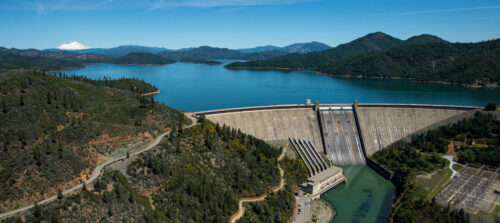
“A Ninth Circuit panel granted a win to the U.S. Bureau of Reclamation Monday, confirming a lower court’s finding the conversion of water service contracts from the California Central Valley Project doesn’t require a new environmental review. A three-judge panel unanimously held the Water Infrastructure Improvements for the Nation Act required the bureau to change a contract if requested by a water user, and does not necessitate the agency undertake environmental review under the National Environmental Policy Act or Endangered Species Act before converting each water service contract. “Reclamation was not required to conduct contract-specific environmental review or initiate consultation before converting those contracts because § 4011(a) creates a mandatory duty to convert water service contracts upon request and prohibits Reclamation from considering the environmental effects of the contract conversion or exercising discretion to benefit protected species when converting contracts,” U.S. Circuit Judge Gabriel Sanchez, a Joe Biden appointee, wrote for the court. … ” Read more from the Courthouse News Service.
Yurok Tribe challenges feds’ revised priorities for Klamath Project
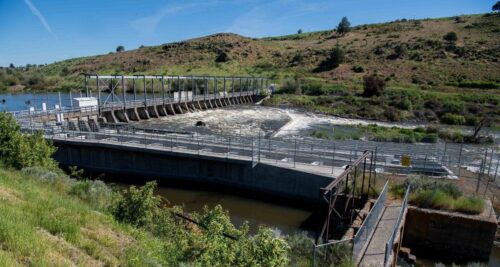
“The Yurok Tribe and other plaintiffs on Friday asked a San Francisco federal judge to once again intervene in a long-running conflict with the feds over water releases from the Klamath Irrigation Project in Northern California after the Trump administration said last year that irrigation should take priority over threatened salmon species. The Klamath Project supplies water to more than 225,000 acres of farmland and two wildlife refuges in the Klamath Basin along the Oregon-California border. But critics say the project has decimated the local Chinook and Coho salmon population, which the Yurok Tribe relies on to survive. “We have an agency that has reversed the priorities, and it intends to prioritize irrigation over Endangered Species Act compliance,” said Patti Goldman, an attorney with Earthjustice who represents the Yurok Tribe. She said the U.S. Bureau of Reclamation had moved forward without required consultations with the U.S. Fish and Wildlife Service or NOAA Fisheries. … ” Read more from the Courthouse News Service.
Water board’s Smith River runoff order ‘failed on … very important fronts’
“Earlier this month, the California North Coast Regional Water Quality Control Board adopted discharge requirements for commercial lily bulb growers in the Smith River Plain. The water board’s order is a first for a waterway where environmentalists have been struggling for decades to secure restrictions on pesticide use — which they say has degraded what should be one of the state’s most pristine and ecologically significant riparian areas. That struggle has pitted people like Greg King, the founder, executive director and president of the Siskiyou Land Conservancy, against some of the area’s most powerful agribusiness interests, particularly three companies located along the Smith River plain that are responsible for roughly 90% of the nation’s Easter lily bulb production. King says that “it’s almost a miracle” that regulators were able to pass discharge requirements — given many years of intransigence on the part of regulators and farmers (residents first documented toxic contamination of downstream wells in the early 1980s). Nonetheless, King and his colleagues are not without misgivings about the order. … ” Read more from the Eureka Times Standard.
New models say a rebuilt Eel River water link could keep Russian River supplied
“One of the concerns about taking out the two dams of the Potter Valley Project — Scott and Cape Horn — is the loss of water downstream for agriculture, recreation and drinking water. This month Mendocino County officials shared preliminary studies of what would replace the dams: the New Eel-Russian Facility. The news is promising: the Eel River project on the drawing board could keep about as much water flowing to the Russian River each year as today’s system does, with more of it arriving in the wet winter months. The facility would replace the Potter Valley Project, a century-old set of dams and a tunnel that sends Eel River water over the hills into the Russian River watershed. PG&E is giving up that project and plans to tear down Scott Dam and Cape Horn Dam. The new facility would pump water from the Eel during the rainy season into the same tunnel that’s used now. … ” Read more from the Mendocino Voice.
FERC moves forward with Eel River dam removal, upcoming meetings will allow Humboldt residents to weigh in
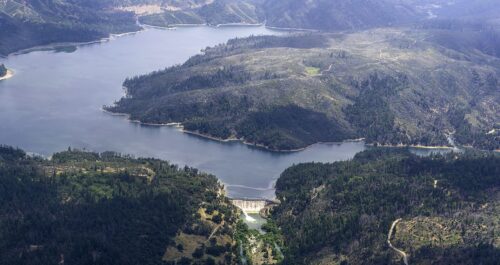
“For the last century, the Potter Valley Project has diverted water from the Eel River south to the Russian River. Now, citing aging infrastructure and seismic concerns, PG&E is moving forward with plans to remove two dams at the site. Some stakeholders in Mendocino County have opposed dam removal, citing the loss of Lake Pillsbury and Van Arsdale Reservoir. But environmental groups say removing the dams would help restore the Eel River and its fisheries. “Folks in Humboldt County should care because water from the Eel flows through much of Humboldt County. Folks all along the South Fork of the Eel River are dependent on that clean water for their drinking water sources, for their irrigation, and, of course, our cultures and our economy,” said Alicia Hamann Executive Director of Friends of the Eel River. … ” Read more from Redwood News.
Shasta County: Man in Cal Fire lawsuit over ‘illegal’ water use vows to keep fighting
“A Shasta County man accused by the state of illegally swiping water from the Pit River and diverting it to a storage pond on his property in rural Montgomery Creek says a showdown is coming. In its lawsuit filed in Shasta County Superior court last year, the California Department of Forestry and Fire Protection alleged that landowner Guiliano Borgna “is improperly diverting water” from the river and sending it across Cal Fire’s property to a storage pond about 275 feet away on his land. In the lawsuit filed in October 2025, Cal Fire called it an “unpermitted channel.” Borgna denies the charge. He said he possesses historical water rights and that he didn’t build the ditch, since the tributary has existed on the property for 115 years. He said the stream carries water from the river to a storage pond on his nearly 18-acre property, which he bought in 2003. … ” Read more from the Redding Record Searchlight.
Biomass-fueled data center project planned in Amador County
“A potential data center, the Buena Vista AI Factory, is under development in Amador County on a long-defunct biomass site next to Harrah’s Northern California. The state has identified biomass-related industries among core economic development sectors across the Sierra foothills region. So, the project potentially checks some boxes for funding and other state support. However, data centers in general are creating growing concerns about environmental impacts as well as questions about permitting and other processes. Other than the above-mentioned project in Ione, so far there have not been any proposed data center projects that have appeared before planning commissions in Tuolumne or other nearby counties. … ” Read more from My Mother Lode.
Bipartisan call for action at Tahoe Summit amid concerns over federal cuts
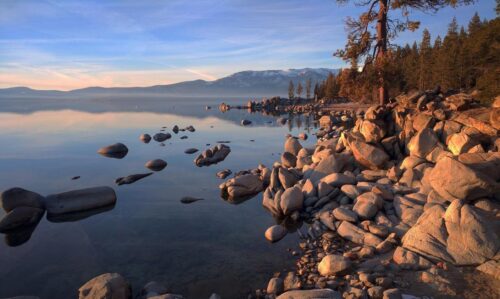 “Lawmakers from California and Nevada came together at the 30th annual Tahoe Summit with a shared goal: continuing efforts to protect Lake Tahoe for future generations. The summit highlighted three decades of investments and resources dedicated to the area, while lawmakers emphasized that continued progress depends on future investments. Preserving Lake Tahoe’s clear water and deep blue hue is something lawmakers from both states said they can agree on regardless of party. “Protecting Lake Tahoe means protecting entire ecosystem from its iconic waters to the native species that call it home,” Nevada Gov. Joe Lombardo (R) said. Washoe Tribe of Nevada and California Chairman Serrell Smokey also pointed to progress involving the lake’s water tables and wetlands, as well as the possibility of implementing Lahontan cutthroat trout. But even with successes over the past three decades, future investments are not guaranteed. … ” Read more from Channel 10.
Raft of resilience initiatives keeps Tahoe blue
“It’s not a national park or a major city, but Lake Tahoe can feel like both: a place of breathtaking natural beauty but also crushing crowds. More than a million Northern Californians visit annually, including thousands of Bay Area families who have had cabins on the lake for generations. Many may be aware of ongoing pressures on the lake’s health from tourism, development, fire, and invasive species — pressures now amplified by climate change. Most visitors, however, are probably unaware of just how much critical conservation and restoration work is underway to protect this unique body of water and the watersheds and forests that surround it. … ” Read more from Knee Deep Times.
Sacramento’s top Army civil works projects in 3D
“The U.S. Army Corps of Engineers Sacramento District has released a new 3D visualization highlighting some of the district’s top Civil Works projects reducing flood risk throughout California’s Capital Region. Narrated by Sacramento District Commander Col. Robert McTighe, the animation demonstrates how major projects including American River Common Features (ARCF), West Sacramento, Folsom Dam Raise, and Natomas Basin work together as part of an interconnected regional flood risk management system. While the animation focuses on Civil Works, these projects are part of the Sacramento District’s more than $1 billion average annual program, which also delivers Military Programs, Environmental, Interagency and International Services, and Operations missions across the western United States. … ” Read more from the Army Corps of Engineers.
Salinas Valley groundwater agency advances a plan to stop seawater intrusion.
“Fourteen years move fast when it comes to reaching sustainability in Monterey County’s critically overdrafted aquifers; the 2040 deadline has pushed three project portfolios into the spotlight. Despite concerns about the feasibility, scale and structure of the proposals, the Salinas Valley Basin Groundwater Sustainability Agency’s board of directors voted 9-2 on Aug. 13 to move forward with one. The selected suite of projects, known as Portfolio 3A, includes the creation of a small Brackish Groundwater Restoration Project (BGRP) with partial delivery to Salinas and partial injection; Salinas River recharge in Castroville and the Eastside subbasins; optimization of the Castroville Seawater Intrusion Project; and 10-percent demand management, or cutbacks in pumping. The portfolio has an estimated capital cost of more than $1 billion, with annual operating expenses of $74 million. … ” Read more from Monterey Now.
Ridgecrest: Groundwater dispute could trigger $300,000 in duplicate well drilling
“A dispute over groundwater data in eastern Kern County, California, could force the Indian Wells Valley Groundwater Authority to spend up to $300,000 drilling monitoring wells that may already exist nearby. Because Rose Valley records have not been provided by the Indian Wells Valley Water District, the Indian Wells Valley Groundwater Authority on Aug. 12 chose to continue a U.S. Navy agreement that would fund two groundwater monitoring wells, according to SJV Water. The agreement would allow the Navy-Coso Royalty fund to pay up to $300,000 toward drilling two monitoring wells, while the authority would still cover $75,000 in related Stetson Engineers costs. That fund, supported by geothermal operations on Navy property, had been scheduled to expire Aug. 31, 2026. … ” Read more from The Cool Down.
Proposed 30% hike in water bills in LA, OC isn’t all that unusual anymore, experts say
 “Golden State Water customers in Los Angeles and Orange counties were hit with a hefty increase in their water bills last year, and now, if the state approves the company’s latest request, those bills could climb 30% more by 2030. That’ll mean about $25 more per month for the average residential customer. Those customers aren’t alone, however. Such increases have become increasingly common in Southern California as utilities and water districts grapple with the broader economy, climate change, higher import and treatment costs and a never-ending battle against aging infrastructure, experts say. Last year, researchers at UCLA found the water bill for an average household in L.A. County jumped nearly 60% from 2015 to 2025, outpacing inflation and straining low-income families. … ” Read more from the LA Daily News.
The Lineage fire sent toxic runoff down the LA River. Why didn’t Long Beach close its beaches?
“At the peak of efforts to quell a massive warehouse fire in Boyle Heights in June, firefighters sent 12,000 gallons of water per minute at the flames — by water cannons, aerial ladder pipes and helicopter flybys. The overwhelming rush of water, millions of gallons over the eight days to subdue the fire, filtered through the Lineage cold-storage facility’s solar panels, insulation and freezers before feeding into nearby storm drains, carrying with it an array of toxic metals, chemicals and tainted food that eventually flowed into the Los Angeles River. If this were an oil spill, sewage leak or a chemical tank explosion, a standardized system would kick in to notify downstream cities and residents that a dangerous flow is heading their way. But in this case, that didn’t happen, as experts say a gap in environmental rules made it so the hazardous firefighting runoff skirted the threshold for such a response. … ” Read more from the Long Beach Post.
Interior Department Finalizes Plans for 2027-2028 Colorado River Operations
“The Department of the Interior issued the 2027-2028 Operating Guidelines and the Record of Decision for the Post-2026 Colorado River Operations Final EIS, establishing a 10-year Decision Framework with a broad operational range that will be used to develop future operational guidelines for Lake Powell and Lake Mead. Together these decisions provide for reliable operations of the Colorado River system, delivery of vital water supplies, and protect critical federal infrastructure while preserving the flexibility necessary to respond to Basin states’ voluntary actions, consensus recommendations and the continued prolonged drought. The combined contents of Lake Powell and Lake Mead have not been this low since before Lake Powell began filling following the closure of the gates at Glen Canyon Dam in 1963, with both Lake Powell and Lake Mead hitting record lows the last few weeks. “We are grateful for the Seven Basin States, the thirty Basin Tribes, Mexico, and many other basin stakeholders who have provided the feedback and voluntary arrangements necessary for the development of the 2027-2028 Operating Guidelines.” said Secretary of the Interior Doug Burgum. “Forty million people, millions of acres of farmland and ranchland, industries that power the American West, and some of our nation’s fastest growing metropolitan areas depend on the Colorado River.” … ” Read more from the Department of Interior.
Colorado River operations enter era of near-continuous negotiation
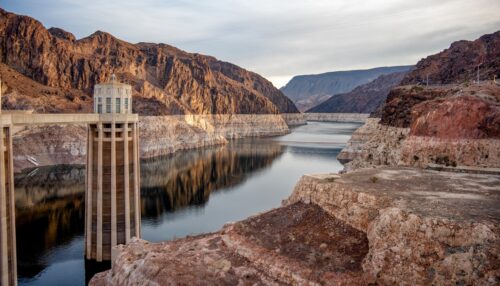
Conditions on the Colorado River continue to deteriorate. Last month, Lake Mead dropped to its lowest level since it was first filled, and last week Lake Powell reached a record low of its own. Both reservoirs are still falling. Against this backdrop, the Bureau of Reclamation recently released the final environmental impact statement for Colorado River operations from 2027 through 2036. At Metropolitan’s August One Water and Adaptation Committee meeting, Shanti Rosset, Colorado River Policy Manager, briefed committee members on the final EIS for post-2026 operations, outlining what it decides, what it means for Metropolitan’s water supply, and what questions remain unresolved. On July 31, the Bureau of Reclamation released the final environmental impact statement for post-2026 operations. The FEIS identifies the 10-year framework as the preferred alternative and organizes it into three nested layers … ” Continue reading at Maven’s Notebook.
Interior Department finalizes plans for 2027-2028 Colorado River operations
“The Department of the Interior issued the 2027-2028 Operating Guidelines and the Record of Decision for the Post-2026 Colorado River Operations Final EIS, establishing a 10-year Decision Framework with a broad operational range that will be used to develop future operational guidelines for Lake Powell and Lake Mead. Together these decisions provide for reliable operations of the Colorado River system, delivery of vital water supplies, and protect critical federal infrastructure while preserving the flexibility necessary to respond to Basin states’ voluntary actions, consensus recommendations and the continued prolonged drought. The combined contents of Lake Powell and Lake Mead have not been this low since before Lake Powell began filling following the closure of the gates at Glen Canyon Dam in 1963, with both Lake Powell and Lake Mead hitting record lows the last few weeks. “We are grateful for the Seven Basin States, the thirty Basin Tribes, Mexico, and many other basin stakeholders who have provided the feedback and voluntary arrangements necessary for the development of the 2027-2028 Operating Guidelines.” said Secretary of the Interior Doug Burgum. “Forty million people, millions of acres of farmland and ranchland, industries that power the American West, and some of our nation’s fastest growing metropolitan areas depend on the Colorado River.” … ” Read more from the Department of the Interior.
Announcements, notices, and funding opportunities …

