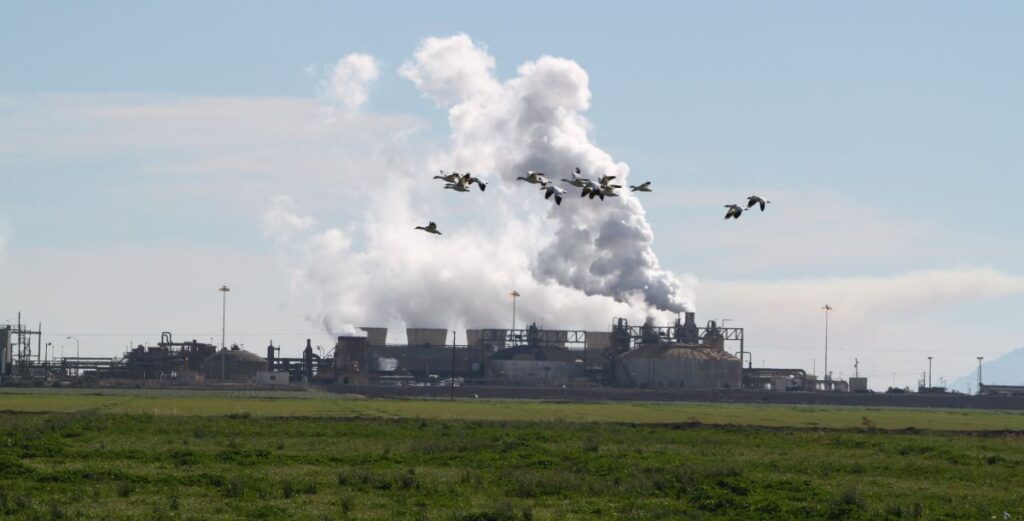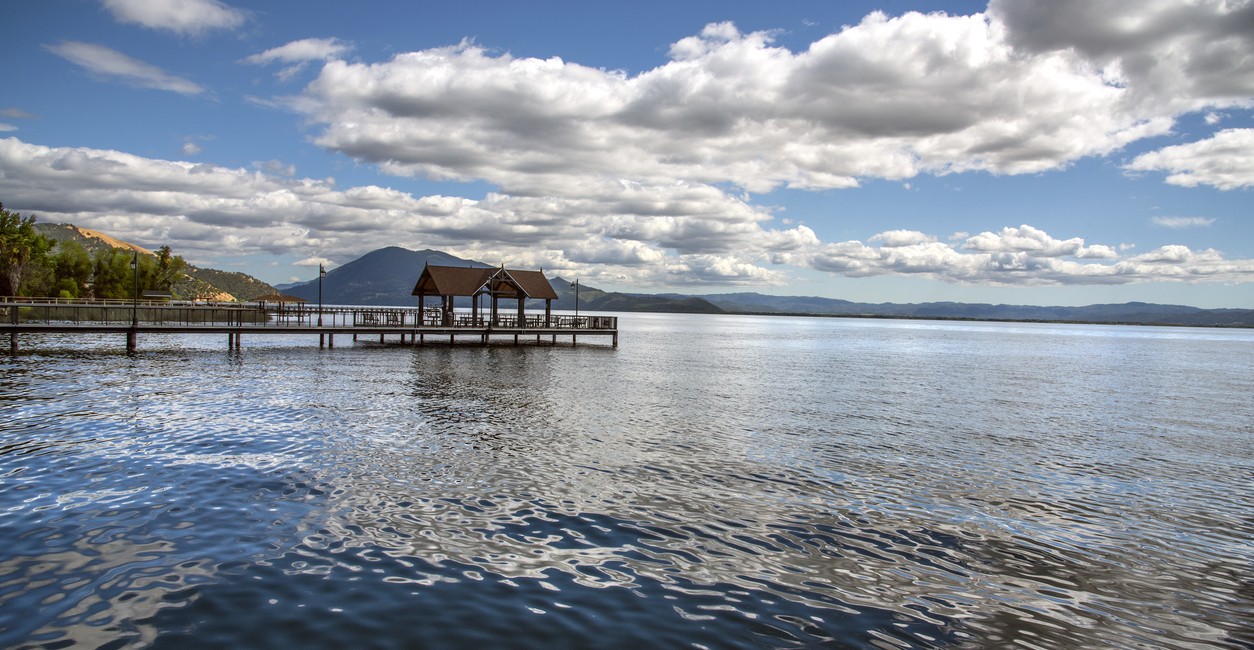
California’s lakes tell the story of the state itself: breathtaking beauty, deep cultural history, complex environmental challenges, and communities working together to protect places that matter. From the volcanic basin of Clear Lake to the alpine clarity of Lake Tahoe and the desert expanse of the Salton Sea, each water body reflects a different part of California’s natural richness—and each is at a turning point.
“We have the highest point in the country, the lowest point, the tallest trees, the largest trees, the oldest trees, all sorts of different ecosystems and different landscapes,” said Wade Crowfoot, Secretary of Natural Resources. “Part of this natural richness are very different water bodies, including really important water bodies from both an ecological environmental perspective as well as a cultural, recreation, community, and economic perspective.”
That richness was the focus of a webinar hosted by Secretary Wade Crowfoot, which highlighted three priority lakes—Clear Lake, Lake Tahoe, and the Salton Sea—and the partnerships, restoration efforts, and community leadership shaping their futures.
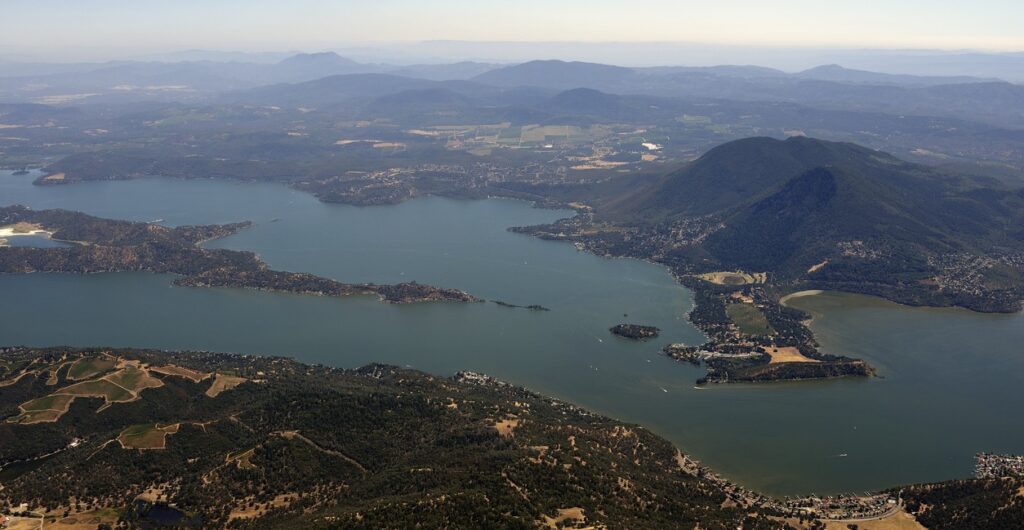
Clear Lake: Tribal Stewardship, Restoration, and Renewal
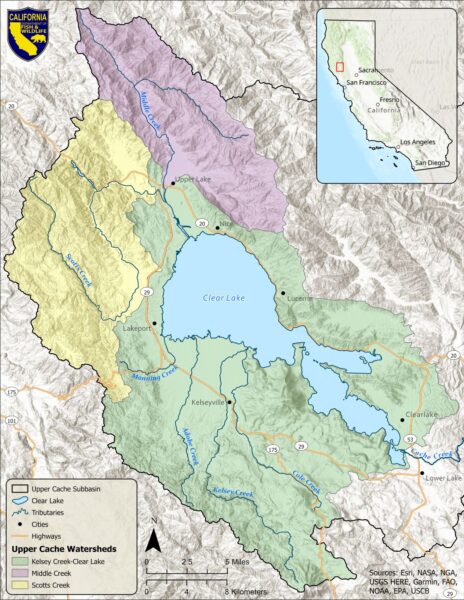 Clear Lake is one of California’s oldest natural freshwater lakes and has sustained Tribes since time immemorial. Its environmental challenges also affect the economic, social, and health conditions of communities in and around the lake.
As a shallow lake, Clear Lake is especially vulnerable to contaminants, algal growth, and low oxygen levels. Levees and dams have altered natural water flows, degraded native fish habitat, and changed flood patterns. By cutting off wetlands, levees have also increased nutrient loading, worsening cyanobacterial harmful algal blooms and reducing overall water quality.
The Clear Lake hitch, known as chi by local Indigenous people, is a culturally vital and sacred native fish that has sustained Native American Tribes since time immemorial. Its spring spawning runs were an essential traditional food source, a seasonal time of celebration, and a focus for community gathering. However, the introduction of bass and other non-native species has severely affected the hitch. Largemouth bass, aggressive apex predators, feed heavily on young hitch as they migrate from spawning streams back into Clear Lake. Once numbering in the millions, its population has declined sharply, and was listed as threatened under the California Endangered Species Act in 2014.
“Tribes are the original stewards of the land since time immemorial, and with that, have deep place-based traditional ecological knowledge that has co-evolved with the Clear Lake watershed,” said Geneva Thompson, Deputy Secretary for Tribal Affairs at the Natural Resources Agency. “So having that traditional ecological knowledge severed from the care and restoration of the lake has had a ripple effect on many of the environmental and cultural harms that we’re facing as well.”
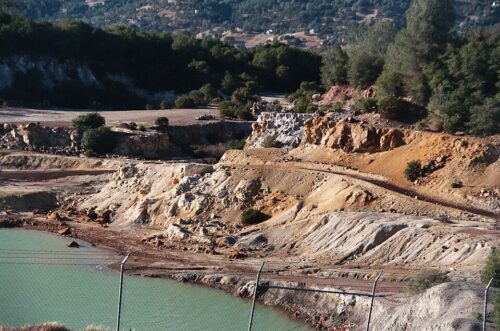
Clear Lake is also home to a Superfund site. The 160-acre abandoned open-pit Sulphur Bank Mine sits on the southeastern shoreline of Clear Lake’s Oaks Arm, spanning 1,300 feet. The site includes the Herman Pit, a heavily contaminated, flooded 23-acre mine pit filled with acidic geothermal groundwater and mine waste, located about 750 feet from the lake. A wetland ecosystem along the mine’s northern edge serves as a buffer but remains severely affected by runoff. Because of its shoreline location, the Superfund site is the dominant source of mercury contamination in Clear Lake. More than a century of mining allowed waste rock and tailings to erode or be dumped into the lake, while geothermal groundwater continues to carry dissolved mercury through the shoreline bed into lake sediment.
Significant work is underway to improve Clear Lake’s environmental health. The Blue Ribbon Committee for the Rehabilitation of Clear Lake, established under Assembly Bill 707, has identified $26.8 million for 35 restoration projects. The projects include cultural fire, tule planting, and Clear Lake hitch surveys and studies, developed in partnership with Tribal governments and local governments in the area.
UC Davis is piloting a hypolimnetic oxygenation system in Clear Lake’s Oaks Arm to add oxygen to deep water, reduce contaminant impacts, and support native fish. The Oaks Arm is highly vulnerable to seasonal stratification, in which warm surface water traps a stagnant, cold bottom layer. When that bottom layer becomes anoxic, sediment releases legacy phosphorus that fuels harmful algal blooms and accelerates the conversion of mercury from the nearby Sulphur Bank Mine into methylmercury, which accumulates in fish. Unlike other systems, the hypolimnetic oxygenation system is designed to gently dissolve pure oxygen into the bottom layer. UC Davis expects the infrastructure to be fully built and operational for the summer–fall 2027 season.
The Clear Lake Hitch Task Force, a multi-agency and Tribal collaborative group, is working to protect and recover the Clear Lake hitch. Its efforts include removing passage barriers such as old culverts and instream structures to help fish reach spawning streams, monitoring surface water diversions and groundwater pumping during the spawning season, and rescuing stranded fish from drying creeks. CDFW and the Robinson Rancheria are partnering on a project that focuses on reducing invasive goldfish and carp, which harm Clear Lake hitch and their habitat by preying on hitch eggs, disturbing lakebed nutrients that reduce water clarity and contribute to harmful algal blooms, and inhibiting tule growth.
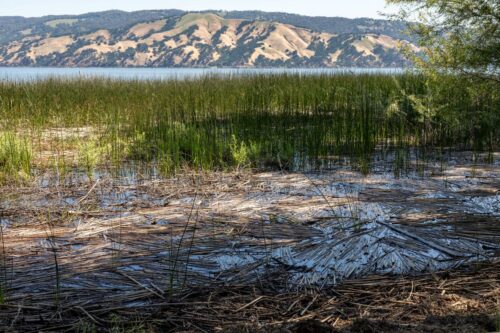
Looking ahead, E. J. Crandell, Vice Chair for Robinson Rancheria and Lake County Supervisor, said he is looking forward to the Middle Creek Flood Damage Reduction and Ecosystem Restoration Project beginning construction as it moves forward. The multi-agency initiative will breach aging agricultural levees and restore roughly 1,400 to 1,600 acres of historic wetlands at the northern end of Clear Lake.
“It’s a real ideal spot for the hitch to live and thrive, and would take care of 33% of the problem with the sediment and the harmful algal blooms and the nutrient load that’s coming into the lake,” said Mr. Crandell.
Ms. Thompson said she anticipates the signing of a co-management agreement among 22 government entities that will pool resources and institutionalize co-management to sustain restoration momentum.
“What I’m really excited about is having Tribes, state agencies, the county, and the cities coming together and having that strategic coordination, working on addressing those historical wrongs, identifying funding and capacity building, looking at enforcement and compliance, and figuring out how we cut the green tape in permitting and regulatory efficiencies to support not only Tribal leadership but Tribal and local workforce development,” said Ms. Thompson. “I can’t wait to see this body of water be a healthy, thriving landscape that supports the health and well-being of all of the communities that rely on its shores and all of the beautiful critters and plants that rely on its waters.”

Lake Tahoe: Protecting Clarity Through Collaboration
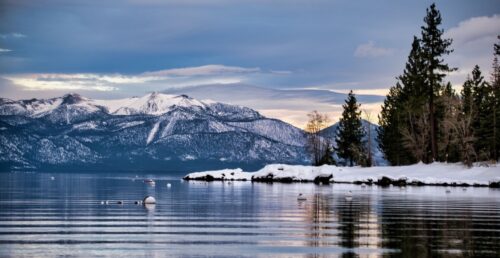
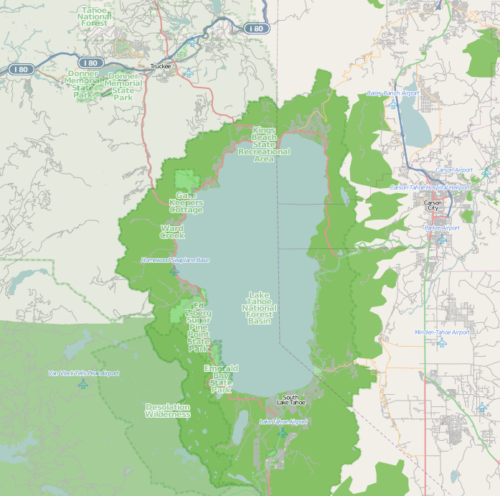 Lake Tahoe is a high-elevation lake in the Sierra Nevada that sits at 6,224 feet and reaches 1,645 feet deep, making it the second-deepest lake in the United States. Known for its brilliant blue water and exceptional clarity, the 22-mile-long lake is also a major recreation destination, drawing more visitor days than any national park in the country. Its world-class skiing, outdoor recreation, and multi-billion-dollar tourism economy create both opportunities and pressures, making environmental protection and recreation management central challenges.
Lake Tahoe straddles the California-Nevada border, requiring coordinated management across two states, four counties, Carson City, and one incorporated city. The lake is also the homeland of the Washoe Tribe of Nevada and California. These dynamics have produced a long history of partnership in the Tahoe Basin. For the past 30 years, about 80 agencies and organizations have worked together through the bi-state Environmental Improvement Program to protect and restore Lake Tahoe.
“Partnership and collaboration are part of Tahoe’s DNA,” said Jason Vasques, Executive Director of the Tahoe Conservancy.
Launched in 1997, the Lake Tahoe Environmental Improvement Program is a cooperative, multi-agency partnership that restores and protects the Lake Tahoe Basin. Led by the Tahoe Regional Planning Agency, more than 80 “Team Tahoe” partners work to improve water clarity, reduce wildfire risk, and support sustainable recreation. The program was created to address historical impacts from logging, grazing, and late-20th-century development, which contributed to the loss of meadows and wetlands. Today, the basin also faces climate change, wildfire, declining snowpack, lake warming, and aquatic invasive species.
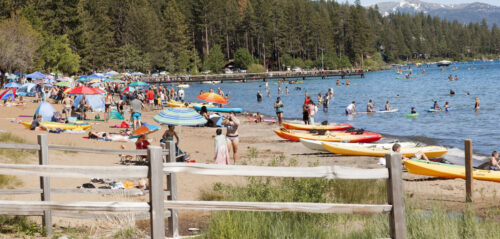
Mr. Vasques said current state initiatives, including 30×30 and Outdoors for All, provide a strong framework for action. He said the Tahoe Conservancy is working with tourism, nonprofit, business, and agency partners to manage recreation, protect the environment, and develop projects that support Lake Tahoe’s long-term health.
A major Tahoe Conservancy project is the restoration of the Upper Truckee River Marsh. Agencies and landowners across the Tahoe Basin are working to restore about 1,000 acres of mountain meadow and wetlands in the Upper Truckee River system. The project, now about halfway complete, will help protect Lake Tahoe’s water clarity by restoring a natural filtering system for the lake.
The Washoe Tribe is a key partner in Tahoe restoration. The Conservancy is working with the Tribe to learn from its long-standing stewardship practices, and the Tribe is leading a 213-acre wetland restoration project on Lake Tahoe’s west shore with the U.S. Forest Service, the Tahoe Conservancy, and nonprofit partners. The project will restore a culturally important site, improve natural water filtration, and help protect the lake’s clarity.
“We can learn from all of our California Tribes about how to effectively steward these lands that have been stewarded for eons before us,” said Jason Vasques.
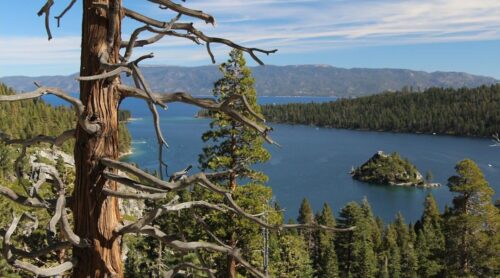 Lake Tahoe’s environmental advocacy history dates to the 1950s, early in the modern conservation movement. Keep Tahoe Blue is the public rallying cry created by the League to Save Lake Tahoe, a science-based environmental nonprofit founded in 1957. Headquartered in South Lake Tahoe, the League works to protect the basin’s environmental health, water clarity, and scenic beauty, and was among the first organizations to use science to document Tahoe’s declining clarity.
By the late 1990s, Lake Tahoe’s clarity had reached record lows, bringing national attention to the basin. A presidential forum with President Bill Clinton and Vice President Al Gore helped launch the public-private partnerships that continue to guide Tahoe restoration today.
The League complements agency and nonprofit partners by mobilizing volunteers, collecting data, securing private funding, supporting policy changes, and testing practical tools that can be expanded across the basin. Its volunteer network allows it to respond quickly to emerging issues, such as collecting samples after the Caldor Fire to assess possible sediment impacts.
 The League also uses volunteers for aquatic invasive species prevention. “We are really good at bringing together volunteers quickly to address other issues,” said Darcie Goodman Collins, CEO of the League to Save Lake Tahoe. “Right now, one of our biggest issues in Tahoe is keeping out the golden mussels that have already established throughout the state. So we’re using volunteers to help educate on what anyone can do to prevent the golden mussels from establishing in Lake Tahoe.”
The League also helps leverage public investment with private funding. For example, it partnered with the Tahoe Fund to support acquisition of the Upper Truckee Marsh and advocated for AT&T to remove a toxic lead cable from the lake. It also pilots tools such as beach-cleaning equipment and “clean, drain, and dry” stations that help prevent the spread of invasive species from boats and gear.
The League’s community programs make participation accessible year-round. In 2025, about 1,500 volunteers contributed 7,500 hours to citizen science and data collection, supporting decisions and advocacy such as local bans on single-use plastic water bottles, bags, and polystyrene.
Secretary Crowfoot closed the segment by emphasizing Lake Tahoe’s bipartisan collaboration with Nevada. He said environmental protection at Tahoe remains a shared effort, noting that Nevada agencies have been strong partners despite political differences in other areas.
Salton Sea: Confronting Crisis, Centering Community
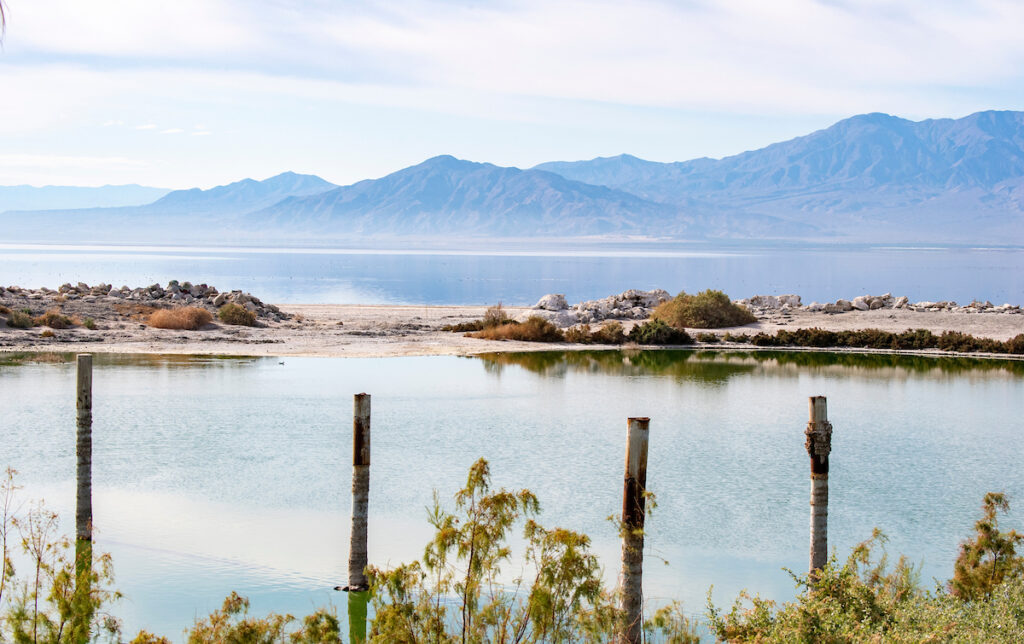
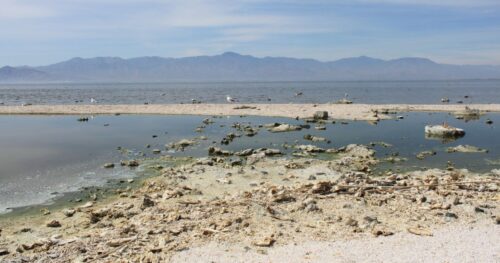
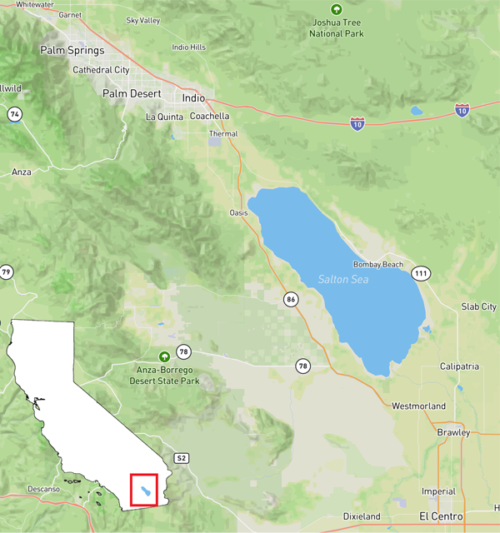 The Salton Sea is California’s largest lake by surface area. Located in southeastern California near the Mexico border, it spans southern Riverside County and northern Imperial County. It is a shallow, highly saline, landlocked desert lake.
Sitting 235 feet below sea level, the Salton Sea occupies an ancient lakebed that has repeatedly filled and dried. The modern sea formed in 1905, when Colorado River floodwaters breached an irrigation canal in the Imperial Valley and flowed into the Salton Sink for nearly two years before the breach was sealed in 1907. Since then, it has been sustained largely by agricultural runoff from the Imperial Valley.
The Salton Sea was once a community asset and tourist destination, drawing visitors in the 1950s and later becoming a mid-century resort area before experiencing severe ecological decline.
As a terminal lake, the Salton Sea receives water but has no natural outlet. Declining inflows have worsened water quality, exposed lakebed sediments, reduced wildlife habitat, and contributed to air-quality impacts for nearby communities.
With less water flowing in, the lake is shrinking faster, intensifying these problems. As water evaporates, salts and contaminants from agricultural runoff concentrate in the lake and exposed sediments. Wind can then carry dust from the exposed lakebed into nearby communities, contributing to chronic respiratory concerns.
Decades of limited investment have made it difficult to improve conditions for Salton Sea communities, many of which still face infrastructure gaps in transportation, roads, water systems, and parks. “My memories of the Salton Sea was wondering, ‘What is that smell?’ and then thinking, ‘Oh, it’s coming from the Salton Sea,’” said Sylvia Paz, the founder and executive director of Alianza Coachella Valley, a non-profit organization focused on community engagement, environmental justice, and policy development in the region. “I was a teenager in the ’90s when we faced the massive fish die-off, and again, ‘Oh, it’s the Salton Sea,’ and then life continues. People continue to wake up in the desert to go to work. We’re surrounded by agriculture, and there is a lot of beauty in our mountains, our agriculture, and the Salton Sea being part of it.”
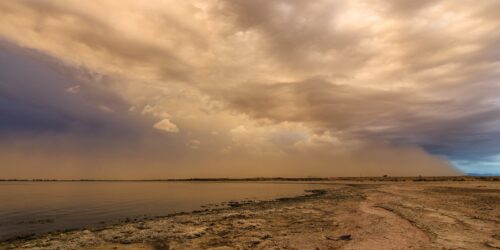
In the last decade, the state through the Salton Sea Program has made significant investments to address the issues at the Salton Sea. Just in the past couple years, around 20 square miles of projects around the Salton Sea are either completed or in progress.
“There’s been a lot of ingenuity, I think, in planning projects that are bringing cleaner water, plants, and wildlife back to the Salton Sea at a really massive scale,” said Joe Shea. “But it is the largest lake by landmass in the state of California, so it’s going to be a continued challenge to scale that work.”
Alianza Coachella Valley works to strengthen the Salton Sea region through campaigns focused on economic, environmental, and educational conditions. The organization partners with university researchers and community scientists to monitor air quality, lake recession, and exposure risks, filling data gaps that also support advocacy.
Alianza is also working with institutions to expand air-quality monitoring and build a more complete picture of conditions around the Salton Sea.
 “One thing we’ve realized around this narrative is that it would be so much easier to make progress if we had a vision for what we wanted, and this vision needed to be a community-led vision,” said Sylvia Paz.
Alianza is bringing residents and partners together to develop a shared vision for a reimagined Salton Sea. Because water challenges will take longer to solve, the group is also focusing on near-term needs as exposed playa expands, including infrastructure, mobility, outdoor access, and stronger connections between restoration projects and nearby communities.
“One of the solutions that we’ve come up with is the idea of trails,” said Sylvia Paz. “We already have a trail that runs from Palm Springs to Coachella … what does this look like if we could actually create that connection, that access to the outdoors, and use trails as a low-hanging fruit that is going to give our community so much more benefit in terms of addressing air pollution and mobility, access to shade, and other amenities that are needed?”
Joe Shea said communities value projects that bring cleaner water, plants, and wildlife back to the sea, and they also want opportunities to experience those projects through public access and recreation. “So, working with these organizations and the governor’s office, Governor Newsom proposed a $30 million budget proposal in January that would add public recreation and outdoor features to our Salton Sea project, and that would have never happened without the input of local Salton Sea communities and groups like Alianza Coachella Valley. So that’s an example of how we want to bring this work forward, but in a way that centers community perspective as we continue to address the challenges that we’re observing at the sea.”
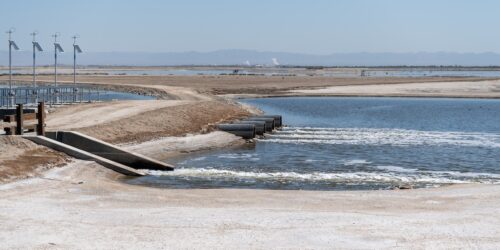
Secretary Crowfoot said more work remains to reduce harmful air emissions, restore habitat, and create recreational assets at the sea. “I am really proud that, starting under Governor Brown and certainly accelerating under Governor Newsom, we’ve taken what seemed like an intractable environmental crisis, and really it is a challenge that we’re confronting head-on.”
Looking ahead, Ms. Paz said communities most affected by Salton Sea conditions must remain central to planning and implementation. “It’s the community that lives there now. It’s the farm-working community that really keeps the Coachella Valley running. These are the community members that are living closer to the Salton Sea that are experiencing the impacts of what’s happening. We need to make sure that the solutions that are advancing continue to be built and planned with access to the community, first and foremost. That we’re addressing the ecology of the sea, improving the environment, and centering community health and well-being in the solution.”
Secretary Crowfoot also recognized the Bureau of Reclamation and the Army Corps of Engineers as partners in Salton Sea solutions. “I want to give a shout-out to State Senator Steve Padilla and the formation of the Salton Sea Conservancy, our newest state conservancy that’s really focused on ensuring that local voices are actually managing these projects for the benefit of people as well as nature.”