
Several news sources featured in the Daily Digest may limit the number of articles you can access without a subscription. However, gift articles and open-access links are provided when available. For more open access California water news articles, explore the main page at MavensNotebook.com.
On the calendar today …
- MEETING: Delta Independent Science Board from 11am to 12:30pm. The Delta Independent Science Board will elect a new Delta ISB Chair-Elect and discuss the Nature-based solutions review and subsidence review. The meeting will close with Dr. Inge Werner’s reflections on her term as chair. Click here for the meeting notice.
In California water news today …
Clear Lake, Lake Tahoe, and the Salton Sea: Stories of restoration and renewal
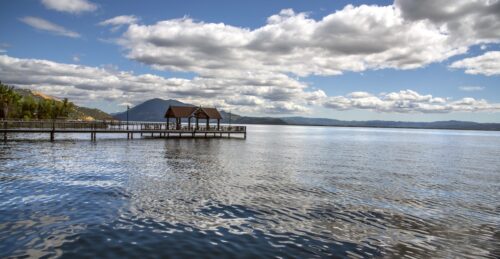
“California’s lakes tell the story of the state itself: breathtaking beauty, deep cultural history, complex environmental challenges, and communities working together to protect places that matter. From the volcanic basin of Clear Lake to the alpine clarity of Lake Tahoe and the desert expanse of the Salton Sea, each water body reflects a different part of California’s natural richness—and each is at a turning point. “We have the highest point in the country, the lowest point, the tallest trees, the largest trees, the oldest trees, all sorts of different ecosystems and different landscapes,” said Wade Crowfoot, Secretary of Natural Resources. “Part of this natural richness are very different water bodies, including really important water bodies from both an ecological environmental perspective as well as a cultural, recreation, community, and economic perspective.” That richness was the focus of a webinar hosted by Secretary Wade Crowfoot, which highlighted three priority lakes—Clear Lake, Lake Tahoe, and the Salton Sea—and the partnerships, restoration efforts, and community leadership shaping their futures. … ” Read more from Maven’s Notebook.
Lake Powell, nation’s second-largest reservoir, hits record-low level
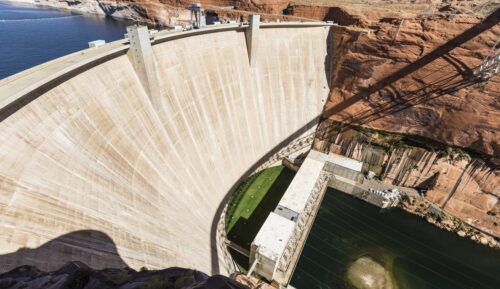 “Less than two weeks after Lake Mead, the largest reservoir by capacity in the United States, hit a record low, Lake Powell, the country’s second-largest reservoir, has suffered the same fate. On Saturday, Lake Powell’s pool elevation dropped to 3,519.91 feet, breaking its previous record of 3,519.92 feet set in April 2023. Federal water officials caution that the daily water level figure is “provisional and subject to revision” and the new record could be walked back considering its razor-thin margin. But even if Saturday’s reading doesn’t hold, the lake’s downward trend means the actual record low is just days away. “If you add the two of these reservoirs together, the last time the joint contents were this low was in 1957, before there even was a Lake Powell. These are truly unprecedented,” Jack Schmidt, a senior research scientist and the director of the Center for Colorado River Studies at Utah State University, told ABC News. “We are in completely new territory.” … ” Read more from ABC News.
SEE ALSO:
- ‘Uncharted territory’: Second-largest reservoir in US plunges to a record low, from CNN
- The Second Largest U.S. Reservoir Hits Lowest Level Ever. It Is Close To Not Being Able To Generate Power, from International Business Times
- Lake Powell Hits Record Low: What It Means for Millions of Americans, from Newsweek
Super El Niño odds for California snowfall revealed in new expert map: ‘Record-breaking’
“Winter sports enthusiasts in California can finally jump with excitement as a new forecast predicts record-breaking snowfall in states across the Southwest US. According to OpenSnow’s newly released 2026–2027 Winter Forecast Preview, a developing El Niño pattern is setting the stage for an above-average snowfall season across California and Nevada, with the heaviest storm cycles expected to ramp up after the new year. While all California mountain ranges stand to benefit from the active storm track, data indicates that the Central Sierra holds the highest statistical probability for well-above-average snow accumulation. Destinations like Mammoth Mountain and China Peak sit squarely in the bullseye of the strongest forecast signals, according to OpenSnow. … ” Read more from the New York Post.
SEE ALSO: Watch out for El Niño, from the New York Times
Hydrogen failed as car fuel. Now California’s big dollar bet on it for green energy is fading, too
“Hydrogen, viewed by its advocates as a clean fuel and a solution to climate change, is having a “non moment,” but don’t ask anyone in the industry to say that on the record. Years of market turmoil, federal funding cuts, canceled projects and industry pullback have made it clear: California’s grand vision for fleets of vehicles and heavy industry running on clean hydrogen fuel has stalled. Yet at a recent gathering in Sacramento, those in the nascent industry continued to tout the potential of a fuel they hope will turn around and thrive. Practically no one wanted to be quoted on the bleak outlook. “It’s tough,” said Andrew Carman, a hydrogen dealmaker at the conference who said there just aren’t enough buyers to justify much new fuel production. … ” Read more from the LA Times.
In commentary today …
Don’t drain the Colorado River. Create water instead.
Jim Madaffer, chief executive of the public affairs firm Madaffer Enterprises, vice chair of the Colorado River Board of California and a board member of the San Diego County Water Authority, writes, “The Colorado River Compact of 1922 is designed to divide a fixed supply of water, but there’s a problem: The river no longer offers one. The Colorado River is facing pressure from years of low water levels that don’t look likely to rise anytime soon. The outdated structure of the compact doesn’t address these problems, forcing seven Western states to search for other ways to fill their reservoirs. The 20th century focused on allocating the river’s water, but the 21st century must create water for the region. And the best way to make that happen is by unleashing the power of the marketplace. This compact, and other laws of the river, focus on water allocation to the states — Arizona, California, Colorado, New Mexico, Nevada, Utah and Wyoming — that rely on its supply. It allowed the building of dams, reservoirs and aqueducts that transformed an arid region into one of the world’s great economic engines. But a system designed to divide a steady stream of usable water won’t work with a river facing chronically low levels due to two decades of droughts and a hotter, drier climate. … ” Read more from the Washington Post.
The Colorado River is significantly overdrafted and not sustainable under current operations
Mike Gardner, former city council member and currently on the Western Municipal Water District Board, writes, “As Colorado River runoff hits historic lows, longstanding agreements on allocation of Colorado River water are set to expire at year’s end, and both Lakes Powell and Mead continue to lose storage, negotiations among the seven Colorado River states have not yielded any agreement. This has caused the Bureau of Reclamation (Reclamation) to impose a 10-year plan that pleases no one and will not result in sustainable operation of the Colorado River. Reclamation’s mandate is really a series of two-year plans to be updated throughout the 10-year plan. In the first two years, the Lower Basin states of Arizona will lose 760,000 acre-feet of diversion rights, California will lose 440,000 acre-feet, and Nevada will lose 50,000 acre-feet. The Upper Basin states of Colorado, New Mexico, Utah and Wyoming lose nothing. Reclamation hopes the seven states (and 20+ Tribal Nations and the country of Mexico) will continue negotiations and come to a consensus. Thus far, the four Upper Basin states have offered nothing, and the mandate does not seem to be an incentive for them to do so. … ” Read more from the Raincross Gazette.
In regional water news and commentary today …
NORTH COAST
Counties, farm groups back Klamath appeal
“Three counties and 10 major western water and agricultural organizations have filed friend-of-the-court briefs supporting a request by the Klamath Water Users Association for a larger panel of judges to review a recent federal court ruling involving water deliveries in the Klamath Project. The filings were submitted Thursday in the U.S. Court of Appeals for the Ninth Circuit, backing a petition filed Aug. 3 by the Klamath Water Users Association, or KWUA. The organization is seeking an en banc rehearing, a process in which a larger group of appellate judges reviews a decision previously issued by a three-judge panel. At the center of the dispute is how the Endangered Species Act applies to water deliveries from the federally operated Klamath Project, which provides irrigation water to farms in Southern Oregon and Northern California. … ” Read more from KTVZ.
SACRAMENTO VALLEY
Tehama County flood control to meet again Monday
“The Tehama County Flood Control and Water Conservation Board of Directors will meet once again, this time on Monday morning. The meeting follows a heated special meeting held on August 5, where groundwater fees were once again discussed, but ultimately tabled. The meeting will be held at 10 a.m. in the Supervisors Board chambers located at 727 Oak Street, Red Bluff. Between the two board meetings, a groundwater commission meeting was originally scheduled for August 12 but was canceled. Information about the cancellation sent from Deputy Director of Public Works – Water Resources Justin Jenson stated, “The Board of Directors has determined that AD-HOC meetings of the board are needed in order to move to the next step in fee implementation. Staff will be concentrating our time with the Directors in order to move this forward as soon as possible.” … ” Read more from the Red Bluff Daily News.
Boat with invasive golden mussels intercepted at Folsom Lake decontamination site
“Sally Mello, owner of Mello Marine, said her team has decontaminated about 6,000 boats since last year, but this was the first time they encountered golden mussels. The boat was brought in for decontamination and tagging, a process required before entering the lake. Mello said the owner of the boat was following all the right steps. The mussels were first spotted on the underside of the boat during inspection. “You can see them underneath here. But as you closer examine it, there’s mussels all over the bottom of the boat,” Mello said. … ” Read more from KCRA.
BAY AREA
Inside the bitter war over cows and wilderness at Point Reyes
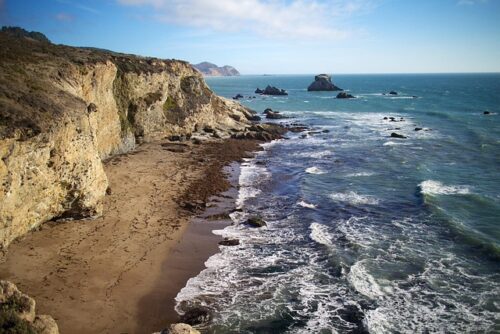 “For nearly 60 years, warring camps have battled one another for the soul of a wind-swept peninsula with breathtaking hills, rugged cliffs, granite outcroppings, oak forests and wide expanses of pasture land and beach. Jutting off the coastline like an upside-down ice skate, the Point Reyes National Seashore is separated from the mainland by the San Andreas fault, which runs like a skate’s blade edge separating the Pacific and North American plates. The peninsula covers about 110 square miles — roughly five times the size of Manhattan. Elephant seals and sea lions bark and breed on its sandy coves. Whales and sharks breach and hunt in the waters beyond the thick kelp forests that tickle its edges. And in its forests and on its grasslands, tule elk and mule deer graze, while bobcats and coyotes hunt for rabbits and mountain beavers. But the peninsula 20 miles north of San Francisco also has been home to agriculture since the 1800s and is the site of one of the state’s fiercest land disputes — one that, contrary to the usual red-versus-blue scenario, pits Northern California liberals against other Northern California liberals. … ” Read more from the LA Times. | Read via Yahoo News.
Corte Madera gets $125K grant for flood berm project
“Corte Madera has been awarded a $125,000 grant from the Marin Community Foundation for its Marina Village flood berm project. The town has been analyzing its flood response and mitigation work since the major king tide flooding in January. It has also been seeking avenues for years to fund its flood mitigation work, especially for projects in high-risk areas. One area of consistent concern is the Marina Village neighborhood, which is prone to flooding when waters overtop the berm. The town hopes to raise and fortify the berm. In 2024, Corte Madera was selected for a Federal Emergency Management Agency grant for the berm project. However, the following year, the Trump administration halted numerous FEMA resiliency grants. … ” Read more from the Marin Independent Journal.
Valley Water awards $1.88B contract to rebuild California’s Anderson Dam
“After years of planning, engineering, regulatory reviews and preliminary construction work, one of California’s most significant water infrastructure projects is finally ready to move forward. The Santa Clara Valley Water District, known as Valley Water, has awarded a major construction contract for the $2.8-billion Anderson Dam Seismic Retrofit Project, clearing the way for work to begin in early 2027. The milestone follows notice recently that key federal regulators have approved the project and marks the next chapter in restoring the region’s largest reservoir to full operation. Located in eastern Santa Clara County, Anderson Reservoir has been at the centre of seismic safety concerns for years. Built in 1950, it is the biggest of Valley Water’s 10 reservoirs and is so large the agency says all nine of its other reservoirs could fit inside it. … ” Read more from the Daily Commercial News.
Pleasanton plans to pursue bonds for water system improvements
“The Pleasanton City Council approved a resolution last week declaring the city’s intent to reimburse any money spent on capital improvements made to the city’s water system with future bond dollars. Even though the council did not formally vote on issuing any water revenue bond — that item is set to come before the dais in September — the resolution allows the city to recover any hard costs recently spent on water-related projects. “I think it’s essential that we’re going to need to pass bonds so we can get these projects moving,” Councilmember Craig Eicher said during the special Aug. 11 council meeting. “Delaying doing this is just going to make things a little bit more challenging for us in the future.” … ” Read more from Pleasanton Weekly.
Once overrun by all-night raves, famed singer’s former beach property opens as new park
“Huge bonfires. All-night raves. Piles of trash. Drunken parties. Graffiti. Ten years ago, a scenic mile-long beach on the rural San Mateo County coast was notorious for bad behavior. On Monday, the stunning property, once owned by rock singer Chris Isaak, will open to the public as a new oceanfront park. Located 8 miles south of Half Moon Bay, Tunitas Creek Beach will become the first major new public beach in the San Mateo County parks system since Fitzgerald Marine Reserve in Moss Beach in 1969. When the free park opens at 8 a.m. Monday, beachgoers will find a landscape transformed through a $19.6 million project funded by private donations, county money and state funding. People will be able to legally — and easily — access the property without trespassing. … ” Read more from the Santa Rosa Press Democrat.
SAN JOAQUIN VALLEY
Expert says Central Valley will be impacted by Right to Clean Water Act’s failure to pass State Assembly
“With the State Assembly Appropriations Committee failing to propel an environmental protection bill forward, a California environmental group is saying that the state’s environmental process is lagging behind. The killed bill was Senate Bill 601, or the Right to Clean Water Act, which failed to move to the State Assembly floor for a final vote. Without the passed bill, thousands of miles of streams and wetlands across the state will have fewer safeguards in place. Sean Bothwell, executive director of the California Coastkeeper Alliance, is an environmental nonprofit organization that helped push for the bill’s adoption. The bill — introduced by State Senator Ben Allen (D-Santa Monica) — was introduced as a response to the U.S. Supreme Court’s 2023 Sackett v. EPA decision, which narrowed the Clean Water Act’s reach on the federal level. The bill itself aimed to maintain California’s state-level wastewater discharge into streams, wetlands and tributaries across the state. … ” Read more from KGET.
SOUTHERN CALIFORNIA
Proposed 30% hike in water bills in LA, OC isn’t all that unusual anymore, experts say
 “Golden State Water customers in Los Angeles and Orange counties were hit with a hefty increase in their water bills last year, and now, if the state approves the company’s latest request, those bills could climb 30% more by 2030. That’ll mean about $25 more per month for the average residential customer. Those customers aren’t alone, however. Such increases have become increasingly common in Southern California as utilities and water districts grapple with the broader economy, climate change, higher import and treatment costs and a never-ending battle against aging infrastructure, experts say. Last year, researchers at UCLA found the water bill for an average household in L.A. County jumped nearly 60% from 2015 to 2025, outpacing inflation and straining low-income families. … ” Read more from the LA Daily News.
The Lineage fire sent toxic runoff down the LA River. Why didn’t Long Beach close its beaches?
“At the peak of efforts to quell a massive warehouse fire in Boyle Heights in June, firefighters sent 12,000 gallons of water per minute at the flames — by water cannons, aerial ladder pipes and helicopter flybys. The overwhelming rush of water, millions of gallons over the eight days to subdue the fire, filtered through the Lineage cold-storage facility’s solar panels, insulation and freezers before feeding into nearby storm drains, carrying with it an array of toxic metals, chemicals and tainted food that eventually flowed into the Los Angeles River. If this were an oil spill, sewage leak or a chemical tank explosion, a standardized system would kick in to notify downstream cities and residents that a dangerous flow is heading their way. But in this case, that didn’t happen, as experts say a gap in environmental rules made it so the hazardous firefighting runoff skirted the threshold for such a response. … ” Read more from the Long Beach Post.
Hammer time: Rare hammerhead shark gives Malibu pier fishermen a shock
“A hammerhead shark paid a rare visit to the Southern California coast this week in what is likely a predictable outcome of unusually warm ocean temperatures. Fisherman Ariel Kohanchi was out around noon Thursday on the Malibu Pier for the first time in about a month, according to a video he published on YouTube, when he and others fishing on the pier spotted the distinct hammerhead shape just below the surface of the water. “Hammerhead. Hammerhead. Hammerhead. Hammerhead,” Kohanchi said in disbelief, the video shows. “Oh my god!” The shark made a few circles, its fins at times breaching the water’s surface as stunned fishermen looked on. One of them apparently hooked the fish, but the shark spat out the bait, according to Kohanchi’s account of events in the video. … ” Read more from the LA Times.
Southern California’s warm-water surge sends stingray stings climbing at crowded beaches
“Warmer waters are causing a record number of injuries from stingrays, threatening Southern California beachgoers while also giving researchers anxiety about stingrays getting squashed. Off Southern California, a marine heat wave is coinciding with a rise in stingray injuries. Unusually warm shallow water is pulling in more beachgoers just as stingrays cluster in the same nearshore areas. More swimmers and waders are being stung because very warm coastal conditions have concentrated both people and stingrays in the same habitat, according to the Associated Press. Marine heat waves are prolonged stretches of abnormally warm ocean temperatures. In Southern California, that warmth is making the shallows more appealing to people trying to cool off while also creating conditions that bring stingrays into the same zone. … ” Read more from The Cool Down.
SAN DIEGO
After years in limbo, San Diego’s sweeping plan to remake much of Mission Bay gets state signoff — with some changes
“San Diego has secured long-awaited Coastal Commission approval for its ambitious plan to transform much of the northeastern corner of Mission Bay into climate-friendly marshland and new recreation space. The Friday approval — which forced the city to change the plan in small ways, like rerouting a bike path away from marshland — allows San Diego to start applying for state and federal grants needed for the costly transformation. City officials and environmentalists hailed the approval as a crucial step for climate resilience, because marshes help suck carbon from the air and soften the impacts of sea-level rise by acting like a sponge for excess water. “This is just such a win for our region,” said Matt O’Malley, executive director of San Diego Coastkeeper. “There’s really nothing else like this throughout the state in a very urbanized area.” … ” Read more from the San Diego Union-Tribune.
Along the Colorado River …
How severe drought is affecting Colorado, from record fishing restrictions to threatened power supplies
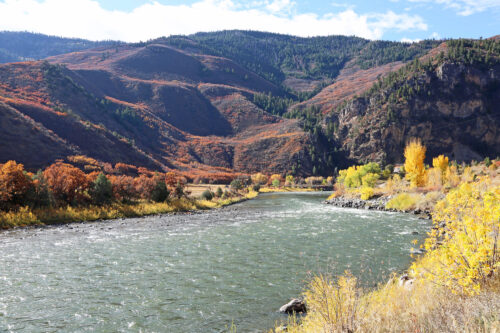
“Drought has raked its fingers across Colorado. By mid-summer, its mark is difficult to ignore. Some reservoirs have fallen so low that they instead look more like the rivers they once were. Boat ramps across the state no longer reach water. Where there should be rows of corn, the landscape is dotted by brown, fallowed fields. Creekbeds have dried up weeks earlier than normal, while even larger rivers have dwindled to trickles. Rising water temperatures in those shrunken rivers are causing fish to suffocate. And for at least two dams, declining reservoir levels now threaten power production. “Everybody’s got a story of woe,” said Steve Pope, the manager of the Montrose-based Uncompahgre Valley Water Users Association. “It’s regionwide; nobody is escaping it.” … ” Read more from the OC Register.
Colorado River shortage reaches farms and tribal lands
“The Colorado River can run dry long before it disappears. In Wyoming’s Little Snake River Valley, ranchers say water vanished weeks earlier than usual this summer. More than a thousand miles downstream, farmers and tribal communities face the same shortage—with no alternative water supply. The Little Snake feeds the Yampa River. The Yampa feeds the Green, which carries water into the Colorado. This summer, part of that chain nearly stopped. Jonathan Bowler manages water in the Little Snake River Valley and operates a small ranch there. “It’s the lowest river flow. It’s the shortest river flow,” Bowler said. “We’re down to the lowest flow in the river that’s been seen in a hundred-year history.” The river peaked early, forcing ranchers to move haying, irrigation and grazing several weeks ahead of schedule. “A lot of rural producers are pretty steeped in the way of life that you take what you can get and you make it work,” Bowler said. “A few years in a row like this would be difficult for producers.” … ” Read more from Your Wyoming Link.
Ruins of lost towns are reemerging as Colorado’s reservoirs shrink
“On a chilly April day, David Primus walked down to where the edge of the largest reservoir in Colorado normally laps against the shore — and then kept walking. His shoes left shallow footprints in the wet sand as he headed toward a rectangle of stones revealed by the receding waters. “That’s a foundation there,” said Primus, a technology professional turned local historian and author of the book “Beneath Blue Mesa.” “That’s going to be some sort of structure that’s associated with a little ranch right outside of town.” At first glance, Blue Mesa looks like an enormous lake that’s always been there. But it, like many other reservoirs in Colorado and the West, was created by the federal government and provides water storage, generates power and supports farms and endangered fish. And, as it had done with other Western dam projects, the federal government bought, burned and removed small communities to make way for the reservoir. … ” Read more from the Colorado Sun.
In national water news today …
EPA releases new state agency guidance to identify ‘systemic issues’ at water systems
“On Aug. 13, the U.S. Environmental Protection Agency (EPA) released what it’s calling an important guidance document for state partners that are working to ensure public water systems are meeting drinking water standards. EPA said the guidance is meant to encourage proactive steps to strengthen drinking water systems while supporting the role of states as co-regulators under the Safe Drinking Water Act. “Public Water Systems provide essential clean and safe drinking water that their residents, schools, hospitals, businesses, commercial centers, and industry rely on,” said EPA Assistant Administrator for Water Jess Kramer. “EPA must work seamlessly with state co-regulators to ensure drinking water is meeting federal standards, and today we are helping our states assess water systems and protect drinking water with this new checklist.” … ” Read more from Water Finance & Management.
How cyclospora evaded the U.S. food safety system to sicken thousands
“Cases of cyclosporiasis were mounting rapidly in Michigan and state health officials were homing in on a common thread: Many of those who had fallen ill had eaten at Taco Bell. On July 1, they asked the company for its supply chain records, crucial information in tracing ingredients that may have caused the outbreak. On July 3, they wrote and asked for the records again. On July 6, they wrote a third time. … Later that day, Taco Bell provided some records to the state, which by then was working with the federal Food and Drug Administration. …A federal rule that had been scheduled to take effect in January would have required Taco Bell to send those records within 24 hours. But last year, the Trump administration delayed the implementation of that rule until mid 2028, saying companies needed more time to prepare. Food safety experts say the postponement has hindered the response to the outbreak, the largest cluster in a record number of cyclospora cases in the United States this year. … ” Read more from the New York Times.
AI companies look to the ocean as a place to put more data centers
“The artificial intelligence boom is driving unprecedented demand for data centers, raising concerns about their growing energy consumption, water use and carbon footprint. These challenges are making companies look beyond traditional land-based data centers. Some developers are now exploring the ocean as a new location for AI infrastructure in the hopes that underwater data centers could improve energy use and cooling efficiency while using less fresh water and land area than onshore buildings. My research focuses on the societal, organizational and environmental implications of emerging technologies, particularly artificial intelligence and the digital infrastructure – including data centers – that supports its development and deployment. I see underwater data centers as a promising new approach for supporting the growth of AI. … ” Read more from The Conversation.

