
Several news sources featured in the Daily Digest may limit the number of articles you can access without a subscription. However, gift articles and open-access links are provided when available. For more open access California water news articles, explore the main page at MavensNotebook.com.
In California water news this weekend …
Can anything stop invasive golden mussels? A test project in Stockton may provide an answer
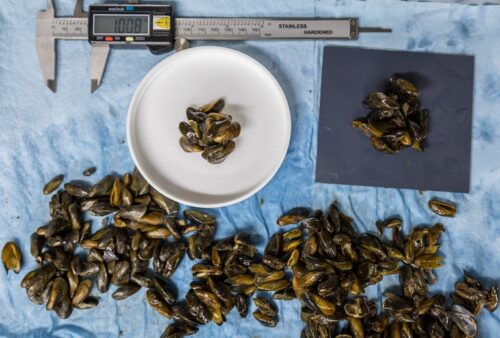 “If you can’t beat ’em, control ’em. That might be the best strategy for tackling the scourge of golden mussels that have quickly spread across the Delta and throughout California’s lakes and inland waterways, causing millions of dollars in damage. Help may now be on the way for boat owners, farmers and water company managers eager for a solution to ward off the quickly propagating bivalves. A Davis-based company is readying a test in Stockton of a biodegradable treatment that kills golden mussels without damaging surrounding aquatic wildlife. The biobased product, Zequanox, is already being used on quagga and zebra mussels, two other invaders that have bedeviled the nation over the past few years. … ” Read more from Stocktonia.
Could this be the strongest El Niño since the French Revolution?
“This year’s El Niño could become the strongest in roughly 250 years, reaching an intensity not seen since the late 18th century. Forecasts for the rapidly strengthening El Niño, a periodic warming of tropical Pacific waters that shifts weather patterns worldwide, have grown more extreme in recent months. Experts have been comparing the projected strength to the modern record events in 1982-83, 1997-98 and 2015-16. Now, it’s becoming apparent that those events will fall short of what’s in store, sending some scientists to reach even further back into the record books. Meteorologist Eric Webb has argued it could surpass 1877-78 and become the strongest in at least 250 years, dating to the so-called Great El Niño of 1789-93. Just this week, the National Oceanic and Atmospheric Administration said the odds of a record El Niño rose to 69%. The agency also gave the event a greater than 90% chance of becoming “very strong” during fall and winter in the Northern Hemisphere. … ” Read more from the San Francisco Chronicle.
Will AI data centers soak up the last of the valley’s water?
“Questions about artificial intelligence and jobs, ethics, even the end of humanity may be swirling through the ethernet right now but folks in the San Joaquin Valley want to know: What about the water? Proposals for two “mini” AI data centers on the fairgrounds in Tulare and Kings counties recently generated a firestorm of questions and angry comments. They are far from approval, but residents fear the notorious power and water guzzling centers will drain already stressed water supplies. Whether they would depends on a lot of factors, including the size and type of data center. … ” Read more from SJV Water.
YOUR INPUT WANTED: New groundwater survey invites GSA and basin manager perspectives on water accounting in California
“The California Water Data Consortium has launched a new survey to better understand how groundwater is accounted for across California. Accurate and consistent water accounting is more important than ever. The results of this survey will help water managers understand how their accounting approaches align or differ with those of other basins and support the development of locally appropriate best practices. Results will also inform a report on modernizing water accounting, developed in collaboration with the Public Policy Institute of California and UC Davis. The survey will be re-administered periodically to track trends and developments over time. Summarized and anonymized results will be published to facilitate knowledge sharing and cross-basin learning. The survey targets groundwater managers, consultants, and technical staff who can speak to how groundwater is tracked within a specific groundwater sustainability agency (GSA), basin, or sub-basin. We want to hear from basins at every priority level – High, Medium, Low, and Very Low – as well as adjudicated basins. … ” Read more from the California Water Data Constortium.
Prairie Creek restoration helps young salmon grow twice as fast—and doubles their survival rate
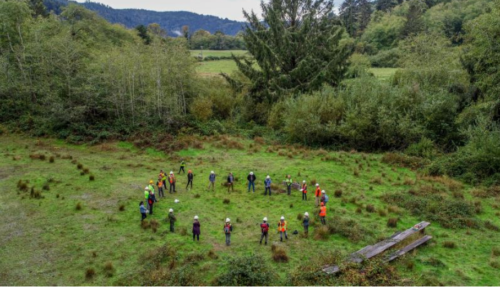
“Along California’s redwood coast, conservationists have been working for more than a decade to give a damaged creek something surprisingly simple: room to behave like a creek again. Prairie Creek is one of the last refuges for three threatened species of salmon: California Coastal Chinook, Northern California steelhead, and coho salmon (whose numbers declined by 90% in the last century). The major US restoration project, led by NOAA Fisheries and a broad coalition of partners, has transformed a former lumber mill into wetlands and a thriving floodplain ecosystem where young salmon can find food and grow before making the difficult journey to the Pacific Ocean. … ” Read more from the Good News Network.
An oil company wants to restart fracking off the California coast. The state’s top coastal officials say no way
“Just days after the Trump administration launched proceedings that could limit California’s ability to protect its iconic shoreline, the state’s top coastal officials reasserted their authority by voting unanimously against an oil company’s controversial bid to restart underwater fracking operations. This is the first time the California Coastal Commission has officially reviewed the issue of offshore fracking. Until now, the practice had been quietly rubber-stamped by the federal government without the state’s knowledge. The proposed fracking plan would quadruple production on an aging offshore platform in the Santa Barbara Channel. The process of hydraulic fracturing ekes out oil from older wells, and involves cracking the bedrock several thousand feet below the seafloor by injecting chemical fluids with intense pressure. “This is just simply one of those cases where the juice isn’t worth the squeeze,” said Coastal Commissioner Ray Jackson at a meeting Thursday in Santa Cruz County. “This creates far too many opportunities for something to go wrong, and when something does go wrong, it’s our oceans, beaches, wildlife and coastal economy that pay the price.”… ” Read more from the LA Times. | Read via AOL News.
SEE ALSO: California Coastal Commission rejects fracking proposal off Ventura Coast, from the Santa Barbara News-Press
People news …+
Meet California’s preeminent fish squeezer – Dr. Peter B. Moyle
 “For those of us who work on rivers, we often have nicknames for each other’s professions. I’m a rock kicker (fluvial geomorphologist), for example. But let me introduce you to my friend and colleague, Peter Moyle, the consummate fish squeezer. Peter is familiar to many readers of California Fly Fisher, even though he is not a member of the fly-fishing fanatics family. But he is, by far, the most important scientist ever to have worked on—or squeezed—freshwater fishes in California, and his lifetime of work undergirds everything that fly fishers in California love. It is worth looking at the arc of Peter’s amazing career and considering its impact on how California’s freshwater fish are managed today. It all starts in Minnesota, where the winters beat the mean out of you. He is the essence of Minnesota nice. … ” Read more from the California Water Blog.
Podcasts …
ECONEWS REPORT: Get ready for the Super El Niño
A supercharged system of warm water off the Pacific Coast threatens to offer a wet and stormy winter. This “super” El Niño is likely to a record-setter, with temperatures already in virtually uncharted territory and months left to continue to climb. Predicting what this super El Niño will do in Northern California is tough but previously strong El Niños—such as 1982-83 and 1997-98—suggest a likely future: one atmospheric river after another, all winter long. And if it wasn’t already obvious, climate change is likely a significant contributor to the warm ocean temperatures (although El Niño events are a normal weather pattern). Climatologist JP O’Brien joins the program to discuss.
(Re)TURNING TO THE RIVER: What is water for? Conservation partnerships in the San Joaquin River watershed
Conservation and land use can occur in harmony. In this episode, we’ll hear from people working “across the aisle” toward common goals.
WATER IS A MANY SPLENDOR’ED THING: Watershed Choices
 The top of the watershed, in any area, is our regulator for natural processes that distribute precipitation of the seasons through the ecosystem. The bottom of the watershed is the collection for all debris and chemicals carried by the water that flows to its lowest point. In California, water conveyance systems provide critically important value to the state but with the benefits come shortcomings that have become today’s challenges. Water is a Many Splendor ’ed Thing and Conversations brings you another water relationship that has a personally significant impact to your life. Produced by Stephen Baker, Bringing People Together to Solve Water Problems, water@operationunite.co 530-205-6388
VIC BEDOIAN: Public voices support for California’s Coast
This week the National Oceanic and Atmospheric Administration held in-person and virtual hearings as part of an unprecedented review of California’s coastal management program. What they got was a public outcry of opposition from officials and citizens alike. The review is seen by state officials as an attempt by the Trump administration to take control over the coast, and proceed with projects like offshore oil drilling, deep sea mining and spaceport development. Vic Bedoian reports from Fresno.
In regional water news this weekend …
NORTH COAST
Yurok Tribe challenges feds’ revised priorities for Klamath Project
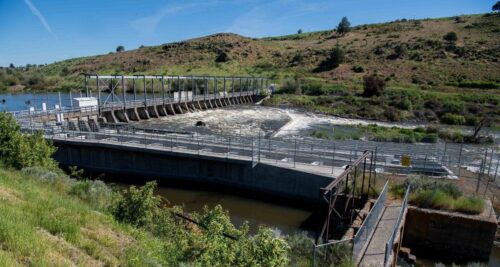
“The Yurok Tribe and other plaintiffs on Friday asked a San Francisco federal judge to once again intervene in a long-running conflict with the feds over water releases from the Klamath Irrigation Project in Northern California after the Trump administration said last year that irrigation should take priority over threatened salmon species. The Klamath Project supplies water to more than 225,000 acres of farmland and two wildlife refuges in the Klamath Basin along the Oregon-California border. But critics say the project has decimated the local Chinook and Coho salmon population, which the Yurok Tribe relies on to survive. “We have an agency that has reversed the priorities, and it intends to prioritize irrigation over Endangered Species Act compliance,” said Patti Goldman, an attorney with Earthjustice who represents the Yurok Tribe. She said the U.S. Bureau of Reclamation had moved forward without required consultations with the U.S. Fish and Wildlife Service or NOAA Fisheries. … ” Read more from the Courthouse News Service.
FERC denies two late PVP intervene requests, local officials report
“The Federal Energy Regulatory Commission has denied two late requests to intervene in the decommissioning of the Potter Valley Project sought by its owner, the Pacific Gas and Electric Company, Mendocino County officials reported. In a press release this week, the Mendocino County Inland Water and Power Commission explained that Elsinore Valley Municipal Water District of Southern California and Infrastruk Group LLC, a company based out of Southern California and Spain, had both sought “to intervene as formal parties in PG&E’s Potter Valley Project license surrender proceeding,” and both requests were denied by FERC, “allowing the federal process to continue.” … ” Continue reading at the Ukiah Daily Journal. | Read via the Mendocino Beacon.
SIERRA NEVADA
Small acts. Hundreds of people. One river cleanup.
“Pick up one piece of trash. That is all anyone is asking. Once you start, though, you find another, and then another, and before long you have filled a bag and walked a stretch of riverbank you have probably passed a hundred times without really seeing it. That is the thing about small acts; they have a way of expanding once you begin. And when hundreds of people begin them at the same time, in the same watershed, on the same morning, something significant happens. That something is SYRCL’s Yuba River Cleanup. It is not one heroic effort. It is hundreds of ordinary ones, happening simultaneously, across 25 sites from the Sierra Nevada headwaters to the lower Yuba, and the cumulative result, year after year, is extraordinary. … ” Read more from the South Yuba River Citizens League.
SACRAMENTO VALLEY
Sacramento-area farms increase access to fresh food through regenerative practices
“As the farm-to-fork capital, Sacramento is surrounded by some of the most productive agricultural land in the country. But living in an agricultural region doesn’t necessarily mean everyone has equal access to fresh, nutritious food. Data from Feeding America shows that food insecurity affects as many as one in five people in some Central Valley counties, including Fresno, Madera, Kern, Tulare, Kings and Merced. Those numbers are estimates based on national food insecurity surveys and economic and demographic data. When the Yolo County Food Bank decided to look into the issue in 2024, it found that the numbers were worse than expected. Their study found that roughly a third of households in Yolo County were food insecure, which far outpaces state and national rates — 15% and 14%, respectively. And the number of people facing food insecurity has been steadily increasing in the Sacramento region over the last few years. … ” Read more from Capital Public Radio.
NAPA/SONOMA
Napa County exploring policies to support wine industry amid economic struggles
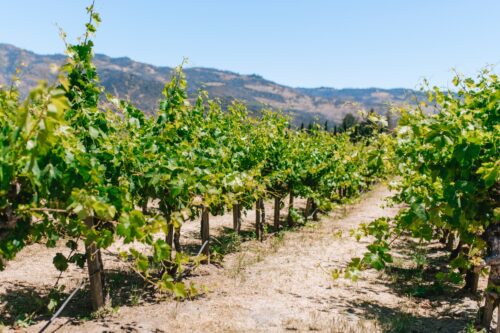 “Amid the economic struggles of the wine industry, Napa County is examining several potential short-term zoning code amendments intended to improve the efficiency of its permitting processes and support local wineries and grapegrowers. That review of county policy comes in response to an April 10 letter from four major wine industry groups — Winegrowers of Napa County, Napa Valley Vintners, Napa Valley Grapegrowers and the Napa County Farm Bureau — calling for a range of short- and long-term actions the groups said would help reduce regulatory burdens on the industry. … “We’re simply looking to make the existing system more efficient, predictable and responsive while maintaining the existing level of environmental review, public participation and all the protections that have been established by the board,” Brian Bordona, the county’s planning director, said at the meeting Tuesday, Aug. 11. … ” Read more from the Santa Rosa Press Democrat.
St. Helena sees problems with grand jury report on water woes
“A recent Napa County civil grand jury report placed the blame for St. Helena’s persistent water distribution system problems on city leadership, though city officials were quick to push back, noting that significant work to improve the systems has been completed or is planned. A draft of a required formal response to the report goes further to spell out the city’s disagreements with the grand jury, which found that water discoloration issues persisted in St. Helena despite significant water rate increases and called on the city to assess the water system issues and develop a plan to fix them. St. Helena’s water troubles surfaced again in July while the city was preparing its response to the grand jury, after a private tour bus collided with a fire hydrant, releasing a deluge of water and dislodging sediment that contributes to discolored water. That prompted the city to call on residents to use bottled water for drinking and other potable uses for three days. … ” Read more from the Santa Rosa Press Democrat.
BAY AREA
San Jose residents push for data center moratorium
“As San Jose hammers out local review standards for data center projects, some residents are calling for the city to follow the lead of other jurisdictions and enact an immediate moratorium on new developments. The proposed standards are expected to address widespread concerns that a glut of new projects working their way through the city’s development pipeline could overwhelm local water and power infrastructure and cause other environmental harms. Staff are in the process of drawing feedback from residents as they draft the standards, which are expected to also include requirements related to air quality, noise pollution, greenhouse gas emissions and public outreach. The package is expected to go before the City Council in December. … ” Read more from the San Jose Spotlight.
CENTRAL COAST
Facing the future of water: SLO County farmers confront new challenges
“Early mornings at The Luffa Farm in Nipomo usually begin under layers of Central Coast fog as rows of luffa plants stretch across the property. Like many specialty crop farms in San Luis Obispo, the farm depends heavily on water to sustain production. But as California continues to enforce stricter groundwater regulations under the Sustainable Groundwater Management Act, many local farmers are rethinking how they operate. The Sustainable Groundwater Management Act was passed in 2014 after years of groundwater overuse throughout California. The law requires local groundwater basins to become more sustainable over time, especially in areas considered critically overdrafted. While the goal is to protect California’s long-term water supply, the changes have also created new challenges for farmers statewide. In San Luis Obispo County, those impacts are becoming more noticeable as growers adjust irrigation practices, deal with rising costs, and look for ways to reduce water use while keeping farms productive. Everything is connected to water,” said Brooklynn Gamble, supervisor at The Luffa Farm. “When water costs increase, it affects production, labor and even pricing for customers.” … ” Read more from the Cuestonian.
SAN JOAQUIN VALLEY
San Joaquin County flood officials prepare for potentially historic El Niño winter
“Flood-control officials in San Joaquin County are preparing for what could be a historically wet winter, as forecasters expect an extra-strong El Niño event to bring wetter-than-normal conditions to California. “We are completely in uncharted territory,” said ABC10 meteorologist Rob Carlmark. “We’re getting more and more confident that we’re looking at a wet winter ahead; of course, something unusual could happen.” Emergency officials in San Joaquin County say they are still waiting to see what the impacts will be. In the meantime, they are continuing routine levee inspections and maintenance while crews work on major levee improvement projects. In California’s Valley, levees protect communities from flooding. That intricate system of waterways is the focus of Darren Suen and his team at the San Joaquin Area Flood Control Agency. … ” Read more from ABC 10.
Dispute between east Kern water entities prevents information sharing
“The Indian Wells Valley Groundwater Authority extended an agreement with the U.S. Navy to drill groundwater monitoring wells in a specific location while it works to get data from the Indian Wells Valley Water District that already has monitoring wells in that same location. The agreement, which involves funding from the Navy-Coso Royalty fund, was set to expire Aug. 31, 2026. That fund is made up of payments from geothermal companies that operate on Navy land. Under the agreement, the Navy-Coso Royalties fund will pay up to $300,000 for the authority to drill two groundwater monitoring wells and the authority is to pay Stetson Engineering $75,000 in related project costs. … ” Read more from SJV Water.
SOUTHERN CALIFORNIA
Long-awaited LA River bike path through downtown pedals ahead — slowly
“In the 30 years since Los Angeles County first created an LA River master plan, much has changed along the 51-mile, mostly concrete-encased river that winds it way from the mountains in the northwest county to the port of Long Beach. Sections of the river have became popular recreation spots for local residents, with parks, tree-shaded paths and coffee shops, and numerous projects are underway to integrate the river in the surrounding communities by making it more accessible to pedestrians and cyclists and by restoring some of its natural character. One segment of the river, however, has remained a dystopian landscape — the 8-mile stretch that passes through the industrial zone east of downtown LA, where the concrete channel is boxed in by rail yards, warehouses and electricity towers. … ” Read more from the Courthouse News Service.
IMPERIAL/COACHELLA VALLEYS
Imperial Valley dreamed of a lithium boom. It just hit another roadblock
“Stalled plans to turn a remote corner of California into a critical minerals and clean energy mecca have been dealt another setback. A state appeals court ruled this week that Imperial County’s approval of the Hell’s Kitchen lithium and geothermal energy project failed to show it has enough water supply from the dwindling Colorado River to sustain its operation, or to address the potential air quality impacts of diverting more water from the polluted Salton Sea, which has been shrinking for years. If the decision stands, it would clash with California and federal policies to amp up critical minerals production, potentially sparking intervention by state policymakers to try and obtain an adequate water supply, one expert said. … ” Read more from Capital & Main.
SAN DIEGO
Along the Colorado River …
Tribal officials ask feds to delay Colorado River decision
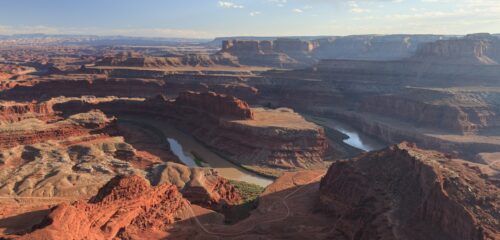 “Millions of peoples’ lives will be affected however the U.S. Bureau of Reclamation decides to manage Colorado River flows over the next 10 years, beginning Jan. 1. That includes tribes in Arizona, who hold nearly 40% of senior water rights. And at least one tribe is becoming warier of what Reclamation will come up with, and still without meaningful interaction or discussion with those tribes. The Colorado River Indian Tribes, Arizona’s largest water rights holder, issued a second call for the feds to delay action and conduct substantial talks with it and the other 29 tribes in the Colorado’s basin. Collectively, those 30 tribes hold about 20% of water rights across the basin, even as some still have yet to quantify those rights or use what they have. Leaders of the 4,300-member tribe, whose lands are in the Colorado River Valley, said in a statement that Reclamation should postpone issuing the final plan, known as a record of decision, at least 45 days after it published the final environmental impact statement July 31. … ” Read more from Arizona Central.
Arizona’s Colorado River fight could be headed to court
“The fight over Arizona’s share of the Colorado River could soon move from the negotiating table to the courtroom. After years of negotiations, the seven Colorado River Basin states remain divided over how to manage the river’s shrinking supply. Arizona and the City of Phoenix have both retained outside attorneys as they prepare for the possibility of a major legal battle. “We want to stay out of the courtroom, federal court, the Supreme Court. It’s not our preferred option,” Arizona’s Colorado River negotiator Tom Buschatzke previously said. “But Governor Hobbs has made it quite clear: If we have to, we will.” Arizona hired the law firm Sullivan & Cromwell to represent the state in possible litigation. Phoenix has retained Culp & Kelly LLP and O’Melveny & Myers LLP to advise the city on Colorado River issues. … ” Read more from Channel 15.
SEE ALSO: Arizona pushes back on a new Colorado River plan that could bring ‘catastrophic harm’, from KJZZ
Runner treks along Colorado River to document drought, shrinking levels
“A long-distance runner is spending months trekking across the entire Colorado River to document the ongoing drought and shrinking water levels. Mina Guli, working with the Thirst Foundation and Keep the River Running, started the journey in June at the northern end of the river and will eventually end in the Los Angeles area of Santa Monica in mid-September. Guli sleeps in tents along the way, running about 30 miles every single day; she is joined by a videographer and photographer who will document her run and the drastic shifts in water levels as she heads downstream. FOX5 met Guli as she stopped by the annual Water Summit at the Springs Preserve with region leaders. … ” Read more from Channel 5.
SEE ALSO: It ‘broke my heart’: Runner says conditions along Colorado River worse than thought, from the Las Vegas Review-Journal
How long would it take to refill Lake Mead?
“Formed by holding back the Colorado River with Hoover Dam, Lake Mead was designed to hold up to 28.9 million acre-feet (roughly 9.4 trillion gallons or 36 trillion liters) of water at full capacity. A multi-decade megadrought across the American Southwest, combined with heavy municipal and agricultural water demand, has severely depleted the reservoir. It now sits below 30% of capacity, and in August 2026 it fell to its lowest level since the lake first filled in the 1930s, leaving a deficit of roughly 20 million acre-feet. That deficit raises an obvious question: how long would it take to refill Lake Mead to its designed capacity? In purely theoretical terms, cutting the outflow or boosting the inflow could do it in as few as two to three years. Under a more realistic scenario that depends on vastly improved water management and favorable weather, a refill could take 30 to 50 years, and even that may be optimistic. It is entirely possible that the reservoir never again reaches full capacity. … ” Read more from the World Atlas.
‘We’re still 70% full;’ Flaming Gorge deals with Colorado River releases
“It’s a beautiful day on the water here at Flaming Gorge Reservoir. The boats are out and people are fishing on the banks. If you look closely, you can see where water levels have declined. It’s made things a little challenging for John Rauch, who runs the popular Cedar Springs Marina. “We’re down almost 12 feet. It’s almost September,” he said in an interview Friday with FOX 13 News. Rauch has had to relocate some docks, moving them out further as lake levels decline. But he’s grateful people are still stopping by to grab a bite to eat at The Snag, the marina’s floating canteen, or rent a boat. “People are still coming out. We have a great backing. Our clientele are some of the best people in the world. They’re giving us support,” Rauch said. … ” Read more from Fox 13.
Can a dam expansion hold back climate considerations on the Colorado River?
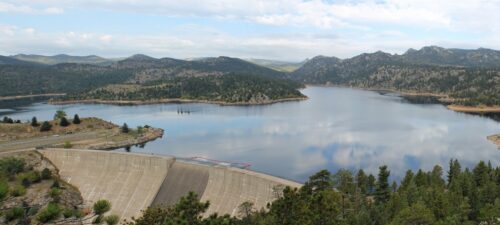
“Is climate change enough justification to stop the expansion of a reservoir that will take more water from the dwindling Colorado River? That’s the central question in a lawsuit pitting the U.S. Army Corps of Engineers and Colorado’s largest water utility against a consortium of environmental nonprofits. The environmentalists say the Colorado River has no more water to give, while Denver Water, the utility whose Gross Reservoir would nearly triple in capacity, argues it is ensuring its customers can withstand droughts. The Corps contends it is not required to consider climate change or the downstream effects of its expansion of a dam to grow the reservoir. The case in the 10th U.S. Circuit Court of Appeals has the potential to ripple through Western water management as states, tribes, cities and the federal government struggle to find a compromise on how to steeply cut water use. Some see history repeating itself, with the Gross Dam expansion emblematic of the kind of thinking that helped put the West into the very water crisis the project is meant to buffer the region against. “Does it make sense for major water projects like this to continue to move forward?” asked Sarah Matsumoto, an associate professor of clinical law at the University of Colorado, Boulder, and director of the Getches-Green Natural Resources, Energy, and Environmental Law Clinic. “I just don’t think it does anymore, without at minimum considering impacts of climate and impacts of overappropriation on the river.” … ” Read more from Inside Climate News.
How low can the Colorado River go? A slow float on the 15-mile reach
“On a hot and sunny morning in August, a group of nine paddlers pushed their duckies and stand-up paddle boards into the Colorado River at Harky’s boat launch in Palisade. The goal of the float was to experience and document the river at one of the lowest levels it has ever seen. With flows hovering around 93 cfs, a bathtub ring showed on the rocks along the riverbank and rusty hunks of old farm equipment emerged from the streambed. Bright green algae grew between the rocks, and herons and ospreys hunted in the shallows. In many places, paddlers got hung up on rocks and were forced to drag their watercrafts through the ankle-deep water. It took about four hours to float the roughly six-and-a-half miles from Palisade to Corn Lake, a trip that normally takes two to three hours with higher flows. … ” Read more from Aspen Journalism.
In national water news this weekend …
Trump administration fights Republican effort to lower flood insurance costs
“The Trump administration is defending a flood policy imposed by the Biden administration and supported by environmental groups against efforts by Republican-led states to overturn it in court. The Justice Department under President Donald Trump recently asked a federal judge in Louisiana to dismiss a lawsuit brought by 10 Republican state attorneys general who say the policy has unfairly raised the cost of federal flood insurance. The policy was launched in 2021 by the Biden administration after decades of offering discounted insurance had led the federal government to understate the flood risk faced by millions of properties covered by the Federal Emergency Management Agency program. The higher insurance rates were hailed by environmentalists as a way to discourage construction in flood-prone areas. Rates are decreasing for roughly 20 percent of the insurance program’s 4.5 million policies. … ” Read more from E&E News.
Announcements …
REGISTER NOW for New Industrial Water Reuse Webinar Series
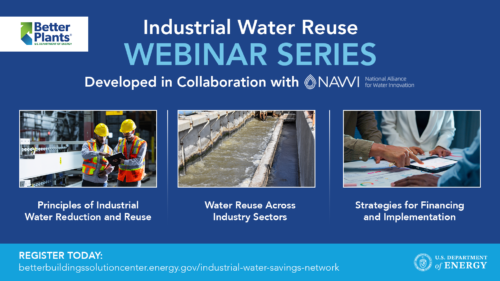 Join the U.S. Department of Energy (DOE) and leading organizations for an interactive webinar series designed to explore the evolving landscape of industrial water reuse. This series will equip you with actionable frameworks to reduce freshwater footprints, lower operating costs, and navigate complex project economics. Learn more and register.

