
Several news sources featured in the Daily Digest may limit the number of articles you can access without a subscription. However, gift articles and open-access links are provided when available. For more open access California water news articles, explore the main page at MavensNotebook.com.
In California water news this weekend …
Q&A with Daniel Swain: Flood and fire: What California can do in the face of dual climate threats
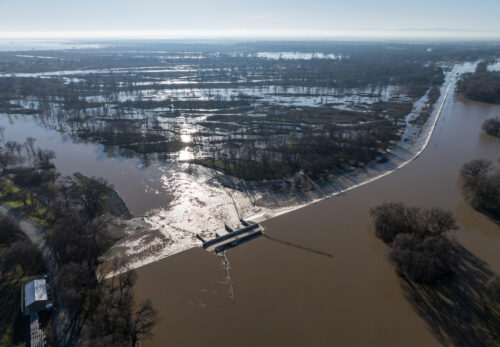
“As the odds of a strong and possibly historic El Niño rise, so too have conversations surrounding the potential for increased flood risk in California this winter following a long, hot summer and prolonged fire season. Climate Scientist Dr. Daniel Swain believes this winter’s El Niño could be historically strong—and he’s not the only one. More and more climate experts are joining the chorus that sees the strengthening El Niño potentially as one of this century’s strongest. But when it comes to the bigger picture, a warming California faces a number of potential extreme weather-related threats that extend beyond heavy precipitation and flood risk. In Part 2 of our conversation with Swain about how our lives are being shaped by weather (Part 1 is here), he explores how River Partners’ 20,000 acres of restored floodplains alongside rivers reduce flood risk, build climate resiliency, and how California policymakers can help protect the state’s most vulnerable communities. … ” Continue reading from River Partners.
SEE ALSO:
- California Braces for Worst and Wettest El Niño On Record, from LA Magazine
- ‘Super El Niño’ could bring wet winter and flooding to western US, climate scientists warn, from the Guardian
Additional watershed demand visualizations from the State Water Board
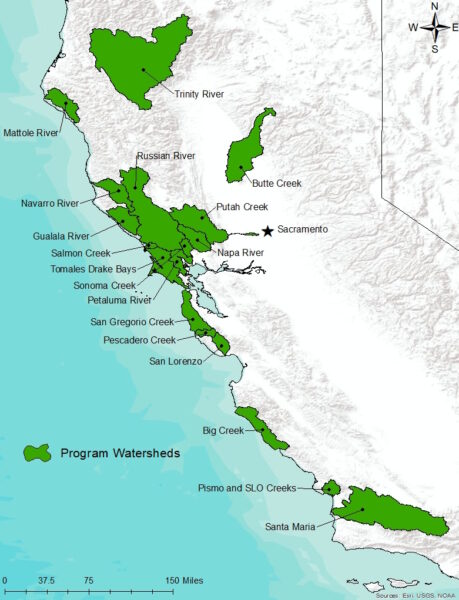
“The State Water Board’s Supply and Demand Assessment Program has published several additional interactive surface water demand visualization dashboards for watersheds across California. This release follows an initial set of dashboards published for nine watersheds in 2025. These dashboards provide insights into reported surface water demands and are part of our ongoing effort to improve data transparency and support informed water management. … ” Read more from the State Water Board.
Now available: New guide: Designing recharge projects for multiple benefits
“Managed aquifer recharge can do more than replenish groundwater. This new brochure explores how thoughtfully designed recharge projects can also support flood risk reduction, ecosystem enhancement, water quality, climate resilience, working lands, and drought preparedness. It highlights practical planning considerations, real-world examples, and strategies for maximizing the multiple benefits of recharge projects across California.” Read the new guide from DWR.
Now available: 2025 Groundwater Recharge Roundup
“Curious how groundwater recharge efforts are progressing across California? This new Annual Groundwater Recharge Round-Up provides a statewide snapshot of Water Year 2025, including recharge volumes, hydrologic conditions, permitting pathways, policy updates, and emerging tools. The resource also spotlights successful implementation in Yolo County, offering insights and lessons for agencies looking to expand recharge efforts.” Read the roundup from DWR.
Proposition 4 Sustainable Groundwater Management Grant Program – Draft Guidelines Released
“The Department of Water Resources (DWR) is pleased to announce the release of the 2026 Draft Sustainable Groundwater Management Grant Program Guidelines. The guideline’s focus is to administer a 2025 legislative directive of $3.5 million for small Sustainable Groundwater Agencies and $6.5 million for Technical Assistance. DWR will host two public workshops to provide an overview of the program, review key components of the 2026 Draft Guidelines, and to accept public comments. … ” Read more from DWR.
Notice of Department of Fish and Wildlife Rulemaking: Invasive Mussels
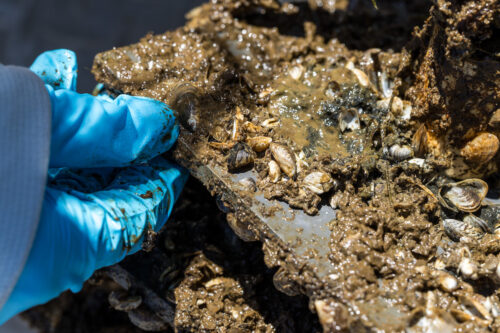
“The California Department of Fish and Wildlife (Department) has published the Notice of Proposed Action to amend sections 650, 672, 672.1, and 672.2 to Title 14, California Code of Regulations (CCR). Fish and Game Code Section 2301 authorizes the Department to adopt regulations regarding the management of invasive mussels. The Department proposes to amend sections 650, 672, 672.1, and 672.2 to Title 14 of the California Code of Regulations. Amendments include management measures for watercraft removed from invasive mussel infested waters, such as mandating the inspection of watercraft that have been launched in infested water for four or more consecutive nights. Additionally, the proposed changes establish a departmental list of conveyance service providers that adhere to industry standards for inspection and decontamination. This is necessary to expand the scope of the existing regulations to encompass all invasive mussel species, thereby ensuring consistency with the revised Fish and Game Code (FGC) established by Assembly Bill 149. … ” Read more from the Department of Fish and Wildlife.
California canning peach crop yield sees roughly 29% dip after Del Monte bankruptcy
“With the fall of Del Monte Foods’ Modesto cannery earlier this year, also comes the fall of the clingstone peach crop tonnage this harvest. The amount of canning peaches processed this year is expected to drop 29%, or roughly 61,000 tons, compared to last year, according to Pacific Coast Producers, the only major buyer and processor of California cling peaches left in the state. The company said in a statement that the total harvest is expected to come in around 150,000 tons. … ” Read more from the Sacramento Bee.
Padilla, Cornyn introduce bipartisan legislation to support desalination and safe drinking water
“U.S. Senators Alex Padilla (D-Calif.) and John Cornyn (R-Texas) introduced bipartisan legislation to reauthorize desalination projects and research. The Desalination Reauthorization Act would support desalination, a drought-proof water supply alternative, by providing grants for projects and research to lower its costs and reduce its environmental impacts. The legislation would extend the programmatic approval of the Bureau of Reclamation to fund desalination projects, which would otherwise expire this year. If the programmatic approval expired, Congress would need to pass a separate bill in order to authorize each new desalination project, which could substantially delay desalination projects and increase their costs. These projects help the Southwest counter drought by bolstering local supplies, providing flexibility during water shortages, and diversifying the water supply. “Access to safe and clean drinking water is a human right, and investments in desalination programs will help us provide drinking water to millions of Americans in need,” said Senator Padilla. “Our bill will guarantee research and development of new avenues for safe, clean drinking water so that California can adapt to growing environmental pressures.” … ” Read more from Senator Alex Padilla.
Bonta accuses DuPont of corporate shell game to dodge PFAS cleanup in California
“California Atty. Gen. Rob Bonta filed a complaint Thursday alleging that a cohort of the companies that make “forever chemicals” partook in a massive corporate shell game to defraud the state and others. In an amendment to a 2022 lawsuit filed by Bonta against the makers of these chemicals, the state now alleges that several DuPont spin-off companies — New DuPont, Corteva, Chemours and Qnity Electronics — worked together to create a “fall guy” company designed to take the financial hit stemming from several multibillion-dollar pollution lawsuits while keeping the companies’ most valuable assets out of reach. “The DuPont Defendants cannot game the system by illegally moving assets out of reach, dodging liabilities for the harm they have caused, and calling it restructuring,” Bonta said in a statement. “I look forward to ensuring that these companies are held accountable for PFAS pollution and that their assets cannot be hidden behind corporate walls while their responsibilities are left behind.” The Second Amended Complaint, as the new amendment is called, was filed in U.S. District Court for the District of South Carolina on Thursday. … ” Read more from AOL News.
SEE ALSO: Attorney General Bonta Files Second Amended Complaint in PFAS Litigation Alleging New Fraudulent Transfers by DuPont Defendants, press release from AG Bonta
In commentary this weekend …
Alternative crops on California farms offer options beyond fallowing land
Caitlin Peterson, an agroecologist, associate director and a research fellow at the Public Policy Institute of California (PPIC) Water Policy Center, and Bradley Franklin, an agricultural and environmental economist and research fellow at the PPIC Water Policy Center, write, “Growers in the San Joaquin Valley know they have to reduce groundwater pumping — and not just because it’s the law. The 2014 Sustainable Groundwater Management Act (SGMA) mandates that overdrafted areas bring their groundwater basins into balance by the early 2040s. Local water agencies — which are in charge of ensuring that pumping levels are brought down to sustainable levels — are turning to fallowing cropland to reduce groundwater use. But fallowing can create more issues, including economic losses to farmers and related businesses, the spread of weeds to neighboring farms and poor air quality due to increased dust. Many growers may wonder about other options. Is fallowing the only way to reduce their water footprint? Or are there alternative crops or business models that could help them adapt to this new water reality? We may have found one. … ” Read more from the Fresno Bee.
Wildfires will only get worse until the US stops ignoring the climate crisis
Felix Horne, senior expert with Climate Rights International based in Ottawa, writes, “”President Donald Trump argued last month that Canada should pay damages — or face additional tariffs — for the wildfire smoke recently “poisoning” American air, and claimed that he strong-armed Canadian Prime Minister Mark Carney during the World Cup final in New Jersey, telling Carney he needed to stop the fires. To Trump and the Michigan members of Congress who recently declared in a letter that their “patience has run out” with Canada over the wildfire smoke: I get where you’re coming from. As a Canadian, I’d love nothing more than to stop the haze drifting over the border. The air is thick, the sunsets are unsettling and your constituents — just like ours — are coughing through summers that are no longer what they used to be. But here’s the thing: Demanding compensation while gutting climate policy is asking Canada to put out the fires while Washington keeps adding more fuel. … ” Read more from the Santa Rosa Press Democrat.
Podcasts …
THE DAILY: Is America’s drinking water the next front in the Iran war?
Over the past week, a growing number of municipalities across the United States have reported that their water systems were hacked. The Times has found that the attacks were most likely perpetrated by Iran. Today, Dustin Volz, a cybersecurity and intelligence correspondent for The New York Times, explains how the hacking exposes yearslong failed efforts to shore up vulnerabilities in U.S. infrastructure, and how Iran may be seeking a new kind of leverage that could extend the war’s reach to within U.S. borders and affect something as elemental as the water we drink.
TALKING UNDER WATER: What we know about the cyberattacks on water systems
In this episode Talking Under Water the co-hosts discuss the recent coordinated cyberattacks targeting water and wastewater system PLCs across Minnesota and several other states, examining what happened, why it matters, and what utilities can learn from the incident. Bob Crossen and Alex Cossin break down reports that more than 30 Minnesota water systems were affected, with federal agencies now investigating activity across multiple states. The conversation explores how attackers targeted operational technology that helps run critical infrastructure such as pumps, wells, water towers, lift stations, and automated controls. The hosts emphasize the most important takeaway from the attacks: despite operational disruptions, utilities successfully maintained safe drinking water by switching to manual operations. They discuss the growing importance of resilience as the industry adopts more digital tools, automation, and artificial intelligence, while highlighting the need to preserve operator expertise and manual control capabilities.
VIC BEDOIAN: Feds threaten California’s Pacific Coast
Communities along California’s coast are expressing alarm over the Trump administration’s unprecedented review of the state’s coastal management program. State officials say the move is aimed at ramping up offshore oil drilling, downgrading environmental protection, and exerting more federal control over the state’s 1,100 mile coastline. The Newsom administration announced it is filing formal comments opposing the review. The U.S. Department of Commerce has announced official hearings to be held to evaluate the state’s coastal management program. KPFA’s Vic Bedoian has more.
CLIMATE DISPATCH: California Forever: Little metropolis on the prairie
A group of Silicon Valley billionaires says it has a bold vision for the future of California: a brand-new city built from the ground up on the Solano County prairie. But behind the glossy renderings and promises of sustainability lies a story of secretive land deals, political maneuvering, and growing concerns over public accountability. In this episode, we investigate the California Forever project, examining the opaque tactics used to quietly acquire more than 50,000 acres of farmland, the allegations surrounding Flannery Associates’ efforts to sidestep meaningful public input, and the questions local residents and conservationists are asking about who gets to shape the future of the region.
ECONEWS: Trump’s plans to disrupt dam removal get FERC’d
Remember how a shady Southern California water agency, the Elsinore Valley Municipal Water District, announced that it wanted to take over the Potter Valley Project on the Eel River, seemingly to thwart dam removal? We have some good news. Earlier this month, the Federal Energy Regulator Commission (FERC) denied the Elsinore Valley Municipal Water District’s petition to “intervene” in their proceedings. This means that the Water District would lack “standing” to sue over the final determination by FERC. While welcome news, that doesn’t mean that Elsinore is out of tricks it can play. Alicia Hamann, Executive Director of Friends of the Eel River, joins the program to give the latest news on Eel River dam removal.
TAHOE TAP: Julie Regan – Tahoe Regional Planning Agency (TRPA)
Few organizations have a greater influence on the future of Lake Tahoe than the Tahoe Regional Planning Agency. From environmental restoration and transportation planning to housing, redevelopment, and shoreline policy, the agency sits at the center of many of the basin’s most important conversations. On this episode of Tahoe TAP, hosts Mike Peron and Rob Galloway sit down with Julie Regan, Executive Director of TRPA, for an inside look at the opportunities and challenges facing one of America’s most iconic alpine environments.
ONCE UPON A BAY: Mrs. Terwilliger
Birds in the freezer. Taxidermy in the trunk. Grownups screeching like hawks. Elizabeth Terwilliger was an unforgettable teacher who taught generations of Bay Area children to see the natural world with wonder. She inspired a conservation movement that helped shape the Bay we know today, and, through the work of her friend Joan Bekins, reached more than 70 million children around the world.
WATER IS A MANY SPLENDOR’ED THING: Sharing is a No Brainer
 One of the strongest doctrines living in the western United States today is the “Prior Appropriative Doctrine.” This doctrine states that if you were the first to use a source of water back in the day and continued to use that source today then under water shortage conditions, you are the one that gets the water before anyone else! Farmers, cities and states, people in general, have been fighting each other in the west for a long time. Water is a Many Splendor ’ed Thing and Conversations brings you another water relationship that has a personally significant impact to your life. Produced by Stephen Baker, Bringing People Together to Solve Water Problems, water@operationunite.co 530-205-6388
In regional water news this weekend …
NORTH COAST
Water board votes to elevate Little River pollution case to state AG’s office
“The North Coast Regional Water Quality Control Board on Thursday authorized a referral to the California Attorney General’s Office for judicial civil enforcement against the Vern C. McGaughey Trust, citing more than a decade of unaddressed waste dumping, wetland degradation and missed cleanup deadlines along Little River. The decision followed a two‑hour hearing in which board staff detailed years of failed cleanup deadlines, repeated violation notices, and worsening conditions along Little River, a waterway already listed as impaired under Section 303(d) of the Clean Water Act for elevated fecal bacteria levels. Assistant Executive Officer John Curtis told the board that the referral is intended to prioritize cleanup and restoration. He said administrative civil liability, the board’s usual enforcement tool, had not produced compliance and could further delay remediation. …” Read more from the Eureka Times-Standard.
Column: Here comes El Niño
“The headlines are ominous: Super El Niño, El Niño Apocalypse, Wettest winter on record, mind-blowing El Niño. What will actually happen on California’s North Coast is uncertain. Warmer ocean temperatures mean slightly higher sea level with greater potential for flooding and coastal bluff erosion. This winter may be wetter than normal, but it could be drier. There might be more and bigger storms; there might be fewer. In short, prepare as you should for any winter: clear your gutters and inspect your roof, remove tree limbs that could fall, check the grading near your home so that water doesn’t accumulate along walls, store supplies of food, water, and medicine for at least two weeks, and know how to get emergency notifications. If you are in or near a flood zone, learn where to get sandbags and how to use them now, not when the water level begins to rise. … ” Read more from the Eureka Times-Standard.
Paddler’s paradise: Construction underway on massive Eel River Estuary Restoration Project that will open up miles of public access at the river’s mouth
“Down a winding levee road, deep into the marshy flats near the mouth of the Eel River, the landscape suddenly turns to an expanse of brown sludge. Nearby, heavy-duty equipment that has been ripping out a new 200-foot-wide channel that will reconnect floodplains and tidal habitat, sat idle near the mud. Emily Afriat, North Coast Regional Director of the Wildlands Conservancy, is relieved work is finally happening. “I’ve been waiting 10 years to get kids out here,” she said. “So for me, that’s going to be the best part.” The Russ Creek and Centerville Slough Restoration Project, envisioned in some form for decades, has entered its first year of construction. It’s at the roughly 1,500-acre Eel River Estuary Preserve, a narrow stretch of beach and marshland between Centerville Beach County Park and the mouth of the Eel River. … ” Read more from the Lost Coast Outpost.
Lawsuit filed against timber plan to protect salmon habitat in Mendocino County
“A hearing has been scheduled in Ukiah later this month for a lawsuit filed in an effort to protect critical salmon habitat in Mendocino County, the Friends of Dutch Charlie Creek reported. In a press release this week, the group reported that it had “filed a lawsuit against Cal Fire to stop the destruction of one of the most critical endangered coho salmon habitats left in California, (describing the litigation as seeking) to halt the recently approved ‘Hot Tuna’ and ‘Lincoln Logs’ timber harvest plans which threaten to imminent harm to the fragile Dutch Charlie Creek watershed and its prime coho habitat.” According to creek inventory information posted by the state of California, “Dutch Charlie Creek is a tributary to South Fork Eel River, tributary to Eel River, which drains to the Pacific Ocean, located in Mendocino County. … ” Continue reading from the Fort Bragg Advocate.
SIERRA NEVADA
USACE Public Comment on Yuba River Daguerre Point Dam Nature Like Fishway outgrant closes August 16
“The Yuba County Water Agency (Yuba Water) is proposing to construct, operate, and maintain the Lower Yuba River Daguerre Point Nature-like Fishway (NLF) Project (Daguerre NLF Project). The Daguerre NLF Project occurs within real property interests of the United States and requires a land use outgrant from the Sacramento District U.S. Army Corps of Engineers (USACE). USACE’s potential issuance of a land use outgrant is a federal action and requires compliance with pertinent environmental laws and regulations. This public notice will inform USACE’s consideration of the land use application for the Daguerre NLF Project. … ” Continue reading at Maven’s Notebook.
Yuba County pipeline disaster threatens annual salmon field trip for 1,500 students
“When a massive pipeline failed in Northern California’s Yuba County earlier this year, the focus quickly turned to repairs. Six months later, the ripple effects are reaching beyond the mountainside. Disaster struck in February at the Yuba Water Agency’s Colgate Powerhouse. The mile-long penstock pipe failed, sending hundreds of thousands of gallons of water and a mudslide down the mountain. Cleanup is coming along, but it is still underway. With the agency’s time and money being focused on critical missions only, the incident is trickling down into more than just the reservoir — it’s dipping into community grant funds. … ” Read more from CBS Sacramento.
SACRAMENTO VALLEY
Sycamore Pool testing can’t detect the E. coli strain that sickened children in 2025
“A year after an E. coli outbreak sickened four children at Bidwell Park’s Sycamore Pool, elevated bacteria levels are prompting warnings about swimming there. But current testing can’t determine whether the dangerous strain linked to the 2025 summer’s illnesses is in the water. A water sample taken Monday, Aug. 3, showed E. coli levels above what the city of Chico considers safe for swimming. The city has posted “no swim” signs at Sycamore Pool and is recommending people stay out of the water until conditions improve. The city’s regular testing measures general E. coli, not the O157 strain linked to last summer’s outbreak, Lisa Almaguer, a spokesperson for Butte County Public Health, said in an email. Detecting O157 requires separate testing. … ” Read more from the Chico Enterprise-Record.
Fire Safe Council, DWR wrap up fuel reduction at Loafer Creek
“A 140-acre fuel reduction project was completed in and around the Loafer Creek Recreation Area in the past week, creating a significant barrier to potential wildfires. The project was a combined effort of both the Butte Fire Safe Council and the California Department of Water Resources with money coming from the Cal Fire Forest Health Grant as well as support from Hanski Family Farms, State Parks and Mooretown Rancheria. DWR issued a press release discussing the scope of the project saying that the methods of the project varied. “Over the last 10 months, crews reduced overgrown, dead and dying vegetation using hand and mechanical thinning, pile burning, and grazing,” the release said. … ” Read more from the Chico Enterprise-Record.
NAPA/SONOMA
Record almond, cattle production pushes Solano County farm economy to new high
“Solano County broke its own agricultural production record last year, with a crop and livestock yield valued at $47.6 million, according to county agriculture officials. The previous record was in 2023, at around $46.4 million. In a presentation to the Board of Supervisors on Tuesday, Agricultural Commissioner Ed King and Deputy Agricultural Commissioner Matthew Carl walked supervisors through the highs and lows of the 2025 Crop and Livestock Report for Solano County, where 67% of the land is agricultural and farmland and where the industry creates jobs for an estimated 6,000 people. … ” Read more from Local News Matters.
Precedent set for groundwater testing in Sonoma County could have state-wide implication
“A California Court of Appeal decision this week in a lawsuit between the California Coastkeeper Alliance and Sonoma County could have implications for the North State. The court found that Sonoma violated the California Environmental Quality Act by adopting its well ordinance without required environmental review. The California Coastkeeper Alliance told Action News Now that all California counties will now need to conduct proper analysis to protect rivers from excessive groundwater pumping. “Counties–Butte County, as an example, or Shasta–will need to authorize groundwater pumping in a way that ensures that they’re not impacting surface streams from, you know, Butte Creek, the Sacramento River, you know, Antelope Creek, the different tributaries to the Sacramento,” said Sean Bothwell, executive director of the California Coastkeeper Alliance. … ” Read more from Action News Now.
SAN JOAQUIN VALLEY
One thing after another has left Monterey Park Tract without safe water for decades
“The Monterey Park Tract has two main streets and fewer than 200 residents, almost exclusively Black and Latino. Like many areas of rural Stanislaus County, it relies on septic systems and has no gutters or sidewalks. The community once known as Sand Hill because of its alluvial soil was founded in 1941 when jobs in Stockton to support the war effort ran out and people built houses on small lots in Stanislaus County where there was farm work. When county leaders applied for a grant in the early 1980s to help Monterey Tract residents get access to clean water, they did not do enough to prevent long-term contamination. … ” Read more from the Modesto Bee.
Drinking water at Modesto’s Gregori High now safe, following reports of lead contamination
“Modesto’s Gregori High School shared on Friday that water on campus is now safe to drink, following reports of contaminated water in June. In a statement from Modesto City Schools, the district shared that they had been made aware of possible elevated lead levels in drinking fountains at the start of summer. Since then, the school’s water supply has undergone testing and repairs, ultimately meeting quality standards on July 29. The news comes ahead of the school year, which is set to start on Aug. 11. … ” Read more from CBS Sacramento.
SOUTHERN CALIFORNIA
The L.A. River has taken a beating. Here’s why we should celebrate it
“If you’ve been following the headlines, these past few months have been eventful for the Los Angeles River. The famed 51-mile watershed that flows from Canoga Park through downtown L.A. before ending in Long Beach has been under siege. Thousands of gallons of crude oil were dumped into the river in May when a construction crew trying to lay fiber-optic cable hit a pipeline carrying the substance from Kern County to the Port of Los Angeles. In June, an unknown amount of debris from firefighting water runoff from Boyle Heights’ Lineage fire made its way into the river. For good measure, there was even a car chase through the river’s portion in southeast Los Angeles in February. It hardly seems a great time to celebrate the river with a festival, yet that’s exactly what’s happening Sunday. … ” Read more from the LA Times.
Laguna Beach City Council supporting action to reduce microplastic pollution
“The Laguna Beach City Council has adopted a resolution supporting statewide action to reduce microplastic pollution. Though it does not establish new local regulations, the resolution expresses the city’s policy position in support of future State of California legislation and administrative actions meant to reduce the release of microplastics into the environment, including intentionally added microplastics and microfibers. The adoption, made as part of the consent agenda at the Aug. 4 city council meeting, was recommended by the Laguna Beach Environmental Sustainability Committee following a May 18 presentation by 5 Gyres. The nonprofit organization’s mission is to develop solutions hat reduce microplastic production. … ” Read more from the Laguna Beach Independent.
New $6.7M nanobubbler systems to boost oxygen in Lake Elsinore
“Lake Elsinore’s water treatment system is expected to receive a major upgrade after the city council approved new Nanobubbler systems, which are expected to triple the current amount of oxygen pumped into the lake. On July 28, the city council unanimously approved an equipment purchase and services agreement with Hawthorne-based Moleaer, Inc. for the purchase of a custom water treatment system to replace and upgrade their pilot Nanobubbler system installed in 2023. The agreement will cost $6,765,000, according to the city. … ” Read more from the Patch.
Will Southern California ever get Mojave Desert groundwater? Should it?
“Cadiz Inc. hopes what lies beneath more than 30,000 Mojave Desert acres in San Bernardino County can one day sustain people. But after four decades, the company’s ambitious groundwater-pumping plan has yielded only fruits, vegetables and a mountain of legal bills. The latest salvo in the long-running fight over the Mojave Groundwater Bank — formerly called the Cadiz Valley Water Conservation, Recovery, and Storage Project or Cadiz Water Project — came last month with a new lawsuit from project critics. They’re hoping to overturn the federal Bureau of Land Management’s July 9 decision that clears the way for 162 miles of a former natural gas pipeline to ferry desert groundwater to the Inland Empire and points beyond. “BLM’s attempt to revive this inadequately studied project is another example of how the Trump administration is selling out the American people and our public lands to private industry hellbent on profiting from natural resources,” the plaintiffs’ attorney Elizabeth Forsyth said in a statement. … ” Read more from the San Bernardino Sun.
IMPERIAL/COACHELLA VALLEYS
Tribal advocates seek national historic protections for Salton Sea sacred lands facing lithium development
“Native American leaders and conservation advocates are mounting a campaign to secure federal historic protections for more than 11,000 acres along the Salton Sea, warning that rapid industrial expansion around California’s proposed “Lithium Valley” threatens sacred sites, ancient cultural resources, and traditional landscapes. The effort targets the Southeast Lake Cahuilla Active Volcanic Cultural District, an 11,162-acre expanse along the sea’s southeastern shore characterized by geothermal steam vents, active mud pots, and deep historical ties to regional tribes, including the Kwaaymii, Kamia, Kumeyaay, Cahuilla, and Quechan Peoples. For indigenous communities, the geothermal landscape carries profound religious and cosmological importance, tied to traditional creation stories and centuries of resource harvesting for clay, medicinal plants, mineral paints, and obsidian tools. Tribal elders view the subterranean dynamics of the region as a living entity, describing the bubbling mud pots as the “heartbeat of Mother Earth” and the venting geothermal steam as her breath. … ” Read more from the Imperial Valley Press Online.
After 85 years of service, IID invests in the future of Drop No. 3 on the All-American Canal
“The Imperial Irrigation District Board of Directors approved a $19.3 million overhaul of Unit 2 at the Drop 3 Hydroelectric Plant on the All-American Canal. The 5-megawatt unit has remained in service since it was installed in 1966. The project will replace and rehabilitate major turbine and generator components that have operated for decades, restoring the unit’s generation capability and extending its service life for decades to come. “Drop 3 represents the historic connection between IID’s water and power services,” said IID Board Chairwoman Karin Eugenio. “Modernizing this essential infrastructure will strengthen reliability, preserve an important source of renewable energy and prepare the unit to continue serving our communities well into the future.” … ” Read more from the Imperial Irrigation District.
SAN DIEGO
A Carlsbad beach lost most of its sand in less than 2 weeks
“Most of the sand at a popular California beach has disappeared. In the past two weeks, strong swells caused by Hurricane Genevieve have battered the Southern California coast, transforming Tamarack State Beach near Carlsbad from a sandy paradise into a rocky stretch of shoreline. As the sand drifted out into the ocean, riprap boulders that line the beach’s parking lot have moved perilously into unstable positions. Not only will locals need to adjust to the lack of sand, but the storms also left at least 35 parking spaces blocked off at the parking lot, which has been crumbling without enough protection. Multiple lifeguard towers were also relocated. The state-owned beach, also known as Carlsbad State Beach, is known as a premier surf spot. The dramatic change occurred just weeks after the beach’s annual Slamarack tradition — an event where hundreds of people pack the beach to cheer on surfers as they surf perilously close to each other. … ” Read more from SF Gate.
Along the Colorado River …
Lake Mead hit a record-low water level.
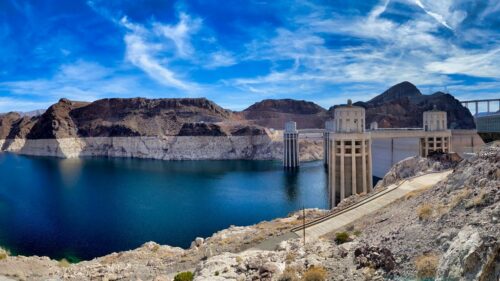 “Lake Mead just dropped to its lowest elevation on record. As of Aug. 6, 2026, the surface level sits at 1040.50 feet above sea level, marking the least amount of water sitting in the reservoir since it was filled in the 1930s. While it seems like a milestone to gawk at, experts who have studied the reservoir and the Colorado River Basin for decades say the benchmark needs context. “Every record that’s broken is a teaching moment,” Jack Schmidt, director of the Center for Colorado River Studies at Utah State University, told Straight Arrow. “When Babe Ruth’s home run record was broken, it was a monumental record, but it was only one home run. But what it is is a teaching moment to then reflect on what the context of that original record is that gets broken.” … ” Read more from Straight Arrow News.
SEE ALSO: Lake Mead hits historic low water level as Colorado River struggles, from the Courthouse News Service
Arizona congressman warns that unfair Colorado River cuts in his state will harm US
“U.S. Rep. Greg Stanton said Friday that the federal government’s plan for divvying up water from the Colorado River is unfair to Arizona and detrimental to the nation. The East Valley Democrat told KTAR News 92.3’s Arizona’s Morning News he will fight to change the plan by making the case that forcing Arizona to bear a disproportionate amount of Colorado River water cuts will have a negative ripple effect across the U.S. “If you hurt the growth here in Arizona, if you hurt economic development here in Arizona, it doesn’t stay in Arizona. It hurts the entire national economy and our national defense because so much of what happens in the semiconductor industry advances U.S. national security,” Stanton said. … ” Read more from KTAR.
Monsoon rains ease parts of Colorado River basin
“The U.S. Drought Monitor released its latest update this week, and the map told two very different stories. In the East and across much of the Midwest, moderate to heavy rain fell on dry ground and eased drought in many places. A few areas even flooded. Still, the report noted that drought stayed stubborn in parts of the East, where low groundwater and tight water supplies held back bigger gains. The West looked nothing like that. From the Rockies to the Pacific, rain was hard to find. The one exception was the Southwest monsoon, which dropped steady rain, and a few totals above two inches, on parts of New Mexico and Arizona. Across the rest of the Intermountain West, the Great Basin, and California, very little rain fell. The report pointed out that this is a naturally dry time of year for much of that ground. Outside the Pacific Northwest, temperatures ran above normal. … ” Read more from Western Water.
Arizona’s water law was built for abundance. Scarcity is exposing it.
“Arizona’s next water fight is not simply about drought. It is about what happens when a legal system built for abundance is forced to govern scarcity. For decades, Arizona treated water as if fragmented rules could hold because the resource itself would remain available. That assumption has reached a breaking point. As rivers shrink, suburbs grow, and rural groundwater levels fall, every gap in the law becomes a fault line. The law is no longer abstract. It determines whose wells are protected, whose communities are heard, and whose water can be moved. McMullen Valley is where that failure became visible. … ” Read more from the Arizona Capitol Times.
In national water news this weekend …
‘We were a dying little town’: How Silicon Valley data centers are reshaping rural America
“Ellendale, N.D., is a place most Americans couldn’t pinpoint on a map. The town of 1,100 is hardly a tourist attraction: Its faded center includes boarded-up buildings, an old grain elevator and a dilapidated opera house. But good luck trying to book a hotel room or find a place to rent in a 100-mile radius. On a recent family trip to nearby Aberdeen, S.D., it was virtually impossible to find a place to stay. For locals, rents have doubled almost overnight. And residents used to peaceful drives through fields of soybeans and corn are now complaining about a very California phenomenon: traffic. The culprit? Ellendale’s new tenant, Polaris Forge 1, an $11 billion data center that, when completed, will encompass approximately 2.5 million square feet and deliver 400 megawatts of computing power — enough to run hundreds of thousands of homes. Swarming trucks carry more than 2,000 workers to the construction site, which is active 24 hours a day, six days a week, and illuminated at night by immense floodlights. A nearby bitcoin mining facility emits a low, persistent hum. Welcome to the new American frontier. … ” Read more from the San Francisco Chronicle.
A pillar of environmental enforcement is targeted by Trump and Musk’s AI company
“Right-leaning legal activists along with Elon Musk ’s artificial intelligence company have brought sweeping challenges against a cornerstone of legal enforcement in the United States: the right of private groups, people and local governments to sue over violations of many major laws. Their argument, supported by the Trump administration, is that the Constitution reserves tremendous power for the president and federal agencies to decide how — or whether at all — to enforce federal law. They contend Congress should never have handed that power to others through so-called citizen suits that are part of environmental, campaign finance and certain other laws. Environmentalists say it would be devastating to lose this essential, decades-old tool that is used to impose fines and halt lawbreaking by bad actors. Citizen suits, for example, have extracted millions from heavily polluting oil and gas operations, and ensured that lead pipes in Flint, Michigan, would be removed after its water crisis. … ” Read more from the Associated Press.

