
A wrap-up of posts published on Maven’s Notebook this week …
Note to readers: Sign up for weekly email service and you will receive notification of this post on Friday mornings. Readers on daily email service can add weekly email service by updating their subscription preferences. Click here to sign up!
In California water news this week …
California dodges a bullet on Colorado River cuts
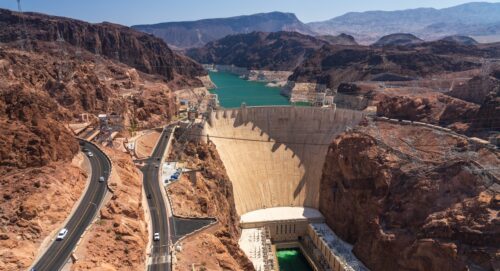 “California and two other states have avoided the harshest water cutbacks the Trump administration could have imposed over the next two years to deal with the deepening crisis on the Colorado River. The Times has learned that federal officials have agreed with an offer made earlier this year by California, Arizona and Nevada to reduce what they take from the river by at least 3.2 million acre-feet between now and the end of 2028. Under the plan, California will cut its use of Colorado River water by about 12% through 2028, Arizona will take about 31% less and Nevada 28% less, according to two officials at state and local agencies who spoke anonymously since details of an announcement are still being finalized. … ” Read more from the LA Times. | Read via Yahoo News.
SEE ALSO:
- Plan To Save Lake Mead Nears as Katie Hobbs Says Water Cuts ‘Unacceptable.‘ from Newsweek
- In Cheyenne, Interior Secretary Says He’ll Act On Colorado River Crisis, If He Has To, from Cowboy State Daily
Metropolitan focuses on stored water access as Colorado River rules take shape
“The Colorado River is under increasing pressure after more than two decades of drought, hotter and drier conditions, and continued demands from cities, agriculture, tribes, and ecosystems across the West. Lake Mead and Lake Powell—the system’s two largest reservoirs—remain at historically low levels, leaving less stored water available to buffer dry years and increasing the stakes for how the river is managed. The seven basin states have struggled for years to find a path forward with little success. Against that backdrop, the federal government is developing new operating guidelines to replace the 2007 interim rules, which expire at the end of 2026. What gets decided in the coming weeks will shape Colorado River supplies for Metropolitan and other users across the Basin over the next decade. At the July meeting of Metropolitan’s One Water and Adaptation Committee, Shanti Rosset, Colorado River Policy Manager, updated committee members on the status of the post-2026 operating guidelines and what the emerging federal approach could mean for Southern California’s water reliability. … ” Read more from Maven’s Notebook.
Could water rights scuttle Sites?
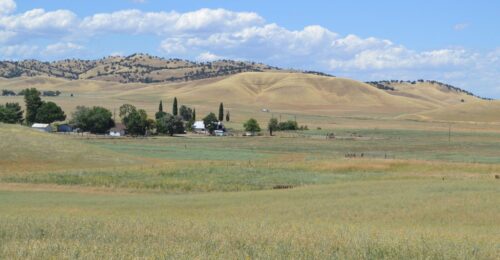
“In late June, a controversial new reservoir project in Northern California received a commitment for nearly $269 million in additional state funding, even as the State Water Resources Control Board weighs comments on a draft water rights decision for the project issued this spring. The upshot of those deliberations could jeopardize the financial viability of the project, which proponents say is vital to California’s water security and critics call yet another threat to the Estuary’s embattled ecosystem. Located in California’s Antelope Valley, the Sites Reservoir project will create an off-stream facility with a capacity of 1.5 million acre feet to capture and store excess flows from the Sacramento River system for later use. The California Water Plan, the state’s strategy for managing water resources, calls for adding nine million acre-feet of additional water, water conservation, or new storage capacity by 2040. The reservoir will be operated in conjunction with both the Central Valley Project and the State Water Project. Unlike traditional reservoirs, it will not dam a river or block fish migration. … ” Read more from Cariad Hayes Thronson at Maven’s Notebook.
California wants to build biggest reservoir in 50 years. There may not be enough water to fill it
“The plan to build California’s largest new reservoir in 50 years has hit a major snag, threatening to undermine the $6 billion water-supply project and prompting outcry from supporters, including Gov. Gavin Newsom, who has called the enterprise vital for the state. Sites Reservoir, proposed in rural Glenn and Colusa counties, secured a key state approval earlier this year: a draft water right that allows the facility to draw water from the Sacramento River. Project officials, however, have determined that the draws authorized by the state could be too little to justify the reservoir’s expense, as regulators seek to limit water diversions to protect fish and other water users. Sites Project Authority Executive Director Jerry Brown, who is overseeing the endeavor, estimates that constraints imposed by the water right, which include numerous conditions for when river flows can be extracted, could reduce the amount of water that the reservoir yields by as much as 50%. … ” Read more from the San Francisco Chronicle.
As Sites Reservoir reaches its potential finish line, Colusa’s struggling small businesses see a ray of hope
“Sites Reservoir is still facing opposition from conservation groups, but in most corners of Colusa County – where mom-and-pop businesses are trying to survive long enough to hold the community’s identity intact – the project’s massive seven-year build-out is increasingly being viewed as a badly needed stimulus opportunity. At least, for those who think it will actually happen. Water contractors have talked about building a project like Sites in Colusa for decades. That means some longtime residents equate discussing a financial windfall from it today as something like daydreaming. But things change. Now, with strong support from California’s Democrat Governor Gavin Newsom and the Mid-Valley’s Republican Congressman James Gallagher, the managers at Sites Project Authority say they could be breaking ground on the reservoir as early as next summer. … ” Read more from the Appeal-Democrat.
Will the “super” El Niño fill Tulare Lake? A Fresno engineer thinks it’s almost certain
Josh Baar / DWR
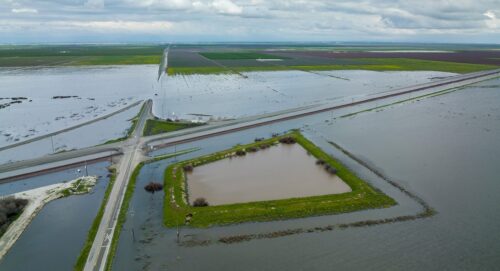
“El Niño is coming. Of that, scientists seem sure as ocean temperatures continue to heat up. Warmer ocean water fills the atmosphere with moisture, which can ride the jet stream into California as massive storms. Or not. Weather is such a tricky beast. Regardless of whether this pattern becomes a “monster,” “Godzilla,” “Jurassic,” or just plain vanilla “super” El Niño, Fresno Engineer John Ennis has found an historic quirk that he believes can result in a very specific outcome in the San Joaquin Valley. There is a nearly 100% correlation between a Relative Oceanic Niño Index of level 2 and flooding on the old Tulare Lake bed, according to a paper Ennis wrote. … ” Read more from SJV Water.
Can cities make deals to lessen data center downsides? A Caltech professor says yes
“Long before data centers became fodder for national discourse and the future of artificial intelligence, Adam Wierman was studying them. Wierman, a computing and mathematical sciences professor at Caltech in Pasadena, began his research in the early 2010s when the need was for cloud computing. The data centers at that time were smaller, yet he helped them use electrical energy more efficiently, as well as less water for cooling down banks of computers. More recently, he began tackling the issues swirling around the mega, hyperscale data centers the size of several football fields bombarding cities and states that Big Tech says are needed to support artificial intelligence. That has culminated into more recent findings, including a Caltech Science Exchange report released on July 2. Without ignoring the environmental and economic impacts, Wierman found that there may be a middle ground between data center critics and their proponents — something that could not come too soon. … ” Read more from the LA Daily News.
As AI expands, California communities debate new data center projects
 “As California races to build the infrastructure needed to power artificial intelligence, communities across the state are increasingly weighing whether they want data centers in their own backyards. The rapid expansion of AI has fueled demand for new data centers, prompting local governments to consider proposals from developers while lawmakers debate how the facilities should be regulated. Some cities are embracing the projects. Others are putting the decision directly in the hands of voters. Last month, voters in Monterey Park overwhelmingly approved a ballot measure prohibiting the development of new data centers within city limits. More than 86% voted in favor of the ban. … ” Read more from CBS Sacramento.
SEE ALSO:
- Data Center Forecasts Keep Climbing and So Does Public Opposition. Something Has to Give, from Inside Climate News
- If you don’t hate data centers yet, boy do I have news for you, from columnist Drew Magary at SF Gate
Metropolitan to begin wetland restoration in the Sacramento-San Joaquin Delta
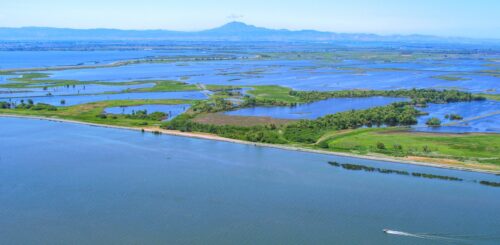
“To address ongoing risks to water supply operations and reinforce its commitment to sustainable land management, Metropolitan’s Board of Directors approved last week construction and restoration of approximately 2,800 acres of wetlands and upland habitat on district-owned land in the Delta. The wetland restoration is part of a larger project to transform Webb Tract, a Metropolitan-owned island in the Delta, from conventional agriculture to a multi-beneficial landscape designed to reverse subsidence and reduce flood risk, capture planet-warming carbon dioxide, and enhance the local ecosystem for migratory birds and local species. “While members of our board carefully weighed further investments in the Webb Tract project during our deliberations, there is strong consensus that stabilizing the ecosystem in the Delta is paramount to also stabilizing our deliveries of water from Northern California,” said Metropolitan Board Chair Adán Ortega, Jr. “The Delta is not the source of our water supplies, but it is the source of our common challenges. The investment in Webb Tract reflects our hope to see longer-term benefits.” … ” Read more from the Metropolitan Water District.
New report documents challenges and applications for telemetered water monitoring and a path forward for California
“The California Water Data Consortium and partners recently released a new report with statewide telemetered water monitoring recommendations for the State Water Resources Control Board (SWRCB). The three-part report synthesizes lessons from global telemetry networks, outlines recommendations for a watershed-scale research study, and identifies practical statewide applications for telemetry to support California’s evolving water management needs. Telemetry, the automatic collection and transmission of data through cellular, radio, or satellite communications pathway, has the potential to dramatically improve the speed and accessibility of water data needed for critical decision making. With the State Water Board’s launch of the California Water Accounting, Tracking, and Reporting System (CalWATRS) last year, California is better positioned to receive and use water data in near real time. However, telemetered water monitoring networks can be costly and technically complex to install, operate, and maintain over the long term. As a result, the state needs stronger research and clearer guidance on where telemetry investments are most critical, effective, and cost-efficient. … ” Read more from the Water Data Consortium.
The secret to water power for Tribes: Just add land
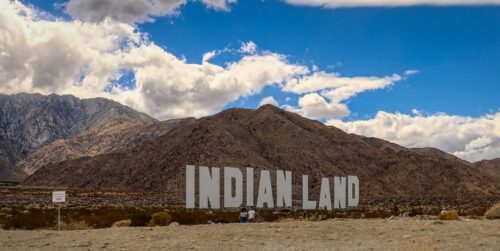
“In the never-ending California water quarrels, the state’s Native American tribes seem to be having a moment. After centuries of neglect (or much worse), the Indians—to use the term they themselves fall back on—are starring in unfolding dramas at the State Water Resources Control Board, before the Delta Stewardship Council, and on sundry other stages. Just about every big water meeting starts with an acknowledgement of aboriginal territories; very often a dull day is enlivened by an indigenous chant or song. Government scientists bow before the altar of traditional ecological knowledge. Some tribal representatives scold the officials they face: by rights, they say, water users and planners should be asking the blessing of tribal authorities, not the other way around. How much does this brave show influence facts on the ground (or in the water)? Are tribal testimonies changing the direction of plans and policies set by what remain, like it or not, the powers that be? The answer is complex. Though lacking clout on the major questions, Indian groups have found a few tools for asserting their interests in waters and in water policy. … ” Read more from John Hart at Maven’s Notebook.
Do’s and don’ts for interweaving Traditional Knowledge and Western science
“Malissa Tayaba, Vice Chair of the Shingle Springs Band of Miwok Indians, comes from ancestral villages on the Sacramento, American and Feather rivers. “I’m really trying to get across to people who the Tribe is, where we’re from, and why land and Mother Earth are so important to us,” she said. “How we use waterways is our lifeway―it’s not an option, it’s something we need,” she said. Tribal connections with waterways go both ways. ““We believe Mother Earth is alive, we believe that water is alive―we can actually feel what they need.” Tayaba spoke at the June 30 kickoff of the three-part Interweaving Traditional Knowledge Roundtable Series, which brings together Tribal Elders and leaders, agencies, and scientists to explore working together to steward lands and waterways. California has required state agencies to consult with Tribes on managing sites that are sacred or vital to their cultural traditions and heritage since 2011. … ” Read more from Robin Meadows at Maven’s Notebook.
In commentary this week …
Advancing groundwater recharge in the Sacramento River basin: A strong technical foundation
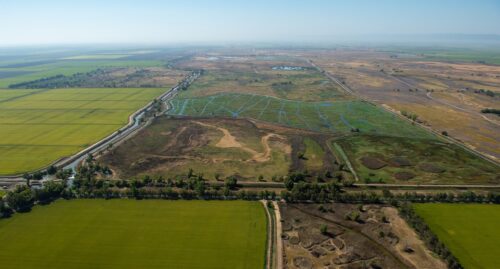
David Guy and Jim Peifer write, “Groundwater recharge is one of the most important and affordable tools available to help California prepare for dry years, improve water supply reliability and support healthy rivers, landscapes and communities. During winter storms, millions of acre-feet of water flow through the Sacramento Valley, creating opportunities to store more water underground and strengthen California’s long-term water resilience. As Jim Mayer and Michael Saunders recently wrote in Mavens Notebook (Recharge the Valley: Why California’s Future Depends on Groundwater), groundwater recharge is an essential part of California’s long-term water strategy. To help scale up groundwater recharge, Assembly Member Aguiar-Curry is leading AB 2026, which has been shaped by the SacRecharge Working Group and builds on years of technical analysis among Sacramento Valley water managers, the California Department of Water Resources (DWR), engineers, hydrologists, and other technical experts demonstrating how groundwater recharge can be expanded while protecting downstream water rights, the operations of the State Water Project (SWP) and Central Valley Project (CVP), the environment, and Tribal interests. AB 2026 will not expand water use by farms or cities. Rather it is a climate adaptation strategy designed to protect our communities and reduce shortages and conflict that will inflict economic and environmental harm. … ” Continue reading this guest commentary at Maven’s Notebook.
Dredging the Delta can prevent a catastrophe
Edward Ring, Director of Water and Energy Policy at the California Policy Center, writes, “It’s January 2027, and for the last few months, a super El Nino has already delivered torrential rains to the Pacific Coast of North America. California’s reservoirs have been releasing record quantities of water to preserve space for the next round of precipitation but their remaining capacity to absorb runoff is dangerously low. From the peaks of the Sierra, through the foothills, and across the wide expanse of the Central Valley, the land is saturated. It’s another warm winter, and there isn’t much snow on the summits. The stage is set for a cataclysm, and sure enough, it happens. Rising up from the warm ocean comes yet another Amazon sized river of moisture, pushed eastward and gathering strength with every mile. When the endless banks of swollen clouds hit the California coast they start to unload. Pushed by winds fast enough to guarantee a relentless resupply of rain but not fast enough to prevent the clouds from lingering against the ramparts of the Sierra, it rains, and pours, and then it rains and pours even more. Within days every reservoir is full and every spillway is pouring water into the Sacramento-San Joaquin river system. Levees are breached along multiple tributaries, the bypasses are filled, and still the water rises. … ” Continue reading from Edward Ring at Maven’s Notebook.
Another opportunity lost for the embattled Delta smelt
Scott Hamilton writes, “In the controversial world of California water, executive orders at both the state and federal levels demand better use be made of available water, but efforts to capture surplus water meets with zealous resistance from special interest groups and their proxies in the legislature and resource agencies. The conflicts undermine the purposes of California’s Delta Reform Act of 2009, which established two “coequal goals” – securing a reliable water supply for California and protecting, restoring, and enhancing the Sacramento-San Joaquin Delta ecosystem. Achieving the co-equal goals necessarily requires a balancing between competing beneficial uses of available water resources. … ” Read more from the Center for California Water Resources, Policy, and Management.
The valley water built
Geoffrey Vanden Heuvel, Director of Regulatory and Economic Affairs at Milk Producers Council and Vice Chair of the Water Blueprint for the San Joaquin Valley board, writes, “To most Californians, the San Joaquin Valley is farmland and freeway: the flat stretch of Interstate 5 or Highway 99 between the Bay Area and Los Angeles, crossed on the way to somewhere else. But the farmland and the food it produces are only what the Valley is famous for. It is not the whole of what the Valley is. Those drivers are passing one of the youngest and fastest-growing regions in California, home to more than four million residents, a population larger than half the states in the union, with an under-35 majority that is the workforce California is counting on for the next fifty years. And that workforce is being educated here, at scale, by institutions the drive-through story never mentions. California’s first chartered university has called Stockton home for a century. Fresno State currently ranks fourth in the nation for moving students up the economic ladder, and it shares the Valley with Stanislaus State and CSU Bakersfield in a university system that leads the country in social mobility. A UC campus in Merced, opened in 2005, reached the top tier of American research universities in under twenty years. A network of community colleges is strung along the entire length of Highway 99, putting higher education within a short drive of nearly every Valley family. … ” Read more from the Water Blueprint for the San Joaquin Valley.
California’s data center backlash is loud—and deeply misplaced
Opinion writer Tom Philp writes, “More than 100 recent protests across California and the U.S. over data centers represent the same fierce opposition that horse enthusiasts once mounted against Model T cars. The times eventually change. And so, in the end, do we. Today, talk of a new data center brings home how artificial intelligence is wrongly changing our future. The physical embodiments of this rapid evolution are the buildings with the humming servers that are increasingly tapping precious supplies of electricity and water. We are worried about the wrong thing. California in particular is much more likely to successfully manage the resource demands of artificial intelligence than the technology itself. Trying to stop the demand for any given new data center is as meaningful as trying to thwart a meteor with a squirt gun. … ” Read more from the Sacramento Bee.
Commentary: California is making progress on preventing severe wildfires. Federal retreat, shaky funding put it at risk
The PPIC’s Bradley Franklin and Kyle Greenspan write, “The Altadena and Palisades fires that swept through Southern California last year were just the latest in an escalating series of wildfires that have scorched the state. The damage has been far-reaching: Californians have lost homes, community, and—in some tragic cases—their lives. Wildfires are also raising insurance premiums and threatening the state’s giant sequoias and the headwater regions that provide most of California’s water supply. This year threatens to be another above-average fire season. As we’ve seen in recent years, fires can emerge quickly—even after wet winters. And if it feels like wildfires are increasing in size and scale, that’s because they are: the area of land burned in severe wildfires in the Sierra Nevada has tripled since 1990, while annual wildfire damages have more than quadrupled during that same period. … ” Read more from the PPIC.
This is why our fresh produce keeps making us sick
Why are California cities still paying for corporate pollution?
Sean Bothwell, executive director of California Coastkeeper Alliance, writes, “California’s cities spend hundreds of millions of taxpayer dollars each year to manage their clean water obligations, yet violations persist with no clear end in sight. Stormwater pollution is ubiquitous, and commercial, industrial, and institutional properties are a significant and unaddressed part of the problem, contributing between 35–60% of stormwater pollutants. Despite their substantial contribution, these corporate properties have never been required to address the pollution they generate. Meanwhile, cities and counties remain responsible for meeting water quality standards through municipal stormwater permits, despite having no control over a significant source of pollution entering municipal storm drains. … ” Read more from Capitol Weekly.
Commentary: The billionaires backing California Forever want Newsom’s help. Will he?
Tom Philp, opinion columnist for the Sacramento Bee, writes, “The billionaires behind the idea to build a city roughly the size of Oakland about 40 miles southwest of Sacramento are seeking the help of Gov. Gavin Newsom to advance the Solano County project known as California Forever. The mystery inside the Capitol is what the governor will actually do. This is not an easy political choice. Far behind in his 2018 goal to build 3.5 million new housing units throughout the state, Newsom could support this project because California Forever envisions some 400,000 new residents and new manufacturing jobs. It would be awkward for Newsom, with his not-so-hidden aspirations for the White House, to be doing huge favors for Silicon Valley billionaires backing this project and asking for very special treatment in Sacramento. “There will be no streamlining for housing unless there’s a guarantee of new jobs,” said Darrell Steinberg, the former Sacramento mayor who is among the stable of political heavyweights hired by California Forever. … ” Read more from the Sacramento Bee.
Editorial: California never
The Washington Examiner editorial board writes, “California Forever’s vision for a safe, affordable, and sustainable Bay Area community is laudable. Founded by Czech-born Jan Sramek and backed by Silicon Valley billionaires, the company bought vast tracts of Solano County farmland to build a new city under a single master plan, bypassing the region’s usual maze of restrictive zoning, rezoning fights, and neighborhood vetoes. But as the project’s recent loss of a $3.2 billion shipbuilding contract shows, developing such a pro-growth city in California is impossible as long as the state refuses to repeal its obstructive environmental permitting laws. California Forever had been courting Saronic Technologies, a defense startup that manufactures autonomous vessels, to build its proposed Port Alpha shipyard in Solano County. Located in Collinsville with direct access to San Francisco Bay and the Pacific Ocean, the shipyard would have created more than 10,000 jobs in the Bay Area county, which has the region’s highest unemployment rate. … ” Read more from the Washington Examiner.
In regional water news this week …
Humboldt County dunes under pressure from storms and invasive species
“California has lost roughly 60% of its coastal dunes since the mid‑1800s, according to a newly published statewide analysis that used historical maps, aerial photography, and LiDAR to track dune change over time titled “Significant Coastal Dune Loss Challenges California’s Climate Resilience and Biodiversity Goals.” Researchers found that more than 440 square kilometers of dunes have disappeared, largely replaced by roads, neighborhoods, and other development. Remaining dunes are increasingly fragmented, reducing habitat quality for species that depend on open sand, including the western snowy plover and least tern. Along the North Coast, those pressures are visible today as steep sand scarps form along Samoa and other beaches, carved by powerful winter waves and long‑term erosion. Danny O’Shea, who recently retired after 10 years as a lecturer in the oceanography department at Cal Poly Humboldt, said the sharp cliffs now lining parts of the shoreline are a direct result of seasonal storm energy. “That’s caused by winter storm wave erosion,” O’Shea said. “It’s got nothing to do with the beach grass or anything else. Everything to do with the storm wave erosion.” … ” Read more from the Eureka Times-Standard.
Gravel project supporting Feather River salmon habitat
“The Department of Water Resources (DWR) is starting construction on a salmonid habitat improvement project in the Feather River between the Table Mountain Bridge and Bedrock Park in Oroville. Crews will begin mobilizing heavy equipment and supplies the week of July 20, with in-water work expected to begin the week of July 27. The project consists of placing approximately 7,900 cubic yards of in-river spawning gravel to improve existing spawning habitat sites and will also aid accessibility to existing side channels by excavating and redistributing accumulated streambed material. Migratory fish species such as Chinook salmon and steelhead trout rely on Feather River spawning habitats along the low-flow channel, where most spawning activity occurs. Because gravel doesn’t naturally flow downstream of Oroville Dam, gravel supplementation is necessary to provide sufficient spawning habitat to support existing salmonid populations. Female salmonids dig into gravel and lay their eggs in nests called “redds” using coarse sediment. Clean, rounded gravel approximately 1-4 inches in size is ideal as gravel that is too large is hard to move and gravel that is too small can suffocate eggs. … ” Read more from DWR.
Tehama County Supervisor steps back in approving groundwater fees
“After a marathon of almost seven hours – split between two separate meetings that morphed into each other – Tehama County Supervisors voted to take a step back in approving the proposed fee structure for residential and agricultural groundwater fees. The supervisor’s chamber was packed with standing room only, along with in the side room and the adjoining hallway. Most of the meeting was dominated by angry, frustrated farmers and locals who spoke against what they felt was an unfair overreach against their rights as property owners, particularly regarding water from their wells. They were also incensed about a perceived lack of transparency about the process. Many in the audience said they only knew about the opportunity to protest the fee hikes because of what they saw on Facebook, or the efforts of the Tehama County Farm Bureau. … ” Read more from the Appeal Democrat.
Castle winery in Napa County agrees to stream monitoring to address water-related concerns
“A dispute connected to water use at Castello di Amorosa was settled this week with an announcement the Calistoga-area winery, fashioned as a medieval-style castle, will study a Napa River tributary stream located on its property. The winery and Water Audit California, a local environmental watchdog, announced in a joint statement Monday, July 13, they would collaborate on a study of Nash Creek. The first phase of the work will involve adding monitoring equipment to collect video and data about creek conditions and track water use, according to the statement. The Napa River watershed historically supported thousands of Chinook and Coho salmon along with steelhead trout, but those numbers have been greatly diminished over the past century. Information gathered via the stream study will “guide future habitat restoration and water utilization,” according to the joint statement. … ” Continue reading from the Santa Rosa Press Democrat.
Cosumnes River stretch permanently protected
“A critical stretch of the Cosumnes River – the only undammed river on the western slope of the Sierra Nevada – is now permanently protected and slated for ecological restoration. Sacramento Valley Conservancy and Westervelt Ecological Services are celebrating the acquisition of the 204-acre Johnson Cosumnes Mitigation Bank, which fills an important gap in river frontage within the more than 51,000-acre Cosumnes River Preserve near Galt and south of Elk Grove. The preserve contains some of the finest remaining floodplain and riparian habitat in California’s Central Valley. Westervelt will own and manage the property, restoring former agricultural land into a thriving floodplain ecosystem. Planned restoration activities include lowering or removing select sections of agricultural berms to reconnect the river with its historic floodplain, creating pilot channels that support natural flow patterns, and establishing native vegetation across wetlands and riparian habitats. … ” Read more from the Elk Grove Citizen.
Tracy residents want answers as mysterious debris from Medline warehouse fire continues falling 1 month later
“One month after a massive warehouse fire in Tracy, some residents say they are still finding mysterious white particles covering their homes and yards — and they say they’re getting few answers about what the material is or whether it’s safe. Cars, plants and children’s toys are coated with a fine, plastic-like material about the size of a grain of salt, according to residents living several miles from the burned Medline warehouse. Heather Corbett, who lives about three miles from the facility, said the particles began appearing after the fire and continue to accumulate. “Just really fine particles. They had never been there prior to the fire, and now we’re finding them everywhere,” Corbett said. … ” Read more from CBS Sacramento.
Seaside supports lifting water moratorium
“Seaside City Council passed a resolution Thursday encouraging the State Water Resources Control Board to lift a moratorium on new water service connections in areas serviced by the California American Water that has been in effect since 2009. The moratorium has effectively prevented new construction on much of the Monterey Peninsula since it was put in place. For Seaside, the decision of the State Water Board may mean newfound independence for the city. “Since 1995, this is the closest we have ever come to this modifying this order,” said Mayor Ian Oglesby in a city council meeting. … ” Read more from the Monterey Herald.
City to shut off Kern River at the end of the month
“The City of Bakersfield will be shutting off water to the Kern River through town as of July 31, according to a press release issued Wednesday. The city has kept the river flowing to the Park at Riverwalk since April using its river rights above what has been needed for drinking water and other contractural deliveries. River advocates noticed a significant drop in flows at Yokuts Park on Monday, but the river was back up again by Wednesday. The fluctuations were caused by delivery changes to other river interests, according to Daniel Maldonado, Assistant Director of the Bakersfield Water Department. The city had been making deliveries to other parties, which bolstered the city’s flows. Those deliveries ended, so flows dropped. Then Wednesday, the city was moving water for another party, bringing the river back up again. … ” Read more from SJV Water..
Sunset Boulevard set to reopen Friday despite discovery of ‘pinhole’ leak after water main repair
“The Los Angeles Department of Water and Power insisted Thursday it is on track to reopen a stretch of Sunset Boulevard in West Hollywood that was damaged by a major water main break by the end of the week, despite finding a new “pinhole” leak that caused water to bubble up in the sinkhole the agency had just finished backfilling. After making what the DWP called “steady progress” on repairing of the ruptured 36-inch diameter pipeline, crews around 8:30 p.m. Wednesday observed water coming up from the area being backfilled and prepared for paving. “Currently, there are no known impacts to our goal of reopening the street Friday,” DWP said in an announcement Thursday morning. “LADWP crews continued repaving and striping of Sunset Boulevard early this morning while working to repair a small pinhole sized leak identified last night at the east end of the worksite. … ” Read more from the LA Daily News.
San Bernardino Valley Municipal Water District board reduces property tax rate for State Water Project
“The San Bernardino Valley Municipal Water District Board of Directors unanimously voted to lower the Agency’s annual property tax rate by nearly 64%, landing at $0.04 per $100 of assessed value. The regional water agency and State Water Contractor bring supplemental water supplies from Northern California into its 353 square mile service area, providing water to 15 retail agencies who serve homes and businesses. In most years, approximately 75% of water is sourced from existing local surface and groundwater supplies, while 25% is imported from Northern California through the state’s water conveyance network to meet local water needs, a system known as the State Water Project (SWP). Each year, the Board sets the annual property tax rate after a thorough review of current State Water Project costs, debt, and long-range infrastructure needs. President T. Milford Harrison stated, “For more than 70 years, we have been careful stewards of taxpayer dollars and our region’s water future. This vote continues that legacy of making decisions that ensure reliable water for residents today and for future generations.” … ” Read more from the San Bernardino Valley Municipal Water District.
Announcements, notices, and funding opportunities …

