
By Cariad Hayes Thronson
In late June, a controversial new reservoir project in Northern California received a commitment for nearly $269 million in additional state funding, even as the State Water Resources Control Board weighs comments on a draft water rights decision for the project issued this spring. The upshot of those deliberations could jeopardize the financial viability of the project, which proponents say is vital to California’s water security and critics call yet another threat to the Estuary’s embattled ecosystem.
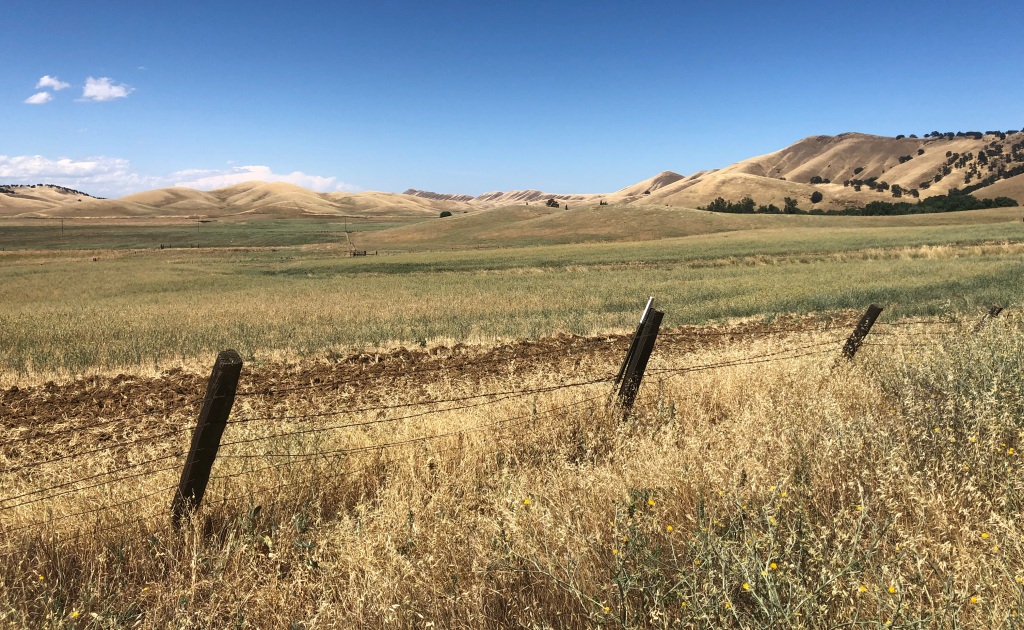
Located in California’s Antelope Valley, the Sites Reservoir project will create an off-stream facility with a capacity of 1.5 million acre feet to capture and store excess flows from the Sacramento River system for later use. The California Water Plan, the state’s strategy for managing water resources, calls for adding nine million acre-feet of additional water, water conservation, or new storage capacity by 2040. The reservoir will be operated in conjunction with both the Central Valley Project and the State Water Project. Unlike traditional reservoirs, it will not dam a river or block fish migration.
The potential additional funding, from the California Water Commission’s Water Storage Investment Program, brings the total amount of committed WSIP funding for the Sites Reservoir to $1.363 billion. The commission administers the funding as an investment in the public benefits of the project, which include water deliveries to wildlife refuges, flood control, new recreational opportunities and emergency water supply. In June, agencies including California’s Departments of Fish and Game and Water Resources spelled out how they will ensure that the project actually delivers the promised public benefits in documents presented to the commission (draft Contracts for the Administration of Public Benefits).
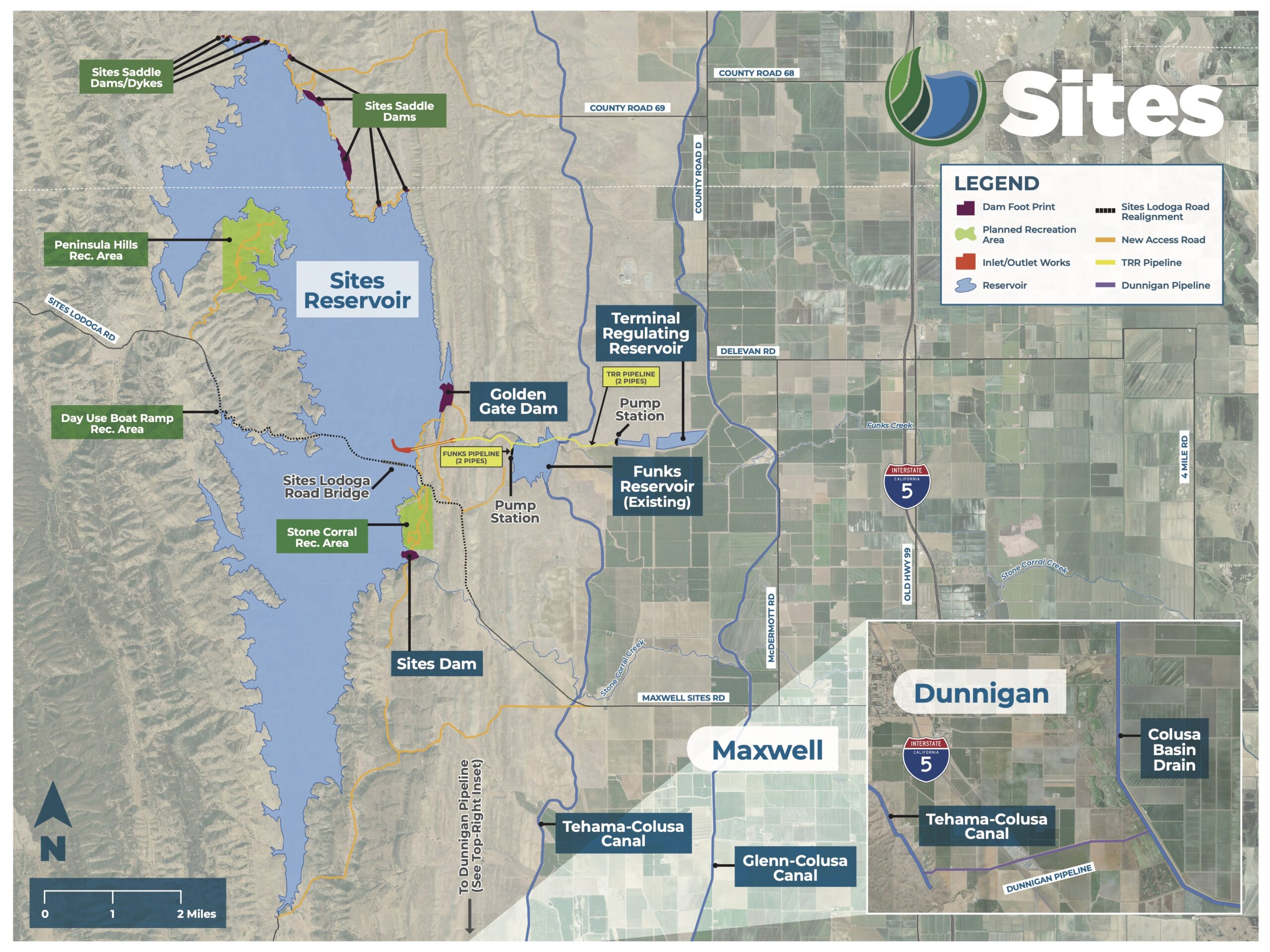
“The project has to be shovel ready before it actually receives WSIP funds,” says the Water Commission’s Public Information Officer Paul Cambra. WSIP money comes from bond funds made available by 2014’s Proposition 1 and 2024’s Proposition 4. The total cost of the project is estimated to be between $6.2 and $6.8 billion.
In addition to the WSIP, the project is being funded by federal dollars and “project partners.” These include water agencies around the state who will receive a percentage of the storage space and water in exchange for their investment.
Southern California’s Metropolitan Water District is so far the largest local participant, having invested approximately $31 million since 2017. The amount of water Metropolitan would receive from the project is relatively small, says Maureen Martin, Metropolitan’s director of Bay-Delta science, but the partnership structure makes it very appealing.
“It creates a nice opportunity to facilitate potential water marketplaces or exchanges,” says Martin. “So even though it’s small, it can be very effective in increasing operational flexibility throughout the system,”
Nevertheless, Metropolitan’s board “hasn’t decided whether they’re going to participate in the project (construction) or not, and if they are, at what size or what proportion,” she says.
The project’s ability to deliver the water it promises was suddenly cast into doubt in March when the State Board issued its draft water rights permit. Although the draft permit found that there is Sacramento River water available to the project, it sharply limited the amount that can be diverted to 986,000 acre-feet per year, and imposed strict conditions on the circumstances under which it can be diverted, in order to protect endangered fish, especially Chinook salmon.
“We were pleased to see that the draft acknowledged that there was water available to be appropriated up to approximately a million acre feet per year,” says Sites Project Authority Executive Director Jerry Brown (no relation to the former governor). “But when you look at the conditions under which the water could be [made] available, there are potential effects on project performance.” According to Brown, the terms of the permit would reduce the water yield of the project by approximately 50%.
The Sites Authority, Metropolitan and other project participants have submitted comments to the State Board citing a number of additional concerns about the permit, including its potential infringement on the SWP’s water rights and conflicts with the State Board’s in-progress update to the Bay-Delta Plan.
While not exactly cheering the draft, environmental groups, which have battled the Sites Project for decades, are somewhat mollified by its terms.
“I think the [water board’s permit] decision understood that endangered native fish and public trust resources and the ecosystem generally are in a state of crisis,” says Eric Buescher, attorney for San Francisco Baykeeper, part of a coalition of NGOs that argued against the assignment of a water right to the project, largely on the grounds of its potential environmental harm. “The understanding of the science about the impacts of increased water diversions on native fish populations, especially Chinook salmon and migratory fish, was spot on. Increasing the harm by increasing the diversion of water was unreasonable and needed to be avoided where it could.”
Potential project beneficiaries object to the restrictions on diversion, arguing that they are overly protective and fail to meet the Board’s requirement to balance beneficial uses of water.
“Some of the restrictions reduce the yield of the project and do not explain how the additional protections are important in terms of balancing beneficial uses,” says Martin.
The terms of the draft stipulate that Sites cannot divert water when Delta outflow is less than 55% of unimpaired flow. That target, with qualifications, is a core part of the Bay-Delta plan update. The Sites Authority and potential partners argue that imposing it before the Plan is finalized unfairly makes Sites alone responsible for a watershed-wide target.
“The conditions are trying to apply what essentially were statewide water system requirements on just the Sites project,” says Brown. “We are seeking better clarity and some consistency with how the Bay-Delta Plan gets applied. It shouldn’t just be applied one way to the Sites project, it should be applied consistently across all water users.”
The draft permit’s terms could have serious consequences for the project’s finances, say Brown and others.
“The draft order makes the project less affordable for all participants, because it has the potential to reduce the yield, not just for Metropolitan, but all of the beneficiaries,” says Martin, adding that MWD is taking a wait-and-see approach before deciding how the permit will affect its participation.
Brown goes further.
“When you’re talking about terms and conditions in a water right that have the effect of potentially reducing by as much as 50% the amount of water supply you’re getting from a project, and the cost is not going down commensurately, you probably reach a point where you’re risking the financial viability of the project.”
“If there’s a cut back in the amount of water available to Sites, then public benefits will also decrease – but we won’t know by how much until we have the water right permit,” says Cambra
Cambra says that after the Sites water rights are finalized, the Sites Project Authority will be required to provide modeling to CDFW and DWR to show they can meet water commitments needed to provide public benefits. This may result in the draft public benefit contracts being modified based on the water right. Once the contracts are final, the Commission will determine the value of the benefits and consider awarding final funding.
In addition to the scores of comments on the draft permit submitted to the State Board, in May Governor Gavin Newsom, who has long championed the Sites project, wrote to the Board urging modification of the draft permit “to ensure that Sites can be built.” Environmental groups called the letter “an overt act of political meddling” and called on the Sites Authority and its supporters to “accept the evidence” that the project “cannot operate as proposed without unreasonable harm to rivers, fish, and ecosystems.”
At the end of June the Water Board’s administrative hearing officer, who issued the draft permit, notified parties that she will hold a supplemental day of hearings on July 24, and issue a revised draft permit in early September.
Produced by Estuary News Group.

