
Several news sources featured in the Daily Digest may limit the number of articles you can access without a subscription. However, gift articles and open-access links are provided when available. For more open access California water news articles, explore the main page at MavensNotebook.com.
In California water news this weekend …
Super El Niño charging ‘full steam ahead,’ potentially drenching California like never before
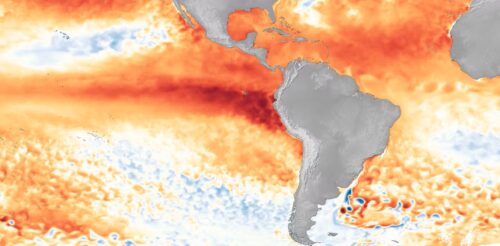
“El Niño is back, and it might be bigger than ever. The National Oceanic and Atmospheric Administration declared in June that the threshold for an El Niño had been met in the eastern Pacific Ocean, and that it was likely to strengthen significantly through the end of the year — potentially becoming the strongest on record by a wide margin. This oceanic pattern, which typically alters global weather, has in the past been associated with intense California flooding, increased wildfire risk and generally reshaped seasons across the American West. For a state coming off its warmest winter on record, the stakes are enormous. Daniel Swain, a climate scientist with the California Institute of Water Resources, said this El Niño has no signs of slowing down. “The observed trajectory is a little bit faster even than some of the already very aggressive forecasts from a few months ago,” Swain said. “All signs point to full steam ahead.” … ” Read more from the Sacramento Bee.
El Niño is here: Five major myths about what it is and what it could mean for California’s weather
“Along with “World Cup” and “Taylor Swift wedding,” it’s one of the most trendy terms so far in 2026: El Niño. Earlier this month, scientists at the National Oceanic and Atmospheric Administration announced there is a 81% chance that very strong El Niño conditions will appear from October to December “that would rank among the largest El Niño events in the historical record going back to 1950.” Every day, there are fresh news stories, breathless claims on social media and new questions and concerns from people wondering what it all might mean. That torrent of attention comes with lots of misinformation and misunderstandings, experts say. Among the most common … ” Read more from the San Jose Mercury News.
Can cities make deals to lessen data center downsides? A Caltech professor says yes
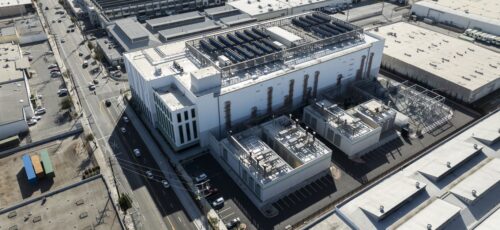
“Long before data centers became fodder for national discourse and the future of artificial intelligence, Adam Wierman was studying them. Wierman, a computing and mathematical sciences professor at Caltech in Pasadena, began his research in the early 2010s when the need was for cloud computing. The data centers at that time were smaller, yet he helped them use electrical energy more efficiently, as well as less water for cooling down banks of computers. More recently, he began tackling the issues swirling around the mega, hyperscale data centers the size of several football fields bombarding cities and states that Big Tech says are needed to support artificial intelligence. That has culminated into more recent findings, including a Caltech Science Exchange report released on July 2. Without ignoring the environmental and economic impacts, Wierman found that there may be a middle ground between data center critics and their proponents — something that could not come too soon. … ” Read more from the LA Daily News.
SEE ALSO: Ask a Caltech Expert: Adam Wierman on the Pros and Cons of Data Centers, from CalTech
Recreational Chinook Salmon fishing returns to Sacramento River after multi-year closure
“Anglers gathered Thursday morning at the Oroville Wildlife Area to celebrate the return of a full recreational Chinook salmon fishing season in the Sacramento River system. The season’s reopening follows a three-year closure of recreational Chinook salmon fishing on the Sacramento River and a limited season on select tributaries last year. The California Department of Fish and Wildlife closed the fishery after Chinook populations declined to critically low levels. According to the department, the decline was largely driven by years of severe drought, which reduced the cold-water habitat needed for salmon to survive, spawn and reproduce. … ” Read more from KRCR.
California homeowner slashes water use after $637 bill, then learns summer tiers drove it higher
“A $637 water bill is enough to make any family rethink every shower, load of dishes, and sprinkler cycle. For one California homeowner, that kind of shock led to immediate cutbacks at home and served as a harsh reminder that summer water costs can climb far faster than many residents expect. According to 23ABC, northeast Bakersfield homeowner Jennifer Herrera said her June water bill came to $637.03 after she noticed other residents online comparing their own bills. To try to lower usage, Herrera told 23ABC that she and her children have kept showers to under five minutes for more than a month. She said the total was much higher than what her household normally pays, including during the peak of summer. … ” Read more from The Cool Down.
Could bioeconomy unlock new value from existing resources?
“From drought and groundwater restrictions to labor shortages and changing markets, California farmers have consistently responded to major challenges through innovation. A new special issue of ARE Update explores whether California’s emerging bioeconomy could represent the next step in that tradition by creating new value from the state’s biological resources while strengthening rural economies and preparing the workforce for new industries. The bioeconomy is not new, but it is evolving. Historically, California’s biological resources have been used primarily to produce food, feed and fiber. Today, Californians are exploring how agricultural byproducts, forest materials and food waste can become feedstocks for renewable energy, new manufacturing industries and other higher-value products. For California, the question is no longer simply how to produce more, but how to create more value from the resources the state already has while helping agriculture adapt to changing environmental and economic conditions. … ” Read more from UC ANR.
California Forever: Finger-pointing begins after Solano County loses $3.2B shipyard project to Texas
“Solano County leaders are pointing fingers after losing out on a multi-billion-dollar shipyard. Saronic Technologies, Inc., a venture capital-backed company that manufactures drone boats used in the United States’ war against Iran, announced Thursday it selected Brownsville, Texas, as the site of “Port Alpha” — picking the Lone Star State over Collinsville, Calif. The $3.2 billion shipyard could become the country’s largest once fully constructed. In a news release, Saronic said the project would employ 10,000 workers and “help restore American maritime strength and significantly expand the nation’s shipbuilding capacity.” Now, local leaders are looking for someone to blame. State Sen. Christopher Cabaldon, D-Yolo, touted the potential Solano County site and said the county’s board of supervisors and state lawmakers were ready to “negotiate a real deal.” … ” Read more from Fox 40.
In commentary this weekend …
Another opportunity lost for the embattled Delta smelt
Scott Hamilton writes, “In the controversial world of California water, executive orders at both the state and federal levels demand better use be made of available water, but efforts to capture surplus water meets with zealous resistance from special interest groups and their proxies in the legislature and resource agencies. The conflicts undermine the purposes of California’s Delta Reform Act of 2009, which established two “coequal goals” – securing a reliable water supply for California and protecting, restoring, and enhancing the Sacramento-San Joaquin Delta ecosystem. Achieving the co-equal goals necessarily requires a balancing between competing beneficial uses of available water resources. … ” Read more from the Center for California Water Resources, Policy, and Management.
In people news this weekend …
Promotions, passings, profiles – submit people news items to maven@mavensnotebook.com.
Russian River’s ‘keeper’ Don McEnhill
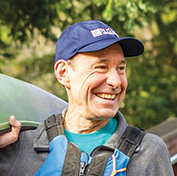 “Named Ashokawna—“the water to the east”—by the Southern Pomo; Slavyanka, “Slavic woman,” by the Russian Colony; and “Saint Ignatius” and “Big river” by the Spanish colonists who came after, the river itself remains nameless and mighty, winding 115 miles to the sea. … We should bow to the Russian River, the artery of the north. Instead, we treat it as a gutter. In 2025 alone, Russian Riverkeeper—self-styled protector of the river—pulled roughly a half-million pounds of trash from its waters, a volume that has grown, year over year, for the past five years. To do so, the Healdsburg nonprofit organized 900 local volunteers across 75 separate cleanup events along its length. That mobilization, says Don McEnhill, deputy director of Riverkeeper, is one of the clearest signs of a slowly shifting culture. … ” Read more from the Healdsburg Tribune.
Podcasts …
RIPPLE EFFECT: The climate condition and 2026 El Niño
Our very own Dr. Joe Casola, Climatologist at C.K. Blueshift, joins us to discuss the current climate, how it got here, and what the future holds. We dive deep into warming trends and what the rising heat means for society as a whole. We explore what El Niño could mean for our water, both in the monsoonal season and upcoming winter. Taking advantage of these climate trends, we can make smarter decisions for the future.
(RE)TURNING TO THE RIVER
Human health and watershed health share vital links. How does the health of a watershed affect the health of those living within it? (Re)Turning to the River is a podcast about the powerful connections between people and water.
GOLDEN STATE NATURALIST: California grasslands with Justin Luong
The golden hills of California are hiding things. At first glance, grasslands like these ones appear to be simple systems. And to some degree, they are simplified versions of their precolonial selves, but they’re also home to thousands of species of native plants that support an intricate ecology. Look a little closer, peer between the swishing blades, know what to look for, and you’ll see not only a mesmerizing web of life but also California’s history written in the grass. Come with me and Dr. Justin Luong of UC Berkeley as we explore a California grassland and discuss the past, present, and future of an ecosystem vital to both biodiversity and human wellbeing.
VIC BEDOIAN: Mono Lake’s Endangered Birds
California’s Mono Lake is at the center of a growing conservation crisis, and the state could decide its fate this year. The lake sits more than 30 feet below its pre-diversion level, exposing land bridges that leave nesting gulls vulnerable to predators. As a result, many birds are abandoning the lake altogether, disrupting ecosystems as far away as the San Francisco Bay.
Vic Bedoian reports from Fresno.
SCIENCE YOU CAN USE: Managing fire for more species: Landscape mosaics benefit plants and animals in Sierra Nevada forests
In the dry, fire-adapted forests of California’s Sierra Nevada – where yellow pine, mixed conifer, and red fir historically burned on frequent, low-to-moderate severity cycles – restoring historical fire regimes has been a guiding principle for ecological management. But most contemporary forests in this region are far from that benchmark. Instead, these forests have been shaped by decades of fire suppression, and increasingly, by megafires at the opposite extreme.
WATER IS A MANY SPLENDOR’ED THING: Reflections of a Dairyman III
 Water battle hasn’t changed much since the settlers first migrated west of the Mississippi River. It’s always been recognized that land with no water is land of no value and that creates quite a stir especially if the land had water back in the day. Water is a Many Splendor ’ed Thing brings you another water relationship that has a personally significant impact to your life. Produced by Stephen Baker, Bringing People Together to Solve Water Problems, water@operationunite.co 530-205-6388
WATERLOOP: Entering an era of advanced water treatment
Advanced water treatment is entering a new era. Utilities are moving beyond conventional treatment to tackle PFAS, expand water reuse, and secure new water supplies. That often means using technologies like membranes, ozone, activated carbon, and advanced filtration. Jaime Safulko of PCL Construction explains what’s driving this wave of investment and why these projects are more complex than the treatment plants of the past. She shares lessons from the El Paso Pure Water Project, which is expected to become the nation’s first direct potable reuse facility. She also highlights recycled water projects in California and new PFAS treatment facilities in Colorado that are putting advanced technologies into practice.
TALKING UNDER WATER: Navigating PFAS regulations and preparing for future water contaminants
In this episode Talking Under Water co-hosts discuss EPA’s draft guidance on PFAS in biosolids, lessons utilities can take from the PFAS regulatory landscape to prepare for future contaminants, and recent developments affecting stormwater and water infrastructure projects.
Weekend adventures …
From cave swimming to Tahoe cruises: Incredible California water escapes
Bartell’s Backroads travels across California and the western United States to showcase unique destinations where water is the main attraction. The special features a swim inside the Natural Bridges cave in Calaveras County, a homemade DeLorean hovercraft, a historic cruise aboard Lake Tahoe’s Thunderbird, the Santa Cruz Surfing Museum, whitewater rafting on the Kern River, California’s Delta ferries, a gondola ride through Napa, and a guided kayak tour of Suisun Marsh. The collection highlights outdoor adventure, history, and hidden travel experiences across the region.
Russian River canoe trips offer scenic paddle through Sonoma County redwoods
The Russian River, known as Ashokawna in the Southern Pomo language, stretches about 115 miles through Sonoma County and Mendocino County, and serves as an important resource for wildlife, agriculture and outdoor recreation. A canoe trip offers visitors the chance to paddle past towering redwoods, vineyards and peaceful stretches of wilderness while experiencing the river’s natural beauty. Canoe guide Andreas Porfirio says the river’s scenery, cultural significance and calming atmosphere continue to make it one of Sonoma County’s most memorable outdoor adventures.
Weekend read …
BOOK REVIEW: Blue Gold: The Fight to Stop the Corporate Theft of the World’s Water
 Jim Lauria writes, “When Maude Barlow and Tony Clarke published Blue Gold: The Fight to Stop the Corporate Theft of the World’s Water (The New Press) in 2002, the idea that water could become the next oil seemed provocative, maybe even alarmist. More than two decades later, with water futures trading on the Chicago Mercantile Exchange under the ticker NQH2O, with aquifers collapsing under cities from Phoenix to Chennai, and with the global bottled water market surging past $350 billion a year, the book reads less like a warning and more like a prophecy. The uncomfortable truth is that nearly every crisis Barlow and Clarke identified in 2002 has not only persisted, it has intensified. Blue Gold opens with a stark accounting of the overdraft of the world’s fresh water…the systematic withdrawal from aquifers, rivers, and lakes at rates that far exceed nature’s ability to replenish them. In 2002, this was an emerging concern. Today, it is a documented emergency. … ” Read more from the Water Shelf.
In regional water news this weekend …
NORTH COAST
Humboldt County dunes under pressure from storms and invasive species
“California has lost roughly 60% of its coastal dunes since the mid‑1800s, according to a newly published statewide analysis that used historical maps, aerial photography, and LiDAR to track dune change over time titled “Significant Coastal Dune Loss Challenges California’s Climate Resilience and Biodiversity Goals.” Researchers found that more than 440 square kilometers of dunes have disappeared, largely replaced by roads, neighborhoods, and other development. Remaining dunes are increasingly fragmented, reducing habitat quality for species that depend on open sand, including the western snowy plover and least tern. Along the North Coast, those pressures are visible today as steep sand scarps form along Samoa and other beaches, carved by powerful winter waves and long‑term erosion. Danny O’Shea, who recently retired after 10 years as a lecturer in the oceanography department at Cal Poly Humboldt, said the sharp cliffs now lining parts of the shoreline are a direct result of seasonal storm energy. “That’s caused by winter storm wave erosion,” O’Shea said. “It’s got nothing to do with the beach grass or anything else. Everything to do with the storm wave erosion.” … ” Read more from the Eureka Times-Standard.
SIERRA NEVADA
Conservation groups tour Feather River watershed
“On July 7 and 8, the Sierra Nevada Conservancy (SNC), the California Department of Water Resources (DWR) and Blue Forest, held an Upper Feather River Tour for State Water Project contractors. The tour highlighted the importance of protecting and enhancing forest health and mountain meadows within the Feather River headwaters and showcased important work the State Water Project is doing to improve water quality, water supply, flow timing, public safety and ecosystem health. The health of California’s water supply is tied to the health of the headwaters, and the State Water Project depends on the short- and long-term resilience of the Upper Feather River in the Sierra Nevada. The State Water Project supplies water to 27 million Californians and 750,000 acres of farmland. Managed by DWR, the project moves water from the Sacramento-San Joaquin Delta down through the Central Valley, the San Francisco Bay Area, the Central Coast and into Southern California. … ” Read more from the Placer Sentinel.
NAPA/SONOMA
What does it mean to protect Sheephouse Creek?
“There is no shortage of opinions about how California’s forests should be managed. It is far less common for a California registered professional forester and a retired fisheries biologist to arrive at the same conclusion. We have spent our careers looking at North Coast watersheds from different professional perspectives. Tom Kisliuk has spent decades helping family forest owners manage their lands under California’s forest practice rules while also managing his own family forest under a nonindustrial timber management plan (NTMP). David Wright spent more than 35 years restoring salmon habitat and managing fisheries projects throughout the Mendocino Coast, particularly in the Ten Mile, Garcia, Navarro and Big River watersheds. Although our careers have followed different paths, our experience has led us to the same conclusion: protecting Sheephouse Creek requires active, long-term stewardship. … ” Read more from the Santa Rosa Press Democrat.
Earliest harvest in 40 years kicks off in Sonoma County
“Sonoma County’s earliest grape harvest in at least 40 years began Thursday morning in the Russian River Valley, where crews picked Pinot Noir at Dutton Ranch’s Jewell Vineyard in what growers say could be one of the earliest harvests on record. As the golden morning light spilled across the vines, a flurry of harvest workers left a veil of dust in their wake, lingering in the air beneath bright blue skies. Samantha Rubanowitz, viticulturist and grower relations manager at Schramsberg Vineyards in Calistoga, surveyed the vineyard in quiet astonishment. “At Schramsberg, we’ve started harvest in July only twice, and both were at the end of the month,” she said. “This is by far our earliest pick — and completely unexpected. We’re caught off guard, but very excited.” … ” Read more from the Santa Rosa Press Democrat.
BAY AREA
Amid El Niño, ‘conga line’ of tropical storms could change Bay Area weather
“Elida, a tropical storm forecast to build into the first hurricane in the eastern Pacific Ocean this year, will spin close enough to California to impact the weather. National Weather Service forecasters expect Elida, which is several hundred miles from the southern tip of Baja California, to fall apart this weekend as it moves from warm to cooler ocean temperatures. Still, the storm will likely lead to muggy weather, striking sunsets and big swells in California. El Niño, which emerged in June, can intensify eastern Pacific hurricane activity. Although Elida won’t bring the same heavy July rain and flooding as Hurricane Dolores did in 2015, another El Niño year, more storms are surely on the way. … ” Read more from SF Gate.
One of the Bay Area’s most stunning parks is ripe for a species reintroduction
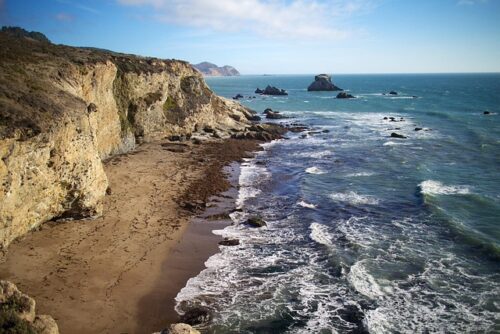 “We are causing an extinction crisis. By some estimates, species are disappearing up to 1,000 times more rapidly than the baseline rate. Habitat loss due to human activities, like livestock agriculture, is among the biggest reasons. Real opportunities to do something about it are rare. Yet we have one such chance in the Bay Area. Point Reyes National Seashore, the only national seashore on the West Coast, is less than an hour from the Golden Gate Bridge. It supports extraordinary diversity, and its location in the Bay Area provides an accessible oasis for people seeking nature. Recently, 17,000 acres of the seashore were vacated by ranches and dairies, presenting an extraordinary possibility in conservation: recovering the ecological integrity of a large, publicly owned coastal landscape. … ” Read more from the San Francisco Chronicle.
An aging dam in Stanford’s backyard — and why it must go
“In a recent article from Stanford University’s Woods Institute, CalTrout is encouraged to see Dan Reicher and Felicia Marcus, Stanford University water experts from the Woods Institute and Center for the West respectively, examining the impacts of dams that have outlived their useful lifespan and the opportunities their removal can create for rivers and communities. In their commentary, they highlight the Potter Valley Project on the Eel River as a candidate for removal, but another prime candidate is the Stanford University-owned Searsville Dam, which has long ago surpassed its useful lifespan of storing water. … ” Read more from CalTrout.
EASTERN SIERRA
2026–2027 Mono Lake level forecast report
“Each spring the Mono Lake Committee’s team of Mono Basin modelers and hydrology experts uses the lake level on April 1 together with the Mono Basin snowpack numbers and similar-year hydrological statistical data to produce the Mono Lake Committee’s lake level forecast for the runoff year ahead. You can download the full Mono Lake 2026–2027 lake level forecast here. On April 1, 2026 the surface elevation of Mono Lake was 6382.75 feet above sea level. The lake level rose slightly through June 1. This forecast projects the lake will fall to 6382.24′ as the most probable lake level on April 1, 2027. April 1 was the start of the current runoff year, which is classified as a “Dry-Normal I” year type. The graph below shows the range of likely Mono Lake elevations for the runoff year. The range of projections (light blue shading) is produced by the Mono Lake Committee’s modeling of hydrologic sequences using a variety of similar runoff years, with the most probable (solid blue line) level based on slightly-adjusted conditions from the most similar past runoff year (2004). … ” Read more from the Mono Lake Committee.
SOUTHERN CALIFORNIA
Heal the Bay statement on water quality following the Lineage Logistics fire
“Following the recent fire at the Lineage cold storage warehouse facility in Boyle Heights, and the resulting local state of emergency, many community members have expressed concerns about environmental and public health impacts from the smoke as well as the runoff from firefighting efforts. The fire, which began on June 17 and burned for 8 days, occurred during Heal the Bay’s regular summer water quality monitoring through our River Report Card program that helps track recreational water quality conditions to inform the public. We monitor water quality at six sites along the Lower Los Angeles River, including Riverfront Park, our monitoring site closest to the Lineage Fire and downstream of the affected area. Our weekly monitoring measures water clarity (turbidity), bacteria levels, water temperature, flow and other visual site conditions. While this monitoring helps us understand recreational water quality, we do not test heavy metals, PFAS, or other fire-related contaminants. … ” Read more from Heal the Bay.
Cleanup, repairs continue after water main break floods West Hollywood neighborhood
“Los Angeles Department of Water and Power crews raced Friday to repair a ruptured main that turned streets in West Hollywood into raging rivers that opened sinkholes, pushed around cars and flooded garages while shifting massive chunks of asphalt and concrete slabs. Workers toiled round the clock using backhoes to expose the broken section of the circa 1916, riveted-steel 36-inches-wide trunk line and set about removing and then replacing the pipe, which unleashed a torrent of water after breaking open around 3 a.m. Thursday on Sunset at Holloway Drive. The new section of pipe arrived Friday morning and officials told reporters at the scene the temporary repair could be complete and Sunset Boulevard reopened by the end of the coming weekend, but on Friday, Sunset Boulevard remained closed along stretch between Sherburne Drive and San Vicente Boulevard. … ” Read more from the LA Daily News.
SEE ALSO: For lots of pictures and videos: Unbelievable moment West Hollywood water main burst, unleashing devastating deluge, from the California Post
Street, homes flooded after water pipe ruptures in Venice
“Homes suffered hundreds of thousands of dollars in damages in Venice Saturday afternoon after a water pipe ruptured near the intersection of Venice Way and Main Street. KTLA reporter Hailey Winslow was at the scene and reports that some areas were buried in as much as 5 feet of water at the height of the flooding. Video provided by one resident shows water pouring down a staircase inside their home. … ” Read more from KTLA.
IMPERIAL/COACHELLA VALLEYS
Environmental groups press to halt Imperial Valley lithium venture
“In a case that has become a local flashpoint, environmental groups seeking to halt a lithium operation in Imperial County until it gets further review argued before a state appeals court in San Diego on Thursday. Controlled Thermal Resources wants to extract lithium from hot brine that will be used to power a geothermal electricity plant it plans to build. This type of lithium removal is different from traditional hardrock mining or evaporation ponds. The project also would need 6,500 acre-feet of fresh water annually for washing the mineral and cooling. Earthworks, a nonprofit focused on the impacts of mining, and Comité Cívico del Valle, an Imperial County environmental justice group, allege the county didn’t adequately examine the project’s effects on water supply, air quality and tribal cultural resources when it granted approvals. … ” Read more from the LA Times.
Along the Colorado River …
Basin states set to sign new 2-year Colorado River agreement, SNWA says
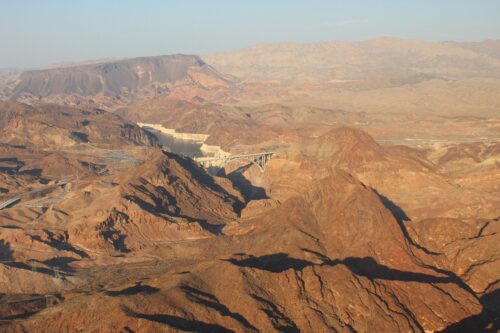 “Nevada and the six other states along the Colorado River basin are on the verge of signing a two-year agreement that would, in theory, temporarily end a long period of discord and contentious negotiations on water rights and usage, the 8 News Now Investigators have learned. The Southern Nevada Water Authority, in an exclusive interview airing Friday, says all seven states may sign a “short term” deal within “the next two months.” The continuing rift between the upper and lower basin states has simmered for years, each group condemning the other’s actions as water supplies have tightened and urban growth has continued. The Upper Basin believes other states need to use less; the Lower Basin says it’s time for states upstream to share the burden. A century-long compact – and its ensuing amendments – are set to expire within a couple of months. … ” Read more from KLAS.
Lake Powell could plunge near lows that threaten power production next year: Federal study
“Lake Powell, a Colorado River reservoir that serves as a source of hydroelectric power, is in danger of reaching very low levels, according to a new federal analysis. A study released by the Bureau of Reclamation this week projects that at the end of March 2027, Lake Powell’s elevation could be just less than 3,492 feet. That level would put the reservoir close to the minimum power pool level of 3,490 feet needed to produce electricity. As of Thursday, Lake Powell was at about 3,524 feet. The bureau said along with the study that it was considering “all tools that are available” to make sure the reservoir doesn’t decline below 3,500 feet. Lake Powell provides power for some 6 million households and businesses in the Western U.S. … ” Read more from The Hill.
As reservoirs dry up, state takes steps towards saving Colorado River water
“Colorado officials are developing a program to pay ranchers, farmers and irrigation districts to conserve Colorado River water, but it’s unclear how much water it will actually be able to save. The voluntary, two-year program will be funded by $100 million from the Bureau of Reclamation, which manages the massive federal reservoirs that dot the Colorado River. The funds will be split between water conservation programs in the river’s upper basin states — Colorado, Utah, Wyoming and New Mexico. The program comes as Colorado is facing a historically dry year, with record low snowpack and an exceptionally warm spring. That means large reservoirs now look less like behemoth storage projects and are instead stagnant puddles. … ” Read more from Colorado Public Radio.
State of the Basin Report: A guide to the Colorado River Crisis
“The river that built the American West has run out of time. But the resourcefulness that built the American West is far from running dry. This report examines the biggest challenges to the Colorado River Basin, based on interviews with subject matter experts, reviews of scientific and news articles, and data provided by the Water Resilience Coalition. It also addresses the most promising strategies to mitigate them. Drawing on recent research and insights about ecology, water management and technology, it looks past the zerosum game of fighting over water allocations, and zeroes in on the emerging methods to keep the river running, together. … ” Read more from the Walton Family Foundation.
In national water news this weekend …
Tapping brine’s wealth: The next evolution for desalination?
“Brine valorization plants are the next step in the evolution of desalination technology, which opens a new horizon for wider use of desalination as a baseline source of drought-proof and environmentally and fiscally sustainable water supply. Over the past decade, the desalination industry has developed a number of brine concentration and mineral extraction technologies which enable the generation of commercially valuable products from brine. Figure 1 presents the typical configuration of brine valorization plants – it includes membrane nanofiltration (NF) system for the separation of the brine from the desalination plant into two streams and subsequent concentration and crystallization of these streams into individual minerals. … ” Read more from Water Finance & Management.

