
A wrap-up of posts published on Maven’s Notebook this week …
Note to readers: Sign up for weekly email service and you will receive notification of this post on Friday mornings. Readers on daily email service can add weekly email service by updating their subscription preferences. Click here to sign up!
In California water news this week …
State poised to nix pumping along Friant-Kern Canal in Tulare County by early 2027
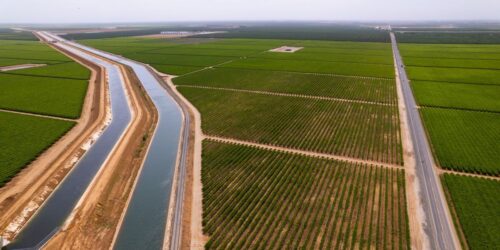
“Growers who farm within two miles of the Friant-Kern Canal in southern Tulare County should be prepared for a pumping moratorium as early as April 2027, water managers learned Thursday. The move is part of Phase I of the state Water Resources Control Board’s proposed pumping plan, which zeroes in on damage to the canal caused by overpumping. The cost of that damage already tops $797 million, according to a slide presented Thursday. The severity of the state’s plan did not surprise water managers, but the accelerated timeline did. “It speaks to the urgency,” said Eric R. Quinley, general manager of Delano-Earlimart Irrigation District Groundwater Sustainability Agency (GSA). It also clarifies the state’s laser focus on subsidence, or land sinking, which has been rampant in the Tule subbasin. … ” Read more from SJV Water.
Dr. Daniel Swain: California could collide with a “very significant El Niño event”
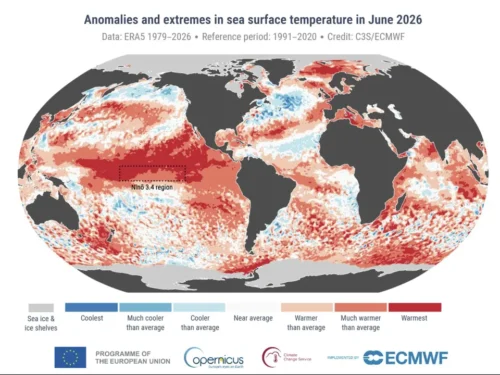 “As Californians settle into our summer of 2026, we’re hearing more about a possible El Niño event this coming winter. And not just any El Niño event—possibly one for the ages. The National Oceanic and Atmospheric Administration’s Climate Prediction Center predicts a greater than 60% chance of a “very strong” El Niño through January that would rank among the most powerful on record going back to 1950. It also has the potential to be the costliest on record, possibly surpassing $5.5 trillion in global financial loses after widespread flooding in 1997-98 due to El Niño conditions. Climate scientist Dr. Daniel Swain focuses on the dynamics and impacts of extreme events—including droughts, floods, storms, and wildfires—on a warming planet. He shares research (and sometimes warnings) on his popular blog Weather West, like this about the increasing likelihood of a significant El Niño event this winter. “Multi-model ensemble predictions have become even more aggressive and are now explicitly predicting an El Niño of very strong, and quite possibly record-breaking, magnitude by autumn or early winter,” Swain published on June 11. “In fact, the just-released multi-model ‘superensemble’ predictions for June are nothing short of remarkable, with the median forecast from every single international model ensemble depicting at least a ‘strong’ event, and the majority indicating a top-tier, very strong-to-historic event.” … ” Read more from River Partners.
How a potential hurricane 1,200 miles away could affect the California coast
“More than 1,000 miles south of Los Angeles, Tropical Storm Elida was forecast to strengthen to the first east Pacific hurricane of the season Friday. The storm was feeding off record warm tropical waters, which should help it grow into a Category 1 hurricane with maximum wind speeds of 85 mph. The stronger Elida gets, the more clouds it will push tens of thousands of feet into the atmosphere. Elida will quickly weaken over colder seas this weekend, but the storm is well positioned to have ripple effects on California’s weather as early as Sunday, with rough seas and picturesque clouds. Even more moisture could approach the state next week. If that happens, the entire California coast could experience more than cloud-brightened sunsets: The impacts could include tropical-like humidity, rare July rain and even a few thunderstorms. Here’s what to know about Elida and its potential California impacts … ‘ Read more from the San Francisco Chronicle. | Read via Yahoo News.
Golden mussels are spreading fast. Water managers may have a new way to fight back

“Since invasive golden mussels arrived in California a couple of years ago, officials up and down the state have scrambled to come up with solutions to their rapid spread. For months, state and local water agencies tried things like hot water treatments and scraping of docks. But the hardy mollusks, which are native to Asia and were likely brought to the California Delta on the hull of a ship, continued to circulate. By early July, they had established populations as far south as San Diego and as far north as the Port of West Sacramento. For the most part, efforts to eradicate the newly established species fell short. … Recently, though, a water district in Kern County used a copper treatment to effectively kill golden mussels that had established themselves locally. Officials said the move, which worked on full-grown mussels and ones that had not yet attached, represents a tool for water managers in the battle against the destructive species. … ” Read more from PBS Abridged.
Dairies say state’s draft plan to protect valley groundwater from nitrates is too costly
“A new regulatory effort to protect Central Valley communities from nitrate pollution in their groundwater has drawn opposition by dairy farmers who say the proposal is too costly for an industry already struggling financially. The State Water Resources Control Board says dairies are diverting so much cow manure onto their own cropland that nitrate levels are rising in underground aquifers. Its proposed solution is to limit such releases, partly by having dairies send manure to other farmers that can use it responsibly. While nitrogen is an essential nutrient for crops, nitrate pollution has long been a problem in the region’s groundwater. Prolonged exposure to high levels of nitrates in groundwater has been linked to cancer, thyroid diseases and birth defects. Dairy groups say their members have already invested in various measures to address the problem. Asking them to spend on new practices envisioned by the state is infeasible, they say. … ” Read more from the Hanford Sentinel.
‘Fiscal cliff’ for drinking water fixes: Californians with bad tap water could have a longer wait
“The state program that helps bring solutions for Californians with contaminated drinking water is facing a major drop in funding. At a meeting in Sacramento last week, state officials presented estimates that grant money to help communities get clean drinking water, including by drilling new wells or connecting to nearby water systems, could fall from $941 million in the current fiscal year to about $103 million in 2027-28. Both state and federal funds are going away. Some at the meeting called it a looming “fiscal cliff.” “I know it’s going to be really depressing having dozens or hundreds of projects in the pipeline that we can’t fund,” Jennifer Clary of the group Clean Water Action told the five-member State Water Resources Control Board. She urged the board to make sure it’s prioritizing financial support for places where it’s most needed. … ” Read more from the LA Times. … ” Read more from the LA Times. | Read via Boiling Point Newsletter.
California agencies advance strategy for emerging contaminants and tire-derived 6PPD-quinone
 “At its June 16 meeting, the State Water Resources Control Board received an informational update on California’s work to identify and manage constituents of emerging concern, including 6PPD and 6PPD-quinone, a tire-derived contaminant linked to toxicity in sensitive aquatic species. Constituents of emerging concern, or CECs, include chemicals that are unregulated or only partly regulated in the environment, such as pharmaceuticals, flame retardants, PFAS, newer pesticides, and emerging commercial materials including nanomaterials. The State Water Board’s CEC Program is developing a statewide strategy, foundational guidance, and new monitoring tools to help identify, evaluate, and manage contaminants that may pose risks to California’s waters. The update also highlighted statewide efforts to understand 6PPD, the primary antidegradant used in tires, and 6PPD-quinone, its transformation product. State Water Board staff were joined by DTSC and Caltrans to discuss interagency work on environmental pathways, monitoring, management options, and source-control strategies for tire-wear-related contaminants. … ” Read more from Maven’s Notebook.
Longfin smelt surge in the Napa River
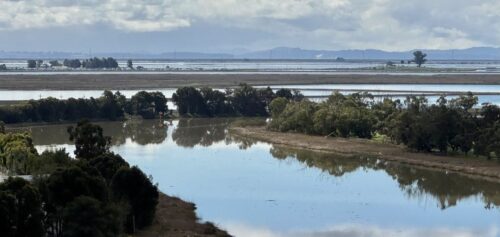
“Biologists studying the San Francisco Estuary’s endangered fishes are trying to unpack a puzzling but encouraging uptick of endangered longfin smelt in a small North Bay watershed. With the fish declining in most of the estuary, time is running out to stabilize the population. Now, scientists hope that understanding why longfin are aggregating in this small stream system could guide efforts to protect critical habitat and save the species from extinction. In the last quarter century, the longfin smelt population has collapsed, following the path of most fishes native to the estuary. Loss of wetland habitat, depleted river flows, and climate change are the probable culprits. However, in the past three years, the fish’s numbers have shown a modest bump—likely from the ecosystem benefits of three consecutive wet winters beginning in 2023. History has shown that winters of high precipitation prompt increases in longfin numbers; this pattern is accentuated when wet years occur consecutively. “You get a compounding effect from these back-to-back wet water years,” says Colin Brennan, who supervises the California Department of Fish and Wildlife’s Interagency Ecological Program. … ” Read more from Alastair Bland at Maven’s Notebook.
Environmental DNA monitoring protects fish hatchery from invasive species
“USGS NOROCK scientists, in collaboration with the U.S. Fish and Wildlife Service, used environmental DNA monitoring in the early detection of invasive New Zealand mudsnails in a fish hatchery, enabling a rapid and successful eradication response. This effort prevented a mudsnail infestation that could have led to long-term operational disruption or permanent facility closure. … To our knowledge, this represents the first published case documenting the use of eDNA monitoring for early detection followed by and successful rapid response eradication of an invasive species in a hatchery setting. … ” Read more from the USGS.
Notice of intent to submit Delta Conveyance Project revised certification of consistency with the Delta Plan on remanded items
“This notice serves to inform all interested parties that the California Department of Water Resources intends to submit to the Delta Stewardship Council the Delta Conveyance Project Revised Certification of Consistency on Remanded Items. The Council’s determination on April 23, 2026, dismissed or denied the vast majority of appeals. For two policy areas, the Council directed a limited remand to DWR. Remands are a standard part of the Delta Reform Act’s Certification of Consistency and appeals process and provide an opportunity to supplement or clarify portions of the record to address the findings in the remand. This revised certification demonstrates how, for Delta Plan Policy ER P5, DWR fully considered and avoids or mitigates the potential for DCP facilities to improve habitat conditions for the nonnative invasive golden mussel; and how, for Delta Plan Policy DP P2, DWR considered and avoided or reduced conflicts between the siting of the Delta Conveyance Project’s Twin Cities Complex and Sac Sewer’s Harvest Water when feasible. … ” Continue reading this notice from the Department of Water Resources.
California Forever loses $3.2 billion shipyard contract as defense startup picks Texas
“California Forever’s bid to recruit a major industrial tenant for a planned waterfront shipbuilding facility in Solano County has slipped away, a significant blow to the ambitious but heavily scrutinized billionaire-backed plan to build an entire new city on thousands of acres of farmland. Defense startup Saronic Technologies, which designs and builds autonomous water crafts, has chosen Texas — where the company has been considering the Port of Brownsville — over Solano County for its $3.2 billion Port Alpha automated shipyard, according to multiple sources familiar with the negotiations. The announcement strips California Forever of the prominent prospective tenant it had presented as proof that its controversial development could become a cornerstone of the nation’s shipbuilding revival. The setback comes at a pivotal moment for the larger project to create a new city, though its supporters say the search for a major commercial tenant is far from over. … ” Read more from the San Francisco Chronicle. | Read via Yahoo News.
PPIC statewide survey: Californians and the environment
“This year marks the twin anniversaries of landmark legislation that has shaped the state’s environmental policies: the California Coastal Act of 1976 and the Global Warming Solutions Act of 2006. Today, California’s longstanding commitments to protecting its coastal waters and reducing greenhouse gas emissions are sharply at odds with federal policy shifts that now call for more oil drilling off the coast and reversing course on renewable energy programs. Today, the state government is also seeking to address the public’s concerns about the affordability and equity of its environmental policies. These are the key findings of the Californians and the Environment survey on topics including the November election and approval ratings; the environment, economy, and technology; climate change and energy; and oceans, coast, and marine life that was conducted June 29–July 6, 2026 … ” Read more from the PPIC.
High-severity fires burn 30 times more acreage than 40 years ago, researchers find
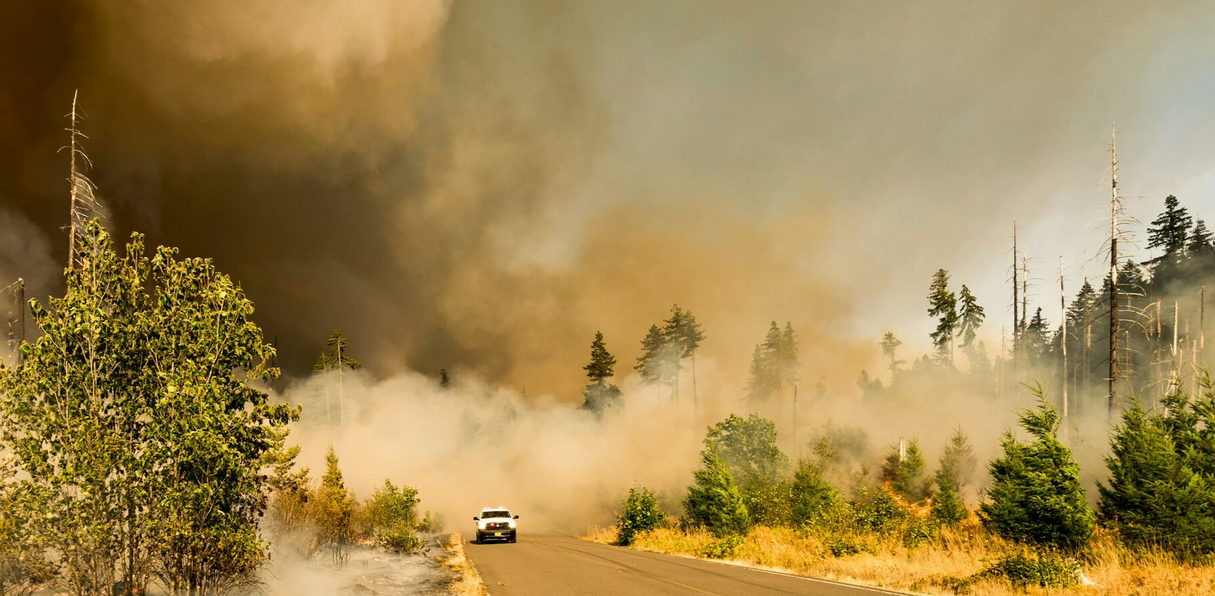 “Forest fires now burn ten times more acreage annually than in 1985, while wildfire severity has gotten even worse. In California, 30 times more acreage burned from high-severity, forest-killing fires, according to new UCLA research. In the 1980s and 1990s, California’s forest fires burned mostly at low or moderate severity, generally benefiting ecosystems. But as fires have grown in size, severe fires causing widespread tree death have overtaken beneficial fire as the most common fire type in California’s forests. The study, published June 22 in the journal PNAS, found that the changes are tied to the increasingly warm and arid environment. These aridity-driven changes were also stronger in more densely forested areas, said UCLA bioclimatologist and senior author Park Williams. … ” Read more from YubaNet.
Water extinguishes fire, but how does fire affect water?
Brandon Ertis writes, “Wildfires in California are increasing in frequency and intensity, resulting in a greater extent of areas being directly burned or otherwise impacted in recent years. I work for a water resources consulting firm called Davids Engineering (DE), and we have an office in Chico in the beautiful Sacramento Valley. Our region has been severely impacted by some large fires in recent years. The Camp Fire in 2018 was unprecedented, burning over 18,000 structures (roughly ~85%) in the nearby foothill town of Paradise and, propelled by strong winds, roaring out of the foothills down onto Chico’s doorstep before being contained. It was the deadliest wildfire in U.S. history in over 100 years. Then the Dixie Fire in 2021 was the largest single-source fire in recorded California history. More recently, in 2024, the Park Fire started on the edge of Chico and very quickly expanded, burning over 429,000 acres to the north. We don’t work with wildfires at DE. We often work with irrigated agriculture and environmental water users in the Central Valley (not an area prone to wildfires), but even on the valley floor, the water supplies that we and our clients rely on are impacted by these wildfires. … ” Read more from the California Water Blog.
In commentary this week …
Conservation isn’t enough for California’s weather whiplash, we need reliable water
Michelle Paul, executive director of the California Farm Water Coalition, writes, “It wasn’t that long ago that drought dominated the West. From 2014 to 2017 and again from 2021 to 2023, record after record was broken as clear skies and relentless sunshine became the norm. The governor’s office initiated statewide prohibitions on “wasteful water use,” mandating that cities, towns, and urban water suppliers reduce their potable water consumption by 25 percent. Central Valley farms received 8.7 million acre-feet less surface water than in a normal year, forcing growers to pump groundwater to keep permanent crops alive. Contrast that with the 2022–2023 water year, one of the wettest and snowiest in California’s recorded history. In a single season, it ended the state’s three driest consecutive years on record, earning the label “weather whiplash” as local governments and utilities rapidly shifted from managing extreme drought to widespread flooding within a matter of months. … ” Read more from the OC Register.
AB 2026 is an duplicitous response to climate change
Max Gomberg, C-WIN Senior Policy Advisor, writes, “When the legislature passed the Sustainable Groundwater Management Act (SGMA) in 2014, the harms from unregulated groundwater pumping had become dire. Rural community drinking water wells were running dry, land subsidence was damaging key infrastructure, and the capacity to recharge groundwater basins was being lost. Much of the crisis owed to demand created by water-intensive permanent crops like almonds, which were planted on massive swaths of land due to their profitability. SGMA created a new set of agencies to manage groundwater and gave them roughly a quarter century to develop and implement plans to bring overdrafted groundwater basins into balance. Loathe to impose pumping restrictions that would impact profits, most of these Groundwater Sustainability Agencies (GSAs) have focused on ways to store additional water. However, getting more water into the ground means getting more water from somewhere else without harming other water users and the environment. … ” Read more from C-WIN.
Trump greenlights California’s dumbest water project
LA Times columnist Michael Hiltzik writes, “On July 9, the Trump administration delivered a gift to Cadiz Inc., a politically well-connected firm that has been trying for decades to win approval for a scheme to pump water out of the Mojave Desert and market it to water agencies across the Southland. The administration approved the company’s application to convert an abandoned 220-mile oil and gas pipeline crossing the desert to carry water instead. Susan Kennedy, the chief executive of Cadiz, called the approval “a pivotal milestone” that would enable the project to move into its construction stage. Here’s betting that Kennedy’s statement was somewhat premature. The project still faces significant opposition from environmentalists, local Indian tribes and the state of California. It has been declared ready to go — and declared dead, too — so often that it could serve as a character in a zombie movie or streaming series. … ” Read more from the LA Times.
Waste and unreasonable use: The overriding doctrine for California water law
Max Gomberg, C-WIN Senior Policy Advisor, writes, “If there is a single overriding principle that defines the consumption of water in California, it is the legal definition of “waste and unreasonable use.” This concept is foundational to the entire body of laws, rules and policies that determine the use of water in California; and even though it is honored in the breach more than the observance, it remains a central means for safeguarding equitable distribution of water in the state. Avoiding waste and unreasonable use, in fact, is mandated by the California Constitution. Article X, Section 2 of the Constitution declares water rights are privileges granted by the state to use water—not property rights. They come with the caveat that such use can only be applied to “reasonable and beneficial” uses. This means that the reasonable and beneficial metric serves as an overarching constraint to all uses and diversions. … ” Read more from C-WIN.
California is making progress on fire prevention. Federal retreat, shaky funding put it at risk
Bradley Franklin, research fellow at the PPIC Water Policy Center, and Kyle Greenspan, research associate with the PPIC Water Policy Center, write, “The Altadena and Palisades fires that swept through Southern California last year were just the latest in an escalating series of wildfires that have scorched the state. The damage has been far-reaching: Californians have lost homes, community and — in some tragic cases — their lives. Wildfires are also raising insurance premiums and threatening the state’s giant sequoias and the headwater regions that provide most of California’s water supply. This year threatens to be another above-average fire season. As we’ve seen in recent years, fires can emerge quickly — even after wet winters. And if it feels like wildfires are increasing in size and scale, that’s because they are: The area of land burned in severe wildfires in the Sierra Nevada has tripled since 1990, while annual wildfire damages have more than quadrupled during that same period. … ” Read more at Cal Matters.
The Forest Service’s fuel reduction strategy is adding fuel to the fire
“Most of the West’s perennial wildfire plague is due to human stupidity. But it’s not just the careless people who start the fires. Given the primary risk factor for massive forest fires is hotter, drier forests from the climate crisis, there is a long list of guilty parties. First, there’s all the people that voted for politicians who ignored the climate crisis or called it a hoax. Then there’s the Supremely Corrupt Court, that has enshrined contempt for environmental and climate protection beginning with an “inconvenient” awarding of the 2000 election to fossil fuel handmaidens Bush and Cheney instead of climate champion Al Gore. Now 26 years later, we have a president who is so malevolently abusive to the environment he is spending billions bribing companies to sabotage clean energy and diligently burning up the planet “like no one’s ever seen before.” Chasing America’s bumbling descent into psychotic irrationality, much of the world has also thrown in the towel on preserving an inhabitable climate. … ” Read more from the Utah News Dispatch.
The experience of climate change captures dangerous shift better than numbers
On July 1, my neighbor gave birth to a baby girl. I met her a few days later, sleeping outside on her aunt’s lap on a hot, hazy evening in Northwest Denver. I ignored another air quality alert on my phone and complimented her full head of hair. I am nearing 30 years old; I remember summers free of wildfire smoke and ozone-alerts. Will she? “Shifting baseline syndrome” refers to the gradual change in accepted norms across generations. In 1995, a marine biologist coined the term to describe the acceptance of deteriorating fishery health caused by the absence of an established ecological baseline. But shifting baseline syndrome can be applied much more generally: The version of the natural world that younger generations consider normal and acceptable may be worse compared to that of their parents, and significantly worse than that of their grandparents, compounding over generations. A potential consequence of widespread shifting baseline syndrome is lowered expectations for environmental quality that lead to unambitious conservation policies and programs. … ” Continue reading from Colorado Newsline.
In regional water news this week …
Rain swept ash from a scorched California mountainside into the Klamath River and silently suffocated it for five hours
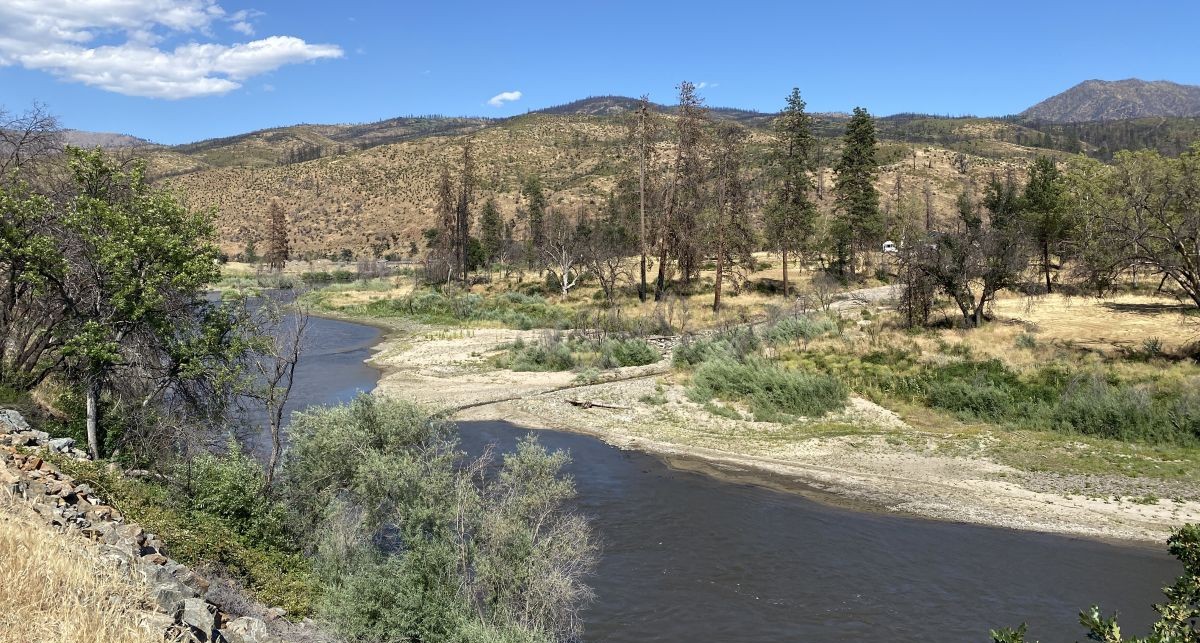
“When a rainstorm swept over the scorched hillsides left by the 2022 McKinney Fire, it seemed like relief was finally arriving. Instead, dissolved oxygen in the Klamath River collapsed to zero — and stayed there for more than five hours. Fish died along nearly 60 miles of one of California’s most culturally significant waterways. Rain was supposed to help. A new USGS study, the first of its kind, documents how it didn’t. The McKinney Fire ignited in late July 2022 in Siskiyou County, becoming the largest wildfire in California that year. It left thousands of acres of scorched hillslopes — bare, unstable ground with little vegetation to slow runoff. When a high-intensity rainstorm followed, water moved fast across that burned landscape, picking up everything in its path. What it carried into the Klamath River was devastating. Stormwater flushed ash, charcoal, and sediment from the fire scar directly into the waterway. Dissolved oxygen dropped to zero — a condition scientists call anoxia — and held there for more than five hours. Fish had no way to survive it. Aquatic life died along nearly 60 miles of river, including juvenile salmon already navigating one of the most challenging migration corridors in the American West. … ” Read more from The Pulse.
Yurok Tribe deploys LiDAR-equipped helicopter to 3d-map the undammed Klamath River corridor
“Starting tomorrow, the Yurok Tribe Fisheries Department and Condor Aviation, along with project partners, will begin conducting low-elevation helicopter missions to map the physical characteristics of 257 miles of the Klamath River channel from Lake Ewauna to the estuary. The helicopter is equipped with high-resolution remote-sensing instruments to capture extremely accurate bathymetric and topographic data. The information will primarily be used to evaluate how the river changes in response to the recent removal of four dams near the California/Oregon border. “This detailed three-dimensional map of the river corridor will provide invaluable insights into the evolution of the Klamath River ecosystem, as well as help us gain a deeper understanding of the river’s overall health. The data will also guide the development of large-scale restoration projects,” said Yurok Fisheries Department Director Barry McCovey. … ” Read more from the Lost Coast Outpost.
Marin Municipal Water District seals agreement for pipeline project
“The Marin Municipal Water District is entering a $2.65 million deal with the U.S. Army Corps of Engineers to advance a major drought resiliency project. The water district board voted unanimously Tuesday to approve the partnership agreement, charging the Army Corps to support the “atmospheric river capture” project. The project is a proposed pipeline that would replenish Marin reservoirs with Sonoma County rainwater during droughts. Under the agreement, the Army Corps will design a section of the pipeline that is 18,000 feet long. The agreement is a necessary step for the district to use federal funding from the 2022 Water Resources Development Act, or WRDA, slated for the project. … ” Read more from the Marin Independent Journal.
Potter Valley update: North Coast residents split on dams, united against Southern California
“The Federal Energy Regulatory Commission took its public comment period on the Potter Valley Project in Ukiah over two days in June. Comments were made in private, behind a closed door. Press was barred and recording forbidden. The transcripts of those comments were released Monday, 20 days after the first session, over 43,000 words, more than 70 speakers. Southern California came first. “My name is Chance Edmondson,” one opens, “and I’m with the Elsinore Valley Municipal Water District.” Edmondson is a director on that district’s board and its vice president. He was among the first people to put a word into the federal environmental record on whether PG&E should be allowed to surrender its license for the century-old Potter Valley Project and pull out Scott and Cape Horn dams. … ” Read more from the Mendocino Voice.
Salinas Valley officials weigh three groundwater sustainability project portfolios.
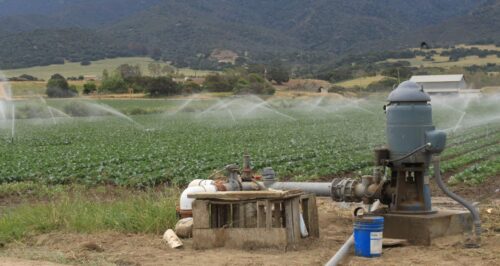 “To meet mandates of the Sustainable Groundwater Management Act, three options have emerged to achieve groundwater sustainability. In August, the board of the Salinas Valley Basin Groundwater Sustainability Agency will select one of these portfolios to recommend to the state’s Department of Water Resources for review. A hurdle is the cost. “We’ve had some real struggles,” Advisory Committee Chair Curtis Weeks told the board on July 9. “They see a number and they can’t talk about the merits of the project.” The project portfolios all incorporate some amount of demand management (reduction in pumping), optimization of the Castroville Seawater Intrusion Project, and use of a Monterey County Water Resources Agency permit to divert water from the Salinas River. … ” Read more from Monterey Now.
Report: Lettuce supplied by Taylor Farms linked to diarrhea-causing illness
“Taylor Farms, which is headquartered in Salinas, supplied lettuce to Taco Bell that has been linked to an outbreak of cyclosporiasis in five states according to reports by the Washington Post and New York Times. More than 30 states have reported infections this year, and current data from them shows the number of infections surpassing the record U.S. mark of about 4,700 set in 2019. The illness is not usually life threatening and is typically treated with antibiotics. Thursday, the Centers for Disease Control reported on its website that cyclospora infections in five states were linked to shredded iceberg lettuce served at Taco Bell locations in Indiana, Kentucky, Michigan, Ohio and West Virginia. The CDC reported 1,644 people who were infected reported eating at Taco Bell in those five states. There have been 94 hospitalizations and no deaths according to the CDC website. The Times and Post reported that two federal officials, who declined to be named, indicated the lettuce was supplied by Taylor Farms. The CDC did not name Taylor Farms or any specific supplier, only saying the lettuce came from Mexico. … ” Read more from the Monterey Herald.
Building soil health: Lessons learned from seven field trials on the California Central Coast
“Since 2016, California’s Healthy Soils Program (HSP) has allocated more than $162 million from cap-and-trade proceeds through California Climate Investments to improve soil health and sequester carbon (C). Program funding has supported both grower adoption of practices such as compost application, reduced tillage, and cover cropping, and demonstration projects evaluating these practices in California cropping systems. By minimizing soil organic carbon (SOC) loss associated with tillage and adding organic C from external inputs and plant biomass grown in situ, HSP practices increase soil C storage and help mitigate climate change (Kӧgel-Knabner et al. 2023). However, soil microorganisms also produce the potent greenhouse gas (GHG) nitrous oxide (N2O) (Butterbach-Bahl et al. 2013). For practices that affect nitrogen (N) cycling, such as fertilization, tillage, and irrigation, the balance between changes in SOC and N2O emissions needs to be considered (Verhoeven et al. 2017). … ” Continue reading from California Agriculture.
Unusual amount of oil and tar reported on beaches across South Coast
“When Caden McQueen was heading down Santa Barbara’s Milpas Street for a morning stroll on East Beach, the stench of petroleum caught his attention. “The smell was intense,” he said. As he approached the shoreline, he saw clumps of crude oil washing up onto shore from the breaking waves, some as big as tennis balls. McQueen noticed two swimmers rinsing off in the showers next to Cabrillo Pavillion, and “the water running away from the washing station was blackish brown. It was really quite appalling.” Carrie Giesy noticed a similar phenomenon yesterday at Santa Claus Beach in Carpineria, writing in to the Independent’s tip line that “a huge oil slick rolled in and completely covered the shoreline with giant globs of tar.” The City of Carpinteria issued a beach alert Thursday acknowledging that there is more than usual amount of tar and oil on the city’s beaches, attributed it to natural seeps, and said that the city “will not initiate a remediation response.” … ” Read more from the Santa Barbara Independent.
Board members sue over alleged ‘water scheme’ in western Fresno County water basin
“Farmers frustrated with recent actions by the Pleasant Valley Groundwater Sustainability Agency (GSA) board filed a lawsuit July 2 alleging the board president used his position to create a captive water market and are seeking an adjudication. An adjudication allows a court to determine how much water can be safely pumped from a basin and who has rights to how much of that pumped water. The lawsuit alleges that farmer Jimmy Anderson leveraged his dominant acreage position to seize control of Pleasant Valley Water District and GSA, installing a quorum on the board composed of relatives, employees, business associates and partners. And that he initiated a series of policies essentially giving himself a captive water market, according to the lawsuit. “It’s getting serious,” said plaintiff Brad Gleason. “People who don’t buy credits from the president have trees that are dying. He can pick and choose who he sells water to, which adds insult to injury.” … ” Read more from SJV Water.
Focus of treating Kern County ag water systems for invasive golden mollusk turns to reducing severe impacts
“The golden mussel, an invasive fresh-water mollusk, poses an unprecedented threat to Kern County’s agricultural industry. First detected two years ago in the Sacramento San Joaquin Delta, this invasive species, native to China, is inundating the water systems that serve California’s agriculture industry throughout the Central Valley, including systems tied to the State Water Project. The mussel is showing up in alarming numbers in the water systems that irrigate crop land in Kern County. Now experts say eradication of the golden mussel is not feasible, but reducing the severity of its impact is the only way to fight it. The people doing that work, like John Bison, a water treatment specialist with Bennet Water Solutions-GreenLeaf Ag has been busy of late. … ” Read more from KGET.
Bureau of Land Management approves Cadiz water pipeline
“The Bureau of Land Management on Friday, July 10, approved a right-of-way allowing Cadiz Inc. to carry water out of a desert aquifer and into communities across Southern California and possibly Arizona. The 50-year grant allows the company to convert its Cadiz Northern Pipeline from natural gas to water, and then to use the 220-mile pipeline to convey water across BLM lands. The water will come from the Fenner Valley Aquifer System in the eastern Mojave Desert, near California’s borders with Arizona and Nevada. Cadiz Inc. is developing a pumping and storage system called the Mojave Groundwater Bank to extract the water and use two pipelines — one the former gas pipeline — to pump it to customers. “We’re excited to achieve this pivotal milestone,” said Susan Kennedy, chair and CEO of Cadiz. “After many years of planning and environmental review, the project is now ready to begin the construction stage.” … ” Read more from the Hi-Desert Star.
San Diego water rate proposal could raise bills for low water users
“San Diego homeowners who use less water could see their monthly water bills increase next year under a proposed rate change that would eliminate the city’s tiered pricing system. The proposal, prompted by a court ruling in a case against the city of San Diego, would replace the current system in which customers who use less water pay a lower rate, and those who use more water pay more. If approved, all customers would pay the same rate, regardless of how much water they use. Under city estimates, single-family homes with low water usage would see their monthly bills increase by about 7%, or an average of $5.62 more each month. Meanwhile, single-family homes with high water usage would see their monthly bills decrease by nearly 6%, saving an average of $19.52 per month. “It seems like if this went through, it would totally take away the incentive to conserve,” Cynthia Hillman said. … ” Read more from NBC 7.
Lake Mead is dry as a bone. California is coming to help.
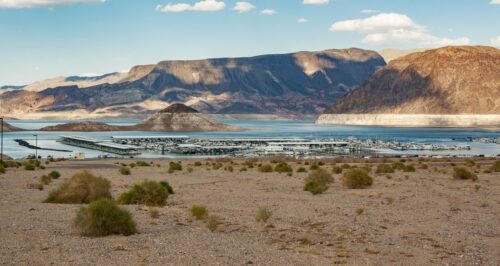 “The largest water district in California has agreed to leave billions of gallons of water in Lake Mead this year in an effort to save America’s largest reservoir — in exchange for up to $65 million in cold hard cash. The Metropolitan Water District of Southern California serves 26 different public water agencies, which in turn deliver water to about 19 million people spanning Los Angeles, Orange, Riverside, San Bernardino, San Diego and Ventura counties. The water giant holds some of the oldest and largest rights to the Colorado River, and was founded in the 1920s to build the 242-mile aqueduct that diverts water from the river and toward Southern California’s population centers. On Tuesday, the Metropolitan Water District Board of Directors agreed to leave up to 200,000 acre-feet of its allocated Colorado River water in Lake Mead this year. … ” Read more from SF Gate.
SEE ALSO: ‘It’ll buy us time’: Feds to pay millions to prop up dwindling Lake Mead, from the LA Times
The Colorado River’s biggest reservoirs are in ‘uncharted territory’ after new record low
“The nation’s two largest reservoirs are extraordinarily dry, and just set a new record for low water levels. Lake Powell and Lake Mead, which store water from the Colorado River for use by major cities, tribes, and a massive agriculture industry, are the lowest they’ve been in nearly 70 years. The last time their combined storage was this small was in May 1957, before Lake Powell was even built. The data comes from a new paper published by a widely-respected group of Colorado River experts. The paper’s authors — a group of academics and retired water officials — write that Powell and Mead are often measured separately, but should be counted together to paint a complete picture of how much water is available from a river that supplies nearly 40 million people across seven Western states. … ” Read more from KJZZ.

