
Several news sources featured in the Daily Digest may limit the number of articles you can access without a subscription. However, gift articles and open-access links are provided when available. For more open access California water news articles, explore the main page at MavensNotebook.com.
In California water news today …
Judge denies environmentalists pause on fed’s Shasta plan
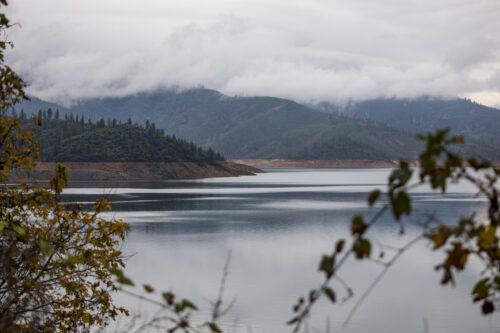
“A federal judge declined on Thursday to halt Northern California water infrastructure projects that a group of environmental nonprofits say will harm several vulnerable fish species. Denying a temporary restraining order, U.S. District Judge Jennifer Thurston said neither the plaintiffs — the Center for Biological Diversity, the San Francisco Baykeeper and Friends of the River — nor the U.S. Bureau of Reclamation provided her an argument on how to interpret the terms of a Endangered Species Act biological opinion for the Central Valley Project. “The bottom line is that the court cannot readily determine on this record whether plaintiffs’ interpretation of the [biological opinion’s] requirements is superior to or even competitive with Reclamation’s,” she wrote. “Thus, the court cannot find either likely success on the merits or a ‘serious question’ at this time.” The denial is without prejudice, however, the Joe Biden appointee wrote, noting briefing for a preliminary injunction is ongoing, and more clarity may be provided. … ” Read more from the Courthouse News Service.
EXPLORE MORE COVERAGE:
- June 2026 – Reclamation’s Approach to Compliance with Sacramento River Water Quality Standards and Permit Requirements, from the California Fisheries blog
- Reclamation’s Shasta plan poses salmon peril, from Alastair Bland at Maven’s Notebook (yesterday’s post)
Strong El Niño now a virtual certainty, forecasters say. What it means for California
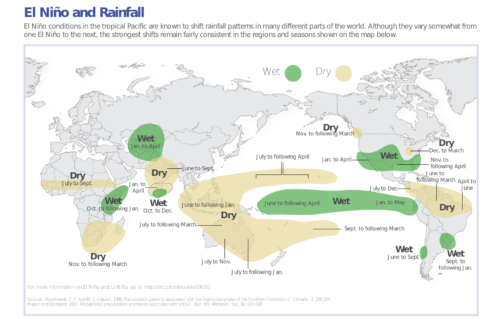
“A strong El Niño is virtually certain to develop this year, federal scientists say, and may end up being one of the strongest such events on record. The National Oceanic and Atmospheric Administration’s Climate Prediction Center said Thursday that there’s a 97% chance El Niño will be either “strong” or “very strong” over a three-month period ending this December. There’s an 81% chance it’ll be “very strong.” That could have a major impact in California, as strong El Niños significantly tilt the odds of expected weather outcomes during the winter. For the southern part of the state, that means a higher chance of above-average rainfall, risking a winter of flash floods and landslides. … ” Read more from the LA Times. | Read via AOL News.
What ‘very strong’ El Niño odds mean for California’s largest reservoirs
“A developing El Niño is forecast to become unusually powerful this winter, which could hold major implications for California’s water supply, reservoirs and flood risk. The odds of a “very strong” El Niño—defined by exceptionally warm sea-surface temperatures in the equatorial Pacific—have increased dramatically as the event develops. The National Oceanic and Atmospheric Administration’s (NOAA) latest outlook, released Thursday, shows a 75 to 81 percent chance of a very strong event between November and January, the heart of California’s wet season. … ” Read more from Newsweek.
EXPLORE MORE COVERAGE:
- Forecast for historic El Niño is getting much stronger — and also longer, from the San Francisco Chronicle
- Track how extreme this year’s El Niño could get, from the Washington Post
How climate change could raise your water bill
 “Perched on California’s Monterey Bay, Santa Cruz is known for its surfing, beaches and boardwalk. Less idyllic is its vulnerability to drought, which puts the beach town on the frontlines of a growing water crisis facing communities around the world as climate change intensifies. As the area gets hotter and drier, Santa Cruz could see median household water bills nearly double to as much as $120 a month from $64 by 2050, according to new research published in Nature Sustainability on Wednesday. These price increases reflect the need to build new infrastructure to expand the local water supply. … ” Read more from Bloomberg.
Sustainable Conservation: Spring 2026 Voices from the Field webinar series recap
“This spring, Sustainable Conservation welcomed experts from government, agriculture, conservation, research, and industry for our Voices from the Field webinar series. In the four conversations, panelists explored some of California’s most pressing climate, water, and environmental challenges, as well as the collaborative solutions needed to address them. Across the discussions, a common themed emerged: California’s climate and natural resource challenges are deeply interconnected, and the most effective solutions recognize and strengthen the connections between our watersheds, working lands, communities, and ecosystems. … ” Read more from Sustainable Conservation.
Poll shows nearly 8 in 10 California voters want a governor who prioritizes water
“A new statewide survey conducted by the Association of California Water Agencies (ACWA) and FM3 Research found strong, broad-based and bipartisan support for prioritizing and addressing California’s water issues. Among the highlights, 77% of California voters say they are more likely to support a candidate for governor who prioritizes improving California’s water reliability and affordability. That support holds up across party lines, including 83% of Democrats, 77% of Independents, and 67% of Republicans. The polling results reinforce the timing of ACWA’s Vision for Our Water Future initiative to elevate water as a top priority for California’s next governor, legislators and state officials. The Vision outlines a clear, solutions-focused framework to secure a resilient and reliable water system that meets the needs of California’s economy, communities and environment. … ” Read more from ACWA’s Water News.
In regional water news and commentary today …
NORTH COAST
Klamath drought programs see impressive enrollments
“The Klamath Project Drought Response Agency had applications covering nearly 40,000 acres for its no irrigation program, which will pay farmers to idle fields and preserve the basin’s water supply. “I expect when the dust settles on that we’ll be probably around 35,000 to 36,000 acres,” said Mike McKoen, vice president of the agency’s board of directors. Administrators are reviewing applications. … ” Read more from the Capital Press.
CDFW continues to cite individuals in Siskiyou County for illegal suction dredge mining
“The California Department of Fish and Wildlife (CDFW) continues to issue citations to individuals for violations related to unlawful suction dredging. Suction dredging is harmful to native fish and wildlife habitat, making it difficult for native species to thrive and creating favorable conditions for invasive species. On June 24, 2026, CDFW officers patrolled the Klamath River near Happy Camp, citing one individual for unlawfully possessing a suction dredge in closed state waters, a violation of California Fish and Game Code (FGC) section 5653(e). The dredge was seized as evidence. Officers used a helicopter and ground crew to remove the dredge and delivered it to a nearby location where it was safely loaded onto a trailer for storage. … ” Read more from the Department of Fish and Wildlife.
Great Redwood Trail Agency deploys $12.4M in climate bond funds for first segments
“California’s Great Redwood Trail took a major step forward with the first deployment of state climate bond dollars, as the Great Redwood Trail Agency board approved $12.4 million to advance priority rail-trail projects across Humboldt, Mendocino and Trinity counties. The Great Redwood Trail Agency board announced the first round of funding on June 23, 2026, after the agency’s Master Plan was approved in March. The $12.4 million is the first deployment from a $50 million award tied to Proposition 4, the climate bond passed by California voters in 2024. … ” Read more from KRCR.
Mendocino County considers data center moratorium
“The Mendocino County Board of Supervisors Tuesday directed staff to draft an urgency ordinance placing a temporary moratorium on any proposed data center projects so that their potential impacts can be more fully evaluated. “Lots of people in the community are concerned about this issue,” said 3rd District Supervisor John Haschak, who sponsored the proposed item along with 5th District Supervisor Ted Williams, explaining at the July 7 meeting that “in talking with the Department of Planning and Building Services, we don’t really have capacity right now to have discretion in the permitting of some of these data centers if they were to come into Mendocino County, so I think this moratorium just provides us a tool to really explore what the issues are, and to come up with an ordinance that would be appropriate for what the people in Mendocino County want.” … ” Read more from the Santa Rosa Press Democrat.
SIERRA NEVADA
We’re moving a river: Phase 2a of the La Grange Salmon Habitat Restoration Project is underway
“Right now, along a quiet stretch of the Tuolumne River near La Grange, our crews are doing something that sounds almost impossible: moving a river. Not far, but enough. Enough to give Chinook salmon a place to spawn again. Enough to undo, piece by piece, a wound that mining left behind more than a century ago. You can be a part of helping bring this river back to life. Field crews, biologists, and partner agencies are already working on the ground this summer. All they need now is you standing with them. … ” Read more from the Yosemite Rivers Alliance.
BAY AREA
San Francisco rain gardens filter microplastic tire particles and dozens of chemicals from stormwater
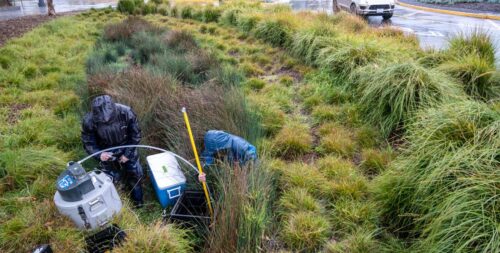 “San Francisco’s rain gardens—the unassuming patches of greenery and mulch designed to soak up rainwater alongside urban roadways—may improve the environment in more ways than realized. A new SFEI-led study shows that rain gardens substantially reduce levels of 21 contaminants in stormwater before that water ends up in San Francisco Bay. The paper published in the journal Environmental Science: Water Research & Technology investigated how rain gardens trapped pesticides, preservatives, pharmaceuticals, chemicals from vehicles and tires, and certain microplastics. The research is among the first to examine so many groups of chemicals across multiple rain gardens and storms. “With a broader dataset, you can examine and even challenge some assumptions that folks might make about the performance of these rain gardens,” says Rebecca Sutton, a study coauthor and lead scientist for emerging contaminants at SFEI. … ” Read more from the San Francisco Estuary Institute.
SF Bay Regional Monitoring Program: 20 Years of investigating underregulated chemicals
“The San Francisco Estuary Institute (SFEI) lobby displays a high case with two dozen glass bottles that appear plucked from a mad scientist’s lab. The liquid in many bottles looks clear; others have visible tinges of oily orange, bright green, or mouthwash-blue. Placards note a water quality contaminant contained in each, from trash to mercury to biotoxins. But a closer look reveals many bottles with a more unnerving label: “unknown.” These represent the emerging contaminants: chemicals that could threaten water quality, but are not well-studied in the environment or fully regulated. Most water quality monitoring focuses on “legacy contaminants,” which were recognized as threats to human or ecological health only after they accumulated enough in ecosystems to cause harm in the 20th century. Legacy contaminants like the pesticide DDT, which was banned in 1972, have forced society to undertake costly efforts to address the pollution. DDT can still be detected in California ecosystems today. Studying emerging contaminants in San Francisco Bay, says Lead Scientist Rebecca Sutton, is an effort to find “the next DDT” more quickly—before a chemical causes widespread and hard-to-reverse damage for people and ecosystems. … ” Read more from the San Francisco Estuary Institute.
Chevron says gasoline mixture spilled into San Francisco Bay from Richmond refinery
“Chevron said a small amount of gasoline mixture spilled into San Francisco Bay on Wednesday during maintenance work at its Richmond refinery. The company said in a Facebook post that “less than a barrel of hydrocarbon liquid” was released. A standard barrel of crude oil is 42 gallons, according to the U.S. Energy Information Administration. In a Thursday statement to the Chronicle, the company said the release was quickly stopped, kept away from environmentally sensitive areas and cleaned up. No community impacts were reported, according to Caitlin Powell, a Chevron Richmond spokesperson. … ” Read more from the San Francisco Chronicle.
Seasonal water tastes different, but Zone 7 says it’s proof of their rigorous monitoring
“Zone 7 Water Agency told residents that their drinking water remains safe despite a recent “earthy scent.” “Zone 7 Water Agency wants to reassure Tri-Valley residents that this seasonal aesthetic change poses absolutely no health risk, and the water remains entirely safe to drink and use,” the agency said in a June 30 statement. The odor arises from algae that bloom in the Sacramento-San Joaquin Delta during warm weather. The blooms produce a particularly strong-smelling organic compound called geosmin that humans can detect at very small concentrations — as low as 15 parts per trillion. Geosmin is also responsible for the smell of beet peels and bottom-feeding fish, such as tilapia and catfish. … ” Read more from the Livermore Independent.
CENTRAL COAST
Amended notice of hearing to consider modification of California American Water Company cease and desist order (State Water Board orders WR 2016-0016 and WR 2009-0060)
On July 1, 2026, the State Water Resources Control Board received an objection from California American Water Company (Cal-Am) to the proposed deadline of July 20, 2026, for submitting testimony, and all deadlines thereafter. The objection requested an extension of 30 days for each deadline, which is hereby granted as reflected in the attached Amended Hearing Notice. All other provisions of the June 19, 2026 Notice of Hearing remain in effect. … ” Read the full notice here.
San Lucas gets funds for water treatment
“More than $6 million in long-awaited funds are coming to help bring clean drinking water to the Salinas Valley town of San Lucas, which has gone without for more than a decade. The incoming funds are a combination of state and federal grants earmarked for the construction of a new water treatment facility. On Tuesday, the Monterey County Board of Supervisors unanimously approved the funding and authorized the Director of Public Works, Facilities and Parks to execute a 10-year, retroactive memorandum of understanding from 2025 to 2035 with the San Lucas County Water District to work together on the project. The town of roughly 325 people, just south of King City, has faced water quality issues since at least 2006 from pollution by nitrates and other compounds. … ” Read more from the Monterey Herald.
Cayucos residents face proposed 35 percent water rate increase
“Residents in Cayucos are facing a proposed water rate increase that could raise bills by more than 35 percent over five years, with some community members arguing that the county should address financial planning and infrastructure concerns before asking ratepayers to pay more. The increase applies to customers in County Service Area 10A (CSA 10A), the county-operated water system serving the South Cayucos community. The system provides drinking water to about 950 customers and is funded almost entirely through customer rates and charges. Under the county’s proposal, the base rate would increase 15 percent in the first year, followed by 5 percent annual increases for the next four years. The average bi-monthly bill would raise from about $217 to approximately $304 by the fifth year. … ” Read more from New Times SLO.
SAN JOAQUIN VALLEY
Can AI help Valley farmers feed a growing world population? A new supercomputer may hold the answer
“On a bright sunny day in the Central Valley city of Selma, farmer Drew Ketelson was out with his crews harvesting nectarines. Ketelson, vice president of HMC Farms, grows stone fruit – nectarines, plums, peaches, apricots and table grapes. In recent years, he’s experimented with different technologies to ease the workflow on his crops. “We’re using moisture sensors, we’re using aerial drones, we’re using AI tools to help us analyze the weather and make better irrigation decisions,” Ketelson said. “I forget how much stuff we have until I look at the list and I go, ‘oh my goodness, we do have a lot of technology out here.’” Ketelson is just one of many farmers in the region who have had to adapt and modernize their farm operations to maintain and increase their production. … ” Read more from KVPR.
SOUTHERN CALIFORNIA
Trump administration OKs California company’s plan to pipe water out of the Mojave Desert
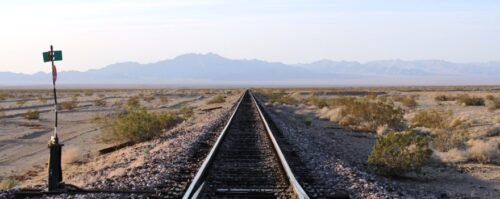 “The company Cadiz Inc. has been trying for years to pump groundwater in the Mojave Desert and ship it to thirsty cities in California. Now, the Trump administration has signed off on part of its plan: converting an oil and gas pipeline to transport water across the desert. The federal Bureau of Land Management released documents Thursday saying the company’s plan to repurpose 162 miles of the pipeline to transport water “will not significantly affect” the environment. “We’re excited to achieve this pivotal milestone. After many years of planning and environmental review, the project has now reached the construction stage,” said Susan Kennedy, chair and chief executive of Cadiz. … ” Read more from the LA Times. | Read more from Yahoo News.
IMPERIAL/COACHELLA VALLEYS
Borrego Springs sees lowest groundwater pumping since 2021
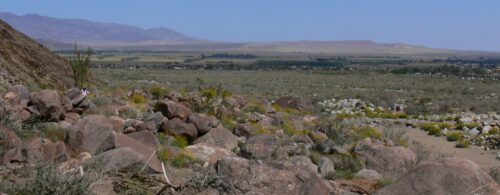
“Borrego Springs recorded its lowest groundwater pumping since 2021, marking a significant milestone in the community’s long-term conservation efforts. The reduction reflects measurable progress under the court-approved plan to protect the Basin’s water supply for homes, businesses, farming, and recreation. Figures presented during the May 2026 Borrego Springs Watermaster meeting showed continued reductions across every major water-use sector, offering one of the clearest signs yet that the community’s conservation efforts are making a difference. According to the presentation, groundwater pumping in Water Year 2026 was down 1,551 acre-feet compared to WY 2025 and was the lowest pumping volume recorded since 2021. All sectors reduced pumping compared to the previous year, including agriculture, municipal users, recreation, and other groundwater users. … ” Read more from the Borrego Sun.
Coachella moves closer to permanent data center ban. What’s next?
“The city of Coachella moved closer to becoming one of the first California cities to permanently ban data centers this week, following recent community pushback against a proposed data center project that the council initially approved then rejected months later. The city council agreed to extend a moratorium on new data centers during its meeting Wednesday, July 8. The extension adds 10 and a half months to the 45-day pause initially adopted by the council in early June. The council plans to consider a permanent data center ban in August, but the extension was needed to avoid any timeline gaps between the pause and the ban. The moratorium came about in June, after the council also opted to cancel its development contract with a company, Stronghold Power Systems Inc., it had hired months ago to build the center. … ” Read more from the Desert Sun.
California’s largest lake is turning to dust
“Michelle Dugan-Delgado has had asthma for as long as she can remember. It’s why she always takes an inhaler and face mask with her when she leaves the house — just in case the wind picks up and a dust storm hits. “I know that it’s not safe for me to go outside,” she told DW. “It’s like I live in a bubble. I have to really protect myself.” … Dust storms are common in the region, which is home to around 500,000 people. A major source of that dust is a huge lake that’s steadily drying up. Spanning some 343 square miles (888 square kilometers), the Salton Sea is California’s largest lake. But it’s rapidly shrinking. When winds sweep over the exposed lakebed, they pick up the parched sediment, producing harmful dust storms. Children living near the lake have been found to have disproportionately high rates of asthma. One study that followed more than 700 primary-school aged children over a number of years found that 24% reported having the condition — far higher than the national rate of about 7% for boys and 5.5% for girls. Over 70% had allergies — more than three times the national average. … ” Read more from DW.
Imperial County reverses course, unanimously approves data center moratorium after intense community pushback
“Facing mounting public anxiety over the rapid growth of the technology sector, the Imperial County Board of Supervisors voted unanimously on Tuesday to place an immediate freeze on the approval of all new data center facilities within the county’s unincorporated territories. The decision marks a sharp shift in tone for a region that has balanced economic ambitions with community preservation. Only weeks earlier, the board had signaled cooperation with tech developers in a contentious 4-1 vote, approving a major lot merge that allowed a pending data center project to advance. In that previous decision, Supervisor Martha Cardenas-Singh cast the lone dissenting vote. … ” Read more from the Imperial Valley Press.
SAN DIEGO
Environmental groups urge USMCA review to address Tijuana River pollution
“Environmental organizations from the United States and Mexico are urging officials to use the upcoming review of the U.S.-Mexico-Canada Agreement (USMCA) as an opportunity to address the long-running pollution crisis affecting the Tijuana River watershed. During a news conference Thursday, WILDCOAST, Sierra Club, the Tijuana River Coalition, 4 Walls International and other nonprofit organizations called for stronger environmental protections and long-term investments to tackle what they described as one of North America’s most serious cross-border environmental and public health challenges. Serge Dedina, executive director of WILDCOAST and former mayor of Imperial Beach, said the Trump administration’s decision to conduct an annual review of the USMCA creates an opportunity to incorporate stronger environmental provisions into the trade agreement. … ” Read more from San Diego Red.
Along the Colorado River …
Upper, Lower Colorado River basin states fail to make agreement on Lake Powell
“The upper and lower Colorado River basin states are working to make a plan for the future of Lake Powell amid critically low water levels. Without consensus, they could be heading to a court battle. The reservoir, located on the Utah and Arizona border, is less than 24% of its full capacity. It’s current elevation is 27 feet above the level the Bureau of Reclamation says is needed to operate the Glen Canyon Dam. If the dam were to fail, this would impact the water supply of about 40 million residents in western states. “The management plans are going to need to change,” said Beth Hensshaw, co-owner of Pronghorn Expeditions in Page, Arizona. “How the water’s been managed so far has been not adapting to the inflow.” … ” Read more from Channel 2.
Colorado’s water commissioner says drought conversations are tough as ever
“As the war over rights to Colorado River water heads toward the brink of a colossal standoff between seven states with varying interests, one state’s water commissioner said there’s one thing on which all can seemingly agree. The federal government, the state of Colorado’s Colorado River Commissioner said, should not be the one to settle the dispute. “Once we release some of the reins, the states release some of the reins and control, I don’t believe we’ll ever get it back in the same way,” Rebecca Mitchell, the commissioner, said in an interview with the 8 News Now Investigators. “And so that’s the biggest downside to the feds coming in.” The federal government is expected to release a plan this summer that might cut Nevada’s primary water supply by 40% as projections for the Colorado sink to new lows. … ” Read more from KLAS.
Is arsenic rise natural? Grand Canyon uranium mine sparks debate
“Last week, the Arizona Department of Environmental Quality (ADEQ) quietly approved a controversial permit change that will allow a uranium mine to operate with higher levels of arsenic in its groundwater monitoring systems. The decision caps months of heated debate between a mining company, state regulators, environmental organizations, and an American Indian tribe that depends on the area’s groundwater for survival. The Pinyon Plain Mine, formerly known as Canyon Mine, was constructed during the 1980s and spans 17 acres, roughly six miles south of Grand Canyon National Park. The mine descends nearly 1,500 feet underground and sits directly above the Redwall-Muav aquifer, a critical water source. This aquifer is not just any water supply. It serves as the sole drinking water source for the Havasupai Tribe and feeds Havasu Creek, a tributary of the Grand Canyon famous for its stunning turquoise waterfalls. The falls attract approximately 40,000 tourists annually. … ” Read more from Western Water.
SEE ALSO: Arizona Regulators Are Raising Contaminant Limits for a Uranium Mine With an Arsenic Problem, from Inside Climate News
Are less-thirsty crops a solution to Colorado’s growing water problems?
“Surveying miles of sprouting Eastern Plains farm fields, the logic around Colorado’s deepening water crisis might sound simple. Colorado each year sinks deeper and deeper into a crisis of water shortages. Up to 90% of the water available in the state each year is used for agriculture. It takes 44 inches of water a year in Burlington to grow alfalfa. Only about 10 inches of water drops on Burlington in a year. It only takes 15 inches of water to grow a healthy crop of black-eyed peas in Burlington. So. The numbers point to seemingly obvious questions: Why couldn’t a lot of eastern Colorado farmers switch crops to black-eyed peas, and sell their saved irrigation water to thirsty Front Range cities, or get paid to leave it in the Colorado and South Platte rivers for others to use? … ” Read more from Water Education Colorado.
In national water news today …
Where are the most data centers planned?
“Driven by the demands of A.I., more than 1,500 U.S. data centers are in the development pipeline, with the rural South leading the wave, according to a Pew Research Center analysis of Data Center Map, an industry resource and marketplace. While most existing data centers are in urban areas, many new ones are planned in rural locations. “The biggest areas are Texas, Virginia and Georgia,” said Matthew Shaw, a Coalition for Responsible Data Center Development volunteer. With an abundance of land and water, the South hosts 1,209 data centers, with plans for 754 more. Many locals have pushed back against the opening of these massive power-hungry facilities. Potential downsides include increased electricity costs, loud noises, water management concerns and light disruption, said Anthony Pipa, a Brookings fellow researching rural data centers. “People have ancestral homes out there,” said Steve Swope about the proposed Project Sail data center site in Coweta County, Ga., near his home. “Their property values are just going to be destroyed. They moved out there for a quiet, rural lifestyle, and now they’re faced with 10 years of ongoing construction.” … ” Read more from the New York Times.

