
By Alastair Bland
In spite of a relatively wet winter, late rains, and high reservoir levels—conditions that generally benefit aquatic ecosystems—California’s ailing chinook salmon are facing unexpected peril in the main river system where they spawn. State officials and environmental groups have warned that an aggressive water delivery plan by federal reservoir managers has temperatures in Lake Shasta and the Sacramento River on track to kill vast numbers of salmon this fall.
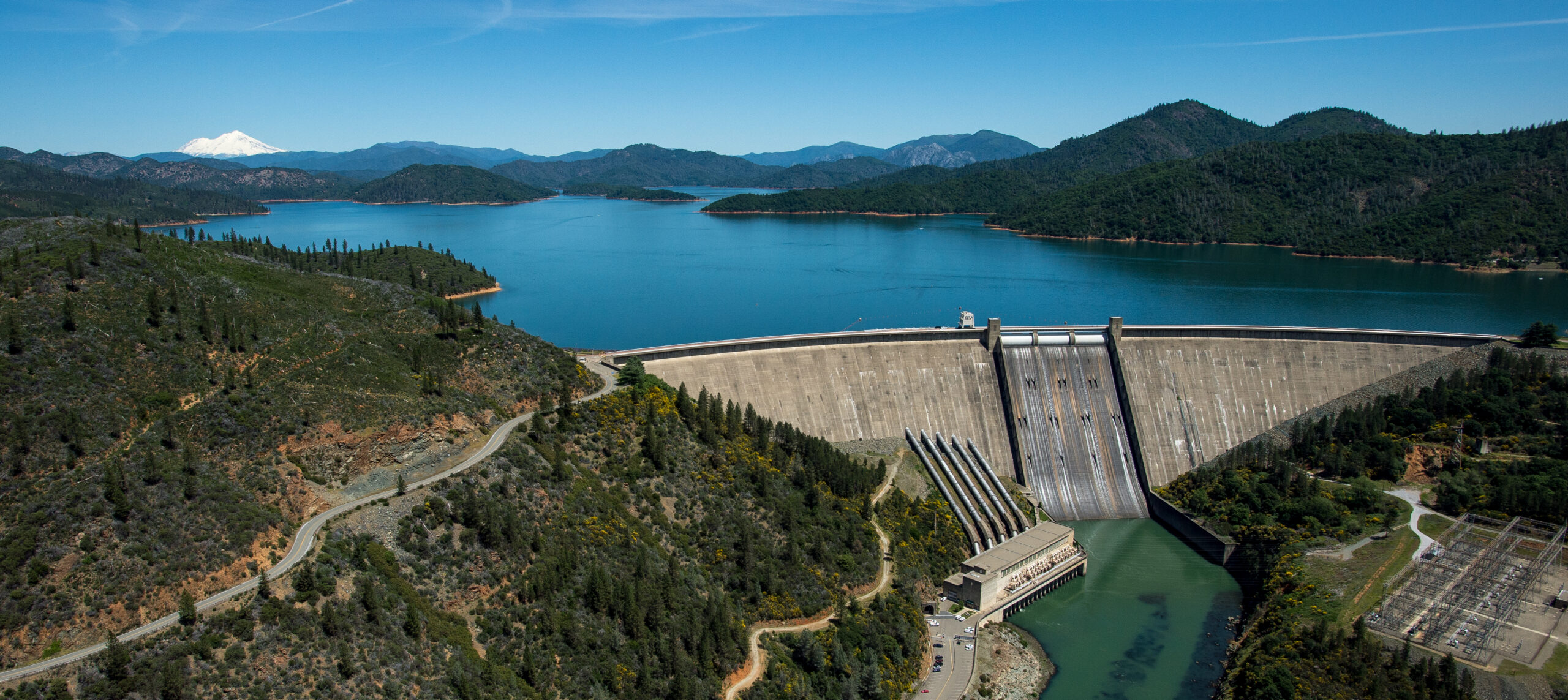
The bleak outlook comes as the U.S. Bureau of Reclamation rapidly spills water from Lake Shasta, the state’s largest reservoir and the infrastructural headwaters of the federal Central Valley Project. This system of canals, dams, reservoirs, and pumps supplies water for about 1 million households and 3 million acres of farmland.
In its 2026 Sacramento River Temperature Management Plan, finalized May 29, the Reclamation outlined its intention to finish the irrigation season with about 2.2 million acre-feet of water in Lake Shasta. State officials and salmon advocates have challenged the plan, saying that recent hydrologic conditions have triggered a legal requirement that Shasta contain 200,000 acre-feet more water by the end of this September than the bureau’s target. They’ve also said such rapid releases as the bureau is planning violate state law and federal endangered species protections embedded in rules adopted in 2024 by the National Marine Fisheries Service (the Biological Opinion for the Long-Term Operation of the Central Valley Project).
In a May response to the draft temperature plan, Brooke Jacobs, chief of the California Department of Fish and Wildlife’s Water Branch, said Lake Shasta’s “cold water pool will be depleted as a result of high summer releases, which will result in elevated water temperatures for fall-run Chinook salmon and high levels of mortality.”
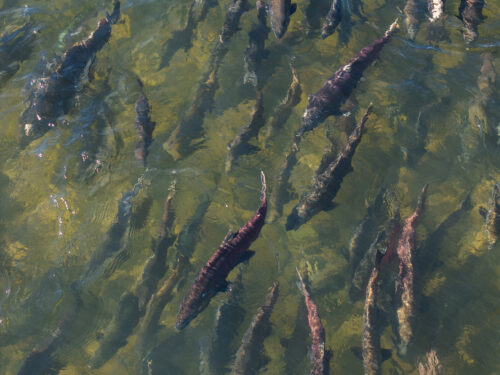
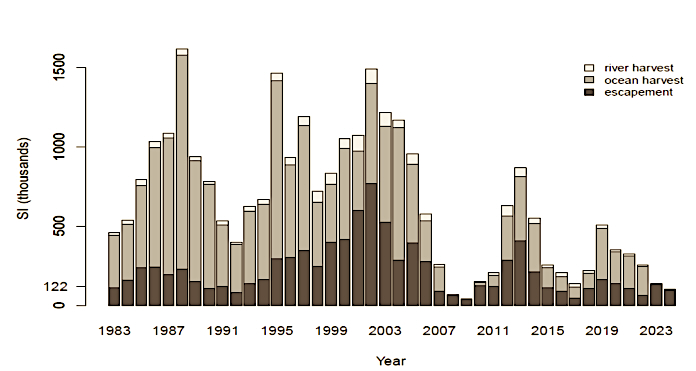
Severe “temperature-dependent mortality” of salmon juveniles occurred in 2021. This contributed to a sharp crash in returns to the upper river reaches, just below Lake Shasta, from 51,000 spawners in 2021 to fewer than 5,000 three years later. By then, the total Central Valley population had imploded from more than a million fish in the 1990s and 2000s to about 100,000, and the salmon fishing fleet was into its second year of a three-year season closure. A highly restricted season has been allowed in 2026.
Even as the salmon fisheries have collapsed, the agricultural industries that compete with them for water have flourished, generating hundreds of billions of dollars in this century alone. The industry has fiercely opposed measures that would leave more water in the rivers for fish, while lobbying for augmented reservoirs and new delivery infrastructure, as well as a controversial system of “voluntary agreements” for regulating diversions.
Hoping to help save winter-run chinook from extinction by forcing a deceleration of summer releases from Shasta Dam, San Francisco Baykeeper, Friends of the River, and the Center for Biological Diversity filed a motion for a temporary restraining order on June 24 against the Bureau of Reclamation and other federal agencies.
“We want them to submit a plan to operate the reservoir to end with 200,000 acre-feet more in Shasta at the end of September,” says Eric Buescher, Baykeeper’s managing attorney. “We think that’s what’s required by the biological opinion and the Endangered Species Act.”
Autumn reservoir levels are no quibbling matter. Low storage by late summer and fall tend to cause higher water temperatures in the reservoir’s outflow and, consequently, higher mortality of fertilized salmon eggs and juvenile fish. Modeling from NOAA’s Southwest Fisheries Science Center and U.C. Santa Cruz shows that the relatively small difference between 2.2 and 2.4 million acre-feet in Shasta at September’s end could reduce temperature driven mortality from 45% to 34%–still very high, says Baykeeper’s science director Jon Rosenfield, but a critical improvement.
According to an analysis by the State Water Resources Control Board, the Bureau of Reclamation’s operation plan for Shasta could create conditions like those of 2015, an extreme drought year in which almost all winter-run chinook born in the summer and fall died of high water temperatures and other harmful conditions downstream of Shasta Dam and its smaller counterpart Keswick Dam. Abnormally low snowpack in California’s mountains this year will probably aggravate adverse conditions.
A specific concern in 2026 is that higher releases during the endangered winter run’s summer spawning window, which peaks in June and July, will coax egg-laying females onto high gravel bars that would likely be dewatered by reduced flows in the fall, leaving eggs high and dry—the sort of event that has caused devastating mortality to salmon in past years.
Only winter-run chinook mortality is closely tracked, because the fish are federally endangered, but the fall run, because they spawn shortly after the winter run, likely experience similar conditions, according to experts.
In June, the water board rejected the bureau’s temperature plan and requested that the bureau modify it with “measures that are more likely to result in favorable temperature management conditions for winter-run and fall-run chinook salmon, which could include higher [end-of-September] carryover storage.”
But the bureau has doubled down. In July, it shot back at state water officials, concluding “that the Board must reconsider its objection” and declared that “[i]n the meantime, Reclamation will continue implementation of its Temperature Management Plan.” The bureau’s actions are consistent with an agency aligning with the 2025 executive order from President Donald Trump that the Central Valley Project deliver more water to farmers, regardless of environmental regulations that might stand in the way.
In their June 24 court filings, the three plaintiff groups also personally challenged the Interior Secretary Doug Burgum, Commerce Secretary Howard Lutnick, and Scott Cameron, the Bureau of Reclamation’s Acting Commissioner, for endangering federally protected chinook, steelhead, and green sturgeon from the operation of the Central Valley Project.
The escalating conflict centers on Biden-era requirements for how much water must remain in Lake Shasta each year by the end of September. Those rules, part of the 2024 biological opinion, proposed water year designations as “bins.” Bin 1 years, reflective of abundant water, are defined as years when end-of-April storage in Shasta is equal to or greater than 3.7 million acre-feet. A year is bumped to Bin 2 if, by April 30, Shasta contains between 3 million and 3.7 million acre-feet of water. (Letters, A and B, are also assigned to each bin ranking, with B implying the need for more cautious use of water based on expected demands through the summer.)
The numeric bin categories correspond to distinct requirements for storage in Shasta at the end of September, with Bin 1 years requiring more water kept in the reservoir—at least 2.4 million acre-feet—than in Bin 2 and 3 years.
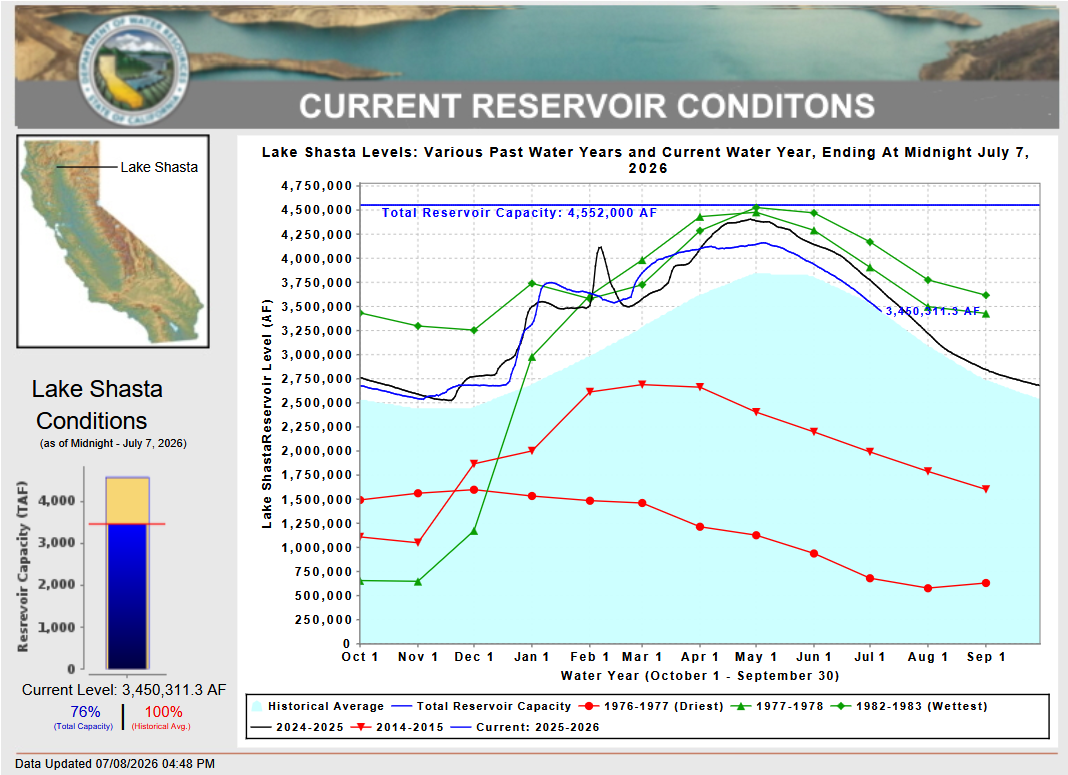
On April 30 of this year, Lake Shasta contained more than 4.1 million acre-feet—just a little shy of full. By the 2024 endangered species rules, this makes 2026 a Bin 1 year.
But in May, the Bureau of Reclamation declared 2026 to be a Bin 2A year, justifying their plan to drain Shasta down to 2.2 million acre-feet by the end of September in order to send more water to San Joaquin Valley farms. Moreover, the agency’s staff, sometime between spring of 2025 and spring of 2026, edited the table of guidelines that dictates the terms for determining the water year’s bin number. The 2026 table—published with the latest temperature management plan—presents modified water volume criteria consistent with assigning 2026 to Bin 2 rules.
The Bureau of Reclamation said no changes were made to the criteria between 2025 and 2026.
“The apparent difference between the tables in the 2025 and 2026 Temperature Management Plans reflect two different ways of summarizing the same operational framework, not a change to the underlying approach,” wrote regional communications chief Mary Lee Knecht in an email.
Baykeeper’s Rosenfield said, “it’s definitely a change,” and added, “It’s different this year, and it obviously matters … it obviously has an effect on the outcome.”
The agency made its Bin 2 assignment even as it acknowledged “modest improvements in reservoir storage and spring runoff conditions across California’s water system” in a May press release announcing increased water deliveries to its San Joaquin Valley agricultural recipients.
The bureau’s actions disappointed fishery advocates.
“We can’t be surprised that this administration is hostile to salmon,” said John McManus, senior policy director for the Golden State Salmon Association. “We can’t be surprised that this administration bends over backwards to help its supporters in the San Joaquin Valley take water from Northern California’s salmon rivers and dump it on a desert in the San Joaquin Valley.”
Rosenfield says the bureau apparently used a reverse pathway, with predetermined plans to maximize water deliveries, to justify a Bin 2A ranking.
“They’ve been planning to make this a Bin 2 year regardless of how much storage there was,” Rosenfield says.
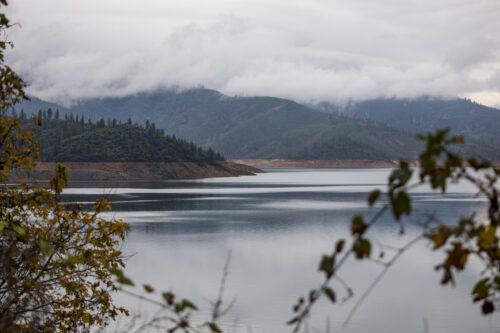
At a March 26 meeting, the agency’s staff presented plans to drain the reservoir down to 2.1 million acre-feet–which would only be allowable by a Bin 2B designation.
By the 2024 rules, the only way such a water year as 2026 could be ranked Bin 2 would be if the bureau demonstrates that it will be impossible for some reason to manage the reservoir to Bin 1 end-of-September storage requirements of 2.4 million acre-feet–what Rosenfield says the agency has not even claimed is the case.
“They haven’t used the magic word ‘impossible’ because in fact it very clearly is possible,” he says.
Though the water board has firmly rejected the bureau’s Shasta plan, it’s not clear how much, if any, physical enforcement power the state’s top water regulator actually has. In an emailed statement, the state water board said that Reclamation remains obligated under state-issued water rights to maintain and monitor protective conditions for fish “and report on these conditions to the board.”
“The board will continue to coordinate and work closely with Reclamation to improve temperature management planning in the years ahead with the goal of protecting fisheries and water supplies,” the water board added.
Should court orders land in the plaintiffs’ favor, it’s even reasonable to expect they could fall flat before the bureaucrats of the Trump Administration.
“We’ll find out where the rubber meets the road,” McManus says. “The court doesn’t have officers who will march up to Shasta and turn the dam off.”
McManus says poor survival of salmon this fall will most directly impact 2029’s adult population of Sacramento River Chinook. While improved hatchery production—especially methods of transporting the fish downstream and around the perils of the river system—could provide a cushion against in-river temperature impacts, McManus said natural production in a healthy river system is critical for a viable fishery and ecosystem.
“We’ve only had good fishing years when we’ve had strong contributions not only from the hatcheries but also from naturally spawned salmon,” McManus said. “The bureau’s plan to release hot water from Shasta Dam and kill that spawn will have a significant effect on the fishery, without a doubt.”
This article was updated to include the July 9 court decision and comments from the Bureau of Reclamation.
This article was produced by Estuary News Group.
Explore more coverage …
UC DAVIS: A secret to survival for California’s most endangered salmon
By Michael Milstein, UC Davis A secret to the survival of juvenile salmon as they form in their eggs is revealed by a new study from NOAA Fisheries and the University of California, Davis. Sacramento River winter-run Chinook salmon are California’s most endangered salmon, with a single surviving population and an average of a few thousand returning fish in recent decades. Shasta Dam blocks their original habitat in cold mountain rivers draining Mount Shasta, leaving them to spawn in the […]

NOAA FISHERIES: The 15-day window that may decide salmon survival
Chinook need cold water in first weeks for their eggs to survive. By NOAA Fisheries Traditional field research combined with new technology has revealed a secret to the survival of juvenile salmon as they form in their eggs, especially in low-water years when many do not survive, new research from NOAA Fisheries and the University of California, Davis shows. Sacramento River winter-run Chinook salmon are California’s most endangered salmon, with a single surviving population and an average of a few […]
COURTHOUSE NEWS: Judge says environmental groups fell short in bid to pause California water projects
The decision hinged on the interpretation of a 2024 Endangered Species Act biological opinion By Alan Riquelmy, Courthouse News Service A federal judge on Monday opted to impose no restrictions on operations for a massive California water conveyance system, determining environmental groups failed to meet their burden. U.S. District Judge Jennifer Thurston wrote that the Center for Biological Diversity and other plaintiffs must make a heightened showing before she will issue a preliminary injunction over the U.S. Bureau of Reclamation’s […]
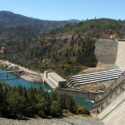
SHASTA DAM: State Water Contractors responds to Court’s denial of request for a temporary restraining order
State Water Contractors applaud decision, which reinforces science-based water management From the State Water Contractors: On Thursday, July 9, the U.S. District Court denied a request for a temporary restraining order that would have restricted the U.S. Bureau of Reclamation’s planned operations of Shasta Dam and reduced releases for the remainder of summer and early fall. The Court found the Bureau’s operational plans represented a reasonable interpretation of the 2024 Endangered Species Act biological opinion, clearing a path toward more […]
COURTHOUSE NEWS: Judge denies environmentalists pause on fed’s Shasta plan
Conservation groups say the large water infrastructure projects in Northern California could harm vulnerable salmon, trout and sturgeon populations. By Carly Nairn, Courthouse News Service A federal judge declined on Thursday to halt Northern California water infrastructure projects that a group of environmental nonprofits say will harm several vulnerable fish species. Denying a temporary restraining order, U.S. District Judge Jennifer Thurston said neither the plaintiffs — the Center for Biological Diversity, the San Francisco Baykeeper and Friends of the River […]
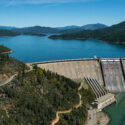
NOTEBOOK FEATURE: Reclamation’s Shasta plan poses salmon peril
By Alastair Bland In spite of a relatively wet winter, late rains, and high reservoir levels—conditions that generally benefit aquatic ecosystems—California’s ailing chinook salmon are facing unexpected peril in the main river system where they spawn. State officials and environmental groups have warned that an aggressive water delivery plan by federal reservoir managers has temperatures in Lake Shasta and the Sacramento River on track to kill vast numbers of salmon this fall. The bleak outlook comes as the U.S. Bureau […]
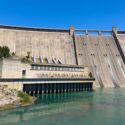
NGOs say Water Board must compel Reclamation’s compliance with water rights permits for Shasta Temperature Management Plan
San Francisco Baykeeper, the Winnemem Wintu Tribe, the California Sportfishing Protection Alliance, Restore the Delta, the Resource Renewal Institute, and Friends of the River sent a letter to the Executive Director of the State Water Resources Control Board supporting the decision to reject the Bureau of Reclamation’s Shasta Temperature Management Plan. However, they urged the Board to require Reclamation to comply with its permits, arguing that otherwise the Board’s response amounts to an objection in name only. The groups describe […]
Read more on Shasta temperature management.
