
Several news sources featured in the Daily Digest may limit the number of articles you can access without a subscription. However, gift articles and open-access links are provided when available. For more open access California water news articles, explore the main page at MavensNotebook.com.
On the calendar today …
- PUBLIC HEARING: Delta Conveyance Project water right hearing beginning at 9am. The State Water Resources Control Board Administrative Hearings Office is holding a Public Hearing on the pending Petitions for Change of Water Right Permits for the Delta Conveyance Project. Interested members of the public who would like to watch this hearing without participating may do so through the Administrative Hearings Office YouTube channel at: bit.ly/aho-youtube. Click here for the meeting notice.
- MEETING: Central Valley Regional Water Board beginning at 9am. Agenda items include several WDRs and NPDES permits. Click here for the agenda.
- WORKSHOP: Mono Lake Water Quality, Salinity, Brine Shrimp and Alkali Flies from 10am to 12pm. Presenters will be Dr. John Melack and Dr. David Herbst. Speaker biographies, presentation summaries, and related information are available here. Registration link: bit.ly/ML2026WkShp1
- WEBINAR: Tribal Water Rights in California from 11am to 12pm. Water rights are essential to the well-being of California’s Tribes—yet these rights are often poorly understood. As Tribes begin to play an increasingly significant role in regional water management in California, we present key findings from a new report about the history and current status of Tribal water rights and convene a panel of experts to discuss what’s next. Click here for more information and to register.
- WEBINAR: Data for Lunch: Inside California’s Open Data Ecosystem from 12pm to 1pm. This year marks 10 years since California passed the Open and Transparent Water Data Act (AB 1755, Dodd), a landmark commitment to making water and ecological data accessible, interoperable, and useful. A decade in, it’s worth asking: What have we built? And what still needs to happen? This special panel edition of Data for Lunch brings together three practitioners who each sit at a different node of California’s open data ecosystem; Together, these three efforts represent the full stack: how data gets published, how it gets discovered, and how it gets used in practice. This is a conversation about what it takes to build California’s open data ecosystem, from AI readiness and federated platform architecture to governance frameworks and data model design. Panelists will get into the hard stuff: standardization problems that lack clear solutions, path-setting architectural decisions, and workforce and platform gaps that are slowing progress. They’ll help us identify what needs to change and who can help make it happen. Click here to register.
In California water news today …
Trump official shares vision of desal plants lining California coast
“President Donald Trump’s top Colorado River official visited San Diego Wednesday to say the president sees “real potential” in developing more plants that make drinking water using the ocean – right off the California coast. That’s a problem for environmentalists, who say desalination plants are environmentally harmful, energy intensive and costly. “Imagine a future where a string of six, or even a dozen desalination facilities are operating along the California coast providing ample amounts of beautiful, clean, clear, fresh water in an environmentally benign way to serve not just California communities but to be shared at a reasonable price with… sister states to the east,” said Scott Cameron, acting commissioner of the Bureau of Reclamation, standing in front of the Carlsbad desalination plant. … ” Read more from the Voice of San Diego.
Solar power for state’s biggest water project comes with hefty price tag – for users
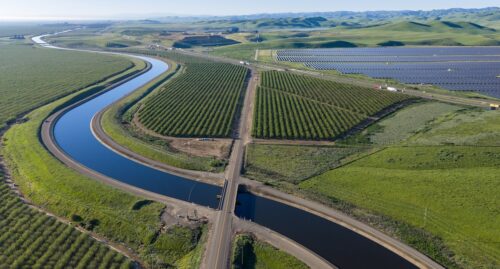
“Water contractors can expect to pay between 1% to 3% more for the energy it takes to bring supplies down the state through California’s largest project thanks to just one renewable energy project that came online recently in Kern County – the Pastoria Solar Project. And that’s just the beginning. When the Department of Water Resources (DWR) brings on enough renewable energy projects to fully power the State Water Project (SWP), contractors can expect their costs to increase another 10% to 20%, according to a presentation at the May 20 California Water Commission meeting by DWR Manager of Power Operations Jorge Quintero. … ” Read more from SJV Water.
A massive Pacific jet stream could shake up California weather
“The Bay Area’s Thursday forecast looks fairly quiet, but the atmosphere over the Pacific is not. After a windy Wednesday, gusts should ease Thursday across much of the Bay Area. And the sun should pop out earlier. Temperatures will be very similar to Wednesday, perhaps a bit warmer in spots. Highs will range from the upper 50s and 60s near the coast to the 70s around the bay, with 80s possible in parts of the North Bay, East Bay and South Bay valleys. Meanwhile, over the Pacific Ocean, an interesting pattern is taking shape. The jet stream, a narrow band of powerful west-to-east winds about 30,000 to 40,000 feet above the ground, is unusually long right now. By early next week, it may stretch more than 6,000 miles from near Korea to the West Coast. That does not guarantee rain or storms in California. … ” Read more from the San Francisco Chronicle.
Delta private island up for sale as $39,000 listing sparks interest
“A secluded island in California’s Sacramento-San Joaquin River Delta has surfaced on the market with a price tag that’s turning heads: just $39,000 for 5.6 acres of land surrounded entirely by water. The property sits in White Slough near Stockton and is part of a chain of small Delta islands, many of which remain undeveloped despite the sprawling agricultural landscape that surrounds the region. Some neighboring islands have been transformed into campgrounds, marinas, recreation destinations and private clubs. According to the Zillow listing, the island offers buyers a rare chance to own a completely private piece of Delta real estate accessible only by boat. … ” Read more from New York Post.
Southern California water agencies mount massive push for reuse
“Not so long ago, the idea of treating wastewater to drinkable standards and reusing it to boost drinking water supply faced enormous public opposition. During the 1990s, Los Angeles officials were on track to build a facility to treat wastewater to highly purified standards before conveying it to spreading grounds in California’s San Fernando valley, where the water would trickle and filter down to groundwater basins and aquifers. But the project was scrapped due to political and public fears about the safety and quality of water derived from treated effluent. Time and technology have changed since then. … ” Read more from Engineering News Record.
Agenda released for Second Ag Expert Panel’s June 5 final plenary meeting; Central Coast revised ag order open for comments
“After convening for two additional working group meetings in May to respond to public comments, the Second Agricultural Expert Panel will meet for the last time this Friday, June 5, 10 am – 4 pm to discuss their final report to the California State Water Board and hold a vote on approving it. The latest version of the report is dated May 29, 2026, and can be accessed through the panel FTP site using the username agpaneldocs-ftp and password AgriculturalExpertPanel2!. The expert panel was assembled in August 2025 to advise the State Water Board on reducing nitrogen contamination of groundwater through California’s Irrigated Lands Regulatory Program (ILRP). Specifically, the State Water Board declared its intent to convene the expert panel in its remand order rejecting elements of the Central Coast Regional Water Board’s 2021 Ag Order 4.0. … ” Continue reading from Jane Sooby at Maven’s Notebook.
The gubernatorial field is set, now is the time to talk about water
“Ernie Avila, President of the Association of California Water Agencies (ACWA), issued the following statement in response to Tuesday’s primary election results. “Between now and the November election, the candidates for California’s governor have an opportunity to champion a nonpartisan issue that unites every resident, business and community – water. Water transcends political lines, offering a shared purpose for all 40 million Californians who depend on a safe, reliable water supply to thrive by facilitating new housing, stabilizing grocery prices for families, and strengthening our communities against wildfires. … ” Read more from ACWA Water News.
State Water Board tightens notification and response levels for manganese in drinking water
“Based on data evaluating potential health risks to formula-fed infants, the State Water Resources Control Board is lowering the notification and response levels for manganese in drinking water. Notification and response levels are non-regulatory health-based thresholds used for contaminants that do not currently have a state-established primary maximum contaminant level, but public notification or additional actions may be warranted to reduce exposure. Manganese is a naturally-occurring trace mineral that can lead to neurological issues at high levels in drinking water. It can also cause discoloration of water, plumbing fixtures and laundry. The revised health-based notification level for manganese is 0.05 milligrams per liter (mg/L), and the revised response level is 0.20 mg/L. … ” Continue reading from the State Water Board.
First District holds CEQA review of Calaveras Reservoir Fishing Program proposed pursuant to Health and Safety Code requirements is prerequisite to reservoir owner San Francisco’s application to SWRCB for amended water supply permit allowing public fishing
“In a published opinion filed May 29, 2026, the First District Court of Appeal (Div. 3) affirmed a judgment denying a petition for a writ of ordinary mandamus to compel public agency respondents, including the City and County of San Francisco (“City”) and the San Francisco Public Utilities Commission (“SFPUC”), to immediately obtain an amended water supply permit and open the City-owned Calaveras Reservoir in its natural state to public fishing. Timothy James Dummer v. City and County of San Francisco, et al. (2026) ___ Cal.App.5th ___. The Court held that the writ was properly denied because plaintiff and appellant Dummer had not demonstrated any failure by the public agency defendants to perform a ministerial duty under applicable law. … ” Read more from Miller Starr Regalia.
Voters speak on data centers …
California voters had their first chance to be heard on data centers. They didn’t hold back.
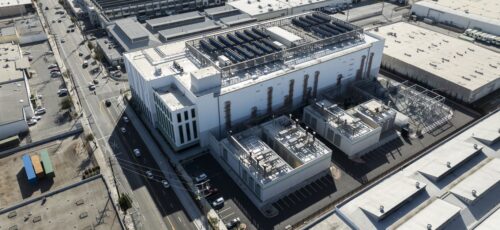
“California’s first-ever anti-data center ballot measure is shaping up to be an absolute shellacking for the tech industry — part of a wave of opposition rising across the country, as communities and lawmakers grapple with the frenzied push to build AI infrastructure. Monterey Park, a city of 60,000 people about 10 miles east of downtown Los Angeles, placed a measure on Tuesday’s ballot asking voters if they wanted to prohibit data centers in their city. The response, so far, has been an unequivocal “yes,” with 86 percent of votes counted as of Wednesday afternoon in favor of the proposal. Local officials and environmental organizers said they hope the drubbing will spur other cities to enact similar bans. “A lot of the other cities that are facing data center proposals are going to follow suit,” Elizabeth Yang, the city’s mayor, said on Tuesday. “There’s [a] bad reputation across the board, across the country, from other data centers that have been built in neighborhoods.” … ” Read more from Politico.
Monterey Park voters approve Measure NDC, banning power-hungry data centers within city limits
“The election data is in and data centers are out — at least in Monterey Park. With most of the votes counted, it appears residents have passed Measure NDC, which bans the power-hungry facilities there. “We had a victory landslide,” said Steven Kung, who co-founded the group “No Data Center Monterey Park,” born last year when plans to demolish an office building and build a quarter of a million square-foot data center surfaced. … ” Read more from KABC.
SEE ALSO:
- In first, California city overwhelmingly votes to permanently ban datacenters, from The Guardian.
- Imperial County moves to strip ‘by-right’ status for Data Center developments, from the Imperial Valley Press
- Erin Brockovich targets data centers. Why they’re controversial, from USA Today
Energy, water use and pollution of AI and data centers rival most countries
“The environmental footprint of data centers already rivals some of the world’s largest countries, according to a United Nations University report, which also predicts their water and energy use and pollution will double in just four years as use of artificial intelligence grows. Last year, global data centers used 448 trillion watt-hours of electricity, more than all but 10 countries of the world, said the report issued Wednesday. That electricity use produced about 208 million tons (189 million metric tons) of carbon dioxide, about the same amount as Argentina, and producing that much energy consumed about 1.2 trillion gallons (4.5 trillion liters) of water, according to the report on the environmental consequences of AI’s energy use. … ” Read more from the Associated Press.
Data center operators are trying to fix their water use problems
“On Monday, SpaceX amended its initial public offering to state that water conditions—including water scarcity, regulations around water, and drought—could constrain data center development. It isn’t the only tech company trying to assess how water scarcity might impact its business. Water use is emerging as one of the most contentious data center issues. A recent Gallup poll found that seven out of 10 Americans are opposed to data center development, with water scarcity ranking as the top resource concern. Facing increasingly fierce resistance, some tech companies are scrambling to assure the public that they’re facing the issue head-on. Data centers primarily use water to cool server racks, which throw off massive amounts of heat. One popular technique, known as evaporative cooling, uses fresh water to absorb the heat, which is then pumped to cooling towers where it evaporates outside. Using more water can save money and reduce emissions for big tech companies by reducing the power needed for cooling that relies on energy-intensive pumps to recirculate water. But it can also come with a large water footprint: Google’s facility in Council Bluffs, Iowa, for instance, which uses evaporative cooling, consumed more than 1 billion gallons in 2024. … ” Read more from Wired Magazine.
In commentary today …
Recent assessment of California’s water misallocation is the first step toward justice
David Sathuluri and Marco Tedesco with Columbia University’s Lamont-Doherty Earth Observatory, writes, “California is in the middle of a quiet but high-stakes argument about what it would mean to fix our water system in a hotter, drier century, especially in the age of AI. Echoes of this argument will resonate in everyone’s lives. One side focuses on efficiency: building more conveyance, freeing up markets and moving water to its highest-value use. The opposite side insists that any reform must start from justice: the human right to safe water, tribal rights and the support to those communities already living with contamination and scarcity. A major new working paper from the National Bureau of Economic Research, “Measuring Water Misallocation in California,” speaks directly to this debate. Via detailed empirical work, it shows that California’s water system is ill-suited to the climate realities ahead. … ” Read more from the LA Times. | Read via AOL News.
In regional water news and commentary today …
NORTH COAST
New Humboldt Bay planning document looks to the future, with guidelines for sea level rise and port development
“The first draft of a big update to a 1980s-era Humboldt County planning document was released this week. The Humboldt Bay Area Plan Update, which sets the policy direction for land use of 21,500 acres in the unincorporated bay area and over 20 miles of coastline, has new modifications aimed at guiding the future of the region through a spread of projected hazards and opportunities. “Some things have definitely changed in the last 40 years. We’re dealing with climate change, which is resulting in sea level rise and wildfire and other things like that, that weren’t even thought of back in 1983,” said John Ford, director of Humboldt County’s Planning & Building Department. This draft has added guidelines for addressing hazards like sea level rise and tsunamis, and proposes new policies to set a process for approving offshore wind energy support facilities. … ” Read more from the Lost Coast Outpost.
Unknown substance turns Redwood Creek white, reaches South Fork Eel River
“A bluish-white, opaque substance has been turning Redwood Creek milky near Briceland Road, and photos confirm it has now reached the South Fork of the Eel River — a waterway where people swim, fish, and pull water for household use. No one has yet officially identified what caused the milkiness. A Cal OES Hazardous Materials Spill Report filed Tuesday evening lists the substance and its source as unknown. The report covers a stretch of Redwood Creek between Seely Creek and the Eel River along Briceland Thorn Road just west of Redway and was filed around 7:30 p.m. June 2. Community members say the discoloration first appeared the previous Saturday before clearing, then returned. According to the report, the substance covers the water from shore to shore and is completely opaque. … ” Read more from the Redheaded Blackbelt.
The Trinity River has a salmon fishing season for the first time in three years. Here are the dates and limits.
“The Trinity River is getting its salmon season back, and we have the full rundown on what anglers need to know. Late spring-run Chinook fishing on the Trinity opens August 1 and continues through August 31. The daily bag limit is one fish of any size with a possession limit of two. Fall-run fishing begins September 1 and runs through December 31. The daily bag limit for fall-run is two fish, only one of which can be an adult greater than 23 inches. The possession limit is six fish, of which only three may be adults. A fall-run adult quota of 3,248 fish is shared between the Klamath and Trinity rivers. Once the adult quota is reached, fishing for jacks will continue but adults must be released. … ” Read more from Active NorCal.
SIERRA NEVADA
Inspectors stop invasive golden mussels from entering Lake Tahoe
“For the second time since golden mussels were detected in California, inspectors have stopped the invasive mollusk species from entering Lake Tahoe. Watercraft inspectors spotted four “possibly live” golden mussels on a boat heading from Sacramento to Lake Tahoe earlier this week, officials said Wednesday. The vessel was stopped at a station in Meyers, California. … “We have elevated mandatory inspections to also require a full decontamination for any vessel coming from other waterbodies,” Dennis Zabaglo, aquatic invasive species program manager for the regional planning agency, said in a news release. “That degree of protection has gotten a positive response from boaters. When more vessels arrive ‘Clean, Drained and Dry,’ it helps lower the risk to Tahoe and saves them time at the station.” … ” Read more from Fox 40.
SEE ALSO: Inspectors spot invasive golden mussels aboard craft bound for Lake Tahoe, from the Sacramento Bee
Granite wins $19M water system project in Lake Tahoe
“Granite Construction (NYSE:GVA) has been awarded an approximately $19 million Progressive Design-Build Guaranteed Maximum Price contract for the Tahoe Cedars Water System Replacement Project by the Tahoe City Public Utility District, according to a press release statement. The project, located on the west shore of Lake Tahoe, California, will replace aging water infrastructure serving the Tahoe Cedars community. The work includes installation of 15,000 linear feet of new water mains, relocation of more than 200 existing service lines, installation of 29 fire hydrants, and integration of approximately 200 residential water meters. “Reaching this GMP is the result of strong collaboration and trust across the project team,” said Chris Burke, Granite Vice President of Regional Operations. … ” Read more from Investing.com.
SACRAMENTO VALLEY
Tehama County moves toward implementing groundwater usage fees
“The majority of Tehama County residents could have new fees on the way for the water they use after the county approved a new ordinance establishing fees for groundwater extraction and administration of local basins. “The money has run out and it’s time for us to, like many other jurisdictions, to fund this through our local resources,” said Matt Hansen, chair of Tehama’s Board of Supervisors on the fees. Hansen explained the ordinance is the latest step in a process the county started in 2014 following the state’s passing of the Sustainable Groundwater Management Act. The SGMA requires each county take steps to mitigate lowering ground water levels. At the time Tehama received a number of grants to assist the process. However 12 years later, Hansen said the funding is on it’s last leg. … ” Read more from KRCR.
Inside the EchoWater project and Sacramento County’s wastewater recycling plant
“Have you ever wondered where exactly your wastewater goes? The water from your dirty dishes, the water that goes down the shower drain, and yes, the water for every flush. All that water is treated by the Sacramento Area Sewer District (SacSewer) at its wastewater treatment plant known as the EchoWater Resource Recovery Facility. Located in Sacramento County, near Elk Grove, the facility is the second largest sewage treatment plant in the U.S. and the region’s largest sewage collection, treatment and resource recovery utility, according to its website. … ” Read more from the Sacramento Bee. | Read via Yahoo News.
BAY AREA
Drowning in studies: As clock ticks on rising sea levels, San Rafael still seeks a solution
“Five months after the release of a major sea level rise adaptation study, the San Rafael City Council heard a presentation of findings and set plans to talk again in three months. Meanwhile, the next king tide event is predicted for Christmas Eve. At Monday’s council meeting, San Rafael Climate Resilience Director Kate Hagemann presented a short summary of the Community Informed Technical Feasibility Study, which was commissioned in 2023. Previous sea level rise studies involving San Rafael were completed in 1989, 1992, 2017, 2018, 2019, 2020, 2022 and 2024. Hagemann also announced that the city recently won an advanced assistance grant from the Federal Emergency Management Agency. She said in an email that the city applied for the grant years ago. The grant would help the city hire a consultant to develop a project that will be eligible for a future FEMA implementation grant. “This is not a construction grant,” she said in the email. Assuming the city wants to proceed with the grant, the total awarded federal funds would be $957,000 with a $300,000 local match. … ” Read more from Local News Matters.
A top Bay Area bird-watching spot was nearly paved over. Today, more than 150 species fly by
“If you were on the Palo Alto City Council in the 1960s and 1970s, God help you, then “Baylands Lucy” was a reliable pain in your life. Elementary school teacher Lucy Evans, who packed her curriculum with immersed-in-nature field trips, was the self-appointed guardian of the Palo Alto marshlands, filling her home with legal papers and meeting minutes related to Bay Area conservation. She once surprised the council with proof that land around San Francisquito Creek in Palo Alto, set for development, had been deeded for exclusive parkland use by Leland Stanford’s right-hand man Timothy Hopkins. The park is still there. Named after Hopkins, of course. … ” Read more from the San Francisco Chronicle.
Fact Brief: Did groundwater pumping in the 20th century cause land to sink in Santa Clara County?
“Yes. According to the Oakland Museum of California, Santa Clara County used to sit 13 feet higher in 1854. Groundwater in the county was so abundant and the water pressure so significant that drilling ground wells would cause water to rush to the surface. By the 1920s and 1930s, the county was an agricultural powerhouse and groundwater was constantly tapped for vegetable and fruit production and hydrating its growing population. But heavy ground water usage caused parts of the county to sink, which created flooding hazards that ultimately led to the development of canals, dams and aqueducts to supply the area with water. … ” Read more from the San Jose Spotlight.
SAN JOAQUIN VALLEY
Hanford moves forward with $60 million waste water treatment plant upgrades
“Hanford is proceeding with an almost $60 million contract to upgrade the City’s wastewater treatment facility. “This is more than a repair. It’s a total modernization,” said Mark Kairis, Hanford mayor. On May 19, the City Council approved a Limited Notice to Proceed for for project engineering with Opterra, an infrastructure modernization company. By passing the Limited Notice to Proceed, the City locked in the project price tag of $60 million, which would have continued to increase. The City negotiated that estimate down from Opterra’s original proposition of $67 million. … ” Read more from the Hanford Sentinel.
Lindsay public forum on water grid Thursday
“The City of Lindsay will hold a public forum on the city potentially selling its water system. The forum will be held at 6 p.m. Thursday, June 4 at the Lindsay Wellness Center. All residents, business owners and stakeholders are encouraged to attend. “This is an opportunity to learn more, ask questions, share feedback and participate in an important conversation about our community,” the city of Lindsay posted on its Facebook page. In April the Lindsay County Council unanimously voted to begin the process to potentially sell the city’s water and sewer systems to an outside agency to operate. At that time the city was scheduled to immediately accept applications from those interested in purchasing its water utilities system. … ” Read more from the Porterville Recorder.
SOUTHERN CALIFORNIA
USACE, Riverside County celebrate milestone in critical levee rehabilitation
“The U.S. Army Corps of Engineers Los Angeles District joined the Riverside County Flood Control and Water Conservation District May 8 for a hard hat tour of the Riverside Levees Rehabilitation Project in Riverside, California. The tour brought together USACE leaders, project team members, local partners and stakeholders, including U.S. Rep. Mark Takano of California’s 39th Congressional District. Participants gathered on the still-active left side of the levee system, where construction is currently focused, to highlight ongoing engineering efforts and gain a clear view of the recently completed repairs on the right side. Originally built in the 1950s to channel floodwater safely through urban areas, the two parallel levees help provide vital flood-risk management for nearby communities, including the cities of Riverside and Jurupa Valley. … ” Read moire from the Army Corps.
SAN DIEGO
Coronado beaches close as sewage treatment plant hit with ‘excessive’ flows
“As Mexico works to repair a wastewater line that collapsed twice in two weeks, Coronado’s beaches have closed. Due to the collapse, the main wastewater treatment plant that handles Tijuana sewage is receiving “excessive” flows well beyond its design capacity, according to the US Section of the International Boundary and Water Commission (IBWC). The South Bay International Wastewater Treatment Plant, which is designed to treat 35 million gallons per day (MGD), reached peak flows of more than 60 MGD for 9 hours over the weekend. For 13 hours, flows were above 45 MGD. … ” Read more from the Coronado Times.
San Diego County survey to look at economic impacts of cross-border sewage
“A new county survey could help capture a fuller picture of how much the ongoing cross-border sewage crisis has cost the region, particularly for those living near the sewage-laden Tijuana River. County officials announced May 28 the launch of the Tijuana River Sewage Crisis Economic Impact Study. It poses questions about how pollution in the river and beach closures have affected local businesses, employment, property values, tourism and school attendance. The survey has four different versions: for business owners, residents, people who have recently visited the area, and those who work for local community organizations. … ” Read more from KPBS.
Along the Colorado River …
New Colorado River water exchange framework signed, raising questions for Imperial Valley agriculture
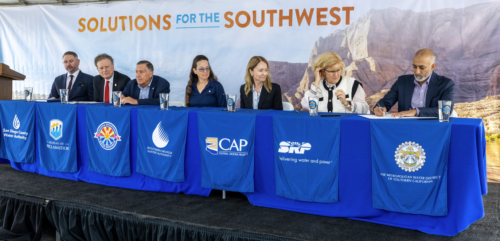
“A Memorandum of Understanding (MOU) signed June 3 at the Claude “Bud” Lewis Carlsbad Desalination Plant marks an early step toward interstate water exchanges in the Colorado River Basin, using desalinated ocean water and recycled supplies to potentially shift allocations on paper. While the agreement itself authorizes no immediate water transfers, agricultural leaders and observers in the Imperial Valley are closely watching its long-term implications for the region’s water rights, farming economy, and the Salton Sea. The MOU, involving the U.S. Bureau of Reclamation, San Diego County Water Authority (SDCWA), Metropolitan Water District of Southern California (MWD), Southern Nevada Water Authority, Arizona Department of Water Resources, Central Arizona Water Conservation District, and Salt River Project, will explore how new water supplies from desalination and advanced purification could be integrated into basin operations. … ” Read more from the Desert Review.
Nevada signs water sharing agreement with Arizona, California
“Lake Mead could soon benefit from the nation’s largest desalination plant thanks to an agreement that would allow water agencies in Nevada, Arizona, and California to explore ways to exchange water supplies across the drought-challenged Colorado River Basin. On Wednesday, the federal government and water agencies in the three states signed a memorandum of understanding to develop a framework for an interstate pilot program that could let agencies in Arizona and Nevada tap San Diego’s Claude “Bud” Lewis Carlsbad Desalination Plant. The desalination plant, operated by the San Diego County Water Authority, can produce 54 million gallons a day. And in years San Diego has a surplus of water, the proposed program would allow California’s share of the Colorado River to be transferred to other states. The plan would not directly send desalination-treated water to Lake Mead, but would allow “paper” transfers and exchanges between states using existing infrastructure and credits. The program could potentially leave more water in Lake Mead that could stabilize the reservoir during water shortages and blunt the impact of federal water cuts. … ” Read more from the Nevada Current.
SEE ALSO:
- Reclamation advances effort to expand water supply tools for challenged Colorado River Basin, press release from the Bureau of Reclamation
- Arizona and Nevada Agree to Trade for Desalinated Pacific Ocean Water, from the New York Times
- Nevada may ease Colorado River worries with California ocean desalination deal, from the Las Vegas Review-Journal
Water leader from California is likely nominee to run top federal Colorado River agency
“The Bureau of Reclamation, the top federal agency for Colorado River matters, is poised to get a new leader in the coming weeks, according to multiple people familiar with the situation. Federal officials are soon expected to announce the nomination of Aubrey Bettencourt to lead Reclamation. She has held multiple government positions related to agriculture and water, and would join Reclamation at a tense time for the agency, which is involved in negotiations about new rules for sharing the shrinking Colorado River. Multiple people who work closely with Reclamation told KJZZ that they expect Bettencourt’s nomination to be announced in the near future. KJZZ agreed not to name the sources, as they were not authorized to speak on the matter. Bettencourt would join Reclamation — a division of the Interior Department — after nearly two decades of jobs with ties to Western water and farming. … ” Read more frpm KJZZ.
Running dry: The environmental impacts of the Colorado River
“As we wait for the federal government to come up with a new plan to divide up water from the Colorado River, ABC15 is taking a closer look at who depends on the River – and it’s not just us humans! According to the Nature Conservancy, at least 150 threatened species of mammals, reptiles, fish, and plants depend on the Colorado River. ABC15’s Nick Ciletti recently had a conversation with Alec Young, a conservation expert who works at the nonprofit Trout Unlimited and also partners with the Arizona Game & Fish Department. Young says, amid concerns about the ongoing drought situation in Arizona, one of the best things all of us can do is to stay informed. “The education piece is the most important thing moving forward,” explains Young. “It’s not going to get better moving forward without that piece, so the more informed residents we have in the state about what’s going on, the more they know about the real facts about what’s happening and ways that they can help be advocates… I think the more we can contribute to that, the better off we’ll be long-term.” … ” Read more from Channel 15.
Lake Mead, Lake Powell face ‘system crash’ by 2028, scientists warn
“The Colorado River system is on track for a potential “system crash” within the next few years, according to a stark new analysis from researchers at the University of Colorado. The report warns that water storage across the basin’s two largest reservoirs—Lake Mead and Lake Powell—is continuing to fall, raising serious concerns about the long-term reliability of one of the United States’ most critical water supplies. The study highlights 2026 as shaping up to be one of the lowest runoff years on record, worsening an already severe imbalance between water supply and demand. Even after years of conservation efforts, water use continues to outpace natural inflows—meaning reservoir levels are still dropping. … ” Read more from Newsweek.
Arizona is drying up faster than any other state in the U.S.
“Talk to anyone about Arizona weather and you can’t avoid the dryness of the climate. Newcomers complain about waking up feeling hungover without having had a sip of booze the night before. People discuss which body lotion they buy in bulk and slather onto their skin in a futile attempt to avoid looking like a desiccated raisin. And no matter what, someone — most likely giggling — is bound to say “It’s a dry heat!” But seriously, it’s no laughing matter. Arizona really is dry. Fifteen percent drier, to be precise. Arizona received 15% less rain per year over the past 30 years than in the 30 years before that, according to a study by Texas-based energy company Payless Power. That’s the biggest decrease in rainfall of any state in the country, and nearly twice the decline seen by New Mexico, the state with the second-biggest dip in rainfall over the same time period. … ” Read more from New Times Phoenix.
Can resistance stop a massive data center next to the Great Salt Lake?
“Shark Tank’s Kevin O’Leary wants to bring the world’s largest A.I. campus to Utah. Over the past month, the Canadian American businessman has been planning out this megaproject alongside financiers, private landowners, military strategists, and state officials, on 40,000 acres of unincorporated land in Box Elder County, right next to the ever-dwindling Great Salt Lake. The idea is to collaborate with the military to install a 30-building “hyperscale” cluster as a matter of national security — i.e., to use a swath of undeveloped Western land to produce high-level American A.I. because, according to O’Leary, “the country with the best AI is gonna win the wars,” and he does not want China to get there first. When constructed, the facility will be more than twice the size of Manhattan and bigger even than Bryce Canyon’s 35,000 acres. For Utah, that means a space with dozens of data centers, a handful of research facilities, and, potentially, some worker housing. The builders are also adding sleek glass panels and internal office space to craft the “sexiest, coolest construction posting in America,” according to Paul Palandjian, the CEO of O’Leary Digital. … ” Read more from High Country News.
In national water news today …
‘Super’ El Nino could trigger a global food price shock. Here’s how companies can prevent the next crisis
“The World Meteorological Organization is warning that this summer’s El Nino event could be the worst yet. Compounded by fertiliser shortages, inflation and rising oil prices, these shocks threaten to push an already fragile food industry to the brink, and the impact will land squarely in consumers’ shopping baskets. While El Nino is part of our routine weather cycle, characterized by weakened trade winds and warmer Pacific currents, a “super” El Nino could achieve record-breaking severity, impacting the profitability of producers, retailers and farmers. Forecasters suggest the El Nino developing over the next few weeks could be particularly potent, attracting media headlines as “super”, “supercharged” and – my favourite – “Godzila El Nino”. Weather anomalies are projected to intensify from July this year, peak during the winter and weaken by the summer of 2027, though some systemic effects may persist and even last into a second growing season and beyond, affecting availability and pricing into 2027 and 2028. … ” Continue reading at Reuters.

