
Several news sources featured in the Daily Digest may limit the number of articles you can access without a subscription. However, gift articles and open-access links are provided when available. For more open access California water news articles, explore the main page at MavensNotebook.com.
On the calendar today …
- MEETING: Central Valley Regional Water Board beginning at 9am. Agenda items include consideration of approval of Modesto Management Zone Implementation Plan, and a closed session to discuss personnel issues or litigation. Click here for the agenda.
- ONLINE EVENT: CA Infrastructure Funding Fair from 9am to 12pm. The funding fairs provide an opportunity for attendees to speak directly with program staff about specific projects and issues affecting their community. Obtain information about currently available infrastructure grant, loan and bond financing programs, and options. Connect with federal, state, and local agencies to discuss the financial and technical resources available. Click here for more information and details on how to attend.
- LUNCH-MAR: Flows, Fish, & FIRO from 12:30pm to 1:30pm. The Willamette FIRO Pilot Study is exploring how advanced forecasting, adaptive reservoir operations, and ecosystem restoration can work hand-in-hand. Andy Martin (USACE Portland District) will share lessons learned from this multi-agency effort to support fish, flows, flood protection, and water supply reliability. Presenter: Andy Martin, US Army Corps of Engineers. To join a Lunch-MAR Session, click here.
- IN-PERSON: Fish Water People Film Festival: Flow State | Arcata Screening from 6pm to 9:30pm. Join us in Arcata for the second annual Fish Water People Film Festival, hosted by California Trout – an evening of storytelling, connection, and celebration of the lands and waters that shape us and our state! Click here for tickets.
In California water news today …
Toxic algal blooms are getting worse in the Sacramento-San Joaquin Delta. Scientists are trying to figure out why.
“Harmful algal blooms were rarely observed in the Sacramento-San Joaquin Delta before 2000. Over the past two decades, they have become a regular summer event, and scientists are racing to understand why. DWR is co-leading a five-year, $3 million research project funded by NOAA to investigate what is driving the increase in harmful algal blooms across the Delta and San Francisco Bay. The effort, called MERHAB, brings together scientists from the U.S. Geological Survey, the San Francisco Estuary Institute, UC Santa Cruz, Cal Poly Maritime Academy and several regulatory agencies. Harmful algal blooms form thick mats on freshwater surfaces during warm, stagnant conditions. As they decompose, they suck oxygen from the water and produce toxins that can be dangerous to humans, pets and wildlife. The blooms thrive on warm temperatures and a steady supply of nutrients, which is why they peak during the spring and summer months. … ” Read more from Active NorCal.
Butte County Supervisor Bill Connelly criticizes state response on Oroville Dam responsibilities
Andrew Nixon / DWR
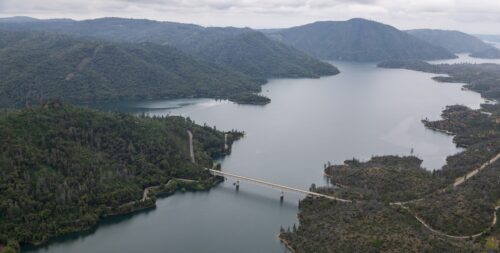
“The California Department of Water Resources has refuted some of the information presented in Butte County’s new website, ourwatertheirpower.org, which chronicles the more than 50-year history of issues surrounding Oroville Dam including undeveloped recreational facilities and the economic burden the dam places on the local community. Following the April 4 publication of a story about the new website, California Department of Water Resources Public Information Officer II Raquel Borrayo sent an email to this newspaper with a lengthy statement from John Yarbrough, DWR’s deputy director of the State Water Project pertaining to some of the information presented on the website. We forwarded the statement along to Butte County Supervisor Bill Connelly for comment. … ” Continue reading from the Chico Enterprise-Record.
Four weather signals that could shape California’s June
“June is the unofficial start of summer in the Northern Hemisphere — and frequently, it’s when dry and hot weather starts to show its face in California. What’s in store this month? Here are the key things meteorologists are watching. Things looked a bit ominous for California’s summer outlook after the state experienced a record-shattering heat wave in March, which raised fears of an extended run of hot temperatures. Since 2016, California has experienced six major June heat waves with scorching daytime temperatures and dangerously warm overnight temperatures.But the atmosphere has largely failed to follow through since then.Long-range forecast guidance continues to suggest that will not change through at least the first half of June. … ” Read more from the San Francisco Chronicle.
Can a water renaissance put California on a sustainable path?
“Southern California imports over half its water from other watersheds. About a quarter is diverted from the Colorado River; some comes from the Eastern Sierra. Nearly a third originates in the northern Sierra and is diverted with massive pumps in the Sacramento–San Joaquin Delta. Climate change and aging infrastructure are making these imports less reliable, as ecosystems buckle under the strain. Following a record-low snowpack in the Rocky Mountains, the Colorado River is flowing far below normal. The water level at Mono Lake, in the Eastern Sierra, is “dangerously low.” The delta suffers from chronically degraded water quality and suffocating algae blooms, and fish runs are crashing. … ” Read more from the Sierra Club.
San Joaquin Valley water resilience summit – from reports to results, day one
“The California Water Institute at Fresno State organized and conducted a conference aimed at not only providing new information but also setting priorities for action to address the water crisis in the San Joaquin Valley. Over 150 people attended all or parts of the two-day session on May 20-21 on campus representing an array of water industry participants including growers, community leaders, water managers, academics and government officials. The group heard reports of new studies from the Department of Water Resources (DWR), an update on the recently completed “Unified Water Plan for the San Joaquin Valley” from the Water Blueprint and the State’s Water Plan for 2028. Panel discussions provided additional background on this detail during the first day. Then on the second day, the whole group engaged in an in-depth effort to identify actions needed to accomplish specific priorities for results. … ” Continue reading at Water Wrights.
Growers use pressure bombs to fine-tune irrigation
“With an eye on tree health and expenses, San Joaquin County walnut producer Richard Thompson has been a longtime fan of using pressure chambers, commonly called pressure bombs, to schedule irrigations. “I won’t do too much irrigation until I know I can get a good reading with the pressure bomb,” said Thompson, who farms walnuts near Manteca and Farmington. “We’re in the middle of May, and I haven’t given (the orchard) a solid shot yet.” Not only does the device help him avoid under- or overwatering his trees, but it also helps to time irrigations to Pacific Gas & Electric Co.’s cheaper off-peak weekend periods. Thompson said he learned about the technology more than 10 years ago from the Bartons, who grow walnuts, almonds and olives in Stanislaus and San Joaquin counties. Josh Barton, vice president of orchard operations for Escalon-based Barton Ranch, said the farm has used pressure bombs for more than 20 years, and he viewed them as one of many tools in the water-management toolbox. … ” Read more from Ag Alert.
USDA Rural Development highlights water, infrastructure, and economic growth in California’s Central Valley
“California’s agricultural communities depend on more than fertile soil and hard work—they depend on reliable infrastructure, economic investment, and access to water. During a recent visit to Bakersfield, USDA Rural Development State Director Bryan Anguiano discussed the agency’s commitment to supporting farmers, rural communities, and economic growth throughout California. Speaking with Ag Meter, Bryan Anguiano expressed enthusiasm about welcoming USDA Secretary Brooke Rollins to California’s Central Valley. He described the visit as an important opportunity for federal leadership to see firsthand the challenges and successes of one of the nation’s most productive agricultural regions. … ” Read more from AgNet West.
The making of a rainmaker
“Humans have drilled the Earth in search of water for thousands of years. Now, they’re excavating the sky. Rainmaker, a drone-powered cloud seeding company, is attempting to solve the West’s deepening water crisis by inducing precipitation. Water scarcity across the American desert has intensified slowly over the past century, compounded by explosive population growth and drought. In 1922 when the Colorado River’s water was first allocated, 9 million people lived in the continental states west of Texas. In 2026, the West’s population has ballooned to 78 million. As a result, reservoirs built as back-up for dry years have steadily drained, with each arid state asking for more of the river than is sustainable to give. Augustus Doricko, Rainmaker’s 26-year-old founder and CEO, learned about the issue while working with farmers across Texas. Water conservation and increased efficiency only took people so far for so long. The reservoirs are draining; aquifers are running out. A realization settled on him: “We have to make more water.” … ” Read more from Deseret News.
Feds shake up rules on Western ranching and land use
“Across the American West, roughly 245 million acres of public land are managed by the federal Bureau of Land Management. That is about one-tenth of the entire land area of the United States. For decades, the rules governing how those lands are grazed, mined, conserved, and used have been a source of tension among ranchers, environmentalists, tribal nations, and rural communities. In the span of just a few weeks in late May and early June 2026, two major regulatory moves have shifted that landscape considerably. On May 12, 2026, the Bureau of Land Management published a final rule in the Federal Register that permanently eliminated what was known as the Conservation and Landscape Health Rule, a regulation that the previous administration had finalized in May 2024. Separately, on June 1, 2026, the Department of the Interior announced a proposed rule that would update how livestock grazing is managed on those same public lands, something that has not been done in any substantial way since 1995. … ” Read more from Western Water.
Federal firefighting change-ups and this summer’s forecast are a bad mix, advocates say
“When crews are bussed in to help battle wildfires, a secondary team of dozens joins to support them, double-checking the accuracy of their maps, making sure their food and supplies are delivered and sharing expertise on timber and forest biology. As Utah and other western states prepare for what could be an unusually busy fire season, advocates for wildland firefighters and conservationists say fewer incident management teams are at the ready after the Trump administration made cuts to agencies managing federal land last year. “I’d just like everyone to keep in mind that there is a whole lot more going on behind the scenes, other than the helicopters in the air and the hotshots cutting line,” said Bobbie Scopa, vice president of Grassroots Wildland Firefighters. The success of those firefighting crews depends on the land management agencies providing them support, Scopa said Tuesday during a virtual news conference held by the Denver-based conservation group Center for Western Priorities. … ” Read more from the Utah News Dispatch.
In regional water news and commentary today …
NORTH COAST
Klamath Basin facing water shortage
“Water managers in the Klamath Basin are working to stretch limited water supplies through the summer as fire season approaches and drought conditions worsen. The Bureau of Reclamation provided 221,000 acre feet of water for the Klamath Project this year. That’s just over half of what’s needed to fully irrigate the project and keep national wildlife refuges hydrated, according to Elizabeth Nielsen, executive director of the Klamath Water Users Association. “This year is absolutely impossible to serve everybody,” said Gene Souza, executive director of the Klamath Irrigation District. … ” Read more from KDRV.
U.S. Congressman Jared Huffman calls the Trump cabinet’s Potter Valley letter ‘incoherent’
“The water that keeps the upper Russian River flowing through the dry months — the flow farms and towns from Ukiah to Healdsburg lean on every summer — comes from a century-old diversion the federal government spent six years agreeing to shrink. On Friday, Secretary of Agriculture Brooke Rollins told Congressman Jared Huffman in a letter dated May 29 she’s not done fighting to keep that system in place, dams and all. On Tuesday, Congressman Huffman, who represents the district in which the dams are located, told the Voice her letter was “incoherent.” … ” Read more from the Mendocino Voice.
A dam good time: What we learned about the Eel River’s dams 1,000 feet in the air
“Up the Eel River, far from where Ferndale dairymen awake on dark mornings, beyond redwoods cloaked in fog, past abandoned train cars and the river canyon’s collapsed tunnels, and well into the chaparral hills of Mendocino and Lake counties, sits the Potter Valley Hydroelectric Project. It has diverted water from the Eel for over a century, and sits 160 miles from the river’s mouth. To some, the project’s two dams, diversion infrastructure and defunct hydroelectric parts stapled onto a piece of the 200-mile Eel represents the promise of the next great dam removal project, something that will open up hundreds of miles of upstream habitat for fish and help restore decimated salmon runs the North Coast has historically relied on. To others, the dam removal effort represents the meddling of NGOs and a massive utility in a scheme that will mean less water to rural farmers in Potter Valley when they need it most, and change the supply of thousands more downstream that have grown used to it. In a flight hosted by environmental groups, the Outpost flew in a single-engine Cessna 210 Friday and saw the project with a birds-eye view. … ” Read more from the Lost Coast Outpost.
Cannabis rarely the top water user in Northern California watersheds, UC Berkeley study finds
“Cannabis cultivation accounts for a fraction of total water demand in northern California’s rural watersheds, drawing far less than either residential users or non-cannabis agriculture, according to a peer-reviewed study published April 22 in PLOS Water. The research, led by Christopher Dillis of the University of California Berkeley alongside Ethan Baruch of the California Department of Fish and Wildlife and Theodore E. Grantham of UC Berkeley, analyzed 14 watersheds across 10 northern California counties, comparing water demand and streamflow impacts across three user types: cannabis cultivation, residential use, and non-cannabis agriculture. … ” Read more from the Redheaded Blackbelt.
SIERRA NEVADA
Environmental restoration in Upper Truckee River, Meeks Bay and fire-scarred areas show promise
“The Tahoe Regional Planning Agency (TRPA) conducted a two-day media tour on the Environmental Improvement Program and projects around the lake. The first day highlighted projects on the Upper Truckee River, Meeks Bay and fire scars from the Angora and Caldor Fires. TRPA public information officer Jeff Cowen highlighted the importance of projects like the Motel 6 demolition on Upper Truckee Marsh South. It’s one of the most recent developments in a long line of acquisitions of parcels for environmental restoration. Tahoe Fund CEO Amy Berry spoke on the “Million for the Marsh” campaign and its latest follow up, “Match for the Marsh” where Barton Health will be helping to secure a $25,000 matching gift for donations. … ” Read more from the Tahoe Daily Tribune.
Keeping invasive species out of Lake Tahoe
“Unfortunately, Lake Tahoe has been exposed to several invasive species over the years. Two invasive plants have hit the lake, as well as harmful clams and a type of freshwater snail. “New Zealand mud snails reproduce very fast. They take calcium out of the water that the fish need to survive on,” says Tom Berndt, a roving boat inspector for the Tahoe Resource Conservation District. “They also promote more of the harmful algae blooms. So, it’s sad that these got into our lake.” Berndt says the snails likely came from a kayak or fishing gear. They’re only present in the south Lake Tahoe beach area right now. … ” Read more from KTNV.
SACRAMENTO VALLEY
A decade of partnership, innovation and reliable water
“Ten years ago, a bold vision became reality along the banks of the Sacramento River. The completion of the new intake facility serving Reclamation District 2035 (RD 2035) and the Woodland-Davis Clean Water Agency (Woodland-Davis) marked more than the construction of critical infrastructure — it represented a transformative investment in water reliability, environmental stewardship and public health for the communities of Woodland and Davis and for UC-Davis. Today, as we celebrate the facility’s 10th anniversary, we recognize the collaboration and long-term vision that made this achievement possible. This milestone is not simply about pipes, pumps and concrete. It is about creating a modern water system that works in harmony with California’s rivers, protects drinking water quality, and demonstrates how collaborative water management can support communities for generations to come. … ” Read more from the Northern California Water Association.
Flood bypasses are key to the future of wild salmon in Sacramento Valley
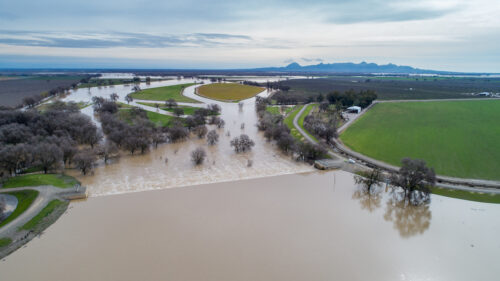
Tom Cannon writes, “The Big-Notch Project at the Fremont Weir came online in late 2025. In this post, I describe events in December 2025 that provided improved access for juvenile salmon to floodplain habitat in the Yolo Bypass through that new Big Notch. The goal of notch projects at the Fremont and Tisdale weirs in the Sacramento Valley is to create greater access to floodplain habitats for juvenile winter-run Chinook salmon, as well as fall-run and spring-run, in the upper Sacramento River Valley. The Fremont Weir project, completed in 2025, now improves access for salmon into the Yolo Bypass. The Tisdale Weir notch project, when completed, will improve access of upper Valley salmon populations into the Butte Basin and the Sutter Bypass floodplains. … ” Continue reading from the California Fisheries blog.
BAY AREA
Where Oakland’s water supply stands after spring heat wiped out our ‘frozen reservoir’
“Record heat and dry weather wiped out the snowpack that holds much of Oakland’s water early this spring, but the East Bay Municipal Utility District says its reservoirs are in solid shape after a decent rainy season. On Friday, the district recorded 43.6 inches of precipitation since July 1 of last year in the Sierra Nevada watershed of the Mokelumne River, which provides water for about 1.5 million people across portions of Alameda and Contra Costa counties. That was roughly 92% of the historical average, while precipitation around the East Bay was lower, at 77% of average. The California Nevada River Forecast Center has recorded 17.88 inches of rainfall at Oakland Airport since October 1, which is 98% of normal for that period. … ” Read more from the Oaklandside.
SAN JOAQUIN VALLEY
Expansion efforts underway to modernize a city water purification plant
“A new project is underway that will expand and modernize the facilities at the Henry C. Garnett Water Purification Plant in Bakersfield. The project — which has been funded by federal money secured by Congressman Vince Fong — will help equip the laboratories to further monitor drinking water, regulatory compliance testing and new emerging contaminant analysis for one of Kern County’s most important drinking water treatment facilities. The project will also provide additional laboratory space and new equipment to help meet both federal and state drinking water requirements, improve efficiency and strengthen the region’s water quality testing capabilities. … ” Read more from KGET.
SOUTHERN CALIFORNIA
Researchers find carcinogenic chromium-6 in Palisades, Altadena fire cleanup zones
“A carcinogen with potentially serious impacts on human health was found in neighborhoods in the months after the 2025 Los Angeles County wildfires and may have spread to communities as far as six to nine miles downwind from the fire zones, according to newly published work by University of California researchers. “Hexavalent chromium, or chromium-6, is a toxic metal and carcinogen that can impact the lungs and is associated with asthma, bronchitis, and lung cancer,” said study co-author Michael Jerrett, professor in the Department of Environmental Health Sciences at the UCLA Fielding School and the Jonathan Fielding Chair in Climate Change and Public Health. “It shows that well after the wildfires were extinguished, nanoparticles, which are so small they can enter the circulatory system very quickly, were in the air around the burn zones,” Jerrett said. “These probably traveled far enough to give 3.3 million people doses that were hundreds of times the levels that are normally seen in the air in Los Angeles.” … ” Read more from UC Davis.
Sea turtles are thriving in a concrete river in Los Angeles

“It’s one of the strangest and coolest wildlife stories in Southern California: green sea turtles are living and thriving at the mouth of the San Gabriel River. A big, urban, ugly concrete river in the middle of LA. Well, or Orange County. Or both, since the river is the boundary between the two counties. And so I went and saw them. I found the spot on Google Maps after seeing a post on Instagram put out by the Aquarium of the Pacific. I parked near the 405 freeway, slipped through a hole in a fence, and climbed up a steep embankment where the San Gabriel River flows lazily through a concrete channel. And there they were. Sea turtles. Eastern Pacific green sea turtles, to be exact. Probably twenty of them. … ” Read more from Curated California.
SAN DIEGO
San Diego agriculture at a crossroads: Dana Groot on water, regulation, labor, and California’s farming future
“California agriculture faces no shortage of challenges, but few regions illustrate both the opportunities and obstacles facing farmers better than San Diego County. In a wide-ranging conversation with “The Ag Meter” Nick Papagni, former San Diego County Farm Bureau President Dana Groot shared an inside look at one of the most unique agricultural regions in America. From soaring water costs and labor shortages to specialty crops, nursery production, regulatory pressures, and the future of California farming, Groot offered valuable insights into an industry that remains vital to both the state’s economy and the nation’s food supply. … ” Read more from AgNet West.
County issues health warnings for Tijuana River Valley following sewage pipe collapse
“A collapse in a major Tijuana sewage pipeline has sent millions of gallons of raw wastewater surging into the Tijuana River Valley, pushing a South Bay treatment plant far beyond its capacity and driving dangerous levels of hydrogen sulfide gas into surrounding neighborhoods overnight. The U.S. International Boundary and Water Commission reported the failure of Tijuana’s Parallel Gravity Line on Friday night. The line conveys wastewater across Tijuana and its collapse sent excessive flows to the South Bay International Wastewater Treatment Plant, which is designed to handle 35 million gallons per day. The plant sustained flows above 45 million gallons per day for 13 hours over the weekend and peaked above 60 million gallons per day for nine hours — well above its design capacity, USIBWC said. … ” Read more from the San Diego Union-Tribune.
Along the Colorado River …
Colorado River faces ‘devastating consequences’ if another dry winter lands, experts warn
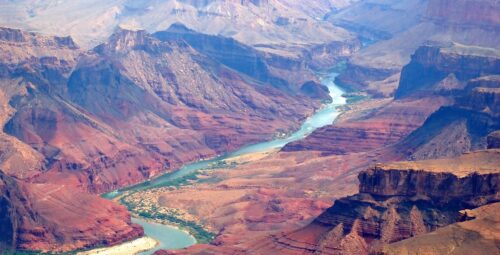
“Another warm, arid winter could leave Colorado River reservoirs nearly dry. That is one of the projections a group of Colorado River experts released Monday, building on a previous report released last September assessing the future of the waterway’s federally managed dams under different hydrological scenarios. The new report forecasted the impacts of another dry winter and a wetter one, which it found would not provide enough water to extricate the basin from the depths of a climate change-fueled drought. “Both scenarios demonstrate the need to adopt significant additional measures to permanently decrease consumptive uses across the entire Basin,” the authors wrote. … ” Read more from Inside Climate News.
Colorado River leaders must act soon to avoid ‘devastating consequences,’ report says
“A new report from a group of widely respected Colorado River experts says the region’s major reservoirs are sliding toward “devastating consequences” as water levels continue to drop. The authors write that another dry year, on the heels of last winter’s record-setting dry conditions, would send the nation’s largest reservoirs to “run-of-the-river” levels, meaning that they are unable to store water for the future, and simply pass water downstream. As a result, the paper’s authors — a group of academics and retired water officials — are calling on state water managers and the federal government to work quickly on new rules for sharing the Colorado River and avert infrastructure problems at Lake Powell and Lake Mead, the nation’s two largest reservoirs. Parts of both reservoirs are in Arizona. … ” Read more from KJZZ.
Lake Powell levels are functionally even lower than on paper, report says
“A new report from a group of widely respected Colorado River experts says the region’s major reservoirs are sliding toward “devastating consequences” as water levels continue to drop. The authors wrote that another dry year, on the heels of last winter’s record-setting dry conditions, would send the nation’s largest reservoirs to “run-of-the-river” levels, meaning that they would be unable to store water for the future and simply pass water downstream. As a result, the paper’s authors — a group of academics and retired water officials — are calling on state water managers and the federal government to work quickly on new rules for sharing the Colorado River and avert infrastructure problems at Lake Powell and Lake Mead, the nation’s two largest reservoirs. … ” Read more from Utah Public Radio.
Why one of the cities most dependent on the Colorado River now has water for sale
“Even as California is offering to take less water from the drought-shrunken Colorado River, one of the state’s biggest cities that’s long been the most dependent on it curiously now has excess water to sell. On a good year, San Diego gets barely eight inches of rain. And not too long ago, the picturesque coastal city was staring down major water supply shortages – it’s notoriously at the end of the line of the Colorado River “straw,” a good three hour drive from the shrinking river itself. But today, thanks in part to aggressive water recycling and urban and agricultural conservation programs and a big bet made on salt water, San Diego has a surplus and other thirsty nearby cities and states are eager to tap it. … ” Read more from NPR.
Arizona: Be aware now more than ever: A strong summer monsoon season could be in the offing
“Few weather stories in 2026 have attracted public attention quite like the approaching “Super El Niño,” the condition bringing rapidly warming waters into the eastern Pacific Ocean. Depending on who you talk to, this so-called Super El Niño either could bring dramatically wet conditions to the Southwest or could just sort of go “meh!” and produce scant moisture, ala the bone-dry 2016 El Niño. There’s just no way of knowing for sure. But missed in much of the media coverage of this still-developing “Super El Niño” is a condition forming up now off the California Baja. News about that condition, which could help prompt a strong summer monsoon season, particularly later in August and September, arrives just as the National Weather Service, in partnership with multiple state and federal agencies, including ADWR, is announcing “Monsoon Awareness Week 2026.” … ” Read more from Arizona Department of Water Resources.
Scottsdale’s 4.5% water rate increase includes funds for additional sources
“Scottsdale will be using part of its recent water rate increase to fund additional water sources and supply. The Scottsdale City Council approved a 4.5% rate bump last month. The city receives about 70% of its water from the Colorado River. … ” Read moire from KJZZ.
Lack of snowmelt leaves Central Utah farms and ranches scrambling
“Central Utah ranchers and farmers are facing tough decisions after an extremely dry winter left spring runoff nearly nonexistent across much of the state. Operations that normally rely on snowmelt flowing out of the mountains are already seeing major water shortages heading into summer, forcing producers to cut cattle numbers, feed livestock by hand, and prepare for the probability of even worse conditions in the months ahead. “This is as bad a drought as I’ve ever seen,” said Emery County rancher Bill Butcher. “I’ve never seen a snowpack so dismal. It was almost nonexistent.” Butcher says the impacts are already changing the day-to-day reality on his ranch. “I got a herd of cows right here that typically are out on the range this time of year,” Butcher said. “But there is no feed out there.” … ” Read more from Fox 13.
‘Historic’ agreement between NM land grant and Forest Service to revitalize 200-year-old acequia
“A dusty acequia in northern New Mexico, which more than 200 years ago diverted water from the Rio Chama, will soon spring to life again, nourishing freshly planted orchards of plums, apples and apricots. That’s the idyllic scene envisioned through a new agreement between the Santa Fe National Forest and heirs of the San Joaquín del Rio de Chama Land Grant. The parties say the “memorandum of understanding” they signed in late March marks the potential thawing of more than a century of tension between New Mexico land grants and the federal government. The agreement, which the Santa Fe National Forest Service provided to Source NM through a public records request, identifies the acequia restoration as a “project of mutual interest.” It also recognizes the land grant as a consulting partner to the Forest Service and provides it greater input into the land’s future use. … ” Read more from Source NM.
After a grim Colorado ski season, drought is crippling rafting season
“When rafting outfitter Ryan Snodgrass talks about the extremely low water levels in the rivers around Winter Park, he sees his financial security floating away. “We are literally going to scrape through — metaphorically, also — until next year,” said Snodgrass, co-founder of Downstream Adventures Rafting. He stood next to the Fraser River, just one stop on a state-organized drought tour featuring lawmakers, state officials, water managers, experts and media. As the group bussed around north-central Colorado, they tracked the rippling impacts of drought, ranging from higher requests for financial assistance to wildfire concerns, after a record-low winter that ended a month early. In Winter Park, the Fraser River was one example. The river was running at 36 cubic feet per second when it should have been closer to 500 cfs or about to peak at over 800 cfs, Snodgrass said. “Fraser River, right here, this is a very popular recreational run,” he said, referring to the river as it flows from Tabernash to Granby. “Nobody’s going to boat that this year.” … ” Read more from the Colorado Sun.
In national water news today …
Biden’s clean drinking water plan is being rebranded as MAHA

“The Trump administration is promoting multibillion-dollar funding packages to help states and disadvantaged communities secure clean drinking water as part of its promise to “Make America Healthy Again.” There’s just one catch: The federal dollars were previously promised under a climate and infrastructure law passed by Congress during the Biden administration. Last month, the EPA announced a $1 billion commitment to address drinking water contaminated by PFAS, a class of synthetic compounds commonly referred to as “forever chemicals.” Two days later, it announced $2.9 billion to help track down and replace lead pipes, which can leach lead — a potent neurotoxin that can cause irreversible cognitive, cardiovascular, and reproductive harm — into drinking water. … ” Read more from Grist.
Cities push Congress to avert water infrastructure funding cliff
“With the Infrastructure Investment and Jobs Act supplemental five-year water infrastructure funding set to expire Sept. 30, local government and water stakeholders are urging federal lawmakers to reauthorize core water programs and fully fund water infrastructure programs in fiscal year 2027. The 2021 IIJA allocated $50 billion for water infrastructure over five years, divided across five pots under the Clean Water State Revolving Fund and the Drinking Water State Revolving Fund, with specific funding to replace lead pipes and address PFAS and other contaminants. The National League of Cities is asking Congress to maintain the IIJA’s authorization amount — $5.85 billion each to the Clean Water SRF and the Drinking Water SRF — and reauthorize grant and technical assistance programs to address PFAS, lead pipes and other water infrastructure projects in FY27. … ” Read more from Smart Cities Dive.
Democrats pledge to fight Trump’s removal of ocean monitors
“Democrats said Tuesday they intend to fight the Trump administration’s plan to eradicate a deep-ocean observation system critical to understanding climate change and marine ecosystems. The system cost $368 million when it was installed in 2016 but now officials want to shut it down, which they say would save $48 million in operating costs each year. The National Science Foundation declined to say how much it would cost to remove more than 900 remote ocean instruments that are anchored to the ocean bottom in far-flung locations, including in the Atlantic and Pacific oceans and an area between Greenland and Iceland known as the Irminger Sea. The agency will begin sending ships to begin pulling up the instruments later this month, a process that is expected to take about 15 months. The ocean observation system was designed to operate for at least 25 years, meaning the decision would result in the loss of more than a decade of data. … ” Read more from the New York Times.
SEE ALSO:
- Scientists lose critical climate record as ocean observatory will go dark under Trump funding cuts, from the Associated Press
- Trump admin is terminating a vast network of ocean monitors, from E&E News
Record sargassum seaweed swamps Caribbean, US beaches
“Record amounts of sargassum seaweed are slowly moving west and north across the Atlantic Ocean, piling up on the shores of the Caribbean and United States. Sargassum is a kind of seaweed, which is a type of algae. Sargassum never touches the seafloor until it dies. The algae tends to float in islandlike chunks and serves as breeding grounds for fish, turtles, birds and other animals. At the end of May, the largest concentration of the 28.9 million metric tons of sargassum was in the Atlantic east of the Leeward Islands, according to the latest sargassum outlook from the University of South Florida. Amounts in the Gulf, Caribbean, and East Atlantic set records for the month of May, while the West Atlantic and total Atlantic numbers were below records. … ” Read more from AccuWeather.
As AI expands, UN researchers warn of growing strain on water, land and power systems
“While artificial intelligence is a digital technology, a United Nations-backed study released Wednesday argues its growth depends on an increasingly vast physical network that consumes large amounts of electricity, water, land and raw materials. The report from the United Nations University Institute for Water, Environment and Health examines the environmental consequences tied to the energy needed to build and operate AI systems. Researchers claim public discussion has focused too narrowly on carbon emissions while overlooking other pressures associated with the technology’s rapid expansion. Those pressures are only expected to grow. Global spending on AI is forecast to exceed $2.5 trillion this year, while the market itself could swell to nearly $5 trillion within the next decade, according to the researchers. … ” Read more from the Courthouse News Service.

