
Several news sources featured in the Daily Digest may limit the number of articles you can access without a subscription. However, gift articles and open-access links are provided when available. For more open access California water news articles, explore the main page at MavensNotebook.com.
In California water news this weekend …
California overhauls carbon market — critics say it’s a giveaway to oil
“California air regulators on Friday approved a contentious overhaul of the state’s carbon market, creating a program that could steer billions of dollars in free pollution permits to oil refineries and other major polluters over the objections of environmental groups, key lawmakers and three of the board’s own members. Ten members of the California Air Resources Board voted to adopt the changes to its cap-and-invest program after two days of lengthy hearings, including a full day dedicated to hundreds of public comments. The overhaul followed intensive lobbying by the oil industry as well as pressure from Gov. Gavin Newsom’s administration to help keep refineries operating in the state amid rising gas prices. The approval sets up a potential budget fight in Sacramento. The Legislative Analyst’s Office projects that quarterly auction revenue for state climate programs will drop from roughly $4 billion a year to about $2 billion under the new overhaul. … ” Read more from Cal Matters.
After heated debate, California updates key climate limit. Critics say it’s a retreat
“In a high-stakes decision that will shape California’s economy for years, air officials late Friday approved a sweeping overhaul of the state’s signature climate program, cap-and-invest. The 10-3 vote from the California Air Resources Board determines how aggressively the Golden State will curb planet-warming greenhouse gas emissions in the years ahead — and how billions of dollars in revenue will flow through communities, businesses and public programs statewide. Cap-and-invest was nation-leading when it launched in 2013. The program forces major polluters to pay for their share of emissions by buying allowances at auctions or being granted them for free. It uses the revenue to fund public transit projects, wildfire prevention, affordable housing, clean energy, electric vehicles and safe drinking water. … ” Read more from the LA Times. | Read via Yahoo News.
New report highlights Delta rice farming as key strategy for protecting California water infrastructure and building local economies
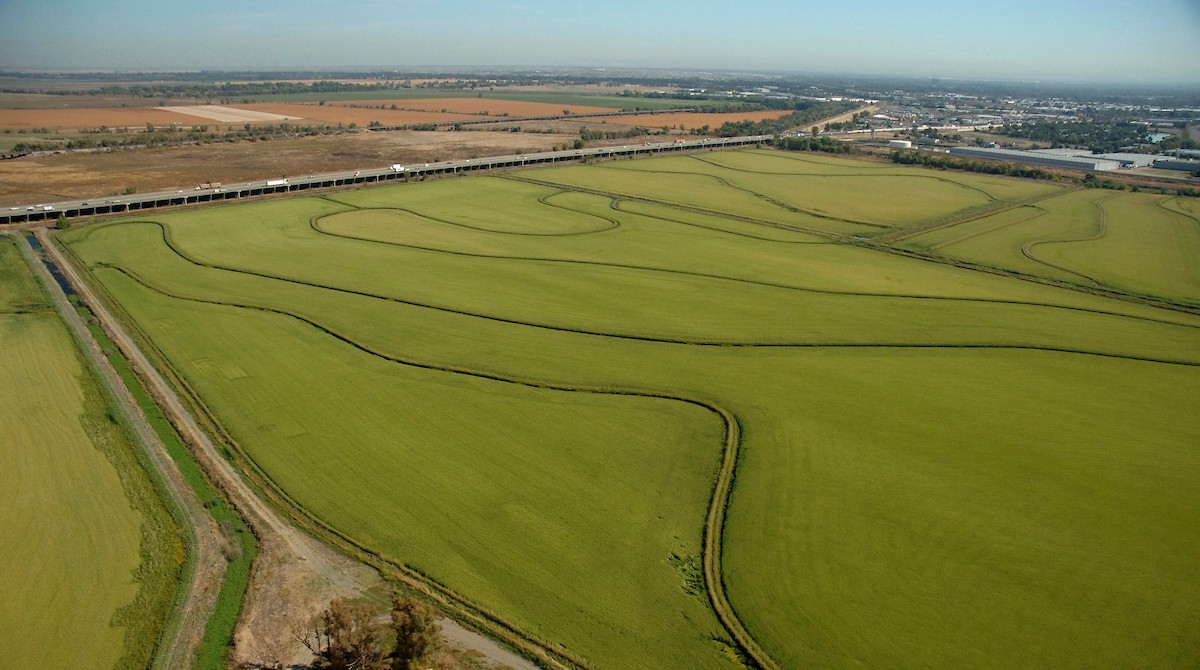
“Today, Restore the Delta released a new report detailing one of the many local solutions outlined in the recently unveiled Water Renaissance Plan: expanding rice farming in the Sacramento-San Joaquin Delta as a strategy to combat land subsidence and support a more sustainable regional economy. Supported by BEAM Circular, which sponsored the critical research for the region, the report documents that Delta rice acreage has increased fivefold over the past eight years and lays out the environmental and economic benefits of rice cultivation as a strategic defense against subsidence. “Without major levee investment in the next 25 years, over $10 billion in infrastructure faces severe flood risk,” said Morgen Snyder, Director of Policy and Programs for Restore the Delta. “Flooded rice cultivation restores the anaerobic conditions that slow and may stop peat oxidation that has already caused some Delta islands to sink as much as 25 feet. Pairing Delta levee investment with rice farming and wetland restoration benefits ecosystem health, as well as driving new economic opportunities for the region.” … ” Read more from Restore the Delta.
The San Joaquin Valley Water Resilience Summit was a success
“The Water Blueprint for the San Joaquin Valley was proud to serve as a partner of the San Joaquin Valley Water Resilience Summit. The rollout of the Water Blueprint for the San Joaquin Valley’s Unified Water Plan was one of the summit’s featured initiatives. Bill Swanson of Stantec outlined both the scale of the Valley’s water challenges and the opportunity to reshape California’s water future. Swanson framed the discussion around a central theme: California’s water system was built through bold, long-term vision, and the state now faces another generational moment that demands the same kind of leadership and investment. Swanson explained that the Unified Water Plan was created to move beyond fragmented local planning efforts and instead develop an integrated regional strategy that addresses water supply reliability, flood management, groundwater sustainability, ecosystem needs, and long-term economic stability together. … ” Read more from the Water Blueprint for the San Joaquin Valley.
Winners of global design challenge “Shaping the Future of Water Use at Home” announced by USGBC California, full report released
 “California uses more water at home than almost anywhere else in the country, and most of it moves through fixtures, appliances, and landscapes designed decades ago. Drought has shifted from emergency to baseline, codes have tightened and fixtures have improved. But the way most homes use water at the household residential scale has barely shifted in the last 25 years, despite improved tools. Committed to bridging this gap, USGBC California (USGBC-CA) is proud to announce the winners of its first global design competition, “Shaping the Future of Water Use at Home”. Receiving the top level prize are Red Dot Studio in the Professional division, and Flow in the Student division. … “Water scarcity is no longer a future challenge for California — it is a design challenge for today,” said Ben Stapleton, CEO of USGBC California. “What inspired us most about this competition was seeing teams from around the world rethink the home not just as a place that consumes water, but as a system that can conserve, reuse, generate, and steward it more intelligently. The strongest submissions proved that lower-water living does not have to feel restrictive — it can be healthier, more resilient, more beautiful, and ultimately more desirable. That is the future we hope to help accelerate across California and beyond.” … ” Read the full press release at the US Green Builders Council – California.
Why wildfire experts are so worried about this year’s fire season
“As bad as things got in Los Angeles in January 2025, when 31 people died and more than 16,000 buildings were destroyed by wildfires roaring into residential neighborhoods, many wildland firefighters look back on the rest of last year as a dodged bullet. Across the nation, according to the National Interagency Fire Center (NIFC), which coordinates the federal wildfire response, the total area burned in 2025 was about two-thirds of the average over the past 10 years. This year is shaping up to be a very different prospect, wildfire experts warn. Key environmental indicators show that the nation is a tinderbox, gripped by widespread drought and with a light snowpack in the mountains that will offer little relief as its remnants melt away. At the same time, upheaval in the federal wildland firefighting effort and the loss of many staff qualified to join wildfire incident teams since Donald Trump took power for the second time have left firefighters deeply concerned about their ability to mount an effective response. … ” Read more from Inside Climate News.
In commentary this weekend …
California cities need to come together to secure our water future
Rudy Mendoza, mayor of Woodlake and the second vice president of Cal Cities’ Mayors and Council Members Department, writes, “California has never lacked passion, innovation, or resolve. Yet when it comes to water, we find ourselves often divided, reactive, and constrained by politics. Water in California is often framed as a conflict: north versus south, urban versus rural, environment versus agriculture. But the truth is far more complex and far more interconnected. Every community experiences water differently. What looks like a supply issue in one place may be a management challenge in another. Coastal cities may explore desalination, while inland communities depend on groundwater and snowpack. Agricultural regions face pressures that urban centers may not fully see and vice versa. If we are serious about securing our future, we must begin by acknowledging this diversity of experience. We cannot solve a problem we do not fully understand. That means checking egos at the door. It means listening — especially when perspectives differ from our own. And it means committing to collaboration over confrontation. … ” Read more from Western City.
Podcasts …
KQED FORUM: What the Colorado River drought means for California
The Colorado River basin and its two largest reservoirs, Lake Powell and Lake Mead, are facing record-low water levels, and the seven states that rely on the water system can’t agree on what to do about it. Now the federal government may need to step in, with the Trump Administration proposing a plan that would cut 40 percent of the Colorado River’s water supply to Arizona, California and Nevada over the next decade. We’ll talk with environment journalists about what this could mean here in California.
VIC BEDOIAN: Climate change impacting California’s coast
California’s coastal and ocean are facing serious ecological challenges due mainly to climate change. To create a better understanding of the situation, the state recently released the first ever Coast and Ocean report. It is a comprehensive assessment of the current environmental conditions of the coast and nearby Pacific Ocean by scientific institutions throughout the state. A recent panel of experts described the plan and strategies to adapt to those changing circumstances. Vic Bedoian reports from Fresno.
ECO NEWS REPORT: Is your fish safe to eat?
Mercury is a potent neurotoxin, particularly harmful to young children and developing fetuses. Mercury is commonly present in fish, but in wildly different concentrations based on the life history of the species. What local fish species are safe to eat and at what amounts? Humboldt Waterkeeper is there to help. With our guest fisheries biologist, , and volunteer fishermen, Humboldt Waterkeeper tested 70 fish across nine species to examine mercury concentrations in fish. Their results? Long-lived species that eat high on the food web have the highest concentrations and should be avoided by those most sensitive to mercury. Other seafood, like salmon, oysters and clams, are good for eating frequently because of their extremely low mercury levels.
TERRA VERDE: Following the fog
In his new documentary Fog Eaters, filmmaker Kyle Baker follows environmental toxicologist Peter Weiss-Penzias and a team of researchers investigating unusually high levels of methylmercury in mountain lions along California’s central coast. Tracing mercury pollution through the food web, the researchers ultimately tie it back to an unlikely source: coastal fog. In this episode of Terra Verde, host Hannah Wilton speaks Baker about the scientific discoveries at the center of film. They explore the legacy of mercury mining and pollution across the Bay Area and the enduring presence of fog in the region’s ecology and cultural imagination. Baker also reflects on his creative process, multispecies storytelling, and the interconnectedness of our ecologies.
WATER IS A MANY SPLENDOR’ED THING: A Watery Economy
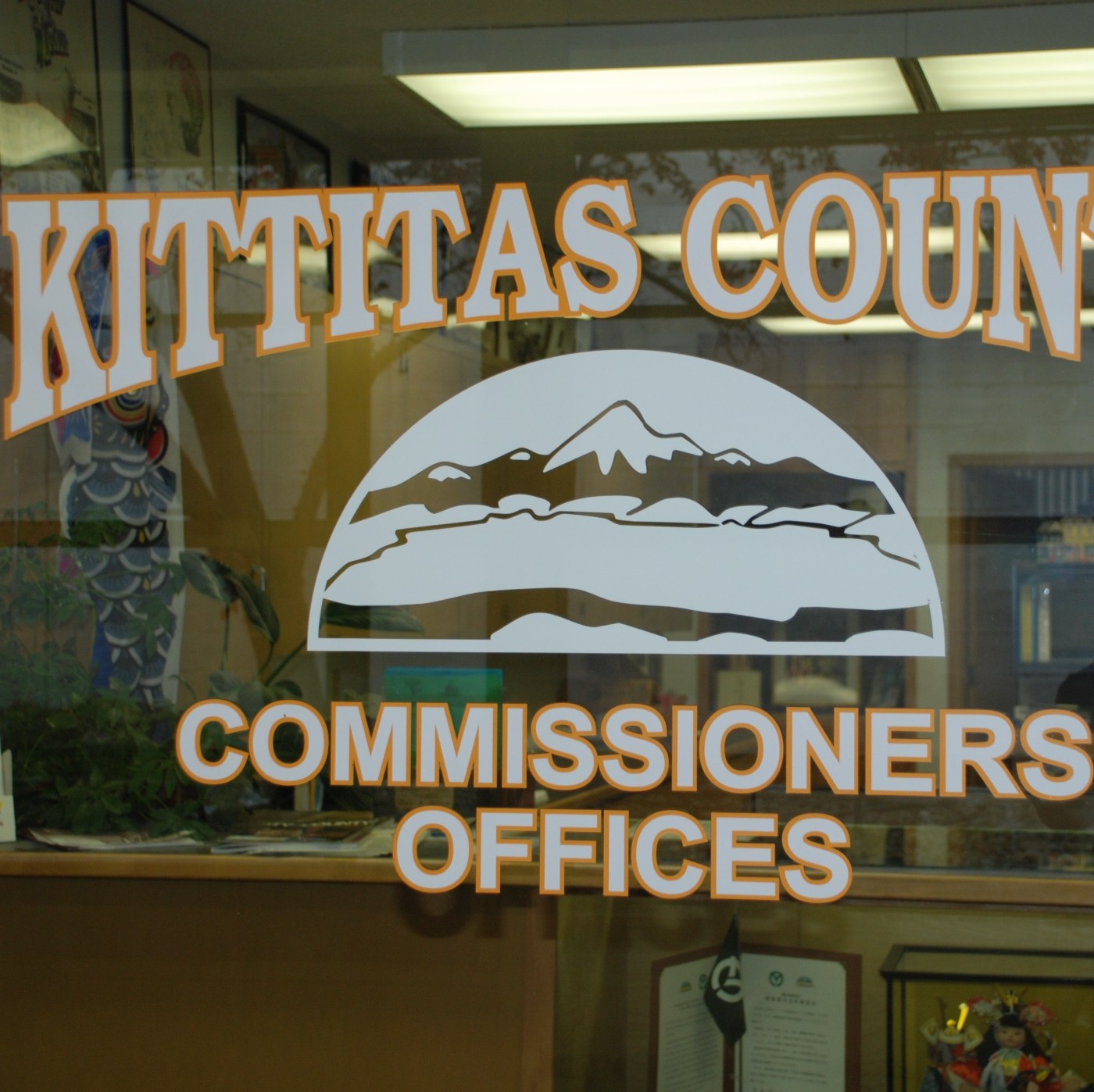 Water is, for the most part, a transparent resource that is invisible to your typical American. Its tangible contributions in our lives are eventually seen when the resource is taken away. Paul Jewel, Kittitas County Commissioner, feels that people can take water for granted. It truly is our single, biggest economic indicator. Most people don’t appreciate that. Water is a Many Splendor’ed Thing brings you another water relationship that has a personally significant impact to your life. Produced by Stephen Baker, Bringing People Together to Solve Water Problems, water@operationunite.co 530-205-6388
Sunday reads …
NEW BOOK: Deep Time in the Mono Lake Basin
 “Nestled at the base of the Sierra Nevada in eastern California sits a stunning landscape overlooking a saline lake with picturesque tufa towers and flocks of phalarope birds. This is the Mono Lake Basin. In this sweeping history, Robert B. Marks examines the forces that have shaped the Mono Lake Basin’s rich ecosystem. The story starts with the region’s Indigenous peoples. It then traces the mid-nineteenth-century arrival of Euro-American settlers and the dispossession of the Kootzaduka’a people of their land. A struggle for control over water led to hydroelectric development and the sale of land and water rights to Los Angeles, diverting nearly all fresh water out of the basin and precipitating an ecological crisis by the 1970s. The ecological restoration movement has, for now, successfully preserved the Mono Lake Basin. … ” Read more from the Water Shelf.
BOOK REVIEW: Troubled Water: What’s Wrong with What We Drink
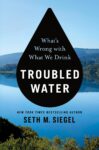 “Seth Siegel’s Troubled Water: What’s Wrong with What We Drink (Macmillan, 2019) is one of those rare water books that doesn’t just diagnose the problem…it hands us a moral mirror and asks: What are we willing to tolerate in the water we drink? With the precision of an investigative reporter and the heart of a public advocate, Siegel exposes the fractured state of America’s drinking water system, reminding us that the pipes beneath our feet carry not only water, but the values, priorities, and imagination of the communities they serve. One of Siegel’s most powerful insights is deceptively simple: when we eat imported foods, we’re also consuming the drinking-water health codes of those countries. In a global supply chain, water quality is no longer a local issue. It’s a worldwide relay, one that depends on science, regulation, and the political backbone to enforce both. … ” Continue reading from Jim Lauria at the Water Shelf.
In regional water news this weekend …
SIERRA NEVADA
Ospreys appear to be signaling Lake Tahoe’s ecological health, officials say
“Lake Tahoe ospreys can be seen around Emerald Bay State Park, D.L. Bliss State Park, and around the Truckee River, according to a recent Sierra State Parks Foundation Facebook post. “Seeing them is a great sign, as they are vital indicators of the lake’s ecological health!” according to the parks foundation. … ” Read more from KOLO.
NAPA/SONOMA
Cotati residents take pride in long history of protecting the Laguna
“Lanny Lowery’s article, Cotati, the southern end of the Laguna de Santa Rosa watershed (May 22, 2026), was written from the perspective of someone seeing Cotati’s Laguna trail as “one of Cotati’s best kept secrets,” and gleaning information from the interpretive signs posted along the trail. As someone who has lived adjacent to Cotati’s Laguna trail for 30 years, and been directly involved with some of the changes that have taken place during that time, this is an ideal opportunity to fill in a few of the gaps and bring the story up-to-date. The Cotati Creek Critters started around 1998 as a small, informal group of friends and neighbors working with Cotati’s Community & Environment Commission. In 2006 we received a grant from the California Department of Water Resources, to “engage the local community in planting 2,000 native trees and shrubs along a 1-mile section of the Laguna de Santa Rosa in Cotati.” … ” Read more from the Community Voice.
Healdsburg weighs new water rules amid growth
“The Healdsburg City Council on Monday will confront a question that reaches far beyond this summer: how to ensure enough water for a growing city when future droughts could become more severe and one of Northern California’s most important water diversion projects is headed toward retirement. Two agenda items—the city’s 2025 Urban Water Management Plan and a proposed overhaul of water waste and drought regulations—outline issues related to Healdsburg’s water resources. … ” Read moire from The Patch.
BAY AREA
Canal residents unveil vision for future that protects community from displacement
“Five months after the release of a major sea level adaptation study for San Rafael’s most flood-prone neighborhood, the residents that live in the Canal district have released their own vision plan. It is tied to the city’s climate adaptation planning, with links to the city’s economic development and housing policy, and it explicitly calls out the risk of displacement due to “green gentrification,” which urban planners often avoid or mention superficially. On Thursday, a resident-led report called the 2026 Canal Neighborhood Snapshot was released by the Canal Alliance, a nonprofit that supports and advocates for Marin County’s Latino community through community engagement and civic participation training. The report, developed through community meetings, surveys and resident leadership programs, is intended to guide a broader neighborhood vision plan expected in 2027. … ” Read more from Local News Matters.
Big Break Regional Shoreline offers free access to rare Delta ecosystem
“Tucked along the edge of the Sacramento-San Joaquin Delta, Big Break Regional Shoreline offers visitors a rare glimpse into one of California’s most endangered ecosystems at no cost. The 1,600-acre park, which opened in 2012, sits at the confluence of two major rivers where saltwater and freshwater meet. Most of the park consists of submerged former farmland, and the district charges no parking, entrance, or program fees.”Regardless of physical ability, where you’re able to hike and go, this place is for you,” said Wyatt Moore, a supervising naturalist with the East Bay Regional Park District. “We really try to provide an experience where anyone who wants to come and enjoy the park is able to be here and learn and be healthy and happy outside.” … ” Read more from KTVU.
CENTRAL COAST
Greenfield approves contract with local contractor to oversee new wastewater plant project.
“Greenfield City Council unanimously approved a $4.6 million contract with BKF Engineers, a civil engineering firm based in Salinas, to manage the city’s new wastewater treatment plant construction project. This includes the project’s timeline, construction and communications. “BKF demonstrated significant qualification and directly relevant experience for the city’s upgrade project,” Jamie Tugel, public works director, told the City Council on Tuesday, May 26. BKF Engineers has over 2,000 water and wastewater projects under its belt, including in Gonzales, Goleta and San Luis Obispo County. The wastewater plant is a $111.3 million project that has been in the works for several years. It will increase the city’s capacity to treat 2 million gallons of wastewater per day and upgrade from its outdated facility, which has a capacity of 1.2 million gallons per day. … ” Read more from Monterey Now.
New fee will charge Paso Robles farmers for water they used last year
“People who’ve pumped from the Paso Robles groundwater basin will see a new charge on their property tax bills this year, after a one-time fee meant to help bring the region’s basin back into balance was approved this week. On Wednesday night, the Paso Robles Area Groundwater Authority voted unanimously to charge of $22.90 per acre-foot of groundwater used by farmers, commercial pumpers and water systems like the city of Paso Robles during water year 2025. An acre-foot is roughly enough to cover a football field in a foot of water. The fee will fund the agency’s budget as it works to balance the basin in accordance with state law — or risk the state setting its own pumping rules and fees for the area, according to board member Hilary Graves said. “Agriculture is struggling right now. It’s a really hard time for farmers,” she said. “I’m definitely not eager to add another regulatory cost to the ones that farmers are already bearing, but we were given the job of finding a way to comply with a law.” Meanwhile, domestic well owners will not be charged water use fees. … ” Read more from the San Luis Tribune.
SAN JOAQUIN VALLEY
Kern agency strikes 11th-hour deal to keep water flowing to Diablo Grande residents
“The Kern County Water Agency will erase a $14 million debt and continue selling water at a lower rate to the Western Hills Water District as part of a deal struck just days before it said it would cut off the tap. The draft deal caps more than a year of start-and-stop threats from KCWA to cut off water to Western Hills, which is the exclusive purveyor to the 600-home Diablo Grande development in the foothills west of Patterson. The most recent cut-off date was May 31. “It’s a very fair deal and I’m pleased,” said Mark Kovich, President of Western Hills. The details of the deal are still vague as the two sides have only signed a “letter of intent,” which SJV Water requested but has yet to receive. An actual contract is still in the works. … ” Read more from SJV Water.
Data center in west Kern would likely tap nearby power plant, carbon storage
“A local oil producer’s proposal to develop a data center in western Kern County is part of a larger discussion of how to integrate the region’s power generation, carbon storage assets, natural gas reservoirs and available land. California Resources Corp. first mentioned the possibility of building a data center in the region when in November it announced a memo of understanding with the Canadian-based owner of a 1.1-gigawatt, natural gas-fueled power plant in McKittrick. Discussions still underway between the two companies are said to have explored the possibility of developing a data center at either CRC property in Elk Hills or Alberta-based Capital Power’s land in McKittrick — possibly both. In either scenario, waste carbon dioxide would be sent for permanent injection at a pair of depleted oil and gas wells CRC owns in Elk Hills. … ” Read more from the Bakersfield Californian.
SOUTHERN CALIFORNIA
Environmental justice groups condemn East L.A. pipeline oil spill into LA River
“Environmental justice advocates, climate organizations, and community leaders have sounded the alarm following the rupture of a crude oil pipeline in East Los Angeles that released thousands of gallons of crude oil into storm drains and the Los Angeles River. The pipeline is operated by Plains All American, the same company responsible for the 2015 pipeline spill off Refugio Beach in Santa Barbara County, one of the worst oil spills in California history, according to a joint press release from four groups. These include Physicians for Social Responsibility – Los Angeles, Central California Environmental Justice Network, Food & Water Watch, and the Oil and Gas Action Network. Historically, the LA River supported a run of steelhead trout, as did many other Southern California streams, until channelization, water diversions, pollution and habitat destruction prevented anadromous fish species from migrating into the headwaters to spawn. … ” Read more from the Daily Kos.
New investments for PFAS projects across Southern California
“As part of the comprehensive U.S. Environmental Protection Agency (EPA) effort to address per- and polyfluoroalkyl substances (PFAS), EPA is announcing new investments in multiple PFAS treatment projects across Southern California. The funding, which totals $15.7 million for seven projects, will advance concrete, tangible solutions to water contamination challenges, and is in addition to EPA’s recently announced $77.257 million investment in California communities’ efforts to address PFAS. “EPA is laser focused on ensuring that every American has safe drinking water, and we’re proud to be providing the resources to make good on that commitment here in California,” said Acting EPA Pacific Southwest Region Administrator Michael Martucci. “This federal investment will be key to our local partners’ efforts to tackle the threat of PFAS across southern California.” … ” Read more from Water Finance & Management.
Along the Colorado River …
Hoover Dam approaches a hydropower cliff
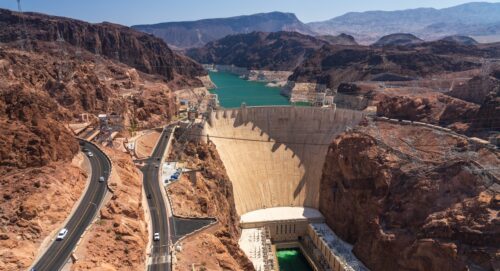 “Some day in the next 12 months – maybe in late-August, maybe not until next spring – Lake Mead will drop below the critical threshold of 1,035 feet above sea level. That is the water-level elevation at which hydropower generating capacity at Hoover Dam, the largest in the Colorado River basin, will be cut by 70 percent. The drastic and immediate reduction in a cheap source of power that is responsive to hourly changes in electricity demand will have consequences for the region’s power customers and the broader electric grid alike. Water managers have known for at least a year and a half that elevation 1,035 feet will be a problem for Hoover’s hydropower. Twelve of the dam’s 17 turbines are not designed to operate in low-water conditions that would be present when Mead is below that level. After record-low winter runoff into already-depleted reservoirs, water managers now know that the day of reckoning is coming soon. “We’re going to go to 1,035,” Tom Buschatzke, director of the Arizona Department of Water Resources, said at a meeting in mid-May. “There’s no question that’s going to happen.” … ” Read more from Circle of Blue.
When the river runs dry
“The Colorado River starts nearly two miles above sea level, in a pass in Rocky Mountain National Park. It’s fed by creeks and snow melt from the Never Summer Mountains, so named by the Arapaho for their year-round mantle of snow. In the remote wilderness where the Colorado begins its life, there is no such thing as political controversy or administrative clashes. That’s not the case over the path it travels across seven states and into Mexico. More than 40 million people depend on water from the Colorado River Basin. Since 1922, a series of formal agreements have determined how it’s shared among states in the “Upper Basin” (Wyoming, Utah, Colorado, Nevada, Arizona and New Mexico) and the “Lower Basin” (Arizona, California, New Mexico, Nevada and Utah). Existing guidelines expire at the end of 2026, and despite two years of negotiations, states were unable to agree on a post-2026 framework by a February deadline. … ” Read more from Governing.
Commentary: Robbing Mead to pay Powell
Ronald L. Rudolph, who has been involved in infrastructure development and water resources issues in the Southwest for more than 50 years and is also a former assistant executive director of Friends of the Earth, writes, “The federal Bureau of Reclamation recently announced extraordinary actions to shuffle water between the Flaming Gorge and Lake Powell reservoirs in an effort to stabilize the Colorado River system. The result will be as if using one credit card to pay the minimum balance on another reduces debt. Instead of juggling a diminishing supply of water, the Bureau should consolidate the storage of Colorado River water in Lake Mead, which supplies water to roughly 25 million people and irrigates millions of acres of farmland, rather than continuing to prop up Lake Powell, which directly serves fewer than 10,000 people. Doing so would enhance the reliability and security of water supplies and sustain agricultural productivity and hydropower generation, while not reducing water available to other states. … ” Read more from the Las Vegas Review-Journal.
In national water news this weekend …
Trump targets science in OMB’s grants revamp
“The Trump administration’s effort to shake up federal grantmaking has begun sending shock waves through the scientific community. The Office of Management and Budget has proposed revising regulations overseeing government assistance, according to a Federal Register notice published Friday. Dozens of agencies would have to rework how they deliver grants worth billions of dollars under the rule, which is slated to take effect later this year. The OMB effort is part of President Donald Trump’s larger campaign to exert political control over the federal scientific enterprise that spans across the government and flows into public and private universities. Liz Borkowski, a researcher at George Washington University, said there was “a general bipartisan recognition” that experts in a given field are the most qualified to set research goals and send funding to worthwhile science. “This rule seems to be envisioning science as a tool for advancing political priorities rather than for answering important questions,” Borkowski told POLITICO’s E&E News. … ” Read more from E&E News.
Risk of saltwater intrusion into coastal groundwater spans the globe: Study
“Globally, about half of drinking water and a quarter of irrigation water comes from under the ground. Yet many coastal sites throughout the world are seeing notable declines in their groundwater levels, putting them at risk of saltwater intrusion, a new study says. The study, published April 14 in the journal Nature Water, found that more than 10% of monitored locations showed a significant years-long decline in groundwater levels, indicating a susceptibility to saltwater intrusion, which can render water unusable. Annika Nolte, a data scientist at the University of Bremen in Germany and lead author of the study, said the results amounted to a “warning” and the work offered a “broad global look at the existing risks” while also identifying “specific regions where we should prioritize management and monitoring.” … ” Read more from Mongabay.

