
Several news sources featured in the Daily Digest may limit the number of articles you can access without a subscription. However, gift articles and open-access links are provided when available. For more open access California water news articles, explore the main page at MavensNotebook.com.
On the calendar today …
- ONLINE EVENT: CA Infrastructure Funding Fair from 9am to 12pm. The funding fairs provide an opportunity for attendees to speak directly with program staff about specific projects and issues affecting their community. Obtain information about currently available infrastructure grant, loan and bond financing programs, and options. Connect with federal, state, and local agencies to discuss the financial and technical resources available. Click here for more information and details on how to attend.
- USGS WEBINAR: Saline Lake ecosystems Integrated Water Availability Assessment from 10am to 11am. The webinar will start with a pre-recorded presentation that includes a brief project overview, an update on 2026 plans for the project’s final summer field season, and recently published products. There will be a live Q&A with the scientists after the presentation. The live Q&A will not be recorded. The recorded presentation will be made available on the Saline Lake Ecosystems IWAA website after the meeting. Please register for the event to receive a calendar information and meeting link sent directly to your email.
- WEBINAR: Obstacles to Achieving the Human Right to Water in the San Joaquin Valley from 2:30pm to 3:30pm. Many Californians, particularly low-income communities and communities of color, face persistent and overlapping barriers to equitable water access. These challenges extend beyond simple availability and include limited political representation, unaffordable water rates, aging or inadequate infrastructure, and exclusion from decision-making processes that shape water governance. This talk will explore the structural and policy-driven obstacles that limit access to clean, safe, and affordable water in the San Joaquin Valley. Click here to register.
In California water news today …
Salmon are at risk with federal plans to give farmers more water from Shasta Lake, critics warn
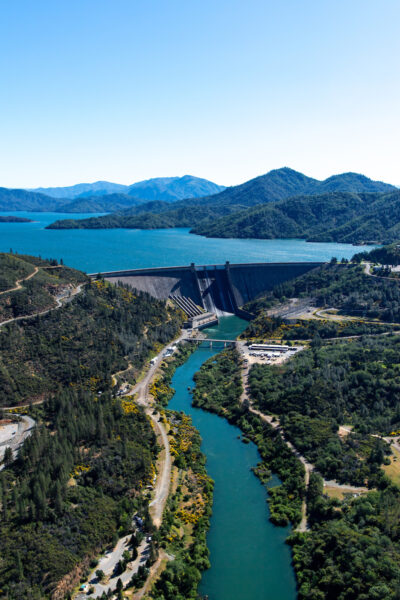
Sara Nevis / DWR
“The Trump administration says it will increase the water it’s sending to Central Valley farmlands this year from Shasta Lake, the state’s largest reservoir. The U.S. Bureau of Reclamation said agricultural water agencies south of the Sacramento-San Joaquin River Delta will receive 25% of their total contracted amount, up from an initial 20%. Cities and towns will also get more from the federal canals that are part of the Central Valley Project. The agency cited “modest improvements” in reservoir levels after some rainstorms in April. Environmental and fishing groups reacted to Tuesday’s announcement with concern, saying that taking too much water out of Shasta Lake threatens to harm Chinook salmon by depriving them of vital cold water in the Sacramento River in the late summer and fall. … ” Read more from the LA Times. | Read via AOL News.
State Water Board urges stronger salmon protections in Reclamation’s draft Sacramento River Temperature Plan
“The State Water Resources Control Board is warning that the Bureau of Reclamation’s draft Sacramento River Temperature Management Plan may not do enough to protect winter-run and fall-run Chinook salmon, citing concerns that low end-of-September storage in Shasta Reservoir could leave too little cold water for spawning. On May 15, the Board submitted comments on the April 29 draft plan, which Reclamation is preparing under State Water Board Order 90-5. The order requires Reclamation to manage Sacramento River temperatures to protect fish species, including winter-run and fall-run Chinook salmon. The Board’s letter points to Reclamation’s projection that Shasta Reservoir could end September with 2.2 million acre-feet of storage, despite relatively high storage earlier in the spring. The draft plan also indicates that the volume of the coldest water in Shasta could be similar to 2015, which was a difficult year for temperature management. “There is significant uncertainty this year in the level of protection that will be provided to winter-run and fall-run Chinook salmon and the actions that should be implemented to improve conditions this year, as well as going into next year,” the letter states. … ” Continue reading at Maven’s Notebook.
New California water coalition breaks with century-old playbook, releases “Water Renaissance” vision for the state’s water future
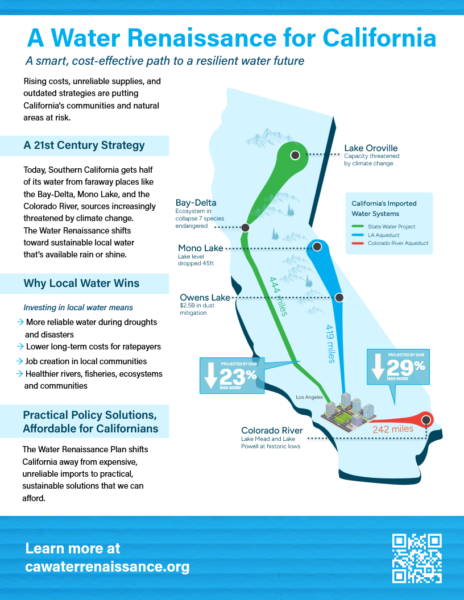
“In an online press conference today, leaders from conservation groups and Tribes announced the release of a Water Renaissance Plan for California. The plan lays out a vision, including specific goals and metrics, for prioritizing local water resilience in California’s urban areas – especially in Southern California – to support a pivot away from the state’s overreliance on unreliable imported water. Among other findings, the plan identifies the opportunity to secure 1.8-2 million acre-feet of drought-proof water supplies in Southern California by 2045 through sustainable technologies like stormwater capture, wastewater recycling, conservation, and groundwater cleanup. The total cost for such investments would be approximately $44 billion. In comparison, the proposed Delta Conveyance Project is only projected to yield 0.4 million acre-feet of water annually at a likely cost upwards of $60 billion. … ” Continue reading this press release.
SEE ALSO:
- Coalition proposes alternate plan to address state water needs, from NorCal Public Radio
- New California water coalition releases “Water Renaissance” vision for the state’s water future that rules out the Delta Tunnel, by Dan Bacher at the Daily Kos
DELTA CONVEYANCE PROJECT: DWR dismisses its second attempt to validate a Delta tunnel bond financing plan
“Following its failed attempt to obtain judicial approval of its first Delta Tunnel bond financing plan, the California Department of Water Resources (DWR) has now dismissed its second “Validation Action,” by which it had sought judicial approval of its second Tunnel financing scheme. DWR’s first attempt began with its 2020 bond resolutions and a Validation Action to secure judicial approval for those resolutions. Delta Counties, cities, and public agencies, as well as public interest groups, opposed DWR’s first Validation Action, warning of major adverse economic and environmental consequences should the financing scheme be validated. Ruling against DWR in the first Validation Action, the trial court found that DWR had exceeded its delegated authority. DWR and its allies among the State Water Contractors appealed. In a unanimous Decision, the Court of Appeal later affirmed the judgment against DWR. (Department of Water Resources v. Metropolitan Water District of So. Calif., et al. (2025) 117 Cal.App.5th 751.) DWR then petitioned the California Supreme Court in an effort to overturn the Court of Appeal’s Decision. Last month, the Supreme Court, sitting en banc, denied DWR’s petition for review and its alternative request for depublication of the Decision. On May 19, 2026, DWR dismissed its second Validation Action, which had been filed during DWR’s appeal in its first Validation Action. … ” Continue reading this press release.
HEALTHY RIVERS & LANDSCAPES UPDATE: Tribal Engagement Plan, Tribal Involvement in HRL Governance and Science; Highlights from the 2025 HRL Flow Measures Trial Run
“The Healthy Rivers and Landscapes (HRL) Program continues to advance and plan for engagements with California Tribes. Recognizing the cultural and spiritual significance of the Bay-Delta watershed to Tribal communities, HRL parties are focused on providing meaningful engagement opportunities as the Program moves toward implementation. In 2025, HRL parties undertook a primary outreach phase with Tribal entities and organizations. This initial work was designed to better understand Tribal perspectives regarding the watershed and to identify potential barriers to participation. Based on the findings from this phase, several recommendations were provided to HRL leadership for consideration in future planning. These suggestions include exploring culturally appropriate engagement approaches, establishing formal structures to compensate Tribal representatives for their technical expertise, and considering a Tribal liaison to serve as a bridge between HRL leadership and Tribal communities. … ” Read more from the Natural Resources Agency.
Edward Ring series continues as California water debate and governor race intensify
“The AgNet News Hour continued its special multi-part interview series with California water and energy policy expert Edward Ring, diving deeper into the state’s ongoing water crisis, Delta management failures, SGMA concerns, desalination opportunities, and the growing political battle surrounding California agriculture. Part three of the series will air Friday, with the final installment scheduled for Memorial Day. Ring, Director of Water and Energy Policy at the California Policy Center, continued outlining what he believes are common-sense solutions to California’s long-running water shortages while criticizing decades of political inaction and overregulation. “It’s not right,” Ring said while discussing continued low water allocations for farmers despite several strong water years across California. … ” Read more from AgNet West.
PPIC Report: Tribal water rights in California
“Tribal water rights play an increasingly significant role in regional water management in California and on the Colorado River, benefiting both Tribal members and other water users. This report and accompanying appendix offer an overview and analysis of the Tribal water rights in California that have been quantified to date. The principal Tribal water rights in Californiaare “federal reserved rights.” Federal reserved rights are associated with the creation of Indian reservations and may include both surface water and groundwater. They provide each Tribe with enough water to maintain a permanent home and to support Tribal economies and traditional practices. Of the 109 federally recognized Tribes in California, only 16 have water rights that have been quantified under federal law. … ” Read more from the PPIC.
SEE ALSO: PPIC Fact Sheet: Tribal Water Rights and Water Use in California
A powerful El Niño is forming. If history is a guide, it could hit hard.
“Well before it was understood, the El Niño phenomenon was leaving its marks on humanity. El Niño is the name given to powerful shifts in Pacific Ocean winds and water temperatures that can drastically transform global weather patterns. Over the centuries these natural patterns have sparked epic droughts and heat waves, and have intensified epidemics. Some academics even claim to see the fingerprints of El Niño on political and economic crises in ancient Egypt, or on the downfall of the Moche civilization in present-day Peru, more than 1,000 years ago. And in 1877 and 1878, a famine fueled by El Niño killed millions of people across the tropics, hardening inequities that, as one research paper put it, “would later be characterized as the ‘first world’ and ‘third world.’” Right now, the world is entering a new El Niño phase. Researchers are warning it could be one of the strongest on record and are invoking this history as an admonition that natural forces, when they reach their highest magnitude, can lead to profound volatility and hardship. … ” Read more from the New York Times.
SEE ALSO: Hotter 2026 and El Nino could trigger extreme fires, from DW
Mussel roundup: State considers emergency; Kern ramps up; Even the guano?
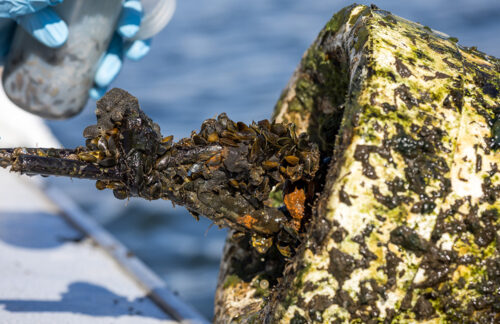
Xavier Mascareñas / DWR
“The invasive golden mussel is moving fast so it’s hard to keep up. Here are just a few tidbits to chew on. A Department of Water Resources spokesman confirmed to SJV Water that the agency, which is in charge of the vast and crucial State Water Project is thinking of declaring an emergency due to the rapidly expanding golden mussel infestation. “DWR is considering declaring an emergency for State Water Project golden mussel response actions but has yet to decide,” the spokesman wrote in an email. “If DWR declared a State Water Project emergency, or if the governor declared a state of emergency for golden mussels, the declaration would allow DWR to use additional resources to initiate, plan, and implement golden mussel-related response efforts in a coordinated and expedited manner.” … ” Read more from SJV Water.
Bills would authorize $60 million in federal funds to fight golden mussels
“California Senators Adam Schiff and Alex Padilla introduced the “Golden Mussel Eradication and Control Act of 2026” on Wednesday that would, if passed, create a task force to partner with state and other entities to develop best practices for dealing with the invasive species that has rapidly infested the state’s water ways. This bill is a companion to one introduced in June 2025 by Rep. Josh Harder (D-Turlock), H.R. 3717, in the House of Representatives, which was referred to the Committee on Transportation and Infrastructure, and in addition to the Committee on Natural Resources. Both bills would authorize $15 million a year over the next four years to be given in grants by the task force to its various partners for research and development. … ” Read more from SJV Water.
EPA announces $77.3 Million for California to address PFAS in drinking water
“U.S. Environmental Protection Agency (EPA) has announced $77.257 million in new Emerging Contaminants in Small or Disadvantaged Communities (EC-SDC) grant funding to address PFAS and emerging contaminants in California communities that need it most. This new funding is part of a comprehensive, lifecycle-based strategy to address per- and polyfluoroalkyl substances (PFAS) that underscores EPA’s commitment to Making America Healthy Again by ensuring clean water for all. “With this investment, EPA is demonstrating our commitment to the goal of every American having safe drinking water,” said Acting EPA Pacific Southwest Region Administrator Michael Martucci. “Providing funding, affordable financing, and technical assistance to help California communities get PFAS out of drinking water will bring lasting positive impacts where they are needed most.” … ” Read more from the EPA.
That bright green water? What to know about harmful algal blooms before you venture in
“It’s a pleasant afternoon and you can feel the warmth of the sunshine hitting your shoulders. The trail opens to a stretch of water. This is your destination, the spot you’ve always visited in the dog days of summer. Your pup knows the way, pulling with glee toward the shoreline. Your child is already stepping in, shoes off, laughing. The water looks… a little green. Not alarming. Just enough to make you wonder. Is it safe? In that moment, you have about 10 seconds to decide. Harmful algal blooms—or HABs for those of us who talk about them all the time—are caused by certain types of cyanobacteria that can produce toxins harmful to people and animals. But here’s the part that catches people off guard: you can see a bloom—but you can’t tell if it’s toxic just by looking at it. “People want a clear visual answer—safe or unsafe,” said Carly Nilson, a senior environmental scientist with the State Water Board’s Freshwater Harmful Algal Bloom (FHAB) Program. “But that’s not something you can determine from appearance alone.” … ” Read more from the Water Board’s Ebb and Flow.
In commentary today …
Chuck Bonham: What does California salmon fishing signify? Not a return to normal
For the first time in three years, California is allowing commercial and increased recreational salmon fishing to resume. For coastal communities, tribal nations and fishermen, that decision brings real relief. It should also sharpen our sense of responsibility. The closure of the fishery was painful for everyone. I know because I was there helping to make those decisions. But it reflected a reality California could not ignore: Salmon runs that once ranked among the most abundant on the West Coast had been pushed to the brink by drought, warming rivers, shifting ocean conditions and long-standing pressure on habitat and water management. Conditions have improved enough to allow limited harvest. That’s welcome news, but it would be a mistake to see this rebound as a full recovery. What we are witnessing is not an overnight return to normal, but a fragile reprieve that requires care and attention. … ” Read more from the Sacramento Bee.
Edward Ring: Differentiating between capacity and yield
“Whether it’s an energy project or a water project, it’s important to avoid conflating capacity with actual production, or yield. With energy projects, that difference is much more certain than with water projects. … The other big source of electricity generation in California is hydroelectric, but the annual yield is not nearly as certain. With nuclear, natural gas, wind, and solar, the reported differences in yield from year to year are insignificant, because the input is relatively predictable. But while California’s big hydroelectric generators yielded 23 percent of hydroelectric capacity in 2024 (25.2 TWh) and 25 percent of capacity in 2023 (27.1 TWh), their output in 2022 was only 14 percent (14.6 TWh), and was only 11 percent in 2021 (12.0 TWh). Obviously, the uncertainty with hydroelectric power is the result of uncertain weather, and that carries over to most water projects. Desalination and wastewater recycling are immune from the vagaries of weather, but that’s about it. The ratio of capacity to yield with water projects is also subject to the related uncertainty of what environmental policies may apply and how they may evolve over time. Even in a very wet year, there may be regulations that limit the utilization of a water project’s capacity. The proposed Sites Reservoir offers a dramatic example of just how wide the range of yield scenarios can get. … ” Read the full commentary from Edward Ring.
In regional water news and commentary today …
NORTH COAST/MODOC PLATEAU
CDFW rescues nearly 6,000 Eagle Lake rainbow trout stranded in Pine Creek
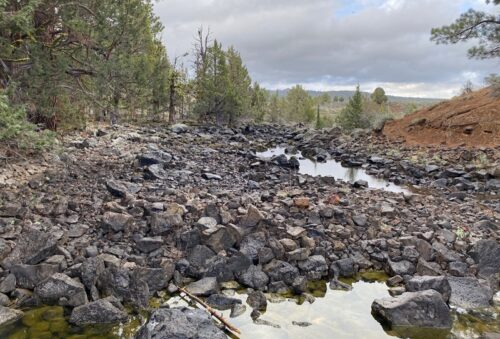
“The California Department of Fish and Wildlife (CDFW) this spring conducted the largest rescue of Eagle Lake rainbow trout in more than a decade, returning approximately 5,800 adult fish to Eagle Lake that were at risk of becoming stranded in the lake’s main tributary, Pine Creek. The emergency efforts occurred over four days in March and April and involved more than 25 CDFW biologists, hatchery staff and several community volunteers. “These fish are long-lived so there’s a very good chance that fish returned to the lake could return in subsequent years to spawn again,” said Paul Divine, CDFW’s District Fisheries Biologist for Lassen and Modoc counties. “And it’s also putting adult-sized fish back in the lake that could be enjoyed by anglers to catch as well.” … ” Read more from the Department of Fish and Wildlife.
The importance of Big Springs to the Shasta River
Tom Cannon writes, “Big Springs contributes streamflow, cold water, and volcanic nutrients to the middle and lower Shasta River. Although its contribution to the overall volume of the Klamath River is small, the cold, nutrient-rich flows originating from Mount Shasta’s source springs, combined with a gentle gradient, play a key role in making the Shasta River the most productive salmon tributary in the Klamath River watershed. Big Springs is the major source of water for the Shasta River. It’s 52ºF clear water supports salmon, steelhead, and trout in the middle and lower Shasta River. Its 100-120 cfs base inflow makes up the predominant flow of the Shasta River in summer. … ” Read more from the California Fisheries blog.
SIERRA NEVADA
CEA Foundation wins pollution judgement against Rise
“On Tuesday, United States District Judge William B. Shubb ruled that Rise Grass Valley is violating the law by discharging pollutants from the Idaho-Maryland Mine into Wolf Creek without a permit. The ruling establishes Rise’s liability for the pollution. This is a major victory for the plaintiff, CEA Foundation. The Idaho-Maryland Mine, situated in Grass Valley, CA, ceased operations in 1956 and became flooded with water. Water has been flowing out of the mine into Wolf Creek since then. A series of tests of the discharge in 2018 and 2019 identified that the discharge is polluted, exceeding lawful values of arsenic, iron, and manganese. Rise Grass Valley, a wholly owned subsidiary of Rise Gold Corp, applied for a Use Permit to reopen the mine in 2019. Included in the project proposal was a water treatment facility to eliminate the polluted mine water. After the Nevada County Board of Supervisors denied a vested rights claim in December 2023 and denied the Use Permit application in February 2024, there were no indications that the ongoing pollution of Wolf Creek was being addressed. … ” Read more from The Union.
SEE ALSO: Rise Gold Provides Litigation Update, from Market Screener
North Yuba River cleanup ongoing, cloudy water expected
“Boaters on the North Yuba River should expect to temporarily see cloudier water over the next few several weeks as workers begin removing sediment from February’s penstock rupture, the Yuba Water Agency said on Wednesday. Work will affect the waters below New Colgate Powerhouse and potentially Englebright Lake. In response, the agency is increasing its water quality monitoring while the cleanup efforts are ongoing, the agency said. On Feb. 13, a pipeline carrying water burst, causing thousands of gallons to be released. An estimated 400 acre-feet of water cascaded down a hillside and caused severe erosion. … ” Read more from Fox 40.
SEE ALSO: River cleanup begins after Yuba pipe rupture. Expect cloudy water, officials say, from the Sacramento Bee
El Dorado Water Agency nets federal funds
“Congressman Kevin Kiley’s office announced the representative recently secured more than $4.5 million for key projects across California’s 3rd District, including $1 million to the El Dorado Water Agency. “These investments reflect our commitment to improving and strengthening our rural communities across the Third District,” Kiley said. “Each of these projects, including improving aging infrastructure, providing fire protection and forest management, represent a meaningful use of taxpayer dollars.” EDWA will use the money in the Upper American Cosumnes Watershed to carry out forest management and watershed resilience efforts, including fuel reduction treatments, post-wildfire recovery actions and meadow restoration in high-risk areas of El Dorado County. … ” Read more from the Mountain Democrat.
SACRAMENTO VALLEY
Where the little fish play
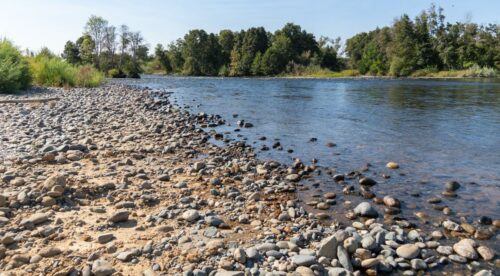 “Seeing a dry-suited man face-down in the shallows, American River hikers could be excused their alarm. The snorkeler is Tyler Brownell, one of a biological team surveying salmonid habitat in the river. “I often get startled reactions,” Brownell told this reporter. “And dogs go crazy at the sight of me.” Employed by Cramer Fish Sciences, Truett and fellow technicians partner with the Sacramento Water Forum. They identify places where small-fry salmonids shelter to prepare for their migration to the Pacific Ocean. Because the American River has been greatly altered – first by gold diggers, then by dams – Chinooks and steelhead face reproductive challenges. … “Habitat for adult and juvenile salmon is limited in the American River,” explained Water Forum program manager Erica Bishop. “Snorkel surveys focus on gathering information about juveniles.” … ” Read more from the Carmichael Times.
NAPA/SONOMA
Who owns the beaches on the Russian River?
“Last summer, paddlers who pulled their boats onto a wet strip of sand near Forestville in Sonoma County were met by private security guards and signs telling them to leave. The fight wasn’t new. It was the latest round of an old Russian River argument: where does private property end, where does the public’s right to be on the river begin, and who — if anyone — is going to walk down to the beach and sort it out? Homeowners along the river have real complaints: noise, trash, fire risk, the steady grind of summer crowds, people wandering into their actual yards. River users have real rights: floating, swimming, fishing, boating, hauling boats around a shallow stretch, and the ordinary use of a river that thousands of Californians have grown up on. Most of the time the two sides coexist. … ” Read more from SF Gate.
BAY AREA
Radar gap filled on Marin mountaintop
“Barnabe Mountain in Marin County, elevation 1466’, is nobody’s idea of a commanding height. From nearby valleys, you can hardly pick out this rounded knob. But the layout of the Marin hills makes this a splendid spot for gathering and transmitting data. Along with lots of communications equipment, there’s a fire-protection webcam here. And in early March, a new structure joined the hilltop crowd: a weather radar installation meant to read incoming storm clouds, hours before they drop any rain, allowing time for flood preparation just when and where it counts. … ” Read more from Knee Deep Times.
Fighting for a foothold: restoration work safeguards fragile ecosystem on Yerba Buena Island
“Biodiversity is the immense variety of all living things on Earth—including plants, animals, microorganisms and humans. In this special for NPR’s Climate Solutions Week, Bay City News journalist Ruth Dusseault talks with ecologist Josiah Clark about the conservation of ecosystems, and what it can teach us about diversity in human societies. You can listen above to her interview with Clark in the field after a day’s work restoring native ecosystems on Yerba Buena Island, and you can listen to her conversation below with KRCB’s Noah Abrams, reflecting on her reporting.” Listen at NorCal Public Media.
After weeks without safe water, Mountain View lifts boil water notice near Cuesta Park
“It took nearly a month but all the homes near Mountain View’s Cuesta Park are now in the clear and have safe drinking water once again. On Tuesday afternoon, Mountain View lifted a “boil water” notice for the last 21 households that had been without access to clean piped water since a city contractor inadvertently contaminated a water main on April 24. In total, 67 households in the Cuesta Park neighborhood were initially affected by the breach, leading the city to declare a state of emergency last month. … ” Read more from the Mountain View Voice.
CENTRAL COAST
Civil Grand Jury proposes water conservation measures to support Salinas Valley Groundwater Basin
 “Monterey County relies on groundwater from the Salinas Valley Groundwater Basin and river systems for crop irrigation and domestic use, but consistent overdrafts have led to the leeching of seawater into subbasins. The Monterey County Civil Grand Juries have examined the issue of groundwater overdraft and the presence of seawater in these basins since the 1990s. Despite repeated efforts to create and coordinate groundwater management, the Salinas Valley Basin Groundwater Sustainability Agency found the issue has persisted. The basin was also identified by the Sustainable Groundwater Management Act as experiencing chronic overdrafts. It is hence subject to a sustainability deadline of 2040. … ” Read more from KSBY.
Buellton Council considers damages request from local horseback operation, advances floodplain ordinance
“The Buellton City Council heard an emotional appeal from a local horseback riding business owner last week who is seeking $50,000 in damages and rent relief after, he says, city construction projects severely disrupted his operations last year. … Council also visited a first reading on the ordinance revising the city’s floodplain management regulations (Chapter 8.06 of the Buellton Municipal Code) to comply with updated FEMA flood studies and new Flood Insurance Rate Maps scheduled to take effect June 1. Public Works Director Rose Hess said the changes are mostly technical. “This ordinance we have as a result of FEMA issuing a letter of final determination,” she explained. “They found just a couple of items that required updating in our ordinance in order to comply with the FEMA updates.” … ” Read more from the Santa Ynez Valley News.
SAN JOAQUIN VALLEY
Manteca preparing for a purple water future
“Manteca will be a step closer to accomplishing a major water supply expansion when work is completed on the final link of a gravity flow wastewater trunk line beneath Woodward Avenue. There is less than a half mile section of the gravity flow line left to be put in place between Union Road and South Main Street. That work starts June 1 and is expected to take up to a year. Once that is in place, wastewater will flow from the neighborhoods around Woodward Park and all homes and development to the west to the treatment plant in the new gravity line. The existing forced sewer line that requires lift stations to move wastewater will then be repurposed for recycled water that will move by gravity from west to east. … ” Read more from the Manteca Bulletin.
California Supreme Court flooded with briefs on Kern River case from outside groups
“More than a dozen “friend of the court,” briefs have been filed with the state Supreme Court debating whether a local judge erred when he ordered that enough water be kept in the mostly dry Kern River bed through Bakersfield for fish. The Attorney General’s office, a slew of environmental and farm groups, along with far flung water districts, economic development agencies, fisheries groups and even a northern California tribe and crab boat association all weighed in on the fight for a flowing Kern River. The attention from such a wide array of groups reflects just how high-stakes the outcome of this case will be as it involves constitutional questions that could affect water rights and conservation efforts on rivers throughout the state. Next up, the main players in the case will file responses to the amicus briefs. Those are due by June 4, unless there’s an extension. … ” Read more from SJV Water.
EASTERN SIERRA
State Water Board’s job at Mono Lake: “You fix it with water”
“Marc Del Piero was a notable commenter at the State Water Board’s March meeting. Del Piero was a State Water Board member at the time of the 1994 Mono Lake decision and served as the hearing officer for the 46 days of testimony and examination that informed the decision, making him the Board member most deeply immersed in the Mono Lake issue. Standing before the board this March, Del Piero spoke clearly and compellingly, laying out the job of the Board then, and now. Protection of the Public Trust at Mono Lake is the law of the land, Del Piero pointed out. That’s what the 1994 decision is designed to accomplish. … ” Read more from the Mono Lake Committee.
SEE ALSO: DWP diverts Mono Lake’s water non-stop, from the Mono Lake Committee
Inside Devils Hole: mysterious depths, an endangered fish, and an unwavering partnership
“In the seemingly bottomless depths of Devils Hole in southwest Nevada, there was a terror lurking below. But it wasn’t some type of science fiction sea monster lurking in the depths. The terror was the looming potential of wild extinction for the Devils Hole pupfish, the rarest fish in the world. A March 2025 dive found only 20 or so of the tiny fish that only exist at Devils Hole, a detached unit of Death Valley National Park within the boundary of the U.S. Fish and Wildlife Service’s Ash Meadows National Wildlife Refuge. These fish, between 1 to 1.5 inches long with males an iridescent blue and females an olive-green color, have special adaptions that allow them to live in the water-filled limestone cavern’s 92-degree Fahrenheit geothermal waters. This entire population of pupfish primarily feeds and breeds on a shallow 215-square foot natural shelf on one side of Devils Hole. The fish feed primarily on algae that grows on the limestone shelf and on small invertebrates. The cause of the sudden population drop in early 2025 was clear: habitat disruption caused by earthquake-generated waves in December 2024 and February 2025. … ” Read more from the US Fish & Wildlife Service.
SOUTHERN CALIFORNIA
How polluted is your favorite California beach? New report shows this year’s cleanest, dirtiest
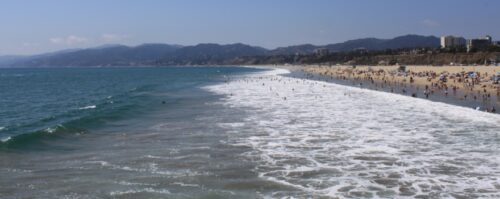 “California is home to some of the most pristine beaches in America – if not the world – but some rank better than others when it comes to pollution. That’s according to Heal the Bay, the non-profit environmental advocacy group that releases a Beach Report Card each year. They measure how rainfall, urban runoff and chronic pollution impact water quality at Golden State beaches. The report also looks at bacterial pollution at rivers, streams and lakes in L.A. County. According to officials, the results of the 2025-2026 Heal the Bay Beach Report Card show that California’s water quality “remained generally strong” over the last year; however, wetter conditions and urban runoff led to slight statewide declines compared to the previous dry year, Heal the Bay officials said in a press release issued before a press conference held to discuss the findings on Wednesday. … ” Read more from KTLA.
Magic Mountain agrees to new treatment efforts for theme park’s water pollution
“After more than a decade in court, Six Flags Magic Mountain has reached a new agreement to manage its water pollution, at the behest of Southern California environmental advocates. As part of the settlement, Magic Mountain has agreed to a new system for treating the polluted water that comes from the theme park and committed millions to projects that is intended to help restore the Santa Clara River’s ecosystem. The three environmental groups that brought the suit against the theme park — Los Angeles Waterkeeper, Friends of the Santa Clara River and the Wishtoyo Foundation — are represented by Sycamore Law founder Daniel Cooper. … ” Read more from The Signal.
Why LA’s concrete river matters more than ever
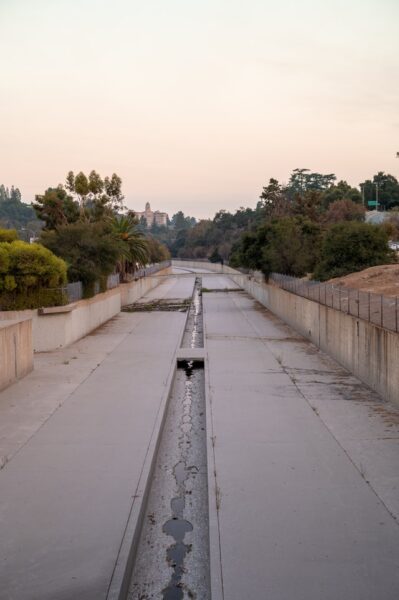 “You’ve seen it in car chases, drag races and apocalyptic movie scenes, but the Los Angeles River isn’t a movie set. It’s one of the city’s most important pieces of infrastructure — and one of its biggest environmental questions. The 51-mile river cuts across Los Angeles in a form that feels uniquely LA: half urban, half natural, part ecosystem, part flood-control machine. Before the concrete, before the city, this river sustained life for thousands of years. Contrary to popular belief, LA isn’t a desert — it was once a lush basin dotted with wetlands. Indigenous communities lived alongside the water for at least 10,000 years, careful to settle near its resources but out of reach of its floods. The Spanish and Mexicans did the same. As the city grew, that wisdom was forgotten. People built right up to the water’s edge, and the river made them pay. Then came the catastrophic flood of 1938. Streets became rivers, bridges collapsed and communities were swept away. Afterward, the Army Corps of Engineers was brought in to make sure it never happened again. … ” Read more from the New York Post.
Hollywood Hills homeowner disputes decades‑old deal that makes him responsible for street drain
“A Hollywood Hills homeowner says he was blindsided when he learned that a storm drain built into the street outside his house is his responsibility — and will be, in perpetuity. Brian Bolain said he discovered the issue after contacting the city about drainage concerns near his home. “They say, well, the architect and builder of your home signed this agreement in perpetuity, and you’re stuck with it now. So good luck,” he told ABC7. According to Bolain, the problem dates back to the early 1980s, when his house was the only one on the street. … ” Read more from KABC.
Bellflower replaces aging water pipes while Cerritos residents ask what comes next after recent rate hikes
“While Bellflower crews are busy replacing nearly 9,500 feet of aging water mains and upgrading hydrants across the city, neighboring Cerritos residents are already paying more after recent water rate increases approved just weeks ago to address the exact same problem: aging infrastructure. California American Water announced this week it completed another $4 million overhaul of Bellflower’s water system, including new pipelines, fire hydrants, valves, and upgraded customer service connections designed to improve reliability and fire protection for residents. The project follows another multi-million-dollar rehabilitation effort completed last year after the investor-owned utility acquired Bellflower’s municipal water system in 2022. … ” Read more from the Los Cerritos News.
Doheny campground upgrades would accompany desal project construction
“Brothers Joel and Aaron Krempasky were hanging out at their beachfront campsite in Dana Point on a recent day, feet in the sand, a quick getaway at one of the most in-demand campgrounds in the State Parks system. “I don’t know of another spot like this,” said Joel Krempasky of the location right at the sand of Doheny State Beach. “It’s unique to all of Southern California, that’s why we love it.” Lucky campers who score spots here in the next year should enjoy it while they can — travelers will likely have to look elsewhere for two years while the coveted beachside campgrounds undergo renovations. This week, community members got a look at the “climate resilience and modernization” project planned for the campgrounds during a workshop at the nearby Dana Point Harbor. … ” Read more from the OC Register.
SAN DIEGO
San Diego Coastkeeper and CERF settle lawsuit with SeaWorld over Mission Bay fireworks pollution
“San Diego Coastkeeper and the Coastal Environmental Rights Foundation (CERF) have reached an agreement with SeaWorld Parks & Entertainment, Inc. resolving a Clean Water Act lawsuit filed in March 2025 over the theme park’s fireworks-related pollution in Mission Bay. The agreement closes more than a year of litigation stemming from SeaWorld’s repeated failures to comply with its Clean Water Act Fireworks Permit. Coastkeeper and CERF filed suit after years of documented noncompliance, including “shocking amounts” of chemical-laden debris — plastic, foil, sharp wiring, and toxic metal residues — recovered from Fiesta Island and the Mission Bay seabed. The resolution follows a major development: the California Coastal Commission recently approved SeaWorld’s proposal to conduct up to 110 drone light shows in the coming year, with shows expected to begin on May 22, 2026 for Memorial Day weekend. Coastkeeper and CERF strongly support Seaworld’s decision to seek the approval for drone shows from the Coastal Commission, noting that the filing of their Clean Water Act citizen suit was instrumental in persuading SeaWorld to transition to this new, more environmentally friendly technology. … ” Continue reading this press release.
Tijuana Slough among state’s most polluted beaches, report finds
“The Tijuana Slough at the Tijuana River Mouth ranked among California’s most polluted beaches, while Playa Blanca near Tijuana was listed as the state’s worst beach in Heal the Bay’s annual Beach Report Card released Wednesday ahead of Memorial Day weekend. The environmental nonprofit’s 2025-26 report placed the Tijuana Slough ninth on its annual “Beach Bummer” list of beaches with the poorest summer dry-weather water quality grades because of elevated bacteria levels and chronic pollution concerns. According to Heal the Bay, Playa Blanca and the Tijuana Slough continue to be heavily impacted by transboundary wastewater flows from Baja California, although efforts are underway on both sides of the border to reduce sewage discharges and improve infrastructure. … ” Read more from KPBS.
Along the Colorado River …
Trump official says lawmakers open to waiving environmental rules along Colorado River
 “As the drought-stricken Colorado River lurches toward a sprawling water and power crisis, lawmakers are beginning to discuss an escape hatch: waiving or streamlining environmental rules. “Several weeks ago, I met with the 14 senators from the Colorado River Basin, and on a bipartisan basis, several of them said, ‘Look, if we have a real crisis on the Colorado and we need to get things done, and if there are any environmental statutes that are slowing things down, tell us what they are and maybe we can legislate to clear out some of the unhelpful bureaucratic paperwork,’” acting Bureau of Reclamation Commissioner Scott Cameron said during a House Natural Resources Committee hearing Wednesday. The comments come as the West’s most important river faces record-low flows this year at the same time that water levels at one of its primary reservoirs are teetering precariously close to the point at which hydropower could no longer be produced and water deliveries to the reservoir that supplies Arizona, California and Nevada would be threatened. … ” Read more from E&E News (sorry, subscription required).
Can the West survive ‘drastic’ Colorado River cuts?
“Years of drought and growing demand have taken their toll on the Colorado River, which supplies water and hydropower to 40 million people in seven Western states. Now the moment of crisis has arrived. The river is “on the brink of disaster,” said The Wall Street Journal. An “unusually warm winter” deprived Colorado and Utah of the snowpack that feeds the river in the spring. That will have literal downstream effects: Lake Powell reservoir in Utah and Arizona “will receive the least amount of water this year” since its creation in 1963. Western states have struggled for years to divvy up the dwindling supply, and old agreements are expiring. Now the Trump administration is preparing a “drastic” plan to “cut water deliveries to farms, cities and tribes” by a third, said E&E News. “There wasn’t enough water to start with, and there’s still less water,” Interior Secretary Doug Burgum said last month, per The Arizona Daily Star. … ” Read more from The Week.
This new Colorado River plan could force talks every two years. Is that a good idea?
“A new federal proposal for managing the Colorado River would force states to reassess their strategy every two years over the next decade. That would mark a shift from the old way of doing things, which saw water-sharing rules implemented for 20 years at a time, with no mandatory check-ins along the way. Policymakers and policy analysts say the new strategy would come with pros and cons. Details of the new proposal are limited, but Arizona officials shared some takeaways at a recent meeting of the Arizona Reconsultation Committee, which brings the state’s water users together to talk about the future of the Colorado River. … ” Read more from KJZZ.
Coyote Gulch: Am I the only one who’s uncomfortable with the “40 million” number?
“While it’s technically true that 40 million people across seven states and Mexico use water systems that are supplied in part by the Colorado River, it’s misleading to say that “40 million people depend on Colorado River water”. That oft-repeated statement obscures the fact that the vast majority of water districts use multiple sources of water. Worse – 40 million is obviously just a rough guess which makes it sound like our federal agencies don’t really know the actual number. … ” Read more from Coyote Gulch.
Trout continue to flourish in the American Southwest
“People from all over the globe thirst for a chance to catch golden treasures found within the cold, mountainous waters of the American Southwest. They are not panning for gold; instead, they are angling to hook the Gila trout and the Apache trout. But the sun almost set forever on these invaluable fish. The arduous trek from the desert floor through the rough mountainous terrain to reach their cold-water streams is emblematic of the recovery of the species. Working together through challenges and rewards, a determined group of partners have made sure that the fish remain and flourish—for us and for future generations. “These fish only exist in really rugged and breathtakingly beautiful places in one small part of the world,” said Zac Jackson, biologist and species lead for the Apache trout with the Service’s Arizona Fish and Wildlife Conservation Office. “The fact that these fish are still around in these isolated areas feels like a testament to their perseverance.” … ” Read more from the US Fish & Wildlife Service.
Anyone shocked? Drought panel recommends – again – that drought emergency status in Arizona continue
“It was the one thing that nearly everyone attending the Spring meeting of Arizona’s panel of drought analysts wanted to know: Will the approaching El Niño condition in the eastern Pacific Ocean – a strong Super El Niño, in fact – bring enough moisture to kickstart an end to the region’s long, long drought? The answer came clear and concise: Maybe. Or maybe not. The prospect of a strong El Niño is pretty rock solid. Already developing, in fact. It’s whether the El Niño will bring the Southwest a lot of moisture that’s iffy. It’s very high confidence actually,
said National Weather Service meteorologist Mark O’Malley about the developing El Niño condition. Normally in the spring we are in a predictive barrier where there’s a lot of uncertainty. This year is the exception. We are looking at basically all the models that we use showing an El Niño. … ” Read more from the Arizona Department of Water Resources.
New technology aims to boost Nevada snowfall without traditional cloud seeding
“As Nevada continues to grapple with drought concerns and increasing demand on its water resources, a company is promoting a new weather-modification technology it says can increase precipitation without the use of aircraft or chemical agents. Rain Enhancement Technologies (RET) is exploring the possibility of bringing its system to Nevada after conducting projects in Utah. Unlike traditional cloud seeding, which disperses silver iodide particles into storm clouds to encourage precipitation, RET’s technology relies on electrically charged negative ions. The company says its ground-based units release negative ions into naturally occurring wind currents. As those ions move into clouds, they are designed to increase water droplets to combine and grow larger, potentially increasing rain and snowfall. … ” Read more from Channel 3.
Trump signs law clearing path for Southern Nevada water pipeline
“The Southern Nevada Water Authority has won federal authorization to build a 40-mile water pipeline beneath a Clark County conservation area, a project lawmakers say will safeguard the region’s water supply for generations. The White House said President Donald Trump signed H.R. 972, the Sloan Canyon Conservation and Lateral Pipeline Act, into law Tuesday. The law directs the Department of the Interior to grant the Southern Nevada Water Authority rights-of-way for the construction and operation of a 40-mile water pipeline beneath the Sloan Canyon National Conservation Area. The pipeline would have the capacity to carry 375 million gallons of water per day to Henderson and the southern Las Vegas Valley. … ” Read more from the Las Vegas Sun.
SEE ALSO: Trump OKs $2B water pipeline under Sloan Canyon conservation area, from the Las Vegas Review-Journal
Frozen Colorado River funds are finally flowing to Utah
“Federal funding for water conservation projects in Utah has been held up for over a year, but some of that money is finally flowing to eastern Utah. The Bureau of Reclamation plans to release about $35 million to Utah from the Inflation Reduction Act for drought mitigation projects in the Colorado River Basin, said Amy Haas, director of the Colorado River Authority of Utah. That’s just a portion of the $90 million that the Biden administration awarded to Utah for 11 projects, ranging from wetland restoration near Moab to removal of invasive Russian olive trees along the Green River. Shortly after the funds were awarded in early January 2025, though, President Donald Trump froze spending from the IRA. … ” Read more from the Salt Lake Tribune.
This wildfire season could be hotter, drier and pricer, Utah officials say
“The 2026 wildfire season is shaping up to be not just hotter and drier but also more expensive after the cost of gasoline soared in the three months since the Iran War began. Usually, when state officials refer to “fuel” in wildland firefighting, they’re talking about grass, brush and trees at risk of burning in dry winds. And they warned about that too, on Wednesday, emphasizing that vegetation across the state dried out a month or more ahead of schedule. But Gov. Spencer Cox also called attention to the kind of fuel powering wildland firefighting engines. “We routinely have fires that are at least a million dollars a day, and with fuel prices, that’s going to cost even more this year as we try to fight these fires,” Cox told reporters at a news conference at a new state wildfire response center in South Salt Lake. … ” Read more from the Utah News Dispatch.
Flaming Gorge marinas race to survive as 1M acre-feet of water sent downriver
“Scuba gear and welding hats aren’t typical fishing tackle. But at Flaming Gorge Reservoir this spring, marina crews are using both as they scramble to move boat docks farther out while trying to keep up with rapidly dropping water levels. Federal officials announced earlier this year that they will release up to 1 million acre-feet of water from Flaming Gorge to boost critically low water levels down the Colorado River on Lake Powell and protect hydropower operations at Glen Canyon Dam in northern Arizona. That lifeline for Lake Powell, though, has become a slow-motion disaster upstream for Wyoming and Utah, where Flaming Gorge marina operators are racing a falling shoreline and wondering if the marina side of their business has any future beyond 2026. … ” Read more from Cowboy State Daily.
In national water news today …
‘Practical stewardship’: House Republicans release Interior-EPA spending bill
“House appropriators on Wednesday unveiled proposed funding for the Interior Department and EPA, cutting deep into science and research programs, bolstering extraction on public lands, and signing off on the Trump administration’s new Wildland Fire Service. The House Interior and Environment Appropriations Subcommittee released a $38.9 billion spending bill for fiscal 2027, which includes a 20 percent cut to EPA, or about $1.8 billion. Interior’s funding would go up by about 2 percent. “America’s public lands and natural resources are not just part of our heritage — they are strategic assets that support recreation, connect our communities, grow opportunity, and reinforce our way of life,” Appropriations Chair Tom Cole (R-Okla.) said in a statement. Cole said the measure focuses on “practical stewardship: managing our lands responsibly, unleashing domestic energy, strengthening wildfire response, and ensuring agencies are focused on results instead of red tape.” … ” Read more from E&E News.
Trump to ease restrictions on climate ‘super pollutants’
“President Trump will announce Thursday that his administration is easing restrictions on the potent planet-warming chemicals used in air-conditioners and refrigerators — restrictions put in place because of a bipartisan law Mr. Trump signed during his first term in office. The move would slow plans to phase out hydrofluorocarbons, synthetic substances sometimes referred to as “super pollutants” because of their enormous effect in driving climate change. Lee Zeldin, the Environmental Protection Agency administrator, is expected to join Mr. Trump at the White House Thursday to announce new regulations that would relax existing requirements for grocery stores, air-conditioning companies, semiconductor plants and others to reduce production and use of the chemicals, which are known as HFCs. … ” Read more from the New York Times.
UN climate resolution passes despite US opposition
“A landmark United Nations resolution on whether countries are obligated to address climate change was adopted Wednesday despite muscular opposition from the United States and other oil-producing nations, including Iran. The measure, put forward by the Pacific island nation of Vanuatu, sought political support for an advisory opinion issued last year by the International Court of Justice (ICJ) in the Hague. The court, often considered the world’s highest legal authority, determined that governments can be held liable for climate inaction based on existing international law. The court’s opinion is nonbinding, and so is the resolution adopted Wednesday. But it does signal countries’ commitment to take the court’s opinion forward by acknowledging its ruling. It also provided an example of countries aligning themselves against the United States and a handful of other nations that are opposed to climate action. “Climate obligations are not political aspirations, they are legal duties,” said Filipo Tarakinikini, Fiji’s representative to the U.N. “Today, this assembly gives that principle the political force it demands.” … ” Read more from E&E News.
Also on Maven’s Notebook today …
NOTICE: Proposition 4 DWR CIMIS Project – Release of Draft Guidelines and Public Comment Period Open

