
A wrap-up of posts published on Maven’s Notebook this week …
Note to readers: Sign up for weekly email service and you will receive notification of this post on Friday mornings. Readers on daily email service can add weekly email service by updating their subscription preferences. Click here to sign up!
In California water news this week …
This coming El Niño could be a monster. Will it bring epic rain to California this winter?
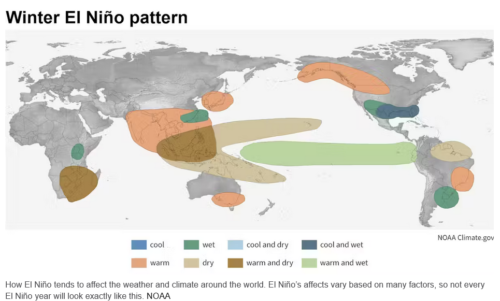 “The likelihood of a potentially powerful El Niño taking shape in the Pacific Ocean is rising, heightening concerns that Southern California could be in for an extreme rainy season. There is now an 82% chance that El Niño is likely to emerge over the next few months, up from the 61% chance estimated a month ago. And there’s now a 96% chance that the climate pattern — characterized by warmer ocean waters in the central and eastern tropical Pacific — will be in force this winter, the National Weather Service’s Climate Prediction Center said Thursday. It remains to be seen how strong this iteration of El Niño could be. There’s up to a 37% chance that it will be “very strong” by the end of the year, up from a forecast of 25% issued last month. … ” Read more from the LA Times. | Read via AOL News.
SEE ALSO: Super El Niño could strain food and water supplies around the world, from AccuWeather
El Niño is coming faster than expected and chances are rising that it will be historically strong
“El Niño is emerging even faster than expected in the Pacific Ocean and odds are increasing that it could become historically strong — a rare “Super” El Niño — by fall or winter. This is according to a just-released update from NOAA’s Climate Prediction Center that says there is a 2 in 3 chance that El Niño’s peak strength will be strong or very strong. El Niño is a natural climate cycle that happens when the tropical Pacific Ocean warms enough to trigger shifts in wind patterns throughout the atmosphere, which has a ripple effect on weather conditions worldwide. Droughts and heat waves can flourish in some regions, fueling wildfire danger and water supply concerns, while others are swamped by flooding rainfall. El Niño’s far-reaching effects can also stymie the Atlantic hurricane season. On a larger scale, it causes already rising global temperatures from human-caused climate change to spike even higher. Stronger El Niños make all these impacts more likely. … ” Read more from the San Jose Mercury News.
Half of California is ‘abnormally dry,’ NOAA data shows
“Abnormally dry and moderate drought conditions continue to spread across California, according to the latest update from the U.S. Drought Monitor. The new map, released Thursday, shows counties across Northern and Central California now classified as “Abnormally Dry” or “Moderate Drought,” the first two levels on the drought scale. Los Angeles, Orange, and Santa Barbara counties are still drought-free, according to the latest map, but “abnormally dry” conditions have moved into San Bernardino and Riverside counties. The update follows new information from NOAA’s National Integrated Drought Information System, which reported that snowpack, the West’s largest non-man-made reservoir, has already disappeared in many areas. … ” Read more from KTLA.
Lasers in the sky: Hi-tech missions track record snowpack loss in the West
 “High above the jagged peaks of California’s Sierra Nevada, the view from the cockpit is breathtaking. At first glance, the mountains appear draped in a pristine white blanket. But as the flight crew gears up for a high-stakes mission, the sensors onboard this specialized aircraft prove that looks can be deceiving. “This is a distinct dry year,” says Tom Painter, CEO of Airborne Snow Observatories. Painter, who developed this technology at Nasa, isn’t relying on a visual inspection. His plane uses Lidar, or rapid pulses of laser light, to calculate snow depth with surgical precision. “The Lidar sprays out about 800,000 pulses per second,” he explains. The result is a 3D map of snow depth accurate to within 3cm. The technology also helps determine how much water is stored in the snowpack. In the US west, where mountain ranges act as “frozen reservoirs”, state water managers rely on this data as a survival guide. It helps them plan for exactly how much water will eventually reach the faucets of millions of people and the critical farm fields that feed the nation. This year, the data is sounding an alarm. … ” Read more from The Guardian.
SGMA’s new subsidence guidance: A higher bar, real-world impacts
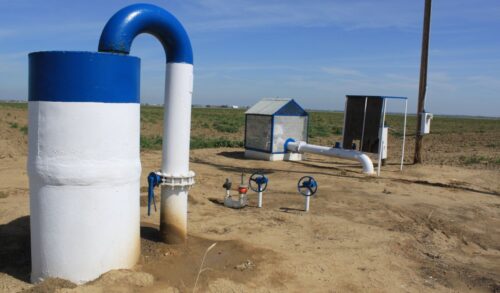 “It’s late July in the Valley. A third-generation grower walks a block that should be full canopy and watches the forecast climb toward triple digits. The local water district is warning their ability to make the requested surface deliveries could shift. The well is already running harder than the budget can tolerate, and the banker wants a water plan before renewing the operating line. Back in the truck, the farmer’s thoughts remain focused on the same question: what stays in production, and what gets cut. That scene is hypothetical, but the tradeoffs are not. DWR’s updated subsidence guidance signals that GSAs will be expected to identify risk sooner and be prepared to respond, even as many basins are still building the projects and capacity needed to reduce pumping responsibly. … ” Read more from the California Farm Water Coalition.
Treating nitrate-contaminated wells with distributed water systems in California
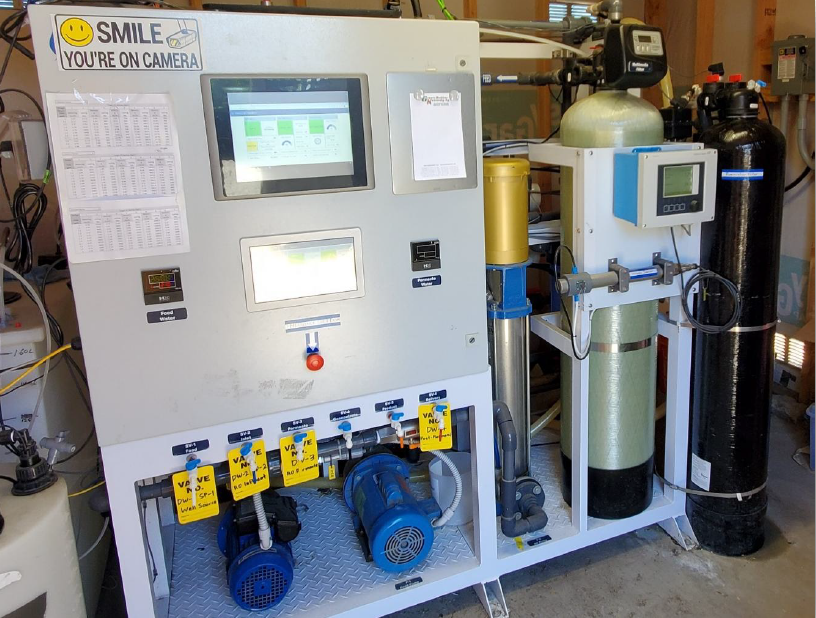
“About 15 seasonal workers and their families live in a trailer park on Huntington Farms, a 6,000-acre land-holding in the Salinas Valley that grows crops including broccoli, lettuce and strawberries. It’s a good deal for both parties. The workers get affordable spaces for their mobile homes and the company gets a reliable local crew. But this arrangement also has a downside. The well that supplies the trailer park’s water is contaminated. Nitrate is five times higher than the state standard, and salinity is twice the state recommended limit. Excessive nitrate can diminish the oxygen-carrying capacity of red blood cells, causing “blue baby syndrome” in infants. This is rare but can be fatal. “Every shallow well in the Salinas Valley has the same problem,” says Mitch Moss, the equipment manager at Huntington Farms. “Nitrate is high from overfertilizing.” People living in the Huntington Farms trailer park haven’t had to worry about unsafe drinking water since 2022, when University of California, Los Angeles researchers installed a new kind of reverse osmosis system on their well. Reverse osmosis uses membranes to filter out impurities. While conventional reverse osmosis systems are large-scale and costly, the new one is small-scale and affordable. … ” Continue reading from Robin Meadows at Maven’s Notebook.
Money for clean drinking water threatened by Newsom administration’s climate overhaul

“Seven years ago, California Gov. Gavin Newsom signed a law to bring safe and affordable drinking water to the state’s most disadvantaged communities. Last week, Newsom celebrated the program’s accomplishments. “Over 1 million people that didn’t have access to clean, safe drinking water today have access to clean, safe drinking water,” Newsom told a conference room filled with California’s water leaders, to a round of applause. “I’m not saying that to impress you, but to impress upon you real progress. A lot more work to be done.” But that work could lose critical funding as the Newsom administration overhauls its source: California’s carbon market. The changes to the program’s funding priorities and revenue threaten efforts to bring clean drinking water to schools, homes and communities across California. “If that funding goes away,” said Sherry Hunter, who has long battled the arsenic leaching into the water supply in the historic Tulare County town of Allensworth, “Oh my god, I can’t even imagine.” … ” Read more from Cal Matters.
The case for investing in the Delta
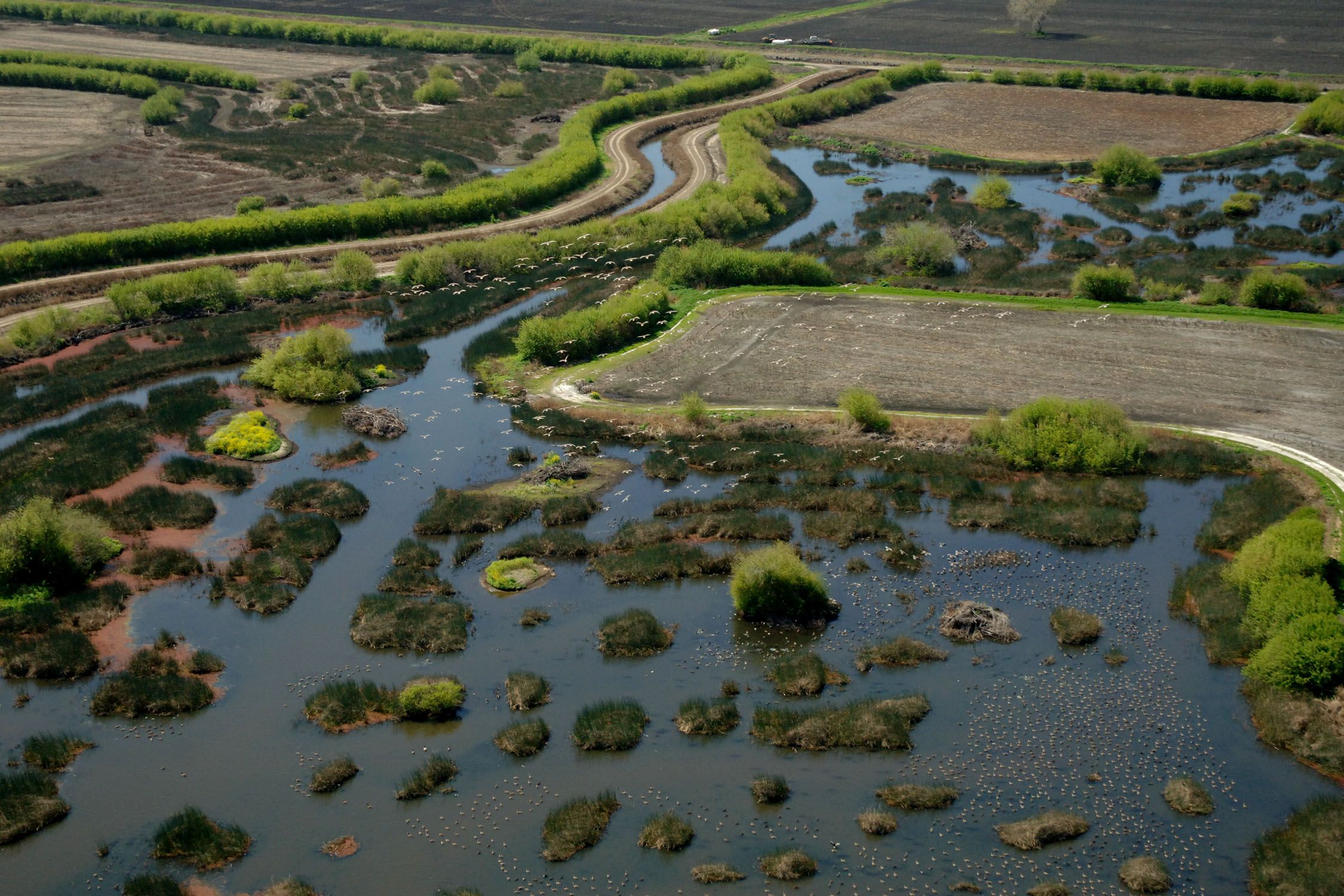 “The Sacramento–San Joaquin Delta is at the center of California’s long-distance water distribution system. But a number of challenges—from aging levees and sea level rise to sinking land—are threatening this vital resource. We spoke with Campbell Ingram of the Delta Conservancy about what’s needed to increase the resilience of the Delta’s communities, ecosystems, and water infrastructure. Water exported from the Delta supplies about 30 million people and irrigates about 3 million acres of farmland. Q: What challenges is the Delta facing as a water infrastructure hub? A: Subsidence is a big one. Currently, 150,000 acres of Delta islands lie 25–30 feet below sea level because of the oxidation of peat soils. This subsidence continues to happen at the rate of 1–2 inches a year, releasing about 1.2 million tons of carbon into the atmosphere. As the climate changes, more intense storms are coming through and eroding levees. If you lose one island, the wind energy causes waves to erode other levees. … ” Read more from PPIC.
Environmental, tribal groups urge Californians to oppose Eel River dams plan at meeting
“Various environmental groups and tribal advocates are urging Californians to weigh in during a virtual Elsinore Valley Municipal Water District board meeting today over a controversial plan involving the Eel River dams. Conservationists say a Southern California water district is exploring a takeover of the Potter Valley Project, a hydroelectric system in Mendocino and Lake counties that impacts the Eel River watershed, including Humboldt County. The system has not produced power since 2020-21. Opponents warn the potential takeover could delay or derail long-planned dam removal and salmon habitat restoration efforts across the North Coast. … ” Read more from KRCR.
New paper shows surges of concentrated precipitation can lead to dryer landscapes
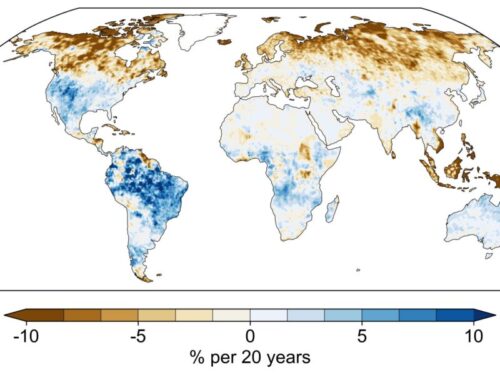 “Scientists have uncovered a new driver of aridification, potentially reshaping how drought across the globe is understood. A new study published Wednesday in Nature by a pair of researchers from Dartmouth College and the Université du Québec à Montréal shows that changing precipitation concentrations exert an important influence over landscape moisture retention. When an area receives its annual moisture in a small number of large, wet storms, it can overwhelm the soils, creating pools of water on the land surface. These exposed pools are more prone to evaporation, meaning water that would otherwise reach streams, rivers and dams drifts back into the atmosphere. When paired with long dry spells, these storms dry out landscapes, even though total precipitation hasn’t necessarily changed, the researchers found. “If you’re asking the land to drink from a fire hose, whether that’s through highly concentrated precipitation falling from the sky or rapid snowmelt, you’re going to lose water,” said Justin Mankin, an associate professor of geography at Dartmouth and the study’s senior author. “It is just a feature of the world that as you concentrate rainfall, less of it goes into the land.” … ” Read more from Inside Climate News.
In commentary this week …
Edward Ring: When it comes to water, California needs to think big again
Edward Ring, Director of Water and Energy Policy at the California Policy Center, writes, “For most of the previous century, Californians successfully designed and built big water infrastructure. In sixty years, from 1910 through 1970, we built the most impressive system of interbasin transfers in the world. The Los Angeles Aqueduct, Hetch Hetchy Aqueduct, Colorado River Aqueduct, Delta Mendota Canal, Friant-Kern Canal, and California Aqueduct. Altogether these conveyances are over 1,500 miles in length and every year they move millions of acre feet from where water is found to where water is needed. For more than a half-century since then, progress has slowed. The proposed Delta Conveyance – a 45 mile long tunnel under the Sacramento-San Joaquin Delta, with an internal diameter of 36 feet – regardless of its virtues or detriments, has been mired in controversy. If it were built and run nonstop at maximum capacity, it could move over four million acre feet per year. With or without a tunnel, how the Sacramento-San Joaquin Delta is managed needs an urgent upgrade. Here is a list of solutions, each of which deserves serious evaluation. An assortment of them combined and implemented would restore water abundance to California. … ” Continue reading this commentary by Edward Ring.
California’s fires have changed, but its policies haven’t
“In the aftermath of the devastating Los Angeles fires, a public health crisis has emerged — one that the state has insufficient tools to address. Assembly Bill 1642, authored by Assemblymember John Harabedian, D-Pasadena, and now heading to the Appropriations Committee, is an attempt to build those tools and shield Californians from the severe, long-term health damage that future fires can cause. Historically, fire danger in California has meant wildfires (the burning of forests). The smoke was toxic, the destruction devastating, but the fire fuel was largely organic, and the resulting contamination something our public health system had tools to address. Fires in the wildland-urban interface, also known as WUI, are reshaping California and are fundamentally different — like the Eaton Fire, which tore through Altadena in January 2025. They do not burn forests, but neighborhoods. Their fire fuel is the accumulated material of modern life. Their smoke and ash carry a toxic mixture of heavy metals and combustion byproducts. … ” Read more from the Sacramento Bee.
California may finally get serious about water
Greg Walcher, president of the Natural Resources Group, writes, “The Wall Street Journal headline said “San Diego Now Has So Much Water That It’s Selling It.” The article said San Diego generates enough water to rescue Arizona, though that’s jumping the gun just a bit. No such deal has actually been finalized yet, but the fact that the conversation is underway marks a new era in Colorado River negotiations. And not a minute too soon. The latest optimism is not based on any change in the historically low flow of the Colorado River. It’s based on the realization — at long last — that California does not need Colorado River water. That realization has finally come not only to Colorado (which has been making this point for decades) but to all of the seven states in the Colorado River Basin, which are entitled to various amounts of river water allocated by a century-old interstate compact and several other legal agreements. … ” Read more from the Grand Junction Sentinel.
A water doom loop is coming
Gary Ferguson, author of “The Twilight Forest: An Elegy for Ponderosa in a Changing West, writes, “In much of the Southwest, the ponderosa pine is the one and only truly big tree, thriving in dry heat and poor soils. The painter Georgia O’Keeffe captured the beauty of a stately ponderosa north of Taos, N.M., in one of her most stunning works, “The Lawrence Tree.” The creators of the television show “Yellowstone” were so taken with ponderosa forests that they did much of their filming within one far from Yellowstone in western Montana. But after about 26 years of exceptionally high heat and drought, hundreds of millions of these trees in lands stretching from New Mexico and Colorado to the southern Sierra Nevada of California have died. And in many places, something even more startling is happening: The trees aren’t coming back. Ecologists warn that in just 25 years, more than 70 percent of the Southwestern needle leaf evergreen forests, which include ponderosa pines, may be replaced by grass in what might qualify as the first significant post-climate change landscape in America. … ” Read more from the New York Times.
In regional water news this week …
Water board tosses Humboldt Redwood Company’s proposed regulation changes for Elk River because sediment levels are not improving
“Humboldt Redwood Company’s request to change the way sediment pollution is regulated on the Elk River was shot down by the North Coast Regional Water Quality Control Board Thursday. Board members pointed to a lack of data showing sediment conditions on the river improving. A motion to adopt the changes failed, with four board members voting “nay” and only Dale Romanini and Jake Mackenzie in support. The changes surround Humboldt Redwood Company’s (HRC) Waste Discharge Requirements (WDR), the primary regulatory mechanism for controlling sediment pollution from logging in the watershed. This rejection followed Water Board staff’s assurances the changes would not reduce water quality protections on the river, which has been heavily impacted by sediment from logging operations, historic and present, and has regulations a staff member said were the strongest in the state. … ” Read more from the Lost Coast Outpost.
Court rejects Rise Gold’s Vested Rights claim for Idaho-Maryland Mine
“Nevada County Superior Court Judge S. Robert Tice-Raskin has ruled against Rise Grass Valley’s claim that it retains vested rights to reopen and operate the Idaho-Maryland Mine in Grass Valley. In a May 7, 2026 Memorandum Decision and Order, the Court denied Rise Grass Valley’s petition seeking to overturn Nevada County’s unanimous December 2023 decision rejecting the company’s vested rights claim. The Court concluded that while some vested mining rights may have existed when Nevada County adopted zoning regulations in 1954, those rights were later abandoned. … ” Read more from The Union.
Sierra to Sea Watershed Outcomes Bank
“Imagine you’re a program manager seeking funding for a project—you identify a funding opportunity, ensure the money can be used for the project, navigate the complex reporting requirements, and successfully implement work on the ground. Then, you learn a neighboring landowner has a similar project working with a different program manager—and so does another landowner across the ridge. Now imagine that instead of these three managers working separately, each short on time, they formed a partnership to share technical, administrative and financial resources? That defines successful partnership, and you can see that in California’s Sierra to Sea Watershed Outcomes Bank. In the Central Sierra region, the Eldorado National Forest and The Freshwater Trust (a partner within the Healthy Eldorado Landscape Partnership) recently signed a new master partnership agreement formalizing the watershed outcomes bank. The bank will cost-effectively fund, finance and implement priority projects that reduce wildfire risk and protect drinking water across the region’s Cosumnes River watershed. … ” Read more from the US Forest Service.
Coastal septic systems: Marin County revisits rules in West Marin amid a history of hassle
“The last thing that comes to mind when visiting the shimmering landscape along Tomales Bay is wastewater, but the people that live and work there think about it often. Marin County officials are revising wastewater regulations for thousands of septic systems in coastal West Marin, prompting debate among homeowners and business operators over maintenance costs, environmental protections and aging infrastructure along Tomales Bay. The county is hosting in-person community meetings to receive feedback on the regulation updates. The next meeting will be Wednesday at 6 p.m. at the Bolinas Firehouse at 100 Mesa Road. The conditions in coastal zones pose unique challenges, like a lack of space, exposure to marine ecosystems and obsolete designs. “We spend $250,000 a year to maintain our septic system,” said Wade Nakamine, general manager of Nick’s Cove, a cluster of a dozen vacation cottages and a restaurant on state Highway 1 just north of the town of Marshall. “We get pumped out weekly.” … ” Read more from Local News Matters.
Power-player breakfast hints at the BFD that is the Regional Water Project settlement.
“Munching on cantaloupe and croissants at 7am Friday, a group of 18 Monterey County officials checked in on what could be a game-changer in the Peninsula water supply saga. The meeting leads up to the March 30 release of the Monterey Regional Desalination Agreement, a proposed settlement that lays out operational details for the Regional Water Project, including what entity will own the plant and who will pay for the water it produces. Although the details of the confidential settlement were not discussed, a few key points of the proposal have emerged: It appears the Marina Coast Water District will own the desal plant, and Cal Am will buy the water it produces. … ” Read more from Monterey County Weekly.
Paso Robles farmers, wineries may need to pay for groundwater. Here’s how much
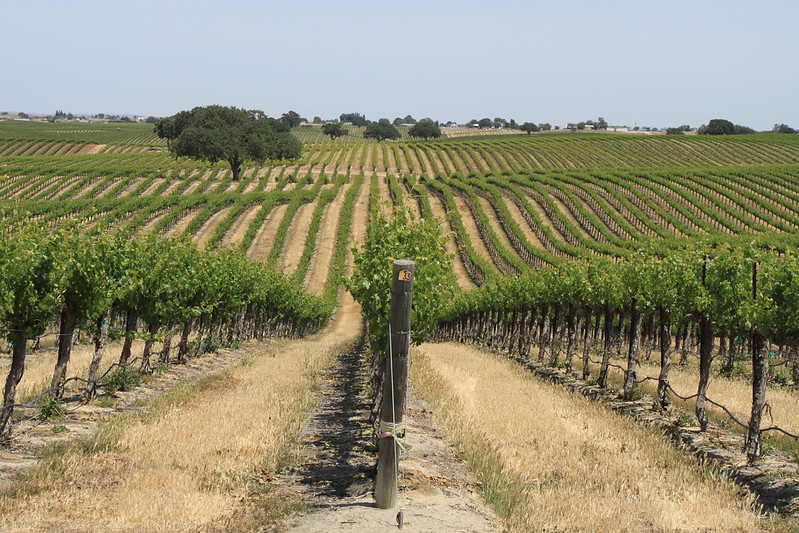 “From farmers to winemakers, commercial water users pumping from the Paso Robles Area Groundwater Basin may soon need to pay for their water use — and this time, they won’t be able to protest the fees. On Friday, the Paso Robles Area Groundwater Authority released a draft rate study that proposed charging $22.90 per acre-foot of groundwater used by water systems, farmers and commercial pumpers. An acre-foot of water is roughly enough to cover a football field in a foot of water. Meanwhile, domestic well owners would not be charged water use fees, the report said. The city of Paso Robles is the largest water system that would pay fees, but this wouldn’t impact the city’s ratepayers, Mayor John Hamon told The Tribune. … ” Read more from the San Luis Obispo Tribune.
Reducing flood risks while refilling the basin: New Central Valley recharge project already boosting the water table
“We have all heard the warnings and seen after-the-fact images of the earth shifting — literally sinking beneath one’s feet — because thirsty water users in the Central Valley have pumped too much groundwater for too many years. But as California continues to expand the state’s water supply, with drought always around the corner, one community in Stanislaus County is celebrating the completion of a $16 million project that captures and stores stormwater to protect against flooding and refill the critically over-drafted Delta-Mendota Subbasin. Located 15 miles south of the city of Patterson, hugging the east side of I-5, with rows of broccoli and assorted crops visible in the distance, the Orestimba Creek Recharge and Recovery Project is an example of how innovation and a decades-long commitment — coupled with a $5.6 million grant and five-year temporary water right permit from the State Water Resources Control Board — can benefit multiple parties and interests. … ” Read more from the State Water Board’s Ebb and Flow.
L.A.’s ultra-urban rivers wash tons of trash out to sea. There’s a plan to change that before the Olympics
“Rivers that wind through Los Angeles County have a trashy reputation. Literally. In many stretches, you’d be hard-pressed to stroll along the banks of the San Gabriel or Los Angeles rivers without meeting abandoned water bottles, candy wrappers, golf balls, sad-looking teddy bears, even shopping carts. On the rare occasion when rain graces the semi-arid region, it sweeps all that debris into the coastal communities where they drain — and out into the Pacific Ocean, wreaking havoc on an ecosystem where fish, sea lions and surfers frolic. By the 2028 Olympics, a coalition of city, county, state and private partners hopes to change that by deploying trash-intercepting devices in the Los Angeles and San Gabriel rivers, officials announced Wednesday. … ” Read more from the LA Times. | Read via Yahoo News.
OC San needs access to aging pipeline running through Huntington Beach backyards
“Huntington Beach homeowners who sued the Orange County Sanitation District to prevent the demolition of their backyard will be able to argue their case in court, an Orange County Superior Court judge recently ruled. The decision by OC Superior Court Judge Deborah Servino to progress the homeowners’ lawsuit to trial came just weeks after OC San crews began maintenance work on an underground wastewater pipeline that runs through the yards of 29 homes on Rhone Lane. In order to access the aging sewer line, the utility company said it needs to remove pools, patios and other backyard structures built on a 30-foot easement, in addition to building an 8-foot cinder block wall and installing access gates on the affected properties. … ” Read more from the OC Register.
After public outcry, Orange County halts herbicide spraying in creeks
“Three months after residents began waging a campaign on Instagram saying they’re concerned herbicides are poisoning local creeks, Orange County officials announced they are halting spraying of the chemicals, for now, in waterways throughout the county. Starting in February, posts by the community group Creek Team OC sparked an outpouring of concern among residents. They posted images of workers spraying chemicals and used artificial intelligence to make illustrations featuring surfers under the slogan “Endless Herbicides.” In March, county Supervisor Katrina Foley told residents the county would halt spraying of herbicides in two creeks near Doheny State Beach. This week, Foley announced that the Orange County Public Works Department had begun a “pause” of herbicide spraying in flood channels countywide. … ” Read more from the LA Times.
SEE ALSO: OC halts use of chemicals that critics say poison the county’s creeks and coast, from the LAist
Fighting for Southern steelhead: Science, the law, and what’s at stake
“This June, CalTrout will be in the Los Angeles Superior Court defending a landmark listing of Southern California steelhead as endangered under the California Endangered Species Act (CESA). We are fighting alongside our partners at the Center for Biological Diversity and the Wishtoyo Foundation on behalf of the fish that can’t speak for themselves and the communities that rely on them. Oncorhynchus mykiss, the species that gives us both rainbow trout and steelhead, is one of the most ecologically and culturally significant fish in California. In Southern California, steelhead once returned each fall to rivers that cut through chaparral and canyon country, connecting the mountains to the sea. They are a keystone species: their bodies carry marine nutrients deep into inland watersheds, feeding entire riparian ecosystems upon their return. Today, that ecological legacy is under threat. Southern steelhead have disappeared from roughly 60% of the watersheds they historically occupied in Southern California. In key rivers, annual returns now number in the single digits. … ” Read more from Cal Trout.
Trump administration readying a plan to impose Colorado River water cuts on Western states
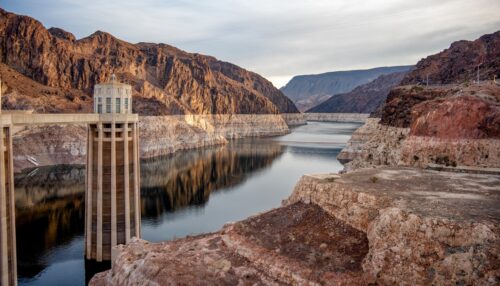
“After months of pressing Western states to come to their own agreement, the Trump administration told their leaders it’s drawing up a 10-year plan for dealing with water shortages on the Colorado River. The river is a major water source for Southern California and much of the Southwest, but its largest reservoirs, Lake Mead and Lake Powell, are severely depleted and their levels continue to drop. News of the federal government’s preliminary plan surfaced Wednesday during a meeting in Phoenix. Tom Buschatzke, director of the Arizona Department of Water Resources, said federal officials informed state water managers they are developing a “10-year framework” with specific rules requiring water reductions that would be reassessed every two years. So far, negotiators for California, Arizona and Nevada have offered to use roughly 1.6 million acre-feet less annually over the next two years. But Buschatzke said the Trump administration’s plan would allow for mandatory cutbacks of up to 3 million acre-feet per year in the three states — as much as 40% of their combined allotments. … ” Read more from the LA Times. | Read via AOL News.
Post-2026 Colorado River operations: Lower Basin proposal and next steps
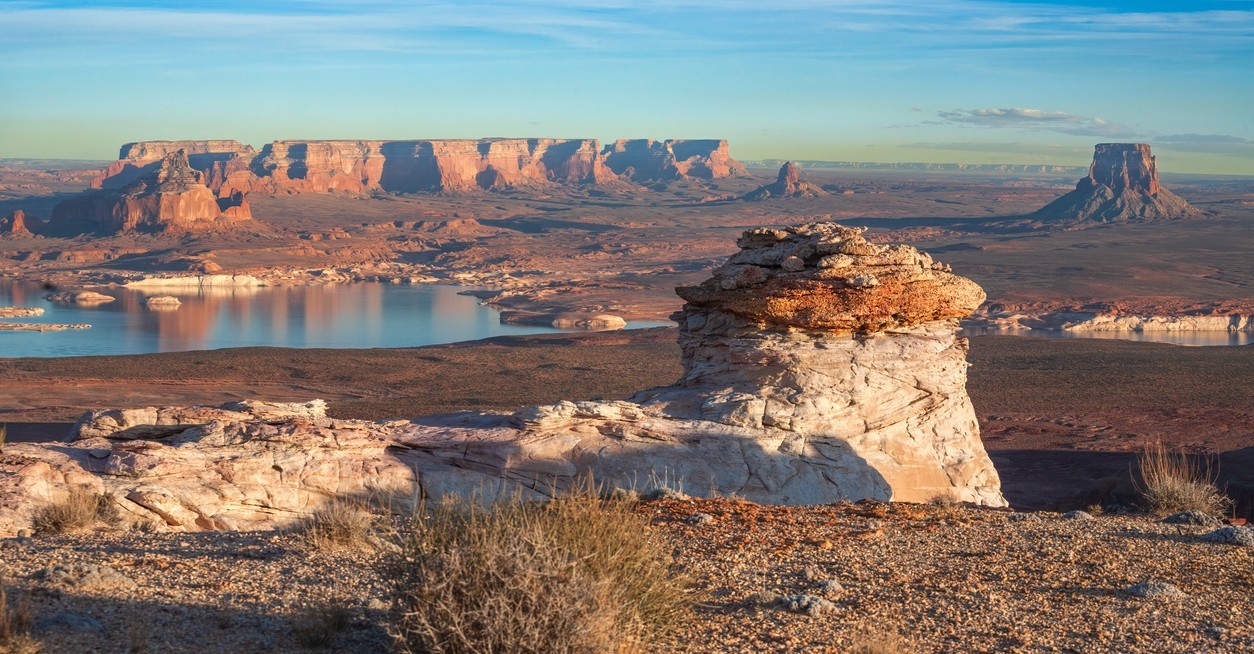
“Two years ago, the Lower Basin states proposed post-2026 operating guidelines in hopes of building a seven-state agreement. But after more than two years of talks between the Lower and Upper Basin states, no consensus emerged. On May 1, Arizona, California, and Nevada submitted a joint proposal to the Bureau of Reclamation describing how the Lower Basin should operate through 2028. Reclamation is now considering which parts of that proposal to include in the federal preferred alternative for post-2026 operations. At Metropolitan’s May One Water and Adaptation Committee meeting, Colorado River policy manager Shanti Rosset briefed members on the proposal and said both the federal review process and the negotiations needed to turn it into binding agreements are expected to move much faster. The 2007 interim guidelines that have governed Lake Powell and Lake Mead operations for nearly two decades are set to expire this year, setting the stage for a major shift in how the system is managed. … ” Read more from Maven’s Notebook.
As the West dries out, a new generation of dams rise
“The Chimney Hollow Dam looks ancient in its simplicity, like a Neolithic mound. The largest dam built in the US in a quarter century, it is not a monumental wall of concrete like the Hoover Dam. Instead, it’s a triangular prism of granite boulders, 350 feet high and 3,700 feet long, stretching across a dry valley in northern Colorado. Two white pipes snake up the far side of the valley and out of sight, heading toward the Colorado River, about 30 miles away. On April 20 engineers turned a valve and began pumping water from the river and putting it behind the dam. Filling the reservoir completely will take years. A new dam of this size is very rare in the US. By turning rivers into lakes, dams destroy riverine ecosystems, and environmentalists have long fought to stop new dams and remove existing ones. More than 100 were torn down last year alone, according to American Rivers, an advocacy group. In 2024 the last of four large dams on the Klamath River in California and Oregon were removed, completing what the group calls “the world’s largest dam removal.” But dams do one thing well: They store water. … ” Read more from Bloomberg.
Announcements, notices, and funding opportunities …

