
Several news sources featured in the Daily Digest may limit the number of articles you can access without a subscription. However, gift articles and open-access links are provided when available. For more open access California water news articles, explore the main page at MavensNotebook.com.
In California water news this weekend …
A record El Niño may be forming — and the forecast model is literally off the charts
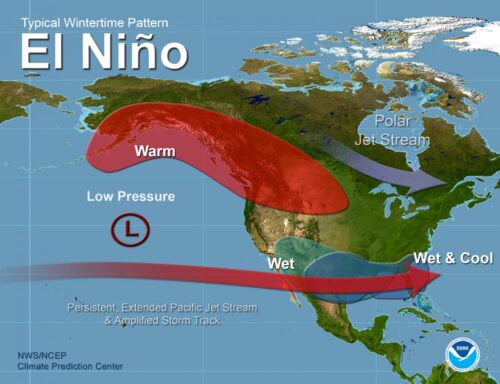 “A freight train of warm water is surging eastward in the tropical Pacific Ocean, kick-starting what is on track to be the strongest El Niño ever observed. The latest model projections are off the charts. Literally. If these models prove accurate, it will set off dramatic weather impacts everywhere from California’s coast to the Arctic Ocean. Most forecast models project Pacific Ocean temperatures to be warmer than the average by at least 3 degrees Celsius by November. For sea surface temperatures across this patch of the central Pacific, even a bump of 1 or 2 degrees Celsius is enough to reshape rainfall, storm tracks and temperatures around the world. … ” Read more from the San Francisco Chronicle. | Read via MSN News.
SEE ALSO: What to know about the predictions for a potentially record-breaking El Niño, from the Associated Press
Newsom to water officials on Delta Conveyance tunnel: ‘We’ve got to finish the job’
“On his first day in office in January 2019, Gov. Gavin Newsom took his office on a surprise visit of the Monterey Park Tract in Ceres, whose contaminated wells invoked “screaming headlines” and made an “indelible impression” on the incoming governor. The fact that more than 1 million people “in the wealthiest state and the wealthiest democracy God has ever conceived” lacked access to clean drinking water inspired him to overhaul the state’s water infrastructure, Newsom said Thursday at an Association of California Water Agencies conference. Over the next seven years, his administration fast-tracked projects like the Delta Conveyance tunnel and spent hundreds of millions to shore up the state’s climate defenses, like removing dams on the Klamath River to restore salmon populations, negotiating with Arizona and Nevada to preserve water from the rapidly shrinking Colorado River, and restoring the Salton Sea. … ” Read more from the Sacramento Bee.
Supervisors to look at ways to support Delta at Tuesday meeting
“The Solano County Board of Supervisors on Tuesday will be updated on the Sacramento-San Joaquin Delta impacts on the county’s land use, economy and environmental resources. Representatives of the Delta Protection Commission, Delta Stewardship Council and Delta Conservancy will make the presentation, which also is designed to “identify opportunities for coordination, funding and partnership.” “The Sacramento-San Joaquin Delta is a critical natural, cultural and economic resource for California, including areas within Solano County. The Delta supports agriculture, water supply, habitat, recreation and local communities, and faces challenges related to climate change, sea level rise, ecological decline and infrastructure vulnerability,” the staff report to the board states. … ” Read more from the Daily Republic.
SGMA’s new subsidence guidance: A higher bar, real-world impacts
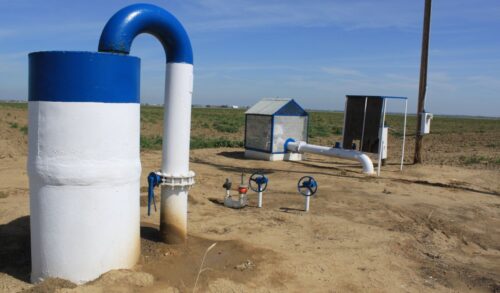 “It’s late July in the Valley. A third-generation grower walks a block that should be full canopy and watches the forecast climb toward triple digits. The local water district is warning their ability to make the requested surface deliveries could shift. The well is already running harder than the budget can tolerate, and the banker wants a water plan before renewing the operating line. Back in the truck, the farmer’s thoughts remain focused on the same question: what stays in production, and what gets cut. That scene is hypothetical, but the tradeoffs are not. DWR’s updated subsidence guidance signals that GSAs will be expected to identify risk sooner and be prepared to respond, even as many basins are still building the projects and capacity needed to reduce pumping responsibly. … ” Read more from the California Farm Water Coalition.
As drought worsens, Western states brace for wildfires, water shortages
“From the Rockies to the Cascades to the Sierra Nevada, mountainsides across the West are sparsely covered by the snow that usually blankets the high country well into the summer. That snowpack is like a savings account that the West draws on when the hot, dry months arrive. It moistens the landscape as it melts, lessening the risk of severe wildfire. The runoff feeds into river basins, and the swelling waterways provide power to hydroelectric dams, irrigation to farmers and drinking water to cities. This year, Western states are heading into the summer with a desperately low balance — threatening wildfires, drinking water, crops, electricity, and more. “This has been an extremely poor year,” said Sharon Megdal, director of the Water Resources Research Center, a research unit at the University of Arizona. “This has gotten a lot of people concerned and alarmed.” … ” Read more from Successful Farming.
Reno scientist helps identify most urgent peatland questions
“People living in and around the Sierra Nevada may be surprised to know that the mountain range has many peatlands. “They are typically found in flat areas commonly known as meadows,” Julie Loisel, an associate professor in the Department of Geography at the University of Nevada, Reno, said. In fact, ongoing studies performed by a team of scientists from the University found peatland deposits in the Sierra that reach 33 feet in depth, making this site one of the deepest peatlands in the United States. Peatlands, undisturbed, can store immense capacities of carbon, helping mitigate climate change. When the ecosystems are disrupted, however, they can release that carbon, contributing to climate change. “Indeed, this peatland is one of the most carbon-dense ecosystems reported in the scientific literature, with over 10 times the amount of carbon contained in tropical rainforests,” Loisel said. … ” Read more from YubaNet.
Seven Summits of California: The state’s most iconic peaks and unforgettable views
“For most people, experiencing the full range of mountain adventure means chasing it across continents. In California, it’s all right here. From sea-breeze hills you can summit before lunch to glaciated giants that demand crampons and grit, the Golden State offers a full spectrum of peak-bagging ambition. So here’s a challenge worthy of the terrain: the Seven Summits of California. Not the tallest seven. Not the hardest seven. The essential seven. … ” Read more from the San Francisco Chronicle.
In commentary this weekend …
California’s fires have changed, but its policies haven’t
“In the aftermath of the devastating Los Angeles fires, a public health crisis has emerged — one that the state has insufficient tools to address. Assembly Bill 1642, authored by Assemblymember John Harabedian, D-Pasadena, and now heading to the Appropriations Committee, is an attempt to build those tools and shield Californians from the severe, long-term health damage that future fires can cause. Historically, fire danger in California has meant wildfires (the burning of forests). The smoke was toxic, the destruction devastating, but the fire fuel was largely organic, and the resulting contamination something our public health system had tools to address. Fires in the wildland-urban interface, also known as WUI, are reshaping California and are fundamentally different — like the Eaton Fire, which tore through Altadena in January 2025. They do not burn forests, but neighborhoods. Their fire fuel is the accumulated material of modern life. Their smoke and ash carry a toxic mixture of heavy metals and combustion byproducts. … ” Read more from the Sacramento Bee.
California may finally get serious about water
Greg Walcher, president of the Natural Resources Group, writes, “The Wall Street Journal headline said “San Diego Now Has So Much Water That It’s Selling It.” The article said San Diego generates enough water to rescue Arizona, though that’s jumping the gun just a bit. No such deal has actually been finalized yet, but the fact that the conversation is underway marks a new era in Colorado River negotiations. And not a minute too soon. The latest optimism is not based on any change in the historically low flow of the Colorado River. It’s based on the realization — at long last — that California does not need Colorado River water. That realization has finally come not only to Colorado (which has been making this point for decades) but to all of the seven states in the Colorado River Basin, which are entitled to various amounts of river water allocated by a century-old interstate compact and several other legal agreements. … ” Read more from the Grand Junction Sentinel.
Podcasts …
WHAT MATTERS: The hard truths of California water
Join Southern California Water Coalition Executive Director Charley Wilson for a no-holds-barred conversation with Califonria Department of Water Resources Director Karla Nemeth about California’s water future. This isn’t your typical policy discussion—it’s a wake-up call. Director Nemeth delivers uncomfortable truths about underground storage, the Delta Conveyance Project, and why finger-pointing between agencies must end. Her message is clear: these aren’t future problems—they’re happening NOW. “We are going to have to get comfortable with the uncertainty,” Nemeth warns. Don’t miss her surprising one-word prediction for California’s water future.
WATER IS A MANY SPLENDOR’ED THING: Fishing on Lake Tahoe
 There are a lot of places to hide if you are a fish in Lake Tahoe. This lake has an average depth of 1,000 feet and is nearly 200 square miles in size. I’ll bet there is a fish tale just waiting to be told. Water is a Many Splendor ’ed Thing brings you another water relationship that has a personally significant impact to your life. Produced by Stephen Baker, Bringing People Together to Solve Water Problems, water@operationunite.co 530-205-6388
ECONEWS REPORT: What’s wrong with the Forest Service?
The Trump Administration is taking an axe to the Forest Service. They are “reorganizing” the Forest Service, eliminating Regional Offices and Research Stations. The National Environmental Policy Act (NEPA) is virtually gone—and with it opportunities for public engagement. And Trump is pushing to get out the cut, meaning bigger, more impactful projects. Kimberly Baker, Executive Director of the Klamath Forest Alliance, is a watchdog for over 5.3 million acres of Forest Service Land and have commented on virtually every timber sale for 25 years. She joins the program to discuss the damage being done to our public forests.
In regional water news this weekend …
NORTH COAST
Water board tosses Humboldt Redwood Company’s proposed regulation changes for Elk River because sediment levels are not improving
“Humboldt Redwood Company’s request to change the way sediment pollution is regulated on the Elk River was shot down by the North Coast Regional Water Quality Control Board Thursday. Board members pointed to a lack of data showing sediment conditions on the river improving. A motion to adopt the changes failed, with four board members voting “nay” and only Dale Romanini and Jake Mackenzie in support. The changes surround Humboldt Redwood Company’s (HRC) Waste Discharge Requirements (WDR), the primary regulatory mechanism for controlling sediment pollution from logging in the watershed. This rejection followed Water Board staff’s assurances the changes would not reduce water quality protections on the river, which has been heavily impacted by sediment from logging operations, historic and present, and has regulations a staff member said were the strongest in the state. … ” Read more from the Lost Coast Outpost.
Mussels near Fort Bragg’s Old Mill Site show elevated contaminant levels, citizen science study finds
“The Headlands Environmental Remediation Education project (Project-HERE) has released preliminary results from a citizen science study examining contaminant levels in California mussels collected from waters near the former Georgia Pacific Mill Site in Fort Bragg. The project collected mussel samples in October 2025 and February 2026 from three locations: two sites in Soldier Bay (north and south of the dam and beach berm) adjacent to the former mill site, and a reference site at Bruhel Point, located 11 miles north of Fort Bragg. Samples were analyzed by nationally accredited laboratories for dioxins, furans, and polychlorinated biphenyls (PCBs). While most individual dioxin/furan compounds were not detected or present at very low levels across all sites, several dioxin-like PCBs and PCB compounds were detected at higher concentrations at both Soldier Bay locations compared to the reference site at Bruhel Point. … ” Read more from the Redheaded Blackbelt.
This 300-mile abandoned railroad is California’s next big trail project — here’s how it will connect to San Francisco
“California is legendary for its numerous epic backcountry treks, like the Pacific Crest Trail, the John Muir Trail, and even the lesser-known Lost Coast Trail. But an exciting new NorCal route is about to join their ranks, tracing the route of the decommissioned Northwestern Pacific Railroad from Humboldt Bay in the north to the San Francisco Bay in the south. This is the Great Redwood Trail (GRT), an ambitious new multi-use trail project that traverses old-growth forests, farmlands, mountains, and the stunning Eel River Canyon. When completed, the GRT will be one of the longest rail-to-trail conversion projects in the country. … ” Read more from Secret San Francisco.
SIERRA NEVADA
Court rejects Rise Gold’s Vested Rights claim for Idaho-Maryland Mine
“Nevada County Superior Court Judge S. Robert Tice-Raskin has ruled against Rise Grass Valley’s claim that it retains vested rights to reopen and operate the Idaho-Maryland Mine in Grass Valley. In a May 7, 2026 Memorandum Decision and Order, the Court denied Rise Grass Valley’s petition seeking to overturn Nevada County’s unanimous December 2023 decision rejecting the company’s vested rights claim. The Court concluded that while some vested mining rights may have existed when Nevada County adopted zoning regulations in 1954, those rights were later abandoned. … ” Read more from The Union.
Lake Tahoe is ‘not taking any chances’ in fight against golden mussels
“As weather begins to warm up at Lake Tahoe, local leaders are encouraging boaters to “maintain vigilance” against golden mussels — and offering discounts on decontamination. Golden mussels, or limnoperna fortunei, are an aquatic invasive species that cling to hard surfaces, including pipes, pumps and other crucial water infrastructure. Officials with the Tahoe Regional Planning Agency called them the “greatest threat” to the lake. The species, which has spread across California in the past several years, is present in lakes and waterways as close as three hours away from Lake Tahoe, officials said in a news release Friday. First found at the Port of Stockon in 2024, golden mussels can now be found as far south as San Diego. … ” Read more from Fox 40.
Volunteers measure Lake Tahoe area water quality in annual Tahoe Truckee Snapshot Day
“A volunteer army of citizen scientists fanned out across the Lake Tahoe area watershed on Saturday morning for the annual Tahoe-Truckee Snapshot Day. The 26th annual spring gathering is the area’s longest-running citizen science program, where teams of volunteers of all ages and abilities collect water samples and measure their quality across the across the Truckee River watershed. Data from the lakes, streams and rivers provides a point in time snapshot of the quality of the drinking water and recreational areas. The volunteers tested the water for dissolved oxygen, pH, and nutrients among other categories. … ” Read more from CBS News.
Sierra to Sea Watershed Outcomes Bank
“Imagine you’re a program manager seeking funding for a project—you identify a funding opportunity, ensure the money can be used for the project, navigate the complex reporting requirements, and successfully implement work on the ground. Then, you learn a neighboring landowner has a similar project working with a different program manager—and so does another landowner across the ridge. Now imagine that instead of these three managers working separately, each short on time, they formed a partnership to share technical, administrative and financial resources? That defines successful partnership, and you can see that in California’s Sierra to Sea Watershed Outcomes Bank. In the Central Sierra region, the Eldorado National Forest and The Freshwater Trust (a partner within the Healthy Eldorado Landscape Partnership) recently signed a new master partnership agreement formalizing the watershed outcomes bank. The bank will cost-effectively fund, finance and implement priority projects that reduce wildfire risk and protect drinking water across the region’s Cosumnes River watershed. … ” Read more from the US Forest Service.
SACRAMENTO VALLEY
PG&E warns of dangerous cold water conditions across Northern California rivers
“Rivers and streams across Northern California are running higher and colder due to snowmelt, prompting safety warnings from Pacific Gas and Electric Company as conditions become increasingly dangerous for recreation. Pacific Gas and Electric Company is urging the public to use caution near waterways and hydroelectric facilities, where flows can change rapidly and without warning. Swimming in cold, fast-moving water is strongly discouraged. “With warm spring temperatures, the snow is melting and creating cold, higher flows,” said Dave Gabbard, PG&E vice president of power generation. “We encourage everyone recreating in or near water to be situationally aware and have a plan to quickly and safely escape in case of changing water flows and cold temperatures.” … ” Read more from Action News Now.
SEE ALSO: Fire crews urge safety precautions for swimmers in American and Sacramento rivers, from KCRA
BAY AREA
Solving the mystery of Point Reyes’ purple waves
“The strange purple waves that rolled onto the Point Reyes coast last weekend may have a new explanation. Eric Sanford, a professor in the Department of Evolution and Ecology at UC Davis and a researcher at Bodega Marine Laboratory, said Friday that his “best assessment” was that the organisms coloring the surf are likely doliolids — tiny gelatinous marine animals that usually live far offshore — not juvenile salps, as initially suspected. Sanford said he and Jackie Sones, research coordinator at the UC Davis Bodega Marine Reserve, saw similar purple waves off the Sonoma Coast in 2015 and 2016 and identified the translucent animals in those waters as doliolids. Various things can cause purple(ish) waves to crash this time of year, including Velella velella, everyone’s favorite sailor jelly, which has been washing up en masse. But while the surest bet is to pop samples under a microscope, Damián-Serrano and other ocean scientists who saw photos believe the culprit may instead be another ocean squishy—a weird little chordate called a doliolid that can upend marine food webs when it peaks. … ” Read more from Bay Nature.
SEE ALSO: Scientists may have solved mystery of Northern California’s purple waves, from the San Francisco Chronicle
Delta Diablo fined $5.6 million for sewage spill to Suisun Bay
“The San Francisco Bay Regional Water Quality Control Board has approved a $5,557,700 settlement with Delta Diablo, a wastewater treatment agency serving eastern Contra Costa County, in connection with a sewage spill that released more than 23 million gallons of untreated wastewater into marshland connected to Suisun Bay. The spill began around Nov. 5, 2024, and continued for nearly a month before being discovered on Dec. 2. It originated from a subsurface break in the Shore Acres Force Main beneath a marsh, which delayed detection. Delta Diablo repaired a 20-foot section of the pipeline within two days, stopping the discharge by Dec. 4. “Sewage spills of this magnitude pose serious risks to water quality, wildlife habitat, and public health,” said Eileen White, executive officer of the San Francisco Bay Water Board. “This settlement holds the discharger accountable while making critical investments to modernize infrastructure and reduce the risk of future spills.” … ” Read more from Contra Costa News.
Invasive species discovered at drinking water treatment plants in San Jose
“For the first time, golden mussels, an invasive species of tiny mollusks that can rapidly reproduce and cause millions of dollars in damage to pipes, drinking water plants, irrigation systems and dams — sparking growing concerns across California — have been found in Santa Clara County. Last month, a juvenile golden mussel was discovered in the raw water intake area at the Penitencia Water Treatment plant near Alum Rock Park in San Jose. A few weeks later, in late April, an adult was found in a raw water strainer at the Santa Teresa Water Treatment Plant in San Jose’s Almaden area. The water remains safe to drink, say officials at the Santa Clara Valley Water District, which owns the plants and provides water to 2 million residents of Silicon Valley. But the discovery of the diminutive invaders has alarmed local officials, who say they must now install equipment costing hundreds of thousands of dollars at some district facilities to remove them, step up inspection rules for boaters on local reservoirs and limit the way more than dozen groundwater recharge ponds are used this year. … ” Read more from the San Jose Mercury News.
SAN JOAQUIN VALLEY
Rapid golden mussel infestation prompts Kern Supervisors to consider local emergency
“The Kern County Board of Supervisors on Tuesday will consider whether to declare a local emergency in response to the rapid infestation of local water facilities by the invasive golden mussel. Local agricultural water districts have already spent millions dosing their systems with various copper-based chemical treatments in an attempt to kill off the mussels. And one of the county’s key canals that supplies ag and municipal districts had to be “de-watered” for workers to find and scrape out the tiny mollusks, which can quickly build up on surfaces, clogging pipes and rendering equipment unusable. “Kern County must stand with our farmers and water districts to combat this emerging threat,” wrote Supervisor Jeff Flores in a text to SJV Water. Flores asked county staff to research the issue at the board’s April 28 meeting. … ” Read more from SJV Water.
EASTERN SIERRA
Water a big question for proposed AI data center in eastern Kern desert
“Assurances that a “highly efficient hybrid cooling system” will keep a proposed AI data center from sucking up all the water in the already overdrafted Indian Wells Valley fell flat with residents who’ve bombarded the state with negative comments on the proposal. The proposed RB Inyokern Data Center being championed by R&L Capital, Inc. would only use up to 50 acre feet a year to keep its whirring data halls cool, according to an application filed with the California Energy Commission in late April. A “will serve letter” issued to R&L Capital, Inc. by the Inyokern Community Services District commits to providing about that same amount. But desert residents aren’t buying it. … ” Read more from SJV Water.
SOUTHERN CALIFORNIA
OC San needs access to aging pipeline running through Huntington Beach backyards
“Huntington Beach homeowners who sued the Orange County Sanitation District to prevent the demolition of their backyard will be able to argue their case in court, an Orange County Superior Court judge recently ruled. The decision by OC Superior Court Judge Deborah Servino to progress the homeowners’ lawsuit to trial came just weeks after OC San crews began maintenance work on an underground wastewater pipeline that runs through the yards of 29 homes on Rhone Lane. In order to access the aging sewer line, the utility company said it needs to remove pools, patios and other backyard structures built on a 30-foot easement, in addition to building an 8-foot cinder block wall and installing access gates on the affected properties. … ” Read more from the OC Register.
SAN DIEGO
Flood or fire? A disaster at Lake Hodges is looming, residents warn
“Lake Hodges is a San Diego landmark where people hike, bike, fish, kayak, canoe, bird watch and take photographs against the backdrop of a century-old, city-owned reservoir. It’s also a disaster waiting to happen. The question is whether calamity would come by flood or by fire. An earthquake could destroy the aging dam and flood Rancho Santa Fe and other communities, so San Diego routinely releases water from the reservoir. But many residents fear less water leads to a greater threat of wildfires in an area already among the most at risk in the state. “We have a fire opportunity that is massive, and we have now increased the ability to make that fire dramatically,” area resident PJ Lynch said. … ” Read more from KPBS.
Along the Colorado River …
Arizona, California and Nevada reached a new Colorado River deal. What comes next?
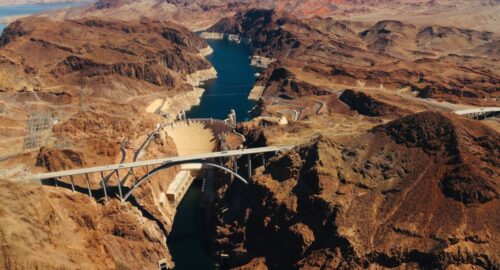 “Seven U.S. states have been deadlocked for years in negotiations around a plan to manage the shrinking Colorado River. Water supplies for 40 million people who depend on the river are on the brink after a dismal winter snowpack and reservoirs at record lows. With river management rules set to expire in just months, Arizona, California and Nevada stepped up with a short-term bridge proposal to collaborate on water use reductions. The bridge is an important step, but will it catalyze long-term solutions across the basin? Tough decisions must be made on how we manage this shrinking river, and time is nearly up. This bridge proposal buys us one final overtime period to figure out how to take control of our own future, and we have a lot left to do. The Lower Basin states agreed to collectively work to reduce water use from the Colorado River by at least 3.2 million acre-feet (AF) through 2028. In addition to mandatory reductions each year — 760,000 AF for Arizona, 440,000 AF for California, and 50,000 AF for Nevada — the states are targeting 700,000 AF of conservation. … ” Read more from EDF’s On the Waterfront.
Arizona leaders propose deeper Colorado River water cuts to shore up supply
“Arizona state leaders are proposing an agreement that would result in even deeper cuts to the state’s Colorado River water allocation as drought and overuse continue to drain the river. Arizona already takes the deepest cuts of any state to its Colorado River allocation. The new agreement would result in even more cuts, but the goal is to shore up the river for years to come. The cutbacks come as the Colorado River supplies water to 40 million people across the West. Arizona would take the biggest reductions, with state leaders warning the situation has become urgent after one of the driest winters on record. Farmers, tribes, and homeowners rely on the Central Arizona Project canal system. Arizona leaders say protecting the river is critical to the state’s economy and long-term growth. … ” Read more from Arizona Family.
Colorado River to hit record low after worst-ever Rockies snowpacks
“Colorado River flows into Lake Powell will hit record lows this summer after the lowest snowpacks ever recorded in the Rocky Mountain states of Colorado, Utah and Wyoming, according to a federal forecast, on Thursday. A March heatwave prematurely melted what snow fell during a warm, dry winter, leading to April through July Colorado River flows into Powell that will be only 13% of average, according to the Colorado Basin River Forecast Center. That would make spring-summer runoff into Powell the lowest since the 1963 creation of the reservoir, which supplies water to 40 million people in major cities such as Los Angeles, Phoenix and Las Vegas. “Really no good news this winter,” Cody Moser, a senior hydrologist with the center, said in a webinar. … ” Read more from Reuters.
SEE ALSO: Late spring storm brings some drought relief, but experts say Colo. reservoirs still far below normal levels, from Denver’s Channel 7
Lake Powell runoff to hit record low, putting West’s water supplies at risk
“Very dry and warm weather in the winter and early spring means Colorado River flows into Lake Powell will hit record lows this summer, a new federal forecast says. The past winter brought record-low snowpack in the mountains of Colorado, Utah and Wyoming that feed the Colorado. March brought record heat that caused the snows that had fallen to melt prematurely. The result is that runoff from the melting snow into the river will bring April through July flows into Powell to only 13% of average, says the federal Colorado Basin River Forecast Center, a division of the National Oceanic and Atmospheric Administration. That would make the spring-summer runoff into Powell the lowest of its kind since Lake Powell was created in 1963 by the construction of Glen Canyon Dam. … ” Read more from the Las Vegas Sun.
SEE ALSO: Lake Powell forecast to receive 13% of its usual flows, new report shows, from the Colorado Sun
From the Colorado River to your plate
Arizona’s monsoon season projected to be wetter than unusual, but not enough to end the drought
“Arizona should get a wetter-than-normal 2026 monsoon season — plus a wetter fall and winter, according to the National Oceanic and Atmospheric Administration. The latest Climate Prediction Center maps show a lot of green, which means precipitation, Arizona State Climatologist Erinanne Saffell told KTAR News 92.3 FM’s Arizona’s Morning News on Friday. “That summer precipitation, the monsoon season, is great because it really helps our vegetation, it helps the soils, but we really want that winter precipitation to refill our reservoirs. That’s the big deal,” Saffell said. But no matter how much rain falls this summer, Arizona’s climate will remain “thirsty,” she explained. The state’s long-term drought conditions have persisted since 1994. … ” Read more from KTAR.

