
A wrap-up of posts published on Maven’s Notebook this week …
Note to readers: Sign up for weekly email service and you will receive notification of this post on Friday mornings. Readers on daily email service can add weekly email service by updating their subscription preferences. Click here to sign up!
In California water news this week …
Will California ever build the Delta tunnel? Major battles ahead as Newsom era nears end
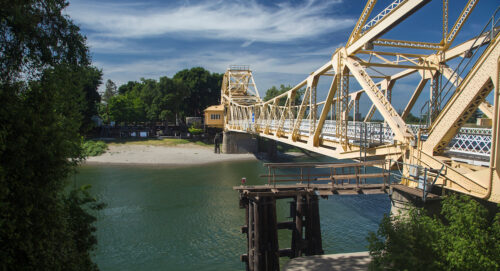
“In what Gov. Gavin Newsom hailed as a major milestone, his $20 billion Delta tunnel largely cleared another chokepoint last week — but it still faces obstacles of a different magnitude. For more than half a century, California’s leaders have debated rerouting water around, rather than through, the network of rivers, farmland and marshes of the Sacramento-San Joaquin Delta. Newsom’s version would pipe Sacramento River water through a 45-mile bypass to a reservoir on the California Aqueduct, in an effort to shore up state supplies and send more water south. Delta communities call the plan a water grab that would devastate one of the country’s largest estuaries and destroy towns, wildlife and generational farms. State officials and major water suppliers say it’s necessary to safeguard water for two-thirds of Californians against the threats of climate change and natural disasters. Tasked with refereeing the fight, a state agency called the Delta Stewardship Council weighed opponents’ many challenges to the project and last week voted six-to-one to require the Department of Water Resources to address just two of them. Newsom declared victory, saying “we are closer than ever to seeing this important piece of infrastructure completed.” Maybe closer than ever, California water watchers say, but still far from complete. … ” Read more from Cal Matters.
Proposed Delta water tunnel advances after state council rejects most challenges
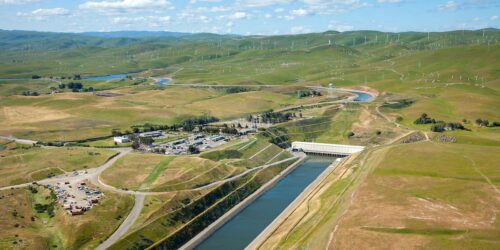
“A plan to install a tunnel beneath a 45-mile stretch of the Sacramento-San Joaquin Delta has moved closer to final approval after a state agency determined most of the project’s certification was consistent with a regulatory plan, according to a news release Friday from the office of Gov. Gavin Newsom. The Delta Stewardship Council voted 6-1 Thursday to return two issues related to the Delta Conveyance Project back to the California Department of Water Resources for further review, while rejecting most appeals filed by 10 groups challenging the project’s compliance with policies. … The council directed DWR to revisit two issues before final certification: 1) whether the tunnel would improve conditions for the non-native invasive golden mussel; and 2) potential conflicts involving one of the tunnel’s major construction sites near the town of Twin Cities just south of Sacramento and the Harvest Water program run by the Sacramento Area Sewer District that addresses groundwater recharge and ecosystem protections for local species. That includes the sandhill crane, which is listed as threatened under the California Endangered Species Act. … ” Read more from Local News Matters.
Newsom celebrates Delta plan advancement while his bond plan is shot down
“The Delta tunnel project cleared a key regulatory step Thursday after the Delta Stewardship Council — a state body created in 2009 following the Legislature’s passage of the Delta Reform Act to oversee planning — voted to uphold the state’s finding that the project complies with the Delta Plan. The approval came with two caveats: State officials must review whether the project could worsen the invasive golden mussel problem and address concerns about possible conflicts with Sacramento-area recycled water systems. The greenlight for the controversial, 45-mile-long Delta tunnel project, which would move water beneath the Sacramento-San Joaquin Delta to supply farms and cities farther south, drew praise from Gov. Gavin Newsom but criticism from environmental and tribal groups, who say the project could harm species that depend on the Delta’s fragile ecosystem. … ” Read more from the Sacramento Bee. | Read via Yahoo News.
California will soon have more than 300 data centers. Where will they get their water?
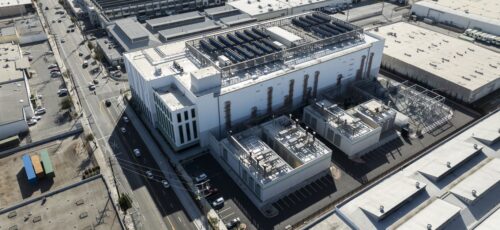
“For patrons of the deli on West Aten Road, it was the white “Not In My Backyard” signs jutting out of lawns. For local irrigation district workers, it was something called an “electric service application.” For Margie Padilla, it was a rant on Facebook. The 43-year-old mom came across a post online while she had a few minutes to scan social media last spring after a day spent tending her garden and taking care of her two boys. “Somebody was complaining about this center,” Padilla said. “I was like, ‘Whoa, what’s going on here?’” What’s going on is the second-largest new data center being considered statewide, which would be less than half a mile from Padilla’s stucco home in the center of Imperial Valley. If finished by 2028, as the developer expects, the at least 950,000-square-foot, two-story data center could be the largest operating statewide, taking up 17 football fields’ worth of land. The roughly $10 billion, 330-megawatt data center would require 750,000 gallons of water a day to operate, said developer Sebastian Rucci, who insists electricity and water costs won’t rise due to the data center. … ” Read more from Inside Climate News.
For the first time, California growers have to say how much groundwater they’re taking
“For the first time, growers in one of California’s most acutely water-stressed areas have to reveal how much groundwater they are pumping. For generations, they’ve been free to take water from wells on their own land without reporting to it the state. The State Water Resources Control Board ordered landowners in parts of the San Joaquin Valley around Corcoran and Pixley to submit detailed reports by Friday. The Tule and Tulare Lake groundwater subbasins were put on probation by the board in 2024 because they weren’t doing enough to control excessive pumping, which has caused levels to plummet. By collecting the data, the agency is preparing to charge landowners fees — $300 for each well plus a usage fee of $20 for each acre-foot of water. … ” Read more from the LA Times. | Read via AOL News.
Congressman opens investigation into Trump administration’s involvement in California dam removal
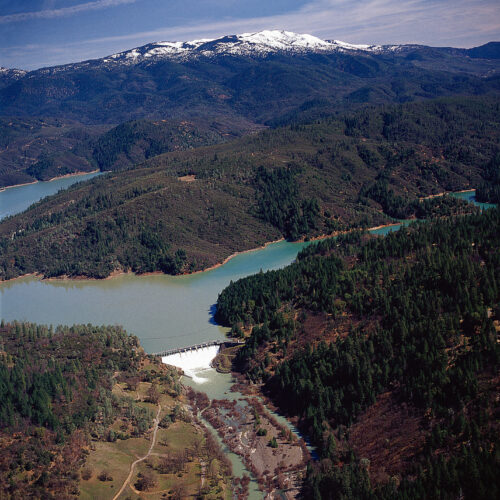
“A Northern California member of Congress is opening an inquiry into the Trump administration’s bid to stop dam removal on the Eel River, citing potential legal, environmental, economic and water-supply problems. Rep. Jared Huffman, D-San Rafael, wants details on why Agriculture Secretary Brooke Rollins is advocating for a Southern California water agency to buy the century-old Potter Valley hydroelectric project in Mendocino and Lake counties, including its two dams, and continue operating it. … While Rollins has said she’s interested in preserving the dams to provide water for local agriculture, her plan to get a new operator, unveiled last week, came as a huge surprise to most in Northern California, with numerous questions. Among them is whether it’s even possible to transfer ownership of the hydroelectric project since the decommissioning is already underway and, perhaps more curiously, what a water agency in Riverside County, more than 500 miles away, wants with the Eel River. … ” Read more from the San Francisco Chronicle.
State’s first solar canal project moves from UC Merced lab to real world
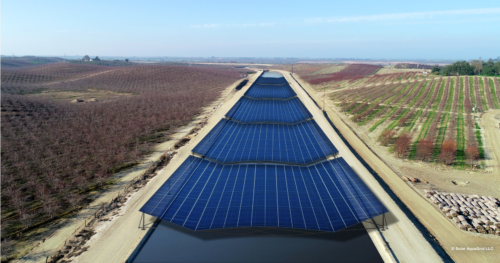
“What started as a premise in a UC Merced lab culminated with a commemoration of Project Nexus, California’s first solar canal project. On Wednesday, state leaders gathered at the Project Nexus sites in Hickman and Keyes to celebrate the completion of the construction pilot, which demonstrates how covering operational irrigation canals with solar panels can help save water, generate clean energy, and conserve natural lands. “For the past three years our UC Merced research team – including our project manager Dr. Brandi McKuin and team members here today – has treated these canals as a living laboratory,” said Roger Bales, professor emeritus of civil and environmental engineering. “We didn’t just want to build a canopy to produce electricity; we wanted to quantify a ‘triple win’ for California: water, energy and land.” Project Nexus, launched in 2022, represents an innovative public-private-academic collaboration between the California Department of Water Resources, Turlock Irrigation District, Solar AquaGrid LLC and UC Merced. “We are excited this day is here,” TID General Manager Brad Koehn said. “It’s been a long journey.” … ” Read more from UC Merced.
SEE ALSO: Governor Newsom announces the completion of first-of-its-kind solar-covered canal in the Central Valley — piloting a new way to save water and reduce costs, from the Office of the Governor
Dredging the San Joaquin River has been a goal for the Greater Valley Farm Water Partnership
“Dredging the San Joaquin River as it meanders through the South Delta could become part of a larger strategy to provide more robust water supplies for California and increase the survival rate of threated Chinook salmon. It’s the goal of the Greater Valley Farm Water Partnership (GVFWP) consisting of 13 growers in the Delta as well as south of the Delta that was formed more than two years ago. The need to dredge is based on the natural process that started more than 250 million years ago filling in what was once a massive island sea to give birth to the Great Central Valley. Dredging the river and Delta waterways happened to various degrees over roughly a century until environmental successfully were able to basically stop it in the 1970s. The GVFWP asserts on its website “Delta channels, particularly those in the South Delta, suffer from diminished capacity due to siltation, or excess sediment, much of which is deposited during high flow events such as occurred in 2017.” … ” Read more from Dredging Today.
What the State Water Board is watching in drinking water — and why it matters

“In the book “What Should We Be Worried About?” science writer John Brockman asked leading scientists a simple question: What keeps you up at night? The answers weren’t always what you might expect. Instead of focusing on the loudest headlines, many pointed to quieter, slower-moving challenges — problems that require steady attention and long-term commitment. That’s a useful lens for thinking about something deeply personal to all of us: our drinking water. In California, water is often in the news — droughts, floods, wildfires, emerging contaminants. It can be difficult to separate what truly warrants concern from what may lack context. When our scientists and engineers talk among themselves, their focus is rarely on sensational fears. … ” Read more from the State Water Board’s Ebb and Flow.
What California’s next governor needs to know about water
“California water issues are notoriously complex: an alphabet soup of agencies manage California water, and the acronym-heavy insider-speak can be impenetrable—even for an experienced water expert. Moreover, California does not manage its water alone: federal agencies are responsible for many water-related activities and services across the state. In the past year the federal government has been downsizing—creating uncertainty across all aspects of California’s water management, including mitigating the impacts of natural disasters like wildfires and floods. Managing California’s water in a time of changing responsibilities, economic pressures, and climate volatility won’t be easy. Clarity around basic issues will help. … ” Read more from the PPIC.
This ‘out of control’ invasive species is threatening California’s water supplies
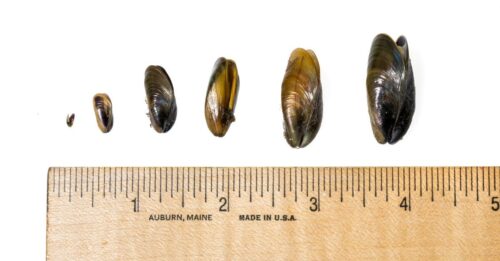 “An invasive species of mussel is becoming more of a concern in California as it overtakes ecosystems and impacts infrastructure, according to officials. Golden mussels, native to China and Southeastern Asia, were first detected in October 2024 by California Department of Water Resources staff who were conducting routine operations in the Port of Stockton, a CDWR spokesperson told ABC News. The discovery was the first known occurrence of golden mussels in North America. Since then, the mussels have spread quickly up and down the West Coast — to the north, in the Bay Area, and to the south down to Los Angeles and San Diego, according to a map from the California Department of Fish and Wildlife. The species are highly efficient filter feeders and form dense colonies, according to the CDFW. … ” Continue reading from ABC 7.
Specialized research and expertise drive California’s golden mussel response, Dudek says
“Dudek, a U.S.-based environmental, planning, and engineering consulting firm, is supporting California’s response to the spread of golden mussels through specialized research and multidisciplinary expertise that is helping water managers assess infrastructure risk and act quickly across complex water systems statewide. First detected in California in late 2024, golden mussels have since been identified throughout the state, including in the State Water Project (SWP), one of the largest and most complex water conveyance systems in the world. The SWP comprises 705 miles of canals, tunnels, and pipelines that deliver water to facilities serving more than 26 million residents and 750,000 acres of farmland throughout the state. Golden mussels pose a threat to infrastructure due to their rapid reproduction and ability to persist across a wide range of water conditions. The species can form dense colonies on pipes, screens, pumps, and other submerged infrastructure, prompting water managers to assess system vulnerabilities, operations and maintenance needs, and long-term reliability. While the species is still in the early stages of establishment in California, agencies are taking a proactive approach focused on early assessment, coordinated planning, and system-specific management strategies. … ” Continue reading from Dudek.
DWR modifies its Invasive Mussel Inspection Program at Oroville
“The California Department of Water Resources (DWR) is modifying its inspection program for invasive mussels at Lake Oroville, the Thermalito Forebay, and the Thermalito Afterbay. Effective today, April 29, watercraft inspections, decontamination services, and seal checking at the Oroville facilities are no longer required. Blue Oroville seals are no longer required to launch watercraft and owners have permission to remove seals themselves, as inspectors will no longer be stationed at launch ramps. DWR will also reopen facilities that were closed to trailered launching including those at the Thermalito Forebay and Thermalito Afterbay. At locations requiring the removal of physical barriers, additional time will be required for crews to fully reopen facilities. Launching access at Lake Oroville will once again be available 24 hours a day, every day. … ” Read more from DWR.
SEE ALSO: Lake Oroville drops invasive mussel inspections after risk review, from Action News Now
Wild vs. hatchery: Charting California’s fisheries path forward
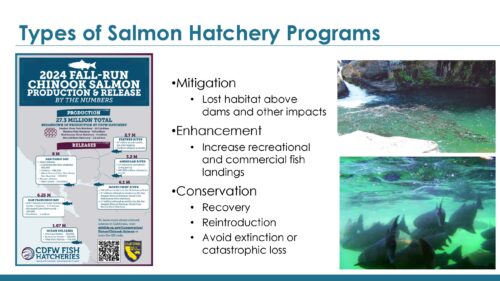 “Hatcheries are a complex issue, tasked with meeting diverse demands that are often at odds: producing large numbers of fish for commercial and recreational fisheries while also serving purposes such as mitigation and conservation. These objectives often clash: hatchery fish can differ from wild fish and impact their recovery, so decisions about production, methods, and release strategies require careful consideration of conflicting factors. These complex challenges were discussed at the 2026 California Water Law Symposium, where a panel evaluated how hatchery policies fit into broader salmon recovery strategies under state and federal law. … ” Read more from Maven’s Notebook.
The next El Niño could lock earth into a hotter climate
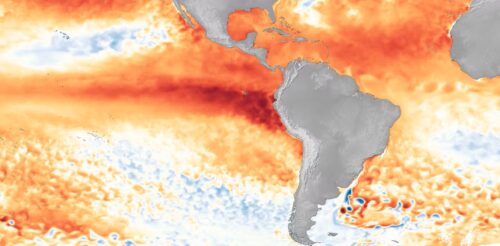
“The Pacific Ocean is a giant climate cauldron, with a powerful heat engine that affects storms, fisheries and rainfall patterns half a world away, and scientists are watching closely to see if it’s about to boil over. Their projections suggest the tropical Pacific is simmering toward a strong El Niño, the warm phase of an ocean-atmosphere cycle that can intensify and shift those impacts. In a world already superheated by greenhouse gases, a strong El Niño during the next 12 to 18 months could permanently push the planet’s average annual temperature past the 1.5 degrees Celsius warming threshold enshrined in scientific documents and political agreements as a turning point for potentially irreversible climate impacts. Climate scientists also recently published a study showing that strong El Niño events can trigger what they called “climate regime shifts,” meaning abrupt, lasting changes in heat, rainfall and drought patterns. … ” Read more from Inside Climate News.
Phase of El Niño-Southern Oscillation foreshadows U.S. wildfire activity up to a year in advance
“The Pacific Ocean’s El Niño-Southern Oscillation (ENSO) is arguably the most influential climate driver on Earth. Its cycles of warm and cool waters in the central and eastern equatorial Pacific alter where ocean heat is released into the atmosphere, affecting atmospheric circulation, temperatures, and precipitation around the globe. New research by NOAA’s Physical Sciences Laborator (PSL) has analyzed in detail how the state of ENSO in autumn, either the warm El Niño or cool La Niña phase, influences where wildfire activity will occur across specific regions of the United States during the following year. In particular, the analysis found that La Niña in autumn often leads to low precipitation and high evaporative demand across the southern United States, which primes vegetative fuels to burn during the coming year. … ” Read more from NOAA Research.
In commentary this week …
Action needed to ensure State Water Project reliability
Jennifer Pierre, General Manager of the State Water Contractors, writes, “California’s lead water agency, the Department of Water Resources, has been developing its existing State Water Project water rights over 30+ years – building 36 water facilities, 25 pumping plants, five hydroelectric power plants and approximately 700 miles of canals, tunnels and pipelines. In so doing, DWR has delivered a reliable water supply to communities across our state, allowing California to grow and thrive. But as that infrastructure ages and climate change produces bigger rainstorms and faster melting snow, DWR must continue investing in the State Water Project to support continued water deliveries. The SWP must adapt so that it can take on larger amounts of water during big storms and store it for use during dry periods, which will be longer and hotter. Unfortunately, DWR’s ability to make these investments has been complicated by an unnecessary administrative hurdle. … ” Read more from Capital Weekly.
Claims of Delta tunnel progress contradicted by reality
The California Water Impact Network writes, “In recent testimony before the State Water Board, the General Manager of the Zone 7 Water Agency—which serves the Silicon Valley suburbs of Dublin, San Ramon, and Livermore—stated that her agency is continuing to pursue the Delta Conveyance Project (DCP) because it is “moving forward” through the regulatory process. Her assessment, however, is incomplete and unsubstantiated. The reality is that the DCP is unraveling quickly due to legal and cost issues, a failure that should alarm the water agencies that have bought into the extravagant promises and false advertising. The courts, certainly, have seen through the hype. On April 15, 2026, the California Supreme Court denied the Department of Water Resource’s (DWR) petition to appeal a lower court ruling that found that DWR lacks legal authority to issue bonds for the $60-$100 billion DCP. … ” Continue reading from C-WIN.
The drought is over, but will state policies reflect the new reality?
Edward Ring, director of water and energy policy at the California Policy Center, writes, “On January 5, 2026, for the first time in 25 years, the entire state of California was declared drought free. The source of this welcome news was the federally funded U.S. Drought Monitor (USDM), a collaborative effort involving experts from academia along with the USDA and the National Oceanic and Atmospheric Administration (NOAA). Once per week, USDM produces a national map that shows where drought is occurring, and for most of the last few decades, large swaths of California have been tinted alarming shades of red to denote conditions ranging from “exceptional drought” to “severe drought.” The fact that the US Drought Monitor has declared California to be totally drought free carries with it unusually high credibility, as demonstrated by a new study by researchers at the California Policy Center. … ” Continue reading at the OC Register.
It’s high time to revisit California’s Water-Year classification system
Paul S. Weiland writes, “This past month, as California experienced record high temperatures and a historic “snow drought” as reported by the L.A. Times and other outlets, we were reminded once again that it is perilous to manage the State’s water supplies based on climate conditions from the historical record. The current October 1 to September 30 water year is an outlier in historical context. The northern Sierra Nevada has received well below median accumulated snowfall, the snow water equivalent declined precipitously more than a month before the historical median date, and snowfall occurred in three large events, each followed by immediate melt off. And, at this point in the water year, precipitation as snow and rain together is actually slightly above median level. Yet the State Water Resources Control Board has managed – and proposes to continue to manage – California’s water supplies based on historical climatic conditions. … ” Read more from the Center for California Water Resources Policy and Management..
New oil drilling in California would put land, water, lives at risk
Keegan Bowers. a graduating physician at the Kaiser Permanente Oakland Pediatric Residency Program, writes, ““The Golden State” motto has come to symbolize California’s stunning natural landscape and bright future, which is exactly where Trump plans to plant his poison-producing, “drill baby, drill” oil agenda. The public comment period for the environmental impact statements of the Bureau of Land Management’s two Oil and Gas Leasing and Development projects closed March 13, and is currently under review by Gov. Gavin Newsom. Together, these projects propose leasing over 1.5 million acres of public land in California’s Bakersfield and Central Coast Field Offices to oil and gas companies for drilling. This is expected to result in as many as 77 new oil projects over the next 20 years, impacting lands near national parks and surrounding communities. … ” Read more from the Sacramento Bee.
Protect produce from PFAS: No forever chemicals in California pesticides
Dennis Calvert, president and CEO of BioLargo, writes, “California prides itself on setting the nation’s environmental standards. From vehicle emissions to plastic waste, we often lead while others follow. But when it comes to perfluoroalkyl and polyfluoroalkyl substances (PFAS) — also known as “forever chemicals” — in pesticides, California is falling behind. As reported by the media, recent testing has found that a significant share of produce contains pesticide residues, and some of those pesticides are part of the PFAS chemical family. These chemicals, prized by manufacturers for their durability, can persist in the environment for decades. Some have been linked to cancer, immune system damage and developmental harm. … ” Read more from the Sacramento Bee.
In regional water news this week …
California is turning an old railroad into a 300-mile trail from SF to Humboldt, opening a wild stretch of once-inaccessible terrain along the Eel River
“California’s Great Redwood Trail (GRT) is shaping up to become one of the longest rail-to-trail conversion projects in the country. It just hit a milestone this past March, when the Great Redwood Trail Agency board approved a master plan years in the making. The GRT is a planned 300-mile, multi-use trail tracing the route of the decommissioned Northwestern Pacific Railroad, starting at the San Francisco Bay in the south and finishing at the Humboldt Bay in the north. The Eel River Canyon section is one of the GRT’s most wild and spectacular stretches, following the old railroad corridor through difficult terrain previously inaccessible to the public. The 2026 Master Plan has greenlit the Eel River Canyon segment, which follows 70+ miles of the Eel River, as a backcountry experience. Travelers will use rugged trails rather than paved paths through one of the most scenic, yet geologically unstable, parts of Northern California. Since the rail lines collapsed, this part of the state has been mostly cut off from public access for decades. … ” Read more from Secret San Francisco.
Restoring a California creek enhances salmonid habitat in redwood forests
“In Northern California’s coastal forests, massive redwoods tower over their surroundings. Crossing between these behemoths are countless streams that snake through the forest, emptying into larger rivers and eventually the Pacific Ocean. These waterways are crucial for salmon, which traverse upstream to their historic spawning grounds. However, human pressures have long hindered these upstream migrations. Large dams on major rivers are usually the culprit and receive significant attention when they’re removed, celebrated for releasing sediment buildup and providing upstream access. But sometimes salmon must travel far into the watershed, reaching smaller streams in the heart of forests. Such is the case of Cooper Mill Creek in California, a small but important salmon spawning creek that was impeded by human infrastructure for decades. However, a recent fish passage and habitat improvement project has changed Cooper Mill. These projects aren’t guaranteed success, so after the project is finished, scientists are monitoring the stream to ensure it will remain suitable for these keystone species. … ” Read more from the Environmental Monitor.
Sewage keeps spilling into Humboldt Bay. It’s hurting oyster farmers
“The oyster producing giant of Humboldt Bay comes to a grinding halt for weeks each year due to sewage overflows. And while emergency aquaculture closures keep the shellfish-dining public safe, oyster farmers say the situation is putting the industry on ice. “When we are notified, everything stops,” said Todd Van Herpe, owner of Humboldt Bay Oyster Company, which farms on three acres in the north bay. Affected farms are ordered closed by the California Department of Public Health’s Preharvest Shellfish Unit, and planned harvests come to a standstill. Sometimes, shipments have to be recalled. For oyster companies, this means cancelled deliveries and triggers what Van Herpe calls a “cascading effect” that disrupts the careful timing of oyster seeds planted years in advance. … ” Read more from the Lost Coast Outpost.
Redding sees novel approach to salmon recovery through installation of ‘rockwads’
“Large bundles of rock and wood called ‘rockwads’ are being put into the Sacramento River just north of Turtle Bay to provide a vital area for young fish to hide. Project leaders said they hope the novel approach to salmon recovery will recreate natural hiding areas for native fish. People’s use of the Sacramento River over the last several decades has left it fairly bare of debris. The installation of the Shasta Dam essentially blocking off the historic debris flow that would come down from the mountains following major storms. That debris that once acted as hiding spots for young salmon and trout to avoid larger predators. This has been one of several factors experts believe to have contributed to California’s salmon population declining. … ” Read more from KRCR.
St. Helena will need to invest millions to maintain water treatment plan, report says
“Millions of dollars will be needed in the coming years to replace the aging infrastructure at one of St. Helena’s key water treatment plants, according to a recent assessment. The Louis Stralla Water Treatment Plant, located at 410 Crystal Springs Road, will need about $9.2 million in improvements over the next 15 years, according to a condition assessment completed this year by Davis-based water engineering contractor West Yost Associates. Water treatment plants remove contaminants from water taken from sources such as reservoirs and wells via treatment with chemicals, filtration and other methods, making the water safe for human consumption and use. … ” Read more from the Santa Rosa Press Democrat.
Monterey: Water and land disputes loom large in a LAFCO vote that results in a stubborn stalemate.
“A vote to elect a member of the public as a commissioner on the Local Agency Formation Commission (LAFCO) of Monterey County turned into a political skirmish on Monday, April 27, dredging up disputes over both Peninsula water and a Salinas Valley land annexation. It resulted in a stalemate over the vote to choose someone to represent the public on the influential land use board. Commissioner Matt Gourley’s term was set to end on Monday, May 4, triggering the need for the commission to select a public member. Gourley reapplied for another four-year term. Running against him were Michael DeLapa, executive director of LandWatch Monterey County, and Brian Okazaki, an attorney originally from Orange County. The seven-member commission is made up of two representatives from the Monterey County Board of Supervisors, two from among the county’s 12 cities, two from among the county’s 41 special districts and one member of the public. To be appointed, the public member needs support from at least one supervisor, one city representative and one special district representative, and at least four votes. … ” Read more from Monterey Now.
Officials celebrate completion of Orestimba Creek recharge project in Newman
“Local, state and federal water officials gathered in Newman last week to celebrate the completion of the Orestimba Creek Recharge and Recovery Project, a major groundwater initiative designed to boost water reliability, improve flood management and strengthen drought resilience across the Westside. The ribbon‑cutting ceremony was held April 14 at the project site on Orestimba Road, hosted by the Del Puerto Water District and the Central California Irrigation District. The event featured remarks from elected officials, agency leaders and community partners, followed by a luncheon at Stewart & Jasper Orchards. The celebration marked the end of a multi‑year effort to expand and modernize groundwater recharge capacity along Orestimba Creek. … ” Read more from Westside Connect.
Lower Basin pushes back as Reclamation advances drought actions
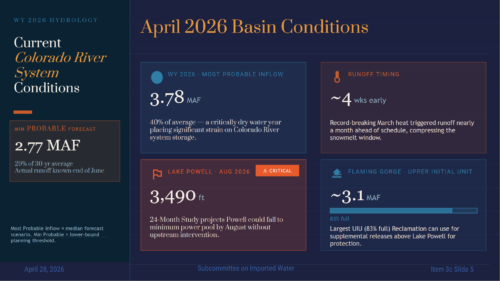 “The Colorado River Basin has been sliding toward a critically dry year since January—enough to put extraordinary federal action on the table. Although there were brief hopes that late-winter storms might turn things around in February, March, or April, these hopes have largely evaporated. As a result, the federal government has now signaled it will step in. At Metropolitan’s April meeting of the Imported Water Subcommittee, Shanti Rosset, Metropolitan’s Colorado River policy manager, outlined the Bureau of Reclamation’s proposed actions. Conditions on the Colorado River have continued to worsen throughout the spring. Specifically, the most likely inflow forecast for water year 2026 is 3.7 million acre feet—just under 40% of the 30-year historical average—which would make it a critically dry year. This situation is further compounded by timing: record-breaking March heat triggered runoff nearly a month early, shortening the snowmelt period and reducing the system’s ability to store water. In Reclamation’s lowest probable inflow scenario, the projection falls to 2.77 million acre feet, about 29% of the average. … ” Continue reading at Maven’s Notebook.
States seek a ‘marriage counselor’ in Colorado River brawl. Are they too late?
“The two teams of states battling over the Colorado River are nearing the end of a game they might both lose. Now, one of them is calling for last-minute, third-party intervention. In a Thursday joint statement, the Upper Colorado River Basin states of Colorado, Utah, New Mexico and Wyoming called for “immediate mediation” in the yearslong deadlock with the Lower Colorado River Basin states of Nevada, California and Arizona. They offered no details about who could fill that role or which entity would pay for the costs. “Time is short, but structured negotiations through mediation offer a new path for authentic discussions,” New Mexico’s Upper Colorado River Commissioner Estevan López said in a statement. “Even at this late stage, we should pursue every opportunity to reach a workable agreement.” … ” Read more from the Las Vegas Review-Journal.
SEE ALSO: Could a mediator help break the Colorado River deadlock? Utah thinks so, from KUER
Glen Canyon Dam faces its existential moment
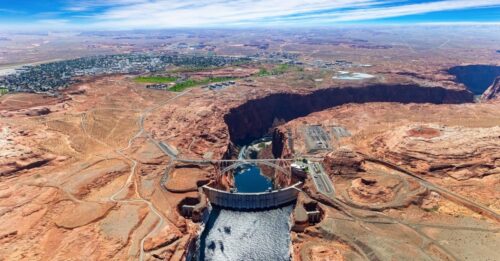
“In the span of U.S. history certain years are turning points, milestones in the nation’s story. 1776. 1865. 1929. 1968. Circumstance and consequence conspire to make it so. For the Colorado River and those who rely on it, 2026 is on the verge of similar prominence. Circumstances in the basin today are that urgent. A slow-developing water supply calamity, decades in the making, has boiled over, like a cold war turning hot. Extreme heat in March – triple-digit temperatures never witnessed that early in the year – obliterated a meager snowpack. The basin’s big reservoirs, the supposed buffers against short-term drought, were already uncomfortably low after a quarter-century of declining river flows. They will drop even lower. The amount of water flowing this summer into Lake Powell, the nation’s second-largest reservoir, will be one of the smallest ever measured, barely a trickle. “This is unprecedented, but it’s not unpredicted,” said Eric Balken, executive director of the Glen Canyon Institute. “I like to say that this is the most predicted disaster of all time.” … ” Read more from the Circle of Blue.
Announcements, notices, and funding opportunities …

