

Several news sources featured in the Daily Digest may limit the number of articles you can access without a subscription. However, gift articles and open-access links are provided when available. For more open access California water news articles, explore the main page at MavensNotebook.com.
In California water news today …
Will California ever build the Delta tunnel? Major battles ahead as Newsom era nears end

“In what Gov. Gavin Newsom hailed as a major milestone, his $20 billion Delta tunnel largely cleared another chokepoint last week — but it still faces obstacles of a different magnitude. For more than half a century, California’s leaders have debated rerouting water around, rather than through, the network of rivers, farmland and marshes of the Sacramento-San Joaquin Delta. Newsom’s version would pipe Sacramento River water through a 45-mile bypass to a reservoir on the California Aqueduct, in an effort to shore up state supplies and send more water south. Delta communities call the plan a water grab that would devastate one of the country’s largest estuaries and destroy towns, wildlife and generational farms. State officials and major water suppliers say it’s necessary to safeguard water for two-thirds of Californians against the threats of climate change and natural disasters. Tasked with refereeing the fight, a state agency called the Delta Stewardship Council weighed opponents’ many challenges to the project and last week voted six-to-one to require the Department of Water Resources to address just two of them. Newsom declared victory, saying “we are closer than ever to seeing this important piece of infrastructure completed.” Maybe closer than ever, California water watchers say, but still far from complete. … ” Read more from Cal Matters.
SEE ALSO: Delta tunnel inches forward, newsletter from Cal Matters
For the first time, California growers have to say how much groundwater they’re taking
“For the first time, growers in one of California’s most acutely water-stressed areas have to reveal how much groundwater they are pumping. For generations, they’ve been free to take water from wells on their own land without reporting to it the state. The State Water Resources Control Board ordered landowners in parts of the San Joaquin Valley around Corcoran and Pixley to submit detailed reports by Friday. The Tule and Tulare Lake groundwater subbasins were put on probation by the board in 2024 because they weren’t doing enough to control excessive pumping, which has caused levels to plummet. By collecting the data, the agency is preparing to charge landowners fees — $300 for each well plus a usage fee of $20 for each acre-foot of water. … ” Read more from the LA Times. | Read via AOL News.
Court delays hearing, blocks state from collecting groundwater fees in Tulare Lake subbasin case
“The Kings County Farm Bureau (KCFB) appeared in court on Tuesday, April 15, 2026, in its ongoing case against the State Water Resources Control Board regarding the State’s actions in the Tulare Lake Subbasin. The hearing was scheduled as a procedural step to allow both parties to provide information to the court and to set a future date for the case now that a new judge has been assigned after the State Board disqualified the previous judge. While the court calendar required extending the date for hearing the Preliminary Injunction, KCFB characterized the outcome as a positive development overall. The court will hear KCFB’s request for a Preliminary Injunction on June 3 because of scheduling constraints. As a result, groundwater users in the Tulare Lake Subbasin must still submit their pumping reports to the State Water Resources Control Board by May 1. However, the court enjoined the State Board from collecting any fees related to the reports until the Preliminary Injunction can be heard. … ” Read more from Valley Ag Voice.
This ‘out of control’ invasive species is threatening California’s water supplies
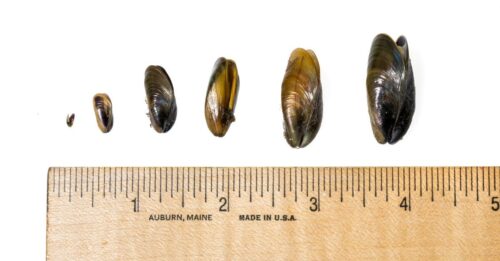 “An invasive species of mussel is becoming more of a concern in California as it overtakes ecosystems and impacts infrastructure, according to officials. Golden mussels, native to China and Southeastern Asia, were first detected in October 2024 by California Department of Water Resources staff who were conducting routine operations in the Port of Stockton, a CDWR spokesperson told ABC News. The discovery was the first known occurrence of golden mussels in North America. Since then, the mussels have spread quickly up and down the West Coast — to the north, in the Bay Area, and to the south down to Los Angeles and San Diego, according to a map from the California Department of Fish and Wildlife. The species are highly efficient filter feeders and form dense colonies, according to the CDFW. … ” Continue reading from ABC 7.
SEE ALSO: San Joaquin County declares emergency over invasive golden mussel, from the Stockton Record
Turlock district, UC Merced test solar panels on canals. State leaders get a peek
“The Turlock Irrigation District was California’s first such agency when it formed in 1887. On Wednesday, it showed off another pioneering feat. TID got a $20 million state grant in 2022 to test solar panels atop two short canal stretches. The arrays reduce evaporation of the Tuolumne River water while helping supply the district’s power customers. A UC Merced team is assessing whether the idea is worth spreading across the 4,000 or so miles of canal in California. A detailed report is due this summer to the state Department of Water Resources. The findings so far are promising, the scientists said at Wednesday’s gathering, which included a member of Gov. Gavin Newsom’s Cabinet and other high-ranking officials. … ” Read more from the Sacramento Bee.
SEE ALSO: Calif.’s first-ever solar panel-covered canal completed in Stanislaus County, from SJV Sun
NOAA Fisheries announces availability of $99 Million for Pacific salmon
“NOAA Fisheries announced up to $99 million in funding through the Pacific Coastal Salmon Recovery Fund for conservation and recovery projects that support Pacific salmon. The funding supports Administration priorities by improving habitat and other actions to increase the production of salmon and steelhead that contribute to U.S. fisheries. Stronger fisheries make the U.S. seafood sector more competitive, as described in the Executive Order on Restoring American Seafood Competitiveness. Competitive fisheries create jobs and put more domestic seafood on American dinner plates. “The Pacific Coastal Salmon Recovery Fund has a strong track record of supporting states and tribes in completing projects that support the economy,” said Eugenio Piñeiro Soler, Assistant Administrator for NOAA Fisheries. “The projects help increase Pacific salmon populations, which sustain federal ocean fisheries and benefit tribes.” … ” Read more from NOAA.
How climate-driven tree loss is accelerating California habitat degradation and endemic species extinction
“California’s diverse ecosystems, ranging from the fog-drenched coastal ranges to the rugged inland deserts, are currently undergoing a profound ecological shift. Long-standing symbols of the Golden State—such as the Western Joshua tree, the blue oak, and the foxtail pine—are facing an unprecedented, climate-driven collapse that threatens to permanently alter the landscapes we recognize today. This shift is not occurring overnight, but rather through a slow, systemic decline that is challenging the limits of traditional conservation. The core of this issue is Climate-driven tree loss, which represents a fundamental disconnection between long-lived plant species and the environmental conditions they require to thrive. Historically, California’s native trees were well-adapted to the state’s natural variability in precipitation and temperature. However, the current pace of global warming has created a “climatic squeeze,” where rising temperatures increase the evaporation of soil moisture, essentially starving trees of the water they need to survive. … ” Read more from Nature World News.
Phase of El Niño-Southern Oscillation foreshadows U.S. wildfire activity up to a year in advance
“The Pacific Ocean’s El Niño-Southern Oscillation (ENSO) is arguably the most influential climate driver on Earth. Its cycles of warm and cool waters in the central and eastern equatorial Pacific alter where ocean heat is released into the atmosphere, affecting atmospheric circulation, temperatures, and precipitation around the globe. New research by NOAA’s Physical Sciences Laborator (PSL) has analyzed in detail how the state of ENSO in autumn, either the warm El Niño or cool La Niña phase, influences where wildfire activity will occur across specific regions of the United States during the following year. In particular, the analysis found that La Niña in autumn often leads to low precipitation and high evaporative demand across the southern United States, which primes vegetative fuels to burn during the coming year. … ” Read more from NOAA Research.
Western U.S. wildfires have gotten less frequent, though larger
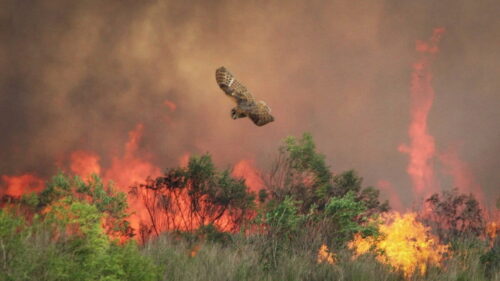
“The number of wildfires burning in the Western United States each year dropped roughly 28% over the past three decades, even as annual burned area and damage from wildfires have soared. A decline in fires accidentally sparked by humans accounts for over 40% of the overall trend, according to a new study. In areas with few people, fires get more frequent as population density rises. Push past a certain density, however, and fire frequency starts to fall. Understanding how shifting human demographics influence wildfire can help scientists more accurately predict how fire patterns will change going forward. “It would be premature to talk about informing fire management [based on] these results, but the main implication is that we can incorporate these results into projections of future fire activity,” said Gavin Madakumbura, an atmospheric and oceanic scientist at the University of California, Los Angeles, and lead author of the study. The study appears in Earth’s Future, AGU’s journal for research on the state of the planet and its inhabitants and their future resilience in the Anthropocene. … ” Read more from the AGU.
Water, fire, and finance: building more resilient systems
“The January 2025 fires in Los Angeles County exposed a critical gap: water systems were never designed to fight large-scale wildfires. As fire risks intensify, communities are asking what the role of water systems should be in extreme events moving forward and how these systems can remain reliable, affordable, and resilient. On January 23, 2026, the UCLA and UC ANR Urban Water Supply + Fire working group — organized by the Sustainable LA Grand Challenge, Luskin Center for Innovation, and the California Institute for Water Resources — convened 54 experts to examine a critical and underexplored issue: how to finance water systems as fire risks change and intensify. The workshop organizers have just released a report, Water Supply Systems, Fire, and Finance, synthesizing key insights from the convening. … ” Read more from UCLA.
Why a major reorganization at the Forest Service has people concerned
“I was on a road trip to visit a friend late in March when my phone started lighting up. The Trump administration had just announced a sweeping reorganization of the U.S. Forest Service. People — among them current and former agency staffers — had thoughts. Under the overhaul, the Forest Service will move from a regional to a state-based leadership structure, relocate its headquarters from Washington, D.C., to Salt Lake City and close nearly three-quarters of its research stations. A news release described this as a much-needed shift to streamline the agency and bring its leadership closer to the forests and grasslands it manages, which are primarily west of the Mississippi. But a common refrain emerged among the sources I spoke with: The Trump administration is trying to break the Forest Service, they claimed, to pave the way for privatizing or even selling off the 193 million acres of land it oversees. … ” Read more from the LA Times. | Read via Boiling Point newsletter.
As potentially significant season kicks off, the U.S. Wildland Fire Service’s first chief shares priorities
“Brian Fennessy grew up in the Los Angeles area, and got into wildland fire straight out of high school in the late 1970s. He mostly worked on, and eventually led, interagency hotshot crews – among the fittest and most respected firefighters in the country. Even decades ago, he said there were questions about why federal wildfire response was split between multiple agencies. “Throwing dirt is throwing dirt, right? And hiking jeep cans up the hills – doesn’t matter what patch you’re wearing, it’s the same work,” he said. “And you know, why wouldn’t there be one agency?” Nearly five decades after he first dug fireline, Fennessy was hired as the U.S. Wildland Fire Service’s very first chief. The U.S. Wildland Fire Service (USWFS) was formed earlier this year by consolidating the fire programs of several Department of Interior agencies, including those of the Bureau of Land Management and National Park Service. … ” Read more from Boise State Public Radio.
In commentary today …
Action needed to ensure State Water Project reliability
Jennifer Pierre, General Manager of the State Water Contractors, writes, “California’s lead water agency, the Department of Water Resources, has been developing its existing State Water Project water rights over 30+ years – building 36 water facilities, 25 pumping plants, five hydroelectric power plants and approximately 700 miles of canals, tunnels and pipelines. In so doing, DWR has delivered a reliable water supply to communities across our state, allowing California to grow and thrive. But as that infrastructure ages and climate change produces bigger rainstorms and faster melting snow, DWR must continue investing in the State Water Project to support continued water deliveries. The SWP must adapt so that it can take on larger amounts of water during big storms and store it for use during dry periods, which will be longer and hotter. Unfortunately, DWR’s ability to make these investments has been complicated by an unnecessary administrative hurdle. … ” Read more from Capital Weekly.
In regional water news and commentary today …
SIERRA NEVADA
Reclamation refills Truckee reservoirs early to improve water operations
“The U.S. Army Corps of Engineers South Pacific Division has approved a Bureau of Reclamation request to temporarily modify operations at Prosser Creek, Stampede, and Boca dams. The change, authorized through a planned major deviation from the 1985 Truckee Basin Water Control Manual, allowed reservoir refilling to begin in mid-March, more than a month earlier than typically permitted. The earlier refill enables capture of additional spring runoff without increasing flood risk under current conditions. As a result, reservoirs are more likely to fill completely or reach higher levels than under standard operations. At Stampede Reservoir, the deviation also increases the likelihood of maintaining higher water levels for longer periods, supporting greater hydropower production through increased flows at the powerplant. … ” Read more from the Sierra Booster.
SEE ALSO: Reclamation refills Truckee reservoirs early to improve water operations, press release from the Bureau of Reclamation
NAPA/SONOMA
St. Helena will need to invest millions to maintain water treatment plan, report says
“Millions of dollars will be needed in the coming years to replace the aging infrastructure at one of St. Helena’s key water treatment plants, according to a recent assessment. The Louis Stralla Water Treatment Plant, located at 410 Crystal Springs Road, will need about $9.2 million in improvements over the next 15 years, according to a condition assessment completed this year by Davis-based water engineering contractor West Yost Associates. Water treatment plants remove contaminants from water taken from sources such as reservoirs and wells via treatment with chemicals, filtration and other methods, making the water safe for human consumption and use. … ” Read more from the Santa Rosa Press Democrat.
BAY AREA
Bay Area beaches are chock-full of mysterious blue creatures again. Here’s how to see them
“They’re an otherworldly sight: blue and iridescent. They have no clear eyes, mouths or body parts analogous to our own. And rising from one side — is it their back; hard to tell — is a transparent sail, which these little seafarers use to catch the wind. Sightings of Velella velella, also known as “by-the-wind sailors,” have proliferated along the Bay Area coastline this week, captivating beachgoers and drawing the attention of the climate- and ocean-curious. These compelling creatures visited our shores last year, too. But this year they seem especially abundant — to the extent that “beaches in this area appear blue from a distance because of the numbers of Velella right now,” according to Jackie Sones, research coordinator at the UC Davis Bodega Marine Reserve in Bodega Bay. … ” Read more from KQED.
Bayview-Hunters Point: After decades of environmental cleanup, rebuilding can cement inequalities
“Thomas Lin was born and raised in San Francisco, but when he and his wife began looking to stop renting and finally own a home, their options were few and far between, leading them to consider a townhome in one of the city’s most affordable neighborhoods: Bayview-Hunters Point. They would otherwise be priced out of the city he was born and raised in. It wasn’t until Lin and his wife went to their bank to get a loan for their prospective home they hit a snag. Their bank refused to offer a mortgage because of the “environmental issues” in the area. This was the first they had heard of the nuclear and industrial contamination brought by the Navy decades before and the sometimes feckless cleanups. The Lins are not alone. Young families like them are at the crux of two trends affecting former Superfund sites nationwide. They must weigh the opportunity for home ownership at a time when for young people the goal has never seemed more impossible — with the median age of first-time homebuyers at an all-time high — versus how much they trust the cleanup process, which in Bayview-Hunters Point has been riddled with controversy and missteps. … ” Read more from … & the West.
Mountain View neighborhood enters seventh day without safe drinking water
“About 170 residents in a Bay Area neighborhood remained without drinkable tap water Friday, a week after state regulators issued a “Do Not Drink” order due to a water main contamination incident. The emergency affects approximately 67 households in a Mountain View neighborhood north of Cuesta Park, where a city-hired contractor was conducting water replacement work on Friday, April 24. City officials said the contamination occurred during a water main replacement project, when cement slurry seeped through a closed valve between an old pipe and a live pipe carrying water to homes. The city said in an FAQ that the new and old pipes “were not disconnected, but were separated by a closed valve.” … ” Read more from the San Francisco Chronicle.
CENTRAL COAST
700 acres of farmland in Monterey County to be preserved
“Some 700 acres of Monterey County farmland will be kept as agricultural land or open spaces for the future thanks to a $7.3 million grant awarded to the Ag Land Trust of Monterey County through California’s Strategic Growth Council. The Strategic Growth Council is composed of 10 members including, state-agency secretaries and directors and three appointed members of the public. The chair of the council is the director of the Governor’s Office of Land Use and Climate Innovation. The council coordinates with public agencies, communities and other stakeholders to promote sustainability and equity in the state. … ” Read more from the Monterey Herald.
Workshops planned on Salinas River management
“Landowners, growers and community members are invited to attend upcoming workshops focused on river management in the Salinas Valley. The workshops will provide information and gather public feedback on new analyses related to flooding and flood impacts, allowable river management activities under existing programs, and potential approaches to water, vegetation and program management. Organizers said participant input will help guide future program development, permitting and funding efforts. … ” Read more from the Rustler.
Study finds offshore wind facility not feasible in Morro Bay
“Developing an offshore wind operations and maintenance (O&M) facility in Morro Bay’s harbor would amount to “significant regulatory, environmental, and social impacts,” according to a feasibility study presented to the City Council on April 28. The study, prepared by Mott MacDonald and Rincon Consultants and funded through a $1 million San Luis Obispo County allocation to study offshore wind, evaluated whether Morro Bay could support long-term offshore wind maintenance operations tied to lease areas roughly 20 miles offshore. “The study serves as an informational resource … and is intended to help inform the city and the public in the event that an OSW [offshore wind] development proposal is submitted in the future,” an April 14 city staff report stated. It added that Morro Bay “has not received any proposals from OSW developers and has not engaged in recent discussions with them regarding potential port facilities.” … ” Read more from New Times SLO.
California Supreme Court curbs Coastal Commission’s block of Los Osos development permit
“The California Supreme Court flexed its power over the California Coastal Commission, unanimously ruling that the commission unlawfully overrode a Los Osos building permit approved by San Luis Obispo County. “Shear’s proposed development is for one of the principal permitted uses of the site. The commission has no appellate jurisdiction over Shear’s permit application,” Chief Justice Patricia Guerrero’s April 23 ruling opinion read. The move caps off a long saga beginning in 2003 when Shear Development Company bought eight lots in a residential neighborhood in Los Osos. Shear graded the lots and installed utilities in preparation. In 2004, the county authorized the development company to build in two phases. … ” Read more from New Times SLO.
SAN JOAQUIN VALLEY
SSJID pursuing $192M plan to assure water keeps flowing to farms and 215,000 people
“South San Joaquin Irrigation District — by virtually every measure — has a successful history of protecting and developing water rights secured 117 years ago. It is a constant battle to do so in California where water wars are as old as the state itself. But that isn’t the big worry today for SSJID. It’s reliability. Without making sure the diversion, storage, and distribution system is as bullet-proof as possible, it increases the chances an incident — rockslides, pipe failure, and even prolonged power outages — can cut off water. It is water that 215,000 people in Manteca, Lathrop, and Tracy expects will flow from their tap when they turn it on for household needs or from hydrants to fight fires. … ” Read more from the Manteca Bulletin.
SOUTHERN CALIFORNIA
A rare slice of California coastline gets a preservation lifeline
“Before the Pacific Coast Highway, before Malibu and before multimillion-dollar beachfront homes, Topanga Creek flowed freely down through the Santa Monica Mountains. The water, swelling and subsiding with the seasons, eventually dumped out into a large lagoon, which in turn drained out to the Pacific Ocean. Historically, the lagoon covered 30 acres of coastal wetlands. But over time, the brackish water slowly gave way to homes, beach parking lots and the Pacific Coast Highway. Today, less than 1 acre of the lagoon remains. A similar process has played out in coastal wetlands up and down California. Coastal wetlands are ecosystems where saltwater and freshwater meet, providing habitat for unique, rare and endangered species such as the “remarkably adorable” and “visually charming” tidewater goby (as described by the Resource Conservation District of the Santa Monica Mountains), a tiny gray-brown fish that lives only in such regionally specific waters. Other species that use the area include the endangered monarch butterfly, protected nesting birds and western pond turtles. California grunion also occasionally pop up on the beach to spawn. … ” Read more from SF Gate.
LA harbor commission OKs Olympics sail training center for Cabrillo Beach site
“The Los Angeles harbor commission approved a permit on Thursday, April 30, that will bring a 2028 Summer Olympics sail training camp to an area adjacent to San Pedro’s Cabrillo Beach starting in May. The combined properties — at 3000 Shoshonean Road and on a vacant triangular lot at 2114 S. Mesa St. — will provide an athletic training and boating facility at the Outer Harbor that will serve national sailing federations and athletes who are training for the 2028 Los Angeles Olympics. The permit will also provide community groups with public access to the former Cabrillo Beach Youth Camp. … ” Read more from the LA Daily News.
Seal Beach to buy storm pumps
“The council on April 27 approved the purchase of two portable pumps for emergency storm response and a third pump for sewer bypass operations. The total cost: $245,722.62, according to the staff report. The vote was unanimous. “Due to its proximity to the ocean as well as its general topography, the City of Seal Beach (City) encounters flooding in various areas during heavy volume rain events. This flooding causes traffic backups, road closures, debris dispersion, and potentially unsafe conditions for residents and visitors alike,” according to the staff report prepared by Sean Low, deputy Public Works director – Maintenance and Utilities. … ” Read more from the Seal Beach Sun.
IMPERIAL/COACHELLA VALLEYS
Imperial Valley Data Center sparks binational debate
“The potential construction of the Imperial Valley Data Center, a large-scale technology complex to be located in southeastern California, near the US-Mexico border in the city of Imperial, has generated divided opinions across the region. The project contemplates an area of approximately 3.23 million square feet, an energy capacity of 330 megawatts, and an estimated construction period of 18 to 24 months. According to Dr. Armando Reyna Ballesteros, Coordinator of the Bachelor’s Degree in Business Intelligence and Innovation at CETYS University, Mexicali Campus, this development could become a strategic cornerstone for the United States’ digital economy. The facility is expected to operate with Tier IV hyperscale computing power designed to support high-demand processing, maximum reliability, and mission-critical workloads with near-zero downtime. … ” Read more from the Imperial Valley Press.
SAN DIEGO
Oceanside wrapping up harbor dredging, beach replenishment
“The Army Corps of Engineers will have placed 320,000 cubic yards of sand on Oceanside’s shoreline by the time the city’s harbor dredging is finished Friday. That’s a significant haul of sand, equal to more than 20,000 dump truck loads, although it’s delivered in a more energy-efficient watery slurry through a pipe across the beach from a dredge in the harbor. Bulldozers spread out the wet, brownish sediment as it accumulates on the beach. This year’s beach-widening deposit is the largest in several years, and the U.S. Army Corps of Engineers and its contractor Manson Construction is scheduled to do another one this fall, as the city transitions from spring to fall dredging. “In previous years, the Corps usually removes 250,000 cubic yards,” said Jayme Timberlake, Oceanside’s coastal zone administrator. … ” Read more from the San Diego Union-Tribune.
Toxic Calif. border river becomes flashpoint in Newsom-Trump clash
“Despite demands from San Diegan officials that Gov. Gavin Newsom declare a state of emergency for the Tijuana River crisis, the governor’s position stands — the crisis remains a federal issue. “Our calls for a state of emergency have gone unheeded,” San Diego County Supervisor Paloma Aguirre told SFGATE. “I led a letter signed by all 18 mayors and myself when I was a mayor. All 18 cities in San Diego County asked for a state of emergency from him.” On April 9, Aguirre took to Instagram to plead with the governor to declare a state of emergency over the worsening sewage crisis in the Tijuana River. The long-brewing problem is part of a broader crossborder watershed in which untreated wastewater, sediment and trash regularly flow into California from Mexico, impacting public health and the environment, the California State Lands Commission has said. … ” Read more from SF Gate.
Along the Colorado River …
Can the Colorado River survive 2026?
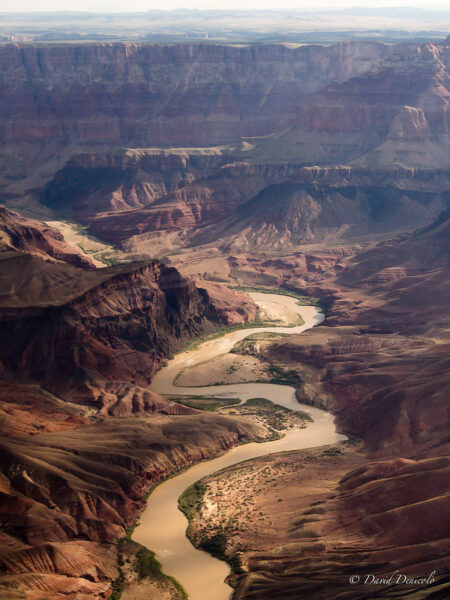 “The Colorado River is reaching a breaking point. A 26-year drought is sucking the river dry, and unprecedented heat is rapidly evaporating this year’s record-low snowpack. These two conditions are leading to low water levels at Lake Powell and Lake Mead, the nation’s two largest reservoirs. That, in turn, jeopardizes critical water infrastructure for a large swath of the West. If water levels fall below 3,500 feet in Lake Powell, water releases, which help create hydropower and serve as the primary water source for millions of Americans, could be halted. To stave off such a catastrophe, dam managers with the Bureau of Reclamation (BOR) are impounding water in Lake Powell and unleashing trillions of gallons of water from Flaming Gorge, an upstream reservoir. … ” Read more from the Sierra Club.
Utah and other Colorado River states call for a mediator. Could that break the stalemate?
“As negotiations over the Colorado River remain at a standstill, Utah and other states in the Upper Basin are asking for outside help. Negotiators from Utah, Colorado, New Mexico and Wyoming called for “immediate mediation” among the seven states that share the Colorado River and the federal government, according to a statement from the Upper Colorado River Commission last week. “It’s past the eleventh hour. It’s 11:59,” Estevan López, New Mexico’s negotiator, said during a commission meeting on April 21 while discussing the looming deadline for new operating plans for the river that provides water to roughly 40 million people. Current guidelines for managing the river system and its reservoirs during dry times expire this year. The Bureau of Reclamation is currently going through an environmental review process and has said it must have a new plan in place by Oct. 1. If the states reach consensus, the bureau has said they will choose that as its preferred path forward. … ” Read more from the Salt Lake Tribune.
SEE ALSO: Could a mediator help break the Colorado River deadlock? These states think so, from KUNC
An emergency water supply is on its way to Lake Powell
“A desperate operation to save one of the Colorado River basin’s most important reservoirs is underway. Again. Widespread drought and fears of a power crisis are forcing the Interior Department to start sending billions of gallons of water from Flaming Gorge Reservoir downstream to prop up Lake Powell. The releases began last week. The water will travel down the Green River until it joins the Colorado near Canyonlands in Utah and makes its way to Lake Powell. As much as one million acre feet, or a third of the water in Flaming Gorge, could be dedicated to keeping Lake Powell levels stable. Powell is getting so low that there are fears it could stop producing hydropower by August. … ” Read more from Utah Public Radio.
What can an 8th grader do with a saw, Jell-O and glue? Solve some of the Colorado River’s toughest problems.
“Throughout Jamie Somerville’s middle school classroom, ideas were taking shape. Big ideas. On a mid-April day, students cut styrofoam into pieces with a band saw. A 3D printer hummed in the corner. A cluster of eighth graders chattered about their project’s design behind a laptop screen. At a time of historic drought and deepening water shortages across the West, they were focused on an ambitious goal: Solving some of the Colorado River Basin’s longstanding problems. Their tools? Pencils, mud, Jell-O and a lot of persistence. Mount Garfield Middle School, between the communities of Clifton and Palisade, has been working its way toward joining the ranks of International Baccalaureate schools in Mesa County and around the world. The global educational foundation designs programs that call on students to take a hands-on role in their studies and schools to rethink how they approach curriculums. This year, Mount Garfield reworked its woodshop class to meet the foundation’s criteria, turning it into a hub of brainstorming and trial and error focused on the Colorado River. … ” Read more from the Colorado Sun.
Utah has an ‘obligation’ to allow the building of massive data centers, Gov. Cox says
“Gov. Spencer Cox said he supports the installation of a new “hyperscale” data center in Box Elder County, a project expected to both generate and consume more power than Utah currently uses. He also bristled against criticism that the proposed project has been rushed. “This whole idea of being rushed — I’m so tired of our country taking years to get stuff done,” he said at a news conference Thursday morning. “It’s the dumbest thing ever. We think that taking time makes things better or safer. It absolutely does not.” And though Cox said he has been “pretty neutral on data centers,” the governor said every state, including Utah, “has an obligation to allow for these types of data centers to be built.” … ” Read more from the Salt Lake Tribune.
SEE ALSO: Mr. Wonderful’s Utah Data Center draws not-so-wonderful reaction from residents, from KUTV
Utah’s heading into an ‘especially dangerous’ wildfire season
“Conditions are ripe for an intense summer of wildfires, state leaders say, with blistering temperatures in the forecast and dry brush across the state. The last thing Utah needs is for people to let their guard down and send sparks and embers into the mix. “We’re begging Utahns everywhere this year to please use your common sense,” Gov. Spencer Cox told reporters Thursday. “One small mistake, like dragging a trailer chain, a poorly extinguished campfire, or a spark from target shooting can lead to just devastating consequences.” Utah has recorded 115 wildfires so far in 2026, and more than 84% were caused by humans, Cox said. None were still burning Thursday after recent rains and cooler weather. But that trend is likely to change, Cox said. The risk is so high that officials are urging Utahns to think very carefully long before the state sees widespread burning restrictions. … ” Read more from the Utah News Dispatch.
Colorado faces “significantly increased risk” of wildfire this summer, governor warns
“Gov. Jared Polis warned Coloradans on Thursday that there is a “significantly increased risk” of wildfire along the Front Range and in western Colorado this summer, particularly in June and July. “We need to prepare,” Polis, flanked by the state’s top firefighters, said at a news conference in Broomfield where he unveiled the state’s annual wildfire forecast. The governor said the drought this year, paired with the long-term consequences of a changing climate and the growing number of people moving into wildfire-prone areas, is making Colorado particularly susceptible. As of Thursday, the entire state was considered to be experiencing at least abnormally dry conditions. Eighteen percent of the state was facing exceptional drought, while 58.5% of the state was in extreme drought. … ” Read more from the Colorado Sun.
In national water news today …
The persistence of PFAS
“This month, Eos is taking a long look at “forever chemicals.” Per- and polyfluoroalkyl substances (PFAS) have been percolating through our industrial environment since the 1940s. They help make products nonstick, waterproof, and stain resistant. They also make their way into air, soil, and water, as well as our bodies, where they have been linked to impaired immune systems, developmental delays in children, and some cancers. Since discovering that PFAS might be harmful to human and environmental health, researchers and industries have reformed the chemicals into novel substances. The behaviors of these novel PFAS are proving difficult to pin down, as Grace van Deelen explores in her feature “Chemical Companies Are Churning Out New PFAS. Where in the World Are They Ending Up?” … ” Read more from EOS.

