
Several news sources featured in the Daily Digest may limit the number of articles you can access without a subscription. However, gift articles and open-access links are provided when available. For more open access California water news articles, explore the main page at MavensNotebook.com.
On the calendar today …
- SoCAL WATER DIALOG: Making Water More Affordable – Part II from 12pm to 1:30pm. Water affordability continues to be a challenge across the state. But what factors are driving up the cost of water? And what strategies are water agencies employing to address affordability for their ratepayers? Our expert panel will continue our dialogue on the meaning of affordability in the context of rising infrastructure costs and the challenge of ensuring reliability with ongoing rate pressures. Click here to register.
In California water news today …
Trump administration offers plan to stop dam removal on California river
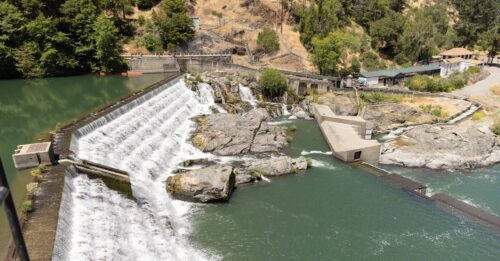
“The Trump administration injected a surprising twist into the fight over Northern California’s Eel River on Tuesday, offering up a potential plan to stop the removal of two dams in the basin — though how serious the plan is remains to be seen. In a social media post, U.S. Agriculture Secretary Brooke Rollins said she had been in touch with a Southern California water agency that was interested in buying the Scott Dam in Lake County and Cape Horn Dam in Mendocino County and continuing their operation. Such a move would run counter to longtime plans by Pacific Gas and Electric Co., the owner of the dams, to remove the facilities as part of the retirement of the century-old Potter Valley hydroelectric project. … “Last week, I heard from the Elsinore Valley Municipal Water District. A legitimate buyer who expressed strong interest in purchasing the project from PG&E,” Rollins wrote on X, formerly Twitter. … ” Read more from the San Francisco Chronicle. | Read via MSN News.
SEE ALSO:
Environmentalists sue feds to protect endangered California fish
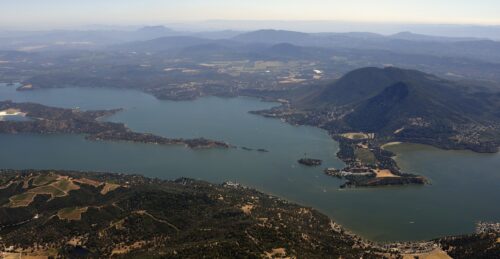 “An environmental advocacy group sued the U.S. Fish and Wildlife Service on Tuesday to force the federal agency to protect a rare California fish through the Endangered Species Act. The Center for Biological Diversity claims the agency missed a deadline in January to decide protection measures for the Clear Lake hitch. The Clear Lake hitch is found only in Lake County in Northern California, and the center says the freshwater minnow is on “the brink of extinction.” “The service’s failure to issue a timely final listing rule protecting the Clear Lake hitch as a threatened species under the [Endangered Species Act] leaves the hitch vulnerable to the ongoing loss and degradation of habitat that is critical for its survival and recovery,” the center said in its complaint. Environmentalists say development and dams are the largest obstacle for hitch recovery, as diversions have “altered tributary habitats and impeded fish passage.” Droughts brought by climate change are also a reason for the hitch’s population decline. … ” Read more from the Courthouse News Service.
SEE ALSO: Environmental group sues Trump administration seeking stronger protections for Clear Lake hitch, from the San Jose Mercury News
State’s high court agrees DWR overstepped tunnel funding authority
“The state Supreme Court on Monday denied a review of a Court of Appeal decision that the Department of Water Resources had exceeded its authority when it approved bond resolutions to finance the proposed $20 billion Delta tunnel. The appellate decision, on Dec. 31, had upheld a lower court decision, which included Solano County. “This decision protects … taxpayers from being locked into billions of dollars of costs without legal approval,” Solano County Supervisor Mitch Mashburn said in Tuesday. “That is a safeguard every Californian should expect.” … ” Read more from the Daily Republic.
Delta Counties celebrate final court victory blocking illegal financing for Delta tunnel
“The Delta Counties Coalition (DCC) announced that a major legal victory is now final after the California Supreme Court denied review of an appellate court decision rejecting the State’s attempt to finance the proposed Delta Tunnel project. The Court also declined to depublish the ruling, meaning it will stand as binding legal precedent going forward. This decision ends the State Department of Water Resources’ (DWR) 2020 effort to validate billions of dollars in bonds for the project without clear legal authority. Courts at every level have thus far found that DWR exceeded its authority. “This is a clear and final win for the rule of law,” said Supervisor Pat Hume, Chair of the Delta Counties Coalition. “The State cannot sidestep legal safeguards to push forward a project of this size and cost. This decision reinforces that accountability and transparency still matter.” … ” Read more from the Delta Counties Coalition.
U.S. Army Corps of Engineers completes Record of Decision for Sites Reservoir Project
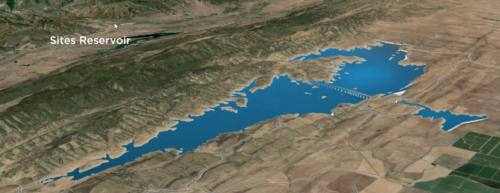
“The U.S. Army Corps of Engineers Sacramento District has finalized its Record of Decision for the proposed Sites Reservoir Project following completion of its National Environmental Policy Act review. The Sites Reservoir Project is a proposed off-stream water storage project located in Colusa County, California, north of the Sacramento-San Joaquin Delta. The ROD documents the Corps’ evaluation of the project in accordance with the National Environmental Policy Act and informs future permit decisions under Section 404 of the Clean Water Act and Section 10 of the Rivers and Harbors Act. The Environmental Impact Statement for the project was prepared under the leadership of the Bureau of Reclamation, with USACE participating as a cooperating agency. “My team worked collaboratively with the Sites Project Authority, the Bureau of Reclamation, Environmental Protection Agency, and other agencies to reach this milestone,” said Col. Robert McTighe, commander, U.S. Army Corps of Engineers Sacramento District. … ” Read more from the Army Corps.
Sierra storm will dump more April snow, but won’t fix California snowpack
“Over the next two days, forecasters expect a cold storm to temporarily reblanket the Sierra Nevada with several feet of snow. The National Weather Service has issued a winter storm warning through 5 p.m. Wednesday for the Northern Sierra above 5,000 feet. While the storm will bring yet another round of April snow after a historically warm, dry March for California, it’s not expected to do much lasting good for the state’s meager snowpack, which sits at 18% of normal for this time of year. “My guess is if you look at the snowpack analysis on Thursday, this will show up as just a blip on the curve,” said Chris Smallcomb, a meteorologist with the weather service’s Reno office. “It’ll keep things from getting worse, at least for a few days.” … ” Read more from KQED.
Dry conditions push farms to new irrigation strategies
“With California facing its second-lowest April snowpack on record and recent warm temperatures triggering early snow melt, farmers anticipate constraints on their irrigation plans, especially those who farm south of the Sacramento-San Joaquin River Delta. Some technologies and methods are emerging to help farmers adapt their irrigation practices, although what proves useful and cost-effective continues to evolve. Farmer Dan Errotabere, who grows 5,000 acres in Fresno County that include almonds, pistachios, winegrapes, tomatoes and cotton, will need to work with a 20% water allocation from the federal Central Valley Project—a 5% bump from an initial 15% announced in February. The largest water strain is on his annual row crops on the west side of the San Joaquin Valley, which gets its water from Westlands Water District. The area is more exposed to water scarcity due to its elevation, reliance on imported water and delivery constraints. “We’re also beginning our fourth year of our SGMA program,” Errotabere said, referring to the state’s Sustainable Groundwater Management Act, which shifts farmers away from unlimited groundwater pumping to regulated water use. He noted water restrictions will require him to fallow 20% to 30% of his acreage this year. … ” Read more from Ag Alert.
Final draft of the Yolo Bypass Cache Slough (YBCS) Master Plan is available
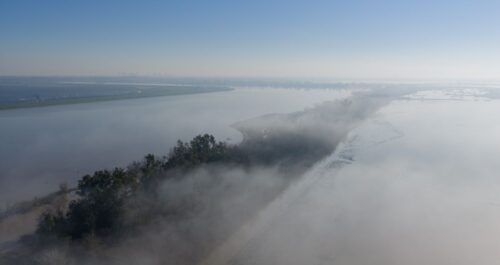
“The California Department of Water Resources (DWR) and Central Valley Flood Protection Board (CVFPB) announced today that the final draft of the Yolo Bypass Cache Slough (YBCS) Master Plan is available. The purpose of the YBCS Master Plan is to guide continued project planning and implementation consistent with the Central Valley Flood Protection Plan and its Conservation Strategy; to inform the U.S. Army Corps of Engineers’ Yolo Bypass Comprehensive Study; and to support the YBCS Partnership goals related to flood, habitat, water supply, water quality, agriculture, and recreation. … ” Read more from the Central Valley Flood Protection Board.
Ready for liftoff: 6,000 acres of floodplain restoration are shovel ready in the San Joaquin Valley
“Though River Partners works throughout California, a recent focus of our restoration efforts has been in the San Joaquin Valley and Tulare Basin. Known for prodigious agricultural output over the last century, this region today is peppered with aging-out agricultural operations, old infrastructure, and an increased need for flood safety for communities. Through a $40 million investment from the California Wildlife Conservation Board (WCB) in 2023 for restoration planning and implementation across the San Joaquin Valley, River Partners’ teams of scientists, ecologists, and restoration experts completed the permitting and design processes for 6,000 acres of landscape-scale projects, bringing them to “shovel-ready” status—meaning we are ready to invest in their implementation today. In total, from Stockton to Bakersfield, these projects are poised to double the acreage of restored floodplains in the Valley. Internally at River Partners, we call them the “SJ10 Projects,” and they are the 10 highest-priority future floodplain restoration sites in the San Joaquin Valley. River Partners Director of Restoration Science Emma Havstad put this achievement into striking context. … ” Read more from River Partners.
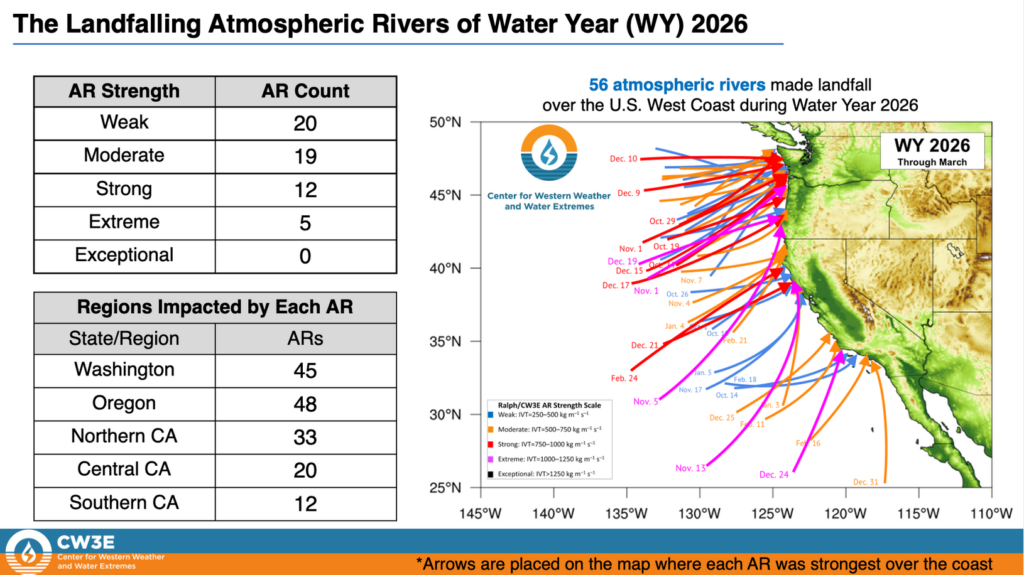
The landfalling atmospheric river systems of 2026
Click on the graphic for the update from the Center for Western Weather & Water Extremes.
Climate goals, meet gravity: Pushing water
“At the Edmonston Pumping Plant in Kern County, giant pumps lift water from an aqueduct near the Central Valley’s floor high up over the Tehachapi Mountains — roughly 2,000 feet — through a series of tunnels and tanks, to Southern California cities below. It’s part of the State Water Project, a sprawling state-run system of pumps, canals and reservoirs that delivers water to 27 million Californians. It’s also the single biggest electricity user in the state. The project’s massive energy demand makes it an early testing ground for one of California’s most aggressive climate targets: that state agencies must run on 100 percent renewable and zero-carbon electricity by 2035, a full decade ahead of the state’s broader 2045 goal. The takeaway: It’s harder than it looks. … ” Read more from Politico.
SEE ALSO: New Kern County solar project set to power state’s largest water pump plant, from KGET
Hands-on water institutes connect teachers to California water issues
“Each summer, dozens of dedicated teachers take time from their summer break and gather in Butte, Solano, and Sacramento counties to participate in Water Institutes for Educators. Over the course of three days, they explore their local watersheds and learn from scientists, water resource experts, and each other. Through these hands-on water institutes, teachers discover new ways to bring water topics into their classrooms. Water resource management in California is complex and crosses many different disciplines. DWR seeks to equip educators with accurate knowledge, practical tools, and real-world experiences to share with their students. This essential work helps develop the next generation of Californians who will steward one of our most essential resources. … ” Read more from DWR.
Learning true cost of reliable water supply
“Otto Robinson, a master mechanic, was killed on Dec. 6, 1955 when a six foot-diverting pipe burst and he was swept away in muddy water and debris. Coonrad Huckson, 50, of Jamestown, and Walter Hooper, 37, of Pollock Pines, were killed on Jan. 13, 1956 by flying granite when vibration of a drill set off buried explosives. Wesley Allen Osbourne, 27, of Oakdale was killed June 4, 1956 when he fell from a “bucket” elevator in an air escape shaft. Arthur Carlson, 56, was killed on Dec. 11, 1956 when a giant rockslide buried him beneath 100 yards of rock and earth. The five died building either Beardsley Dam or Donnells Dam that were part of the Tri-Dam Project that also included Tulloch Dam constructed on the Stanislaus River by the South San Joaquin Irrigation District and the Oakdale Irrigation District. Last week on Tuesday, April 14, geologist Twyla Cappuro, 35, of Coulterville died in a tunnel collapse working on the SSJID-OID Canyon Tunnel Project below Goodwin Dam northeast of Knights Ferry on the Stanislaus River. … ” Read more from Riverbank News.
Landslides are increasing in California, experts say
“NASA and US Geological Survey researchers have documented a “growing landslide crisis” in California. Climate extremes have accelerated the occurrence of slides even though there were landslides even before humans came here, largely due to steep terrain and more recent geological formation. Marin City may actually be a national model for dealing with climate change because it has two major threats: sea level rise and landslides. During the pandemic, a series of atmospheric rivers caused a 70-year-old wooden retaining wall to fail in two spots: a total of some 40 feet. Fortunately, it did not slide into the 48-unit Oak Knolls Cooperative. “Our soil is not alluvial mud. Our soil is rocky clay and that’s been a bit of our advantage. These trees, they help hold; the roots are holding the soil,” said Curtis Finley, Oak Knolls Co-op VP. … ” Read more from KTVU.
California Forever foes, pros meet in spirited exchange at City Hall
“California Forever last week released a poll that purports 51% support for its proposed expansion of the Suisun City. Opponents want a recount. So they called on supporters to rally Tuesday at City Hall to urge the City Council to place an advisory measure on the November ballot to apprise the council on how local voters feel about the Suisun City Expansion project. The group was greeted by an equal number of – perhaps even a few more – supporters of the ambitious project. Mark Stephenson, president of the Napa-Solano Audubon Society, strongly favors following the Orderly Growth Initiative by keeping urban development within the cities. He said the project would destroy agricultural lands and natural habitat, and called for a countywide ballot measure. … ” Read more from the Daily Republic.
SEE ALSO: Suisun City residents call for advisory vote on proposed California Forever annexation, from KCRA
What a 5,000-mile long marine heat wave means for summer in the U.S.
“A massive ocean hot spot is stretching across a 5,000-mile swath of the Pacific — from Micronesia to the coastal waters of California. Across this zone, waters are as much as 6 to 8 degrees above average. And it has the attention of climate scientists, who say it could boost temperatures, humidity and the threat for tropical storms in the West during the months ahead. Climate scientist Daniel Swain described this increasingly extreme marine heat wave as an “exceptional event” that’s breaking records. The unusual ocean anomaly — the largest on the planet — could expand and intensify to cover the entire Pacific coast of North America by late summer, he wrote. The development of this ocean hot spot, which is linked to a forming El Niño, also follows record warmth and a historic lack of snow in parts of the West earlier this year. Such conditions could worsen as the warm waters influence weather patterns in the coming months. … ” Read more from the Washington Post.
Wildfire forecast 2026: Fires likely to burn over 5.5 million acres as drought intensifies
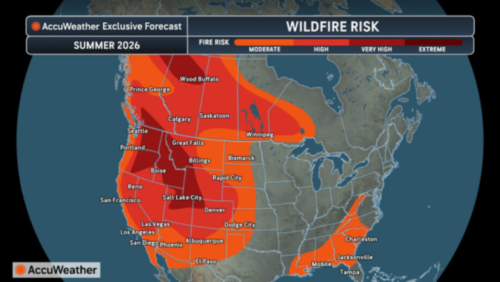 “Wildfire danger is expected to increase across much of the western United States in the coming months, while other parts of the country could face periods of heightened risk amid worsening drought and summer heat. … California is expected to see fire danger increase as the summer progresses, especially in interior and lower-elevation areas where grasses dry out and become more flammable. “The spring season brought record-breaking heat to California early, which has rapidly melted off a meager snowpack from the winter season,” AccuWeather Meteorologist Brandon Buckingham said. The effects of the heat may contribute to fires in the foothills and agricultural areas during late May and early June. … ” Read more from AccuWeather.
In regional water news and commentary today …
NORTH COAST
Tribes receive $6 million for Chinook recovery
“The Klamath Tribes plan to implement the first-ever large-scale reintroduction of Chinook salmon. The Bureau of Indian Affairs and NOAA Fisheries recently allocated $6 million in efforts do the reintroduction on what the Tribes say are “critically imperiled spring-run Chinook salmon within the Klamath Tribes’ ancestral territory.” The Tribes plan to establish up to 40 remote incubation sites in cold-water streams above Upper Klamath Lake. The money will also support the installation of four additional raceways and “increase water efficiency” at the Oregon Department of Fish and Wildlife’s Klamath Fish Hatchery near Chiloquin. … ” Read more from the Herald & News.
Mendocino County Fire Safe Council allocates nearly 200 free water tanks
“The Mendocino County Fire Safe Council (MCFSC) is allocating close to 200 free water tanks to more than a dozen Firewise Communities, Neighborhood Fire Safe Councils, and fire departments throughout the county. In 2022, the California Department of Water Resources (DWR) was allocated $10 million from the Governor’s 2022 budget to establish a water tank program as part of its Small Communities Drought Relief program. The one-time water tank portion of the program is ending at the close of this fiscal year. Alena Misaghi, a senior water resource engineer in Fresno and assistant program manager for the Small Community Drought Relief program, reported that about 1,000 tanks will be distributed across California as a result of the program, with roughly 450 of them going to Mendocino County. … ” Read more from the Redheaded Blackbelt.
SIERRA NEVADA
Yuba River’s native fish are at historic lows. A new appeal wants to hold the federal government accountable.
“Two dams on the lower Yuba River have long blocked salmon, steelhead, and green sturgeon from reaching critical habitat, and a conservation group says a recent federal court ruling lets the agency responsible off the hook. Friends of the River filed an appeal this week challenging that decision. At the center of the case is whether the U.S. Army Corps of Engineers, which owns Englebright Dam and Daguerre Point Dam, must comply with the Endangered Species Act in how it manages those structures. A March 31 ruling from a federal judge in the Eastern District of California said the Corps has no obligation to mitigate the dams’ effects on fish, a conclusion Friends of the River calls legally flawed. The group argues the Corps has already made modifications at the dams, including fish ladders, proving it does have discretion over how the structures are managed. With that discretion, they say, comes legal responsibility under federal law. … ” Read more from Active NorCal.
Microplastics in Third Creek
“One would think that the return to Third Creek for the seasonal spawning study of the Lake Tahoe Rainbow trout is a joyous occasion. In part, because they grow faster, larger, live longer and generally have more eggs these Tahoe’s Rainbows are considered, “the healthiest Rainbow Trout west of the Rocky Mountains.” According to those who catch and eat them, these Rainbows are the tastiest of all.Here’s what darkens the returning season. … Prior to each season’s spawn, for eleven years I and Friends of Third Creek have dawned our chest waders, and crawled over, around, and knee-walked chest deep beneath low-hanging branches to clear human carelessness from these creek’s spawning gravel flats. We all believe that we love Lake Tahoe, that’s why, besides the skiing, we’re here, but do we love it enough to care for it? … ” Read more from the Tahoe Daily Tribune.
U.S. Forest Service prepares to open Lake Tahoe recreation sites for summer
“As the community prepares to say goodbye to winter and embrace the spring and summer seasons, the U.S. Forest Service is preparing to open recreation sites at the Lake Tahoe Basin Management Unit. Officials said that before opening, the sites need to be cleared of safety hazards, such as dead or damaged trees, after the snow melts. They also emphasize the importance of letting the danger of a freeze pass before turning on restroom water systems. … ” Read more from Fox 40.
SACRAMENTO VALLEY
An unusual salmon habitat project is coming to the Sacramento River near Redding this week
“A coalition of farmers, scientists, and government agencies is dropping dozens of tree and boulder structures into the Sacramento River near Redding to give young salmon and trout a fighting chance. The project, led by the Sacramento Valley Ecological Restoration Foundation (SAVER) and funded by the U.S. Bureau of Reclamation and U.S. Fish and Wildlife Service, will install more than two dozen “rockwads” in the river between April 27 and May 3. Construction will take place near the Redding Rodeo Grounds, north of the Sundial Bridge, and will be visible from the bridge and portions of the Sacramento River Trail. The Turtle Bay Boat Launch will have limited hours during that period, open only from sunrise to 9 a.m. daily. … ” Read more from Active NorCal.
SEE ALSO: Local and Federal Agencies Partner to Create the Rockwads Fish Habitat Restoration Project in the City of Redding, from A News Cafe
NAPA/SONOMA
Sonoma County declares dry water supply for Russian River area despite recent rains
“With weather forecasts calling for rain and reservoirs at, or nearing, capacity, it seems strange to think that parts of Sonoma Water are under a “dry water supply” designation. It’s a technical term, but it shows how careful they’re being when it comes to managing water, especially now that climate change is being taken into account. Lake Sonoma near Geyserville is considered full; there really isn’t any room for more water. Farther north on U.S. Highway 101, Lake Mendocino stands at about 85% of capacity. That’s good news for Sonoma Water, which uses the two reservoirs as its water supply. But Don Seymour, the agency’s deputy director of engineering, said, technically, it’s still not up to “normal.” … ” Read more from CBS News.
SEE ALSO:
Study measures regulatory costs for Napa vineyards
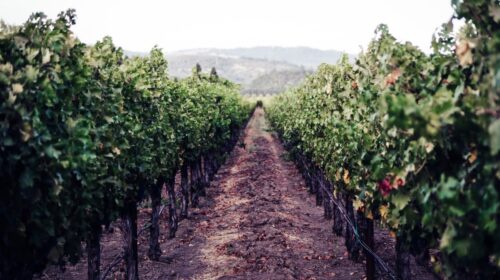
“A new study has put a price tag on the cost to Napa County winegrape growers of complying with government regulations. The study, titled “Regulatory Cost of Production in Napa County Vineyards,” was commissioned by the Napa County Farm Bureau and prepared by Cal Poly, San Luis Obispo, professors Lynn Hamilton and Michael McCullough. They found that the cost of regulatory compliance last year for winegrape growers in the county was between 8% and 12% of production costs. For a large grower, that equated to more than $1,700 an acre and nearly $2 million overall. For a small grower, regulatory compliance cost more than $1,100 an acre and around $226,000 overall. Paying that much to comply with regulations “makes a big difference in profitability,” Hamilton said. “Both growers and policy makers need to understand the impact of regulatory costs on the viability of farming.” … ” Read more from Ag Alert.
BAY AREA
Belvedere approves $3.5M contract for seawall repairs
“Belvedere has awarded a construction contract to repair its deteriorating seawall on Beach Road. The City Council unanimously approved a resolution on April 13 for a $3.5 million contract to Gordon N. Ball, a construction company in Walnut Creek. The project will tackle three key areas of erosion in the decades-old earthen levee under the road. In 2019, the city conducted emergency repairs on the crumbling wall. Several years later, the city discovered significant subsidence and movement in the structure. The project is intended to fix a 580-foot stretch of the road, adding support infrastructure to sections of the wall. The city has identified a need for a larger, comprehensive upgrade — estimated to cost $28 million — to the entire wall along Beach Road as well as San Rafael Avenue, including integrating flood mitigation efforts, which it may pursue in the future. … ” Read more from the Marin Independent Journal.
Gray whale found dead near Alcatraz as toll rises in San Francisco Bay
“A dead gray whale was reported near Alcatraz Island this week, the eighth this season in the San Francisco Bay Area, according to the Marine Mammal Center. The whale, described as small and looking like it died recently, was seen Monday morning floating against the rocky shoreline of the island after National Park Service staff alerted marine researchers. Crews quickly moved to try to secure it. In coordination with the Marine Mammal Center and the California Academy of Sciences, the U.S. Army Corps of Engineers dispatched a vessel to tow the carcass to a mooring buoy east of Treasure Island. But by the time the boat arrived, the whale was gone. … But the latest death comes amid a troubling pattern. More gray whales are entering San Francisco Bay — and more are dying there. … ” Read more from the San Francisco Chronicle.
San Jose and Pittsburg hot for data center development
“Developers of Bay Area data centers are aiming beyond Santa Clara to nearby San Jose and distant Pittsburg. The Bay Area data center market is moving past Santa Clara, with San Jose and Pittsburg becoming new development hotspots, according to the Silicon Valley Business Journal, citing a report from Colliers. Santa Clara has long dominated Silicon Valley data center development by taking advantage of lower power costs. But now San Jose has opened its arms to data center development. And Pittsburg has ratcheted down its power costs. At the same time, Santa Clara faces longer timelines for large-scale power access, according to Raul Saavedra, who leads Colliers’ Americas data center advisory practice. … ” Read more from The Real Deal.
SAN JOAQUIN VALLEY
Dredging the San Joaquin River
“Dredging the San Joaquin River as it meanders through the South Delta could become part of a larger strategy to provide more robust water supplies for California and increase the survival rate of threated Chinook salmon. It’s the goal of the Greater Valley Farm Water Partnership (GVFWP) consisting of 13 growers in the Delta as well as south of the Delta that was formed more than two years ago. The need to dredge is based on the natural process that started more than 250 million years ago filling in what was once a massive island sea to give birth to the Great Central Valley. Dredging the river and Delta waterways happened to various degrees over roughly a century until environmental successfully were able to basically stop it in the 1970s. … ” Read more from the Manteca Bulletin.
Valley crops and farmers feeling the impacts of the latest wet weather
“A rainy day means work on the farm looks a little different for Tulare County growers. Tulare County farmer with C & C Agriculture, Chris Chesser, says while he catches up on paperwork, his crops are reaping the benefits of the wet weather. “Trees love the rainwater,” says Chris. “Cleaning off the dirt and the dust helps for photosynthesis for the tree leaves, and to help promote fruit production size and nutrition.” The Tulare County Farm Bureau estimates the recent storm system won’t significantly impact groundwater or long-term irrigation outlook. … ” Read more from Channel 30.
State’s groundwater reporting portal still hit or miss as deadline looms
“More than two dozen well owners attended the state’s first workshop to help them register their wells to begin reporting extractions by May 1 as groundwater sanctions finally get underway in Kings County. While some landowners were able to open accounts, others found the program unworkable and questioned the fairness of impending state fees that are tied to how much water is reported through the program. Claudine Contente, a third generation dairy farmer, was in and out of the April 16 workshop in 30 minutes after successfully registering her account on the Groundwater Extraction Annual Reporting System (GEARS). She said Water Resources Control Board staff were friendly and helpful. But she questioned whether bugs in the GEARS system would be worked out by the May 1 deadline. “It’s kind of late in the game,” she said. … ” Read more from SJV Water.
New fill station in Tulare County provides free, clean drinking water
“Residents from Orosi and Cutler who are on well water and have long struggled with access to clean drinking water now have a new option thanks to a free fill station funded by the Kings Water Alliance. The station opened in February outside of Jack’s Gas on the corner of Road 128 and Avenue 413 in northern Tulare County. Residents may bring their own containers, whether a 5 gallon jug or a personal water bottle, and fill them for free with clean water. Previously, residents had to pay for water at other fill stations in Orosi or neighboring Cutler. The only other station supplying free drinking water is in Dinuba, a 14-mile roundtrip journey from Cutler and Orosi. “We are really excited for this and want to shine a light on this resource,” said Chris De Leon, advocacy manager with Community Water Center. “We pushed hard for this because the only way to get to Dinuba is via car, there is no public transportation available.” … ” Read more from SJV Water.
Proposed project aims to restore 670 acres along the Lower Kern River
“A proposed restoration project could bring new life to parts of the Lower Kern River. A presentation to the Bakersfield Water Board outlined plans to restore more than 670 acres along the Kern River Parkway. The project aims to create new habitat, improve wildlife corridors, and add shade and recreational opportunities for the community. The first phase of the project would cover about 137 acres south of the Kern River near Truxtun Lake. The total project cost is estimated at $4.3 million. Most of the funding is expected to come from state grants. … ” Read more from Channel 23.
SOUTHERN CALIFORNIA
Santa Clarita: Draft Water Use Efficiency Strategic Plan available for review
“The Santa Clarita Valley Water Agency invites customers and other interested parties to review its draft Water Use Efficiency Strategic Plan, which is now available for public review. The WUESP is being developed to establish a comprehensive water conservation strategy for the Santa Clarita Valley, said a news release from the agency. The WUESP is a key planning and strategic component for SCV Water that will inform, influence, and impact multiple facets of the agency’s operations, services and initiatives, the release said. Members of the public are invited to review the draft WUESP ahead of a SCV Water board of directors meeting on Tuesday, May 12, at which the plan is scheduled to be considered for adoption. … ” Read more from the Santa Clarita Signal.
Palisades reservoir that was empty during fire is dry again. Residents aren’t happy about it
“The Los Angeles reservoir that was notoriously empty during the 2025 Palisades fire has been drained once again as crews replace its floating cover, to the dismay of area residents who worry that there won’t be water available to fight wildfires. The Santa Ynez Reservoir stores drinking water for Pacific Palisades, and the $19.5-million project to replace its damaged cover is needed to ensure the water is safe to drink, according to the Department of Water and Power. But with warm weather and wildfire season ahead, community leaders would prefer to see a full reservoir even if the water isn’t suitable for drinking. “It’s a failure to recognize that there is value to this community to have the reservoir full,” said Maryam Zar, head of the Palisades Recovery Coalition. “It’s incredible to me that after the experience we went through [with the Palisades fire] there is still no recognition that this reservoir should be filled to the gills, whether or not it’s potable.” … ” Read more from the LA Times. | Read via Yahoo News.
More sharks in the water may actually make SoCal beaches safer, experts say
“It’s going to be a sharky summer. Due to a marine heat wave, researchers are predicting an unusually high number of juvenile white sharks in San Diego. However, there’s actually a bright side to that: they may end up making the ocean safer for beachgoers. That’s because juvenile white sharks feed on stingrays and bottom fish, which have long been the bane of visitors to Southern California waters. In fact, there’re a lot more of them than there used to be, due to humans killing off their predators and anthropogenic climate change warming waters that were previously uninhabitable for the critters. “Our data shows you’re probably safer going to a beach with juvenile white sharks than without,” Chris Lowe, director of the Shark Lab at Cal State Long Beach, told CBS8. “They’re feeding down the stingrays. Stingrays injure over 10,000 people in Southern California per year.” … ” Read more from The Inertia.
Along the Colorado River …
20-foot drop: Why more decline is on deck for Lake Mead in 2026
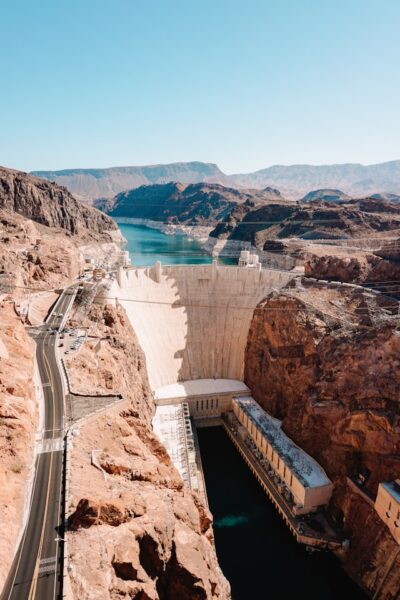 “Lake Mead is expected drop drastically in the coming months. The reservoir outside Las Vegas is currently 32% full, so more decline would expose more rocks and hazards — and take us back toward the lowest levels ever recorded. “Less water is going to be released from Lake Powell down to Lake Mead this year. That is going to result in about a 20-foot decline in Lake Mead’s current elevation,” said Bronson Mack, spokesperson for the Southern Nevada Water Authority. So, get ready. The infamous bathtub ring circumnavigating the basin is about to get wider, in part due to the lackluster winter recorded across our region and throughout the west. … ” Read more from Channel 13.
Arizona water cuts loom as Colorado River negotiations put farms at risk
“In Southern Arizona water is everything. And for one family farm, the future of that water hangs in the balance as Colorado River negotiations continue. Brian Wong is a fourth generation farmer and president of BKW Farms. The farm is located in Marana and harvests several kinds of wheat and grains as well as blue oyster mushrooms. Wong’s great-grandfather came to the United States from China in the late 1800s to start working on Arizona’s early railroad system. In the 1920s he decided to settle down and open up a grocery store in downtown Tucson. The rest of the Wong family immigrated to the U.S. including Brian’s grandfather, who worked in the grocery store, saving up enough money to buy his first cropland in 1935 in Red Rocks, just north of Marana. In 1939, he planted his first crop. … ” Read more from Arizona Public Media.
Utah agrees to massive water release from Flaming Gorge to prop up Colorado River system
“Utah and surrounding states have agreed to release a massive amount of water from Flaming Gorge to prop up Lake Powell and the rest of the Colorado River system. On Tuesday, the Upper Colorado River Commission voted to approve the release that could happen within the next couple of weeks. As much as a million acre-feet of water will be released from Flaming Gorge, flowing downstream through the Green and Colorado rivers into Lake Powell to keep it able to generate electricity for millions across the American West and avoid a system-wide collapse. “It is an unprecedented release at an unprecedented time I think hydrologically,” Amy Haas, the executive director of the Colorado River Authority of Utah, told FOX 13 News in an interview. … ” Read more from Fox 13.
SEE ALSO: ‘Crippling’ drought prompts Utah, other states to approve massive release of Flaming Gorge water to bolster Lake Powell, from the Salt Lake Tribune
Colorado River water release is a ‘Band-Aid on a gaping wound’ with negotiations stalled
“It’s been a record dry winter across the West — and it’s making an already bad situation on the Colorado River even worse. If water levels get any lower, Lake Powell and the dam that holds it back could be in dire straits. So now, the federal government is stepping in to prop up water levels. But, as KJZZ’s Alex Hager reports, it could be a Band-Aid solution to a much bigger problem. Hager joined The Show to explain. … ” Read more or listen to radio show at KJZZ.
Arizona water department secures law firm for potential Colorado River legal fights
“The Arizona Department of Water Resources is gearing up for a legal fight over Colorado River negotiations and has hired a law firm to represent the state. Arizona is among seven states negotiating for its future share of Colorado River water. If the federal government imposes a water sharing deal that Arizona doesn’t agree with, it will likely lead to a lawsuit. If the states disagree with one another, that will also likely end up in court. A lawsuit between the states could also potentially go straight to the Supreme Court, instead of going to a lower court first. … ” Read more from KUNC.
Judge blocks Arizona water rule that halted new housing developments across the Valley
“A judge handed a huge win to developers Tuesday when he blocked an Arizona water rule that put a stop to new housing developments in some areas of the Valley. The ruling prohibits the Arizona Department of Water Resources from using its “unmet demand” rule for the Phoenix Active Management Area. The Home Builders Association of Central Arizona, represented by attorneys from the conservative Goldwater Institute, filed a lawsuit in January 2025 to challenge what they said were illegal assured water supply restrictions put in place by ADWR. In a Tuesday ruling, Maricopa County Superior Court Judge Scott Blaney found that ADWR didn’t have the legal authority to implement the new unmet demand rule in the Phoenix Active Management Area because it didn’t comply with the Arizona Administrative Procedures Act rulemaking process. … ” Read more from the Arizona Mirror.
Can a Super El Nino save Colorado from deepening drought conditions?
“Not even a Super El Nino — which climatologists say is likely to develop this summer — could undo the damage in Colorado after a historically low snowpack. It may, however, offer a glimmer of hope that relief is on its way. “Overall, between the very low snowpack and the warm, dry winter and start to spring …. we are in drought conditions across basically the entire state, and they, at this time, are worsening,” said Peter Goble, the assistant state climatologist at the Colorado Climate Center, said at the monthly Colorado Water Conditions Monitoring Committee meeting on Tuesday, April 21. “But this is probably the most optimistic seasonal outlook that I’ve been able to give on one of these calls in quite some time.” El Nino and its inverse La Nina are two phases of a climate cycle related to abnormal changes in ocean temperature. When temperatures in the tropical Pacific Ocean are warmer than average, it results in El Nino conditions. When temperatures are cooler than average, La Nina is the result. The ocean temperatures can drive different weather patterns across the world. Historically, El Nino conditions bring wetter summers and falls but drier than normal winters in the Northern Rockies. … ” Read more from the Aspen Times.
In national water news today …
Data center moratorium a fault line in Dem primaries
“Democrats’ split over data centers is opening a gaping fault line in key House primaries. Democratic candidates in battleground districts across the country are embracing a left-wing proposal to halt the development of data centers nationwide, pushing incumbents to weigh more aggressive postures than trying to limit the energy-hungry facilities’ impact on electric grids and utility bills. The moratorium idea is gaining traction beyond insurgent campaigns. In Tennessee, state Rep. Justin Pearson is mounting a serious primary challenge to Rep. Steve Cohen (D) in the state’s 9th District and says a federal moratorium on data centers is not only sound policy but also a potential political winner across party lines. … ” Read more from E&E News.
At Water Week 2026, local leaders see a glimmer of hope
“Municipal water system leaders and nonprofits gathered in Washington, D.C., to lobby Congress as part of Water Week 2026 focused on two priorities: securing funding to update aging water infrastructure and restoring a federal program that provides grants to low-income households for paying water and wastewater bills. Water Week, an annual event organized by the National Association of Clean Water Agencies, brings together water utility professionals, engineers, policy advocates and anyone committed to advancing water infrastructure and sustainability to discuss the future of water policy. Besides panels and hearings, it features a conference with government officials, who provide a glimpse into their priorities regarding water infrastructure. … ” Read more from Inside Climate News.

…
