
Several news sources featured in the Daily Digest may limit the number of articles you can access without a subscription. However, gift articles and open-access links are provided when available. For more open access California water news articles, explore the main page at MavensNotebook.com.
On the calendar today …
- MEETING: State Water Resources Control Board beginning at 9am. Agenda items include Consideration of a proposed Resolution to adopt the guidelines to administer Proposition 4 funding to address water quality in the rivers that come across the border from Mexico; and Consideration of a proposed Resolution denying requests for exclusion from probationary reporting and fees to eight groundwater sustainability agencies in the Tule Subbasin. Click here for the full agenda.
In California water news today …
Proposed decision favors California in Delta tunnel project dispute
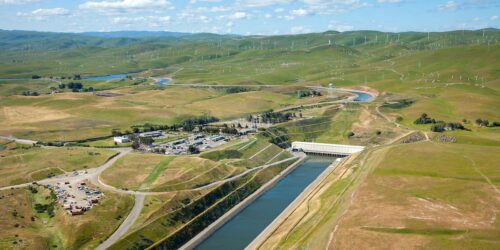
“A draft decision issued Monday on appeals to California’s Delta Conveyance Project appears to hand the state a major win in its battle to make the massive project a reality. However, while discarding most of the appeals against the project, the recommendation to the Delta Stewardship Council calls for sending two issues about the project back to the state Department of Water Resources for reconsideration. It also wants yearly reports from the department about its outreach efforts to tribes and various agencies. The draft decision comes in advance of a Thursday meeting of the stewardship council. A formal vote on the decision by the council is expected then. The upcoming vote stems from an appeal to a certificate of consistency for the project. The council heard that appeal in February and has 60 days to issue its decision. That deadline is this weekend. … ” Read more from the Courthouse News Service.
SEE ALSO:
- DRAFT Decision on Appeals of DWR’s Certification of Consistency for the Delta Conveyance Project denies the appeal except for two counts, from Maven’s Notebook
- EXPLAINER: What you need to know about the Delta Conveyance Project Certification of Consistency and the appeals process, from Maven’s Notebook
Heavy snow, winter storm warning in forecast for Sierra Nevada. How much?
“A winter storm warning has been issued for the Sierra Nevada as an incoming storm is poised to dump snow on the mountains, the National Weather Service said. The warning will take effect at 2 a.m. Tuesday and is expected to end at 5 p.m. Wednesday, the agency said. The forecast calls for 12 to 18 inches of snow in the Sierra, with up to 2 feet of snow on the highest peaks. Snow levels will initially be from 6,000 to 7,000 feet Monday night, lowering to 5,500 to 6,500 feet Tuesday, and down to 4,500 to 5,500 feet Wednesday. The heaviest snowfall is expected Tuesday afternoon and evening with snowfall rates of 1 to 2 inches per hour. … ” Read more from the Sacramento Bee.
SEE ALSO: Winter storm warning for Sierra as another multi-foot dump expected, from the San Francisco Chronicle
California Supreme Court denies review of major appellate decision rejecting DWR’s attempt to validate bond financing for Delta Tunnel
“Attorneys Roger Moore and Thomas Keeling today reported a major legal victory in the battle by Tribes, fishing groups, family farmers, environmentalists, the City of Stockton, five Delta Counties in stopping the controversial Delta Tunnel from moving forward. The 45-mile underground tunnel – known as the Delta Conveyance Project by its advocates – would divert water from the Sacramento River near Clarksburg to facilitate the export of more water to corporate agribusiness in the San Joaquin Valley and Southern California water agencies. Tunnel opponents say the project would hasten the extinction of Sacramento River winter and spring-run Chinook salmon, Delta and longfin smelt, green sturgeon and other fish species, as well as imperil Delta, Tribal and environmental justice communities. … ” Read more from the Daily Kos.
Friends of the River appeals court decision that leaves Yuba salmon endangered
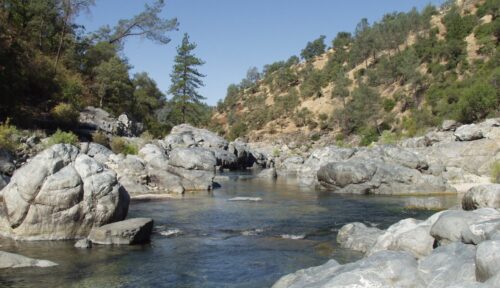 “Today, Friends of the River filed an appeal challenging a federal court ruling that lets the U.S. Army Corps of Engineers (Corps) avoid responsibility for the harm caused by its dams on the lower Yuba River. Chinook salmon, steelhead, and green sturgeon are threatened with extinction because Englebright Dam and Daguerre Point Dam block high-quality habitat, inflict harms to the species, and are not managed in compliance with the federal Endangered Species Act (ESA). The Corps has also failed to comply with the ESA in its management of the activities of third parties the Corps has authorized to use the dams. In a decision issued March 31, 2026, Judge Calabretta of the U.S. District Court for the Eastern District of California got it wrong when he ruled that the Corps has no duty under the ESA to mitigate any of the dams’ adverse effects. The Court declined to hold the Corps accountable for the harms caused by the dams blocking fish passage and creating deadly conditions for juvenile fish migrating out to the ocean. He further got it wrong in ruling that the Corps need not ensure that its contracts with companies that use Englebright Dam for hydropower generation are in compliance with the ESA. … ” Read more from Friends of the River.
‘Rarely seen’: The ground is rising in parts of Fresno County
“The ground may be sinking throughout most of the Central Valley, but it’s actually rising in some parts of southern Fresno County. Westlands Water District says thanks to its efforts, the county has seen “measurable uplift” in and around the area between Cantua Creek and Huron. The map below details the change from January 2025 to January 2026 in blue. According to the legend, the land in this area rose at least 1.2 inches. The “rarely seen” phenomenon is the result of efforts borne from the Groundwater Sustainability Plan. It was introduced in 2014 in response to increasingly degraded water quality, land subsidence, and dry wells exacerbated by overpumping and drought. … ” Read more from Your Central Valley.
‘Forever chemicals’ are used on California farms. Should we be worried?
“California has banned PFAS from a variety of products — including clothing, bedding, makeup and shaving cream — out of concern that the family of toxic chemicals can be harmful to humans and the environment. Now, state lawmakers have taken up a proposed law to ban the “forever chemicals” from use in farm pesticides, after research recently showed that nearly two-fifths of conventionally grown fruits and vegetables tested by California regulators have residues of PFAS (per- and polyfluoroalkyl substances). At issue: Should the state continue to allow the chemicals in pesticides, as long as they remain in low concentrations deemed safe by the federal government? Or should they be banned entirely because of the concern that cumulative exposure threatens public health? … ” Read more from the LA Times.
California agriculture faces policy pressure, weather challenges, and critical election year
“The AgNet News Hour focused on a wide range of challenges impacting California agriculture, from political pressure in Sacramento to unpredictable weather patterns and rising input costs heading into a pivotal year for the industry. As the governor’s race continues to develop, hosts highlighted growing concern over proposed legislation and ongoing policy decisions that could further impact agriculture. One bill drawing attention is AB 2624, which has raised questions about government transparency and accountability, particularly as discussions around fraud and oversight continue across the state. At the same time, the broader political landscape remains a key concern for farmers. With dozens of candidates in the race, there is increasing focus on which leaders will prioritize agriculture and address long-standing issues like water, regulation, and cost pressures. “We are officially broken,” hosts said, emphasizing the urgency many in the industry feel as California approaches the upcoming primary election. … ” Read more from AgNet West.
Paradox of Plenty: Why California can be wet and still short on water
“For much of California’s agricultural history, a wet winter brought relief. Reservoirs filled, rivers ran high, and growers assumed surface water deliveries would follow. Today, that assumption no longer holds. Even in years marked by heavy storms and strong reservoir storage, California water allocation anxiety persists. The disconnect reflects a fundamental shift in water management. California’s system is now governed as much by regulation, environmental constraints, groundwater limits and operational rules as by precipitation totals. In short, flood years no longer guarantee reliable water. … ” Read more from The Business Journal.
A new resource for Healthy Rivers and Landscapes, at a pivotal moment for California water
“A new website has been launched to help tell the story of the Healthy Rivers and Landscapes (HRL) program. The HRL program is a science-based, collaborative approach to restoring river health, floodplains, and natural landscapes, and continues to gain momentum as an important path forward for the Bay-Delta Water Quality Control Plan update. Developed by California public water agencies from Redding to San Diego, working with our many partners, the site brings together videos, infographics, and clear, accessible information to help explain how this approach works for Californians and why it matters. … ” Read more from the Northern California Water Association.
ACWA launches Vision for Our Water Future to advance statewide water solutions and leadership
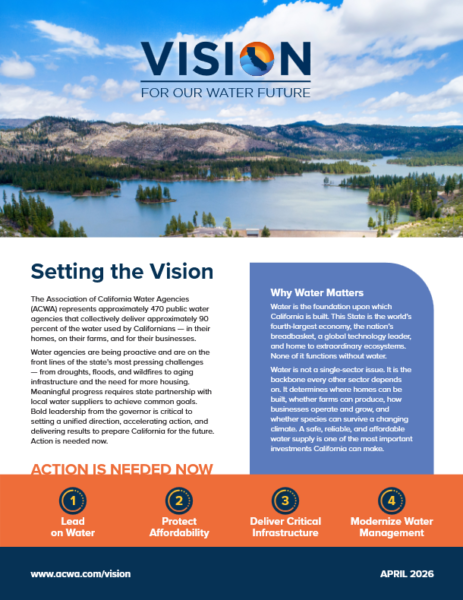 “The Association of California Water Agencies (ACWA) today announced the launch of Vision for Our Water Future, an initiative to elevate water as a top priority for California’s next governor, legislative leadership, and state officials. The initiative outlines a clear, solutions-focused framework to secure a resilient and reliable water system that meets the needs of California’s economy, communities and environment. It is backed by the members of the largest statewide coalition of public water agencies in the nation. “Water is foundational to everything California is trying to achieve, from building housing and growing our economy to protecting public health and ensuring community resilience,” said Chelsea Haines, ACWA Director of State Regulatory Relations. “This Vision reflects the collective expertise of water suppliers across the state and puts forward strategic, actionable solutions. We are asking for bold leadership from the next governor to move these solutions forward.” … ” Read more from ACWA.
California’s blueprint for climate-ready policy
“Communities are paying more for less reliable water. From skyrocketing water bills to unsafe drinking water, from collapsing fisheries to devastating floods, water is no longer an abstract policy issue – it is a kitchen table issue in California. Across regions and political lines, Californians consistently rank water reliability, affordability, and safety as a top-tier concern. We need leadership that is willing to fix what is clearly broken. California Coastkeeper Alliance has developed a practical, actionable roadmap to deliver the climate-ready and equitable approach to water management that Californians demand. … ” Continue reading from the California Coastkeeper.
California marks 10 years since voter-approved cannabis legalization
“California has cleared more than 215,000 cannabis convictions and disrupted $1.2 billion in illicit cannabis activity over the past decade, Governor Gavin Newsom announced today, as the state marks 10 years since voters approved the Newsom-led Proposition 64 in 2016. A decade after voters legalized cannabis, California has paired large-scale record clearance with the nation’s most expansive legal cannabis market — generating billions in revenue and directing funds back into communities harmed by decades of failed drug policies. Since legalization, state and local authorities have seized over 778,000 pounds of illegal cannabis and eradicated over 1 million plants — part of an aggressive push to shut down the illicit market while expanding opportunity through record clearance and reinvestment efforts. … ” Read more from the Office of the Governor.
SEE ALSO: A thirsty crop in a drying climate: The hidden water cost of cannabis, from The Weather Channel
Growing the next generation of restoration leaders
“In 2022, Kylie McNary was a student at Sacramento City College when she presented her undergraduate research The Western Section of The Wildlife Society conference in Reno, Nevada. While there, she met Kim Armstrong, then a biologist at River Partners, who suggested she apply for a summer program called Restoration Fellows, a paid, hands-on internship at River Partners that offers college students and early-career professionals practical experience in large-scale restoration across California. Taking Armstrong’s sage advice, McNary applied for and was accepted into the Restoration Fellows program, where she worked during the summer of 2022. During her internship, McNary said she fell in love with the world of restoration. “My time as an intern introduced me to local plant and animal identification, soil classification, and basic hydrology,” she said. “The experience inspired me to pivot my education journey and major in ecology.” … ” Read more from River Partners.
A record marine heat wave simmers off California’s coast right now
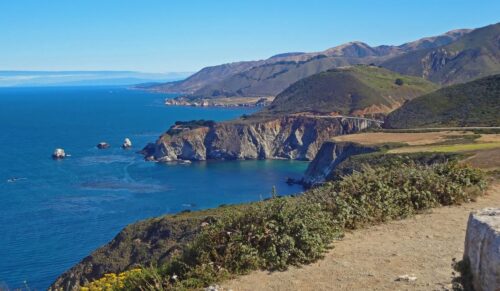 “Hottest. Earliest. Most extreme. California’s meteorologists and oceanographers keep dropping new superlatives about the temperatures in 2026. In the first months of the year, a record-smashing heat wave set a new high for the hottest California day in March and prompted a premature spring. Now, experts are turning focus to the heat simmering deep in the Pacific Ocean, which is already likely hurting marine life. “There’s a bunch of claims circulating, some viral social media posts, that this is the most extreme heat wave, oceanic heat wave ever observed in this region, so is that true?” Daniel Swain, a climate scientist for the University of California’s Agriculture and Natural Resources, said during a recent videostream. “Well, by many objective metrics, yes, that is correct.” … ” Read more from SF Gate.
Burgum’s wildfire mandate: Smother every blaze
“With a hot, dry summer looming, Interior Secretary Doug Burgum this month told senior career leaders his department’s new wildfire agency should put out every blaze that ignites on public lands. The directive, contained in an April 8 memorandum obtained by POLITICO’s E&E News, offers the clearest window yet into the mission Burgum has dictated for the U.S. Wildland Fire Service, an agency he created in January to consolidate the Interior Department’s fire resources under one chain of command. “We will enter this season with the presumption of a full suppression strategy applied to every wildfire under DOI management,” Burgum wrote, noting a responsibility to protect “communities, landscapes, habitat and critical infrastructure.” … ” Read more from Politico Pro (sorry, subscription required).
In commentary today …
We must revive community solar in California
Tulare County farmer Pete Tiemersma writes, “I started my family farm in Tulare County in 1971 with just 40 acres. Over the past 50 years, my wife, Diane, and I have raised a family on this farm and grew it into a 200-acre dairy facility. Today, we support the California dairy industry by raising heifers and growing feed crops. We’re hoping to add a community solar project to that list. But first, we need functioning community solar legislation. For the past few years, it looked like hosting small community solar and storage projects would be the wisest pivot to care for our family, community and the natural resources on our farm. Unfortunately, efforts to establish a viable, robust community solar and storage program at the California Public Utilities Commission (CPUC) have stalled. This lack of progress is now harming all of the things we are trying to steward. We need lawmakers to take a more aggressive role in making the CPUC do their job by passing new community solar plus storage legislation this session, so Californians can benefit from the promise of community solar. … ” Read more from the Sacramento Bee.
In regional water news and commentary today …
NORTH COAST
Klamath Falls farmers urged to idle 10,000 acres amid drought
“The Klamath Drainage District is asking landowners to idle 10,000 acres through Klamath Project Drought Response Agency programs as the region faces low snowpack and limited water supplies. The Bureau of Reclamation allocated only 221,000 acre-feet of water to the Klamath Irrigation Project this year. According to the Klamath Water Users Association, between 40,000 and 50,000 acres will need to be idled across the Klamath Project. “I’m hoping our district can idle around 10,000 acres,” White said. “Fortunately, KDD is an extremely efficient district. We’ve gotten by on limited supplies in the past, but it takes a village to make it work.” … ” Read more from KDRV.
Clearlake sewage spill lagging cleanup prompts protest and seeks answers from officials
“It has been 98 days since the Robin Lane Sewage spill and the lingering odor of swamp gas, especially when it rains, prompted residents of the ground zero neighborhood where the pipe burst in Clearlake to travel across the lake to Museum Park to alert Lake citizens they need to hold their leaders accountable. “There’s still toilet paper in peoples’ fences and ducting saturated with sewage; people can’t use their heaters or wells because they’re contaminated,” Cassandra Hulbert said. “We’re not satisfied with the results. While there’s been some movement (toward resolution) there’s not been any more Town Halls, and now we don’t have a platform to ask questions. We’re trying to gather evidence to prove what the situation is. My neighbor messaged me the morning of January 11 saying, ‘there’s a river down our street and I don’t think it’s regular water.” Hulbert went on to state that the neighbors were all talking amongst themselves and they feel the county people were avoiding residents, so as not to answer questions. … ” Read more from the Lake County Record-Bee.
SIERRA NEVADA
Winter Weather Advisory issued for Tahoe Basin
“With a forecasted storm moving into the Tahoe Basin, the National Weather Service has issued a Winter Weather Advisory for the greater Lake Tahoe region from 5 a.m. Tuesday until 5 p.m. Wednesday. According to the NWS, 1–4 inches of snow are expected at lake level, with 12–18 inches possible along the highest peaks in the Tahoe Basin. The system is also expected to bring strong winds and slick road conditions. OpenSnow forecaster Bryan Allegretto agrees, noting that rain and snow will be slow to move up the mountains Monday night but could reach Donner Pass after midnight into early Tuesday morning. … ” Read more from the Tahoe Daily Tribune.
Prescribed burns at Truckee River wildlife area to benefit public safety, enhance public access and protect mule deer habitat
“CDFW and CAL FIRE have joined forces to protect public safety, public access and mule deer habitat. On a cool, cloudy day in February, CAL FIRE crews ignited dozens of log and brush piles within the Canyon Unit of CDFW’s Truckee River Wildlife Area adjacent to Interstate 80 in Nevada County. The piles were assembled by CAL FIRE teams over the summer – but not before CDFW biologists had carefully mapped out and flagged native bitterbrush stands to spare them from the cutting and burning. “Part of the resources we have on this wildlife area is this bitterbrush plant,” explained Alyson Cheney, Environmental Scientist with CDFW’s North Central Region’s Conserve Lands team. “It is really nutritious for mule deer and has been linked by scientific studies to their survival in the winter. They eat it, they use it for cover and it prepares them for their spring migration. It’s really a crucial resource for deer in the Truckee River area.” … ” Read more from the Department of Fish and Wildlife.
SACRAMENTO VALLEY
Volunteers remove nearly 10K invasive plants, tons of trash from American River Parkway
“More than 440 volunteers removed nearly 10,000 invasive plants and thousands of pounds of trash during a large-scale spring clean-up along the American River Parkway, organizers said. According to the American River Parkway Foundation, participants pulled 9,927 invasive plants and cleared more than 4,695 pounds of trash and debris during its Spring Clean-Up event on Saturday. The annual effort, the foundation’s second-largest clean-up of the year, focused on multiple sites along the parkway. Volunteers worked at locations including Ancil Hoffman Park, Discovery Park, River Bend Park, Sunrise Recreation Area, William B. Pond Park, and river access points near Howe and Watt avenues. … ” Read more from Fox 40.
NAPA/SONOMA
Reservoirs are in good shape, but officials declare dry conditions in upper Russian River for first time in years. Here’s why
“Although about 2 inches of rain is expected to fall throughout much of the North Bay this week, a historically hot and dry March is forcing local water managers’ hand. The dearth of late winter rainfall and runoff has led Sonoma Water, the region’s dominant supplier, to declare what it calls dry water conditions in the upper Russian River watershed. The move anticipates drier months ahead, as most rainfall in the region tapers off by May. It also sanctions a significant dial-back in releases from Coyote Dam at Lake Mendocino, the smaller of the two main Russian River reservoirs. The lake stores water for about 100,000 rural and urban residents and farms from Ukiah to Healdsburg. A smaller change in releases for Warm Springs Dam at Lake Sonoma also is in store. … ” Read more from the Santa Rosa Press Democrat.
BAY AREA
Pop-up thunderstorms could bring hail, heavy downpours to Bay Area
“The Bay Area is expected to see another wet and stormy day on Tuesday as a low-pressure system continues to move through the area. Already, the storm has dropped about an inch to an inch and a half of precipitation in San Francisco and Oakland since Monday, according to National Weather Service meteorologist Dylan Flynn. “It’s a lot of rain for April,” Flynn told SFGATE, adding that the storm dropped 3 inches of rain just outside the Bay Area in the Santa Cruz Mountains. The unsettled wet weather is due to a cold front followed by an extratropical low-pressure system. … ” Read more from SF Gate.
SEE ALSO: Bay Area storm to bring heavy showers, possible thunderstorms, from the San Francisco Chronicle
Richardson Bay anchor-out era nears end
“Most of Richardson Bay has been cleared of illegally moored boats, according to the Richardson Bay Regional Agency. In March, the last of the so-called anchor-outs — boat residents living on the bay — was removed from the “eelgrass protection zone” northward from the Spinnaker restaurant in Sausalito to Strawberry Point, the agency said. “It’s worth celebrating the full clearing of the EPZ because protecting and restoring the eelgrass beds are key components of the agency’s core mission,” said Jack Ryan, the agency’s board chair and a member of the Tiburon Town Council. “The waters of San Francisco Bay are there for everybody to enjoy,” Jim Malcolm, the agency harbormaster. “It’s protected, but that just means you can’t anchor there. What you now see every morning is kayakers out there. You see people in their sculls rowing. You see people fishing.” … ” Read more from the Marin Independent Journal.
Researchers to measure atmospheric benefits of restored San Francisco Bay wetland
“Researchers at the University of California, Santa Cruz, will undertake the campus’s first greenhouse-gas monitoring project in the San Francisco Bay, as part of a collaboration announced on April 14 that will restore a retired 275-acre industrial salt pond back into healthy tidal-marsh habitat. The carbon-monitoring project will be the largest of its kind for Earth and planetary sciences professor Adina Paytan, whose lab has extensively studied the exchange of carbon dioxide (CO2) and methane (CH4) between the atmosphere and marshes of Elkhorn Slough. The work in the San Francisco Bay is part of the South Bay Salt Pond Restoration Project, whose ultimate goal is to convert 15,100 acres of commercial salt ponds at the south end of the bay to a mix of tidal marsh, mudflat, and other wetland habitats—making it the largest tidal wetland restoration project on the West Coast. … ” Read more from UC Santa Cruz.
CENTRAL COAST
Environmental justice committee to meet with pesticide regulators
“Communities with the highest exposure to pesticides will have the opportunity to weigh in on issues facing them at the Department of Pesticide Regulation’s Environmental Justice Advisory Committee meeting on Friday from 4 to 8 p.m. in Salinas. Scheduled for the statewide committee’s first-ever physical meeting are presentations on DPR’s SprayDays – a program which notifies participants when hazardous pesticides are applied nearby – and a proposed expansion to DPR’s Air Monitoring Network. An online meeting was held last December. According to the Committee’s charter, the purpose of the Environmental Justice Advisory Committee is to provide an ongoing, formal, public forum for the involvement of environmental justice community members in pesticide issues impacting them. … ” Read more from the Monterey Herald.
A ‘Godzilla’ El Niño could hit this winter. What that might mean for SLO County
“Whether it’s El Niño, La Niña, neutral conditions, or what some call El Nothing or El Nada, meteorologists have always watched seawater temperatures across the Equatorial Pacific. This year, many climate models predict a very strong — some say “Godzilla” — El Niño for the winter. For people living along the Central Coast, tracking ocean temperatures is important because they hint at what kind of winter we might expect, particularly rainfall. The term El Niño dates back centuries to Peruvian fishermen, who noticed unusually warm ocean waters arriving around Christmas. They called it “Corriente del Niño,” or “current of the Christ child.” Today, we know that this warming is part of a much larger shift in the ocean-atmosphere system. … ” Read more from the Sacramento Bee.
San Luis Obispo County holds community meeting to discuss desalination project
“The County of San Luis Obispo held a community engagement meeting Monday to share their plans for a desalination project. The “Desalination Executable Solution and Logistics Plan” is a five-phase flood control and water conservation project. The county is currently conducting a feasibility study to determine whether to move forward with the project and where it would be located. Courtney Howard, deputy director of public works for the county, said officials are trying to get a jump on the project to prepare for the future. “We are so heavily dependent on rainfall for existing water supplies, and it takes a long time to implement any kind of a project to create this new water supply using the ocean and removing the salt from it, we feel it’s really important to get the planning process started now to be ready for when communities say they need it,” Howard said. … ” Read more from KSBY.
SAN JOAQUIN VALLEY
City of Clovis votes to raise water rates by 60% over 3 years
“Water bills are going up in the City of Clovis. “It’s going to be hard for some people,” says Marge, Clovis Resident. Rate increases were passed Monday night following a failed majority protest, during which city residents were given their final chance to cast a vote against the move. The city held several community meetings and then sent out mailers on March 3rd, but only 76 households wrote in protest. Starting January of 2027, ratepayers can expect a 21% jump, then another 21% the next year, and in year three an additional 18%, for a total of 60% over the next three years. … ” Read more from Channel 30.
Tulare Lake focus of lecture in Visalia
“The Pa’ashi Speaker Series focusing on water in the San Joaquin Valley wraps up on Wednesday, April 22, with a free lecture by North Fork Mono Tribe Chairman Ron Goode. Goode’s talk is titled “Tulare Lake: a natural design and water storage which has climate change effects.” He will speak at 5:30 p.m. in the Ponderosa Hall at College of the Sequoias in Visalia. An outdoor reception will follow. Goode is a retired community college professor in ethnic studies and the author of the 1992 book “Cultural Traditions Endangered.” He is the co-founder of the California State Tribal Water Summit, a periodic event held since 2009 by the Department of Water Resources that aims to create a roadmap of strategies for preserving Native water rights and the sustainable management of the state’s waters. … ” Read more from SJV Water.
SOUTHERN CALIFORNIA
Rainstorm and fierce winds strike California. Here’s what’s in store for SoCal
“A storm is hitting California late in the wet season, bringing rain to the north and snow to the Sierra Nevada, with Los Angeles expected to receive light rain in time for the Tuesday afternoon commute. Strong winds could make driving difficult, especially for high-profile vehicles such as big rigs. Fierce gusts of up to 65 mph are possible on the desert slopes of the San Bernardino Mountains. In Death Valley and the San Gorgonio Pass, which connects the Inland Empire to the Coachella Valley, gusts could hit 60 mph, rev up to 50 mph over the San Gabriel Mountains and Antelope Valley and rise to 40 mph elsewhere in the region. The rainstorm is expected to bring one-tenth to one-third of an inch of rain in Los Angeles and Ventura counties and peak between 11 a.m. and 8 p.m. Tuesday, the National Weather Service office in Oxnard said. … ” Read more from the LA Times.
Climate Action Plan: Mayor releases roadmap to reach carbon neutrality
“Mayor Karen Bass has released her Climate Action Plan for Los Angeles that outlines actions the city is taking to meet its ambitious climate goals and accelerates the city current climate work. The plan comprises more than 50 actions and creates a path for LA to reach carbon neutrality by 2045, double local solar production and install 120,000 EV chargers. “We’ve already made LA coal-free, opened one of the largest solar and battery storage facilities in the country, and doubled the number of EV chargers in Los Angeles. With this plan, we’re doubling down on that progress and moving full steam ahead to clean our air, create green jobs, and build a more sustainable city,” Bass said. “We’re not just setting goals, we’re delivering results. And we’re showing the country, and the world, what’s possible with bold climate leadership.” … ” Read more from LA Downtown News.
Along the Colorado River …
Severe Colorado River drought leads to water releases from Upper Basin reservoirs and reduced flows from Lake Powell
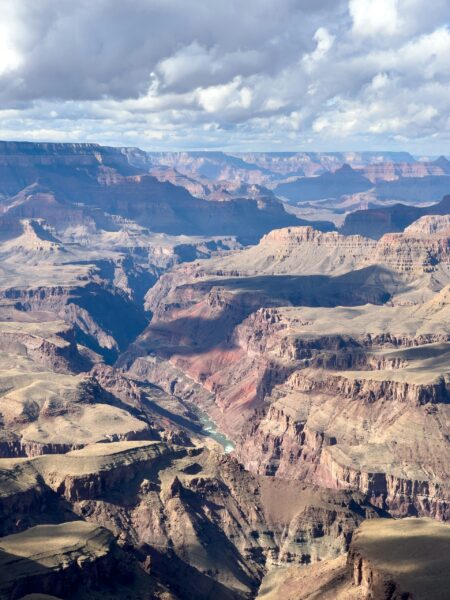 “The Bureau of Reclamation is taking emergency action to protect Lake Powell, the Upper Colorado River Basin’s largest reservoir, and its infrastructure in the face of ongoing drought. The agency announced on April 17 that it would release between 600-thousand and one million acre feet of water from Flaming Gorge Reservoir on the Wyoming-Utah state line over the course of the next year. In addition, Reclamation will reduce the amount of water it sends from Lake Powell through Glen Canyon Dam, decreasing flows downstream through the Grand Canyon and into Lake Mead. Through September 2026, the agency will reduce its annual release volume from about 7.5 million acre feet of water to just 6 million acre feet. … ” Read more from Aspen Public Radio.
Blog: Why river lovers should oppose water cuts for California farmers …and why they should support cuts in Colorado and Utah
“One of the great pastimes for residents of the Intermountain West is bashing California. Ski bums and river rats complain about Californians driving up rents in resort towns, and conservatives fear monger about the spread of “California values” to rural areas. It’s all a lot of fun, but sometimes it can distort perspectives, including when it comes to the Colorado River. California uses more of the river’s water than any other basin state, roughly as much as the four Upper Basin states combined. Some of that water goes to Los Angeles and San Diego, but much of it is used for agriculture in places like the Imperial Valley to grow vegetables (the main source of wintertime produce for the entire country) and hay crops to feed cattle. … ” Read more from Zac Podmore.
Experts say Scottsdale could lose majority of Colorado River water supply in near future
“Scottsdale could lose as much as 80% of its Colorado River water supply in the coming years, according to an expert who spoke at a community water forum Monday night — a warning that left many residents concerned about the city’s long‑term water security. Roughly 70% of Scottsdale’s municipal tap water comes from the Colorado River, a source that has been under increasing strain from drought, population growth, and shrinking reservoirs. That dependence, experts said, makes the city especially vulnerable. “I think the city is at a crossroads,” resident Natalie Chrisman Lazar told ABC15. … ” Read more from ABC 15.
‘We are not at the table’: A Ute elder on water, power and the Colorado River
“The Colorado River is entering another dangerous season. After a dry winter and weak snowpack, the seven basin states still have not reached an agreement on how to use less water, raising the chances of federal intervention as the river continues to shrink. The stakes are especially high for tribes, whose water rights and histories have too often been treated as secondary in the negotiations. On a recent episode of Storytellers of Color on KGNU, Rossana Longo Better spoke with Donald Whyte, a Ute Mountain Ute elder and retired chief ranger with the National Park Service, after a University of Colorado Boulder presentation that used theater to explore the Colorado River. For Whyte, water is not simply a policy issue or a resource to divide. It is history, identity and relationship. … ” Read more from KGNU.
SEE ALSO:
- U.S.’s 2nd-biggest water reservoir to get a short-term fix amid Colorado River drought, from NPR
- Lake Powell will get a short-term boost amid Colorado River drought, from KJZZ
How plants can impact Colorado River levels
“Drought has been driving water levels down on the Colorado River, but it is not the only culprit. Researchers at the University of Washington looked into why some Colorado River forecasts have overestimated how much water would flow into the river since the year 2000. Danny Hogan, Researcher at the University of Washington, said, “They haven’t necessarily always been wrong, but what we’ve seen is sort of an increase in the occurrence of them being wrong. So, it’s not like they don’t work anymore. But we’ve seen errors that are sort of outside the bounds of what we have seen in the past.” Researchers did some digging to find out why this has been. … ” Read more from KKCO.
Arizona lawmakers press Interior, OMB to release Colorado River drought funds
“Two Arizona congressmen, one Democrat and one Republican, are calling on the Trump administration to stop holding back billions of dollars meant to fight the historic drought choking the Colorado River. They warn the money could disappear if it isn’t spent soon. Reps. Greg Stanton and Andy Biggs, a Democrat and Republican respectively, co-signed the letter to Interior Secretary Doug Burgum and budget chief Russell Vought on April 9, demanding the government release unspent drought relief funds that Congress set aside nearly four years ago. In 2022, Congress secured $4 billion in funding to support drought mitigation efforts. The congressional approval runs out in July and much of that money has yet to go out the door. … ” Read more from KTAR.
SEE ALSO: Arizona lawmakers push to release water funds, from Western Water
A new AI tool could help predict drought on Arizona rivers. Here’s how
“Understanding and predicting when a river ebbs and flows — and by how much — is a key part of managing the river as well as planning for the economies that feed off it, from agriculture to hydroelectricity generation. Now, as climate change brings both floods and drought with increasing frequency, natural riparian rhythms are growing more erratic, complicating scientists’ ability to make projections on stream flows. A new river forecasting tool aims to pin down the near-term future with greater accuracy and clarity. Developed by the U.S. Geologic Survey, River DroughtCast uses artificial intelligence to foretell flow rates of rivers nationwide, up to 90 days in advance. The data from the software is free for anyone to access and download. “It’s a very massive undertaking,” said Saurav Kumar, a water resources researcher at Arizona State University, who wasn’t involved in the project. USGS is “forecasting 13 weeks in advance, which is very ambitious.” … ” Read more from Arizona Central. | Read via AOL News.
Invasive zebra mussels discovered last October in Colorado River
“From an evolutionary perspective, the zebra mussel is quite ingenious. “They are very rapid reproducers,” described Madeline Baker, an invasive species specialist with Colorado Parks and Wildlife. Each female can each produce up to one million eggs. They can survive in warm water, cold water, polluted water and at higher elevations. They can live for up to 30 days out of the water. “There’s nowhere in Colorado we don’t think they can live,” Baker said. They can attach to nearly any surface, and once they do, they stick for life. Together, they can form a crust several feet thick, capable of clogging water intake pipes to power plants, water treatment plants, municipal water supplies, and irrigation systems. … ” Read more from Aspen Daily News.
A rocky (and muddy) ski season concludes in Colorado
“Skiers and snowboarders in 1990s neon fashion and other colorful regalia danced on a restaurant deck atop Aspen Mountain while elsewhere on the mountain people ate and drank at a picnic table with a view of the imposing snowcapped Maroon Bells, Colorado’s famous peaks. It was closing day on Sunday at Aspen Mountain, a celebrated but bittersweet tradition that signified the end of the winter season and the transition from skis and snowboards to mountain bikes and hiking boots. “Everyone’s hooting and hollering and having the best day they can, celebrating that we did make it to our end of closing day,” Katrina Marmor, 36, said after a day spent on the slopes with her husband and friends. … ” Read more from the New York Times.
Denver Water draining, closing Antero Reservoir for drought savings
“Drought impacts are rapidly spreading across Colorado as Denver Water announced Monday it will drain and close South Park’s Antero Reservoir fishing and camping spot to avoid critical evaporation losses in a tinder-dry season. The agency serving 1.5 million Front Range customers will send Antero’s reserve down the South Platte River to Cheesman Reservoir and close the recreation area to the public for the first time since the severe 2002 drought. The move will keep 5,000 acre-feet of water from evaporating in summer heat about one-quarter of the reservoir’s capacity. In a normal runoff year, that 5,000 acre-feet would easily be made up by snowmelt, but Denver has declared this year’s snowpack the lowest in recorded history in its resource areas. … ” Read more from the Colorado Sun.
In national water news today …
USGS investigates groundwater drought metrics across the US
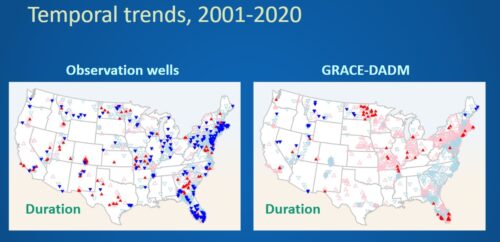
“In a pioneering study led by the U.S. Geological Survey (USGS), researchers analyzed groundwater levels across the conterminous United States to see how certain drought metrics, like severity and duration, change over time. The study, published in the Journal of Hydrology, also helps to identify gaps in groundwater monitoring efforts so scientists can better characterize drought in the future. Understanding changes in groundwater levels over time is important because groundwater is a primary water source for approximately 144 million citizens in the United States, and groundwater discharge into rivers, lakes, and wetlands supports ecosystems and the survival of many endangered species. “Determining how groundwater-based drought characteristics differ by region and over time is needed to assess the impacts of drought and to support drought management actions,” said USGS lead author and research hydrologist Glenn Hodgkins. … ” Read more from the USGS.
Army Corps narrows its scope of regulated wetlands
“The Trump administration is still regulating federally protected wetlands, despite recent remarks from a senior official about the Army Corps of Engineers moving away from the practice. Lee Forsgren, principal deputy assistant secretary of the Army for Civil Works, said during a conference last month that the administration was “getting out of the business of regulating wetlands.” Reported by Bloomberg Law and other outlets, the comment was later confirmed by the agency. Yet Army Corps officials now say that the statement was not meant as a total abdication of oversight over wetlands. Rather, it reflects the agency’s limited authority under the Clean Water Act, the top political appointee for the Army Corps said in a brief interview last week. “The point [Forsgren] was making is that the law, the Clean Water Act of 1972, gives us responsibility relating to permitting activities in the waters of the United States, and waters of the United States does not necessarily include all wetlands,” said Adam Telle, assistant secretary of the Army for civil works. … ” Read more from Politico Pro (sorry, subscription required).
Tiny microbes hiding in soil may help pull rain from the sky, study reveals
“Tiny organisms on the ground – bacteria and fungi – have a “superpower” that allows them to reach up into the atmosphere and pull down the rain, according to a recent study. To understand how a microbe can control a storm, we first have to look at how clouds become rain. High up in the atmosphere, water doesn’t always freeze at 0 °C. Temperatures are normally much lower at cloud level, but pure water can stay liquid down to a bone-chilling -40 °C. Most rain starts as ice. In the atmosphere, clouds are full of “supercooled” water – liquid that is colder than freezing but hasn’t turned to ice yet because it has nothing to hold onto. For a cloud to turn into rain or snow, it needs a “seed”– a tiny particle for water molecules to grab onto so they can crystallize into ice, then fall from the clouds as rain. Dust, soot, and salt – swept into the clouds by wind – can do this, but they aren’t very good at it. They usually require the temperature to drop significantly before they start working. This is where biology enters the frame. … ” Read more from Science Alert.

