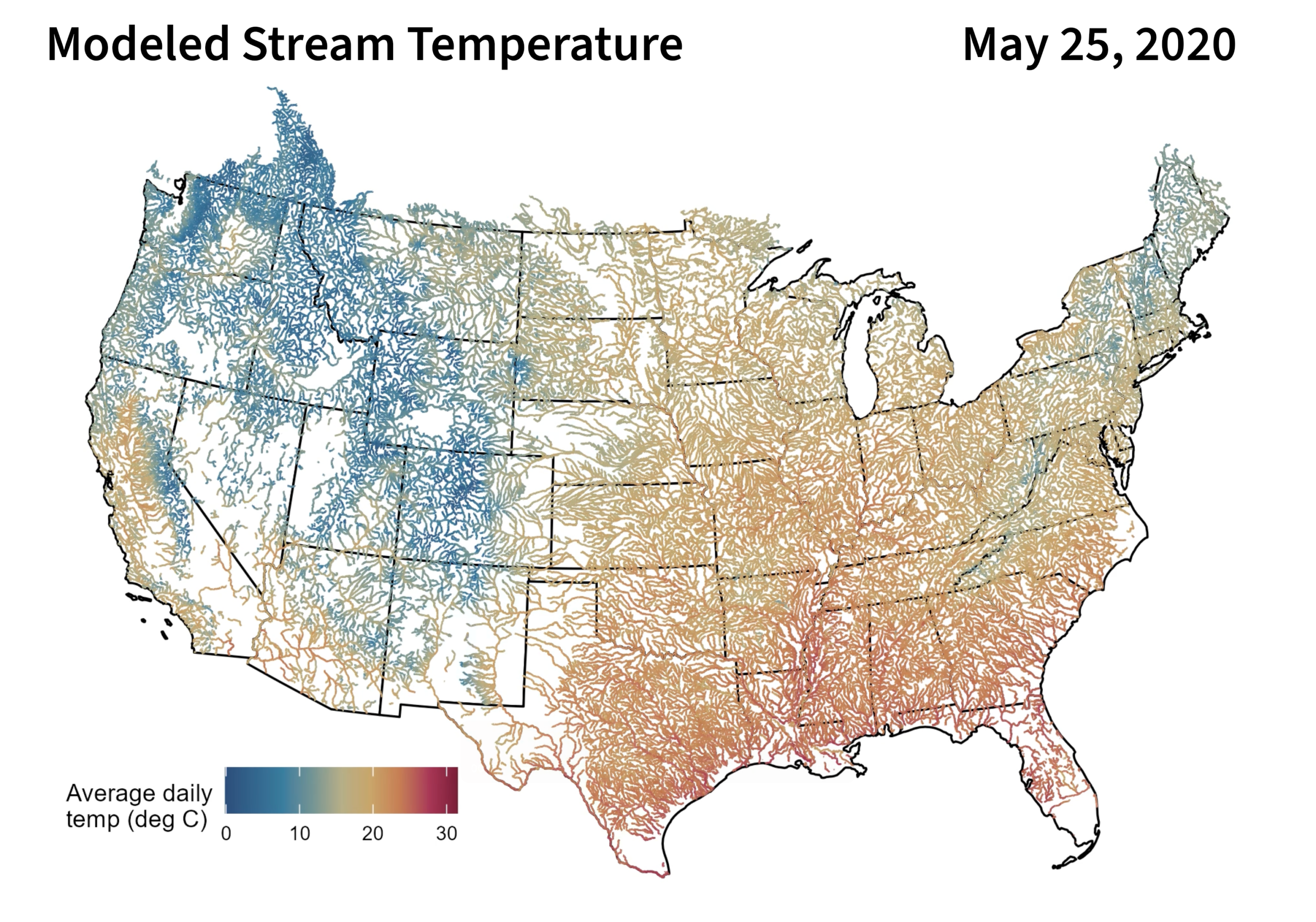
USGS scientists recently published four decades of modeled daily stream temperature values for nearly 60,000 river reaches across the lower 48 United States From the USGS: Temperature is a key water quality parameter that affects a range of stream functions,...
From the USGS: The San Francisco Bay and Sacramento–San Joaquin Delta Estuary (hereafter, Bay-Delta) is the largest estuary on the West Coast of the United States. The Bay- Delta covers more than 1,600 square miles and drains a watershed of...
From the Delta Science Program: The Delta Stewardship Council’s Delta Science Program is developing the third iteration of the Delta Science Plan, which outlines the vision, principles, and approaches that guide science in the Sacramento-San Joaquin Delta. Called for in...
In the latest issue of the San Francisco Estuary and Watershed Science: RESEARCH MONOGRAPH Synthesizing Relationships Between Winter-Run Chinook Salmon Out-Migration Survival and Water Operations in the Sacramento–San Joaquin Delta Alexander Jensen, Brian M. Mahardja, Jianchun Huang, Samaneh Saadat, Joshua...
From the Delta Stewardship Council: The Delta Plan Interagency Implementation Committee’s (DPIIC) Fiscal Year 2023-2024 Delta Crosscut Budget Report is...
By Wendy Morgado Gamero, McGill University and Orianne Tournayre, Université de Montpellier As climate change and human activity threaten freshwater ecosystems like lakes and rivers, it’s more important than ever to know how the species who inhabit them are being...