
Several news sources featured in the Daily Digest may limit the number of articles you can access without a subscription. However, gift articles and open-access links are provided when available. For more open access California water news articles, explore the main page at MavensNotebook.com.
In California water news this weekend …
Lake Oroville water level drops faster than previous years
“After a long dry spell starting in early spring and lasting through the summer, Lake Oroville’s high-level streak came to an end this year. The lake currently sits at 752 feet in elevation, roughly 47% of its total capacity. However, as California Department of Water Resources spokesperson Jaden Torres noted, it remains at 85% of its historical level for this time of year, likely in part because of past droughts. “As we saw this recent winter, there wasn’t as much snowpack to feed our rivers and reservoirs like previous years and while Lake Oroville remained at or above average for much of the summer, we remind our media partners it’s typical to see reservoirs drop this time of year as we enter a new water year,” Torres said. “The northern part of the state hasn’t seen significant precipitation since early spring.” … ” Read more from the Chico Enterprise-Record.
Reclamation announces Delta Cross Channel gate closure to support fall-run Chinook salmon
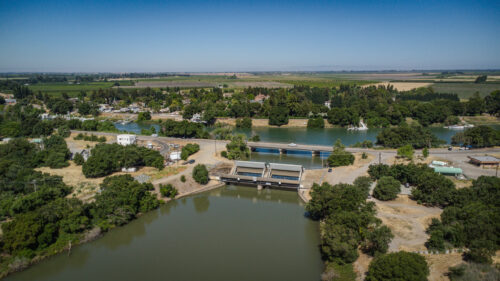
“The Bureau of Reclamation will close the Delta Cross Channel gates on Monday, Oct. 5, at approximately 10 a.m. The gates will remain closed until further notice. The closure is intended to help protect adult fall-run Chinook salmon passage and maintain river flows that help guide migrating salmon toward the lower Mokelumne River. The timing of the gate reopening will depend on Delta conditions and will be coordinated based on current hydrologic and fisheries information. Reclamation will provide additional information as it becomes available. The Delta Cross Channel, located near Walnut Grove, California, is a controlled diversion channel that connects the Sacramento River with the interior Delta. Operation of its gates is coordinated to meet water supply, water quality, flood management, and fishery objectives. For additional information about Delta Cross Channel operations, visit Reclamation’s Central Valley Project website at https://www.usbr.gov/mp/cvo/.”
San Joaquin Valley water update
Geoffrey Vanden Heuvel, Director of Regulatory and Economic Affairs for the Milk Producers Council, writes, ““How is it going with the water situation?” is a question I often get asked. So, here is my answer: Reservoirs: Pretty good shape going into the new water year which started on October 1. Pine Flat on the Kings River looks lower than average, but that is misleading. The reservoir is right where it needs to be to capture the huge runoff that would result from a wet winter. Precipitation prospects for the coming winter season are looking wet. So wet that the Governor issued an emergency order allowing expedited flood preparations. From state to local to private everyone needs to get ready to handle a big water year. What is not in the emergency order is the permission to divert flood flows to recharge without a permit. My strong belief is that an emergency order allowing recharge will come if the very wet winter actually happens. On Policy, the update of the Bay Delta regulations by the State Water Resources Control Board is scheduled for a decision at the end of October. … ” Continue reading at the Milk Producers Council.
Project to reduce groundwater pumping near Friant-Kern Canal – damaged by excessive pumping – gets underway
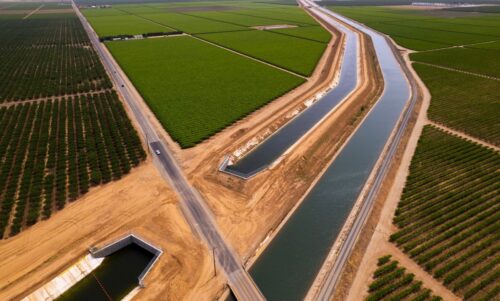 “A groundbreaking ceremony in southern Tulare County last week signaled the start of another chapter in the long and expensive effort to fix the sinking Friant-Kern Canal. Construction began on five new Friant Water Authority pump stations that will lift water out of the canal and into Tea Pot Dome Water District and Saucelito Irrigation District systems, reducing growers’ reliance on groundwater. The project is expected to cost $46 million and take two and a half years to complete. More than $500 million – so far – in local, state and federal funding has been dedicated to fixing the canal, which has sunk along a 33-mile section from about Pixley to the Kern County line due to excessive groundwater pumping. Friant is looking for up to $400 million more to start the next phase of construction. … ” Read more from SJV Water.
Work Begins on the Friant-Kern Canal Pump Station Replacement Project
“On October 1, the Friant Water Authority, in partnership with the U.S. Bureau of Reclamation, broke ground on the first phase of the Friant-Kern Canal’s Pump Station Replacement Project. While the full project will take place over two phases and result in the replacement of 13 aging pump stations, this first phase will replace five pump stations. During the groundbreaking ceremony, attendees heard remarks from Congressman Vince Fong, Congressman David Valadao, Friant Water Authority Chief Executive Officer Johnny Amaral, and Director of Water Infrastructure at Clark Bros Inc. Mark Zan, among other stakeholders. The Friant Water Authority serves about 15,000 family farms and over roughly one million acres of farmland. According to Amaral, the pump station replacement project is part of the broader Middle Reach Capacity Correction Project. The first phase of the Middle Reach Capacity Correction Project was completed in 2024, restoring a 10-mile segment of the Friant-Kern Canal that had lost more than 60% of its original capacity due to land subsidence. The full MRCCP effort intends to restore capacity along approximately 33 miles of the Friant-Kern Canal. … ” Read more from Valley Ag Voice.
No single failure caused LA fires, report finds. Who fixes the system?
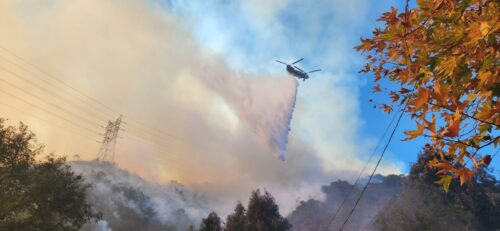 “No single failure explains the devastation of the Palisades and Eaton fires that burned through Los Angeles County in January 2025, a new report concludes. Instead, the blazes exposed weaknesses across a system never designed to combat a wind-driven conflagration that spread from structure to structure at sweeping scale. The 723-page report dropped Friday morning. Commissioned by Gov. Gavin Newsom, it lands during his last months in office and just days after California’s Legislative session concluded. The report doesn’t pin the disaster on a single agency or decision. Its authors caution against seeking one culprit or one magic fix. As a result, the report, which completes an analysis of some of the most deadly, destructive and costly fires in state history, raises a harder question: If responsibility is spread across an entire system, who is responsible for fixing it? … ” Read more from Cal Matters.
What to know about the Kelvin wave raising the sea level along the West Coast
“Sea levels along the West Coast will begin to rise by up to a foot this month as a series of pulses of warm water called Kelvin waves hit the shoreline and move north, sparking concerns about beach erosion and flooding in areas already impacted by climate change and El Niño. Kelvin waves are not like tsunamis, and they don’t curl over and crash on the beach. A better image is water sloshing in the bathtub or a swimming pool during an earthquake. In the ocean, they are bulges of water that lift the sea level as they move along the coast. They’re common during El Niño events, but this year’s super El Niño could intensify the impacts, experts say. … ” Read more from the Associated Press.
Why California’s plan to protect beachfront homes could backfire
“California is scrambling to prepare for a predicted “super” El Niño, which experts anticipate will be one of the most powerful on record. Several cities around the state declared states of emergency last month after Hurricane Maria slammed into the Southern California coast, causing damage to beachfront property and significant coastal erosion. Not long after, Gov. Gavin Newsom declared a statewide emergency to streamline efforts to prepare communities for the upcoming winter storm season. Some scientists and conservationists are worried, however, that the state’s strategy to protect homes and infrastructure with big rocks and seawalls will be harmful to California beaches in the long run. Charles Lester, the director of the Ocean and Coastal Policy Center in the Marine Science Institute at UC Santa Barbara, is one of those who is concerned. Prior to joining the institute, Lester worked for the California Coastal Commission for 20 years, serving as the agency’s fourth executive director from 2011 to 2016. POLITICO spoke with Lester about how the state is preparing to adapt to sea level rise and extreme weather, and what the future holds for California’s beloved beaches. … ” Read more from Politico.
As federal administration continues to target public lands and California’s coast, California surges past halfway mark on world-leading conservation goals
“As the federal administration continues its assault on public lands, targets California’s coast, and removes protections for wildlife, California is moving in the opposite direction – expanding stewardship and accelerating progress toward its goal of conserving 30% of lands and coastal waters by 2030 (30×30). A new progress report released today shows California has surged past the halfway mark of the additional land conservation needed to reach 30×30 and is on track to meeting the land conservation goal by 2030. More than 1 million acres of land were added to the 30×30 database in the past year alone, bringing the state to 27.1% of lands conserved and 21.9% of coastal waters conserved. The Newsom administration and partners throughout the state celebrated the milestone at the annual 30×30 Partnership Summit in San Francisco today. “While Donald Trump looks for ways to hand public lands to private developers and roll back the safeguards that protect our parks, wildlife, and coastal communities, California is doing the opposite. We are conserving more land than ever before, protecting our iconic coastline from new offshore oil and gas drilling, revitalizing wildlife habitat, and ensuring every Californian can experience the natural treasures that make the Golden State extraordinary.” – Governor Gavin Newsom. … ” Read more from the California Natural Resources Agency.
$7.5B plan for California science agency free from Trump’s influence will go to voters
“California could create its own multi-billion-dollar science and health research agency under a bill signed by Gov. Gavin Newsom Wednesday, helping to fill a gap left by the politicization of science under the second Trump administration. Voters will decide in a year and a half whether to fund the idea, which the University of California has championed. Approved by state lawmakers at a time when federal science funding has become increasingly unpredictable, the bill places a $7.5 billion bond measure on the March 2028 ballot to pay for the creation of the California Foundation for Science and Health Research. The new state agency would provide grants and loans for projects in public health, climate science, agriculture and other areas. Panels of scientists would review proposals, and the agency would develop rules allowing the state to share in some of the profits from inventions made with its support. … ” Read more from LAist.
In commentary this weekend …
Securing the future of California dairy forage production is critical to protecting rural communities
“For dairy farm families, animal feed is a critical part of their work to ensure optimal cow care, produce more nutritious milk using fewer resources, and make sure their farms remain economically sustainable. Animal feed comprises about 60 percent of a California dairy farm’s operational costs. Dairy farmers and their nutritionists work hard to ensure cows receive balanced meals each and every day. Forage production is an increasingly challenging yet critically important part of a California dairy farm’s resiliency. California dairy cow rations include a mixture of crops grown at the dairy (primarily corn and cereal silages), imported grains, and locally available byproducts from other crops. There are many reasons why California dairy farmers produce their own silage, which is a fermented form of plants that is high in moisture and nutrition. To make silage, the entire plant (stalk, husk, and kernels) is harvested while still green, chopped into pieces, and stored in airtight conditions. Minimizing transportation of the high-moisture feed is critical to both feed quality and farm economics. Importantly, growing feed on nearby fields is how dairies recycle manure nutrients and water. … ” Read more from Dairy Cares.
In people news this weekend …
Promotions, passings, profiles – submit people news items to maven@mavensnotebook.com.
Dr. Janet (Jan) K. Thompson given Brown-Nichols Science Award
 “Dr. Janet (Jan) K. Thompson is being honored by her peers as the recipient of the 2026 Brown-Nichols Science Award. A research scientist with the United States Geological Survey who has studied the Bay-Delta for more than fifty years, she has fundamentally changed the way we understand and manage the estuary. Jan’s work has reshaped the conceptual model of the estuary by connecting disciplines that are often considered separately and demonstrating the central role of benthic communities in driving ecosystem dynamics. Beyond her impressive scientific contributions, Jan has been a stalwart champion for women in science and an especially important mentor to early-career women scientists. Her scientific insight, interdisciplinary perspective, and commitment to supporting others have left an enduring mark on both the Bay-Delta and its scientific community. … ” Click here for more information.
Podcasts …
VIC BEDOIAN: Migratory Birds Face Mono Lake Challenges
Bird migration is in full swing along the Pacific Flyway. They journey by the millions from arctic climes to warmer regions in South America. Along the way, they need places to rest and feast in order to sustain them for the thousands of miles they will fly to reach their winter habitat. Mono Lake is one of those places. And it is special because it’s one of few existing salt lakes that some species of waterfowl require. And those species are facing existential challenges from climate change and excessive water diversions for human uses. Vic Bedoian has this report.
WE GROW CALIFORNIA: California legislative end-of-session recap with Senator Kelly Seyart
California’s two-year legislative session is over, and Senator Kelly Seyarto joins Darcy and Darcy to share his perspective on how it ended. At the time of recording, the Governor had over 700 bills on his desk, which historically he either signs or vetoes. Senator Kelly Seyarto represents the 32nd District, which includes parts of Riverside and Orange counties. The Senator shared his perspective on what went right – believe it or not – there were a few things – what went wrong, and what he thinks still needs to be done. The Senator shared his perspective on water infrastructure, the bullet train, wild fires, El Niño, and so much more!
WATERLOOP: The dramatic drop in American home water use
Indoor residential water use in American homes has fallen 44 percent over three decades, as more efficient fixtures and appliances allow people to perform the same daily tasks with far less water. Peter Mayer, principal engineer at WaterDM and lead author of all three Residential End Uses of Water studies, explains the findings from the Water Research Foundation’s 2026 update.
In regional water news this weekend …
NORTH COAST
Restoration efforts continue two years after historic dam removal
“Friday marked the second anniversary of the completion of the Klamath dam removal project, but local organizations have spent the last two years restoring the river and the lands that surround it. Following the initial removal, several local tribes partnered with the Klamath Water Users Association to support 19 proposed restoration projects. Those projects included adding irrigation infrastructure and wetland restoration, which were estimated to cost over $100 million. Klamath River Renewal Corporation has since shared updates on projects, highlighting the impact projects have had on native species and salmon populations. KRRC said billions of native seeds, plants, shrubs and trees have been replanted across 2,200 acres of formerly submerged lands. They also said tens of thousands of salmon have journeyed along the free-flowing river into Oregon, many of those documented in streams above Upper Klamath Lake. … ” Read more from KDRV.
‘Super’ El Niño is projected to bring record-breaking rain to California, but Humboldt’s forecast is less certain. What are local officials doing to prepare?
“If you’ve kept up with national news or spent any time on social media in recent months, you’ve almost certainly been inundated with warnings of the “super” El Niño brewing in the Pacific Ocean. The storm system is expected to be one of the strongest on record, with the potential to bring destructive rainstorms and flooding to much of the West Coast in the coming months. While Southern California typically bears the brunt of El Niño’s impact, it’s unclear how the climate pattern will affect the North Coast. “It’s kind of an even split whether we get really wet, normal or drier conditions,” said Danny Schmiegel, a meteorologist with the National Weather Service (NWS) office in Eureka. “We could have above-average rainfall, but it’s definitely not weighted in that direction because our weather’s a bit different than it is down in Southern or even Central California.” … ” Read more from the Lost Coast Outpost.
SIERRA NEVADA
El Dorado Irrigation District considering Texas Hill preservation
“The El Dorado Irrigation District Board of Directors on Monday, Sept. 28, authorized an agreement with the American River Conservancy to begin evaluating permanent land conservation opportunities at Texas Hill, roughly 1,000 acres of undeveloped district-owned land along Weber Creek south of Placerville. The ARC, an accredited land trust dedicated to conserving the lands and waters of the upper American and upper Cosumnes River watersheds, has expressed interest in acquiring the property for wildlife habitat, watershed protection, scenic open space and recreation. The agreement is expressly preliminary and non-binding. It does not obligate EID to sell, and does not commit the board to any particular course of action. It allows the parties to explore land conservation concepts, conduct due diligence, pursue grant funding and engage the public. … ” Read more from the Mountain Democrat.
SACRAMENTO VALLEY
Feather Falls restoration progress remains ongoing
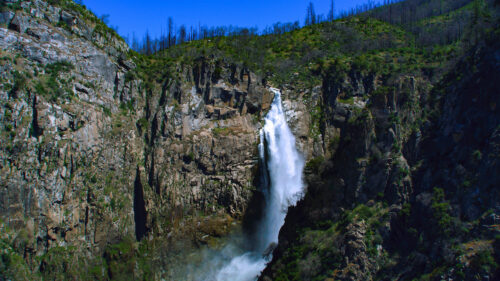
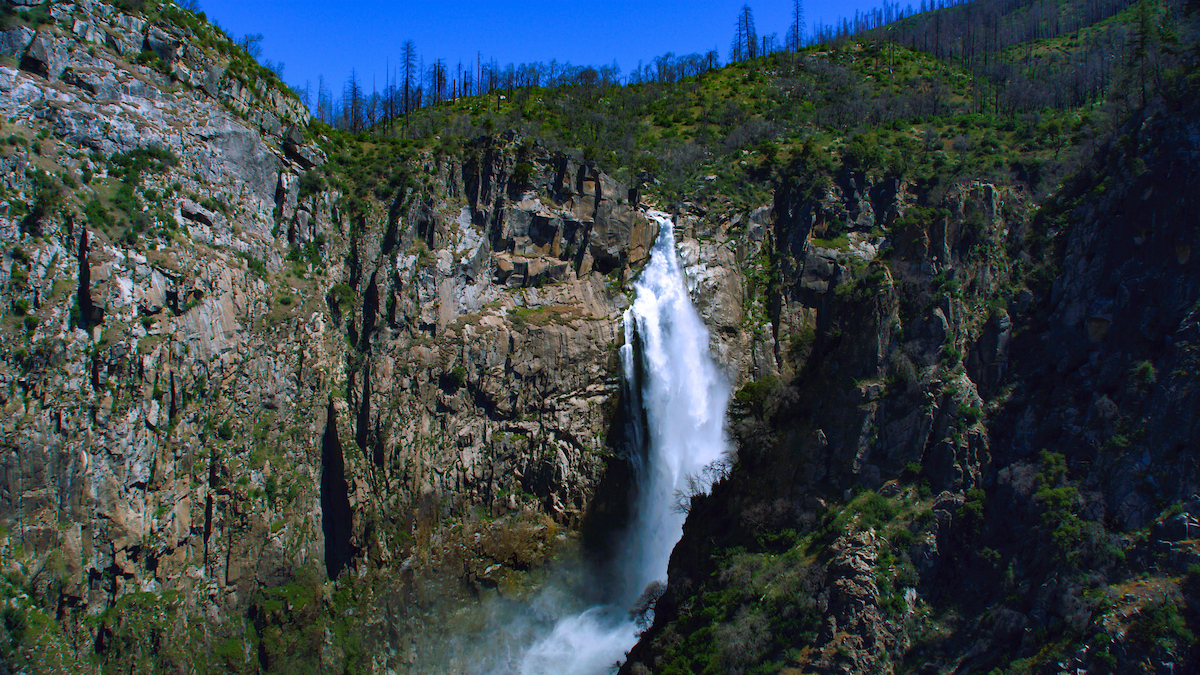
“When the North Complex tore through over 300,000 acres of land in the Plumas National Forest in 2020, the Feather Falls scenic area was devastated — three bridges, the scenic overlook and the non-motorized trail were essentially destroyed. But in the years since, several efforts have been made to support rebuilding efforts, including a recent $500,000 grant awarded by the Sierra Nevada Conservancy to the Mooretown Rancheria of the Maidu Indians of California. The grant follows a prior $350,000 grant given in 2022 to the rancheria to complete a comprehensive cultural resource survey of the area. The surveying took place while the U.S. Forest Service worked to remove hazardous trees, restore the 8-mile trail and rebuild the scenic overlook, according to SNC Representative Kristy Hoffman. With the most recent grant, which was awarded in September, the second phase of the Feather Falls Post-Fire Project project will begin. … ” Read more from the Chico Enterprise-Record.
BAY AREA
San Francisco could see ‘30 king tides’ this winter as El Niño looms
“San Francisco residents can expect 30 king tides this winter, which could flood parts of the city, according to Mayor Daniel Lurie. Already, tides in San Francisco are running about six inches higher than normal, Lurie said in an Instagram video Friday which showed water lapping over the sides of the Ferry Building seawall. Lurie said the abnormally high tides are predicted to batter San Francisco between November and February. A spokesperson for the mayor told the Chronicle the estimate came from the Port of San Francisco’s Waterfront Resilience Program, which used data from the National Oceanic and Atmospheric Administration. King tides are forecast to peak right before and during Thanksgiving and Christmas, potentially throwing a wrench in holiday travel plans for those traveling through low-lying parts of the Bay Area. Another peak will come on Jan. 21. … ” Read more from the San Francisco Chronicle.
CENTRAL COAST
San Luis Obispo: 13-year Lawsuit with Steinbeck Vineyards Resolved
 “On September 24, 2026, the Santa Clara Superior Court issued its final judgment in Steinbeck Vineyards #1, LLC, et al. v. County of San Luis Obispo, et al. (Steinbeck litigation). This judgment represents the culmination of nearly 13 years of litigation involving quiet title claims asserted by hundreds of landowner parties against several water suppliers, including the County of San Luis Obispo, City of Paso Robles, San Miguel Community Services District, Templeton Community Services District and Atascadero Mutual Water Company as well as the County Flood Control District. The County was a defendant based on its ownership and operation of water systems in Shandon and Santa Margarita, collectively serving over 800 customers. The Steinbeck litigation was heard in Santa Clara County to avoid local conflicts of interest and was conducted in six separate phases of trial due to the complex nature of the issues. … ” Read more from San Luis Obispo County.
SAN JOAQUIN VALLEY
Was a river otter spotted in Fresno’s San Joaquin River? Decide for yourself
“A river otter was apparently spotted in the San Joaquin River in northern Fresno County, stewards of the waterway said on Friday. Officials were quick to say they could not be certain the partially submerged animal spotted swimming in a river channel was an otter, and they were waiting on a confirmation from the state Department of Fish and Wildlife, but the furry swimmer appeared to be an otter rather than a beaver, rat or other animal. The video was likely near Sycamore Island in an old gravel pond now filled with water, according to Sharon Weaver, the executive director of the San Joaquin River Parkway and Conservation Trust. “They’re an apex aquatic predator. So if you have a river otter in the system, that indicates that the whole system is pretty healthy,” she said. “Otherwise, the ecosystem doesn’t support that kind of predator, because it means you’ve got to have the whole food chain that’s functioning, and that you’ve got plenty of food sources for those predators.” … ” Read more from the Fresno Bee.
Groundbreaking marks significant stage of Friant-Kern Canal repairs
“A major effort to restore the Friant-Kern Canal’s ability to move water through the San Joaquin Valley officially moved into its next phase Thursday, as local, state, and federal officials gathered to break ground on the replacement of five aging pump stations. The first of the pump replacement projects, located on Avenue 128, or Teapot Dome Ave., is part of the Friant-Kern Canal Middle Reach Capacity Correction Project, which is aimed at addressing decades of land subsidence that have reduced the canal’s ability to reliably deliver water at its designed capacity. In front of a crowd gathered at the project site on Thursday morning, Friant Water Authority CEO Johnny Amaral said the need for the work is rooted beneath the canal itself. “The ground beneath the Friant-Kern Canal has been sinking,” Amaral said. … ” Read more from the Porterville Recorder.
SOUTHERN CALIFORNIA
Scorching weather breaks heat records in Orange, Los Angeles, Riverside counties
“While Los Angeles, Orange, San Bernardino and Riverside counties continued to experience scorching weather, only a handful of local areas saw weather records broken on Saturday, Oct. 3. Temperatures hit a high of 94 degrees in Newport Beach which toppled the old record of 91 degrees set in 1958. It reached a sizzling 107 degrees in Santa Ana, breaking a record of 102 degrees set in 2014. In Anaheim, the new high was 105 degrees which dethroned the record of 103 degrees in 2014. At the Burbank Airport, the record high of 101 degrees set in 1943 fell Saturday when it hit 102 degrees. And in Idyllwild, the mercury topped 92 degrees which broke the record of 91 degrees in 2024. No records were broken in San Bernardino counties, according to Sebastian Westerink, a meteorologist with the National Weather Service San Diego office. … ” Read more from the OC Register.
Councilmember Nazarian and city partners break ground on new project turning rainwater into local water supply
“Councilmember Adrin Nazarian, LADWP, LA Recreation and Parks, and the LA Bureau of Engineering convened in Valley Plaza Park this morning to break ground on a stormwater capture project to collect rainwater and urban runoff at seven local parks in the East San Fernando Valley. “This innovative program will be instrumental in fortifying Los Angeles’s water supply,” said Councilmember Nazarian. “This initiative enables the capture of millions of gallons of water that would otherwise flow into the ocean. Once complete, this initiative enables the capture of millions of gallons of water that would otherwise flow into the ocean, especially in times of heavy rainfall. Consequently, municipal rates can remain stable by reducing reliance on imported water sources from hundreds of miles away. I’m so glad that the East San Fernando Valley will be the first region in the city to see the benefits of this new program.” … ” Read more from LADWP.
LADWP begins refilling Santa Ynez Reservoir following completion of drinking water floating cover construction project
“The Los Angeles Department of Water and Power (LADWP) began refilling the Santa Ynez Drinking Water Reservoir yesterday. At the current fill rate of approximately 1.5 feet to 2 feet per day, the reservoir is anticipated to be back in service by the end of the year. The refilling process follows the completion of a new floating cover designed to protect drinking water quality and ensure compliance with state and federal drinking water regulations. The design and installation of the new reinforced liner and floating cover system – both required to safeguard potable storage under the EPA’s Long‑Term 2 Enhanced Surface Water Treatment Rule – began earlier this year and was fully installed in September. Throughout the floating cover replacement project and current refilling process, LADWP continues to provide uninterrupted drinking water service to Pacific Palisades customers through the Upper Stone Canyon Reservoir and the Westgate Trunk Line. … ” Read more from LADWP.
Metals in water samples from the Los Angeles River
“On June 17th, 2026, a fire broke out at a ~500,000 square foot warehouse in Boyle Heights, the burning released thick harmful smoke. During the peak of the warehouse fire, firefighters used ~ 12,000 gallons of water per minute to combat the flames. Members of East Yard Communities for Environmental Justice noticed that water from putting out the Lineage Warehouse was draining into the Los Angeles River. A concern arose due to potential sources of metals being released from building materials. … ” Read the Story Map.
L.A. considers the rare closure of an active oil site in Jefferson Park
“In a city that was built on oil and remains home to over 2,000 active wells, zoning officials are considering a first: shutting down an oil production site. Residents of the Jefferson Park neighborhood just south of the 10 Freeway have been fighting for more than decade to close the 32 closely-packed oil and gas wells at the Murphy drill site, run by Bakersfield-based E&B Natural Resources. It has a history of air pollution violations running from before the current operator took over to this year. The city’s zoning administrator is now weighing whether to revoke the operator’s permit. Momentum has been building toward phasing out oil in Los Angeles for years, but the city has never rescinded a permit before. … ” Read more from the LA Times.
Redlands: Unprecedented grant expands groundwater recharge
“A $5.403 million grant from the U.S. Bureau of Reclamation will help the San Bernardino Valley Water Conservation District (SBVWCD) expand its ability to capture stormwater and store it underground for the communities that depend on the region’s groundwater. The award for the Oak Creek Basins is the largest award for the Program for Expansion of Recharge Capacity, or PERC, projects to date. “Every storm brings an opportunity to store water for the future, but only if we have the capacity to capture it,” said SBVWCD General Manager Betsy Miller Vixie. “This historic investment will help us make better use of the water nature provides, storing it underground where it can support our residents, economy and environment for years to come.” … ” Read more from the San Bernardino Valley Water Conservation District.
IMPERIAL/COACHELLA VALLEYS
Mexicali farmers push for financial relief amid major Colorado River water cuts
“Farmers in the Mexicali Valley are preparing to push for financial compensation as mandatory land fallowing looms following a historic reduction in Colorado River water allocations. The International Boundary and Water Commission (IBWC) announced on Sept. 9 a total supply reduction of 616 million cubic meters (roughly 500,000 acre-feet) due to persistent drought conditions and record-low water levels at Lake Mead behind Hoover Dam. Half of the reduction is scheduled to take effect next year, with the remaining cuts implemented in 2028, La Voz newspaper reported. The decision directly impacts Irrigation District 014, which feeds the agricultural hub of the Mexicali Valley along the U.S.–Mexico border. … ” Read more from the Imperial Valley Press.
Along the Colorado River …
PBS News Hour: How the West is preparing for a drier future as water supplies hit lows
“Mandatory cuts from the federal government on water from the Colorado River will soon take effect in Arizona, Nevada, and California. Now, some water managers in the region are spending billions to prepare for a drier future. Special correspondent Ben Tracy with Climate Central reports for our series, Tipping Point.” Read the transcript or watch video below from PBS.
What Colorado River cuts mean for Phoenix groundwater
Joanna Allhands writes, “Cities across metro Phoenix are still fleshing out how deep Colorado River cuts will go — with good reason. Much uncertainty remains about who will lose water and when. But we can’t overlook an equally important question: Where will Arizona’s most populous region turn for water once these cuts are made? In the short term, there’s only one real source. Groundwater. Arizona State University’s Groundwater CuRVE Project simulated what might happen when cities across Maricopa County tap this finite source to fill recurring needs. It paints a sobering picture. The study found that demand for tap water radically outstrips cities’ available supply as Colorado River shortages deepen. And that despite decades of saving extra supplies underground, there simply isn’t enough water to meet those demands for long. “It’s not sustainable,” said Cynthia Campbell, a former ASU researcher who completed much of the modeling. … ” Read more from the Arizona Farm Bureau.
Arizona’s groundwater future hinges on 2026 election
“There is widespread agreement that Arizona needs to modernize its nearly 50-year-old Groundwater Management Act, but how that happens and how much regulation is imposed to do so could depend on the results of this year’s election. The ongoing drought and impending cuts to the state’s Colorado River allocation are adding urgency to the debate over Arizona water policy, particularly in rural areas where groundwater is often the primary water source. And while Gov. Katie Hobbs and Republican gubernatorial nominee Andy Biggs have sharply differing views on how the state should manage groundwater, the election could also reshape the Legislature, which could also determine whether long-stalled efforts to give rural communities new tools for managing their aquifers finally advance in 2027. Meanwhile, some communities, unwilling to wait for lawmakers, have already begun pursuing their own solutions. … ” Read more from the Arizona Capitol Times.
Las Vegas to replace grass at 17 parks as part of water conservation efforts
“Seventeen parks across Las Vegas are set to see changes in the coming months as the city removes certain areas of grass as part of its water conservation efforts. Bronson Mack of the Southern Nevada Water Authority said the grass removal at 17 parks qualifies the city for the Water Efficient Technologies Program. “So we’ll be able to help provide some rebates upwards of about $4 million to help support these upgrades, and in return, these upgrades are going to be saving 82 million gallons of water every single year,” Mack said. … ” Read more from Channel 3.
How much water Lake Powell loses into the canyon walls
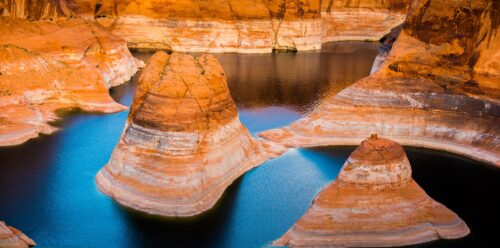
“Glen Canyon Dam closed its diversion tunnels in March 1963, and Lake Powell did not reach full pool until June 22, 1980. Seventeen years to fill. Part of that was simply the volume involved, and part of it was that the Colorado was filling the rock as well as the canyon, because Lake Powell sits in Navajo and Wingate sandstone that soaks up water like a sponge. How much goes into those walls is one of the most contested numbers on the river. Advocacy groups put the combined annual loss to evaporation and bank seepage at 860,000 acre-feet. A technical assessment by academic hydrologists concluded that draining the reservoir entirely would save between 30,000 and 50,000. Those figures are an order of magnitude apart, and both camps are citing real data. … ” Read more from World Atlas.
In national water news this weekend …
After outcry, monitors the Trump administration tried to scrap return to sea
“When the Trump administration started dismantling a $368 million ocean monitoring system earlier this year, scientists fought back. So did fishermen. And Congress. On Saturday, a 238-foot ship set sail to reinstall the first batch of monitors in the waters of the Pacific. The equipment was part of a network of 900 deep-sea instruments that had been anchored off Oregon, Washington State, Alaska, North Carolina, and an area between Greenland and Iceland known as the Irminger Sea. It included seismic instruments, and robotic gliders placed near underwater seamounts and volcanoes off the northwest coast. … ” Read more from the New York Times.

