
Several news sources featured in the Daily Digest may limit the number of articles you can access without a subscription. However, gift articles and open-access links are provided when available. For more open access California water news articles, explore the main page at MavensNotebook.com.
In California water news today …
As new water year begins, California prepares for strong El Niño and expanded water supplies
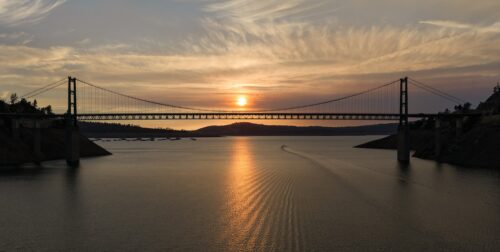
“Today marks the start of Water Year 2027 in California and the Department of Water Resources (DWR) is preparing for potential extreme weather emergencies while positioning the State to capture and store as much water as possible. Recent water years have demonstrated the extreme swings California can experience between record-breaking drought and devastating flooding, and strong El Niño conditions make preparedness especially important. “California is taking action now to prepare for flood season. With strong El Niño conditions on the horizon this winter, being ready for anything is more important than ever,” said California Department of Water Resources Director Tom Gibson. “We don’t yet know where or when the storms will hit, but we can take actions to prepare now. DWR and our partner agencies across California will be ready.” … ” Read more from DWR.
ACWA: New water year calls for flexibility, preparedness
“As California begins a new water year today, the Association of California Water Agencies (ACWA) is calling on state leaders to embrace long-term planning around water management as recommended through its Vision for Our Water Future initiative. Beginning today and lasting through Sept. 30, 2027, the new water year is expected to include an unusually strong El Niño event. Gov. Gavin Newsom recently proclaimed a state of emergency to accelerate preventative flood control work, with forecasts predicting a greater than 90 percent chance of a historically severe event during fall and winter 2026-’27. However, by providing greater operational flexibility and increasing system capacity, California can also capture and store water from this type of weather event, reduce flood risks, better protect communities, and prepare for a future of increasingly extreme and unpredictable weather and hydrology. … ” Read more from the Association of California Water Agencies.
Happy New Water Year 2027! – following three years of unusually average California hydrology
Dr. Jay Lund writes, “October 1 marks the beginning of California’s new Water Year (WY). Water years here run from October 1 until September 30 of the next calendar year and are named for the calendar year of the bulk of the water year (January – October). October 1 is also the nominal beginning of California’s wet season. (No significant rain yet, by the way.) California’s hydrology has two basic seasons, wet and dry, with the wet season nominally from October 1 – April 1 (Figure 1). The first sizable storm sometimes arrives in late September and sometimes not until November (recently in 2021). Sizable storms rarely arrive after April. As we leave California’s long 2026 dry season and prepare, hopefully, for the wet season, it is good to reflect on the last water year and prepare for what is also California’s flood season. This is commonly a time for largely futile predictions and speculations of precipitation and runoff for the coming 12 months. … ” Read more from the California Water Blog.
The West’s best shot at snowpack recovery comes from El Niño
“El Niño could boost Lake Mead, Lake Powell and the Sierra snowpack. After years of diminishing winter snowpack and lowering lake levels in the West, El Niño could make this the year to recharge those reservoirs, including California’s watershed, Lake Mead and Lake Powell. The Sierra Nevada and the Rockies are likely to see a lot of help from a jet stream called the Pineapple Express. This rainmaking “firehose” is a direct movement of moisture from around Hawaii to the West Coast of the U.S. and Canada during the winter months. It is naturally occurring and is a frequent cause for flood concerns and mountain snow in California. El Niño tilts the odds toward a wetter, more active Pacific storm track. El Niño’s heat across the Pacific warms the atmosphere and allows it to hold more moisture to be transported toward North America. … ” Read more from the Weather Channel.
Meteorologists say we’re in for a strong El Niño—but that doesn’t necessarily translate to a wet winter.
“Aric Sleeper here, thinking back to the past few years of winter storms (January 2023, I’m looking at you) and forward to the rainy season ahead after attending the City of Monterey’s Winter Storm Ready Town Hall at the Monterey Conference Center on Wednesday evening, Sept. 30, which featured a panel of local experts from Monterey Fire and Public Works, County of Monterey, along with the National Weather Service and PG&E. … “El Niño is not a new phenomenon,” Bain said, adding that the pattern has three phases: the cold phase, La Niña, a neutral phase, and then the warm phase, El Niño. He warned that the upcoming El Niño will be one for the books. “If you extrapolate into the fall and even into the winter, we may be getting close to all-time records for sea surface temperatures across this Niño 3.4 region, so we are looking at prospects of a very strong El Niño.” However, a strong El Niño doesn’t necessarily equate to a wet winter. “There still is some variability, but what we can say is that typically in these strong and very strong El Niños, odds tilt toward being above normal in terms of precipitation,” Bain said. “But no two [El Niños] are the same.” … ” Read more from Monterey Now.
Army Corps: New Bullards Bar and Oroville Water Control Manual Updates
 “The U.S. Army Corps of Engineers Sacramento District, is providing an update on the schedule and environmental review process for proposed updates to the Water Control Manuals (WCM) for New Bullards Bar and Oroville reservoirs. Following the February 2026 public scoping meeting, comprehensive hydrologic and engineering evaluations and additional environmental analysis were conducted and the Sacramento District has determined that the proposed Water Control Manual updates qualify for a Categorical Exclusion under the National Environmental Policy Act (NEPA). As a result, a formal NEPA Environmental Assessment will not be prepared, and there will not be a formal NEPA public review and comment period. … ” Read more from the Army Corps of Engineers.
Major federal investment accelerates modernization of Friant Kern Canal
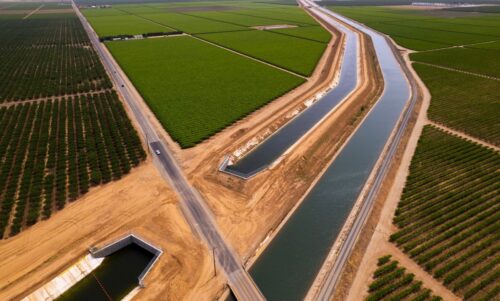 “The Bureau of Reclamation, in partnership with the Friant Water Authority, today broke ground on Phase 1 of the Friant-Kern Canal Pump Station Replacement Project. This milestone marks an important move toward modernizing the Friant‑Kern Canal and improving long-term water reliability for communities, farms and businesses throughout the San Joaquin Valley. This project represents long‑term improvements following Reclamation’s recent Middle Reach Capacity Correction Project Phase 1 that improves canal performance. Funded through President Donald J. Trump’s Working Families Tax Cut, the Department of the Interior invested $200 million to upgrade the canal’s aging pump stations that are essential to maintaining consistent water deliveries throughout the Friant Division. The project is one of California’s largest conveyance modernization efforts aimed at reducing outages, stabilizing operations, and supporting the Central Valley Project’s agricultural and economic strength and improving Southern California’s groundwater banking portfolio. … ” Read more from the Bureau of Reclamation.
SEE ALSO:
- Canal upgrades to support 1 million acres with ‘reliable’ water in San Joaquin Valley, from Your Central Valley
- Congressman Valadao Secures Federal Funding for Friant-Kern Canal, Attends Groundbreaking for Phase I Pump Station Replacement Project, from Congressman Valadao
Weekslong heatwave set for California. How long could it last?
“October is here, but summer is hanging around for quite a bit longer. Starting Friday and lasting through at least the next week, a heatwave will keep the western U.S. hot as we kick off the 10th month of the year. The result will be a prolonged stretch of above average temperatures for nearly all of California, with widespread highs in the 90s for the Central Valley and even portions of Southern California into the triple digits. On Friday, high temperatures will rise well into the 90s for the entire Central Valley, with 90s even creeping into the Bay Area and the Los Angeles metro. The air heats up further this weekend, with places like Merced and Fresno approaching 100 degrees Sunday as skies clear and high pressure pushes down from above. … ” Read more from the Sacramento Bee.
Western water supplies increasingly threatened by wildfires, new research finds
“Wildfires are burning more land in watersheds that provide water to communities across the West, raising concerns about water quality and infrastructure as fires become larger and more frequent. New research published in the scientific journal Nature analyzed more than 17,000 watersheds across 11 Western states and tracked wildfire patterns dating back to 1940. Researchers found a significant shift in wildfire activity beginning in the late 20th century, particularly in forested and mountainous areas that generate large amounts of runoff. The trend was especially pronounced in watersheds that serve large populations. Those supplying water to more than 100,000 people saw the average amount of land burned annually nearly double — from 4.7% to 9.1% — after researchers detected that shift. “What we were noticing that was alarming, I’d say, [is] that watersheds that were serving over 100,000 people nearly doubled in annual burn area,” said Alicia Kinoshita, a researcher at San Diego State University and one of the study’s authors. … ” Read more from KUNR.
Toxic algal blooms are spreading across the West
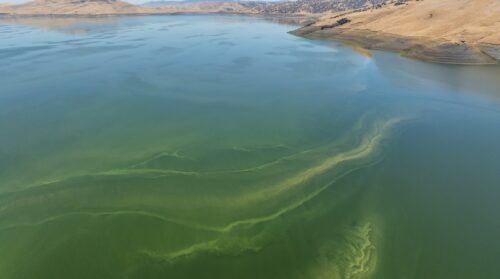
“By the time Tanya Bachman noticed something was wrong with her border collie, Jax, it was too late. … The veterinarian told them that Jax had likely ingested a toxic, algae-like microorganism called cyanobacteria, or blue-green algae, from a benthic bloom, a phenomenon scientists began documenting in the West about five years ago. Benthic blooms, which resemble globs of snot, form on stream bottoms or submerged logs or rocks, sometimes breaking free and rising to the surface. They are less familiar to Westerners than planktonic blooms, which form on the surface of lakes and reservoirs and look more like floating grass clippings or spilled green paint. The cyanobacteria that cause planktonic and benthic blooms have existed in Earth’s waters for billions of years. Excess nitrogen and phosphorus from agricultural fertilizers or air pollution can cause them to proliferate. Research suggests that climate change is also contributing to more frequent and widespread blooms as warmer water stagnates during hot, dry years like this one, said Hannah Bonner, a professor and water scientist at Brigham Young University who studies benthic cyanobacteria. It’s a cruel twist: As the West warms, once-inviting cool-water refuges may become a threat not just to pets, but to people and wildlife. … ” Read more from High Country News.
Sea lions and toxic algae
“The California coast faces two serious wildlife problems: sea lions are dying from toxins in algal blooms, and seabirds are starving because there are fewer fish. These problems occur along the coast from northern to central California, including Monterey Bay, Santa Cruz, Capitola, and Humboldt County. Animals washed ashore have been found at places including Trinidad State Beach, Clam Beach, Sharp Park Beach in Pacifica, Half Moon Bay, Bodega Bay, Santa Cruz Wharf, and Fort Bragg Beach, showing how extensive the crisis is. Local rescue teams have responded to many calls about stranded or disoriented sea lions and seabirds, retrieving at least twelve animals from beaches like Trinidad and Clam Beach. … ” Read more from the Northcoast Environmental Center.
California to vote on landmark Tribal petitions for coastal protections
“Drive the Pacific Coast Highway, spearfish alongside Great White sharks, surf in Santa Cruz, dive for lobster, cast a line or set a crab pot: California is defined by its 840-mile coastline. Managing the miles of beach, reef and cliffsides that define the state is a complicated and controversial process and has long left out Indigenous Californians. But this fall, the California Fish and Game Commission will vote on a set of tribal petitions to amend the state’s network of marine parks, marking a potential shift in the state’s management of marine resources. California’s coastline is home to 125 marine protected areas, a system of underwater parks established to protect and enhance biodiversity in the state. After over a decade of use, data shows that the network is working to enhance biodiversity and climate resiliency, but for years the state has agonized over the next steps it should take to manage the network. … ” Read more from Inside Climate News.
The Trump admin cut funding to a conservation nonprofit. The group has no idea why.
“On Aug. 7, Department of the Interior officials quietly canceled more than 130 National Park Service projects, pulling nearly $26 million in funding that would have otherwise supported everything from wildfire mitigation and trail maintenance to invasive species management and cultural resource preservation in parks across the country. Nearly half of that funding would have supported projects overseen by the Great Basin Institute, a nonprofit based in Reno, Nevada, that has gotten more than 7,500 workers outdoors and raised more than $200 million for public land conservation since 1998. … Of the 133 cancellations, roughly half were GBI projects, amounting to $12.7 million in lost funds and 184 personnel whose positions have now disappeared. The national parks most affected by the cuts to the GBI include Joshua Tree, Death Valley, Yosemite, Yellowstone, Zion and Mount Rainier, with each park losing at least $250,000. … ” Read more from SF Gate.
Native tribes denied greater say in water decisions with Newsom veto
“Gov. Gavin Newsom vetoed legislation that would have given Native tribes a greater role in California water policy decisions, saying the state is already making this a priority. The bill would have directed state agencies to recognize historical inequities affecting tribes, and to consult with them on water projects, plans and policies. Newsom said in his veto message Wednesday that his administration has worked to address wrongs committed against tribes and has prioritized respectful “government-to-government dialogue.” He said, however, that California “must streamline its water policies to protect our water supply from the reality of climate change.” … ” Read more from the LA Times. | Read via Yahoo News.
SEE ALSO: Tribal advocates say Newsom apologized for state history, then vetoed their bills, from the Sacramento Bee
Governor signs AB 2180, clarifying Proposition 218 cost-of-service requirements
“Governor Newsom signed Assembly Bill 2180 on September 27, 2026, adding Government Code section 53751.5 to the Proposition 218 Omnibus Implementation Act. AB 2180 clarifies how to comply with Proposition 218’s proportionality and cost of service requirements. It also describes consistent methodologies for allocating costs of service. Proposition 218 provides that a property-related fee may not exceed the proportional cost of the service attributable to parcel and places on the local agency the burden of demonstrating compliance with that proportionality requirement. Although some courts have recognized that rate-setting does not require mathematical precision and that tiered pricing (pricing that increases with use or demand) may be permissible, some decisions created uncertainty regarding the level of evidence necessary to demonstrate compliance. … ” Read more from Best Best & Krieger.
California’s Prop 45 may be the biggest reform to CEQA in decades. Critics say it goes too far
“California has rolled back some of its notorious building regulations in recent years to battle longstanding problems of red tape and high costs. Now, a measure on the November ballot is seeking to take the push for regulatory reform up a notch. Proposition 45, sponsored by the California Chamber of Commerce, would streamline the approval process for a wide range of development activities considered “essential,” from housing and highways to clean power projects and broadband internet. (Whether data centers are covered by the initiative remains a matter of legal debate.) Critics of Proposition 45, which include many environmental groups, call the measure a giveaway for developers, utilities and corporations. They say it would weaken oversight and public input and go a step too far in the fight against bureaucracy. … ” Read more from the San Francisco Chronicle.
In regional water news and commentary today …
NORTH COAST
Scott River runs dry as salmon return, and Tribes demand a state water audit
“Adult salmon are pushing up the Klamath River right now, and one of the tributaries they count on has stretches with no water in it. Parts of the Scott River in Siskiyou County turned to dry sand and gravel late this summer while the hayfields beside them stayed green. The Los Angeles Times reported that critics blame the State Water Resources Control Board for letting it happen. A coalition that includes the Quartz Valley Indian Reservation, Friends of the River and the Environmental Protection Information Center put numbers to that complaint on Thursday. The gauge near Fort Jones read about 8 cubic feet per second on September 27, and the state’s emergency minimum for September is 33. Those groups want a full audit of who is diverting and pumping what in Scott Valley, starting with a state program that lets irrigators propose local conservation plans in place of cutbacks. As of September 1, 47 of the 49 Scott River proposals were still pending, and groundwater pumping has continued while they wait. … ” Read more from Active NorCal.
Big Lagoon’s water rates could triple by 2030
“The amount Big Lagoon-ers pay for their water has a chance of tripling by 2029, and much of that’s for paying off salaries. The Big Lagoon Community Services District, the organization tasked with supplying water to the 42 houses on Roundhouse Creek Road (plus Big Lagoon Elementary), announced recently that it’s going to attempt to increase water rates by a large margin. It’s currently $0.005519 per gallon, plus a $54.61 monthly flat fee; if the rate increase goes through, by November 2029, it’ll be $0.035 per gallon, and the flat fee will be $125. Example: according to a water rate study Arcata conducted last year, the average single-family household uses about 3,740 gallons of water every month. Right now, that would cost one of the district’s customers $75.25. In late 2029, the same amount would cost $255. … ” Read more from the Lost Coast Outpost.
SIERRA NEVADA
Tahoe Kokanee get down upstream
“One of nature’s most raucous spectacles is the annual return of Sockeye salmon from the Bering Sea to the wild Alaskan rivers of their birth. Most of us have never gotten to see in person – it’s not an easy thing to access, or cheap. But doubtless you’ve seen the images: Fat Bear Week anyone? Most of those fish trying to out-jump/maneuver/swim those plus-size bruins in Katmai National Park are Sockeye. Well, this article isn’t about them. It is about Sockeye salmon – but the kind called “Kokanee,” a landlocked, freshwater version of Sockeye native mostly to inland waters of Alaska, British Columbia and Pacific Northwest. For decades, they’ve been stocked in lakes and reservoirs throughout the west, including Lake Tahoe. … ” Read more from Gold Country Media.
Commentary: We all have a stake in Tahoe’s roadless areas – An open letter from Tahoe’s conservation, trails, and outdoor recreation community
“Lake Tahoe’s forests are everything all at once. They are the watershed that protects the Lake’s famously clear water, the wildlife habitat that is home to endangered species, and places to hike, bike, ski, climb, and explore. They also support our recreation economy and quality of life. That is why Keep Tahoe Blue, the Tahoe Rim Trail Association, Tahoe Area Mountain Biking Association, and Tahoe Backcountry Alliance—representing conservation, trails, mountain biking, and backcountry recreation—have come together. The U.S. Forest Service is proposing to rescind the 2001 Roadless Area Conservation Rule, which would drastically change how some of Tahoe’s least developed national forest lands may be managed. We stand in opposition to the proposed rescission. For more than two decades, the Roadless Rule has provided protections from most new road construction, road reconstruction, and commercial timber harvesting across millions of acres of inventoried roadless areas, including roughly one-quarter of Forest Service lands in the Tahoe Basin. These lands protect headwaters, habitat, backcountry terrain, and recreation while connecting Tahoe to the larger Sierra landscape. Lake Tahoe’s extraordinary clarity depends on the health of the forests that surround it. … ” Read more from South Tahoe Now.
SACRAMENTO VALLEY
How did Northern California do at the end of the water year?
“It’s the end of another year, not the calendar year yet; but the end of the water year. The water year runs from Oct. 1 to Sept. 30 the following year. This 2025-2026 season saw a fair amount of water, with most spots in Northern California near normal or above normal for the amount of rain they received. Out of the official NWS sites monitored, Stockton came out on top with 1.69 inches of rain above what is average. Almost all of the sites did better than last year, with Redding being the only location that did not receive as much rain as last year. … ” Read more from KCRA.
Guest Column: Water reliability depends on more than water supply
Robert P. Wichert, member of the Sacramento Suburban Water District Board of Directors, writes, “Groundwater is one of California’s most important water resources, and for many regions, it provides the only reliable source of drinking water. Through regional collaboration and innovative planning, the Sacramento Suburban Water District (SSWD) implemented sustainable groundwater management practices years before the state mandated it under the 2014 Sustainable Groundwater Management Act. This long-term stewardship is especially important because groundwater remains the foundation of SSWD’s water supply. Today, the District operates more than 80 wells throughout our service area. Keeping those wells running reliably requires continual maintenance, repair and, as infrastructure ages, more significant rehabilitation. … ” Read more from the Citrus Heights Sentinel.
NAPA/SONOMA
Lake Mendocino in 2026: 10 inches less rain, five feet less storage
“With Thursday marking the first day of a new water year for California, local water officials Wednesday reported on how Water Year 2026 affected storage levels in both Lake Mendocino and Lake Sonoma. “Without (Forecast Informed Reservoir Operations), we would have gone into the summer with critical water supply conditions,” said Donald Seymour, Deputy Chief Engineer for the Sonoma Water Agency, which co-operates Lake Mendocino and Lane Sonoma along with the U.S. Army Corps of Engineers. “But because of FIRO, and substantial improvement in water storage, we were able to meet the dry conditions. “And now that the new water year begins Thursday, Oct. 1, that is really good timing,” Seymour continued. “Because we are now observing adult Chinook salmon coming into the system to spawn, which means we will have higher flows giving those fish better passage in the main stem of the Russian River.” … ” Read more from the Ukiah Daily Journal.
BAY AREA
An El Niño-driven ‘Kelvin wave’ could raise Bay Area sea levels and flooding risk
“Scientists warn that a deep ocean wave driven by El Niño conditions could raise Bay Area sea levels by up to a foot by the end of next month. That’s on top of sea levels already about 6 inches above predicted levels because of warm water along the West Coast. Researchers call it a “Kelvin wave” and said it will deliver even more warm water associated with El Niño. “Kelvin waves are a symptom of El Niño,” said Dillon Amaya, a professor at North Carolina State University who studies how climate change affects waters off the U.S. coast. There’s a 75% chance that this year’s El Niño will become “historic” this fall into winter, according to a September outlook from the National Oceanic and Atmospheric Administration’s Climate Prediction Center. … ” Read more from KQED.
Larkspur residents seek help with winter flood defense
“Several residents of the Larkspur Marina neighborhood pleaded with city leaders to help them prepare for potential floods as the city braces for winter storms. The City Council meeting on Sept. 16 included a discussion about plans for the upcoming rainy season. Forecasters see a high likelihood of heavy rain from an El Niño weather pattern, as well as high tides. Larkspur had significant flooding at the beginning of the year, particularly at Larkspur Marina, which sits along the Corte Madera Creek. City Manager Dan Schwarz said he and Public Works Director Julian Skinner have been meeting extensively with Marin County staff to coordinate an approach to storm preparations. … ” Read more from the Marin Independent Journal.
Sunset Boulevard recycled water irrigation project advances with $1M in state funding
“San Francisco officials gathered Wednesday along Sunset Boulevard’s greenbelt, a 2-mile strip of plants and trees along the road, to celebrate an integral financing step in a project to deliver recycled water as the landscape’s irrigation source instead of potable water. “It is a very important project, and it is long overdue,” said state Sen. Scott Wiener, D-San Francisco, at Wednesday’s briefing. “Particularly when it comes to irrigation, we should never be using potable water.” Sunset Boulevard is a main thoroughfare running through the Sunset District connecting from Golden Gate Park to Lake Merced. The 60-acre greenbelt along both sides of the road is covered in trees and native plants that create habitats for critters and provide shade for residents. … ” Read more from Local News Matters.
SAN JOAQUIN VALLEY
Fresno River otter sighting signals healthier San Joaquin River ecosystem
“A river otter has been spotted in the San Joaquin River where Fresno conservation officials say the animals have only recently begun appearing again. The San Joaquin River Parkway and Conservation Trust posted about the sighting on social media Wednesday, saying river otters are top predators in river ecosystems and can indicate a healthy environment. Sharon Weaver, executive director of the San Joaquin River Parkway and Conservation Trust, told GV Wire that otters have not been present in the area in the recent past but have started appearing near Sycamore Island. … ” Read more from GV Wire.
Hanford-area growers agree to new fees they hope will hold off further state intervention

“A Hanford-area groundwater agency will institute a pair of new fees on landowners to help pay for programs and plans that it hopes will – eventually – get it out from under state scrutiny. Mid-Kings River Groundwater Sustainability Agency (GSA) overwhelmingly won approval for a new assessment fee of $26.84 per acre. And the board also approved a pumping fee of up to $19.24 per acre foot. “I just think that we need to give a lot of credit to the farmers that have put in so much work and so much time to take and work on this and the entire county appreciates this,” Mid-Kings board member Kimber Regan said during the Sept. 29 final hearing on the fees. … ” Read more from SJV Water.
Will Tulare County water district settlement foster more cooperation or open the door to water exports?
“The settlement of a disputed land annexation could mean greater communication and a chance for innovative projects in a groundwater-strapped part of southeastern Tulare County. Or it could open the gates to groundwater sales for profit leaving the aquifer a husk of its former state. Time will tell as the Alpaugh Irrigation District and neighboring Atwell Island Water District forge ahead with a settlement agreement that ends a lawsuit over Atwell’s annexation last year of more than 13,000 acres of land. “I’m not saying it’s not going to be scary,” said Mike Battles, Alpaugh Irrigation District general manager. But without more communication and cooperation among districts, he feared there would be very little farming left in the Tule subbasin, which covers the southern half of Tulare County’s flatlands. … ” Read more from SJV Water.
SOUTHERN CALIFORNIA
October heat wave to bring 100-degree temperatures, wildfire risk to Southern California
“The calendar may say October, but summer refuses to let go, with extreme heat expected to scorch Southern California into this weekend. This will be an especially long-duration heat wave, lasting through much of next week. A large heat dome is forecast to settle over most of Nevada and California beginning Friday, with high temperatures reaching the lower 90s to mid-100s for the Southern California coasts and in the valleys. The heat is expected to peak this weekend. In Los Angeles, the heat wave through Oct. 8 is forecast to be extreme on AccuWeather’s HeatWave Severity Index™. “The heat is expected to intensify Saturday in Southern California, with the high in downtown Los Angeles expected to approach 100 degrees,” AccuWeather Meteorologist Lauren Bader said. … ” Read more from AccuWeather.
SEE ALSO: Exceptionally long heat wave hitting Southern California, could last until mid-October, from the LA Times
‘Super’ El Niño could overwhelm L.A.’s aging Hyperion sewage treatment plant
“On the shores of Playa del Rey sits L.A.’s last line of defense against sewage streaming into the Santa Monica Bay — and a jacked El Niño this winter threatens to be more than a match for it. Built in 1950, the Hyperion Water Reclamation Plant handles roughly 95% of the city’s sewage on any given day — up to 800 million gallons of effluent from toilets, washing machines, sinks, industrial operations and more. Storms can overwhelm the aging facility, which suffered an equipment breakdown in 2021 that led to 17 million gallons of raw sewage gushing into the Santa Monica Bay. Los Angeles officials are bracing for more trouble if the forecast “super” El Niño brings heavy rains and flooding. “We have done our best; a great job of maintaining it” said Joone Kim-Lopez, general manager of the Los Angeles Sanitation and Environment, or LASAN, told the L.A. City Council recently. “But as with anything, this infrastructure needs attention.” … ” Read more from the LA Times.
What a super El Niño means for Long Beach: High risk of rain and floods — but no guarantees
“Long Beach and the rest of Southern California are bracing for a strong, if not historic, El Niño period that will likely translate into a very wet winter. Technically, El Niño has already begun. It’s been exacerbating the high tides and muggy weather locally. However, its worst effects may not arrive until the rainy season. It’s impossible to say at this point when — or if — record-breaking storms will actually wash over Long Beach, but here’s why forecasters say the conditions are ripe for it to happen. … ” Read more from the Long Beach Post.
IMPERIAL/COACHELLA VALLEYS
Colorado River cuts raise the atakes for Salton Sea, Imperial Valley restoration
“The Colorado River provides annual water allocations for seven western states, dozens of Tribal nations, and Mexico—and it is in serious trouble.The Colorado River Basin is embroiled in a decades-long drought. Last month, after the states that receive water allocations failed to reach a long-term consensus agreement, the federal government stepped in and released its own two-year plan for this vital waterway. According to the U.S. Bureau of Reclamation, Nevada, California, and Arizona (all Lower Basin states) received mandatory cuts for the next two years (a 1.25-million acre-foot reduction in Lower Basin deliveries), with cuts potentially increasing in the coming years. The Salton Sea will feel those cuts. California’s largest lake gets most of its water from Imperial Valley farm runoff, which drains into the Alamo and New Rivers and flows north to the Sea. Those farms run on Colorado River water delivered by the Imperial Irrigation District (IID), which holds the biggest share of California’s allocation. Less water on the fields means less water reaching a lake that’s been shrinking for decades. … ” Read more from River Partners.
SAN DIEGO
EPA reports progress on Tijuana River sewage infrastructure
“The U.S. Environmental Protection Agency (EPA) and Mexico have advanced several wastewater infrastructure projects aimed at reducing sewage flows into the Tijuana River and improving treatment capacity along the U.S.-Mexico border. In its third-quarter 2026 update, EPA reported that the Parallel Gravity Line was completed in August and construction began on Phase 2 of the Tijuana River Gates. The first major construction contract for expanding the South Bay International Wastewater Treatment Plant (SBIWTP) to 50 million gallons per day (MGD) was awarded in September. The plant’s capacity was previously expanded to 35 MGD in August 2025. The U.S. International Boundary and Water Commission is also preparing the full design for the SBIWTP expansion, with approval expected in October. Early work is underway to maintain the existing plant and prepare for construction. … ” Read more from Wastewater Digest.
Along the Colorado River …
New rules for sharing the Colorado River start today
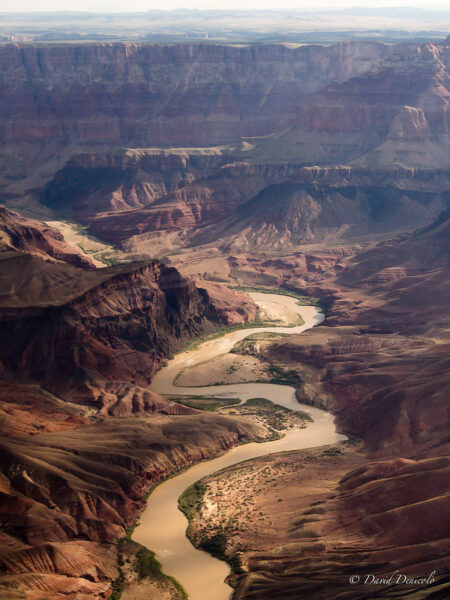 “Oct. 1 is when new federal rules for sharing the Colorado River start. It’s going to be messy and courts will likely have to weigh in. Starting today, California, Arizona and Nevada will get a lot less water. That’s because of new federal rules for the seven states that share the Colorado River. Those states are still scrambling to figure out how they’ll bear the pain of those reductions, as KJZZ’s Alex Hager reports. … ” Listen to radio show or read transcript from NPR.
The Colorado River is shrinking. What happens next?
“It was 42C (108F) degrees as we motored across Nevada’s Lake Mead in our rented pontoon boat. Colby Pellegrino with the Southern Nevada Water Authority wanted to show us something we shouldn’t have been able to see. She pointed toward a rock island where a large metal pipe was sticking out of the water. “That is the first intake that was built to bring municipal water into the valley in 1970,” Pellegrino said. It is part of the system that takes water from Lake Mead and brings it to Las Vegas. It was designed to sit deep underwater. “It is no longer part of how we get water to Las Vegas because the lake has dropped too much for this piece of infrastructure to be operable,” Pellegrino told us. … ” Read more from The Guardian.
The water saved for Lake Mead can return as dust
“Imperial Valley conservation helps protect the Colorado River’s largest reservoirs. Farther south, the Salton Sea can inherit part of the cost. Tina Shields calls fallowing “the F word.” In parts of the West, people call it “buy and dry.” Either phrase reflects the same fear: pay farmers to stop using water, and a rural economy may lose crops, jobs and families along with it. Shields manages water for California’s Imperial Irrigation District. The district has spent decades conserving Colorado River water and transferring part of the savings to urban Southern California. It now plays a central role in efforts to keep more water in Lake Mead. But the water balance does not end at the edge of a farm field. … ” Read more from Your Wyoming Link.
A senior water right cannot push water downstream
“Jay Weiner began with a giant, imaginary spigot. That is not how the Colorado River works, he cautioned. Its users do not stand in one line, waiting to see whether the tap runs dry before their turn. But the image does capture one feature of Western water law: rights line up by priority date. The older claim generally stands ahead of the newer one. Weiner serves as water counsel for the Fort Yuma Quechan Indian Tribe. The tribe holds a Colorado River right dating to 1884. The U.S. Supreme Court later included that right in its decree in Arizona v. California, giving the tribe powerful legal protection in the Lower Basin’s priority system. Then Weiner described the part a decree cannot control. … ” Read more from Your Wyoming Link.
Arizona cities could tap into a water savings account to help with Colorado River cuts
“Arizona needs to cut back on Colorado River use, and water managers are working on a new plan that would tap into an underground water savings account to help do that. As part of its response to record-low reservoir levels, the federal government is mandating water cutbacks for Arizona, California and Nevada. On top of that, the states are volunteering to cut back more water. To do that, they’re passing the hat, getting contributions from water users — like cities and farms — that add up to a larger total. Many of those users get money from the federal government to cut back on water use. But on Thursday, officials with the Central Arizona Project laid out the details of another strategy to help reach that goal. Some cities and private utilities in the Phoenix metro could promise to conserve water and, instead of money, get access to an underground backup supply held by the Arizona Water Banking Authority. … ” Read more from KJZZ.
Developer asks judge to toss Pahrump data center ban amid water fight
“A tech developer has asked a Nye County judge to toss out a ban on data centers in one of the state’s most overstressed water basins that serves Pahrump. In a statement, developer Sean Dalesandro said his company is asking for a judge to uphold a principle of fairness, adding that he believes the ban unlawfully disregarded a significant investment into zoning. His company’s previously proposed data center project, the Manse Technology Campus, drew protests from hundreds of residents. “You should be able to rely on your property’s zoning, the county’s guidance and the county’s own process when you invest,” Dalesandro said. “If your zoning can be undone at any time, then property rights become property privilege and that should concern every property owner in Nye County.” … ” Read more from the Las Vegas Review Journal.

