
Experts explain how prevention, early detection, and coordinated response can help protect California’s ecosystems, waterways, agriculture, and communities.
Invasive species are reshaping California’s landscapes, waterways, farms, and communities, creating challenges that span ecology, infrastructure, public health, and the economy. During the webinar Uninvited Guests: Protecting California from Invasive Species, hosted by California Natural Resources Secretary Wade Crowfoot, experts discussed how invasive species arrive, why early detection matters, and how state agencies, researchers, land managers, and the public are working to prevent new introductions and manage established threats.
What is an invasive specie?
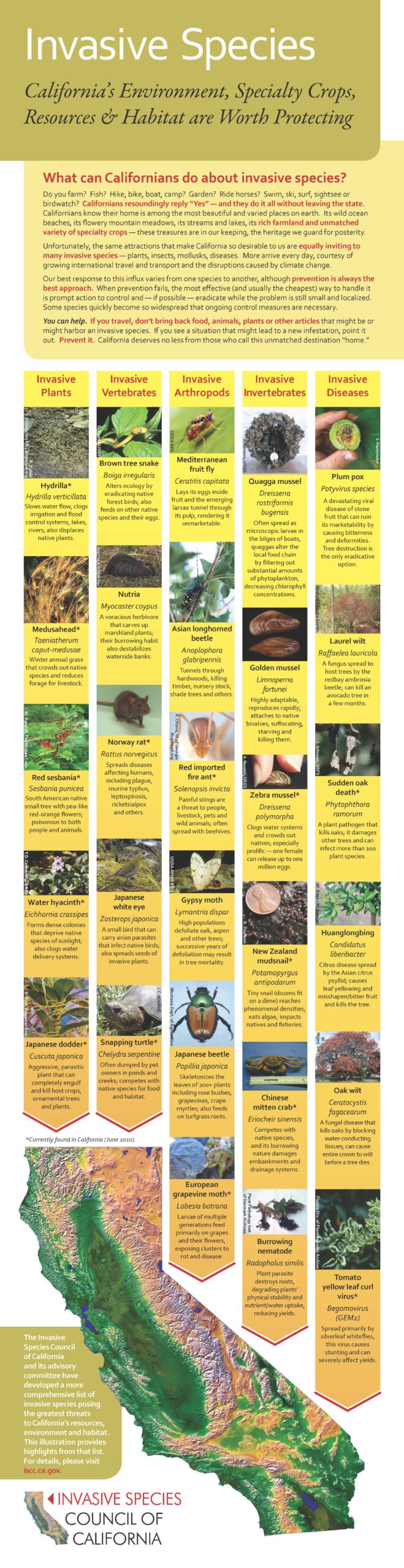 Dr. Jeff Dukes, senior staff scientist in the Division of Biosphere Science and Engineering at the Carnegie Institution for Science, opened the webinar by defining what makes a species invasive. An invasive species is a plant, animal, pathogen, or other organism that is not native to a particular place and causes—or is likely to cause—harm to the environment, the economy, or human health. In California, invasive species affect wildlands, waterways, farms, forests, and urban communities. They can crowd out native species, damage crops and infrastructure, alter fire and flood risks, spread disease, and disrupt the ecological relationships that native plants and animals depend on.
It is important to distinguish between “non-native” and “invasive.” Many non-native species have been introduced to California intentionally or accidentally, but not all of them become harmful. Some remain limited in where they grow or live and may coexist without major effects. Invasive species are the subset that establish, spread, and create measurable risks for ecosystems, agriculture, water systems, public health, or other values Californians care about.
The line between harmless and harmful is not always obvious. A species may be present for years before conditions allow it to expand rapidly, or its effects may be difficult to detect until damage has already occurred. Climate change, land disturbance, trade, travel, and the movement of boats, equipment, nursery plants, and cargo can all create new opportunities for species to arrive, survive, and spread.
Some invasive species are highly visible, such as plants that overtake rangelands or mussels that attach to water infrastructure. Others are harder to see, especially pathogens. Sudden oak death in California and chestnut blight in the eastern United States show how organisms that may be nearly invisible to the public can transform forests and food webs. For that reason, prevention, early detection, and rapid response are often the most effective ways to reduce harm before an invasive population becomes widespread.
Prioritizing Prevention and Response
As the movement of goods, people, boats, equipment, and agricultural products increases, so does the likelihood that species will be transported into new environments. Some arrivals may remain relatively benign, while others can cause significant ecological or economic harm. That makes prioritization one of the central challenges in invasive species management: deciding when intervention makes sense, where limited resources should go, and which risks deserve immediate attention.
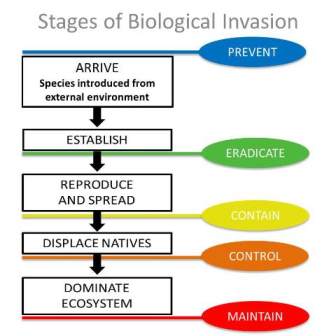
The decision is not always straightforward. Agencies and land managers may need to choose between addressing invasive species that are already widespread and causing harm, or focusing on pests that are still limited in number but could expand quickly and threaten key resources, including California’s agricultural economy. Each approach has tradeoffs: established species may be difficult to control, while newly detected species may offer the best chance for eradication if action is taken quickly.
Those choices also depend on what communities, agencies, and landowners are trying to protect. Priorities can differ depending on whether the main concern is native habitat, water infrastructure, crop production, public health, recreation, or long-term ecosystem resilience.
“In general, when you spend money on catching new invaders early, that can make a big difference because you can still potentially get rid of the invading population and prevent some sort of big tragedy. But on the other hand, there are invasive species that are firmly established, but they’re threatening things that we really care about,” said Dr. Jeff Dukes. “I don’t have a perfect way to prioritize that; everybody’s got their own priorities.”
Control Tools and Eradication Successes
Once an invasive species is detected, the response depends on the organism, where it is found, how widely it has spread, and what is at risk. Managers may use physical removal, chemical treatments, trapping, quarantines, public outreach, or biological control. The most effective programs often combine several tools and adjust them as new information becomes available.
Biological control, or biocontrol, uses living organisms to reduce the impact of an invasive species. A control agent might feed on an invasive plant’s seeds, attack the eggs or larvae of an insect pest, or otherwise limit the population’s ability to grow. When it is carefully tested and well matched to the target species, biocontrol can be especially valuable because the control agent may become self-sustaining over time.
Biocontrol also carries risks if it is poorly designed or released without adequate safeguards. Some historic efforts have harmed non-target species or created new ecological problems. For that reason, modern programs rely on careful screening, monitoring, and regulatory review before a living control agent is released.
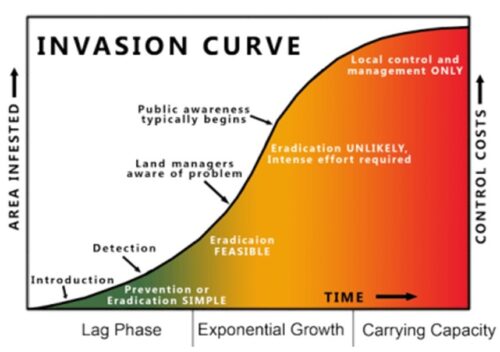
Eradication is most realistic when an invasive population is still small, isolated, and detected early. Animal pests are sometimes easier to eliminate than invasive plants because plants can persist through deep roots, seed banks, or fragments that regrow after treatment. Even so, early detection and rapid response can make the difference between a local containment effort and a long-term management problem.
California’s experience with the Mediterranean fruit fly illustrates how control strategies can evolve. The medfly is a major agricultural pest with a broad host range, threatening many fruits, nuts, and vegetables. Earlier outbreaks prompted controversial aerial pesticide applications over populated areas. The state later shifted toward the Sterile Insect Technique, which releases sterile male flies so wild females produce no viable offspring, helping suppress populations without relying on broad pesticide spraying.
Another example is the European grapevine moth, first detected in Napa County in 2009. The pest threatened grapes and other specialty crops, but a coordinated response involving growers, county agricultural commissioners, state and federal agencies, and university researchers used trapping, mating disruption, quarantine measures, and other controls. California declared the pest eradicated in 2016, showing how early action and sustained coordination can prevent a new invasive species from becoming permanently established.
“There certainly are examples where if you catch things early, you know, you’ve got a good early detection program, and you move fast once it’s detected, you can keep things suppressed or even sometimes eradicate things,” said Dr. Jeff Dukes. “It’s much tougher to do with plant invasions, especially the ones that have already gotten out of hand. But it is possible.”
Golden Mussels: A New Threat to Waterways and Infrastructure
Xavier Mascareñas / DWR
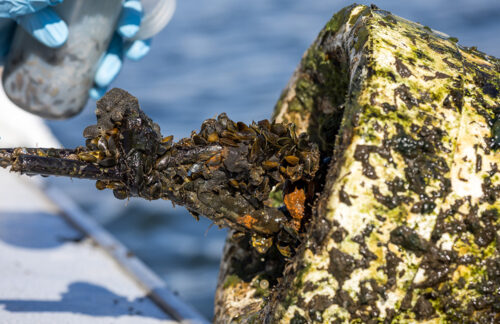
Golden mussels have quickly become one of California’s most concerning invasive species. Native to Southeast Asia, these freshwater mussels can reproduce rapidly and spread through connected waterways or by attaching to boats, equipment, and other surfaces moved between water bodies. Golden mussels are efficient filter feeders, consuming microscopic plants and animals that support native species and sport fish. They also form dense colonies that can restrict water flow, clog pipes, foul boat motors, and require ongoing removal to keep water systems operating. Those effects can create costs for water conveyance, energy production, recreation, agriculture, and the public.
“We’re really finding that golden mussels are becoming not just an environmental issue, but also an infrastructure and water supply issue,” said Dr. Christopher Jones, who leads the Department of Water Resources’ Golden Mussel Incident Command Team.
The golden mussel was first detected in California in October 2024 at the Port of Stockton during routine water quality monitoring by the Department of Water Resources. How it arrived is still uncertain; ballast water is one possible pathway. Since that initial detection in the Delta, the mussel has spread quickly, raising concern because even small populations can lead to larger infestations if they are not contained.
DWR’s response combines immediate control measures, targeted investments to protect infrastructure, and longer-term research and partnerships. The goal is not only to address current detections, but also to learn which tools work best under different site conditions and operational needs.
Monitoring is a central part of that effort. DWR and the State Water Project are watching for both adult mussels and veligers—the microscopic larval stage—because earlier detection gives managers more options for containment, treatment, and infrastructure protection.
“We’ve learned that there isn’t going to be just one solution,” said Dr. Jones. “We’re really trying to build a layered response. We are constantly testing and learning and adapting as we go.”
Within DWR, the Golden Mussel Incident Command Team is studying vulnerable facilities and developing site-specific responses. Facilities face different risks depending on their infrastructure, operations, and environmental conditions, so treatment plans must be tailored rather than applied uniformly across the system.
Potential tools include manual cleaning, hot-water treatments, ultraviolet treatment, chemical treatment, anti-fouling technologies, and infrastructure modifications. DWR is also evaluating materials and designs that may discourage mussels from attaching to key facilities, including approaches such as new louvers at the Skinner Fish Facility and copper-nickel materials that appear to reduce settlement.
 “We’re testing and learning and adapting in real time and building a toolbox and figuring out which tools work best under different conditions,” said Dr. Jones.
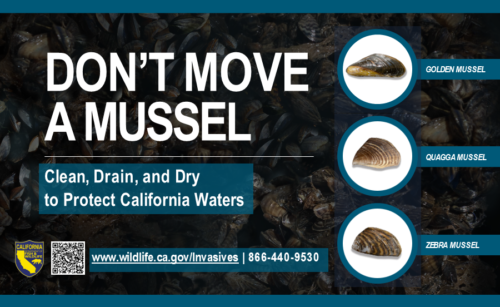
Public prevention is especially important because boats, trailers, fishing gear, and other equipment can move mussels from one water body to another. The basic message for anyone using California waterways is simple: clean, drain, and dry every time. Before moving a boat or equipment, users should remove debris, drain all water, and allow everything to dry fully.
“It may sound simple, but preventing a mussel from reaching new water bodies is far more effective than trying to manage an infested area,” said Dr. Jones.
Invasive Plants and the Importance of Local Coordination
“I love California, and I love native plants, but it seems like plants from all over the world love California,” said Tanya Meyer of the Yolo Resource Conservation District and a board member of the California Invasive Plant Council. Meyer works as a weed management area coordinator, helping local partners address invasive plants across property lines.
Invasive plants are among California’s most persistent and widespread invasive species. They can reproduce quickly, outcompete native vegetation, and change the basic conditions that shape an ecosystem. By consuming water, sunlight, soil nutrients, and space, invasive plants can make it harder for native species to survive and for restoration efforts to succeed.
“Plants are near the bottom of the food chain, so in the ecosystem, if there’s a plant out of place that’s pushing out all the native plants that our wildlife, our insects, and animals, and microorganisms are adapted to, it can really change the whole ecosystem,” said Ms. Meyer.
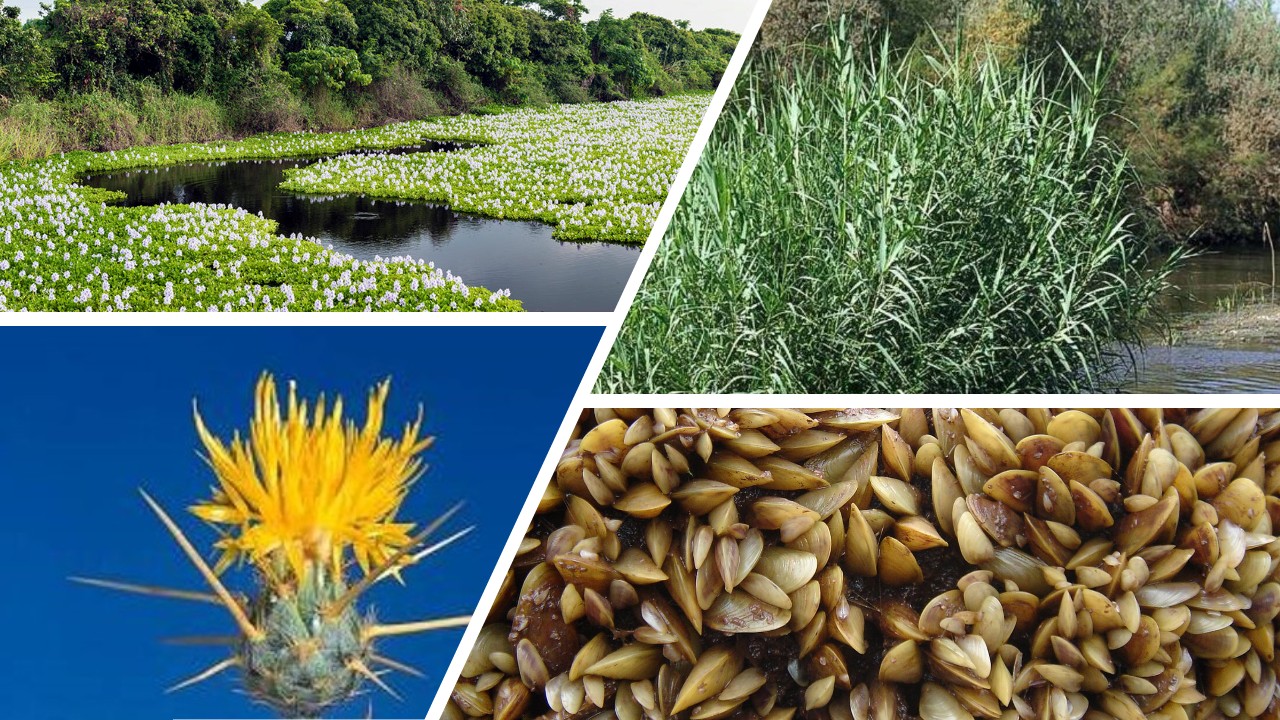
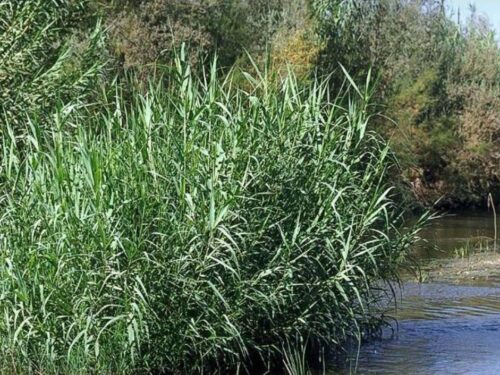
Those effects can extend from individual sites to entire food webs. Arundo donax, or giant reed, is one example. When it grows along creeks and rivers, its leaf litter can replace the native willow and cottonwood material that aquatic insects and other organisms are adapted to use. Invasive plants can also increase wildfire risk when they create dense, dry fuel loads, and they can degrade habitat by forming monocultures that displace the plants insects, birds, and other wildlife depend on.
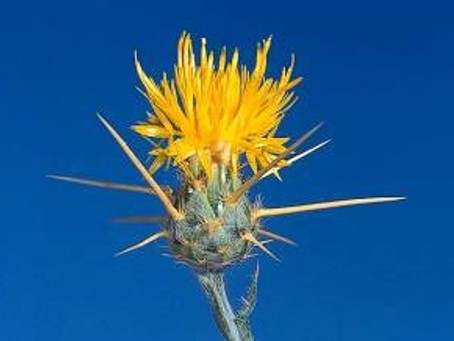
The costs are significant. The California Invasive Plant Council and UC Davis have estimated that land managers spend about $82 million each year to control and manage invasive weeds, while agricultural impacts can reach into the billions. Invasive plants can reduce forage on rangelands, complicate riparian restoration, and require years of follow-up treatment before native habitat can recover.
One way California addresses invasive plants is through Weed Management Areas, voluntary local partnerships that bring together private landowners, public agencies, conservation groups, and other partners to control invasive and noxious weeds across property boundaries. About 45 Weed Management Areas are currently active in California, and each is shaped by local geography, land uses, resources, and priority species. The program began in 1999 through Assembly Bill 1168, which created a noxious weed account at the California Department of Food and Agriculture to support cooperative weed control.
Early Detection and Rapid Response, or EDRR, is often the most effective strategy. The approach focuses on finding and eliminating new invasive plant populations before they spread, develop large seed banks, or become too expensive to control. Acting early usually requires less time, money, and labor than long-term management after an infestation has expanded.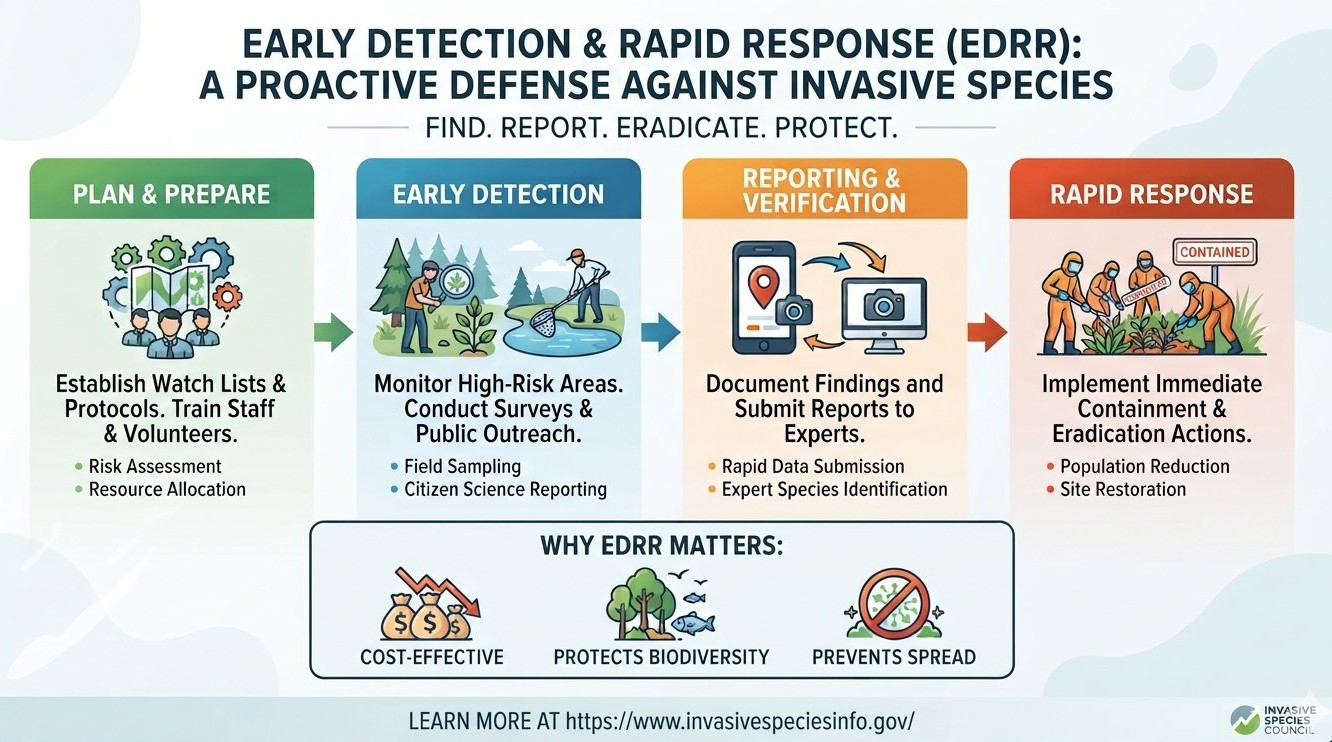
Successful control also requires strategy. Land managers need to understand the biology of the plants they are targeting, including how they reproduce, how long seeds remain viable, and where treatment should begin. In Monterey County, for example, a large Arundo eradication effort on the Salinas River started at the top of the infestation and worked downstream, reducing the chance that upstream plants would continue to spread material into treated areas.
Long-term follow-through is essential because invasive plants can be hard to eliminate completely. Perennial plants may have deep roots or fragments that resprout, while annual plants may produce thousands or even millions of seeds. Effective management often combines multiple tools, continued monitoring, restoration, and cooperation among landowners and agencies. In some places, native plants may return after weeds are controlled; in others, active restoration may be needed to replant native species and rebuild habitat.
“A lot of these invasive plants are like bullies, while our native California plants often can be more slow and gentle as they’re growing,” said Ms. Meyer. “These guys come in and just take over.”
Sustainable Pest Management: A Broader Approach to Invasive Species
The California Department of Pesticide Regulation, part of the California Environmental Protection Agency, is helping advance a statewide shift toward sustainable pest management. Dr. Sapna Thottathil, DPR’s deputy director of sustainable pest management, described the approach as a way to manage invasive species and other pests while reducing reliance on the most hazardous pesticides and protecting people, ecosystems, and working landscapes.
Sustainable pest management builds on integrated pest management, or IPM. IPM is a decision-making framework that encourages people to understand the pest problem first, consider prevention and nonchemical approaches, and use the least-toxic effective method when treatment is needed.
SPM expands that idea into a more holistic, whole-system approach for agricultural lands, managed ecosystems, and urban and rural communities. It integrates traditional pest control with broader sustainability goals: reducing harmful pesticide exposure for farmworkers, local residents, and vulnerable or heavily burdened communities; protecting natural resources such as water quality, soil health, biodiversity, and climate resilience; and ensuring that pest control remains practical and economically viable for agriculture and other industries.
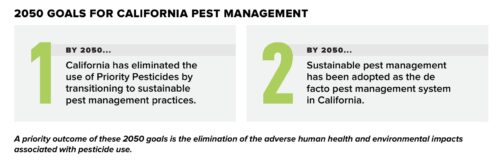 The program has two long-term goals: to transition away from high-risk, highly hazardous active ingredients that threaten public health and ecosystems, and to make sustainable, least-toxic pest management the standard approach across California by 2050.
“SPM is an approach that encompasses all landscapes,” said Dr. Thottathil. “It’s not just a property-by-property approach to managing pests. SPM recognizes that how we manage pests in one landscape will impact another landscape and communities because pests move, humans move. So we really need to think about this in a holistic, multiple-scale sort of way.”
Climate change adds urgency to that shift. As temperatures, precipitation patterns, and habitat conditions change, pest ranges can expand or move into new areas. California is also seeing continued pressure from invasive pests arriving through travel, trade, and other pathways. SPM provides a framework for adapting to those changes by combining existing tools with new approaches that can work across landscapes and communities.
That toolbox can include biological solutions, cultural practices, mechanical controls, monitoring, prevention, targeted pesticide use, and other methods. The emphasis is not on eliminating pesticides entirely, but on choosing approaches that reduce risk while still controlling pests effectively.
California’s research and extension networks are central to that effort. DPR works with partners across the University of California system, Cooperative Extension, UC Integrated Pest Management, and UC Agriculture and Natural Resources to share expertise and support new projects. One recent pilot project focuses on managing navel orangeworm in parts of the Central Valley, illustrating how SPM can support innovation for real-world pest challenges.
“I think the biological reality is that species are going to keep evolving, and the social reality is that humans are going to keep moving around, bringing pests into the state,” said Dr. Thottathil. “Climate change is changing pest ranges, so we, the state, have to stay one step ahead. And I think this is where California can really shine. We’re already known for environmental leadership and leadership in technology and innovation. It’s up to us to support the innovation in this space, to churn out more biological tools, and support the widespread adoption of new approaches to pest management.”
Prevention and Rapid Response in California Agriculture
California’s agricultural system depends on prevention, surveillance, and rapid response to reduce the risk of invasive pests and diseases. Karen Ross, secretary of the California Department of Food and Agriculture, described CDFA’s work as a front-line effort to protect crops, livestock, natural resources, and agricultural trade from species introduced through travel, commerce, cargo, and other pathways.
CDFA’s responsibilities include insect pests, plant diseases, and threats to livestock. The New World screwworm illustrates the importance of continued vigilance: once eradicated from the United States, the pest has been moving north through Mexico and toward Texas, creating renewed concern for animal health and agriculture. Early detection and rapid response remain central to containment and, when possible, eradication.

Prevention requires substantial investment at points of entry. California receives large volumes of cargo through borders, ports, airports, and inspection stations, and many shipments continue to destinations across the country. Federal, state, and local partners support inspection and interception efforts designed to stop high-risk pests before establishment occurs.
CDFA’s largest investment in California is prevention, carried out in partnership with county agricultural commissioners. Intensive trapping takes place throughout the year in communities across the state, with priority given to pests that pose the highest risk in areas where suitable host plants are present. Trapping provides the information needed to detect new problems early and launch rapid response efforts before pests spread widely.
That prevention system is expensive, but the potential losses are far greater. Recent fruit fly outbreaks required more than $200 million in combined federal, state, and county investment, including responses to species not previously detected in California. CDFA’s annual prevention budget is about $44 million to $48 million, in addition to inspection work at border stations and other entry points. Without prevention and rapid response, invasive pests can cause major crop losses, reduce productivity, and spread plant-killing diseases such as Pierce’s disease in grapes and Huanglongbing in citrus.
Secretary Karen Ross emphasized that climate change is intensifying some of the biggest challenges facing California agriculture. As growing conditions shift and pests and diseases move into new areas, the state’s ability to maintain food production will depend on prevention, resilience, and continued investment in practical solutions. That includes plant breeding, genetics research, and other tools that can help crops withstand emerging pressures while supporting long-term food security.
“Every one of these presents an opportunity for innovation,” said Secretary Ross. “So I’m so thankful that I’m in California, of all places. We might be the host to a lot of these things, but we’re also the host to the answers to a lot of these things.”

