
Several news sources featured in the Daily Digest may limit the number of articles you can access without a subscription. However, gift articles and open-access links are provided when available. For more open access California water news articles, explore the main page at MavensNotebook.com.
On the calendar today …
- WEBINAR: Bay Nature Talk: California’s Freshwater Heritage with Sage Ono from 12pm to 1pm. Join Bay Nature and Sage Ono for a virtual talk. Inspired by Sage’s unique, photographic take on the California Heritage Trout Challenge, this talk asks us to go beyond the act of exploration and encourages us to think more critically about our role in the evolution of our freshwater ecosystems. As Sage puts it, “California rivers developed with their species in mind” and goes on to say, “we’re living in a Frankenstein ecosystem we’ve created”. Tune in to hear more about the past, present, and future of California’s freshwater and consider conservation through a philosophical lens. This talk is inspired by Sage’s Summer article, “What I Learned by Fishing Without Rod, Reel, or Hook”. This talk is free for Bay Nature Members and $5 for Nonmembers. Click here to register.
- WEBINAR: Water Year 2026 webinar to review Russian River rainfall, water supply and winter outlook from 12pm to 1pm. The webinar, held on the final day of Water Year 2026, will look back at the Russian River watershed’s rainfall, reservoir conditions and water supply over the past year and discuss what may lie ahead this winter. Panelists will also discuss El Niño and its potential influence on winter weather. The water year runs Oct. 1 through Sept. 30. Register at https://bit.ly/water-year
In California water news today …
Uninvited guests: Protecting California from invasive species

“Invasive species are reshaping California’s landscapes, waterways, farms, and communities, creating challenges that span ecology, infrastructure, public health, and the economy. During the webinar Uninvited Guests: Protecting California from Invasive Species, hosted by California Natural Resources Secretary Wade Crowfoot, experts discussed how invasive species arrive, why early detection matters, and how state agencies, researchers, land managers, and the public are working to prevent new introductions and manage established threats. Dr. Jeff Dukes, senior staff scientist in the Division of Biosphere Science and Engineering at the Carnegie Institution for Science, opened the webinar by defining what makes a species invasive. An invasive species is a plant, animal, pathogen, or other organism that is not native to a particular place and causes—or is likely to cause—harm to the environment, the economy, or human health. In California, invasive species affect wildlands, waterways, farms, forests, and urban communities. They can crowd out native species, damage crops and infrastructure, alter fire and flood risks, spread disease, and disrupt the ecological relationships that native plants and animals depend on. … ” Continue reading from Maven’s Notebook.
When will California see its first snow? How El Niño could impact fall, winter
“The start of fall brings changing leaves, pumpkin spice favorites and cooler temperatures. For many Californians, it also means the first snowfall of the season could be on the horizon. According to the Farmers’ Almanac’s latest forecast, the timing of the first significant snow will vary widely across California depending on elevation and location. “For many people, the first snowfall is the moment the season really changes,” the Farmers’ Almanac said in its Sept. 11 forecast. This year, a strengthening El Niño could push California’s first snowfall later than usual, particularly at lower elevations, according to Sean Macaday, a meteorologist for The Sacramento Bee. … ” Read more from the Sacramento Bee.
SEE ALSO:
- El Niño’s Dreaded ‘Kelvin Wave’ Is About to Hit California, from Gizmodo
- Can California handle the heat?, from Politico
A Kelvin wave is heading toward the California coast, bringing trouble
“In the coming days, sea levels off Southern California are expected to begin rising by half a foot or more and then stay elevated for months, as an enormous pulse of wave energy generated by El Niño travels up the coast, lifting the water as it goes. “It’s one of the first, if not the first indication that El Niño is here,” said Dillon Amaya, an assistant professor in the department of marine, earth and atmospheric sciences at North Carolina State University. This pulse, known as a Kelvin wave, will boost the ocean’s height across an area extending 12 to 18 miles offshore. It is coming on top of several other factors that are raising the seas off California and increasing the threats from coastal flooding, erosion and saltwater intrusion. … ” Read more from the New York Times.
New detection technique advances early warnings for toxic algal blooms
“A team of marine scientists led by researchers at the University of California, Santa Cruz, has unlocked a novel approach to predicting harmful algal blooms (HABs), fundamentally shifting how oceanographers track these hazardous marine events. In a study publishing this week in the Proceedings of the National Academy of Sciences (PNAS), the researchers demonstrated that passively measuring chemical “alarm cues” produced by microscopic ocean predators—a group of polar lipids known as copepodamides—allows scientists to forecast toxic algal blooms up to seven weeks in advance. This “top-down” biological monitoring technique extends predictive lead time by more than a month compared to conventional toxin-tracking methods, giving coastal agencies and shellfish fisheries critical advance warning before toxins reach dangerous levels. For decades, ocean-forecast models have focused almost exclusively on “bottom-up” physical and environmental drivers, such as ocean currents, water temperature, and nutrient upwelling, according to the study’s senior author, Distinguished Ocean Sciences Professor Raphael Kudela. “By capturing the chemical signals of biological predators, we’ve opened up a vital top-down window into ecosystem dynamics,” Kudela said. “By ‘listening’ to chemical interactions between marine grazers and algae, we can add a new and reliable monitoring technique to our early-warning toolbox.” … ” Read more from UC Santa Cruz.
Public comment period opens on Delta ag land report
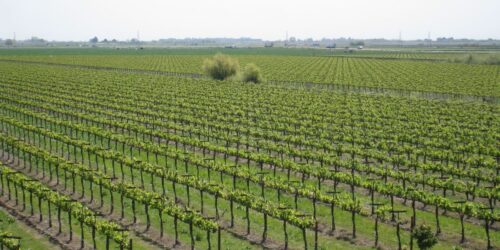 “The Delta Protection Commission said California’s stated “coequal goals” of agriculture protection and ecosystem restoration in the Delta is a paper practice. “Although Delta planning documents contain numerous provisions intended to protect farmland, many are recommendations rather than enforceable requirements, and some regulatory policies use qualifying language that leaves substantial discretion,” states the introduction to the commission’s draft report, “Farmland Conversion in the Delta: Protecting Agriculture as Part of the Coequal Goals.” “Delta Plan Chapter 5, which addresses the Delta as an evolving place and includes a section on agriculture, includes two regulatory land-use policies: one that primarily addresses the location of new residential, commercial and industrial development, and one requiring water management facilities, ecosystem restoration, and flood management infrastructure to avoid or reduce conflicts with existing uses when feasible. … ” Read more from the Daily Republic.
This Berkeley artist was given six months to live. Now he’s asking us to rethink our relationship with water.
“Blue-lit screens rise and tilt across the floor of UC Berkeley’s Worth Ryder Art Gallery. At their center, a digital river winds through an imagined watershed. Stools surround them, each representing a different water regime, or system for governing and allocating water — from Indigenous stewardship to colonial extraction and AI-driven optimization. Sit on a stool marked “Kinship,” and the dams and large-scale irrigation infrastructure disappear. Sit on the “Water Projects” stool, where the state diverts as much water as it can, and the river shrinks as dams rise. Two stools offer competing visions of AI — one that maximizes economic output and another that prioritizes long-term ecological survival. When two or more people sit stools at the same time, the regimes interact. In some combinations, the system may prosper for a time; in others, it may reach “day zero,” when drought or depleted groundwater leave the watershed unable to meet competing demands. “In the ‘Tech Regime,’ there’s going to be a whole bunch of data centers that pop up,” said Greg Niemeyer, a Berkeley professor of media innovation and creator of the installation, titled Water Council. “The salmon go away and the data centers pop up, and you’re like, ‘Well, maybe we didn’t want all that. Maybe we should just get off this chair now.’” … ” Read more from UC Berkeley.
California governor signs PFAS pesticide tracking bill
“Pesticides containing toxic “forever chemicals” will now be tracked by the state of California, the country’s largest producer of agricultural products. The legislation, signed this week by Governor Gavin Newsom, requires the state’s Department of Pesticide Regulation to indicate whether agricultural pesticides contain perfluoroalkyl and polyfluoroalkyl substances, or PFAS, when reporting their use in a public database. It also requires the department to track PFAS pesticide use trends in the state, where nearly half of the vegetables and more than three-quarters of the fruits and nuts in the US are grown. … ” Read more from Reuters.
Governor vetoes State Water Contractor-sponsored subsidence bill
“On September 27, 2026, Governor Newsom vetoed Senate Bill 872 (McNerney). The bill, co-sponsored by the State Water Contractors and supported by over 60 organizations, including environmental groups, labor, builders and business interests, would have established the Delta Levees and Canal Subsidence Fund to support critical levee and canal subsidence projects. SB 872 was unanimously passed by the California Senate and Assembly before making its way to the Governor’s desk. … “We are disappointed by Governor Newsom’s veto of SB 872, a bipartisan bill with unanimous support from the legislature that would have helped address critical Delta levee and State Water Project (SWP) subsidence repair,” said Jennifer Pierre, General Manager of the State Water Contractors. “”While the $68 million allocated from Prop 4 for SWP aqueduct repairs caused by subsidence is greatly appreciated and much-needed, this is just a fraction of the funding necessary – in the billions of dollars – to fully repair this vital backbone infrastructure. SB 872 would have provided a critical conduit for that funding. … ” Read more from the State Water Contractors.
New California rules target dairy manure pollution, groundwater contamination
“Over 900 dairy farms and millions of cows — that’s what takes up much of California’s Central Valley. Now, those same farms face a new reality: stricter regulations on water pollution. “Mark my words, what you guys do here today will further consolidate the industry,” Milk Producers Council General Manager Kevin Abernathy said. The State Water Resources Control Board’s unanimous decision last week has gotten mixed reactions from advocates and opponents. The board says the goal of the new limits is to reduce discharges from nitrogen, a natural component of manure. That eventually seeps into the soil, waterways and groundwater. That can then lead into drinking water. … ” Read more from KION.
California on track to conserve 30% of its land, but is lagging on coastal waters
“After adding more than a million acres in the last year, California is on track to meet its goal of conserving 30% of its land by 2030, officials announced Tuesday. However, the state lags in its efforts to conserve 30% of its coastal waters in the same time frame. Since Gov. Gavin Newsom established the “30×30” initiative in 2020, virtually all of increase in protected waters came from a single marine sanctuary created by the federal government in 2024. “We’ve made tremendous progress on land. It’s stubborn, but we’ve made progress as it relates to our coastal waters as well,” Newsom said at a 30×30 summit at the California Academy of Sciences in San Francisco. “We’re going to achieve and reach those goals, absolutely, by 2030.” … ” Read more from the LA Times.
Can California stop Trump from drilling off its coast? A new law tries

“Gov. Gavin Newsom on Tuesday signed legislation to strengthen California’s protections against offshore drilling amid escalating efforts by the Trump administration to open up the coast to new oil and gas operations. The new state law, Assembly Bill 1448 from Assemblymember Gregg Hart (D-Santa Barbara), will make it illegal for oil producers to use oil rigs, pipelines and other equipment currently in state waters to support any new federal offshore oil leases. It also strengthens state oversight of existing leases by requiring additional scrutiny and waiting periods for renewals, extensions or changes. The law comes after the Trump administration proposed opening California’s entire coast to offshore oil and gas drilling for the first time in more than four decades — an action the U.S. Interior Department said will “unleash American offshore energy.” … ” Read more from the LA Times.
In regional water news and commentary today …
SIERRA NEVADA
Salmon are spawning. Beavers are building. Upper Long Bar restoration is already working.
“As the first salmon begin to spawn at our Rose Bar restoration project (completed 2024) this fall they will have even more connected, complex floodplain habitat to grow up on thanks to continued restoration projects by the South Yuba River Citizens League (SYRCL), with special appreciation to our members and donors. In September of 2026, we finished the initial construction of the Upper Long Bar Habitat Restoration Project. The project is located on private property in Yuba County along the lower Yuba River just over 1 mile below the Highway 20 bridge, and just under 4 miles from those spawning salmon at Rose Bar. The Upper Long Bar project was built to improve edge habitat for juvenile Chinook salmon and steelhead by adding new alcoves, instream structures, and increased roughness along the riverbank. These enhancements aim to increase the carrying capacity of the system and support diverse salmonid life history strategies. … ” Read more from the South Yuba River Citizens League.
CENTRAL COAST
Monterey Bay domoic acid rescues slow, but fishery warnings remain
“A month after a wave of California sea lions with symptoms of domoic acid toxicity were reported on the coast of the Monterey Bay, the number of reports is dropping, according to the Marine Mammal Center. Though fewer sick sea lions have been found in recent weeks, take restrictions and consumption warnings for northern anchovies remain in place. Domoic acid is a neurotoxin produced by an algae called Pseudo-nitzschia. High levels of the algae were seen in Santa Cruz earlier this summer, and the species has been consistently observed throughout the Monterey Bay in the following months. The toxin collects in animals that consume algae, such as small fish, including northern anchovies. While the fish may not become sick or display any neurological symptoms, the animals that prey on them can feel the effects of the toxin, which include disorientation and death. … ” Read more from the Monterey Herald.
Water deal gets initial green light: 40% of Montecito’s State Water rights pledged to North County housing
“A $40 million deal to sell more than 40% of Montecito’s State Water Project rights to a massive North County housing proposal passed a big test Tuesday. In a 5-0 vote , directors of the Montecito Water District approved a non-binding letter of intent in support of the transaction, paving the way for a Spring 2027 purchase agreement with developers of Solomon Hills, 4,000 homes planned between Orcutt and Los Alamos. “Our future is local,” said district board President Brian Goebel, stressing a point made repeatedly as officials characterized the potential sale as a way to shore up South Coast sources of water for Montecito. “We’ve got to invest here.” Added board member and past president Floyd Wicks: “I’m honestly thankful this opportunity came.” … ” Read more from the Santa Barbara News-Press.
SEE ALSO: Montecito district takes 1st step toward selling part of state water rights, from Noozhawk
SAN JOAQUIN VALLEY
T.W.G. Cigars: A new crop for the valley
“California’s San Joaquin Valley is a world powerhouse of agriculture. It’s also facing a combination of factors coming together to reduce its water supplies. One solution for growers is changing the crops grown. Timothy Greene may have the answer. Greene grows tobacco and hand rolls his own brand of cigars. T.W.G. Cigars located in Fresno County may hold the key for some farmers looking to change to a less water intensive crop. “I see T.W.G. as more than just a cigar company. The long-term goal is to build a vertically integrated business around premium cigars—from growing the tobacco here in the San Joaquin Valley, to curing and fermenting it, to blending and hand rolling the finished cigar,” said Greene. “I’m not interested in competing by becoming the biggest cigar company. I want to build a company known for quality, craftsmanship and for doing something that is uniquely connected to this region.” … ” Continue reading from Water Wrights.
State budget includes $5 million to address chromium-6 contamination in Los Banos water, $1.5 million for Merced fire truck
“The newly signed California state budget includes $5 million for a Los Banos groundwater treatment project and $1.5 million to help the Merced Fire Department replace a ladder truck, according to Assemblywoman Esmeralda Soria. Gov. Gavin Newsom signed AB 113, the Budget Act of 2026, on Sept. 18, finalizing the state’s 2026-27 spending plan. Soria, whose 27th Assembly District includes portions of Merced, Fresno and Madera counties, announced more than $11 million in targeted investments across the district. The largest allocation directly identified for Los Banos is $5 million for the city’s Hexavalent Chromium Groundwater Well Treatment Project. … ” Read more from the Los Banos Enterprise.
Fact check: Fresno County supervisor candidates clash over water quality issues
“Is Kerman’s water clean? The two candidates running to represent western Fresno County on the Board of Supervisors disagree on that question. At a forum Monday night in northwest Fresno between Fresno City Councilman Mike Karbassi and Kerman Mayor Maria Pacheco, water quality was the topic. Highway City Community Development, a nonprofit group, hosted the forum at the Teague Community Resource Center. More than 70 people listened to the two supervisor candidates, as well as one candidate running for city council. Answering a question about infrastructure, Pacheco referenced a water quality issue in the mountain community of Shaver Springs, represented by Supervisor Nathan Magsig. “The way that we can measure whether or not our water infrastructure is good or bad is whether or not government officials are willing to drink the water,” Pacheco said. … ” Read more from the Fresno Bee.
House passes water bill providing key local help
“The House of Representatives recently passed HR 9497, the Water Resources Development Act last week and included in the legislation is funding for projects providing support for the Central Valley and the local area. Congressman Vince Fong’s office announced Fong was able to secure $34 million for projects in the Valley. The bipartisan legislation authorizes water resources infrastructure projects across the country. The Senate is expected to pass a similar bill and through reconciliation the legislation is expected to become law. Friant Water Authority CEO Johnny Amaral stated the bill continues to provide funding for airborne snow observatories which allow for a better forecast for water availability. The bill also provides funding for the U.S. Army Corps of Engineers to mitigate wildfire risks around reservoirs it manages, including Success Lake. … ” Read more from the Porterville Recorder.
SOUTHERN CALIFORNIA
LA County Public Health fell short in response to Chiquita Canyon landfill issues, audit says
“The California State Auditor says L.A. County Public Health’s response to the health conditions around the Chiquita Canyon landfill was inadequate. The backstory: An underground chemical reaction at Chiquita Canyon landfill has burned for years, producing large amounts of noxious chemicals and bad odors. Residents nearby have complained about symptoms like headaches and nausea. What’s new: The State Auditor released a report this week that found the county’s public health department hasn’t done enough to help or inform the community. For example, the audit says the department got reports from the landfill operator every quarter at times showing chemical levels that exceeded state thresholds, but didn’t let the public know. The department in its response said it considers a number of factors on deciding what poses a potential health risk. … ” Read more from the LAist.
Community testing finds elevated levels of metals in LA River after the Lineage fire
“A community-led effort that tested water runoff from the burned Lineage cold-storage facility found that elevated levels of metals made their way to the Los Angeles River. The findings of increased concentrations of iron, zinc, chromium and lead are highlighted in a Sept. 22 report published by researchers and scientists from UCLA, UC Irvine and East Yard Communities for Environmental Justice. According to the report, members of East Yard Communities for Environmental Justice noticed that the water firefighters sent to the flames — an estimated 12,000 gallons of water per minute — was draining into the LA River. That’s what spurred Emmanuel Carrera Ruedas, a member of East Yard, and Casey Cooper, a community scientist, to gather water samples and test the runoff for metals from building materials after the fire ignited June 17. The fire was knocked down June 24. … ” Read more from the Boyle Heights Beat.
SEE ALSO: Metals in LA River: The testing was a community-led effort, from the LAist
Rancho Palos Verdes prepares for El Niño
“For many, living along the California coast is the realization of a lifelong dream. But for some in Rancho Palos Verdes, that dream has become difficult to maintain as the ancient Portuguese Bend Landslide under the picturesque cliffs continues to move. Yards have fallen into the ocean, and the city’s main thoroughfare, Palos Verdes Drive, requires constant maintenance and repaving. Sha — who asked us just to use her first name — said she unknowingly bought her home in the landslide-impacted area 10 years ago. “I had no idea about a landslide. We just noticed damages, sinking, subsidence, and eventually the city declared a state of emergency,” she said. … ” Read more from Spectrum News.
Irvine Lake will soon close to recreational use and be drained while dam renovation project moves forward
“For decades, Irvine Lake has served Orange County anglers and outdoor enthusiasts, but a major transformation is underway. The Irvine Ranch Water District (IRWD) is preparing for a significant drawdown of the lake to accommodate the upcoming Santiago Creek Dam Improvement Project. It’s another case of a popular fishing lake with residential water storage as its primary purpose, which is nothing new, especially in the west. The reservoir supplies water to roughly 85,000 Orange County homes. Santiago Creek Dam is over nine decades old. Following an assessment that started in 2017, IRWD identified critical needs to modernize the facility. The multi-year project will replace the aging outlet tower and spillway, strengthen the earthen dam embankment, and boost earthquake resistance. Additionally, the upgrades will restore lost reservoir storage capacity, enabling the capture of more local stormwater runoff to reduce reliance on imported water supplies. … ” Read more from Western Outdoor News.
Along the Colorado River …
The United States and Mexico agree on Minute 334 to secure the Colorado River amid historical drought
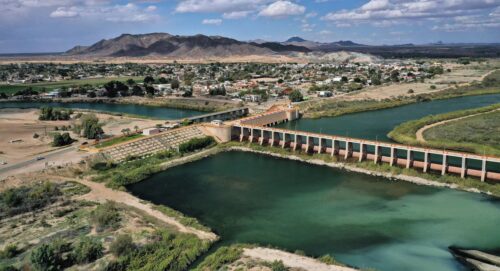
“On September 2nd, the United States and Mexico signed Minute 334 -a bilateral agreement- to extend cooperative operating measures for the Colorado River through to the end of 2028. To address ongoing drought and low reservoir levels, Mexico has agreed to reduce its annual water deliveries by 250,000 acre-feet in both 2027 and 2028. This equates to approximately 308 million cubic metres of water annually, which roughly corresponds to the annual water consumption of hundreds of thousands of households. These cuts align with parallel guidelines requiring users in the U.S. section of the lower Colorado basin to reduce their allocations by 1.25 million acre-feet annually. This equates to approximately 1.54 billion cubic metres of water annually, which roughly corresponds to the annual water consumption of several million households. Should water levels at Lake Mead – a reservoir formed by the Hoover Dam on the Colorado River in the Southwestern United States- improve significantly, the agreement allows both nations to meet and proportionally increase deliveries. … ” Read more from The Water Diplomat.
Environmentalists challenge southern Arizona mining expansion over habitat concerns
“Conservationists sued the Trump administration Tuesday to challenge the expansion of a heavy metal mine they say will carve up one of Arizona’s ecologically important mountain ranges. In consultation with the U.S. Fish and Wildlife Service, the U.S. Forest Service approved the expansion of Australian company South32 Hermosa’s mineral extraction operations to 52,438 acres in the Patagonia Mountains of southern Arizona, directly through one of the last remaining migration corridors for endangered jaguars and ocelots. According to the agencies’ own assessments, the expansion project would threaten the only corridor for roughly 120 miles where the cats can cross the U.S.-Mexico border. … ” Read more from the Courthouse News Service.
Did Las Vegas cut its water use in half between 2002 and 2025?
“Southern Nevada’s per capita water use fell from 211 gallons per person per day in 2002 to 89 gallons in 2025 a spokesperson for the Southern Nevada Water Authority (SNWA) said in an email. That’s a 57.8 percent decrease. SNWA uses 2002 as its baseline because it was the region’s peak water use year. The community’s goal is to reach 86 gallons per person per day by 2035. … ” Read more from the Nevada Independent.
Utah is paying farmers to conserve Colorado River water. Is it working?
“Ranch manager Kent Nelson flipped open the cap on a water meter and pointed to the words “EMPTY PIPE” on the screen. Chains normally connected to a pump pulling water from the Green River hung loose. Marc Stilson, the principal engineer for the Colorado River Authority, looked at the meter and checked the pump. But it didn’t take much close examination to see that one of Ruby Ranch’s nearby fields wasn’t receiving water. It was shades of brown and tan, blending in with the surrounding sandstone while standing out against the neighboring bright green irrigated fields. This year, Ruby Ranch enrolled two alfalfa fields in Utah’s Demand Management Program, which pays Colorado River water users to temporarily and voluntarily send water downstream. The ranch, owned by Noel and Carrie Vallejo from Pleasant Grove, sits at the confluence of the San Rafael River and the Green River, about an hour’s drive south of the town of Green River. … ” Read more from the Salt Lake Tribune.
Lake Powell sits about 28 feet above the level where Glen Canyon dam stops generating power
“Lake Powell stood at 3,517.75 feet above sea level on Sept. 25, about 28 feet above the 3,490-foot mark known as the minimum power pool, the elevation below which Glen Canyon Dam’s turbines can no longer generate electricity effectively. The reservoir set a new modern low of 3,516.62 feet on Sept. 15, according to daily U.S. Bureau of Reclamation readings compiled by the Lake Powell Water Level tracker, leaving it roughly 27 feet above that threshold at its lowest point so far. The margin matters to many people who never see the lake, because most of them feel its value through a utility bill. Glen Canyon Dam’s electricity is marketed by the federal Western Area Power Administration to municipal utilities, rural electric cooperatives and tribal utilities across the interior West. If the turbines go quiet, those customers still need power, and replacement electricity bought elsewhere can cost more than federal hydropower. … ” Read more from Nature World News.

