
Several news sources featured in the Daily Digest may limit the number of articles you can access without a subscription. However, gift articles and open-access links are provided when available. For more open access California water news articles, explore the main page at MavensNotebook.com.
On the calendar today …
- MEETING: Delta Plan Interagency Implementation Committee beginning at 9am at the SAFE Credit Union Convention Center (1401 K Street, Sacramento, CA, 95814 [enter via the East Lobby at 15th and K Streets]). This meeting will feature presentations highlighting recent regional advances in science, including the 2026 Delta Science Plan; an overview of the Delta Adapts Adaptation Plan and recent implementation work; and a presentation on interweaving Traditional Knowledge with western science. While this meeting will take place at the same venue and during the 2026 Bay-Delta Science Conference, the DPIIC meeting is open to the public without conference registration. Members of the public may attend the meeting in person or virtually via Zoom. Click here for the meeting notice.
In California water news today …
What’s in the Proposed Bay–Delta Water Quality Control Plan?
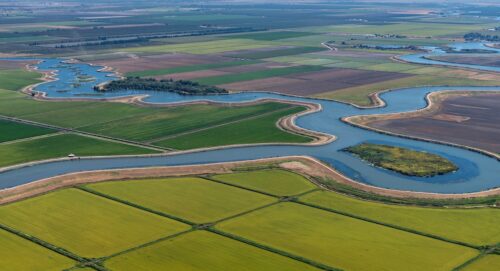
Ken James / DWR
“The State Water Resources Control Board is updating the Bay–Delta Water Quality Control Plan, which is set for adoption in late October 2026. Protecting water quality in the Sacramento–San Joaquin Delta and its major tributaries—the Sacramento and San Joaquin Rivers—is one of the State Water Board’s key responsibilities. The Bay–Delta Plan sets water quality and flow standards for the multiple, occasionally conflicting, uses of these rivers. While board members and stakeholders will debate the merits of the plan over the next month, it contains several innovations worth exploring regardless of the ultimate outcome. … ” Read more from the Public Policy Institute of California.
Republican legislators push back on Bay-Delta Water Plan
“Republican politicians are pushing back on a draft of California’s Bay-Delta Water Quality Control Plan, citing taxpayer concerns and an abstract regulatory framework. The plan concerns the state’s San Francisco Bay/Sacramento-San Joaquin Delta Watershed, which covers more than 75,000 square miles and serves as the primary source of drinking water for 25 million people in California, according to the U.S. Environmental Protection Agency. The Bay-Delta Watershed also irrigates 7,000 square miles of agriculture. According to a Sept. 17 letter sent from Assembly Minority Leader Alexandra Macedo, R-Tulare, to E. Joaquin Esquivel, chair of the California Water Resources Control Board, the plan would establish an expansive regulatory approach to regulating tributaries to the Sacramento River and Sacramento-San Joaquin River Delta. The plan establishes a framework based on 55% of unimpaired flow on the tributaries, subject to adjustments and future implementation decisions, Macedo wrote in the letter. … ” Read more from The Center Square.
PPIC policy brief: Why California needs a modern approach to accounting for water
“California’s nearly 40 million people and $4 trillion economy depend on water for everything from thriving agriculture to healthy ecosystems to robust industry. Yet due to the state’s highly variable climate, water availability changes dramatically between wet and dry periods, and this pattern is becoming more extreme with climate change. Furthermore, the mismatch between where water is available and where population centers and agricultural land are located means that vast amounts of water are moved long distances across the state. Accessible and timely information about water is critical, including how much is available, how much is needed and where, and how much is used—in other words, modern water accounting. … ” Read more from the Public Policy Institute of California.
Incoming El Niño is so extreme it doesn’t have a scientific name
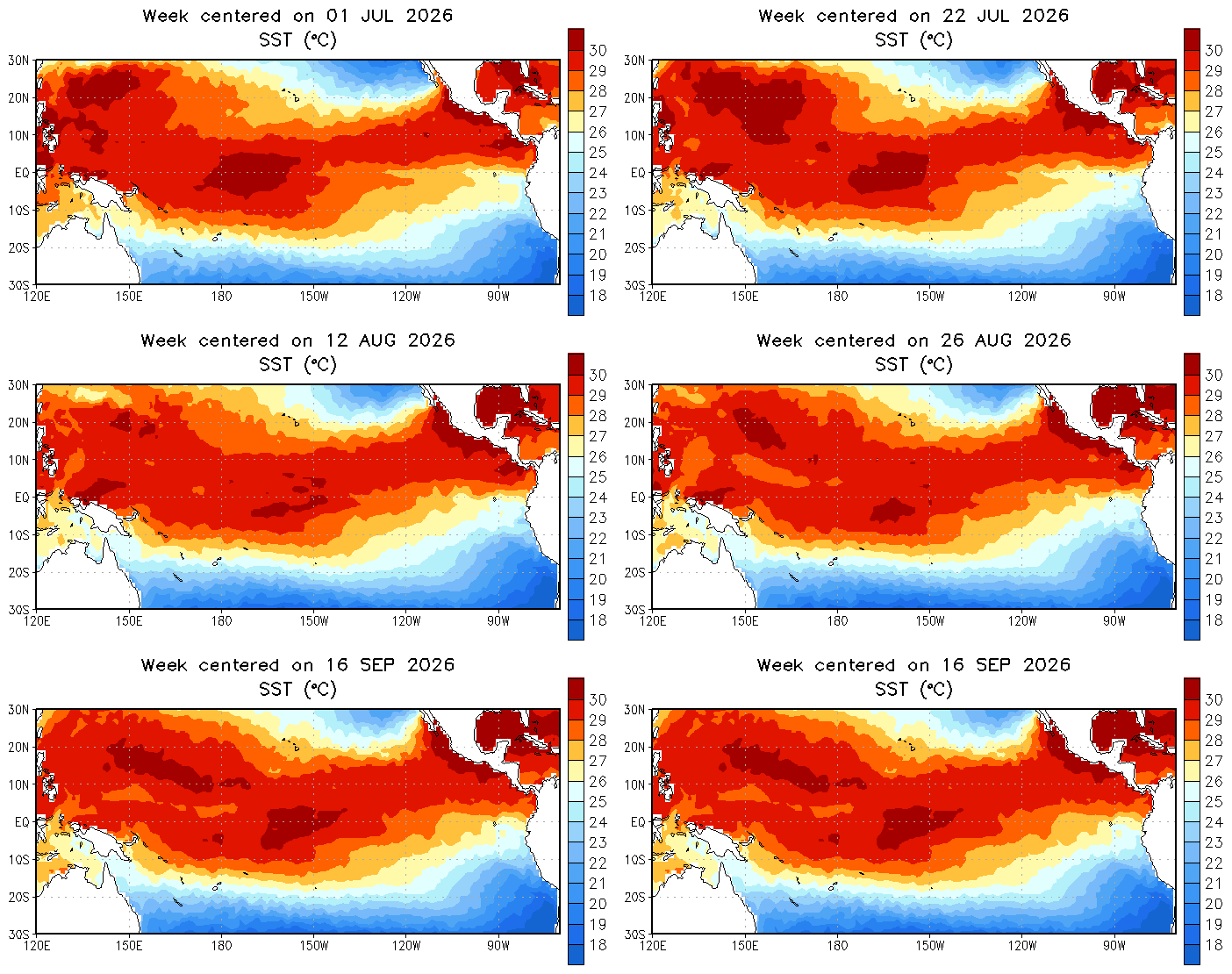 “Daniel Swain has made a name for himself studying the extremes of a warming planet. Fires, floods, droughts, heat, storms: if it’s a record breaker, Swain has probably studied it. As a weather and climate research scientist at UCLA’s Institute of the Environment and Sustainability, Swain has dedicated his life to understanding so-called “outlier events” and how climate change is super-charging them. Then, he explains them, and not just to fellow scientists. He devotes over 1,000 hours a year to climate communication for the public. Swain is the mind behind “Weather West,” and coined the term “Ridiculously Resilient Ridge” in December 2013, as a first year graduate student, for the high pressure ridge perpetuating the 2011-2017 northern California and Pacific Northwest drought. As a climate scientist, and life long Californian, he has been keeping a close eye on the current El Niño. … ” Read more from Inside Climate News.
El Niño is coming: Flood and storm water preparation, response and recovery
“El Niño is coming … and if you haven’t done so already, NOW is the time to evaluate infrastructure and to take action to minimize potential risks. This year, the predicted power of El Niño means deferred maintenance and improvements carry more risk than usual. However, planning, funding, and securing permit approvals for repairs and upgrades can take months or years. Recognizing El Niño risks and these long permitting timelines, Governor Newsom proclaimed a state of emergency on September 21, 2026, directing state agencies to prioritize and accelerate permitting for local flood, landslide, and debris flow work. This alert is the first in a series that explores how businesses and agencies can prepare for, manage, and respond to anticipated extreme weather. We start with the regulatory hurdles that public agencies and private parties typically face when preparing infrastructure for the wet season. … ” Read more from Hanson Bridgett.
Newsom vetoes Delta levees bill as El Niño winter looms
“Even with an El Niño winter looming and memories of flooding still fresh, Gov. Gavin Newsom vetoed a bill aimed at shoring up the Delta’s aging levees and protecting the region and vital water infrastructure from flooding and sinking land. In his veto message, Newsom said the more than $170 million for repairing levees, aqueducts and canals and other projects already included in the state budget made the measure redundant. “While well-intentioned,” Newsom said, “this bill is unnecessary.” But the state’s own data shows that this funding is nowhere close to what’s needed to protect the Delta, both as a region and as the heart of the state’s water supply. … ” Read more from Cal Matters.
SEE ALSO: Governor Newsom vetoes SB 872, the Delta Levees and Canal Subsidence Fund, from Restore the Delta
Microplastics and the law explained: What California’s new rule means for plastic policy
“While talks on an international plastics treaty remain deadlocked, California is starting a process that could lead to microplastics regulation. On Oct. 1, the state will add microplastics to a list of substances that evidence suggests may be harmful to people or the environment and are candidates for increased regulation. A recent Stanford University–led paper traces California’s approach to microplastics regulation over the past decade and draws lessons for other states and countries looking to regulate a synthetic material found in our water, food and bodies. The paper was published in Frontiers in Environmental Science. Below, paper co-authors Amelia Meyer, Kara Meister and Sarina Patel explain what can be learned from the state’s decade-long regulatory experiment. … ” Read more from PhysOrg.
In commentary today …
Local farmers found a groundwater solution that works. Proposition 4 should build on it.
Frank Mendonsa, dairy farmer in California and board member of Western United Dairies, writes, “As a farmer in a critically overdrafted basin, I know firsthand that California’s groundwater challenges are not abstract policy debates. The decisions we make about water affect our farms, our communities and whether agriculture can continue for generations to come. A few years ago, local farmers partnered with the State, local water agencies and community organizations through LandFlex to reduce groundwater pumping where those reductions could make the greatest difference. The goal was to protect vulnerable drinking water wells while giving agriculture practical tools to move toward long-term groundwater sustainability. Today, we know that approach worked and have the results to prove it. … ” Read more from Capitol Weekly.
In regional water news and commentary today …
NORTH COAST
An eroding California beach and the fight over driving on the sand
“For Dylan Feierabend, there are few things more life-affirming than fishing for redtail surfperch and smelt at Centerville Beach in rural Humboldt County. His favorite spot, where the Eel River meets the Pacific Ocean, is a few miles from the main road — too far to walk with fishing poles and an ice chest in tow. He instead gets there by driving a side-by-side, a small off-road vehicle, right onto the sand. He might not be able to do so much longer. If the California Coastal Commission has its way, vehicular access will soon be nixed at Centerville Beach County Park outside Ferndale — one of just a handful of beaches along the state’s 840-mile coastline where driving is allowed. … ” Read more from the LA Times. | Read via Yahoo News.
SIERRA NEVADA
SYRCL invites families to public salmon expeditions on the Lower Yuba River
“SYRCL is pleased to announce its 2026 Public Salmon Expeditions, led by our Education Department in partnership with H2O Adventures. Designed for the whole family, these expeditions offer a unique blend of recreation, education, and connection to the river’s salmon migration and watershed health. They are an opportunity for families to experience the river together, learn about salmon life cycles, and better understand how human activity has shaped the watershed. On October 25th and November 7th, from 9:00 AM to 2:00 PM, SYRCL staff and experienced raft guides will lead raft trips on the lower Yuba River so participants ages 4 and up can witness Chinook salmon spawning and explore river ecology in a hands-on way. These family-friendly trips mirror the structure of SYRCL’s school field expeditions and include learning stops, interpretive commentary, and exploration of SYRCL’s active restoration sites along the river. … ” Read more from the South Yuba River Citizens League.
South shore community celebrates completion of stormwater project with ribbon-cutting ceremony
“The completion of the multiphase Tahoe Valley Stormwater and Greenbelt improvement project was cause for celebration on Friday, September 25 as community members, city staff and organization partners gathered for a ribbon-cutting ceremony. “[This project] represents our commitment to protecting Lake Tahoe’s legendary water quality, improving our shared public spaces, and supporting the long-term health and vitality of our community,” said Mayor Cody Bass prior to the ribbon-cutting. Through two phases, the project took three years to complete with phase one beginning in 2023 at the Bonanza and D Street neighborhoods, with infrastructure put in to collect rain water through a series of three basins. … ” Read more from the Tahoe Daily Tribune.
SACRAMENTO VALLEY
New Redding water plant to bring upgrades, and some closures, to Sacramento River Trail
“A new $74 million water pumping plant planned for Redding is expected to improve the city’s water system while also bringing several upgrades to the Sacramento River Trail. The project will replace Pump Station 1, a nearly 90-year-old facility built in 1937 upstream from the Diestelhorst Bridge. The station pumps water from the Sacramento River to the city’s Foothill Water Treatment Plant, which provides more than half of Redding’s drinking water. Redding Water Utility Manager Josh Watkins said the new facility is being designed to meet the city’s long-term water needs. … ” Read more from KRCR.
Tehama County ranch holds Audubon Bird-Friendly Land Certification
“Those visiting Charlotte and Roy Ekland’s aptly named “C&R Ranch” may or may not take note of an unassuming green sign at the gate, reading “grazed on Audubon certified bird friendly land.” The impacts of the practices that garnered the Eklands the certification are hard to miss however, as are the many, many birds chattering, splashing in bird baths and soaring overhead. The National Audubon Society announced earlier this month C&R Ranch earned a Bird-Friendly Land Certification. The Eklands were included among four other certified California ranches. Since 1970, the Audubon Society stated grassland birds across North America have seen a steep population decline. To mitigate this loss, Audubon works with ranches and farms across the U.S. as part of the Audubon Conservation Ranching program to support grassland birds and biodiversity. C&R Ranch is one of 20 certified ranching operations in California, covering 314,000 acres of grassland bird habitat in total. … ” Read more from Red Bluff Daily News.
A ‘super El Niño’ may be on the horizon. How could it impact Sacramento?
“California is gearing up for what could be a very wet winter, with meteorologists warning that this year could bring a potentially historic El Niño cycle. The National Weather Service recently said there is more than a 90% chance of a “very strong event,” which can mean heavy rain, potential flooding and significant mountain snow. Governor Gavin Newsom declared a preemptive state of emergency Sept. 21, making more resources available to protect vulnerable communities and prepare supplies across California with wet weather on the horizon. Jeffrey Mount is a Senior Fellow at the Public Policy Institute of California’s Water Policy Center. He spoke with Insight Host Vicki Gonzalez about the science behind El Niño, and what the impacts could look like across the Sacramento region. … ” Read more from Capitol Public Radio.
Can a $597 Million Water Project Refill the Aquifer Beneath Sacramento County’s Farms?
“Walter Hardesty has raised hay and cattle south of Elk Grove long enough to watch groundwater turn from a private worry into a regional one. Soon, he expects to manage it from his phone. The Harvest Water Program is set to deliver recycled water to his ranch in 2027, and he will order it through an app for a set date and duration. Then, an automated valve at the edge of his property will do the rest, all the while giving the aquifer beneath his fields and his wells, which will be run about half as often, time to recover. That, in essence, is the promise at the center of a nearly $597 million public project which Hardesty has watched from inside as a steering committee member. “Our groundwater should actually start rising again once the project comes into fold,” he says. … ” Read more from Comstock’s.
El niño is coming: Flood and storm water preparation, response and recovery
“Walter Hardesty has raised hay and cattle south of Elk Grove long enough to watch groundwater turn from a private worry into a regional one. Soon, he expects to manage it from his phone. The Harvest Water Program is set to deliver recycled water to his ranch in 2027, and he will order it through an app for a set date and duration. Then, an automated valve at the edge of his property will do the rest, all the while giving the aquifer beneath his fields and his wells, which will be run about half as often, time to recover. That, in essence, is the promise at the center of a nearly $597 million public project which Hardesty has watched from inside as a steering committee member. “Our groundwater should actually start rising again once the project comes into fold,” he says. … ” Read more from Comstock’s.
Site of rejected Village Farms project in Davis under investigation by wildlife agency
“The California Department of Fish and Wildlife is conducting an investigation at the site of the proposed Village Farms project, a 1,800-unit housing development that Davis voters narrowly rejected in June. The investigation, first reported by Abridged by PBS KVIE, may relate to the endangered vernal pool tadpole shrimp present in the site’s seasonal wetlands. The species is federally protected, but the pools are not classified as critical habitat. The California Department of Fish and Wildlife confirmed that an investigation is underway but could not comment further, said department spokesperson Peter Tira. … ” Read more from the Sacramento Bee.
BAY AREA
El Niño brings flooding risk to Bay Area despite dry forecast
“The National Weather Service has issued a coastal flood advisory and is warning low-lying areas around San Francisco Bay and San Pablo Bay will be at risk during high tides for most of the workweek. The advisory comes even as no rain is expected in the area. It’s due in part to higher-than-average water levels, linked to the historic El Niño building in the Pacific Ocean. Matt Mehle, a meteorologist at the National Weather Service, told SFGATE that El Niño has already caused notable sea level rise along the California coast. The weather phenomenon is the warm phase of a natural pattern that occurs in the central and eastern Pacific. Weak winds cause above-average ocean temperatures to develop, increasing the chance of wet weather for much of California, especially the southern part of the state. … ” Read more from SF Gate.
SEE ALSO: Bay Area gets second-ever September coastal flood advisory as seas rise with El Niño, from the San Francisco Chronicle
SAN JOAUIN VALLEY
In a Fresno County foothill town, residents say their water is dangerous
“In the tiny community of Shaver Springs in the Fresno County foothills, residents say the water is so brown it leaves stains in their bathtubs, tiles and clothing. They say it’s been like this for years. But they’ve only now gotten attention outside of their community. At multiple public meetings in the last month, residents and other advocates have shown up with their concerns, telling county leaders they need to address the community’s water system as well as high water bills. In late August, community residents gathered at a town hall meeting at Pine Ridge Elementary School organized by Fresno County Supervisor Nathan Magsig, who represents the community on the board. … ” Read more from KVPR.
SOUTHERN CALIFORNIA
Southern California beach cities prepare for potential flooding, erosion as strong swells threaten properties
“Beach cities and residents across Southern California are preparing their homes and properties ahead of potential flooding and coastal erosion caused by Hurricane Polo. Just weeks after getting walloped by Hurricane Marie, residents on the peninsula in Long Beach are getting ready to do it all over again with Hurricane Polo. The storm has already started to create some elevated tides along the beaches. High tide on Monday is at 10:24 a.m. The National Weather Service has issued a coastal flood advisory for Los Angeles County beaches, Ventura County beaches and the Malibu coast. The advisory will remain in effect until 5 p.m. Tuesday. … ” Read more from CBS LA.
California’s plan to save coastal homes from El Niño could end up killing beaches
“With California’s coast getting pounded by strong waves amid a strengthening El Niño, residents and government leaders are turning to big rocks and seawalls to protect homes and keep a railroad from falling into the sea. But there is growing concern this defensive strategy will end up harming California’s famed sandy beaches. “It’s kind of a double-edged sword, where it may have some short-term benefits, but long-term, there’s a lot of work showing that some of those protection measures can have negative effects — both at the site, and immediately adjacent to the site,” said Jonathan Warrick, a research geologist with the U.S. Geological Survey. … ” Read more from the LA Times.
What is a Kelvin wave, what does it have to do with El Niño, and should we be worried?
“If Hurricanes Odalys and Polo along with extreme high tides weren’t enough to make Southern California coastal residents nervous about crashing waves and rising waters damaging homes and other property, add one more thing to that destructive list: A Kelvin wave. So what exactly is a Kelvin wave, and should we be worried about it? A Kelvin wave is a warm-water anomaly expected to show up any time now that could add to extreme high tides of nearly 6 feet by pushing waves even higher, up to a foot, experts said. And those higher water levels could mean greater concern for the area’s already struggling coastline. … ” Read more from the OC Register.
Long Beach’s Peninsula keeps washing away. The fix could cost hundreds of millions
“Let’s hope that by the time you’re reading this, the waters are calm as ever and the streets are bone dry. If not, Long Beach might as well be called Short Beach. After waves supercharged by Hurricane Marie battered a series of beachside homes, tore up a city boardwalk and ripped away enough sand to reveal a decades-old bulkhead, Long Beach is looking at spending roughly $3 million to stabilize the Peninsula, with a much larger price tag looming. In a memo released Friday, city Public Works Director Joshua Hickman lays out the damage plainly: About 200 feet of boardwalk decking and support beams need to be replaced; Roughly 1,000 feet of bulkhead needs new top caps, and another 450 feet of bulkhead planks have to be restored. … ” Read more from the LAist.
Rethinking green: Golf’s new approach to California’s drought
“On a dry afternoon, a bright green fairway can seem almost out of place. Golfers expect freshly cut grass, smooth greens and playable conditions throughout the year, even in regions where rainfall can be limited and drought is a recurring concern. Keeping that landscape alive takes water, but increasingly, golf courses are changing from where that water comes, how much they use and their visual course layout. The current climate shift has pushed golf courses across Southern California to think about how they use water. Some have switched to recycled water, while others have removed irrigated turf, planted grasses that need less water or have used technology to accomplish irrigation more efficiently. This shift is already visible in Los Angeles. The Los Angeles Department of Water and Power (LADWP) currently lists Woodley, Encino, Balboa and Van Nuys golf courses among the locations using recycled water for irrigation in the San Fernando Valley. Recycled water is also used at Lakeside Golf Course and Westchester Golf Course. The water is treated wastewater that can be reused for purposes like landscape irrigation, rather than drawing from the same supply used for drinking water. … ” Read more from the Harvard-Westlake Chronicle.
Along the Colorado River …
Life-threatening flash floods may soon hit the Southwest, driven by Polo remnants
“The risk for serious flooding from the Southwest to the Plains will escalate in the days ahead. Across that stretch, flood watches were in effect for around 28 million people as of early Tuesday, after Hurricane Polo made landfall in Mexico’s Baja California Sur on Monday night while hurtling toward the United States. The storm is expected to lose its hurricane status in northern Mexico on Tuesday, but that won’t make it any less dangerous. Polo’s remnants will reach New Mexico on Tuesday evening, carving a path across that state on Tuesday night. … ” Read more from the Washington Post.
What they are saying about the Colorado River Basin Water Security and Infrastructure Act
“Following Congressman Andy Biggs’s (AZ-05) introduction of the Colorado River Basin and Infrastructure Act, several public officials expressed their support for the landmark legislation. The bill would expand water supplies, accelerate critical infrastructure projects, and strengthen long-term water security throughout the Colorado River Basin. “The Colorado River powers Arizona’s homes, farms, factories, and critical industries that keep America strong. Prolonged drought is pushing the system to the brink; we can’t sit back while levels keep dropping,”said Congressman Abe Hamadeh.“That’s why Congressman Hamadeh joined @RepAndyBiggsAZ’s bipartisan effort demanding emergency funding for infrastructure upgrades, conservation, and long-term planning in the Colorado River Basin.” “Arizona can’t make it rain or snow, but we can take action to secure our water future,” said Senate President Warren Petersen. “Arizona has known for years that shortages could put the Central Arizona Project at risk. Valuable time to develop alternative supplies has already been lost, and we cannot afford to lose any more. That’s why we worked with Congressman Biggs to make sure Arizona’s priorities helped shape this federal plan.” … ” Read more from Congressman Andy Biggs.
Amazon has pledged $20M for Colorado River conservation. Why big companies care about saving water
“We’ve all heard how dire the future of the Colorado River is, especially for us who rely on its water here in Arizona. But just how much would it cost to help save it? And who should be ready to foot the bill? Well, the state and just about every municipality in it are getting ready to shell out a whole lot in water conservation efforts. And now, one big player in the private sector is stepping up, too: Amazon. The online retail giant has pledged $20 million to water-saving efforts in Arizona and California as part of a longer-term effort. … ” Read more from KJZZ.
Court rulings loom in Las Vegas dispute over water authority turf removal rules
“A court hearing that could shape how thousands of Las Vegas-area water customers comply with turf-removal rules has been delayed, pushing back a decision in a long-running dispute over Southern Nevada’s water conservation efforts. The hearing had been scheduled for this afternoon in a courtroom at the Phoenix Building in downtown Las Vegas, but it was vacated at the last minute at the request of the court. It is expected to be rescheduled in a matter of days. The case centers on AB 356, 2021 legislation that requires homeowners associations to remove “non-functional,” or decorative, turf. Plaintiffs in a class action lawsuit are seeking to halt enforcement while the case proceeds. … ” Read more from Channel 3.
Las Vegas homeowners, HOAs, businesses soon to be fined if they water ‘nonfunctional’ grass
“The Las Vegas Valley Water District will fine businesses and homeowners associations in the new year if they continue to use water from Lake Mead to irrigate grass it has deemed “nonfunctional.” A page on the water district’s website said that beginning Jan. 1, irrigation of decorative grass will be classified as water waste and come with fines. Those fines, if approved, will range from $80 for a first offense on a water meter sized for most residential homes to $5,120 for the fifth offense on the largest water meter size. It’s the first time Southern Nevada water managers have told the public how they intend to enforce Assembly Bill 356, a controversial 2021 law that banned using Colorado River water to irrigate turf that agencies consider nonfunctional or decorative. Single family homes are not targeted by the law, but the law does apply to grass plots in medians or ones within 10 feet of a road. … ” Read more from the Las Vegas Review-Journal.

