
A wrap-up of posts published on Maven’s Notebook this week …
Note to readers: Sign up for weekly email service and you will receive notification of this post on Friday mornings. Readers on daily email service can add weekly email service by updating their subscription preferences. Click here to sign up!
In California water news this week …
Nearly 70% of California is ‘abnormally dry’ as drought, El Niño strengthens
“Fall has arrived in California. After a scorching summer with temperatures climbing above 100 degrees, nearly 70% of California is now experiencing either abnormal dryness or drought, according to the latest date from the U.S. Drought Monitor. The return of dry conditions marks a sharp shift from earlier this year. In January, none of California was experiencing drought conditions, marking the first time in 25 years that the state had been completely drought-free, according to the U.S. Drought Monitor. Months of hot, dry summer weather have since erased that milestone. … ” Read more from the Sacramento Bee.
Whether it’s ‘super’ or ‘Godzilla,’ El Niño is already breaking records
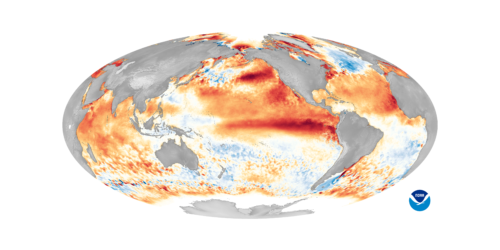
“By now, you’ve seen the headlines, and there’s more of them every day: It’s “jaw-dropping.” It’s poised to make global warming worse. California has just declared a statewide state of emergency. This year’s El Niño — a shift in Pacific Ocean trade winds that scrambles global weather patterns — has been hotly discussed as one of the strongest on record, and one that could bring about potentially disastrous consequences. One study projects that it may cause as many as 451,000 heat-related deaths around the world by February. The current El Niño has also been given an array of eye-catching descriptors. When Jeffrey Shaman, a climatologist at Columbia Climate School, heard the phrase “super El Niño” for the first time earlier this year, he said, “I literally googled it.” The phrase isn’t officially used by the National Oceanic and Atmospheric Administration or the World Meteorological Organization. But he still sees value in the label as a way of communicating the significance of this year’s likely unprecedented El Niño to the general public. “It’s colloquial, and there’s nothing wrong with that at all,” Shaman said. … ” Read more from Grist.
Newsom declares state of emergency as California prepares for historic El Niño this winter
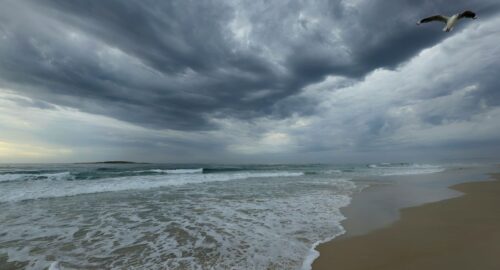 “Gov. Gavin Newsom on Monday declared a statewide emergency for California, warning of damaging storms that could be generated this winter from a historically strong El Niño brewing in the Pacific Ocean. The move is the latest sign that emergency officials are growing increasingly concerned about flooding, landslides, coastal damage and power outages as winter approaches. The declaration fast-tracks permits for flood protection projects and allows state agencies to obtain emergency supplies without the usual competitive bidding process. “We are preparing for this El Niño early because every Californian deserves to be safe in their home, connected to their community and protected when severe weather comes,” Newsom said. Earlier this month, scientists at NOAA, the National Oceanic and Atmospheric Administration, said there is a greater than 90% chance of a “very strong” El Niño being present in October, November and December, and a 75% probability that it will rank as the strongest in history since modern records began in 1950. … ” Read more from the San Jose Mercury News.
El Niño planning must include dredging the Sacramento-San Joaquin Delta
“On September 21, Governor Gavin Newsom declared a state of emergency due to the “strong and likely historic El Niño event in the Pacific Ocean.” The timing of the announcement is in response to the latest predictions from the National Oceanic and Atmospheric Administration, estimating a 90 percent chance of a “very strong event during the Northern Hemisphere fall and winter of 2026-27.” In the Executive Order that accompanied Newsom’s emergency proclamation, he directs state agencies to “prioritize permitting, consultation, and technical assistance to support local efforts,” and among the efforts noted are “sediment management” and “channel-capacity improvements.” He does not, however, specify the area where sediment buildup poses the most acute danger to the entire state, which is the Sacramento-San Joaquin Delta. The main stem of the San Joaquin River, as well as most channels in the southern delta, are dangerously clogged with sediment. If the predicted super El Niño brings extreme rains, flood waters will overwhelm the levees. The disastrous floods that hit when the San Joaquin overflowed in 1997 mostly inundated open space, but today much of that area has new homes. … ” Read more from Edward Ring.
California’s biggest reservoir project in decades clears major obstacle
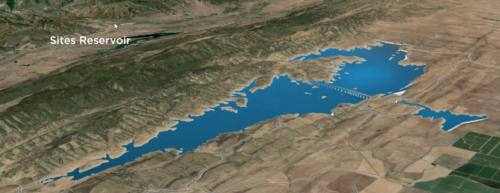
“The developers of a new, massive Northern California reservoir say they’ll have enough water to pursue their $6 billion venture, laying to rest their previous concerns that the project 70 miles northwest of Sacramento might not be viable. The proposed Sites Reservoir, billed as a remedy for the state’s chronic water shortages, appeared to be at risk earlier this year when state regulators outlined how much water the facility could draw from the Sacramento River, and when those draws could occur. Supporters of the reservoir said the terms would yield as little as half the water needed to make the project worth the cost. The state’s terms were established to protect river flows and ensure fish, wildlife and other water users wouldn’t be harmed by the facility. But two weeks ago, after pushback from Gov. Gavin Newsom and other advocates, the State Water Resources Control Board relaxed the conditions laid out in the reservoir’s proposed water right, allowing more water to be taken. Regulators said new data suggested that they’d been overly restrictive. … ” Read more from the San Francisco Chronicle.
NOW AVAILABLE: Public Comments on Final Draft Bay-Delta Plan
“On August 19, 2026, the State Water Resources Control Board (State Water Board) released a final draft of updates to the Water Quality Control Plan for the San Francisco Bay/Sacramento-San Joaquin Delta Watershed (Bay-Delta Plan or Plan) for public review and comment. The changes are focused on the portions of the Plan relevant to the Sacramento River watershed, Delta eastside tributaries (including the Calaveras, Cosumnes, and Mokelumne Rivers), and Delta (Sacramento/Delta) for the reasonable protection of fish and wildlife beneficial uses. The final draft Bay-Delta Plan is available here. Written comments were due on September 18, 2026. Comments are now available on the State Water Board’s file transfer protocol (FTP) site. … ” Click here for information on how to access the comments.
This major California river has gotten too warm for its salmon
Sara Nevis / DWR
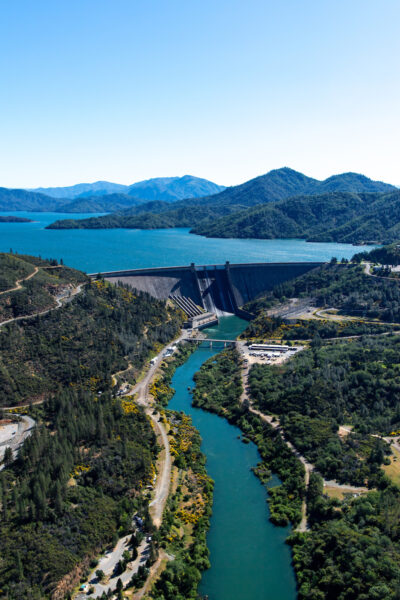
“Chinook salmon have been laying eggs in gravelly nests in the Sacramento River for millennia. But California’s biggest river is now so warm that biologists expect a significant number of the eggs won’t hatch. Environmental advocates blame the Trump administration. They say the federal government took too much water out of Shasta Lake for farms in the Central Valley, leaving the reservoir too warm for many salmon eggs to survive in a vital spawning area downstream from Shasta Dam. “The fish are not being protected,” said Jon Rosenfield, science director of the nonprofit group San Francisco Baykeeper. “We know that those eggs are getting cooked.” It’s happened in previous years. Chinook salmon need cold water for their eggs to survive. When it gets warmer than 53.5 degrees, it becomes lethal. … ” Read more from the LA Times. | Read via Yahoo News.
How managed wetlands are boosting food production in Suisun Marsh
“Suisun Marsh is a rich and vibrant environment, teeming with growth and wildlife. DWR is harnessing that natural productivity to explore a new approach to ecosystem improvement – one that works with the marsh’s ability to produce the food and habitat native species need to thrive. This approach involves strategically managing wetlands to produce and export tiny, shrimp-like organisms called zooplankton that super-charge the food web to the benefit of native fish species. It involves adjusting water levels, tracking food web production and modeling how that food moves through Suisun Marsh. “Normally these sites are dry in the summer, which means production is zero,” said Rosemary Hartman, DWR environmental program manager. “Now that these sites are wet, there are zooplankton out there, and they are at way higher densities than you get in the surrounding sloughs.” Importantly, this effort isn’t driven by the needs of any single species. Its value is cumulative, with benefits that extend across the ecosystem — from improving ecological conditions to deepening the collective understanding of how the Delta functions and how it can be best managed for the future. … ” Read more from the Department of Water Resources.
How San Francisco Bay can learn from decades of estuary recovery efforts across the United States
 “San Francisco Bay is the largest estuary in California, with a watershed that drains 40 percent of the state’s freshwater runoff. Over the past 200 years, like much of the country’s estuarine environments, the Bay’s watershed has been extensively altered by large-scale development associated with agriculture and urbanization, resulting in floodplain and wetland loss, and inflows have been redirected and reduced. This type of development and modification can have significant effects on estuarine systems. Stormwater runoff and wastewater discharges deposit elevated levels of nutrients, including nitrogen and phosphorus, which have the potential to contribute to harmful algal blooms (HABs) and deplete levels of dissolved oxygen (DO), which can kill fish and cause the loss of important habitats like seagrass meadows. This sequence of events is a process known as eutrophication. However, unlike many estuaries in other parts of the United States, such as the Chesapeake Bay in Maryland and Virginia or Tampa Bay in Florida, San Francisco Bay did not exhibit clear signs of ecological impact from nutrient enrichment for most of the 20th century. That has been changing. … ” Read more from Environmental Science Associates.
New research tracks predatory fish in the Delta to benefit threatened salmonids
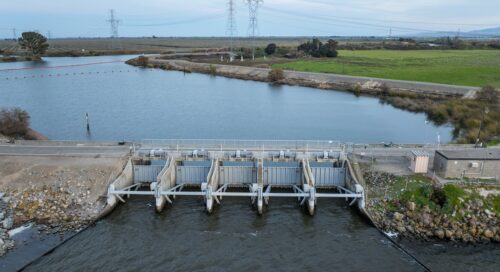
“Spanning more than 705 miles, California’s State Water Project supplies water to nearly 27 million residents and agricultural users through an extensive network of reservoirs, pumping and power plants, canals, tunnels, and pipelines. Unfortunately, there have been adverse effects on sensitive native fish populations over the decades throughout the State Water Project water system, particularly for listed species such as endangered Sacramento River winter-run Chinook salmon and threatened steelhead trout. One area of particular concern is Clifton Court Forebay (CCF), a 6-square-mile reservoir at the southern end of the Sacramento–San Joaquin Delta (Delta). CCF and its basin serves as the starting point for the 400-mile California Aqueduct. Over the past 17 years, multiple studies have been conducted at the reservoir as the California Department of Water Resources (DWR) works to address declining salmonid populations. Migrating juvenile salmonids are especially vulnerable to predators such as striped bass, which were introduced into the Delta in the late 19th century. … ” Read more from Environmental Science Associates.
Tracking Harmful Algal Blooms in the Delta
“By late summer, harmful algal blooms are a familiar sight in parts of the Sacramento–San Joaquin Delta—but understanding when they will form, whether they are toxic, and how to reduce their impacts remains a complex challenge. Cyanobacterial harmful algal blooms can threaten people, pets, wildlife, aquatic ecosystems, and water operations, yet monitoring across the region remains fragmented. The Delta Stewardship Council’s examination of harmful algal blooms began at its July 23 meeting, when Delta Lead Scientist Dr. Lisamarie Windham-Myers provided a “HABs 101” overview during the Delta Lead Scientist Report. The discussion continued at the Council’s August 27 meeting in Stockton, where a panel of scientists and agency experts described efforts to build a coordinated, Delta-wide monitoring program. The panel examined what drives blooms, how biological data could improve forecasts, progress on the 2024 Delta CHAB Monitoring Strategy, and new tools—including a standardized visual index and potential phone app—that could help managers identify risks earlier and respond more effectively. … ” Read more from Maven’s Notebook.
Rethinking mercury reduction in the Delta
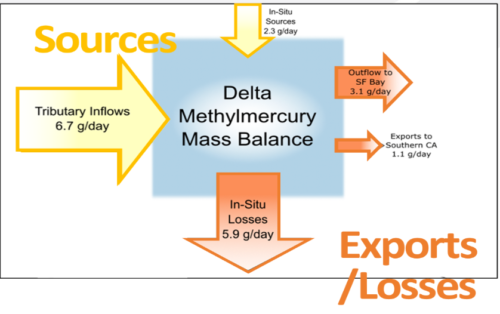 “At a September 3 workshop, Central Valley Water Board staff outlined proposed changes to the Delta Mercury Control Program following the completion of Phase One studies and an ongoing review of the program. New data indicate that the current TMDL allocations and 2030 attainment date are not achievable under the existing approach, prompting staff to consider extending the timeline and revising allocations to better reflect the sources of methylmercury entering the Delta. Methylmercury poses serious risks to human health and wildlife. This potent neurotoxin can damage the brain and central nervous system and impair reproductive and immune functions. It forms when environmental conditions convert inorganic mercury and then bioaccumulates and biomagnifies through aquatic food webs, reaching harmful levels in fish and prompting consumption advisories. … ” Continue reading at Maven’s Notebook.
Here’s what California is learning from solar panels built over irrigation canals
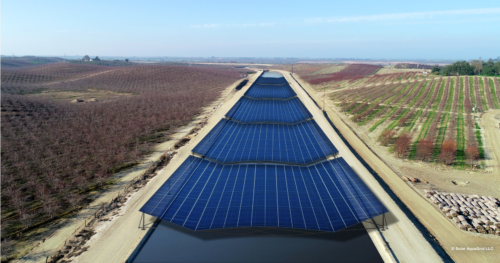
“Driving from Los Angeles to San Francisco, Jordan Harris saw the concrete canals that transport water across the state slowly evaporating under the scorching West Coast sun. … Thinking back to the baking concrete canals, Harris pitched an “obvious” solution to his friend Robin Raj: Why not build solar panels on top of California’s 4,000 miles of open canals that transport water across the state? The panels would produce clean energy while limiting evaporation by shading the canal — a win-win. The duo went on to start Solar Aquagrid, an advocacy firm dedicated to reimagining aging canals, and partnered with the Turlock Irrigation District, UC Merced and the California Department of Water Resources to cover small sections of Turlock’s canals with solar panels. The new “solar canal” provides shade to limit evaporation and generates power all in one neat package. They call it Project Nexus, and it operates at the intersection of the state’s need for clean water and energy. Project Nexus tests not one, but three different solar canal models. … ” Read more from KQED.
Groundwater agencies seeking relief from state sanctions will have to pay $50k-$250k just to apply
“Any groundwater agency hoping to independently avoid state sanctions under the so-called “good guy” clause of the Sustainable Groundwater Management Act (SGMA) will have to pay between $50,000 and $250,000 just to be considered. That’s how much the state Water Resources Control Board staff says it costs to review the technical and often voluminous exemption requests. The $50,000 to $250,000 tiers are based on the percentage the requesting groundwater agency pumps from the subbasin and are intended to “…cover appropriate staff expenditures with the need to avoid discouraging legitimate exclusion requests,” according to David Ceccarelli, branch chief with the Division of Water Quality. The Water Board approved the good guy application fees at its Sept. 15 meeting and got an update about how well – or not – Tulare County farmers have been paying other fees. … ” Read more from SJV Water.
The end is coming for California’s untouchable grass
 “Just a few months remain before swaths of California grass irrigated with potable water must be eliminated, browned, or converted to less water-intensive landscaping. The impending shift stems from a new rule, passed in 2023, that prohibits using drinkable water to irrigate nonfunctional turf. The law — AB 1572 — takes effect on the first day of January 2027 and applies to local government properties. Other property types will come under the law’s scope in the following years — commercial, industrial, and institutional properties in 2028 and common areas of homeowner association properties in 2029. Fines for noncompliance can reach up to $1,000 per day that the violation continues. The new law, according to estimates from the Oakland-based water conservation thinktank Pacific Institute, could cut urban water use by more than a fifth. A report from the State Water Resources Control Board states that grass is “the largest component of vegetation water demand” year-round and statewide. … ” Continue reading at Knee Deep Times.
New California rules target dairy manure pollution, groundwater contamination
 “Over 900 dairy farms and millions of cows — that’s what takes up much of California’s Central Valley. Now, those same farms face a new reality: stricter regulations on water pollution. “Mark my words, what you guys do here today will further consolidate the industry,” Milk Producers Council General Manager Kevin Abernathy said. The State Water Resources Control Board’s unanimous decision last week has gotten mixed reactions from advocates and opponents. The board says the goal of the new limits is to reduce discharges from nitrogen, a natural component of manure. That eventually seeps into the soil, waterways and groundwater. That can then lead into drinking water. Advocates say this poses a major risk. … ” Read more from CBS Sacramento.
SAFER program safe – for now
 “Funding for a state drinking water program, vital to many communities throughout the San Joaquin Valley that struggle with groundwater contamination and scarcity, is secure for one more year after Gov. Gavin Newsom signed three budget bills into law on Friday. The Safe and Affordable Fund for Equity and Resilience (SAFER) program has $171 million to pay for emergency supplies when homes, or entire communities, go dry, and fund efforts to identify long-term water solutions throughout the state. The funding came after a harrowing ride through the legislature this summer. SAFER was all but gutted in the spring, with $68 million. That is less than half of its previous annual funding of $130 million. … ” Read more from SJV Water.
Newsom signs bills regulating data centers’ water, energy use
“Data centers in California will face a slew of new regulations preventing them from passing electricity costs to residents and require the facilities to report their energy and water use. The new laws come as Congress struggled to pass legislation to tame voters’ anxiety over the costs associated with data centers ahead of the midterm elections. California Gov. Gavin Newsom signed a pair of measures (SB 886 and AB 2383) Monday that will create special energy rates for data centers by 2028 and require them to pay for infrastructure upgrades needed for their operations. He also signed into law bills requiring data centers to report their annual water usage (AB 2619) and energy consumption (AB 1577). Another bill, AB 2469, requires facilities to disclose their estimated water use when applying for or renewing a business license and be financially responsible for new infrastructure needed. These are the first major bills to become California laws targeting the facilities. … ” Read more from Bloomberg.
America’s water systems face a growing cybersecurity threat
“America’s water systems are increasingly in hackers’ crosshairs. In recent years, dozens of water utilities experienced cybersecurity attacks that forced them to take systems offline, operate manually, or suspend billing or customer account services. Over just a few days this past July, the FBI received reports of cyber incidents affecting water systems across at least seven states. Although most incidents have not contaminated water or caused sustained outages, cyber threats are increasing as more utilities adopt internet-connected technologies—often without appropriate safeguards. Preventing, responding to, and recovering from cyberattacks can impose significant costs on utilities, including for cybersecurity training and staff, vulnerability assessments, and software and equipment upgrades. “Things that even 10 years ago we never thought about are all now adding to the cost of what it takes to run a water supply system,” said Mike Grimm, vice chair of the American Water Works Association’s Water Utility Council, earlier this year. … ” Read more from Governing.
In commentary this week …
Ducks Unlimited on why Healthy Rivers and Landscapes works for waterfowl, wildlife and California
“Each winter, millions of waterfowl travel the Pacific Flyway, one of North America’s major bird migration routes, relying on California’s wetlands, rivers and working lands to rest and refuel along the way. The Sacramento Valley is especially important, providing critical wintering habitat for waterfowl along the Flyway. For Jeff McCreary, Director of Operations for Ducks Unlimited’s Western Region, protecting this migration “superhighway” illustrates why water management in California must consider the connections between rivers, wetlands, working lands, fish, wildlife and communities. It is also why Ducks Unlimited supports the Healthy Rivers and Landscapes (HRL) program. … ” Read more from the Northern California Water Association.
Delta Coalition slams Bay-Delta Plan for failing to comply with law
“Today, the Delta Tribal Environmental Coalition (DTEC)—consisting of the Shingle Springs Band of Miwok Indians, Winnemem Wintu Tribe, Little Manila Rising, and Restore the Delta— submitted comments on the updated San Francisco Bay-Delta Water Quality Control Plan (“Bay-Delta Plan”), a critical policy guiding water quality, river flows, and ecosystem protections for the state’s largest and most fragile estuary. The updated plan drew immediate opposition from the coalition for failing to make meaningful changes to address longstanding Tribal, environmental justice, and ecological concerns. “Protection of Tribal sovereignty and beneficial water uses cannot be achieved through approval of voluntary agreements that excluded tribes. This is the Board’s final opportunity to reverse course and do the right thing,” said Vice Chair Malissa Tayaba, Shingle Springs Band of Miwok Indians. Among DTEC’s central concerns is the plan’s reliance on Voluntary Agreements (VAs), privately negotiated deals allowing powerful water districts to offer limited flow commitments and funding in exchange for exemptions from stronger, enforceable regulatory requirements. … ” Read more from the Delta Tribal Environmental Coalition.
State’s voluntary agreements threaten Klamath-Trinity salmon recovery
Regina Chichizola, a co-founder and director of Communities United for Water Protection, writes, “Right now, water is being released from Trinity River reservoirs to aid struggling salmon on the Klamath River. This federal action, part of the Lower Klamath Long Term Plan, and coordinated with the Hoopa and Yurok Tribes, should help avoid an otherwise imminent fish kill from low flows and warm temperatures. It will also help wash out toxic and attached algae, which plague the Hoopa Valley Tribe’s drinking water supplies and Klamath and Trinity River swimming and fishing activities. Governor Newsom says this is the type of action that California supports. Working with Tribes, counties, and the federal government to protect rebounding salmon runs after a major dam removal project is a win-win. However these types of flow releases are threatened by California’s Bay Delta water quality decisions. If California’s Water Quality Control Board does not act to protect the Trinity River, and/or deny the Bay Delta Voluntary agreements, this water may not be available in future years. The fact is the Governor and Water Board are letting politics and power decide who gets water, and that is a much bigger threat to the Klamath River, and salmon recovery, than people realize. … ” Read more at the Eureka Times-Standard.
C-WIN: Voluntary agreements are unjustified and do not satisfy the board’s duty to protect the Bay-Delta ecosystem
“The California Water Impact Network (C-WIN) has submitted comments to the State Water Resources Control Board on the Final Draft Bay-Delta Plan, emphasizing that approval of the plan’s Voluntary Agreements without evidence for their effectiveness would be arbitrary, capricious, catastrophic to the Bay-Delta ecosystem, and unfair to ratepayers. C-WIN also noted that the Board must follow the law and reject Trump administration claims that the US Bureau of Reclamation is not subject to state rules for operating the Central Valley Project, which supplies massive quantities of water to Central Valley agriculture. Max Gomberg, C-WIN’s Senior Policy Advisor and Board Secretary, said the Board pursued voluntary agreements for a decade without ever presenting evidence for why they would be more effective than regulation for restoring California’s salmon populations. The plan’s voluntary agreements allow large contractors to provide limited additional river flows and habitat restoration rather than submit to standard regulation that requires more flows to maintain healthy fish populations. … ” Read more from C-WIN.
California needs a better way to pay for water infrastructure
Michelle Paul, Executive Director of the California Farm Water Coalition, writes, “California’s water system is running on borrowed time. While the state continues to innovate, its water delivery systems have not kept pace. Aging infrastructure, outdated regulations, and unreliable funding have left California more vulnerable to shortages, floods and weather extremes. Decades of growth are still being supported by water delivery systems built for half the population. California needs more water storage capacity but has not provided a clear or reliable funding source to put plans into action. Today’s structure relies on one-off financing to maintain or build large-scale water projects, leaving ratepayers to cover what grants and bonds cannot finance. The Sites Reservoir project is a good example. … ” Read more from Comstock’s.
State continues to leave Butte County underwater with Oroville Dam
Bill Connelly, chair of the Butte County Board of Supervisors, writes, “Growing up, Oroville was the kind of small California town where people knew their neighbors and children learned the Feather River by heart. Families fished its banks, swam its currents, and built ordinary lives around an extraordinary river. That was until the 1950s, when the State of California came with a proposition. Right here in Butte County, they planned to build the nation’s tallest dam, serving as the headwaters and keystone facility of the State Water Project (SWP). … The state understood the infrastructure would impose a significant burden on Butte County, so it offered us a vision of mutual gain: grandiose attractions and recreation facilities designed to accommodate 12.5 million visitors each year, creating an economic engine that would help offset our costs of hosting the dam.Imagine what that sounded like to a working town in Northern California: We would give something up, but we would build something together. That bargain never materialized. … ” Read the full commentary at the Chico Enterprise-Record.
California Never: Why tech billionaires can’t build their new city
“I can’t count the number of times I’ve heard people flying over the vast American West for the first time exclaim: “Who says we don’t have plenty of room for millions more people? There’s nothing but empty space down there!” Now, these are not necessarily people with master’s degrees in urban planning, to be sure. Empty space is one thing; water is another. … Could we build a California city today? We certainly need one—or five, or 10. There’s not enough housing for those of us here already, not to mention for our grandchildren. Civilizations have been building cities ever since we emerged from the caves. Can-do Americans can do anything we put our minds and backs to, right? Wrong. You can’t build a new city in our state, at least not easily. … ” Read more from the LA Daily News.
Gov. Newsom should veto biomass bill
Shaye Wolf, Ph.D., climate science director at the Center for Biological Diversity, writes, “What would you think if Gov. Gavin Newsom signed a bill declaring that junk food was healthy, and that funneled millions from health programs to the junk food industry? That would be absurd. But a costly, pro-industry biomass energy bill now on the governor’s desk does something similar. If signed into law, Assembly Bill 706 would prop up the state’s dirtiest, most expensive, most inefficient electricity source — biomass energy made by burning or gasifying trees — by declaring it clean. The bill would raid the state’s Greenhouse Gas Reduction Fund — meant for investments in clean energy and climate resiliency — to pay the biomass energy industry to expand its polluting operations. This would waste up to tens of millions of dollars each year. … ” Read more from Capitol Weekly.
California’s wildfire bills need water safeguards written into law
“The Trump administration is promoting the herbicide glyphosate as the U.S. Forest Service expands its use on California public lands. Now, wildfire bills could fast-track comparable herbicide-treatment projects without requiring baseline water testing or downstream monitoring. Senate Bill 1370 would create a consolidated, expedited process for covered wildfire-mitigation projects. It would exempt covered projects from the California Environmental Quality Act (CEQA), California’s main environmental review law, and allow waivers of specified requirements. Assembly Bill 2410 would exempt qualifying fuels-reduction projects from CEQA if they comply with the 2025 Statewide Fuels Reduction Environmental Protection Plan and specified conditions. SB1370 excludes herbicide treatment from its covered-project pathway; AB 2410’s CEQA exemption does not itself establish uniform, water-specific safeguards wherever herbicide treatment is authorized. California’s own record shows why lawmakers must require water safeguards before accelerating or exempting herbicide-treatment projects. … ” Read more from Capitol Weekly.
Protecting California’s coastal waters helps heal the ocean — and its tribal caretakers
Eva Pagaling, a community member of the Samala, the Santa Ynez Band of Chumash Indians and the Yakama Nation, writes, “My path to advocating for ocean protection began when I was about 10, watching my dad and other Chumash community members build our traditional maritime tomols, or canoes, using redwood planks and yop, the tar and pine pitch. Our tomols link generations of our people, who have paddled and fished in our ancestral waters off California’s Central Coast for millennia. From San Luis Obispo to Malibu and the Northern Channel Islands, our people have fostered a reciprocal relationship that has sustained thriving marine ecosystems. Colonization nearly severed our maritime traditions, beginning with the forced removal of our people from our islands and coasts. During the 1800s, our ancestors were enslaved to construct the California mission system. That led to the padres burning all our tomols, an act of ethnocide intended to break our spiritual and physical ties to the ocean. … ” Read more from Cal Matters.
In regional water news this week …
Building momentum the focus for Nature-Based Solutions Forests and Mountain Meadows Summit
“In its efforts to combat the impacts of climate change and help protect communities and landscapes from extreme weather events, such as wildfires, the state is harnessing one of its greatest powers: Nature. Since 2020, California has invested billions in funding to advance nature-based solutions – projects that restore health and resilience to the land to protect natural resources and communities while also durably storing carbon. These projects come in many forms, such as removing overly dense fuels from forests, using beneficial fire to prevent more damaging wildfires, restoring mountain meadows, and replanting forests after a high-severity wildfire. By working with nature, these efforts strengthen ecosystems while also helping landscapes adapt to a changing climate. To build momentum around efforts to advance these critical solutions and celebrate initial progress, the California Natural Resources Agency is organizing a series of NBS summits across the state. The California Natural Resources Agency, Sierra Nevada Conservancy, California Tahoe Conservancy, and The Nature Conservancy hosted one of these summits focused on forests and mountain meadows in Tahoe City on Thursday, Sept. 10. … ” Read more from the Sierra Nevada Conservancy.
Keep Tahoe Blue installs machines to guard against invasive species
“Earlier this month, Keep Tahoe Blue and its partners installed four new mobile, solar-powered watercraft cleaning stations with onboard tools to make it easy for anyone to Clean, Drain, and Dry their gear and help stop the introduction and spread of aquatic invasive species in the Lake Tahoe region. The stations, called “CD3 Outpost Blue” machines — for clean, drain, dry and dispose — were placed at Baldwin Beach and along the shores of Fallen Leaf Lake in coordination with the U.S. Forest Service and the ExplorUS concessionaire that manage these public lands on the Lake Tahoe Basin Management Unit. Istallation of the new machines is part of a coordinated and growing effort to prevent harmful invasive species from spreading in local waterways. Keep Tahoe Blue strongly encourages all paddlers, anglers and beachgoers to use the new stations on all their nonmotorized water gear, from kayaks and paddleboards to floaties, fishing gear and life vests. … ” Read more from the Mountain Democrat.
Microplastics concentrations in the Truckee River surge during high spring flows, new study finds
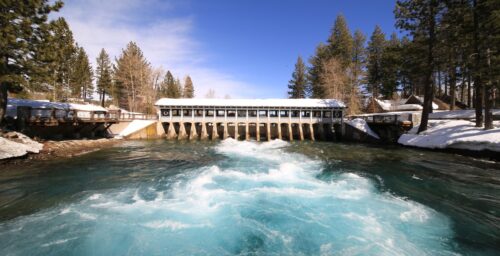
“The ubiquitous plastics of modern life are degrading into tiny fragments and littering Earth’s landscapes and waterways. Scientists are starting to examine and measure this phenomenon to better understand how microplastics move through the environment and ultimately impact human and environmental health. A new study focuses on the Truckee River, which stems from the clear blue waters of Lake Tahoe and traverses through Reno and Sparks, Nevada, before reaching Pyramid Lake. The research sought to illuminate the concentrations and types of plastics accumulating throughout the river — which supplies drinking water to nearly half a million people. Published September 15th in ACS EST Water, the research was led by Hannah Lukasik, former master’s student at DRI and the University of Nevada Reno. She was mentored by Monica Arienzo, Director of DRI’s Microplastics and Environmental Chemistry Lab. The group sampled microplastics at several sites upstream and downstream of Reno, Nevada, in fall 2022 and spring 2023. … ” Read more from Desert Research Institute.
Designed and delivered: Napa River restoration
“ESA’s approach to restoring and revitalizing the Napa River began with devising highly functional and complex restoration nodes for the severely incised and degraded river. Historically, the Napa River was a dynamic network of multithreaded channels within a broad alluvial valley. A vast array of native plants and animals, including salmon and beavers, once thrived in the valley’s riparian and wetland habitats. Over the past two centuries, land use changes have altered the watershed and severely degraded habitat conditions. Land cultivation and development required a network of berms and ditches to channelize and drain the valley. Such land uses also increased impervious surfaces. The combination of channelization and impervious surfaces drastically increased the amount of runoff to the Napa River during storm events, causing an imbalance in stream flow and sediment supply. This imbalance led to a process known as incision, where excess stream flow erodes the river’s bed and banks to deeper, wider dimensions. As incision ensued, the river became disconnected from its natural floodplain, which further confined flows and exacerbated erosion. … ” Read more from the Environmental Science Associaties.
Bay Area: Coordination among wastewater treatment plants could save rate payers money
 “Treating polluted water flowing into San Francisco Bay to meet regulatory requirements is going to cost ratepayers money. Exactly how much depends, in large part, on whether the region’s wastewater treatment plant operators are willing and able to coordinate infrastructure construction and operation to meet these requirements, according to a Stanford University study published Sept. 24 in Nature Water. The paper features a framework that calculates the most cost-effective way for multiple treatment facilities to jointly plan, build, and operate infrastructure to remove excess nitrogen from wastewater before it is discharged to the bay. Applied to three Bay Area treatment plants within a few miles of each other, the tool found that coordination could cut total capital and operating costs by up to 48 percent, a savings of $268 million over 30 years compared to the cost of building infrastructure independently. “If you don’t coordinate, each facility has to build and finance small infrastructure projects on its own,” said study lead author Sinan Abi Farraj, a PhD student in civil and environmental engineering in the Stanford Doerr School of Sustainability and School of Engineering. “The coordinated solution reduces how much infrastructure gets built and how much that infrastructure costs.” … ” Read more from Stanford’s Woods Institute for the Environment.
Madera County residents plagued by dry wells surprised, and hopeful, that new recharge basin will help in dry times
“When longtime Fairmead resident Vickie Ortiz heard the neighboring Madera Irrigation District wanted to meet with her community advocacy group, she said, “Sure, we’ll meet with anybody.” One of Fairmead and Friends’ biggest concerns is water. Community members, including Ortiz, noticed water tables dropping in the 432-home enclave as almond orchards started popping up around it five to 10 years ago. Then in the devastating 2020-22 drought, domestic wells dried up, leaving residents mostly dependent on one county-operated well. Residents spent two years working with Madera County under a Climate Resilience Challenge grant seeking solutions. … ” Read more from SJV Water.
Clock is ticking for Kings County groundwater agencies to control their own fate
“Kings County groundwater agencies are now in a race to head off mandatory state pumping limits, which could be imposed by the end of 2027. Water managers are scrambling to get a new, unified groundwater plan to the state Water Resources Control Board by April 2027 that they hope regulators will approve. But Water Board staff has already begun writing its own mandatory pumping plan for the region expected to be released next summer. Given the severe subsidence, or land sinking, in the Tulare Lake subbasin, which covers most of Kings County, the state plan will likely include stringent pumping limits. Or even pumping moratoriums, as a recently released state plan could impose on farmers in the neighboring Tule subbasin. … ” Read more from SJV Water.
Colorado River cuts could fall heavily on Southern California water agency, Pasadena representative says
“The Metropolitan Water District of Southern California (MWD) could bear or pay for most of California’s required Colorado River water cuts in 2027 and 2028, Pasadena’s representative on the district’s board warned in a written update to the city’s Municipal Services Committee Tuesday. In a written report, former City Manager Cynthia Kurtz said negotiations are continuing over how California will divide a required reduction of 440,000 acre-feet per year. Metropolitan has junior Colorado River water rights within the state, she wrote, while much of California’s river water goes to agriculture. The city gets about two-thirds of its total water supply from MWD, which splits its imported supplies between the Colorado River and Northern California’s State Water Project.“Because of its junior rights, MWD will in all likelihood be responsible for making or paying for the majority of the cuts in 2027 and 2028,” Kurtz wrote. She said the effect on Metropolitan’s conservation programs and water rates remains unknown. … ” Read more from Pasadena Now.
As El Niño looms, Orange County is in a desperate race for sand
“Some of Southern California’s famous beach towns are suddenly finding themselves short on their most notable public resource: coastal sand. And with an eye-opening, powerful El Niño on the horizon, the timing couldn’t be worse. The upscale Orange County community of Newport Beach has invoked a new emergency permit this week that will allow the city, in partnership with Orange County Public Works, to pull some 200,000 cubic yards of sand from the nearby Santa Ana River. The sediment is expected to help shore up jetties and other protective coastal areas that have been battered this season by hard surf and high swells. Without replenishment and other coastal preparedness work, communities like Newport Beach become vulnerable to flooding and larger issues, including the disintegration of vital roadways, the exposure and deterioration of underground infrastructure, and even the loss of private coastline homes and businesses. … ” Read more from SF Gate.
The California surf spot with epic waves—and rusty metal spikes
“Ronan Collins is used to navigating giant waves and unpredictable currents when he paddles his surfboard out near the inlet that bisects this ultrawealthy beach town. He’s still getting to know the boulders, wooden pilings and shards of rusty metal. Southern California’s most dangerous surf spot, the Wedge, has become even sketchier in recent months. Nonstop swells combined with a “super” El Niño phenomenon have washed away truckloads of sand from Newport Beach and other parts of the California coast, exposing hazards buried a century ago. They’ve also delivered some of the best waves anyone here can remember. “It’s been great,” Collins, 21, said as he waxed his board atop a six-foot-high sand cliff that’s edging ever closer to $20 million oceanfront homes. He tries not to think about the possibility of getting skewered on ancient rebar. “Good thoughts and good vibes,” he said. … ” Read more from the Wall Street Journal (unlocked article).
Feds find Tijuana River pollution poses public health hazard in San Diego
“A report on the Tijuana River pollution crisis from the U.S. Department of Health on Wednesday confirmed what many people living in San Diego County have long suspected: Air pollution from the river has reached levels capable of harming their health. The federal health assessment from the department’s Agency for Toxic Substances and Disease Registry found residents may experience headaches, nausea and respiratory congestion, among other symptoms, as a result of a high concentration of hydrogen sulfide coming from the Tijuana River. Residents in San Diego’s South Bay have complained of sulfurous odor in the area for years, which has worsened as the city of Tijuana’s infrastructure has been unable to match its unprecedented growth. The agency found hydrogen sulfide levels exceeded the odor threshold of .5 parts per billion at all four Tijuana River Valley air quality monitoring sites in 93% of its 30-minute samples. In one instance, a 30-minute average of hydrogen sulfide at its Leon Avenue monitoring station reached a high of 3,021 ppb in September 2024, far above the 2,000-ppb level associated with health effects in humans. … ” Read more from the Courthouse News Service.

