

Several news sources featured in the Daily Digest may limit the number of articles you can access without a subscription. However, gift articles and open-access links are provided when available. For more open access California water news articles, explore the main page at MavensNotebook.com.
On the calendar today …
- MEETING: Delta Stewardship Council beginning at 9:30am in West Sacramento. Agenda items include Consideration and Possible Appointment of the Delta Lead Scientist, A Quick-Start Guide to the Council’s Delta Plan Performance Measure Dashboard, and the Tide’s End Multibenefit Project. Click here for the meeting agenda.
- WEBINAR SERIES: Expanding Recharge and Preparing for Wet Weather: On-Farm Recharge Guidance for Practitioners from 11am to 12:30pm. Growers are essential partners in expanding groundwater recharge—and successful implementation of local groundwater sustainability plans will depend on making on-farm recharge practical, effective, and workable in the field. Join us for a special 90-minute Recharge Readiness session focused on the nuts and bolts of on-farm recharge. Hear about the experience of growers implementing on-farm recharge projects including what they’ve learned about field preparation, recharge methods, crop considerations, and implementation on a variety of crop types. And, explore practical resources to help growers implement on-farm recharge. Presenters: Rogell Rogers, Wendy Rash, and Roshni Katrak-Adefowora of Sustainable Conservation; Nick Blom, grower. Click here to register. Click here for a flyer.
- EVENT: SB 552 Drought Resilience Symposium from 1pm to 5pm in Sacramento. DWR is pleased to announce the upcoming symposium to recognize Senate Bill (SB) 552 accomplishments on Thursday, September 24, 2026; 1-5 pm at the CNRA Auditorium. Over the past five years since passing of SB 552 in 2021, California has made strides in strengthening drought preparedness for small water systems and rural communities through collaboration, innovation, and local leadership. As we reached the five-year mark, we invite you to join us to reflect on progress, celebrate accomplishments, and help shape the next chapter of this important effort. The symposium will bring together local, regional, state, and community partners to share lessons learned, explore emerging opportunities, and build momentum for continued action and collaboration. We hope you will join us for this important and inspiring conversation and be part of advancing drought resilience in rural California. Participation will be in-person, please register to attend: https://forms.cloud.microsoft/g/SHhqMdUGUE. The event will also be livestreamed on YouTube for viewing: https://youtube.com/live/2LnmYitoLr4?feature=share.
In California water news today …
SAFER program safe – for now
 “Funding for a state drinking water program, vital to many communities throughout the San Joaquin Valley that struggle with groundwater contamination and scarcity, is secure for one more year after Gov. Gavin Newsom signed three budget bills into law on Friday. The Safe and Affordable Fund for Equity and Resilience (SAFER) program has $171 million to pay for emergency supplies when homes, or entire communities, go dry, and fund efforts to identify long-term water solutions throughout the state. The funding came after a harrowing ride through the legislature this summer. SAFER was all but gutted in the spring, with $68 million. That is less than half of its previous annual funding of $130 million. … ” Read more from SJV Water.
California prioritizes safe drinking water funding
“Last Friday afternoon, Governor Newsom signed budget bills AB 113, SB114, and SB193 into law, authorizing $171M for SAFER for the 2026-27 fiscal year. This is a significant shift from the $24 million estimate projected in July. Community partners, allies, and strong leadership headed by Senator Melissa Hurtado and Assemblymember Esmeralda Soria made this critical change possible to secure safe water funding. Now is the time to make sure this investment in safe water is permanent, and to ensure that water is affordable. “Living in the Cutler Orosi area, we realize that if SAFER loses funding we would be lost when we think about the dry wells that happen and the emergency bottled water we need,” said Angie Moreno, AGUA coalition member from the San Joaquin Valley. “We appreciate that the Governor has visited our communities like East Orosi and it is great we have this funding secured, but we need to make sure that years down the line, we still have funding so my community can finish the work and consolidate to have safe drinking water.” … ” Read more from the Community Water Center.
This JPL satellite mission is burning through its funding. One reason: the Eaton fire
 “The next phase of a highly successful satellite mission led by NASA’s Jet Propulsion Laboratory has burned through its rainy day fund and now risks cost and schedule overruns, according to a new report. One of the culprits: the 2025 Eaton fire, which came within a mile of the La Cañada Flintridge research facility. The mission is the newest generation of the Gravity Recovery and Climate Experiment — or GRACE — which tracks the movement and storage of Earth’s life-sustaining water, and has documented declining aquifers, melting ice sheets and rising sea levels. The report by NASA’s independent Office of Inspector General found that the $658-million mission still remains on schedule to launch from Vandenberg Air Force Base by July 2029. However, it argued that with more than 60% of the rainy day fund spent, the mission’s financial situation is “less than desirable.” … ” Read more from the LA Times. | Read via Yahoo News.
Clock is ticking for Kings County groundwater agencies to control their own fate
“Kings County groundwater agencies are now in a race to head off mandatory state pumping limits, which could be imposed by the end of 2027. Water managers are scrambling to get a new, unified groundwater plan to the state Water Resources Control Board by April 2027 that they hope regulators will approve. But Water Board staff has already begun writing its own mandatory pumping plan for the region expected to be released next summer. Given the severe subsidence, or land sinking, in the Tulare Lake subbasin, which covers most of Kings County, the state plan will likely include stringent pumping limits. Or even pumping moratoriums, as a recently released state plan could impose on farmers in the neighboring Tule subbasin. … ” Read more from SJV Water.
Which Western rivers are most resilient to climate change? New research offers clues
“New research finds only a small portion of the nation’s rivers may be able to maintain today’s diversity of fish and other aquatic wildlife as the climate warms. The study, published in the scientific journal PLOS ONE, mapped waterways across the Lower 48 to identify places that could give species more options as temperatures and water conditions change. Researchers identified a network covering roughly 35% of the contiguous U.S. that could help sustain freshwater biodiversity. That includes waterways already considered resilient and others that could benefit from restoring flows, improving habitat or reconnecting rivers. “So when we’re talking about resilience, we’re talking about what it is about an ecosystem that gives species options to move and to adapt as their environmental conditions are changing,” said Mary Khoury, a freshwater ecologist with the Nature Conservancy and one of the study’s authors. … ” Read more from KUNR.
Video: How El Niño could affect California rain, snow and water supplies
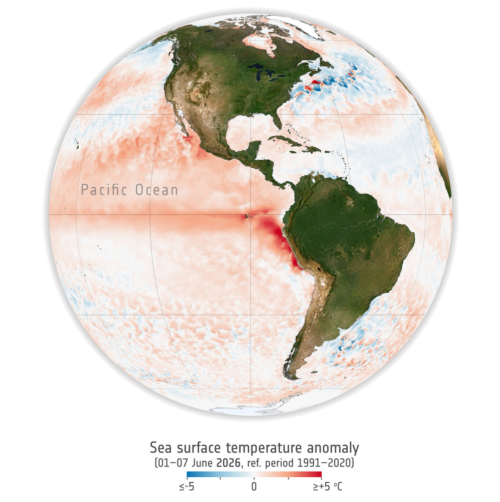 “Will El Niño shape California’s winter this year? As interest in the climate pattern rises, many Californians are wondering whether the state is headed for more storms, heavier Sierra snowpack, and drought relief. In this explainer, we break down what El Niño is, why it matters, and what forecasters are currently saying about the months ahead. Using the latest information from NOAA and California water officials, we explore how El Niño can influence rainfall, mountain snow, reservoirs, and water supplies across the state. We also explain why seasonal forecasts are never guarantees and what weather experts still don’t know as winter approaches. Most importantly, we’ll look at what California homeowners can do now to prepare for potential winter storms, flooding, and power outages. Whether this winter turns wet, dry, or somewhere in between, being informed and prepared can help families stay ahead of changing conditions. Watch our full video for the latest outlook and practical tips for the season ahead.” Watch video from the Desert Sun.
El Niño planning must include dredging the Sacramento-San Joaquin Delta
“On September 21, Governor Gavin Newsom declared a state of emergency due to the “strong and likely historic El Niño event in the Pacific Ocean.” The timing of the announcement is in response to the latest predictions from the National Oceanic and Atmospheric Administration, estimating a 90 percent chance of a “very strong event during the Northern Hemisphere fall and winter of 2026-27.” In the Executive Order that accompanied Newsom’s emergency proclamation, he directs state agencies to “prioritize permitting, consultation, and technical assistance to support local efforts,” and among the efforts noted are “sediment management” and “channel-capacity improvements.” He does not, however, specify the area where sediment buildup poses the most acute danger to the entire state, which is the Sacramento-San Joaquin Delta. The main stem of the San Joaquin River, as well as most channels in the southern delta, are dangerously clogged with sediment. If the predicted super El Niño brings extreme rains, flood waters will overwhelm the levees. The disastrous floods that hit when the San Joaquin overflowed in 1997 mostly inundated open space, but today much of that area has new homes. … ” Read more from Edward Ring.
Pacific hurricane reaches Category 5 in record time
“Storm after storm is forming over record-high water temperatures in the Pacific Ocean, a symptom of this year’s rapidly strengthening El Niño. On Wednesday, the Big Island and Maui closely monitored Tropical Depression Fifteen-E, which could strengthen and pass near the islands this week. Meanwhile, Hurricane Polo, which reached Category 5 strength at record speed, threatens Mexico with rain, wind and dangerous surf — and could also bring another round of big swells to Southern California. “We’ve had many storms reach the strength of Polo, but it’s the fastest one in terms of the rate at which it went from a tropical storm to a major Cat 5 hurricane,” Jamie Rhome, deputy director of the National Oceanic and Atmospheric Administration’s National Hurricane Center, told SFGATE. “That part of the eastern Pacific is notorious during El Niño years for producing very, very strong storms or storms that rapidly intensify.” … ” Read more from SF Gate.
Wildfire and water research grants saved as Trump EPA permanently restores $19 million to UC
“The Environmental Protection Agency agreed to permanently restore about $19 million in University of California research grants, including studies into wildfire-smoke health effects and water management, that it canceled, according to a settlement filed in federal court Wednesday. The settlement would resolve one part of a broader lawsuit, brought by a legal team that includes UC law school professors and additional attorneys, challenging roughly $2 billion in funding cuts across seven federal agencies. Wednesday’s deal covers 24 research grants, including projects at UC San Francisco and UC Berkeley. The agreement still needs the approval of U.S. District Judge Rita Lin, who previously ruled against the Trump administration in the case. … ” Read more from the LA Times.
Water demand: the double-edged sword of data centers
 “Artificial intelligence may feel weightless, but the systems behind it depend on resource-intensive physical infrastructure. As data centers multiply to meet demand, their appetite for water and electricity raises questions about shared resources. Each 100-word AI prompt uses one bottle of water (519 milliliters), according to scientists at the University of California, Riverside. This small amount adds up as hundreds of millions of people around the world use AI systems, often multiple times a day, according to Pew Research Center findings. A medium-sized data center, like the 36,554-square-foot Equinix facility in Irving, Texas, consumes roughly 110 million gallons of water annually for cooling purposes. That consumption is equivalent to the yearly water usage of 1,000 households. Bigger data centers, such as the approximately 785,000-square-foot xAI plant near Memphis, Tennessee, can consume up to 5 million gallons of water per day, or about 1.8 billion gallons over the course of a year, which is comparable to the usage of a town of 10,000 people. … ” Read more from AccuWeather.
Newsom signs bills regulating data centers’ water, energy use
“Data centers in California will face a slew of new regulations preventing them from passing electricity costs to residents and require the facilities to report their energy and water use. The new laws come as Congress struggled to pass legislation to tame voters’ anxiety over the costs associated with data centers ahead of the midterm elections. California Gov. Gavin Newsom signed a pair of measures (SB 886 and AB 2383) Monday that will create special energy rates for data centers by 2028 and require them to pay for infrastructure upgrades needed for their operations. He also signed into law bills requiring data centers to report their annual water usage (AB 2619) and energy consumption (AB 1577). Another bill, AB 2469, requires facilities to disclose their estimated water use when applying for or renewing a business license and be financially responsible for new infrastructure needed. These are the first major bills to become California laws targeting the facilities. … ” Read more from Bloomberg.
New bill requires California data center developers to create water scarcity plans
“California Gov. Gavin Newsom signed “seven bills aimed at giving communities more information about proposed data centers’ energy, water, workforce and land use to help weigh their economic costs and benefits” on Sept. 21, Robyn Griggs Lawrence writes for Smart Cities Dive. According to Data Center Map, California has 296 data centers. One bill commands the California Public Utilities Commission to scrutinize data centers’ energy use and make sure they pay for transmission and distribution upgrades, and two more make it a requirement for “data centers to pay all infrastructure upgrade and generation costs, bear a larger share of wildfire mitigation and liability costs, and undergo environmental review,” Smart Cities Dive reports. Another bill requires data centers to report their energy consumption to the California Energy Commission every month. … ” Read more from Planetizen.
AI at public meetings: SB 1159’s unclear path to implementation
“In light of increasing concerns about the role of Artificial Intelligence (AI) in government proceedings, the California Legislature passed Senate Bill (SB) 1159. The bill provides that AI systems, autonomous agents, and robots are excluded from the definition of “persons” who are entitled to take part in governmental processes that are regulated by California’s transparency and governance laws, such as the Ralph M. Brown Act (Brown Act). The bill was enrolled and sent to Governor Gavin Newsom on August 28, 2026. The Governor has until September 30, 2026, to either sign or veto the bill. … ” Read more from Somach Simmons & Dunn.
In blow to tribes, Newsom vetoes bill that would have remade little-known state forests
“Gov. Gavin Newsom has vetoed a bill aimed at deprioritizing commercial logging in a unique state forest system, arguing the measure would jeopardize the ability to test best management practices. At issue are the state’s 14 demonstration forests — managed by the California Department of Forestry and Fire Protection, or Cal Fire — which are billed as “living laboratories” for forest management practices. Under existing law, they’re directed to produce as much timber as can be sustained over time, while considering factors such as recreation and wildlife. Assembly Bill 2494 would have eliminated what’s often characterized as a logging mandate in favor of prioritizing values such as carbon storage, wildfire resilience and biodiversity conservation. It also would have directed state officials to seek agreements with Native American tribes to integrate their traditional knowledge into managing the land. … ” Read more from the LA Times.
California and Washington to join forces on carbon markets, aiming to cut pollution and raise billions
“California is moving forward with plans to link its signature climate program, cap-and-invest, to that of Washington State, a major step officials say will cut more pollution and increase revenue for key state programs. Gov. Gavin Newsom announced the move at Climate Week in New York City, where he is meeting with international officials and positioning himself as a climate leader in opposition to President Trump. The governor’s action will allow the California Air Resources Board, the state’s top air agency which also administers the cap-and-invest program, to begin the public process to link the two state’s markets. “By joining forces with our partner in Washington State, we will build a stronger, more durable carbon market that will drive investment, cut pollution, and power the clean economy of the future,” Newsom said in a statement. … ” Read more from the LA Times.
California pushes back on federal plan to strip protections from 4.4 million acres of state’s national forests
“California has submitted formal comments opposing the federal administration’s proposal to rescind the 2001 Roadless Area Conservation Rule, which has protected millions of acres of national forest lands from most new road construction and commercial timber harvesting for 25 years. The federal proposal would eliminate nationwide restrictions on road construction, road reconstruction and timber harvesting in inventoried roadless areas. “Donald Trump is hell-bent on liquidating some of our nation’s most precious and irreplaceable public lands for his extraction industry cronies,” said Governor Gavin Newsom. “Our national forests safeguard drinking water, support rural economies, and give millions of Americans places to hike, hunt, fish, and connect with nature. California will not stand by while these treasured landscapes are put at risk.” … ” Read more from the Natural Resources Agency.
In commentary today …
California’s wildfire bills need water safeguards written into law
“The Trump administration is promoting the herbicide glyphosate as the U.S. Forest Service expands its use on California public lands. Now, wildfire bills could fast-track comparable herbicide-treatment projects without requiring baseline water testing or downstream monitoring. Senate Bill 1370 would create a consolidated, expedited process for covered wildfire-mitigation projects. It would exempt covered projects from the California Environmental Quality Act (CEQA), California’s main environmental review law, and allow waivers of specified requirements. Assembly Bill 2410 would exempt qualifying fuels-reduction projects from CEQA if they comply with the 2025 Statewide Fuels Reduction Environmental Protection Plan and specified conditions. SB1370 excludes herbicide treatment from its covered-project pathway; AB 2410’s CEQA exemption does not itself establish uniform, water-specific safeguards wherever herbicide treatment is authorized. California’s own record shows why lawmakers must require water safeguards before accelerating or exempting herbicide-treatment projects. … ” Read more from Capitol Weekly.
In regional water news and commentary today …
NORTH COAST
Salmon are thriving after Klamath River dam removals, study finds
“The Klamath River, cleared of big barriers for the first time in more than a century after the largest dam removal project in American history, is experiencing a significant rebound of native chinook salmon, according to a new study. Thousands of the salmon were recorded passing a former dam site in 2024 and 2025, researchers say, and have reoccupied nearly the full extent of their known historical range. “I don’t think any of us, in our wildest dreams, expected this many fish this quickly to repatriate that area,” said Keith Parker, a senior fisheries biologist and member of the Yurok Tribe, which led the decades-long campaign to have the dams removed. … ” Read more from the New York Times.
SIERRA NEVADA
TRPA Board takes action on construction violation
“The Tahoe Regional Planning Agency (TRPA) Governing Board approved a violation settlement with a lakefront property owner in Incline Village, Nev. for illegal construction and modifications to their residence and violation of water quality protections during construction. The settlement requires payment of a $150,000 penalty, removal of unauthorized improvements, and a restoration plan for the affected shorezone area. “TRPA’s longstanding permit requirements are designed to harmonize the natural and built environments and protect this lake for all to enjoy,” TRPA General Counsel Graham St. Michel said. “This settlement is a good result for Tahoe and we appreciate the cooperation of the property owner and the support of the Governing Board.” In 2025, TRPA investigated a report of unauthorized construction at 1707 Lakeshore Boulevard, Incline Village, Nev. Violations included an unpermitted second-story unit, a storage shed, an expanded driveway, and construction materials stored in the shorezone. … ” Read more from the Tahoe Daily Tribune.
Keep Tahoe Blue installs machines to guard against invasive species
“Earlier this month, Keep Tahoe Blue and its partners installed four new mobile, solar-powered watercraft cleaning stations with onboard tools to make it easy for anyone to Clean, Drain, and Dry their gear and help stop the introduction and spread of aquatic invasive species in the Lake Tahoe region. The stations, called “CD3 Outpost Blue” machines — for clean, drain, dry and dispose — were placed at Baldwin Beach and along the shores of Fallen Leaf Lake in coordination with the U.S. Forest Service and the ExplorUS concessionaire that manage these public lands on the Lake Tahoe Basin Management Unit. Istallation of the new machines is part of a coordinated and growing effort to prevent harmful invasive species from spreading in local waterways. Keep Tahoe Blue strongly encourages all paddlers, anglers and beachgoers to use the new stations on all their nonmotorized water gear, from kayaks and paddleboards to floaties, fishing gear and life vests. … ” Read more from the Mountain Democrat.
SACRAMENTO VALLEY
Oroville Salmon Festival celebrates return of chinook salmon on Saturday
“The 2026 Oroville Salmon Festival will celebrate the annual migration and return of the chinook salmon up the Feather River on Saturday. Attendees can wander between downtown Oroville and the Feather River Fish Hatchery from 9 a.m. to 3 p.m. for a day chock-full of free, family-friendly activities. The festival kicks off with a 3k Salmon Run at Riverbend Park at 8 a.m., followed by the Salmon Festival Motor Mania at the Oroville State Theatre, hosted by the Oro Dam Cruisers. Both events have entry fees for participants, but spectators are free to watch. … ” Read more from the Chico Enterprise-Record.
BAY AREA
Coordination among wastewater treatment plants could save rate payers money
 “Treating polluted water flowing into San Francisco Bay to meet regulatory requirements is going to cost ratepayers money. Exactly how much depends, in large part, on whether the region’s wastewater treatment plant operators are willing and able to coordinate infrastructure construction and operation to meet these requirements, according to a Stanford University study published Sept. 24 in Nature Water. The paper features a framework that calculates the most cost-effective way for multiple treatment facilities to jointly plan, build, and operate infrastructure to remove excess nitrogen from wastewater before it is discharged to the bay. Applied to three Bay Area treatment plants within a few miles of each other, the tool found that coordination could cut total capital and operating costs by up to 48 percent, a savings of $268 million over 30 years compared to the cost of building infrastructure independently. “If you don’t coordinate, each facility has to build and finance small infrastructure projects on its own,” said study lead author Sinan Abi Farraj, a PhD student in civil and environmental engineering in the Stanford Doerr School of Sustainability and School of Engineering. “The coordinated solution reduces how much infrastructure gets built and how much that infrastructure costs.” … ” Read more from Stanford’s Woods Institute for the Environment.
Bay Area cities shut the door to new data centers
“As the number of data centers in California proliferates, so, too, have the number of cities and counties voting to oppose them. Up and down the state, city councils and boards of supervisors have used emergency moratoriums to temporarily ban new data centers from being built in their communities, with even more eager to follow suit. These moratoriums assuage the fears of residents concerned that data centers could bring pollution and noise to their neighborhoods, or spike their utility bills. But virtually none have been introduced in the places where data center development is concentrated in the South Bay. … ” Read more from the San Francisco Chronicle.
EPA awards $82 million for San Francisco Bay water quality and stormwater projects
“The U.S. Environmental Protection Agency (EPA) has awarded more than $82 million through its San Francisco Bay Program for 20 projects focused on water quality, habitat restoration and pollution reduction across the Bay watershed. Several projects will directly address stormwater runoff and related pollutants. The City of San Jose will receive $3.16 million to develop a green stormwater infrastructure implementation plan, including an approach that would allow new development projects to contribute to an operations and maintenance fund for existing green infrastructure. The City of San Pablo will receive $1.26 million to construct and monitor green stormwater infrastructure designed to capture and treat stormwater runoff. San Francisco Public Utilities Commission will receive $5 million for green stormwater infrastructure in the Outer Mission neighborhood, including planted sidewalk filtration systems, rain gardens and an underground infiltration system. … ” Read more from Stormwater Solutions.
Richmond faces 60 years of DDT
“On Sept. 16, the U.S. Environmental Protection Agency (EPA) released its current plan for a major cleanup of Richmond’s highly contaminated United Heckathorn site. But controversy is inevitable, because the plan does not correspond with the cleanup proposal put forward by a coalition of environmental groups—the Richmond Shoreline Alliance, San Francisco Baykeeper and the local branch of the Sierra Club. The coalition released a group of comments, including: “The Community Cleanup Plan calls for a complete cleanup. The EPA’s proposal doesn’t reflect that standard, and it’s unclear whether they even addressed it …” and, “There may be valid reasons the EPA disregarded our recommendations, but without real dialogue, we have no way of knowing whether their approach is sound—or whether we’re simply being ignored.” … ” Read more from the East Bay Express.
CENTRAL COAST
Water efficiency program expands to rural residents across Salinas Valley
“Salinas Valley Basin Groundwater Sustainability Agency announced Sept. 9 that its Water Efficiency Pilot Program for Rural Residents has expanded to all six subbasins under the agency’s purview, offering free home water efficiency assessments through the end of 2026. The expansion builds on the program’s work helping homeowners in northern Monterey County over the past year. “This program supports homeowners and renters by providing personalized recommendations and free devices to help households save money, energy and water,” said Piret Harmon, general manager of SVBGSA. “The program is one part of the larger efforts by SVBGSA to support the long-term health of groundwater in the Salinas Valley.” … ” Read more from the Kings City Rustler.
Tiny Calif. coastal community cleans up its inlet with a big boat giveaway
“Located 12 miles from downtown San Luis Obispo, Cuesta Inlet is a 13-acre oceanfront parcel that sits in the heart of the unincorporated bayside community of Los Osos. This weekend, volunteers will do some housekeeping, hoping to get rid of a substantial number of moribund vessels that have washed up on its shores. Residents and visitors to this small community have an opportunity this week to pick up a free boat and clean up a hidden stretch of oceanfront California in the process. At the first Cuesta Inlet cleanup hosted earlier this month, volunteers filled two dumpsters with 31 boats and 10 catamarans that were “abandoned, damaged, waterlogged, and no longer seaworthy,” according to the inlet’s website. … ” Read more from SF Gate.
SAN JOAQUIN VALLEY
How to turn the Central Valley’s climate challenges into economic growth
“For generations, families and agricultural workers in the San Joaquin Valley have fed California and the nation through hard work, ingenuity, and enterprise. Today, a changing climate is making that job harder and more expensive. Relentless summer heat, chronic water shortages, and rising energy costs are putting mounting pressure on farms, workers, families, and businesses across the Valley. These are not abstract environmental debates. They are hard pocketbook realities. Extreme heat endangers outdoor crews, while strict groundwater limits leave productive farmland fallowed and drive up the cost of pumping water from deeper underground. At the same time, Valley families and small business owners face some of the highest electric rates in the country, straining household budgets and local commerce alike. … ” Read more from GV Wire.
SOUTHERN CALIFORNIA
Judge issues split decision on claims in landfill suit
“An 18-page tentative ruling in federal court Thursday offered a split decision for residents seeking relief from Chiquita Canyon Landfill, which is blamed for myriad health problems in a consolidated lawsuit with thousands of plaintiffs. The tentative rulings — which were filed Tuesday, argued Thursday and yet to be finalized as of this story’s publication — also mark one more milestone in what’s expected to be a yearslong process for residents. Judge Maame Ewusi-Mensah Frimpong ruled on two significant claims in a special master’s report, which states: residents’ trespass claim is sufficiently pleaded under federal law, and should not be dismissed; and the ultrahazardous strict liability claim is insufficiently pleaded and should be dismissed with prejudice. … ” Read more from The Signal.
Colorado River cuts could fall heavily on Southern California water agency, Pasadena representative says
“The Metropolitan Water District of Southern California (MWD) could bear or pay for most of California’s required Colorado River water cuts in 2027 and 2028, Pasadena’s representative on the district’s board warned in a written update to the city’s Municipal Services Committee Tuesday. In a written report, former City Manager Cynthia Kurtz said negotiations are continuing over how California will divide a required reduction of 440,000 acre-feet per year. Metropolitan has junior Colorado River water rights within the state, she wrote, while much of California’s river water goes to agriculture. The city gets about two-thirds of its total water supply from MWD, which splits its imported supplies between the Colorado River and Northern California’s State Water Project.“Because of its junior rights, MWD will in all likelihood be responsible for making or paying for the majority of the cuts in 2027 and 2028,” Kurtz wrote. She said the effect on Metropolitan’s conservation programs and water rates remains unknown. … ” Read more from Pasadena Now.
Sharks, sea snakes and weird fish: El Niño brings unusual marine life to Southern California
“Unusual creatures are visiting Southern California’s coastal waters. One of them, a sea turtle, nested near Seal Beach last week for the first time in California history. And they’re here because of El Niño. Forecasters say there is more than a 90% chance that this year’s El Niño is going to be very strong, and most Southern Californians are bracing for record-high surf and heavy rains that usually come with the climate pattern. Residents got a taste earlier this month of what could come this fall and winter, when surf from Hurricane Marie caused widespread damage along the Southern California coast. But the region is also starting to see a lesser-known effect of El Niño: sea creatures that don’t normally live here showing up in our waters. … ” Read more from the LAist.
SAN DIEGO
Super El Niño is coming. What exactly does that mean for San Diego?
“You’ve probably heard by now: A strong El Niño is developing in the tropical Pacific Ocean. So what can San Diegans expect? El Niño can influence weather patterns around the world, but its effects on Southern California — including warmer ocean temperatures, higher sea levels and an increased likelihood of strong storms — could all affect San Diego’s coastline. Here’s what to know. El Niño is a large-scale change in ocean temperatures, winds and atmospheric pressure in the tropical Pacific Ocean. It can bring heavy rain and floods. Under normal conditions, trade winds blow from east to west across the Pacific. Those winds push warm surface water toward the western Pacific, while cooler water rises near the coasts of Ecuador and Peru in a process known as upwelling. During El Niño, those trade winds weaken or can even reverse. That disrupts the normal upwelling of cold water and allows warmer water to move eastward across the Pacific, according to UC San Diego Scripps Institution of Oceanography researcher Reinhard Flick. … ” Read more from iNewsSource.
Feds find Tijuana River pollution poses public health hazard in San Diego
“A report on the Tijuana River pollution crisis from the U.S. Department of Health on Wednesday confirmed what many people living in San Diego County have long suspected: Air pollution from the river has reached levels capable of harming their health. The federal health assessment from the department’s Agency for Toxic Substances and Disease Registry found residents may experience headaches, nausea and respiratory congestion, among other symptoms, as a result of a high concentration of hydrogen sulfide coming from the Tijuana River. Residents in San Diego’s South Bay have complained of sulfurous odor in the area for years, which has worsened as the city of Tijuana’s infrastructure has been unable to match its unprecedented growth. The agency found hydrogen sulfide levels exceeded the odor threshold of .5 parts per billion at all four Tijuana River Valley air quality monitoring sites in 93% of its 30-minute samples. In one instance, a 30-minute average of hydrogen sulfide at its Leon Avenue monitoring station reached a high of 3,021 ppb in September 2024, far above the 2,000-ppb level associated with health effects in humans. … ” Read more from the Courthouse News Service.
New federal health assessment of Tijuana River Valley air pollution builds on UC San Diego findings
“The Agency for Toxic Substances and Disease Registry (ATSDR), a federal public health agency within the U.S. Department of Health and Human Services (HHS) that works jointly with the Centers for Disease Control and Prevention (CDC), released a new health consultation report on Sept. 23, 2026, that analyzed environmental contamination in the Tijuana River Valley and evaluated hydrogen sulfide levels in outdoor air. The public health consultation report, which used data from scientists at the University of California San Diego in the assessment, released the following conclusions … ” Read more from UC San Diego.
Along the Colorado River …
Arizona Republicans back Biggs’ Colorado River water security and infrastructure plan
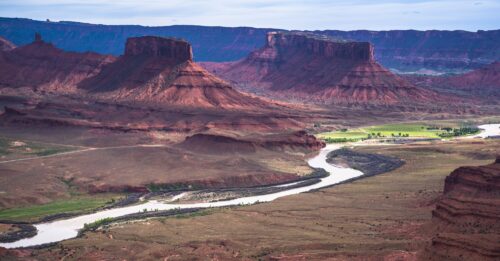
“Arizona Republican legislative leaders are backing Congressman Andy Biggs’ proposed $19 billion plan to expand water supplies and accelerate infrastructure projects throughout the Colorado River Basin. The Colorado River Basin Water Security and Infrastructure Act, introduced by Biggs (R-AZ-05) last week, would authorize funding for water augmentation, desalination, storage, treatment, recharge, and conveyance projects across the seven Basin states. Senate President Warren Petersen (R-LD14), House Speaker Steve Montenegro (R-LD29), and several Republican committee leaders have announced their support for the proposal, arguing that Arizona needs to focus on developing additional water supplies as uncertainty continues over the Colorado River. “Arizona can’t make it rain or snow, but we can take action to secure our water future,” said Petersen. … ” Read more from Arizona Free Media.
Phoenix adds water storage, Scottsdale weighs new rules as Colorado River supplies shrink
“As Arizona prepares for less Colorado River water, Valley cities are looking at both new infrastructure and new ways to manage future water demand. Phoenix is moving forward with a major project at one of its water treatment plants, while Scottsdale is considering new rules that could bring additional scrutiny to developments expected to use large amounts of water. Historically, about 40% of the water delivered by Phoenix has come from the Colorado River. Some of that water is treated at the Union Hills Water Treatment Plant, one of five water treatment plants owned and operated by the city. “It’s one of five water treatment plants the city owns and operates,” Phoenix Assistant Water Services Director Nazario Prieto said. “It’s one of two facilities that treat Colorado River water.” … ” Read more from Channel 15.
SEE ALSO: Scottsdale’s water recycling program hits election-year backlash, from the Associated Press
In national water news today …
Low-flow, high stakes: CAP Fellows review climate-driven flows and management across the US
“In a new publication, the 2022-2024 Climate Adaptation Postdoctoral Fellows cohort explores how climate-driven low-flows in rivers alter water quality, how those water quality changes influence ecosystem health, and how instream flow management has been used across the U.S. to address these challenges. Across the country, rivers and streams are experiencing declining water quality as low-flow extremes become more common. These low-flow events, or periods when rivers have reduced water levels, are strongly influenced by increasing temperatures, rainfall extremes, and a growing demand for fresh water. Low-flows were the focus of a national synthesis project led by the CASC Climate Adaptation Postdoctoral (CAP) Fellows ‘Future of Aquatic Flows’ cohort. The team, comprised of post-docs located in each CASC region, conducted a review of the current literature and expert knowledge to better understand the influence of low-flows on water quality and aquatic ecosystems across the U.S., and its implications for future management. … ” Read more from the USGS.
NOAA’s flood mapping tool now covers nearly 100% of U.S.
“NOAA’s National Weather Service announced today that Flood Inundation Mapping (FIM), a revolutionary tool for predicting river flooding, is now available on an experimental basis to nearly 100% of the U.S. population. This is a massive expansion from FIM’s prior coverage of 60% of the country. FIM produces estimates of land area covered in water based on model forecast river flows and current conditions that predict where flooding impacts may occur in the following days. It’s a tool for forecasters, emergency managers and the public that alerts users to the latest river and stream flooding conditions. “Inundation maps are a critical tool for assessing the impacts of flooding,” said NOAA Administrator Neil Jacobs, Ph.D. “NOAA prioritized expanding FIM to ensure that nearly every American can access detailed information beyond the expected river crest height. These maps further support NOAA’s mission to protect lives, safeguard property, and strengthen our national economy.” … ” Read more from NOAA.
Alaska’s orange rivers more metallic than acid mine drainage
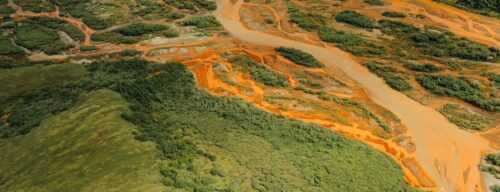
“The bright orange plumes of water scientists first noticed billowing across a river in Alaska’s Brooks Range in 2018 were even more acidic and metallic than water leached from metal mines, despite their pristine surroundings. That is according to a new study from the University of California, Davis, of six of the impacted watersheds. The study, published in the journal AGU Advances, found that these metals can travel far and become more toxic as they go. Metal concentrations were about 70 times higher as much as 60 miles downstream from where they entered the river. “This is very acidic, metallic water,” said senior author Brett Poulin, a UC Davis professor in the Environmental Toxicology department. “The good news is the river’s mainstem did not become more acidic. It’s buffering the pH, indicating there is some resiliency in this system. But there are metals that increased downstream, and those can be transported very long distances.” … ” Read more from UC Davis.

