
Several news sources featured in the Daily Digest may limit the number of articles you can access without a subscription. However, gift articles and open-access links are provided when available. For more open access California water news articles, explore the main page at MavensNotebook.com.
On the calendar today …
SoCAL WATER DIALOG: Water and the Gubernatorial Election from 12pm to 1:30pm. Join us for a discussion among journalists from around the state as they share their observations on the upcoming election and the candidates’ engagement on water issues. Panelists will also discuss the challenge of communicating the complexities of water and the water projects and issues they think should be prioritized for debate. Speakers: Rachel Becker, CalMatters, Samy Roth, Climate-Colored Glasses. Camille Von Kaemel, Politico.Click here to register.This event has been cancelled.
In California water news today …
How managed wetlands are boosting food production in Suisun Marsh
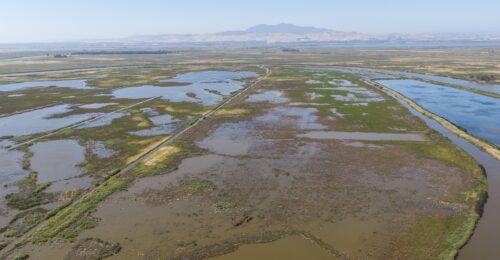
“Suisun Marsh is a rich and vibrant environment, teeming with growth and wildlife. DWR is harnessing that natural productivity to explore a new approach to ecosystem improvement – one that works with the marsh’s ability to produce the food and habitat native species need to thrive. This approach involves strategically managing wetlands to produce and export tiny, shrimp-like organisms called zooplankton that super-charge the food web to the benefit of native fish species. It involves adjusting water levels, tracking food web production and modeling how that food moves through Suisun Marsh. “Normally these sites are dry in the summer, which means production is zero,” said Rosemary Hartman, DWR environmental program manager. “Now that these sites are wet, there are zooplankton out there, and they are at way higher densities than you get in the surrounding sloughs.” Importantly, this effort isn’t driven by the needs of any single species. Its value is cumulative, with benefits that extend across the ecosystem — from improving ecological conditions to deepening the collective understanding of how the Delta functions and how it can be best managed for the future. … ” Read more from the Department of Water Resources.
How San Francisco Bay can learn from decades of estuary recovery efforts across the United States
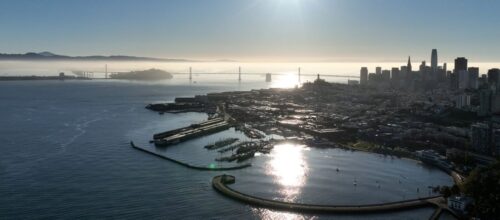 “San Francisco Bay is the largest estuary in California, with a watershed that drains 40 percent of the state’s freshwater runoff. Over the past 200 years, like much of the country’s estuarine environments, the Bay’s watershed has been extensively altered by large-scale development associated with agriculture and urbanization, resulting in floodplain and wetland loss, and inflows have been redirected and reduced. This type of development and modification can have significant effects on estuarine systems. Stormwater runoff and wastewater discharges deposit elevated levels of nutrients, including nitrogen and phosphorus, which have the potential to contribute to harmful algal blooms (HABs) and deplete levels of dissolved oxygen (DO), which can kill fish and cause the loss of important habitats like seagrass meadows. This sequence of events is a process known as eutrophication. However, unlike many estuaries in other parts of the United States, such as the Chesapeake Bay in Maryland and Virginia or Tampa Bay in Florida, San Francisco Bay did not exhibit clear signs of ecological impact from nutrient enrichment for most of the 20th century. That has been changing. … ” Read more from Environmental Science Associates.
New research tracks predatory fish in the Delta to benefit threatened salmonids
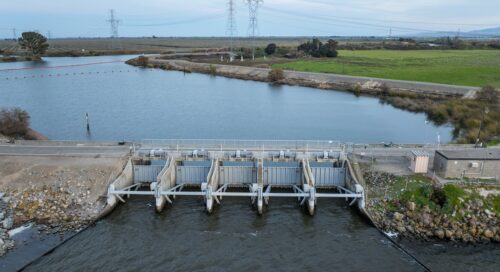
“Spanning more than 705 miles, California’s State Water Project supplies water to nearly 27 million residents and agricultural users through an extensive network of reservoirs, pumping and power plants, canals, tunnels, and pipelines. Unfortunately, there have been adverse effects on sensitive native fish populations over the decades throughout the State Water Project water system, particularly for listed species such as endangered Sacramento River winter-run Chinook salmon and threatened steelhead trout. One area of particular concern is Clifton Court Forebay (CCF), a 6-square-mile reservoir at the southern end of the Sacramento–San Joaquin Delta (Delta). CCF and its basin serves as the starting point for the 400-mile California Aqueduct. Over the past 17 years, multiple studies have been conducted at the reservoir as the California Department of Water Resources (DWR) works to address declining salmonid populations. Migrating juvenile salmonids are especially vulnerable to predators such as striped bass, which were introduced into the Delta in the late 19th century. … ” Read more from Environmental Science Associates.
Rethinking mercury reduction in the Delta
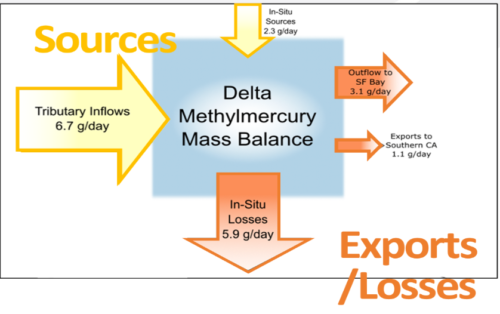 “At a September 3 workshop, Central Valley Water Board staff outlined proposed changes to the Delta Mercury Control Program following the completion of Phase One studies and an ongoing review of the program. New data indicate that the current TMDL allocations and 2030 attainment date are not achievable under the existing approach, prompting staff to consider extending the timeline and revising allocations to better reflect the sources of methylmercury entering the Delta. Methylmercury poses serious risks to human health and wildlife. This potent neurotoxin can damage the brain and central nervous system and impair reproductive and immune functions. It forms when environmental conditions convert inorganic mercury and then bioaccumulates and biomagnifies through aquatic food webs, reaching harmful levels in fish and prompting consumption advisories. … ” Continue reading at Maven’s Notebook.
15 years of Delta reform: Building the foundations for future success
Jessica R. Pearson, Executive Officer of the Delta Stewardship Council, writes, “Delta Week is a time to honor and elevate the statewide importance of California’s Sacramento-San Joaquin Delta, recognizing the people who steward this special place and the partnerships that will protect it for future generations. The Delta matters to all Californians, whether they know it or not! Thoughtful planning and dedicated resources are necessary to achieve the ambitious goals for the Delta established by the Legislature. As I reflect on the last 15 years, I recall the hard work and determination that have brought us to where we are today, and I acknowledge there is much more to be done to protect the Delta of tomorrow. The 2009 Delta Reform Act pressed the reset button on governance in the Delta, charting a more intentional path towards long-term success. Before its passage, Delta management was highly fragmented, with authority over land use, flood control, water supply, and habitat restoration scattered across nearly 200 local, state, and federal agencies. … ” Read more from the Delta Stewardship Council.
El Niño: What to know as California leaders declare State of Emergency
“California leaders officially declared a State of Emergency on Monday. The reason? El Niño and its potential to influence a stormier than normal winter on the West Coast. This declaration allows emergency response resources to be readied and allocated ahead of any storm damage. But it has prompted many questions over the past 24 hours. When will El Niño hit? How bad will it be? What should I do now? Below are the answers to some of those big questions along with a check on the status of El Niño as of late September. … ” Read more from KCRA.
SEE ALSO: Newsom declares state of emergency for California ahead of super El Niño storm season, from CNN
New California rules target dairy manure pollution, groundwater contamination
 “Over 900 dairy farms and millions of cows — that’s what takes up much of California’s Central Valley. Now, those same farms face a new reality: stricter regulations on water pollution. “Mark my words, what you guys do here today will further consolidate the industry,” Milk Producers Council General Manager Kevin Abernathy said. The State Water Resources Control Board’s unanimous decision last week has gotten mixed reactions from advocates and opponents. The board says the goal of the new limits is to reduce discharges from nitrogen, a natural component of manure. That eventually seeps into the soil, waterways and groundwater. That can then lead into drinking water. Advocates say this poses a major risk. … ” Read more from CBS Sacramento.
SEE ALSO: New California Rules Target Dairy Manure Pollution and Groundwater Contamination Amid Consolidation Fears, from eDairy News
John Duarte: Water, crops and California ag future
“California’s water future, the impact of SGMA, agricultural land, new crop opportunities and changing water-management strategies were all part of a wide-ranging conversation when Duarte Nursery President John Duarte joined “The Ag Meter” Nick Papagni. The interview covers a tremendous amount of ground, from the recent Turlock Water Forum and California water infrastructure to pistachios, almonds, avocados and the potential use of improved weather forecasting in reservoir management. For anyone following California agriculture, the full conversation offers much more detail than can be captured in a short recap. Duarte discussed a recent water forum hosted by Congressman Tom McClintock in Turlock, where federal and agricultural representatives examined California’s water challenges. Duarte said the discussion included the Army Corps of Engineers, flood control, water storage and the potential for additional Delta dredging. He argued that reservoir operations should better balance flood protection with water supply, particularly when reliable weather forecasts indicate a dry or normal year. … ” Read more from AgNet West.
DWR releases Bulletin 161-2026 Annual Water Supply and Demand Assessment Summary Report
“The California Department of Water Resources is pleased to announce the publication of Bulletin 161–2026 – The 2026 Annual Water Supply and Demand Assessment Summary Report to the State Water Resources Control Board. This year, all urban water suppliers that are required to submit an Annual Water Shortage Assessment report have done so, achieving 100% reporting compliance for the third year in a row! This milestone is a direct reflection of the urban water suppliers’ commitment, diligence, and professionalism. Thank you all for your outstanding work. Among this year’s submissions, only a small percentage (3.6% of suppliers) projected a potential shortage if next year turns out to be a dry year. More importantly, every supplier that identified a potential shortage also determined that they could fully eliminate it through proactive drought response actions, whether through demand reduction efforts or supply‑augmentation strategies. … ” Read more from the Department of Water Resources.
Sediment is shrinking reservoir storage in the West. Wildfires could make it worse
“Reservoirs across the West are slowly losing space to store water as dirt, sand and other sediment pile up behind dams, according to new, sweeping, nationwide research. Researchers with the science journal Nature modeled sediment buildup in more than 57,000 U.S. reservoirs. Collectively, they estimate the reservoirs have lost roughly 8% of their original storage capacity. But the losses are much greater in many individual reservoirs: about two out of five have lost more than one-quarter of their storage capacity. The Colorado, Columbia and Rio Grande river basins are among the hardest hit. … ” Read more from KUNR.
AI data centers release heat, posing new problem for cities
“In Phoenix, where the average daytime temperature in September is 100F (38C), a blizzard of fans cools the CyrusOne data center just south of the city limits. In communities downwind from this facility, temperatures were up to 4F higher than upwind, according to a recent analysis. Belching its exhaust into the sky, the building is essentially a giant laptop, said David Sailor, lead author of the study and director of Arizona State University’s School of Geographical Sciences and Urban Planning. The dense neighborhoods just across the street? The lap. “Put your hand behind your computer and you feel the heat coming off that fan,” said Sailor. “Now, imagine if you had 1,000 computer [fan] blades in your office — 10,000, 100,000, several hundred thousand blades in your office — that’s the amount of heat that we’re talking about.” … ” Read more from Bloomberg.
Cities get more say in data center development under new California laws
“California is home to 296 data centers, the third highest number in the U.S., according to Data Center Map. “Communities are left to deal with the consequences — higher electricity demand, grid constraints, water use, and pollution,” Newsom said in a statement. “With these laws, we are ensuring that Californians remain in the driver’s seat — and that those profiting from data centers aren’t doing so at our expense.” The bills Newsom signed Monday include: SB 1168: Directs the California Public Utilities Commission to examine data centers’ energy use and ensure they pay for transmission and distribution upgrades and load increases. … ” Read more from Smart Cities Dive.
SEE ALSO: New California law requires environmental analysis before data centers can be built, from KPBS
In commentary today …
California needs a better way to pay for water infrastructure
Michelle Paul, Executive Director of the California Farm Water Coalition, writes, “California’s water system is running on borrowed time. While the state continues to innovate, its water delivery systems have not kept pace. Aging infrastructure, outdated regulations, and unreliable funding have left California more vulnerable to shortages, floods and weather extremes. Decades of growth are still being supported by water delivery systems built for half the population. California needs more water storage capacity but has not provided a clear or reliable funding source to put plans into action. Today’s structure relies on one-off financing to maintain or build large-scale water projects, leaving ratepayers to cover what grants and bonds cannot finance. The Sites Reservoir project is a good example. … ” Read more from Comstock’s.
State continues to leave Butte County underwater with Oroville Dam
Bill Connelly, chair of the Butte County Board of Supervisors, writes, “Growing up, Oroville was the kind of small California town where people knew their neighbors and children learned the Feather River by heart. Families fished its banks, swam its currents, and built ordinary lives around an extraordinary river. That was until the 1950s, when the State of California came with a proposition. Right here in Butte County, they planned to build the nation’s tallest dam, serving as the headwaters and keystone facility of the State Water Project (SWP). … The state understood the infrastructure would impose a significant burden on Butte County, so it offered us a vision of mutual gain: grandiose attractions and recreation facilities designed to accommodate 12.5 million visitors each year, creating an economic engine that would help offset our costs of hosting the dam.Imagine what that sounded like to a working town in Northern California: We would give something up, but we would build something together. That bargain never materialized. … ” Read the full commentary at the Chico Enterprise-Record.
In regional water news and commentary today …
NORTH COAST
Newsom’s vetoes demonstration state forest reform
“Last week, Gov. Gavin Newsom announced he vetoed AB 2494, a bill that aimed to modernize forest management practices in California’s Demonstration State Forest system. The bill, authored by North Coast Assemblymember Chris Rogers (D-Santa Rosa), passed the state Assembly and Senate with overwhelming majority support (with only three Democratic abstentions in both houses) and also engendered support from environmental groups, tribal authorities and local government organizations, including the Humboldt County Board of Supervisors and the Mendocino County Board of Supervisors. The latter board, which represents most of the demonstration state forest’s local constituents, even voted unanimously to send a letter to the governor’s office supporting the bill this spring. Mendocino County is home to Jackson Demonstration State Forest, which, at nearly 50,000 acres, is not only the largest Demonstration State Forest but also makes up the lion’s share of the system’s 85,000-acre footprint throughout the state. … ” Read more from the Eureka Times-Herald.
Eel River Expo brings experts together to discuss river health
“The Eel River Expo brought together researchers, conservation groups, tribal representatives and community members to highlight ongoing efforts to understand, restore and protect the Eel River watershed. “This is a community event that brings together all the people in the Eel River watershed, which spans five counties, to share their work annually,” said organizer Christine Davis. The event showcased a wide range of projects focused on restoration, conservation, recreation and scientific research throughout the watershed. “We’d like people to take away an increased love and celebration of the Eel River and all the plants and animals that live in it,” Davis said. … ” Read more from the Redwood News.
SIERRA NEVADA
From forest to meadow: Máyala Wáta ancestral home of the Washoe
Tim Hauserman writes, “For fifty years I’ve hiked the Tahoe-Yosemite Trail from Meeks Bay into the Desolation Wilderness and Crag Lake. What began as a challenging camping trip with a group of thoroughly unprepared teenagers with overly heavy packs has become a regular choice in my summer hiking plans. The first mile and a half of the trail, known as Meeks Meadow or Máyala Wáta by the Washoe Tribe, has always been a nearly flat journey through a thick forest of lodgepole pines with occasional glimpses of snippets of meadow. It was a peaceful sandy stroll, although a bit of a slog, before the climbing began through granite and a thick forest of white fire and Jeffrey pines. A few weeks ago I went on this hike, and it was a very different place. For the first time in many years, the forest has returned to meadow, thanks to the efforts of the Washoe Tribe. … ” Read more from the Sierra Nevada Ally.
Leaves are falling and autumn is calling at Taylor Creek
“Fall has arrived at Taylor Creek, and the Taylor Creek Visitor Center offers a popular hub for viewing fall colors and wildlife on the Lake Tahoe Basin Management Unit. Taylor Creek, which begins at Fallen Leaf Lake Dam and flows into Lake Tahoe, provides important habitat for a wide variety of birds, mammals, amphibians and fish including the popular Kokanee salmon. The visitor center will remain open Thursdays through Sundays until Oct. 25. The Rainbow Trail and Taylor Creek grounds are open to foot traffic year-round although they are not maintained in winter. While most native fish such as the Lahontan cutthroat trout spawn in the spring, the introduced Kokanee salmon spawn in fall and winter. These land-locked relatives of the Sockeye salmon leave Lake Tahoe and travel upstream in mid- to late October into November. … ” Read more from the US Forest Service.
SACRAMENTO VALLEY
Volunteers clean up Sacramento riverbank ahead of the rainy season
“Around three dozen volunteers gathered at Robert Matsui Park, behind the SMUD Museum of Science and Curiosity in downtown Sacramento, to clean up the riverbank and remove debris from the area’s waterways over the weekend. Caltrans partnered with the River City Waterway Alliance for the cleanup, which is part of their regular efforts to maintain the area’s waterways. The group has about five to six cleanup events per week across the area, said Jeff Burdick of Caltrans. “[The] Sacramento Valley is a huge receiver of all the water from the mountains and the rainstorms and it comes here and there’s a big conveyance of it,” Lisa Sanchez of River City Waterway Alliance said. “And we’re just here to try to make sure that the water that flows through Sacramento is clean when it leaves, before it goes into the Delta.” … ” Read more from KCRA.
NAPA/SONOMA
The plan to raise Lake Mendocino’s dam got a 415-9 vote and zero dollars
“Lake Mendocino supplies drinking water to more than 650,000 people across Mendocino, Sonoma and Marin counties, and the plan to make it bigger just got its fifth nudge from Congress. The U.S. House voted 415 to 9 last week to order the Army Corps of Engineers to expedite its study on raising Coyote Valley Dam near Ukiah. The vote did not include any money to do it. The instruction sits in Section 202 of the Water Resources Development Act of 2026. If the finished study finds the project justified, the Corps could move straight to preconstruction engineering and design. The catch is that water resources bills authorize projects without funding them, and the Corps paused this study last October for exactly that reason. Congress put $500,000 toward it in fiscal year 2024, then nothing since, and neither the Corps’ work plan nor the president’s 2027 budget includes a dollar for it. … ” Read more from Active NorCal.
Federal legislation enables $60 million in local water and wastewater projects
“The U.S. House of Representatives on Wednesday passed the Water Resources Development Act of 2026, bipartisan legislation that includes a new federal authorization for up to $60 million in funding for water and wastewater infrastructure projects in Sonoma and Marin counties. The funding would support water supply, stormwater management, surface water protection and environmental restoration efforts, with the Sonoma County Water Agency (Sonoma Water) pursuing funding for eligible projects within Sonoma County. Rep. Jared Huffman, D-San Rafael, whose district includes Sonoma County, championed the provision. The bill authorizes the U.S. Army Corps of Engineers’ civil works program and advances other North Coast water projects, including the Coyote Valley Dam Feasibility Study and the Petaluma River Marsh Restoration, Sea Level Rise Adaptation and Beneficial Reuse Study, which will accelerate wetland restoration using dredged sediment to reduce flood risk. … ” Read more from the Sonoma Sun.
Designed and delivered: Napa River restoration
“ESA’s approach to restoring and revitalizing the Napa River began with devising highly functional and complex restoration nodes for the severely incised and degraded river. Historically, the Napa River was a dynamic network of multithreaded channels within a broad alluvial valley. A vast array of native plants and animals, including salmon and beavers, once thrived in the valley’s riparian and wetland habitats. Over the past two centuries, land use changes have altered the watershed and severely degraded habitat conditions. Land cultivation and development required a network of berms and ditches to channelize and drain the valley. Such land uses also increased impervious surfaces. The combination of channelization and impervious surfaces drastically increased the amount of runoff to the Napa River during storm events, causing an imbalance in stream flow and sediment supply. This imbalance led to a process known as incision, where excess stream flow erodes the river’s bed and banks to deeper, wider dimensions. As incision ensued, the river became disconnected from its natural floodplain, which further confined flows and exacerbated erosion. … ” Read more from the Environmental Science Associaties.
BAY AREA
With Bay Area common murres starving, biologists fear the worst
“The number of common murres washing ashore in critical condition has alarmed experts. These charcoal-and-white seabirds rarely come to land. International Bird Rescue has taken in 162 of the penguin look-alikes from Northern California beaches this year, with a notable spike since August. Many are starving. A decade ago, biologists documented millions of these seabirds dying during a long period of high ocean temperatures. Now, California biologists are still investigating the deaths, but they worry it could be the start of a similar scenario with the ongoing marine heat wave — and El Niño on the way. “The bleak conditions early in the year likely took a toll on the seabirds that survived that period and now they have less than ideal conditions, which are only going to get worse as El Niño progresses,” Tammy Russell, a marine ornithologist for Scripps Institution of Oceanography at UC San Diego, wrote to SFGATE. “I fear that these back-to-back warm periods are too much for many of these species to take; there’s no time to recover in between.” … ” Read more from SF Gate.
Sausalito taps emergency funds for El Niño preparations
“Sausalito will use emergency funds to defend part of the waterfront from flooding during anticipated king tides and potential El Niño-fueled storms. At its meeting on Sept. 15, the City Council authorized spending up to $250,000 for temporary pumps, tide gates, sandbags and other measures to prevent flooding in the Marinship area along Gate 5 Road. The light industrial and residential area flooded severely in January. The city will work in tandem with property owners on Varda Landing Road to create a temporary berm between Gate 5 Road and the bay. The collective measures along Harbor Drive, the Coloma Street canal, Gate 5 Road and Varda Landing could prevent tidal flooding from inundating the low-lying neighborhood. … ” Read more from the Marin Independent Journal.
EPA announces $93.4M plan to rid California Superfund site of dangerous chemicals
“The EPA has released a 53-page, $93.4 million plan to remove dangerous chemicals from Richmond’s Heckathorn Superfund site, but community members who’ve long advocated for a more extensive cleanup aren’t impressed. While there may be some aspects of the EPA’s United Heckathorn Superfund Site plan that the Richmond Shoreline Alliance (RSA) might agree with, said coordinator Janet Johnson, they don’t consider it a complete cleanup. The RSA and its partner agencies became so frustrated with the EPA last year that they wrote their own cleanup plan, one that has been endorsed by the city of Richmond and Sen. Jesse Arreguín. The EPA never acknowledged their proposal, Johnson said. … ” Read more from the Associated Press.
Golden mussels spread to East Bay’s Lake Del Valle for the first time
“Golden mussels have spread to a popular reservoir in the East Bay, prompting officials to enforce a 30-day quarantine on all boaters who launch at Lake Del Valle in Livermore, where the invasive species recently emerged. The East Bay Regional Park District has been enforcing a banding program for boaters since the summer of 2025, attaching tamper-proof plastic ties to the eye bolts of watercrafts to track where they’ve been before they can enter another waterway. The goal is to prevent the spread of the tiny mussels, which were detected for the first time in North America at the Port of Stockton in the Sacramento-San Joaquin Delta in October 2024. At the time, officials with the California Department of Fish and Wildlife said they were likely introduced by a ship traveling from an international port. The news encouraged outdoor destinations like Lake Tahoe to double down on their existing watercraft inspection programs, requiring motorized vessels to also undergo a decontamination process. … ” Read more from SF Gate.
CENTRAL COAST
House passes water infrastructure bill with $66M for Central Coast projects
“The House of Representatives has passed a bipartisan water infrastructure bill that includes more than $66 million for Central Coast water projects. The Water Resources Development Act of 2026 now heads to the Senate for final passage. The legislation authorizes the U.S. Army Corps of Engineers to carry out water infrastructure projects nationwide, including flood risk reduction, ecosystem restoration, and navigation improvements. U.S. Representative Salud Carbajal secured the funding for his district. … ” Read more from KSBY.
SAN JOAQUIN VALLEY
Data center moratorium extended in Tulare County, as community calls for permanent ban
“The Tulare County Board of Supervisor extended the moratorium on data center development in any unincorporated part of the county for an additional ten months and fifteen days after holding a public hearing Tuesday morning where people on both sides of the issue spoke. The initial 45-day moratorium introduced by the board on Aug. 18 — with the possibility of extension up to a year — aimed to evaluate the impact of data centers on the county’s resources and infrastructure. The initial moratorium ordinance would have expired on Oct. 2. The board reviewed preliminary findings on electrical demand, water use, and potential regulatory options from zoning requirements to conditional use permits. The board unanimously approved Tuesday to extend the moratorium and requested regular updates, especially for comprehensive land use regulations. … ” Read more from the Fresno Bee.
SOUTHERN CALIFORNIA
As El Niño looms, Orange County is in a desperate race for sand
“Some of Southern California’s famous beach towns are suddenly finding themselves short on their most notable public resource: coastal sand. And with an eye-opening, powerful El Niño on the horizon, the timing couldn’t be worse. The upscale Orange County community of Newport Beach has invoked a new emergency permit this week that will allow the city, in partnership with Orange County Public Works, to pull some 200,000 cubic yards of sand from the nearby Santa Ana River. The sediment is expected to help shore up jetties and other protective coastal areas that have been battered this season by hard surf and high swells. Without replenishment and other coastal preparedness work, communities like Newport Beach become vulnerable to flooding and larger issues, including the disintegration of vital roadways, the exposure and deterioration of underground infrastructure, and even the loss of private coastline homes and businesses. … ” Read more from SF Gate.
The California surf spot with epic waves—and rusty metal spikes
“Ronan Collins is used to navigating giant waves and unpredictable currents when he paddles his surfboard out near the inlet that bisects this ultrawealthy beach town. He’s still getting to know the boulders, wooden pilings and shards of rusty metal. Southern California’s most dangerous surf spot, the Wedge, has become even sketchier in recent months. Nonstop swells combined with a “super” El Niño phenomenon have washed away truckloads of sand from Newport Beach and other parts of the California coast, exposing hazards buried a century ago. They’ve also delivered some of the best waves anyone here can remember. “It’s been great,” Collins, 21, said as he waxed his board atop a six-foot-high sand cliff that’s edging ever closer to $20 million oceanfront homes. He tries not to think about the possibility of getting skewered on ancient rebar. “Good thoughts and good vibes,” he said. … ” Read more from the Wall Street Journal (unlocked article).
‘Unprecedented’: Endangered sea turtle lays eggs on California beach for the first time
“An endangered sea turtle made history when she lumbered her way from the ocean onto an Orange County beach last week. On Wednesday, lifeguards spotted an olive ridley sea turtle digging a nest and laying her eggs near Seal Beach, Aquarium of the Pacific President Jeff Flocken told SFGATE. Three days later, visitors spotted an olive ridley sea turtle near the Huntington Beach Pier, though it’s unclear whether it was the same animal. Flocken called the sightings “unprecedented.” “What happened this week — and we’re very excited about — is there’s never been a recorded instance of any sea turtle nesting on a California beach,” he said. “And we’ve had two confirmed sightings of an olive ridley hauling up onto the beach and nesting — digging a hole.” … ” Read more from SF Gate.
SEE ALSO: Sea turtles laying eggs at Huntington Beach and Seal Beach are first known cases of nesting on West Coast, from the LA Times
Along the Colorado River …
This water advocate wants to fill Lake Mead first before Lake Powell
 “As the Upper and Lower Basin states of the Colorado River fight amongst themselves —and with the federal government — over new rules for the over-allocated river, an idea that’s been around for a while may be gaining some steam. It’s called Fill Mead First, which essentially aims to says that if there isn’t enough water in the Colorado River’s two main reservoirs — Powell and Mead — why not think about consolidating the water that is there in Lake Mead? This effort would save that reservoir, supporters say, and also give Glen Canyon a chance to restore itself. Needless to say, this would likely be a difficult plan to pull off — both logistically and politically. But that doesn’t stop advocates like Eric Balken, executive director of Glen Canyon Institute, from making their case. Balken joined The Show to talk more about it.” Listen to the show or read the transcript for KJZZ.
AZ Republicans: Bill would restore Yuma Desalting Plant, expand Colorado River water supplies
“A Yuma desalting plant would be restored under federal legislation introduced by Congressman Andy Biggs of Arizona, Republican state government leaders said late last week. The GOP Arizona State Legislators announced their support for the bill they said would authorize $19 billion to increase the water supply for people living in the Colorado River basin. Republicans say the bill, the Colorado River Basin Water Security and Infrastructure Act, would develop additional water. One way the bill would help is to direct the U.S. Department of the Interior to restore the Yuma Desalting Plant within 180 days and authorize $1 billion for the project. … ” Read more from KAWC.
How to survive a drought emergency: Lessons learned from a ‘miserable’ year for the Colorado River basin
“On Colorado’s Western Slope, water managers, ranchers, producers and community leaders knew early in the year that this summer was going to be unlike any others they’ve experienced. “Things were not looking great — and then March happened,” said Rebecca Briesmoore, senior water resources engineer for the Colorado River Water Conservation District, at its annual water seminar on Friday, Sept. 18, in Grand Junction. “Every single county in the state of Colorado broke the record for the hottest March on record by a large margin. What does that do to our snowpack? It started melting very, very quickly. We saw that [snow water equivalent] just plummet down the graph.” In Colorado, mountain snowpack serves as its largest reservoir, with 80% of the state’s precipitation falling as snow on the Western Slope. With 90% of the state’s population residing east of the Continental Divide, however, transmountain diversions carry this water east during the annual melt-off. … ” Read more from the Aspen Times.
In national water news today …
A departing U.N. Chief’s dire warning on climate change
“From the moment he took over as United Nations Secretary General in 2017, António Guterres has been raising the alarm about climate change. He called it the “defining issue of our time” and urged countries to embrace renewable energy and phase out the fossil fuels that are dangerously warming the planet. He has called for an end to subsidies for oil and gas, and bans on fossil fuel advertising. Now, the 77-year-old Portuguese diplomat’s time as the head of the U.N. is coming to an end. A new secretary general will be chosen in the coming weeks. And while Guterres’s successor is not yet known, it will be difficult for whoever comes next to match his passion for the climate cause. “No one has done more to rally the world to address climate change than António Guterres,” said Michael Bloomberg, the billionaire, climate donor and former mayor of New York City who has partnered with Guterres on the issue. “His work has been crucial to the significant progress we’ve made over the last decade.” Just how much progress the world has made is a matter of debate. … ” Read more from the New York Times.

