
Several news sources featured in the Daily Digest may limit the number of articles you can access without a subscription. However, gift articles and open-access links are provided when available. For more open access California water news articles, explore the main page at MavensNotebook.com.
On the calendar today …
- WORKSHOP: 2026 Draft Sustainable Groundwater Management Grant Program Guidelines from 10am to 11am. “The Department of Water Resources (DWR) is pleased to announce the release of the 2026 Draft Sustainable Groundwater Management Grant Program Guidelines. The guideline’s focus is to administer a 2025 legislative directive of $3.5 million for small Sustainable Groundwater Agencies and $6.5 million for Technical Assistance. DWR will host a public workshop to provide an overview of the program, review key components of the 2026 Draft Guidelines, and to accept public comments. Register here: https://stantec.zoom.us/meeting/register/sGYXxQn5S6C3NMyl64sSIw
- WEBINAR: Getting to Efficiency: Data 201 – Data Sources & Documentation from 10am to 12pm. Building on the previous session, Data 101, this session goes deeper into what it takes to make your data reporting ready. We’ll walk through the full data cycle, from identifying who owns key data sources at your agency to establishing best practices for documentation, storage, and stewardship. Think of it as the recipe for great reporting: the right ingredients, in the right place, managed by the right people. By the end of this session, you’ll have a clearer picture of how to organize and govern your agency’s data so that when reporting time comes, you’re ready. Who should attend: Staff responsible for UWUO data collection, management, and reporting at urban water suppliers and water districts. What to expect: Data stewardship best practices · Documentation across the data cycle · Identifying data owners · Data storage and management · Q&A Click here to register.
In California water news today …
This major California river has gotten too warm for its salmon
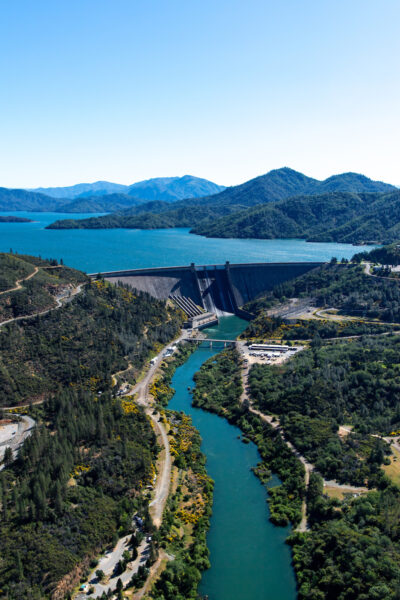
Sara Nevis / DWR
“Chinook salmon have been laying eggs in gravelly nests in the Sacramento River for millennia. But California’s biggest river is now so warm that biologists expect a significant number of the eggs won’t hatch. Environmental advocates blame the Trump administration. They say the federal government took too much water out of Shasta Lake for farms in the Central Valley, leaving the reservoir too warm for many salmon eggs to survive in a vital spawning area downstream from Shasta Dam. “The fish are not being protected,” said Jon Rosenfield, science director of the nonprofit group San Francisco Baykeeper. “We know that those eggs are getting cooked.” It’s happened in previous years. Chinook salmon need cold water for their eggs to survive. When it gets warmer than 53.5 degrees, it becomes lethal. … ” Read more from the LA Times. | Read via Yahoo News.
Too hot to handle: Temperature timing shapes salmon survival
“As temperatures continue to rise, news stories and research in California often focus on the fact that salmon thrive in colder water. Historically, many native salmon populations spawned in cool, high-elevation waters, but many upstream reaches are now blocked by dams, restricting salmon to warmer, low-elevation rivers for reproduction and rearing. As a result, the survival of many of these populations is dependent on cold-water releases from dams during hot summer months to help maintain downstream water temperatures within a suitable range for salmon. This water, however, is a limited and highly contested resource, and managers must balance competing demands, like water storage and supply, flood control, and recreation, with fish conservation goals. To help make effective decisions while managing these tradeoffs, research into how much cold water salmon need is important. Recent research (Arai et al.) has gone one step further to show that the success of salmon may depend less on the total amount of cold water that salmon receive and more on the timing of when the cold-water releases happen. … ” Read more from FishBio.
Newsom declares state of emergency as California prepares for historic El Niño this winter
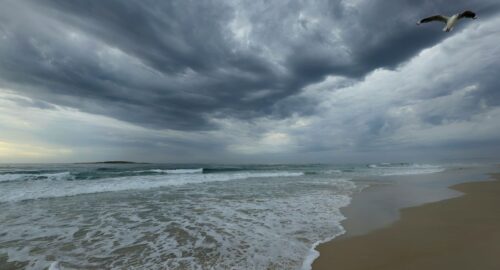 “Gov. Gavin Newsom on Monday declared a statewide emergency for California, warning of damaging storms that could be generated this winter from a historically strong El Niño brewing in the Pacific Ocean. The move is the latest sign that emergency officials are growing increasingly concerned about flooding, landslides, coastal damage and power outages as winter approaches. The declaration fast-tracks permits for flood protection projects and allows state agencies to obtain emergency supplies without the usual competitive bidding process. “We are preparing for this El Niño early because every Californian deserves to be safe in their home, connected to their community and protected when severe weather comes,” Newsom said. Earlier this month, scientists at NOAA, the National Oceanic and Atmospheric Administration, said there is a greater than 90% chance of a “very strong” El Niño being present in October, November and December, and a 75% probability that it will rank as the strongest in history since modern records began in 1950. … ” Read more from the San Jose Mercury News.
Delta communities prepare for potential record-breaking El Niño
“It’s a memory seared into the minds of many Walnut Grove residents: the massive flooding of 1986. “In the ’80s, there was a really bad one,” Walnut Grove resident Christine Saunters said. “The levee broke and wiped out a lot of businesses. It was really bad, really sad.” … Emily Pappalardo, a principal engineer with Tule Engineering, was born and raised in Walnut Grove and remembers the impact as well. “This was one of the biggest floods we’d had in a flood season in my lifetime,” Pappalardo said. Now, Pappalardo is working with state and local officials to prepare the Delta for what could be a record-breaking El Niño storm season. … ” Read more from CBS Sacramento.
SEE ALSO:
- Newsom declares statewide emergency as Super El Niño breaks into record territory, from the LA Times
- Newsom declares state of emergency for El Niño that could pound California coast, from the San Francisco Chronicle
- A Powerful El Niño is Brewing. Newsom Wants California Ready for the Worst, from KQED
- A ‘super’ El Niño is about to crash into California: 9 essential ways to prepare, from the LA Times
Tracking Harmful Algal Blooms in the Delta
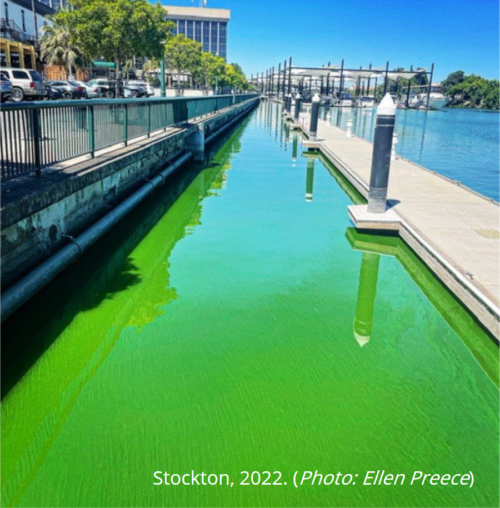 “By late summer, harmful algal blooms are a familiar sight in parts of the Sacramento–San Joaquin Delta—but understanding when they will form, whether they are toxic, and how to reduce their impacts remains a complex challenge. Cyanobacterial harmful algal blooms can threaten people, pets, wildlife, aquatic ecosystems, and water operations, yet monitoring across the region remains fragmented. The Delta Stewardship Council’s examination of harmful algal blooms began at its July 23 meeting, when Delta Lead Scientist Dr. Lisamarie Windham-Myers provided a “HABs 101” overview during the Delta Lead Scientist Report. The discussion continued at the Council’s August 27 meeting in Stockton, where a panel of scientists and agency experts described efforts to build a coordinated, Delta-wide monitoring program. The panel examined what drives blooms, how biological data could improve forecasts, progress on the 2024 Delta CHAB Monitoring Strategy, and new tools—including a standardized visual index and potential phone app—that could help managers identify risks earlier and respond more effectively. … ” Read more from Maven’s Notebook.
Groundwater agencies seeking relief from state sanctions will have to pay $50k-$250k just to apply
“Any groundwater agency hoping to independently avoid state sanctions under the so-called “good guy” clause of the Sustainable Groundwater Management Act (SGMA) will have to pay between $50,000 and $250,000 just to be considered. That’s how much the state Water Resources Control Board staff says it costs to review the technical and often voluminous exemption requests. The $50,000 to $250,000 tiers are based on the percentage the requesting groundwater agency pumps from the subbasin and are intended to “…cover appropriate staff expenditures with the need to avoid discouraging legitimate exclusion requests,” according to David Ceccarelli, branch chief with the Division of Water Quality. The Water Board approved the good guy application fees at its Sept. 15 meeting and got an update about how well – or not – Tulare County farmers have been paying other fees. … ” Read more from SJV Water.
California’s largest new reservoir in 50 years just cleared its toughest hurdle
“Six months ago, the people trying to build a 13-mile-long lake in the cattle country west of Maxwell were openly wondering whether the whole thing still penciled out. As of Friday, they say it does. The Sites Project Authority has finished analyzing the state’s revised water right for Sites Reservoir and concluded the project would capture enough water to be cost-effective. That is a sharp turnaround from March, when the State Water Resources Control Board’s first draft permit set diversion limits so tight that supporters warned the reservoir might collect as little as half the water needed to justify its roughly $6 billion price tag. … ” Read more from Active NorCal.
A clean energy source is buried under the desert, but it takes water to use it
“Beneath the Rocky Mountains, the Sierra Nevada, and the deserts in between, lies a massive energy source — and it isn’t a fossil fuel. The smashing and separating of tectonic plates that produced many of the West’s most dramatic landscapes have also allowed heat from the planet’s core to rise nearly to the surface. Now, an explosion of new geothermal energy companies wants to drill into the Earth and capture that heat for clean electricity. These companies have new technologies to better reach the heat, and a massive new customer base: energy-hungry data centers. Tech giants seeking to build data centers while meeting their climate goals see geothermal as a promising option because it can produce consistent power around the clock, unlike solar and wind. Meta and Google have signed agreements with geothermal start-ups in New Mexico and Utah, including a deal announced this month in which Google agreed to buy 396 megawatts from Fervo’s soon-to-come-online Cape Station facility in southwest Utah, enough to power around 430,000 households. The federal government also received record per-acre bids from developers seeking to build geothermal on public lands in the Mountain West this year. New geothermal technology borrowed from the oil and gas industry, along with California’s renewable-energy goals, have helped drive the boom, but experts say demand from tech companies is a major factor. … ” Read more from Grist.
Not even California Forever can stop the Delta Breeze, experts say
“Like a thoughtful friend, the Delta Breeze often shows up right when it’s needed. At the end of a hot day in the Sacramento Valley, when triple-digit temperatures seem like they may never release their grip, the breeze comes on subtly, almost unnoticeable to the uninitiated. Leaves in the trees overhead start to flutter and, within minutes, unbearable heat transforms into pleasant summer weather. … Because of that, any potential threats to the breeze are taken seriously. When word got around that the billionaire-backed California Forever development — which could add thousands of new homes and a shipyard in Solano County — might disrupt the breeze, residents were concerned. “People orient their summer days and build their homes around the breeze,” Goldstein said. “It would be a devastating loss.” … ” Read more from PBS Abridged.
Newsom clamps down on California data centers as voters turn against the industry
“Facing growing public backlash and a pivot from his own past vetoes, Gov. Gavin Newsom signed a sweeping package of seven bills on Monday that aim to force the data center industry to pay its own way in California. Three of the new laws shift electric infrastructure costs away from residential customers and toward data center operators, three more mandate disclosures of water usage and other resources, and the last one makes data centers ineligible for environmental review exemptions. Newsom in a written statement contrasted the new regulations with President Donald Trump’s hands-off approach to data centers and artificial intelligence. “We know that we don’t have to sell out Californians or sacrifice our well-being to innovate and succeed,” the statement read. “California has proven that time and time again. With these laws, we are ensuring that Californians remain in the driver’s seat — and that those profiting from data centers aren’t doing so at our expense.” … ” Read more from Cal Matters.
SEE ALSO: Governor Newsom signs most comprehensive data center laws in the nation, providing communities more control on water, electricity, and land use, from the Office of the Governor
California awards $44M for tribal stewardship, conservation projects
“The state of California has awarded $44 million for 15 projects, including funding for a tribal organization to acquire 80 acres in Lake County for Indigenous-led ecological restoration, cultural programs and job training. The Tribal EcoRestoration Alliance will acquire the Politsuwi property, located on the ancestral lands of the Robinson Rancheria, Scotts Valley Band of Pomo Indians and Habematolel Pomo of Upper Lake. The property will expand the adjacent EcoCultural Stewardship Training and Demonstration Center and protect oak woodlands, wetlands and wildlife habitat. The awards, announced by Gov. Gavin Newsom’s office, were made through the California Wildlife Conservation Board and included $32 million from the voter‑approved 2024 Climate Bond. The funded projects span 11 counties and support the state’s goal of conserving 30% of its lands and coastal waters by 2023. “These investments are about standing with tribes and communities, restoring the ecosystems we all depend on, and protecting the natural heritage of generations to come,” Newsom said in a statement. … ” Read more from Tribal Business News.
The wildfire doom loop: Why the federal government is losing its war on fire.
“Dan Dallas had defended these communities before. The little towns on the Karuk tribal land are nestled in a gorge along the Klamath River, amidst a million-acre wilderness of Northern California conifer and hardwood that makes up the Six Rivers National Forest. This time, August 2023, a fusillade of lightning strikes had ignited the web of steep canyons south of the town of Orleans in two dozen places, and as the fires expanded, they merged. As an incident commander for the U.S. Forest Service, Dallas wasn’t called up until fires got big. On the drive from Colorado, he considered the recent experiences that had begun to trouble him. “I’d been to multiple places, two, even three, sometimes four times,” he remembered in a recent interview. On each fire, he’d followed the Forest Service playbook. Keep the fire small. Contain it quickly. Box it in by throwing hardware at it, bulldozing the ridgetops and dropping fire retardant slurry or water from planes and helicopters. Don’t light the fuse on a megafire that could reach the nearest town. But he was starting to realize: even if you don’t light the fuse, you still have the bomb. … ” Read more from Re:Public.
In commentary today …
Delta Coalition slams Bay-Delta Plan for failing to comply with law
“Today, the Delta Tribal Environmental Coalition (DTEC)—consisting of the Shingle Springs Band of Miwok Indians, Winnemem Wintu Tribe, Little Manila Rising, and Restore the Delta— submitted comments on the updated San Francisco Bay-Delta Water Quality Control Plan (“Bay-Delta Plan”), a critical policy guiding water quality, river flows, and ecosystem protections for the state’s largest and most fragile estuary. The updated plan drew immediate opposition from the coalition for failing to make meaningful changes to address longstanding Tribal, environmental justice, and ecological concerns. “Protection of Tribal sovereignty and beneficial water uses cannot be achieved through approval of voluntary agreements that excluded tribes. This is the Board’s final opportunity to reverse course and do the right thing,” said Vice Chair Malissa Tayaba, Shingle Springs Band of Miwok Indians. Among DTEC’s central concerns is the plan’s reliance on Voluntary Agreements (VAs), privately negotiated deals allowing powerful water districts to offer limited flow commitments and funding in exchange for exemptions from stronger, enforceable regulatory requirements. … ” Read more from the Delta Tribal Environmental Coalition.
In regional water news and commentary today …
NORTH COAST
A 72-acre ranch next to the Headwaters Forest Preserve secures permanent protection via save the Redwoods League
“Save the Redwoods League announced today that Westfall Ranch, a 72-acre property outside Eureka in Humboldt County, has been transferred to the Bureau of Land Management (BLM) for permanent protection adjacent to Headwaters Forest Reserve. With this ownership change, Save the Redwoods, which purchased Westfall Ranch in 2016, completes a decade-long effort to restore the land, expand habitat connectivity and increase future public access potential to one of Northern California’s most treasured redwood destinations. “We’re thrilled to add Westfall Ranch to the network of conserved lands in Humboldt County,” said Adrianna Andreucci, land protection manager for Save the Redwoods League. “Thanks to support from the Land and Water Conservation Fund, and thousands of Save the Redwoods League donors a decade ago, these lands and waterways are now part of the fabric of our shared public lands.” … ” Read more from the Lost Coast Outpost.
UC climate scientist gives the skinny on Mendocino County’s winter
“Two camps are shouting about this winter. One says Mendocino County is going to drown. The other says nobody can know, because strong El Niños have come up dry before. Daniel Swain, a University of California climate scientist, says both are wrong. The skeptics start from something true, Swain said in a phone interview Sept. 14. An El Niño of any strength guarantees nothing, and its pull on California weather is strongest in Southern California and weakest along the North Coast. Mendocino County sits at the weak end. In a weak or moderate El Niño, Swain said, the skeptics would have a point: “It’s not very predictive of anything in particular” north of the Bay Area. But the skeptics’ case comes with a caveat, Swain said, and this year the caveat is the main point. … ” Read more from the Mendocino Voice.
Newsom declares emergency 8 months after massive Clearlake sewage spill, unlocking state funding
“Eight months after a ruptured sewer main released 2.9 million gallons of untreated wastewater into Clearlake’s Robin Lane neighborhood, Gov. Gavin Newsom has declared a state disaster in Lake County, opening the door for state emergency funding. The declaration allows local agencies to seek reimbursement for up to 75% of eligible costs associated with the spill, including emergency response work, equipment and supplies as well as repairs or replacement of infrastructure. It was secured following months of work by the California Office of Emergency Services, Sen. Mike McGuire, D-Healdsburg, and Lake County officials. “This devastating spill put an enormous strain on our community, leaving hundreds of families without clean water and facing months of disruptions,” Lake County Supervisor Bruno Sabatier, whose district encompasses the Robin Lane area, said in an announcement Monday. “This declaration will go a long way towards helping us recover from the costs of the Robin Lane sewage spill, and possible long-term solutions.” … ” Read more from the Santa Rosa Press Democrat.
SIERRA NEVADA
Microplastics concentrations in the Truckee River surge during high spring flows, new study finds
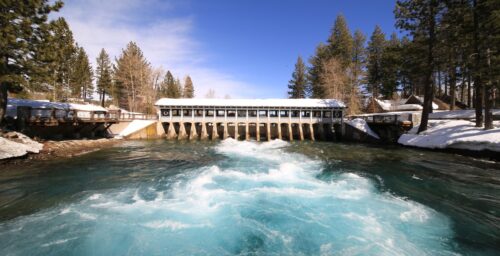
“The ubiquitous plastics of modern life are degrading into tiny fragments and littering Earth’s landscapes and waterways. Scientists are starting to examine and measure this phenomenon to better understand how microplastics move through the environment and ultimately impact human and environmental health. A new study focuses on the Truckee River, which stems from the clear blue waters of Lake Tahoe and traverses through Reno and Sparks, Nevada, before reaching Pyramid Lake. The research sought to illuminate the concentrations and types of plastics accumulating throughout the river — which supplies drinking water to nearly half a million people. Published September 15th in ACS EST Water, the research was led by Hannah Lukasik, former master’s student at DRI and the University of Nevada Reno. She was mentored by Monica Arienzo, Director of DRI’s Microplastics and Environmental Chemistry Lab. The group sampled microplastics at several sites upstream and downstream of Reno, Nevada, in fall 2022 and spring 2023. … ” Read more from Desert Research Institute.
SACRAMENTO VALLEY
DWR finishes $2.37 million salmon spawning project on the Feather River just in time for fall
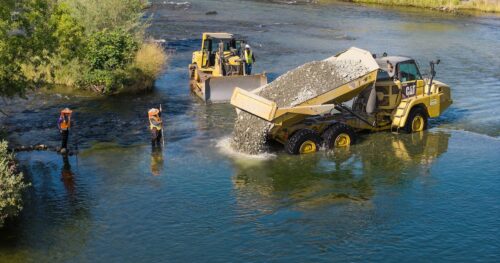
Xavier Mascareñas / California Department of Water Resources
“The gravel is in. Ahead of this fall’s spawning season, the Department of Water Resources has wrapped up its $2.37 million habitat project on the Feather River in Oroville, and the next move belongs to the fish. DWR announced crews placed roughly 8,000 cubic yards of clean spawning gravel along the low-flow channel between the Table Mountain Bridge and Bedrock Park, the stretch where most Chinook salmon and steelhead in the river dig their nests. Work ran through July and August on purpose, since placing rock before the fish arrive avoids crushing eggs. Active NorCal covered the start of this project in July, and the reason it exists has not changed. Oroville Dam blocks gravel that would otherwise tumble downstream with winter floods, so the riverbed below the dam slowly runs out of the rounded, fist-sized stone salmon need. Females sweep depressions called redds into that gravel with their tails, and the spaces between stones let oxygen-rich water flow over the eggs. The sweet spot in between has to be trucked in. … ” Read more from Active NorCal.
CENTRAL COAST
Monterey County Board of Supervisors to vote on continuing local emergency on Moss Landing fire
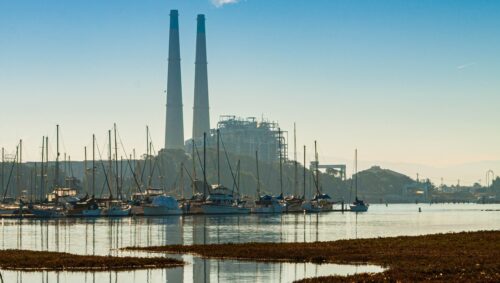
“The Monterey County Board of Supervisors will vote in Tuesday’s meeting on a resolution to continue the Proclamation of a Local Emergency in response to the battery fire in Moss Landing in January 2025. The resolution will renew the state of emergency for another 60 days before the Board of Supervisors must decide to renew it again. According to District 4 Supervisor Chief of Staff Yuri Anderson, the resolution is a procedural item that will continue to allow county resources to be dedicated to the emergency. It’s been made a discussion item to provide an update on the situation as it stands in Moss Landing following the Sept. 18 fire. While the fire on Sept. 18 was reported to be spontaneous, the resolution shows that in one way it’s only a continuation of an emergency that has been ongoing since January 2025. “The board has to make a finding every 60 days if the emergency needs to be continued to be addressed,” said Anderson. “Whether it’s through cleanup or emergency response or whatever the appropriate response will be. It essentially allows them to continue to be able to deploy county resources to address the emergency as well as seek reimbursement from appropriate state or federal agencies.” … ” Read more from the Monterey Herald.
Ocean Rainforest secures key California Coastal Commission approval for Santa Barbara Channel seaweed farm
“In a major regulatory milestone for West Coast marine aquaculture, the California Coastal Commission has unanimously approved the consistency certification for Ocean Rainforest’s proposed commercial-scale offshore kelp cultivation project in the Santa Barbara Channel. The approval clears the final major state regulatory hurdle for what will become a pioneering 2,000-acre offshore giant kelp (Macrocystis pyrifera) farm, positioned roughly 5 miles off the coast of Ventura in federal waters. … ” Read more from Morning Ag Clips.
SAN JOAQUIN VALLEY
Kings County groundwater agency gains more support for land fee
“A land assessment fee proposed by a groundwater agency continued to gain support when the Kings County Board of Supervisors and Hanford City Council members voted at their meetings on Sept. 15 to support the fee, which must still pass an election. The fee is being proposed by the Mid-Kings River Groundwater Sustainability Agency (GSA) to help fund projects in order to comply with the Sustainable Groundwater Management Act (SGMA) and possibly work its way out of state probation. The assessment fee comes under Proposition 218 rules, which require landowner approval before it can take effect. It already got approval from the Lakeside Irrigation Water District and the Kings County Water District earlier this month. “I encourage all Hanford residents to submit a yes vote on the 218. It’s a minimal cost and it is going to impact everyone,” Mayor Mark Kairis said. … ” Read more from SJV Water.
Tehachapi-Cummings County Water District board takes action needed to move forward litigation settlement
“Tehachapi-Cummings County Water District took action Thursday to approve revised rules and regulations for its sale, use and distribution of water. “I’m confident this is a good step forward for the district,” President Robert Schultz said during a special meeting of the board of directors on Thursday, Sept. 17. The board called the special meeting at the beginning of its regular monthly meeting on Wednesday after determining that the resolution brought to directors by staff needed additional review. The board also tabled the agenda item during a meeting in August. In a staff report for Thursday’s special meeting, water district General Manager Tom Neisler said the resolution before the board will “amend and restate the district’s water service rules and regulations to update the district’s form of Term M&I Agreement, add relevant exhibits and address minor desired revisions to streamline operations.” … ” Read more from the Tehachapi News.
SOUTHERN CALIFORNIA
Las Virgenes-Triunfo secures $335 million to finance Pure Water Project
“The Las Virgenes-Triunfo Public Financing Authority (PFA) has secured more than $335 million in low-cost state and federal financing for the Pure Water Project Las Virgenes-Triunfo, a milestone in a decade-long effort to bring down the cost of building the region’s first local source of drinking water. The package combines $84 million in loans and grants from the State Water Resources Control Board, of which $50 million comes through the Clean Water State Revolving Fund, with a $251 million Water Infrastructure Finance and Innovation Act (WIFIA) loan from the US Environmental Protection Agency. Together, the two sources give the Joint Powers Authority (JPA) access to favourable terms and flexible repayment structures that will reduce what customers ultimately pay for the $466 million programme. … ” Read more from Smart Water Magazine.
Sea turtle nests on Southern California beach for first time in recorded history
“A sea turtle currently nesting on a Southern California beach is the first known sea turtle on record to nest naturally anywhere on the West Coast, according to NOAA Fisheries. An olive ridley sea turtle was spotted digging a nest and laying eggs near Seal Beach in Orange County on Sept. 16. Three days later, a sea turtle was also spotted a few miles south near the Huntington Beach Pier. Wildlife officials have not determined if the sightings involved two different sea turtles or the same one. Sea turtles are protected under the Endangered Species Act. Wildlife experts will protect the local nest throughout the incubation period. Beachgoers are advised to keep a safe distance from the nest and not disturb the fencing, signage or turtles. “Our team of local, state, and federal partners will monitor the nesting sites throughout the incubation period, which typically lasts for 45-60 days,” NOAA Fisheries said. “Both areas are fenced, protected, and have interpretive signage.” … ” Read more from KTLA.
Newport Beach gets emergency permit to get sand on beaches
“Newport Beach will be allowed to pull an estimated 200,000 cubic yards of sand from the Santa Ana River as part of an emergency permit to address its eroding shoreline, as a series of relentless swells batters the coast. Sections of the Newport Beach coast, along with several others across Southern California, have been hammered by several back-to-back tropical storms this summer that have devastated coastlines, pulling away sand and leaving homes and infrastructure at risk. The emergency agreement between OC Public Works and the city of Newport Beach to help expedite permitting to move the 200,000 cubic yards of sand from the Santa Ana River outlet to the city’s eroding shoreline was announced Friday. “This move comes at a critical time as coastal cities reckon with the damage caused by Hurricane Marie and prepare for this winter’s El Niño storm season,” Fifth District County Supervisor Katrina Foley said in a statement. … ” Read more from the OC Register.
Over 40,000 pounds of trash removed from inland and coastal OC for Coastal Cleanup Day
“On Saturday, September 19, more than 3,700 volunteers assembled across Orange County to clean up beaches, waterways, and parks, preventing more than 40,000 pounds of trash from reaching the ocean. These numbers are expected to grow as cleanup site captains from 36 simultaneous events continue to report their results to Orange County Coastkeeper (Coastkeeper). Local organizations and agencies hosted cleanup sites throughout the county with support from Coastkeeper, the Orange County regional coordinator for California Coastal Cleanup Day. Sponsored by the California Coastal Commission, this statewide event brings Californians together each year to clean creeks, rivers, lakes, beaches, and shorelines and help prevent marine debris from reaching the ocean. Coastal Cleanup Day is California’s largest annual volunteer effort. … ” Read more from the OC Coastkeeper.
Along the Colorado River …
Unpacking the latest developments on the Colorado River
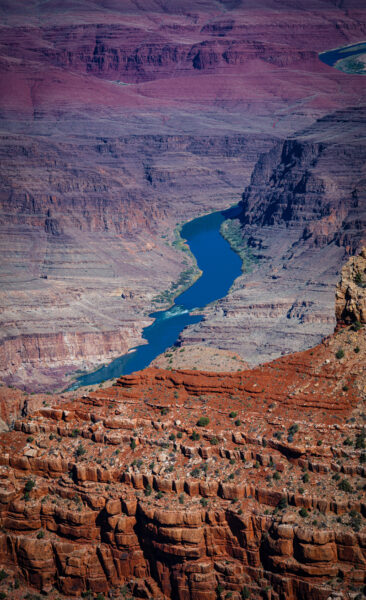 “The Colorado River is in crisis. Reservoir levels are at historic lows—Lake Powell is at 21% of capacity, while Lake Mead is at 27%, threatening hydropower operations and possibly even reservoir outflow. Last month, the US Department of the Interior published a final 10-year decision framework for coordinated reservoir operations, as well as interim guidelines for 2027 and 2028. Both aim to stabilize water levels to avoid the most negative outcomes for reservoir operations. What does it all mean for California? We asked our resident water law expert and senior fellow Brian Gray. First, what do the agreements say?The 2027–28 guidelines allow the Bureau of Reclamation to reduce deliveries of Colorado River water to the three Lower Basin states —Arizona, Nevada, and California—by 1.25 million acre-feet in each of the next two years. They also call on the three states to voluntarily conserve and store an additional 700,000 acre-feet in Lake Mead over the two-year period. … ” Read more from the PPIC.
Colorado River crisis deepens as federal plan imposes major water cuts across Southwest
“Federal water officials published a final decision framework meant to head off catastrophic drops in the Colorado River, unveiling interim guidelines for 2027 and 2028 that will require Lower Basin states to drastically trim their intake. Under the new plan released by the U.S. Department of the Interior, the Bureau of Reclamation will cut water deliveries to Arizona, Nevada, and California by 1.25 million acre-feet annually over the next two years. The interim policy also asks the three states to voluntarily conserve and store another 700,000 acre-feet in Lake Mead during the same window. In a blog post, the Public Policy Institute of California said that beyond the immediate two-year horizon, federal authorities established a broader 10-year framework. That plan mandates aggregate annual cuts of up to 3 million acre-feet for the Lower Basin if reservoir elevations continue to plummet and the seven basin states—which also include Colorado, New Mexico, Utah, and Wyoming—fail to reach an alternative agreement. … ” Read more from the Imperial Valley Press.
How the American West can restructure its water debt
“This summer, Mina Guli, the CEO of global water awareness non-profit Thirst Foundation, spent her days running the length of the Colorado River, from the snowfields of the Rockies to the scorching depths of the Grand Canyon. You learn things at that pace that no reservoir chart will tell you. You meet the farmer who has fallowed a third of his acreage, and the tribal water manager whose community holds ironclad rights to water it has no pipes to receive. A river in crisis is usually described as a countdown clock towards running out of water. But from our combined perspective as advocates for water awareness, efficiency and stewardship, it’s a far more dynamic problem. What we’ve found through Keep the River Running, our campaign for the Colorado River, is instead a complex mismatch between supply and demand. Economists have a term for this, and it is not drought, it is a water bankruptcy. For a century the basin spent more water than nature deposited. The pattern is not unique to the United States. River flows and aquifer depletion across the world shows the same mismatched balance sheets, at various stages of denial. … ” Read more from the World Economic Forum.
Why the West saw so much record-breaking heat this summer
“Nevada had its warmest August on record. Arizona tied its hottest summer, while New Mexico, Utah and Colorado logged their hottest summers ever, according to data from the National Oceanic and Atmospheric Administration. The heat was especially pronounced across the Southwest, where daytime highs averaged 90.9 degrees this summer — 5.6 degrees above average and nearly 1 degree warmer than the previous record set in 2020. Farther north, Wyoming shattered records in July. Temperatures there averaged 6.3 degrees above the 20th-century average, making it both the state’s hottest July and hottest month ever recorded. … ” Read more from Wyoming Public Media.
Small restoration projects have big impact on the Colorado River
“When people think about the future of the Colorado River, they often picture massive reservoirs, interstate water negotiations or billion-dollar infrastructure projects. Those conversations matter. But some of the most important work shaping the river ― and its future ― is happening under the radar, quietly, in the headwaters and tributaries where healthy rivers begin. In eastern Arizona, along the Little Colorado River near Springerville, I have spent the past several years closely collaborating with the Arizona Game & Fish Department on the restoration of three stretches of the waterway that had been damaged by erosion, wildfire, sediment buildup and decades of altered river flow. Individually, they’re relatively modest projects. Together, they demonstrate an important lesson: Restoring natural river processes can produce lasting benefits for wildlife, fisheries, water resources and the people who depend on them. … ” Read more from the Merced Sun-Star.
Arizona Farm Bureau supports Colorado River Basin Water Security and Infrastructure Act
“Arizona Farm Bureau (AZFB) announced their support for the Colorado River Basin Water Security and Infrastructure Act. Rep. Andy Biggs (R-Ariz.) introduced the bill last week to help keep the Colorado River Basin from shrinking, and this will authorize $19 billion to increase the water supply available to the Basin. In response to the bill’s introduction, AZFB President John Boelts issued the following statement saying the Bureau supports Rep. Biggs’ bill. “The status quo is not sustainable, and Arizona’s agricultural producers cannot afford to be left carrying an ever-increasing share of the burden,” said Boelts. … ” Read more from Channel 11.
SEE ALSO: Arizona Farm Bureau supports Colorado River Basin Water Security and Infrastructure Act, from Arizona Free Media
Amazon will spend millions to help save Colorado River water
“It’ll take a lot of money to help save water from the shrinking Colorado River. Now, Amazon is helping foot the bill. The ecommerce giant announced that it would send $20 million to water-saving projects in Arizona and California, kicking off a new longer-term effort to rally money for water conservation. The company formed a new coalition, dubbed the “Colorado River Basin Collaborative,” and aims to spend $100 million on water conservation across two years. “Companies that benefit from being in that basin have an opportunity, and really a responsibility, to help solve those problems,” said Will Hewes, Amazon’s water sustainability lead. … ” Read more from KJZZ.
SEE ALSO: Amid concerns over big tech and water, Amazon announces Colorado River conservation alliance, from News 12
Yuma prepares legal fight over Colorado River water rights, federal cuts
“The Yuma City Council is preparing for a legal fight on two fronts to protect the region’s water supply as competition for the Colorado River intensifies. Council members voted unanimously to authorize legal action over water transfers from rural areas to growing suburbs, as well as potential federal mandates that could reduce water allocations across the desert Southwest. While no lawsuits have been officially filed by the city yet, officials said the move signals that Yuma is ready to defend its resources against both urban expansion and federal policy changes. “We get one shot of water, and if that goes away or it’s compromised, it can impact our future in a very dramatic way,” Yuma Mayor Doug Nicholls said. … ” Read more from Arizona Family.
Another flash flood hit the Grand Canyon, setting back recovery from a deadly flood weeks ago
“Grand Canyon National Park just can’t get a break. Less than a month after the deadly August 29 flash flood, a second storm system swept through Bright Angel Canyon on September 16, reportedly washing away temporary housing units for construction crews and worsening water-crisis closures across the South Rim. National Park Service (NPS) said that all employees were safely evacuated before the storm hit, and no injuries were reported. “With severe weather approaching and flash flood warnings in effect, the NPS had reduced the number of personnel working in the canyon,” NPS wrote in a statement. “Crews remaining in the area were able to reach safety before the flood moved through. The affected area remains closed to public access.” … ” Read more from Outside Magazine.
CRIT reaches agreement with water district on Colorado River water
“The Colorado River Indian Tribes and the Central Arizona Water Conservation District reached an agreement on Colorado River, CRIT officials announced. The CRIT and CAWCD agreement will deliver more than 9,000 acre-feet of CRIT Intentionally Created Surplus, or ICS, water to the district. An acre-foot of water is the volume of water required to cover one acre to a depth of one foot and is equal to 325,851 gallons, according to the Arizona Department of Water Resources. In Arizona, one acre-foot is typically enough water to serve three single-family homes for a year. CRIT officials said the afreement with the CAWCD represents the last remaining water CRIT made available as part of a Drought Contingency Plan that was agreed to in 2019. … ” Read more from KAWC.
Diné NAU professor maps safe drinking water on the Navajo Nation
“Access to water, and, more importantly, clean drinking water, remains a challenge for many people on the Navajo Nation, so Northern Arizona University chemistry professor Jani Ingram and a team of researchers took on the challenge. They created a map identifying wells with water that is considered safe to drink and those that may be best avoided. Ingram, a citizen of the Navajo Nation, has been at NAU since 2002. Upon arriving, she almost immediately started working on some of the contaminant issues, particularly water contamination on the Navajo Nation related to legacy uranium mining. She said her work was motivated by uranium mining and community members who “requested for this type of work to be done.” … ” Read more from the Arizona Republic.
Las Vegas parks rip out grass, sparking heated debate over water, heat
“More than a dozen Las Vegas city parks are getting makeovers, changes that officials say will save 82 million gallons of water per year but have some residents incensed about the potential consequences. At Thursday’s Southern Nevada Water Authority board meeting, elected officials approved a $4 million rebate for the city for removing grass through a cash-for-grass incentive program that water managers have offered since 2001. It is one of the many tools the agency uses to protect the Colorado River Basin’s water supply, which is on life support. However, residents brought a list of objections during public comment, taking issue with minimal artificial turf installation and the effect of grass removal on valley temperatures and quality of life. … ” Read more from the Las Vegas Review-Journal.
Colorado River conservation must expand beyond Las Vegas, expert says
“Southern Nevada residents’ efforts to save water are making a difference, but protecting the Colorado River will require broader participation across the basin, according to a researcher who has studied the river for decades. Amazon announced a $20 million conservation commitment Monday. Michael Cohen, a senior fellow with the Pacific Institute, said private funding can help expand efforts to reduce water use as a hotter, drier climate puts pressure on supplies. “Because the problem is so massive that no single entity can respond to it,” Cohen said. “So corporate contributions are a critical part of that.” …, ” Read more from Channel 3.
How Nevada’s Colorado River lawsuit does, and doesn’t, impact Colorado
“Nevada launched the Colorado River’s most significant lawsuit in decades in August. In the days after, river expert Anne Castle was still surprised. She wasn’t alone. “I was surprised that it was Nevada that filed this lawsuit,” said Castle, a “recovering lawyer,” Colorado River policy expert and former federal water official based in Colorado. “Litigation was widely expected, but I think most people thought that it would come from Arizona first.” Nevada’s lawsuit challenges new federal management rules announced in August that govern how immense reservoirs, like Lake Mead and Lake Powell, will store and release water for millions of people over the next 10 years. Those rules go into effect Oct. 1, unless the court decides to put them on ice beforehand. That’s unlikely, experts said: Water-related court cases typically take months or years to decide. … ” Read more from National Geographic.
How is Colorado Springs growing but using less water? Hint: The lawns are changing.
“Lugging out the heavy garden hose and rolling it back up was Melissa Meadows’ most dreaded gardening chore. So when she and her husband moved into their home just east of downtown Colorado Springs two summers ago, she researched how to transform their 250-square-foot patch of weeds and dirt in a way that required little maintenance — and a lot less water. After doing some digging, Meadows landed on buffalo grass — a species native to the Great Plains that uses one-third of the water demanded by thirsty Kentucky bluegrass, a turf grass valued for its dense, green blades. She enrolled in a free native grass workshop, hosted by Colorado Springs Utilities, for expert advice, seeds and high-efficiency sprinkler nozzles. Using a workbook packed with seeding and watering schedules specific to the city’s climate and guides to identify specific weeds, she and her husband began planting seeds last summer to transform their dusty patch. … ” Read more from the Colorado Sun.
In national water news today …
USGS: Landsat product supports water management worldwide
“A USGS Landsat science product helps to provide that information at the scale of individual fields around the world. Using Landsat observations, the product estimates Actual Evapotranspiration, or ETa, the movement of water from the land surface and plants into the atmosphere. Knowing how much water is being consumed can help farmers and water managers make decisions about irrigation, water allocation and conservation. A new USGS publication evaluates the on-demand product and its performance across a range of landscapes and climates. The research demonstrates how more than four decades of Landsat observations can provide consistent ETa information for studying water use around the world. … ” Read more from the USGS.

