
Several news sources featured in the Daily Digest may limit the number of articles you can access without a subscription. However, gift articles and open-access links are provided when available. For more open access California water news articles, explore the main page at MavensNotebook.com.
In California El Niño news today …
This new El Niño looks like past ones that soaked California — here’s the key detail
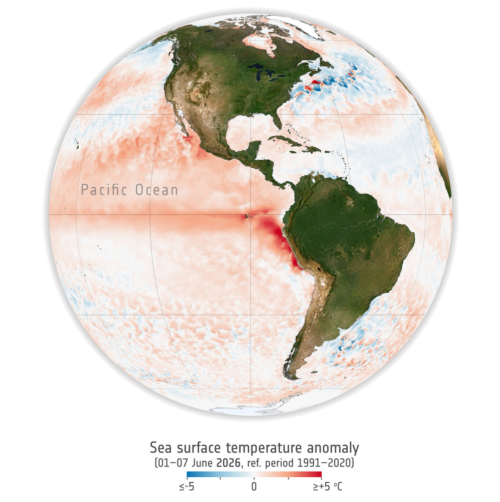 “As the 2026-27 El Niño flirts with record territory, scientists are increasingly confident it will have an outsize influence on California precipitation. That’s because there is a significant similarity between this event and two prior very strong El Niños that drenched California, and a difference from two that didn’t. The key is the exact location of warm water: El Niños in the far east — with the most unusually warm water near South America — correlate more strongly with California precipitation than a central-Pacific based El Niño, according to John O’Brien, a climate scientist and a program officer for science at the Heising-Simons Foundation. “The odds of an average winter are very low,” O’Brien said. … ” Read more from the San Francisco Chronicle. | Read via Yahoo News.
The ongoing El Niño has officially reached record levels
“What started as a wind shift in a remote stretch of the western Pacific Ocean nine months ago has developed into an El Niño of record proportions. In a sparsely populated portion of the central equatorial Pacific Ocean called the Niño 3.4 region, the average ocean temperature on Saturday reached 3.05°C (5.49°F) above average, the highest peak sea surface temperature anomaly on record. The record anomalous reading occurred two months earlier in the year than the previous peak in November 2015 and an El Niño in 1877 that contributed to a famine that wiped out 3 to 4 percent of the global population. By this metric, this El Niño has also now surpassed historically significant events in 1997 and 1982. … ” Read more from the Washington Post.
Governor Newsom proclaims state of emergency to bolster statewide El Nino preparedness, protect California
“As a historic El Niño storm season develops, Governor Newsom is proclaiming a state of emergency today, mobilizing state resources ahead of potential winter storms and other impacts. The emerging El Niño event is already breaking records, and forecasters expect it to continue to strengthen, potentially becoming the strongest in recorded history. Today’s emergency proclamation streamlines measures to help California prepare for this historic event. The Governor’s action puts California in a stronger position before winter weather intensifies. It directs state agencies to begin protecting vulnerable communities, prepare roads and critical infrastructure, stage emergency supplies, and help local partners reduce flood, landslide, and coastal risks. … ” Read more from the Office of the Governor.
El Niño could usher Central Valley floods. One strategy: let it flood like it used to
“The road into Dos Rios Norte crosses a bridge. It’s a small one-lane hop over the creek, and then the land opens up. This is the part Bryce Lundberg mentions first. Not the shear size, or the price, or the wildlife, not even the spring floodwaters. The bridge. “You go across that bridge, and you go out there and say, ‘wow,’” he said. “It’s like you’re in a different world.” On the other side is 1,600 acres of forest-ringed rice field, set at the confluence of the Feather River and Sacramento River, with Butte Creek sliding in from the north. … The Dos Rios Norte property is where three rivers, a flood bypass and a changing approach to flood control converge. For generations, the Lundberg family grew its rice, even as floods repeatedly made the land difficult to plant. After selling the property to restoration nonprofit River Partners, the land is becoming something else: a working floodplain designed to hold water and provide habitat — a test of whether giving rivers more room can make the Central Valley safer for the big storms the future will bring. … ” Read more from the Sacramento Bee.
King tides set to bring unusually high water levels to California coast this winter
“Communities near California’s coastline are expected to see some of the highest tides this year as the next few months are projected to bring a series of King Tides coinciding with the ongoing El Niño pattern. King Tides are the highest predicted high tide of the year at a coastal location, according to the Environmental Protection Agency. They are a normal phenomenon that happens once or twice every year in coastal regions, occurring when the orbits and alignment of the Earth, moon, and sun combine to cause the exceptionally high tides. King Tides, a popular but non-scientific term to describe the high tide, touch levels that exceed the highest water level reached at high tide on an average day. Although King Tides can reach up to one to two feet higher than average high tides and are not related to climate change, King Tides help scientists understand what higher sea levels will look like, according to the California Coastal Commission. … ” Read more from edhat.
UC Santa Cruz researchers launch real-time study on kelp resilience as a super El Niño unfolds

“A rapid-response team of students and their professor at the University of California, Santa Cruz, are doing real-time research to measure how the region’s iconic giant kelp forests respond to ocean warming expected during a powerful “super El Niño” that is set to surge across the Pacific. The Nearshore Ecology Research Group, led by UC Santa Cruz professor Joshua Smith, is treating this forecasted extreme climate event as a natural opportunity. The team is studying the effects of acute ocean warming on these undersea forests, which are still recovering from widespread losses that occurred during a marine heatwave over a decade ago. “We now have a rare, time-sensitive opportunity to understand, and potentially mitigate, another large-scale ecosystem shift as it unfolds,” said Smith, an assistant professor of ecology and evolutionary biology. “This project will deliver actionable science in near to real time” … ” Read more from UC Santa Cruz.
EXPLORE MORE COVERAGE:
- El Niño Is Coming. Here’s What California Can Expect, from California City News
- As cities prepare for 2026’s super El Niño, some crucial blind spots can’t be ignored, from The Conversation
In other California water news today …
Here’s what California is learning from solar panels built over irrigation canals
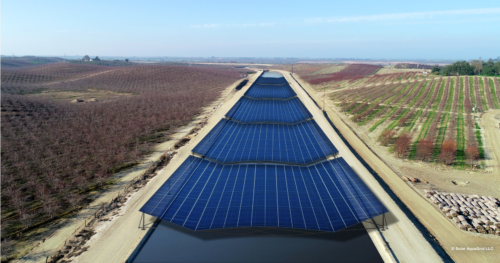
“Driving from Los Angeles to San Francisco, Jordan Harris saw the concrete canals that transport water across the state slowly evaporating under the scorching West Coast sun. … Thinking back to the baking concrete canals, Harris pitched an “obvious” solution to his friend Robin Raj: Why not build solar panels on top of California’s 4,000 miles of open canals that transport water across the state? The panels would produce clean energy while limiting evaporation by shading the canal — a win-win. The duo went on to start Solar Aquagrid, an advocacy firm dedicated to reimagining aging canals, and partnered with the Turlock Irrigation District, UC Merced and the California Department of Water Resources to cover small sections of Turlock’s canals with solar panels. The new “solar canal” provides shade to limit evaporation and generates power all in one neat package. They call it Project Nexus, and it operates at the intersection of the state’s need for clean water and energy. Project Nexus tests not one, but three different solar canal models. … ” Read more from KQED.
John Duarte discusses California water, agriculture and policy
“California agriculture faces a long list of challenges, and few are more important than water. On the latest AgNet News Hour, “The Ag Meter” Nick Papagni sits down with John Duarte of Duarte Nurseries for a wide-ranging conversation about California water, agriculture, rural communities, environmental policy, farmland and the future of the state’s farming industry. Duarte and Papagni begin with the recent water forum hosted by Congressman Tom McClintock in Turlock, where federal and agricultural leaders discussed ways to improve California’s water supply. Duarte highlights efforts to broaden the Army Corps of Engineers’ focus beyond flood control to include water supply, along with proposals involving Delta dredging and better coordination among state and federal agencies. … ” Read more from AgNet West.
Water board adopts order concerning manure at dairies
“Stating its advancing the protection of the Central Valley’s drinking water sources while balancing the needs of its agricultural economy, the State Water Resources Control Board adopted new rules to safeguard groundwater quality while providing the dairy industry reasonable timelines to adopt sustainable manure management practices. The board stated California produces more milk than any other state, with most dairy farms located in the Central Valley. The board’s new dairy order will reduce discharges of nitrogen – a natural component of manure that can pose a threat to human health at high concentrations in drinking water, the board stated. The new rules regulate how much dairy manure can be applied to other crops. The overapplication of dairy manure to croplands has been shown to harm groundwater supplies in the Central Valley which many communities rely upon for drinking water, the board stated. … ” Read more from the Porterville Recorderr.
Residents shocked to learn state bill could soon shield water agencies from wildfire liability
“Fire survivors may have a harder time suing water agencies whose systems fail during wildfires under a new state bill. The bill, now awaiting Newsom’s signature, could give companies like the Los Angeles Department of Water and Power (LADWP) new protection from wildfire lawsuits just as the main reservoir in the Pacific Palisades sits dry for the third fire season in a row — and fire victims continue to battle the local water agency in court over the 2025 firestorm. Senate Bill 1153 comes directly into a fight that exploded after the Palisades Fire, when parts of the neighborhood’s water system buckled under enormous demand, and some hydrants lost pressure or ran dry. Residents were further outraged when they learned the nearby Santa Ynez Reservoir, which can hold about 117 million gallons of water, was empty for repairs when the fire erupted. … ” Read more from Westside Current.
Western wildfires increasingly intersect critical water supply watersheds
“New research examining more than eight decades of wildfire activity found that fires are burning more land in Western watersheds that supply water to millions of people. The study published in Communications Earth & Environment [September/2026] analyzed wildfire trends from 1940 through 2024 across approximately 17,000 watersheds in 11 Western states. Led by Dalston J. Karto, a San Diego State University computational science doctoral student, and Alicia M. Kinoshita, the study was conducted in collaboration with researchers from NASA’s Jet Propulsion Laboratory and the U.S. Geological Survey. The researchers found that some of the watersheds most important for generating runoff and supplying downstream drinking water are experiencing significant increases in burned area. In California, the study captured fires affecting watersheds connected to major water supplies, including the 2018 Carr Fire near Whiskeytown Lake and the 2013 Rim Fire near Don Pedro Reservoir. The findings highlight a growing challenge for water security: Wildfire can affect water resources long after a fire is extinguished by increasing sedimentation, degrading water quality and altering runoff patterns. Those effects can reduce reservoir capacity, increase water treatment demands and create additional risks for downstream communities. … ” Read nore from the San Diego State University.
In regional water news and commentary today …
NORTH COAST
Extra water is pouring down the Trinity to protect the Klamath’s first big post-dam salmon run
“The fall salmon run is stacking up in the lower Klamath and Trinity rivers, and federal water managers are pushing extra cold water downstream to keep a crowded run from turning into a sick one. The Bureau of Reclamation nearly tripled releases from Lewiston Dam, taking the Trinity from about 450 cubic feet per second to as much as 1,200 cfs. The higher flows began August 28 and are scheduled to run through September 21. The decision was made with the Yurok and Hoopa Valley tribes, the California Department of Fish and Wildlife and the U.S. Fish and Wildlife Service. When water runs low and warm, returning Chinook bunch up in the few deep, cold pools they can find, and packed fish pass parasites and bacteria to each other fast. More cold water breaks up those holding pools, nudges fish to keep moving toward spawning grounds and dilutes the disease load. Everyone involved remembers 2002, when roughly 33,000 adult salmon died in the lower Klamath under exactly those conditions. … ” Read more from Active NorCal.
SIERRA NEVADA
How the 2021 Caldor Fire is changing Sierra Nevada forests
“Partners are working to help the Sierra Nevada landscape recover and become more resilient after the 2021 Caldor Fire burned more than 220,000 acres, including parts of the Upper Mokelumne River watershed. Through a partnership between CAL FIRE, the U.S. Forest Service and the Upper Mokelumne River Watershed Authority, grant funding is supporting projects that reduce excess vegetation, improve forest health and protect the watershed. The Mokelumne River watershed provides water for communities across the region, including millions of people in the East Bay. … ” Read more from Action News Now.
Tahoe Conservancy awards $2 million for shared-use trail across Upper Truckee River
“The California Tahoe Conservancy Board authorized a $2 million grant for El Dorado County to build a critical missing section of the south shore shared-use trail network. The Johnson Meadow Greenway Connector Project will provide a safe route for people biking, walking, and rolling between South Lake Tahoe neighborhoods east and west of the Upper Truckee River. “It’s exciting to see this transformative project move forward,” said Conservancy Vice Chair and El Dorado County Supervisor Brooke Laine. “By tying together our neighborhoods and visitor destinations, this new trail crossing will provide lasting benefits for residents and visitors, and even for wildlife.” … ” Read more from the Tahoe Daily Tribune.
SACRAMENTO VALLEY
Volunteers work to keep Big Chico Creek, Bidwell Park clean
“Hundreds of volunteers met at Hooker Oak Park on Saturday, dedicating the morning to picking up trash for the 39th Annual Bidwell Park and Chico Creeks Cleanup, hosted by the Butte Environmental Council. Over the past 38 years of the event, around 367 tons of trash have been collected from wild spaces and waterways in Bidwell Park — in 2025, the event recorded 628 volunteers and 20 tons of trash collected. Miranda Kokoszka, BEC program director, said that this year’s trash will be hauled off by event sponsors Murdock’s Moving and Storage, the Chico Area Recreation and Park District and Waste Management. Some volunteers might also load their personal vehicles, usually those with pickups, with trash. Before heading out to designated areas along the creek, volunteers were given trash bags and a safety briefing. The first 350 volunteers also received free event T-shirts. … ” Read more from the Chico Enterprise-Record.
How the Sacramento region is preparing for ‘very strong’ El Niño
“It might be difficult to think about flooding while Sacramento temperatures are still hovering in the 90s, but the region’s rainy season is approaching, and with it, a familiar risk. El Niño can increase the potential for a wetter winter, but it can’t predict exactly how the season will unfold. NOAA forecasts a more than 90% chance of a “very strong” El Niño this year, raising the risks of extreme weather. But El Niño’s intensity and duration remain uncertain, leaving Sacramento to prepare for a range of possibilities in an area where flooding has long shaped the way communities manage water. There are few urban flood control districts in the state like Sacramento’s, according to Timm Kerr, general manager at the American River Flood Control District that maintains 40 miles of levees along the American River and nearby creeks. “Our levee districts protect highly urbanized population centers with lots of infrastructure,” Kerr said. “We’ve got a lot of features to protect and a lot of lives that our levees protect.” … ” Read more from PBS Abridged.
Native Californian shows how the Sacramento region once was, and sometimes still is
“Diana Almendariz sees her grandmother everywhere. In the exposed root systems along the banks of the Sacramento River, where the sedge roots can grow more than a dozen feet long and be used for weaving. In acorns leeching tannic acid as they’re made edible. In the upriver sighting of the occasional sea lion, introduced to her long ago as a passing friend. These are memories, visits from someone who left this earthly plane years ago. But there’s also something alive about them — real and relevant lessons entrusted to Almendariz by the woman who took her under her wing when she was a child. Decades later, the space below Almendariz’s own wing is crowded. Her daughters, Christina and Ooti, are there, along with many others. … ” Read more from PBS Abridged.
NAPA/SONOMA
U.S. House of Representatives votes to speed up stalled Lake Mendocino dam study
“The U.S. House voted Wednesday to order the Army Corps of Engineers to speed up its study of raising Coyote Valley Dam at Lake Mendocino — a study the Corps stopped last October for lack of federal funding. The bill doesn’t provide any money. Lake Mendocino supplies drinking water to more than 650,000 people in Mendocino, Sonoma and Marin counties, according to the Mendocino County Inland Water and Power Commission, one of the Corps’ two local partners in the study. The vote was 415-9 for the Water Resources Development Act of 2026, H.R. 9497. Rep. Jared Huffman, D-San Rafael, voted yes. In a statement Wednesday, his office said the bill “advances evaluation of improvements to increase flood protection while expanding water storage and strengthening long-term drought resilience” at the dam near Ukiah. … ” Read more from the Mendocino Voice.
BAY AREA
Marin Municipal Water District prepares to raise rates
“Marin Municipal Water District rate revenues need to increase 4% to 6% annually over the next four years to maintain a balanced budget, officials said this week. The report, presented at a board meeting Tuesday, came on the heels of another report that said district water sales were about $8 million lower than projected last year and will continue to decrease because of less consumption. At the same time, the district’s costs are estimated to climb about 4.5% annually. The solution could involve an overhaul of the district’s tiered rate structure. The district is looking at raising both fixed and variable rates that it charges its customers, said Bret Uppendahl, the finance director. The 4% to 6% revenue increase is “the bottom line what the overall rates need to bring in,” Uppendahl said. “We’re looking right now with the consultants as to where that will show itself,” he said. … ” Read more from the Marin Independent Journal.
In Silicon Valley, AI data center boom meets local resistance
“In Silicon Valley’s biggest city, residents and environmental groups are organizing against a wave of proposed data center projects that officials have courted in a bid to position the city as a hub for AI infrastructure. The clash highlights a challenge confronting policymakers nationwide: how to support an industry viewed by government and business leaders as critical to economic competitiveness while responding to growing public concerns about the electricity, water and pollution impacts of the infrastructure required to power it. In California, that debate is particularly fraught because the state is home to many of the companies driving the AI boom, including Google, Meta, OpenAI and Anthropic. San Jose, a city of nearly 1 million and California’s third-largest, has embraced the industry’s growth. Last year, city leaders announced an agreement with utility PG&E to speed delivery of power to large energy users such as data centers. … ” Read more from US News & World Report.
SAN JOAQUIN VALLEY
Friant Water Authority announces Pump Station Replacement groundbreaking
“The Friant Water Authority has announced a major groundbreaking that should go a long way in providing the Tea Pot Dome Water District a more reliable source of water. Friant Water Authority, in partnership with the Bureau of Reclamation, will hold a groundbreaking ceremony for the Phase 1 Pump Station Replacement Project, marking the beginning of a major investment in modernizing critical infrastructure along the Friant-Kern Canal, FWA stated. The project is made possible through federal funding provided by the Working Families Tax Cut, which includes a historic investment in western water infrastructure, FWA stated. This federal funding will support the replacement of five aging pump stations that are essential for ensuring reliable water deliveries within the Friant Water Authority service area. … ” Read more from the Porterville Recorder.
California supreme court to hear oral argument October 7 in landmark Kern River fish-flow case
“The California Supreme Court will hear oral argument on October 7, 2026, in Bring Back the Kern, et al. v. City of Bakersfield (Case No. S290840), a case that will determine how one of California’s oldest environmental water statutes, Fish and Game Code section 5937, is enforced statewide. Section 5937 requires the owner or operator of any dam to allow sufficient water to pass the dam to keep fish downstream in “good condition.” The statute traces its origins to 1915 and has been reaffirmed and expanded by the Legislature multiple times since, including after voters adopted Article X, Section 2 of the California Constitution in 1928, which requires that all uses of water be “reasonable and beneficial.” The case arises from the Kern River, where the City of Bakersfield’s diversion structures have left long stretches of the riverbed dry for much of the year. Plaintiffs (Bring Back the Kern, Water Audit California, Kern River Parkway Foundation, Kern Audubon Society, Sierra Club, and the Center for Biological Diversity) sued the City of Bakersfield in 2022 seeking to compel compliance with Section 5937. … The California Supreme Court has granted review to resolve that question. … ” Read more from Water Audit California.
Tehachapi-Cummings County Water District prepares for this year’s super El Niño, discusses coming GIS upgrade
“The Tehachapi-Cummings County Water District is preparing for an unprecedented season of weather as this year’s super El Niño continues to strengthen. For California, El Niño typically brings dry, hot weather for northern California, and wetter weather for the south, and this year weather conditions continue to reach into the extremes. At a meeting of TCCWD’s board of directors last month, district General Manager Tom Neisler noted equatorial water temperatures in the pacific are three degrees Celsius above normal, saying fluctuations are typically measured in fractions of degree. Earlier this year he described a two-degree rise as “astounding.” … ” Read more from the Tehachapi News.
SOUTHERN CALIFORNIA
Fight intensifies over the fate of homes falling into the sea
“Natalie Driessen drove down Beach Road on a mission, past neighbors whose houses fell into the sea and others now scrambling to prevent their property from collapsing next. She had a video from March that she wanted everyone to see. When she spotted an Orange County supervisor outside what was left of one mangled kitchen and living room, Driessen pulled out her phone to play the clip of the California Coastal Commission — the powerful state agency tasked with preserving beaches — discussing a home in her gated community. California beaches are considered public beyond a certain high tide line, the commissioners warned, and that waterline was rising. “I wonder,” one of the commissioners said, “how many years before I’m allowed to just pull up a chair — sit in their, you know, front deck porch and watch TV because it’s public land. … I don’t think we’re that far away from this, right?” Storms and high tides — fueled by a near record-breaking El Niño — have battered the California coast in recent weeks, destroying homes and eroding beaches. The fallout has supercharged years-long tensions between the owners of coveted oceanfront property and the authorities they say aren’t doing enough to protect them. The damage has intensified a bigger debate playing out around the coast: What can or should be done to save private property in the most vulnerable communities? … ” Read more from the Washington Post.
EPA awards $251M WIFIA loan for California water reuse project
“The U.S. Environmental Protection Agency (EPA) has announced a $251 million Water Infrastructure Finance and Innovation Act (WIFIA) loan to the Las Virgenes-Triunfo Public Financing Authority in California to support drinking water treatment improvements and advance water reuse. The funding will support the Pure Water Project, which will construct an advanced water purification facility to treat recycled water for the Las Virgenes-Conejo region of Los Angeles and Ventura counties. The project is expected to provide the region’s first local water supply while increasing capacity and system reliability for approximately 105,000 customers. The project is designed to reduce reliance on imported water supplies from Northern California while improving drought resilience and emergency response capabilities. EPA said reducing demand on those supplies could also increase water availability for agricultural users in Central California. … ” Read more from Water World.
Lake Mathews’ water level
Mike Gardner writes, “What is happening at Lake Mathews, is the water level low, and should we be worried? I have been hearing quite a bit of discussion about the water level at Lake Mathews and associated speculation on whether it is reflective of an impending water shortage. I will address those questions and give some background on Lake Mathews and how it is operated. Lake Mathews is the end point of the Colorado River Aqueduct. It is owned and operated by the Metropolitan Water District of Southern California, commonly known as Metropolitan or MET. The Colorado River Aqueduct runs from Parker Dam 242 miles to Lake Mathews. The aqueduct and Lake Mathews were completed in 1939, and the first water flowed into Lake Mathews in early 1940. … ” Continue reading at the Raincross Gazette.
Proposal could bring more roads to forests in OC, LA, San Bernardino and Riverside counties
“The public has until Oct. 6 to comment on a federal administration proposal to eliminate the Roadless Area Conservation Rule, a regulation in effect for more than 25 years that has prevented roads through 60 million acres of National Forest System lands for recreation and habitat protection. The rule, adopted in 2001 by President Bill Clinton’s administration, blocks road building for logging and other access and development. Upon word that President Donald Trump’s administration was considering the repeal, environmentalists statewide have been sounding the alarm that it could open up much of Southern California’s wildlands to roads. The rollback could impact the biggest undeveloped stretch of Orange County in the Trabuco District Area of the Cleveland National Forest, wildlands in the San Gabriel Mountains National Monument in Los Angeles County, the San Jacinto Mountains and Pyramid Peak, Palm Canyon Creek in the Inland Empire, and the San Bernardino National Forest near Big Bear. … ” Read more from LA Daily News.
Along the Colorado River …
Will the U.S. megadrought ever end?
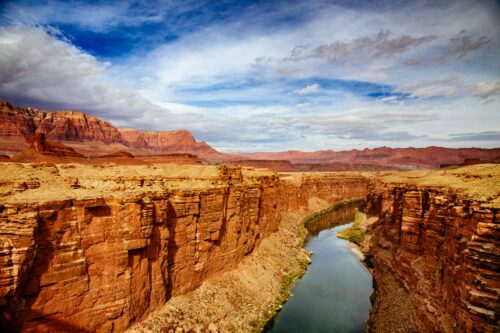 “Kearny, Ariz., is a town on the brink. Located at the foot of the Dripping Spring Mountains in eastern Arizona, this small community of 2,000 people sources its water from the Gila River, a verdant waterway that snakes by the southern edge of town. But in March, the snowpack feeding the river had dropped to precipitous levels: It was just 1 percent of its historic norm for that time of year. The Gila River water commissioner slashed Kearny’s allotment of river water by some 85 percent. And in April, town officials announced that “Zero Day” was approaching, at which point the taps would run dry. Since 2000, the region — which includes Arizona, New Mexico, California, Utah, Colorado and parts of northern Mexico — has endured a historic “megadrought,” or a period of severe dryness that persists for decades. Scientists say it’s the driest this region has been in 1,200 years. “We’re 27 years into it, and it shows no signs of letting up,” says Brad Udall, a water and climate researcher at Colorado State University in Fort Collins. Scientists point to two factors causing the drought — rising temperatures and declining precipitation. … ” Read more from Science News.
To build resilience in the Colorado River basin, let nature take the lead
“High in the Colorado Rockies, Grand County lives up to its name. Each year, from elevations of up to 14,000 feet, the snowpack from this formidable range melts to form the headwaters of the Colorado River, whose basin supplies water to more than 40 million people in a thirsty American West. In 2020, the East Troublesome fire tore through Grand County and Rocky Mountain National Park, scorching nearly 200,000 acres of wilderness and sending sediment cascading into the rivers and reservoirs below. “In terms of the loss and ferocity of this fire, you almost couldn’t believe what you were seeing,” says Sean Henry, environmental planning manager for Northern Water, the local public agency that manages and delivers the resource. “We were already in extreme drought, and bark beetles had destroyed 70% of the trees in the years before.” … ” Read more from the Walton Family Foundation.
Amazon invests $20 million in the Colorado River as part of a coalition to mobilize $100 million for water conservation
“The Colorado River carved the Grand Canyon and has shaped the American West for millions of years. It serves 40 million people, 5.5 million acres of farmland, 30 tribal nations, and hundreds of plant and animal species across seven states and Mexico. It powers the Hoover Dam and supplies water to Los Angeles, Phoenix, Las Vegas, and the farms that produce 90% of America’s winter vegetables. But after 25 years of severe drought, the river’s largest reservoirs are below 30% capacity, and the gap between supply and demand is roughly 1 trillion gallons per year. To address this, Amazon is launching the Colorado River Basin Collaborative (CRBC) and plans to invest $20 million in water conservation in communities that rely on the Colorado River. The CRBC’s objective is to create one of the biggest corporate water conservation efforts for a single U.S. watershed. … ” Read more from Amazon News.
Mexican desalination plant could help Arizona with water. What happens next
“Arizona will spend $4.9 million to study the prospect of building a seawater desalination plant in Mexico’s Gulf of California, the state’s Water Infrastructure Finance Authority decided. The Epcor Water Innovation Partners, with the Spanish construction company Sacyr, wants to build a plant near San Felipe on the northwest side of the gulf, also known as the Sea of Cortez. It could eventually produce up to 500,000 acre-feet of freshwater, an amount that would replace nearly two-thirds of what Arizona is about to lose under a federal plan to protect reservoir storage on the Colorado River. If it happens, the project is proposed to come online in phases from 2034 to 2039. “Arizona must continue exploring a range of potential water supply solutions to meet the needs of future generations,” WIFA Board Chairman Jonathan Lines said in a statement. “Approving this project appraisal scope allows us to deepen our understanding of this proposal while maintaining our commitment to a thoughtful, transparent, and financially prudent evaluation process.” … ” Read more from the Arizona Republic.
Monitoring drinking water turbidity after the Grand Canyon’s largest wildfire
“On July 4, 2025, a lightning bolt struck Grand Canyon National Park’s North Rim, igniting a blaze within park boundaries. Labeled the Dragon Bravo fire, it was contained for a week until persistently windy, dry conditions caused an explosion in intensity. The fire swept north, penetrating the adjacent Kaibab National Forest. It also surged south, consuming thousands of acres of national park land, torching structures on the North Rim, and spreading into the canyon, coming within a mile of the Colorado River. Park authorities quickly started debating fire response and evacuation measures, and Arizonans mourned the loss of land and historic structures. Hundreds of miles south, the fire also consumed the mind of a Northern Arizona University (NAU) professor. Abe Springer, a Professor of Ecohydrogeology in NAU’s College of the Environment, Forestry, and Natural Sciences, has studied the North Rim for decades. He researches how the North Rim’s karst geology impacts water movement through the rim’s underlying aquifer, various springs, and tributaries of the Colorado River. … ” Read more from Environmental Monitor.

