
Several news sources featured in the Daily Digest may limit the number of articles you can access without a subscription. However, gift articles and open-access links are provided when available. For more open access California water news articles, explore the main page at MavensNotebook.com.
On the calendar today …
- WORKSHOP: Flood MAR Network: A New Era of California Water Planning from 10am to 12pm. Join the Flood-Managed Aquifer Recharge Network for a virtual workshop to learn about current planning and implementation efforts underway by the State of California to expand recharge (with a special focus on California Water Plan 2028) and to take part in discussion with Network members on ways to get involved. Click here for the agenda. Click here to register.
- MEETING: Delta Independent Science Board from 11am to 12:30pm. Agenda items include the subsidence review and the Delta Stewardship Council Chair and Executive Officer Report. Click here for the meeting notice.
- MEETING: Delta Protection Commission from 5pm to 7pm in Rio Vista. Agenda items include Commission Appointments to National Heritage Area Advisory Committee, Final National Heritage Area Logo and Tagline Selection, Delta Conveyance Project: Update and Potential Action Regarding DWR’s Revised Certification of Consistency on Remanded Items. Click here for the full agenda.
In California water news today …
The race to put El Niño underground

“A predicted “super” El Niño this winter could put one of Gov. Gavin Newsom’s plans to bolster the state’s water supplies to the test just as his governorship winds down. The storms could bring danger, potentially overwhelming levees and causing damaging floods. But they could also give California, where water supplies can swing wildly from drought to flood, a chance to capture and store excess water underground for later use. Groundwater usually makes up roughly 40 percent of the state’s water supplies, and closer to 60 percent during dry years when above ground rivers run dry. But over-pumping by farmers and years of drought have depleted underground reserves. Newsom has tried for the past couple of years to make it easier for water managers to divert floodwaters into underground aquifers as part of his broader efforts to store and send more water to farms and cities, sometimes angering environmentalists who argue it comes at the cost of endangered species. … ” Read more from Politico.
State Water Board adopts order to protect groundwater from overapplication of manure at dairies
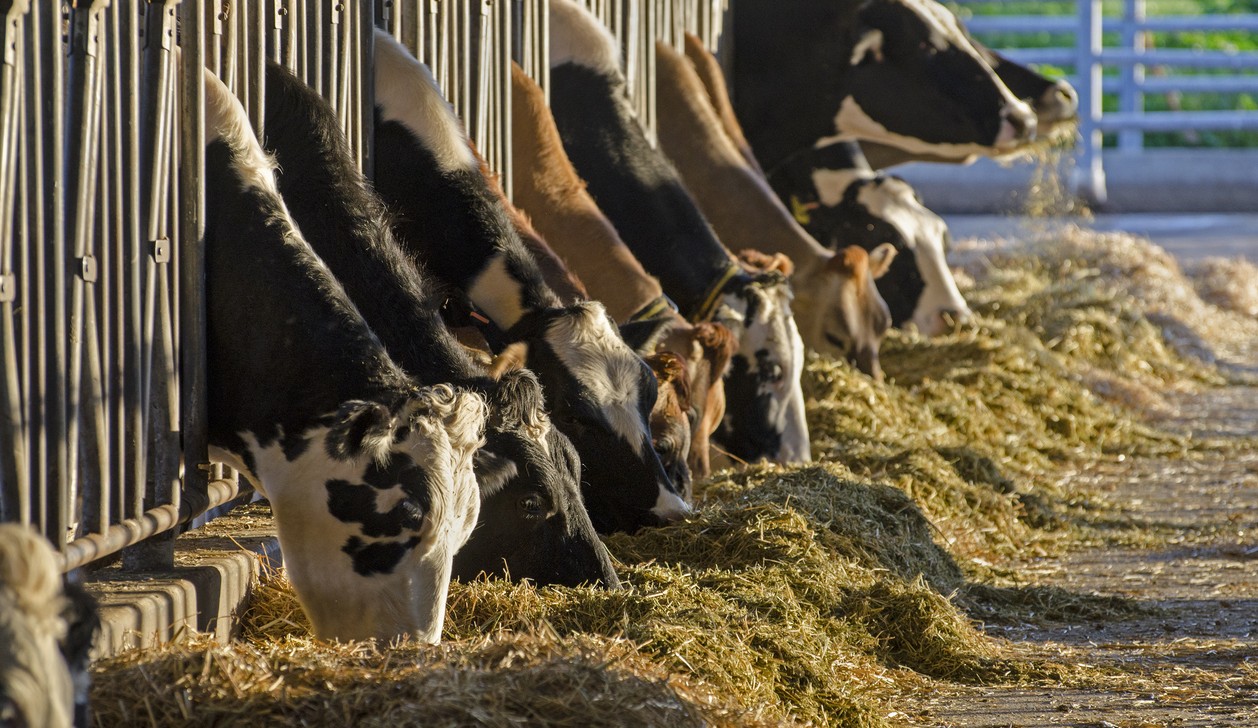 “Advancing the protection of the Central Valley’s drinking water sources while balancing the needs of its agricultural economy, the State Water Resources Control Board adopted new rules to safeguard groundwater quality while providing the dairy industry reasonable timelines to adopt sustainable manure management practices. California produces more milk than any other state, with most dairy farms located in the Central Valley. The board’s new dairy order will reduce discharges of nitrogen – a natural component of manure that can pose a threat to human health at high concentrations in drinking water. The overapplication of dairy manure to croplands has been shown to harm groundwater supplies in the Central Valley which many communities rely upon for drinking water. “California’s dairies anchor the Central Valley economy, and many have worked hard on nutrient management over the past decade. This order recognizes that work, and it also recognizes that nitrate is still in household drinking water wells,” said State Water Board Chair E. Joaquin Esquivel. “The order sets legally required outcomes, defines timelines, and obligates dairies to deliver safe drinking water to affected households in the meantime. … ” Read more from the State Water Board.
Feather River gravel project supports chinook salmon and steelhead spawning
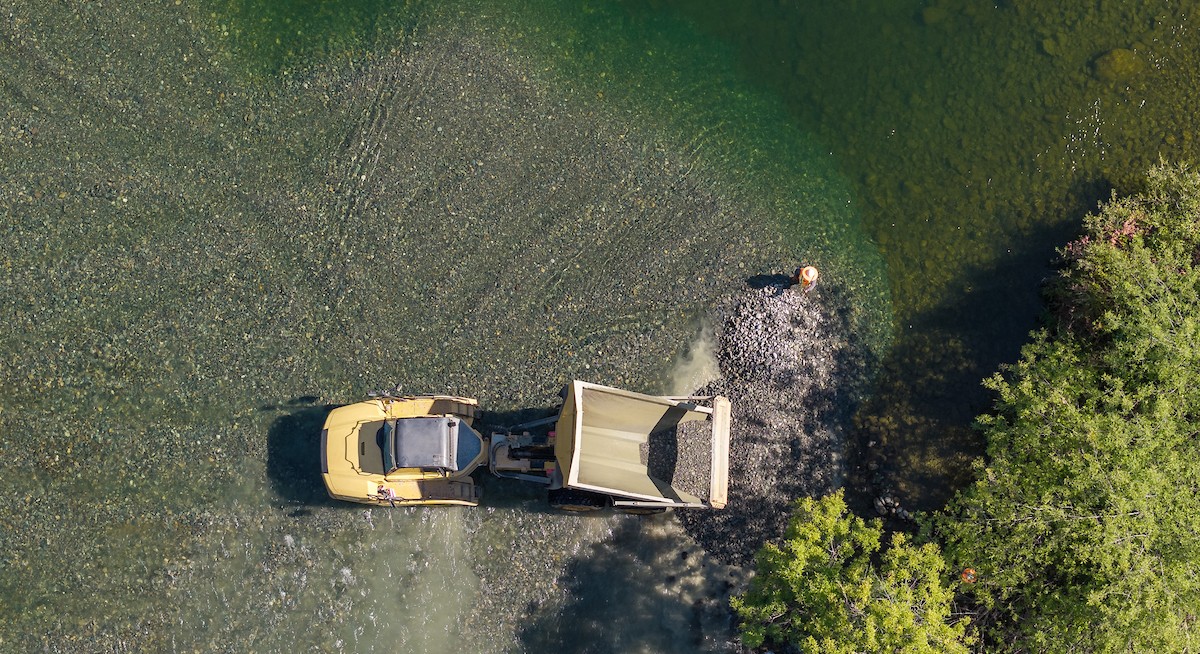
“Throughout California’s Central Valley, Chinook salmon and steelhead trout migrate between the ocean and inland rivers to spawn during their lifecycles. Ahead of the fall spawning season, DWR completed a salmonid habitat improvement project in the low-flow channel of the Feather River in Oroville, placing approximately 8,000 cubic yards of spawning gravel between the Table Mountain Bridge and Bedrock Park. “Oroville Dam blocks the upstream passage of some fish to their natural spawning habitat and prevents the migration of gravel that would naturally flow downstream,” said Kassie Henley, senior environmental scientist with DWR’s Feather River program. “Through gravel restoration projects, DWR supports fish that use the Feather River for this critical phase of their lives. The gravel is placed in July and August ahead of when Chinook salmon and steelhead spawn to avoid impacts to eggs.” … ” Read more from DWR.
The energy and water footprint of AI
“Whether artificial intelligence should be regulated, and if so, how, has almost overnight become one of the biggest political issues of our time. And with AI comes a surge in construction of massive data centers, for which we should minimize impact on the surrounding communities. But to the question of how we will find enough energy and water to supply data centers, concerns may be overstated. When it comes to water, there is good news. A recent report published by Richard Evans, an economist with the Abundance Institute, describes recent recycling innovations that promise to reduce ongoing water consumption by data centers to almost nothing. Using a liter per kilowatt-hour metric, modern designs are already down from as high as 2.5 L/kWh with traditional evaporative cooling to 0.12 L/kWh with closed-loop cooling technologies. It may get even better than that. Evans elaborates, “And those fleet averages actually understate what is occurring in new construction. Microsoft says its newest liquid-cooled AI data centers use direct-to-chip closed loops with zero water evaporation. Oracle says the same about AI facilities it is building in New Mexico, Michigan, Texas and Wisconsin. The cooling system is initially filled and subsequently has essentially no evaporation, blowdown, or continuous makeup-water requirement.” … ” Read more from Edward Ring.
WHAT MATTERS: AI, data centers, and water
Artificial intelligence is transforming the way we live, work, and connect. But behind every AI query, streamed video, uploaded photo, and cloud-based application lies a vast network of data centers that require significant amounts of energy and water to operate. In Episode 31 of What Matters Water TV & Podcast, we explore the critical intersection of AI, data centers, energy, and water resources.
Scientists warn this year’s El Niño can trigger unprecedented flooding
“Derek Bentley is practicing karate on new blue mats in his San Rafael studio. His business is just yards from a marina connected to San Francisco Bay. The building flooded through seams in the foundation during a January storm, stacked on top of a king tide. Some of the old dirty mats are still stacked in a corner. “We were closed for about a week after the flood and then we opened but we had like air dryers and some of the mats were still wet,” said Bentley. “Took a little bit of a credit card to it, but we got some new mats finally. We’re slowly rebuilding.” He fears that a very strong El Niño will raise water levels and steer storms toward the Bay Area. As for his worst fear, Bentley says, “That this place goes completely under water.” … ” Read more from KQED.
The ‘plant that ate California.’ Meet the Golden State’s worst invasive weed
“The National Park Service calls it “the plant that ate California.” Yellow starthistle, a spiky winter plant, has invaded more than 12 million acres in the Golden State, the California Invasive Plant Council said. While California has plenty of invasive plants, yellow starthistle is considered “one of the most serious rangeland weeds” in the state, the council said. It’s also difficult to eradicate thanks to its long root system and fire-resistant seeds. Here’s what to know about yellow starthistle … ” Read more from the Sacramento Bee.
SEE ALSO: Yellow starthistle has long taproots that reach deeper than most native annual plants and can consume substantial amounts of water, as Robin Meadows reported in 2022.
Huffman advances Northern CA projects in critical water resources legislation
“Today, Representative Jared Huffman voted to pass the Water Resources Development Act (WRDA) of 2026. This piece of bipartisan legislation authorizes the U.S. Army Corps of Engineers’ civil works program while advancing critical water infrastructure, ecosystem restoration, and climate resilience projects nationwide. “We’re in a tough time when it comes to water policy. President Trump has tried to roll back years of progress on sustainable water management, clawed back funding for critical water infrastructure projects, and tried at every opportunity to stoke water wars, especially in California. Meanwhile, water managers throughout the west are dealing with the fallout of the worsening climate crisis — record droughts, extreme floods, rising seas — while trying to maintain and modernize deteriorating infrastructure,” said Rep. Huffman. “WRDA is one of Congress’ best tools for tackling these complex water challenges – and I’m happy to say that I was able to get big wins in this year’s WRDA, including reversing a wrongheaded Trump edict against Army Corps staff communicating with members of Congress, and advancing important projects in my district to restore wetlands, boost water supplies, modernize our infrastructure, and increase flood and drought resiliency.” … ” Read more from Congressman Jared Huffman.
Forest Service proposal could change protections in California for roadless areas
“The U.S. Forest Service is proposing to rescind the 2001 Roadless Rule, a move that could change how some undeveloped forest areas in California are managed. The proposal comes as the Forest Service says deteriorating forest health and wildfire risk require more flexibility in managing the nation’s forests. “Forest health has been at a decline for the last 30 to 40 years,” said U.S. Forest Service Chief Tom Schultz. “We have overstocked stands, we have unhealthy stands, and we have stands that are primed for catastrophic fire.” To get a closer look at what’s at stake, we took an EcoFlight from Truckee-Tahoe Airport over the Tahoe National Forest and Lake Tahoe Basin. … ” Read more from CBS News.
In commentary today …
The valley’s new water plan offers hope
Scott Hamilton, a natural resource economist working on water issues and water projects, writes, “Without new water supply projects, the San Joaquin Valley is projected to be 2.4 to 3.0 million acre-feet short of water on average each year by 2040. Kern County sits at the center of that arithmetic, with the largest gap between water supplies and water demands of any of the groundwater subbasins in the San Joaquin Valley. The cost of doing nothing is enormous. Land values have already begun to tumble. Ultimately, in some areas without any surface supplies, irrigated almond orchards now worth $30,000 per acre might be reduced to one tenth of that value. The cost to the valley goes well beyond the loss of farmland values. … ” Continue reading from the Bakersfield Californian.
In regional water news and commentary today …
NORTH COAST
Klamath River increased water releases aim to save salmon
“Salmon migrating up the Klamath and Trinity rivers are getting a boost from increased water releases below Lewiston Dam. The U.S. Bureau of Reclamation worked with the Yurok and Hoopa Valley tribes, California Department of Fish and Wildlife, U.S. Fish and Wildlife Service and other partners to approve flow increase to reduce the risk of disease for salmon migrating from the ocean to the rivers, the bureau said. Flows below Lewiston Dam will increase from approximately 450 cubic feet per second to as much as 1,200 cfs, the bureau said. The planned release does not affect water supply to agriculture, communities or other environmental obligations. … ” Read more from the Siskiyou Daily News.
Federal regulators seek public comment on proposal to remove two PG&E dams on Eel River
“Federal regulators are seeking public input on a proposal to remove two PG&E-owned dams on the Eel River, a plan supporters say could bring significant ecological benefits while reshaping recreation for nearby communities. The Federal Energy Regulatory Commission held a meeting after releasing a scoping document that outlines what the agency plans to study as it considers the dam removals. Ren Brownell, the Connectivity Campaign Manager for Caltrout, said she attended “in a personal capacity” and said the document is meant “to ensure that this is a safe and effective dam removal.” … ” Read more from KRCR.
Eureka council supports restrictions on data centers as city begins drafting long‑term rules
“Eureka officials began shaping long‑term rules for data centers Tuesday night and council members shared their concerns about how data centers could affect the communities where they are built. Staff agreed that data centers should be allowed only in industrial zones. The majority of the council supported potentially allowing only small facilities under strict conditions as the city continues a temporary moratorium on new projects. The moratorium, adopted unanimously in August, paused all data‑center proposals while the city evaluates how the fast‑growing industry fits within Eureka’s limited electrical and water capacity, as well as aesthetic concerns related to tourism. Development Services Director Cristen Kenyon said the new framework is meant to give the city a way to assess projects before they arrive or determine whether they should be allowed at all. … ” Read more from the Eureka Times-Standard.
SACRAMENTO VALLEY
Council members make clear: No plans for data center in Redding
“In the minutes before Tuesday’s Redding City Council meeting began, the audience of around 80 community members talked amongst themselves, many sharing the same topic of conversation: data centers. It was revealed a few days prior that Circle 6 Consulting, the firm hired to conduct an efficiency study on the city, was recommending that the council consider a data center project in Redding, among other suggestions, to improve city finances. During Circle 6 principal Nathan Sprague’s presentation at the council chambers last night, he breezed over the slide about the data center recommendation, clearly aware of the community’s pushback. “[I] can hear the groans before I start talking about this one,” he said when the slide appeared. “Believe me, I’m not going to stand here and wave pom poms in the air for a data center, but there is a business case for it. … ” Read more from the Shasta Scout.
Sacramento weighs data center policy as residents raises concerns
“Sacramento officials are looking into how a large data center could affect energy, water, infrastructure and neighborhoods as residents raise concerns about a possible project in the city. At Tuesday’s Sacramento City Council meeting, Mayor Kevin McCarty directed the city manager and staff to explore a policy addressing the potential impacts of a large data center. “There’s growing interest and curiosity and somewhat concerns about the issue across our country and locally about data centers,” McCarty said. “I want Sacramento to be prepared if and when a project comes our way, so I’m asking our city manager and our city staff to look into a policy that considers potential impacts on our communities — energy, water, infrastructure, neighborhoods — and what safeguards we may need if such a proposal is forwarded to the city of Sacramento for consideration.” … ” Read more from Channel 10.
SEE ALSO: Sacramento leaders offer assurances of transparency on future data center projects, from the Sacramento Bee
SAN JOAQUIN VALLEY
MEETING NOTES: “Super” El Niño dominates Kern water district meetings
“Water districts in Kern County are preparing for the possible onslaught of a wet El Niño-driven winter. El Niño is an infrequent weather pattern where Pacific Ocean temperatures heat up and moisture evaporates, filling the atmosphere. That moisture could form into storms that the jet stream could bring barreling into California as happened most recently in 2023. Scientists are now saying there is a greater than 90% chance of a very strong El Niño in the Northern Hemisphere for fall and winter of 2026-27. Though other factors could block that pattern from bringing precipitation into California – as happened during the so-called “Godzilla” El Niño of 2015 – locals aren’t taking any chances. … ” Read more from SJV Water.
EASTERN SIERRA
Ridgecrest: Desert groundwater agency questioned about “communications” spending
“Board members questioned why the Indian Wells Valley Groundwater Agency is budgeting $195,000 for communications with an Orange County-based agency. “My county spends a fifth of this total,” said board member Will Wadelton who represents Inyo County on the board. Budgeting $195,000 is excessive for “a couple of newspaper ads and some Facebook posts,” he said. The rest of the groundwater authority’s 2027 draft budget received little comment at the board’s Sept. 9 meeting. The amount set aside for Westbound Communications is a “not to exceed” amount of $195,000, said agency representative Christopher Perez. It was the same amount in the 2026 budget. … ” Read more from SJV Water.
SOUTHERN CALIFORNIA
Clearing out the mountain basins in case El Niño brings flooding rain
“The strong El Niño this year increases the odds of drenching rainstorms hitting Southern California, and L.A. County is preparing by digging out massive amounts of accumulated mud, sand and debris from reservoirs that protect communities below from floods. Crews with excavators are scooping loads of sediment onto trucks to increase the water-catching capacity of mountainside reservoirs including San Gabriel, Eaton Wash and Devil’s Gate. In all, the county estimates its teams this year are removing as much as 1.3 million cubic yards of sediment to free up space for floodwaters and debris at the dams and in smaller catchment basins — enough to fill the Rose Bowl three times. In thousand of trips, trucks haul the material to old gravel pits. At one reservoir, a conveyor moves it to a nearby canyon. … ” Read more from the LA Times. | Read via Boiling Point newsletter.
Irwindale approves data center ban, adding to growing list of San Gabriel Valley cities
“The Irwindale City Council unanimously approved a data center ban through an ordinance on Wednesday, Sept. 9, in effect 30 days after adoption. The decision makes Irwindale one of the latest cities to ban data centers in its zoning code. The unanimous vote on Ordinance No. 821 followed a first reading on Aug. 26. About the unanimous decision, Mayor H. Manuel Ortiz said “An ordinance on Data Centers is necessary, because I believe Irwindale should remain open to responsible Economic Development while carefully considering the great impact Data Centers would create on the Community and Residents.” … ” Read more from the LA Daily News.
This private company wants to extract water from the driest desert in the US
“Deep in the heart of the Mojave Desert lies Bonanza Spring, a half-mile green oasis in the middle of one of the driest landscapes in the country. Fed by the Fenner Basin aquifer, the spring is lined with moisture-loving plants and trees like cottonwoods, mesquite, Gooddings willow trees, and arrowweed. It’s a vital life source for bighorn sheep, desert tortoises, and migratory birds. But a water-extraction project recently green-lit by the Trump administration could be detrimental to the spring’s survival, critics say. In July, the Bureau of Land Management approved a permit for Los Angeles–based private water company Cadiz to convert a 220-mile gas pipeline that runs across the Mojave Desert into a water pipeline. Officially named the Mojave Groundwater Bank, the project plans to pump extracted water from the Fenner Valley Aquifer System in California’s eastern Mojave Desert, to “underserved” communities in the Southwest. Cadiz claims that the pipeline—which runs through Mojave National Preserve and Mojave Trails National Monument—will provide “clean, reliable, and affordable” water to more than 40,000 people on the front lines of climate change. … ” Read more from Sierra Magazine.
SAN DIEGO
Research finds larger storms drive higher pollution loads in San Diego River watershed
“When rain falls across San Diego, it does more than send water rushing through local rivers and creeks. It can also mobilize pollution across the watershed. New research published in Journal of Hydrology: Regional Studies (October 2026) from San Diego State University finds larger storms transport greater pollutant loads through the San Diego River watershed, offering new insight into how storm intensity, urbanization and aging sewer infrastructure can shape water quality in the region. Researchers in SDSU’s Department of Civil, Construction, and Environmental Engineering examined the San Diego River and Alvarado Creek, a small, highly urbanized tributary adjacent to SDSU that feeds into the river. They analyzed high-resolution discharge and water quality data from storms sampled between 2016 and 2024, tracking dissolved organic carbon, total dissolved nitrogen, nitrate, phosphate and fecal indicator bacteria. … ” Read more from San Diego State University.
Along the Colorado River …
Lake Mead’s sacrifice to prop up Lake Powell shown in poor outlook
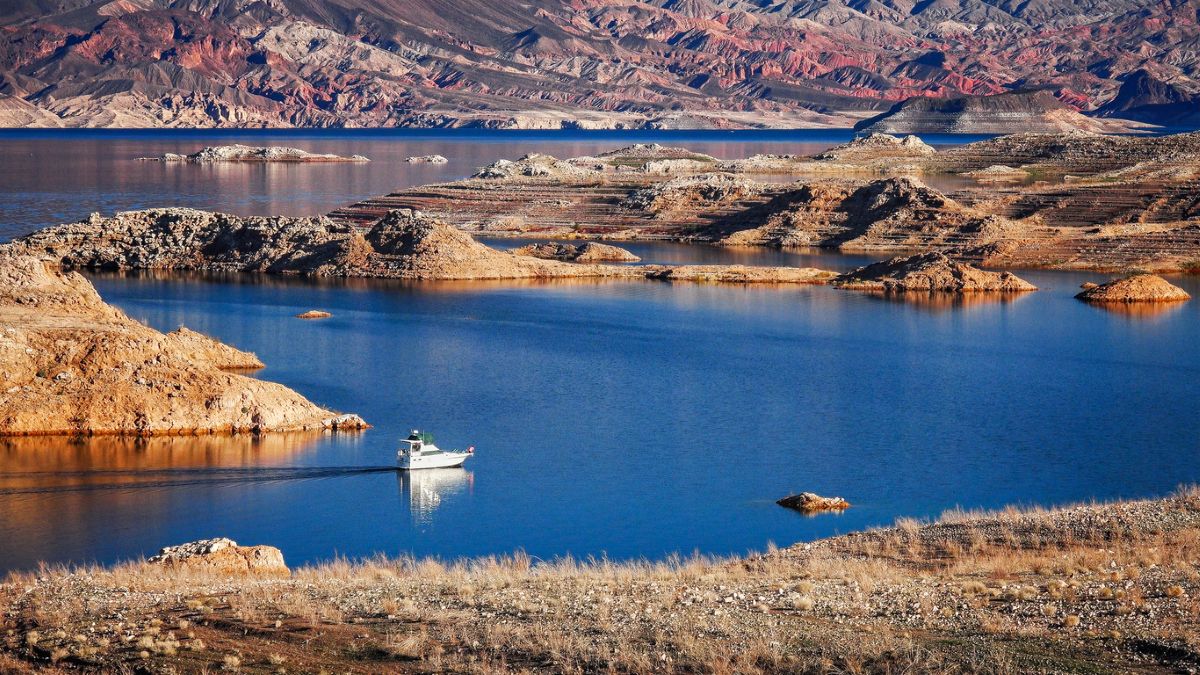 “The ramifications of propping up Lake Powell at Lake Mead’s expense are on full display in the federal government’s latest numbers for the two reservoirs along the Colorado River. While Lake Mead may keep plunging until it’s firmly below 1,000 feet in elevation or close to it in summer 2028, Lake Powell is projected to recover in a big way, surpassing its current level in those same months. The Bureau of Reclamation’s 2-year study now breaks down the most possible elevation levels in two scenarios: one where 6 million acre-feet of water is released from Lake Powell per year and another where 7 million acre-feet of water makes it downstream. In both paths that the Trump administration charts, Lake Mead, the reservoir that provides 90 percent of Southern Nevada’s drinking water, is headed for trouble. By the end of November, forecasters say the reservoir will dip below 1,035 feet — a critical elevation level below which only five of Hoover Dam’s 17 turbines can generate power without risk of damage. … ” Read more from the Las Vegas Review Journal.
Why El Niño monsoons won’t provide cure to Lake Mead water crisis
“Monsoon rainfall is expected to hit parts of the drought-stricken Southwest this week, bringing some risk of flash flooding but offering little help to the depleted Colorado River system. While the moisture could provide localized, short-term drought relief, meteorologists say it will not deliver the prolonged rain and mountain snow needed to substantially improve conditions at Lake Mead and other major reservoirs. “Don’t expect much help at all for the Colorado River Basin,” Alex Wallace, on-camera meteorologist at The Weather Channel, told Newsweek. “There may be some areas that pick up a couple of inches of rain over the next few days but to truly get back to normal, they need a lot more.” … ” Read more from Yahoo News.
Mexican desalination plant could help Arizona with water. What happens next
“Arizona will spend $4.9 million to study the prospect of building a seawater desalination plant in Mexico’s Gulf of California, the state’s Water Infrastructure Finance Authority decided. The Epcor Water Innovation Partners, with the Spanish construction company Sacyr, wants to build a plant near San Felipe on the northwest side of the gulf, also known as the Sea of Cortez. It could eventually produce up to 500,000 acre-feet of freshwater, an amount that would replace nearly two-thirds of what Arizona is about to lose under a federal plan to protect reservoir storage on the Colorado River. If it happens, the project is proposed to come online in phases from 2034 to 2039. … ” Read more from the Arizona Republic.
Yuma City Council takes action on two Colorado River water issues
“The Yuma City Council unanimously voted Wednesday to take action on two Colorado River water issues that could have implications for the region’s water supply. One of the actions involves legal proceedings related to a proposed Colorado River water transfer from GSC Farm in La Paz County to the Town of Queen Creek. Yuma is joining Mohave and La Paz counties in legal action concerning the transfer. City officials say they are concerned the transfer could set a precedent for how Colorado River water is moved from rural areas to growing communities elsewhere in Arizona. … ” Read more from KYMA.
Peoria agrees to $100 million water deal in face of Colorado River cuts
“The city of Peoria has signed a $100 million agreement to buy water from a private company, as Arizona faces cuts to its supply from the Colorado River. Peoria says it will receive about 173,672 acre feet of water in storage credits to help shore up the city’s supply. That’s roughly enough to provide half a million homes with water for a year. The city says it bought a 120 acre campus that includes two wells from Vidler Water Company in the Harquahala irrigation area in La Paz County. When all permitting is finished, Peoria plans to pump groundwater into the Central Arizona Project canal, and eventually into a treatment facility for the city’s use. … ” Read more from KJZZ.
Upper Verde River on verge of earning state’s highest water quality protection level
“The Upper Verde River is one step closer to being receiving the Outstanding Arizona Waters designation, the highest water quality protection level in the state. The Governor’s Regulatory Review Council approved the proposal earlier this month. The Upper Verde River is located north and east of Prescott in Yavapai County. The headwaters begin just east of Paulden and the river stretches down to the town of Clarkdale. The Sierra Club Grand Canyon Chapter nominated this stretch of the Verde along with portions of Sycamore Creek in 2023. … ” Read more from KTAR.
Colorado has a new, voluntary program to conserve Colorado River water. Farmers are wary.
“As the clock winds down on a historically dry year in the Colorado River Basin, Colorado water officials Wednesday said they’re willing to launch a new state-run conservation program that would chip in to address system-wide shortages — but not without more certainty from the federal government, and possibly the state Legislature, about how the program would work. Members of the Colorado Water Conservation Board, the state’s lead water agency, voted 9-0 to conditionally approve a “near-term contribution program” to fulfill the voluntary conservation efforts requested by federal officials this year, as the seven states that rely on the Colorado River continued to fall short of a long-term agreement on how to share its shrinking water supplies. … ” Read more from the Colorado Newsline.
Colorado data centers move ahead fast, while public opposition grows
“Colorado communities are moving ahead with approvals of massive new data centers, even as new public polling shows citizen opposition swelling over concerns about electricity and water use and noise. The Colorado Springs City Council will hold a key public hearing Thursday on the controversial “Taurus” data center proposed for a former microchip factory near Garden of the Gods. That center could draw up to 50 megawatts of power from Colorado Springs Utilities, and neighborhood groups have risen up with fears of noise and other impacts on the area. Politicians voting on planning recommendations and permits are looking over their shoulders at poll results like these: An independent survey of 1,389 registered voters by the respected Magellan firm found 82% of Coloradans “oppose a data center in their city or town, 77% oppose one in their county, 86% oppose one near their neighborhood, and 75% oppose one elsewhere in the state.” … ” Read more from the Colorado Sun.
Court rules in favor of feds and Denver Water on dam expansion
“The unfinished expansion of Gross Reservoir near Denver can proceed after three judges ruled Tuesday in favor of the federal government and a water utility’s challenge to a lower court opinion halting construction. The U.S. Army Corps of Engineers and Denver Water defended the dam expansion before the 10th Circuit Court of Appeals against a challenge from the environmental group Save The Colorado. The organization sued the agency in part on the grounds that the Corps did not fully account for the dam’s impacts on the Colorado River system that is already stressed by climate change. “It’s nonsensical to be putting more straws in, and further draining, the Colorado River at this point in history,” said Gary Wockner, director of Save The Colorado, in a statement released after the judges’ ruling. … ” Read more from Inside Climate News.
In national water news today …
Beyond construction: Closing the water infrastructure data gap
“Water utilities across the United States are entering a historic period of infrastructure renewal. More than $50 billion in funding from the Infrastructure Investment and Jobs Act is helping communities modernize pipes, treatment facilities and distribution systems at an unprecedented pace. Maximizing the value of those investments requires more than successful project delivery. Information generated during planning, design and construction must remain connected throughout the life of the infrastructure. A continuous digital asset lifecycle creates a trusted flow of data from project conception through operations, maintenance and eventual replacement, helping utilities improve performance, control long-term costs and make informed infrastructure decisions. … ” Read more from Water Finance & Management.
Trump’s data center push runs into a new demand for environmental review
“Nevada Democratic Rep. Dina Titus is pushing back on President Donald Trump’s push to expand AI data centers onto federal lands by proposing the projects must undergo extensive environmental review and public-engagement processes. Titus introduced a bill Wednesday, exclusively shared with POLITICO, that takes aim at Trump’s directive to speed up data center development on public lands. “Data centers are proliferating in Nevada and other states,” Titus said. “We need to make sure the public’s voice is heard and that the effects on the environment, water resources and the electric grid are thoroughly assessed and made public.” The legislation comes as Democrats seek to make regulation of AI and data centers a larger political issue ahead of the midterm elections. Republicans are pushing legislation on Capitol Hill to protect consumers from the costs of data centers, but Democrats argue the bill is wholly insufficient amid the broader picture of existential fears about AI development and the booming power needs of data centers. … ” Read more from Politico.
Rivers are delivering a staggering amount of microplastics into the ocean, study finds
“Up to a quarter of all plastic flowing from rivers into the ocean are microplastics — delivering more than 260,000 metric tons in 2022, according to a new study published last week in Science. The staggering amount suggested there was more plastic pollution carried by rivers than previously estimated, researchers said. Almost all — 96 percent — of the pollution was from rivers in developing countries, with more than half it coming from Southeast and East Asia, according to the study. The Yangtze River in China, for example, is the largest contributor, releasing an estimated 43,000 tons of microplastic per year, despite contributing only 2 percent of global freshwater discharge. Countries are susceptible to more of that pollution when they have a combination of high total plastic use, high rates of mismanaged plastic waste, strong rainfall and high solar radiation, the study found. The plastic flow acts like a relay race: High usage and flawed waste systems mean there is a higher volume of microplastics, while rain and solar radiation help move and break down that plastic. … ” Read more from the Washington Post.

