
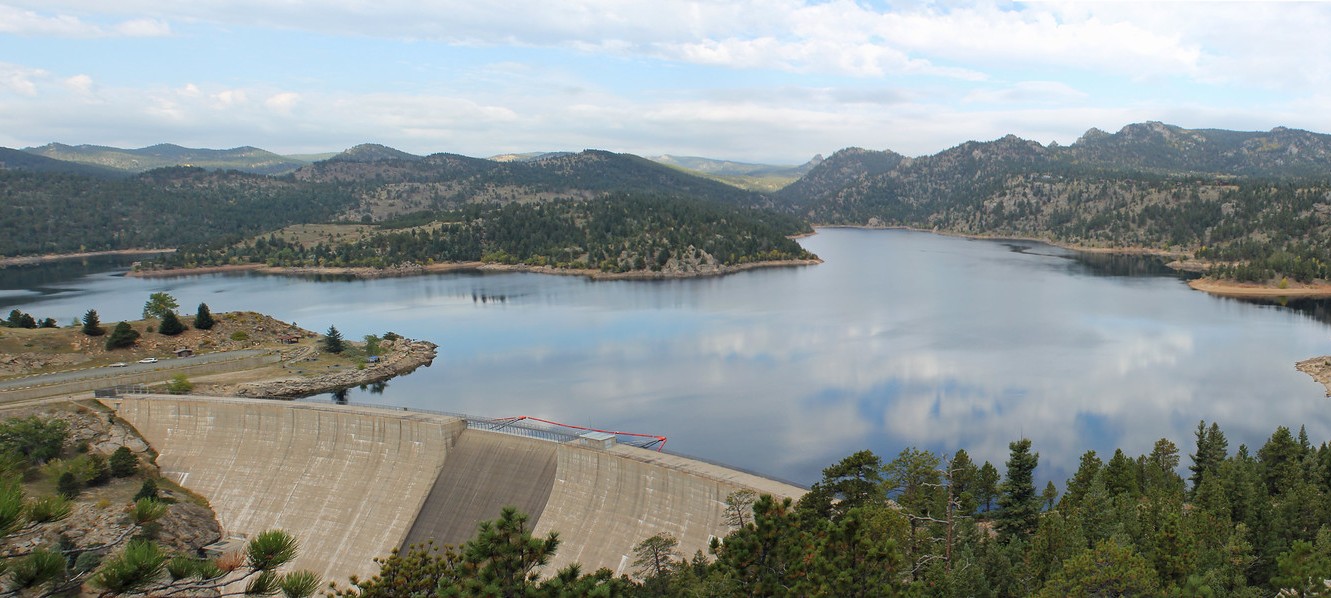
Denver Water planned to complete construction on Colorado’s largest dam by next year until environmental groups secured an injunction in 2024 blocking the utility from filling the expanded reservoir.
By Amanda Pampuro, Courthouse News Service
The 10th Circuit cleared the way for Denver Water to complete the Gross Dam and fill the expanded reservoir by vacating a lower court’s permanent injunction on Tuesday, bringing the end in sight for Colorado’s largest dam project more than two decades after it was initially planned.
“The touchstone for judicial review of agency action is deference, and nowhere is deference more appropriate than when an agency exercises its expertise to make technical and scientific judgments,” U.S. Circuit Judge Timothy Tymkovich wrote in a 37-page opinion. “The Corps’ three determinations — which the district court found arbitrary and capricious — fall easily within that zone of discretion, and none of those determinations were arbitrary or capricious.”
Denver Water began designing the Moffat Collection System Project and Gross Dam expansion 24 years ago in anticipation of future water shortages. The utility initially applied for a wetlands permit from the U.S. Army Corps of Engineers in 2003, which was granted more than a decade later in 2017.
Claiming the federal government issued permits without adequate environmental review, nonprofit Save the Colorado joined several other environmental groups in suing the Army Corps and the Department of the Interior in December 2018.
Senior U.S. District Judge Christine Arguello initially granted the government’s motion to dismiss in 2021, citing lack of subject-matter jurisdiction. The environmental groups appealed, and the 10th Circuit revived the case in 2022 just as dam construction began.
Following a 2024 bench trial, the George W. Bush appointee found the government’s environmental review inadequate under the Clean Water Act and National Environmental Policy Act. After initially enjoining further construction, Arguello allowed the utility to complete the structure while it appealed but prevented the dam from being filled to its full potential. The 10th Circuit heard argument from both Denver Water and the Army Corps of Engineers in July.
Engineers completed the $600 million dam expansion in July, adding 131 feet to the dam’s height, enabling it to hold an additional 77,000 acre-feet of water. Under the lower court’s order, Denver Water was barred from clearing trees around the reservoir and using the newly added expansion.
In its permit application, Denver Water anticipated needing to secure an additional 18,000 acre-feet per year of new firm yield to provide for 1.5 million people. In addition to needing more water, Denver also sought to make its overall system more efficient while pulling water from separate sources and storing it around the state.
Once complete, the project will allow Denver Water to divert water from the Colorado River on the Western Slope of the Rocky Mountains and store it in the Gross Reservoir on the Eastern Slope. This allows the utility to shore up shortfalls in its northern system, which currently only reaches 10% of customers. The project will also allow the Moffat Water Treatment Plant to run year-round and through anticipated droughts.
In Tuesday’s opinion, the 10th Circuit found the government wasn’t wrong to tailor the project toward achieving both of Denver Water’s goals — to increase water and reduce reliance on the southern system. The panel also found it reasonable that the federal agency ruled out projects that didn’t require expanding the Gross Reservoir and Dam.
“The Corps did not act arbitrarily or otherwise contrary to law by screening out proposed alternatives that could not increase water supply to the Moffat Treatment Plant,” Bush-appointed Tymkovich wrote.
In vacating the permanent injunction, the court ordered the case be remanded to the lower court “with instruction to enter judgment against the plaintiff.”
Todd Hartman, a spokesperson for Denver Water celebrated the decision.
“With this decision, Denver Water can move forward with completion of construction, site preparation and eventual filling of the expanded reservoir,” Hartman said over email. “An expanded Gross Reservoir is vital to the future of the Denver region, giving Denver Water far greater ability to flexibly manage constrained water supplies amid the growing risks of catastrophic wildfire and weather extremes that accompany the challenges of drought and climate change already upon us.”
Fellow Bush appointee Chief U.S. Circuit Judge Jerome Holmes joined the opinion with Barack Obama-appointed U.S. Circuit Judge Nancy Moritz.
A U.S. Department of Justice spokesperson declined to comment, as did attorney William Eubanks, who represented the environmental groups.

