
Historic watershed co-management agreement and groundbreaking of innovative projects institutionalize
From the California Natural Resources Agency:
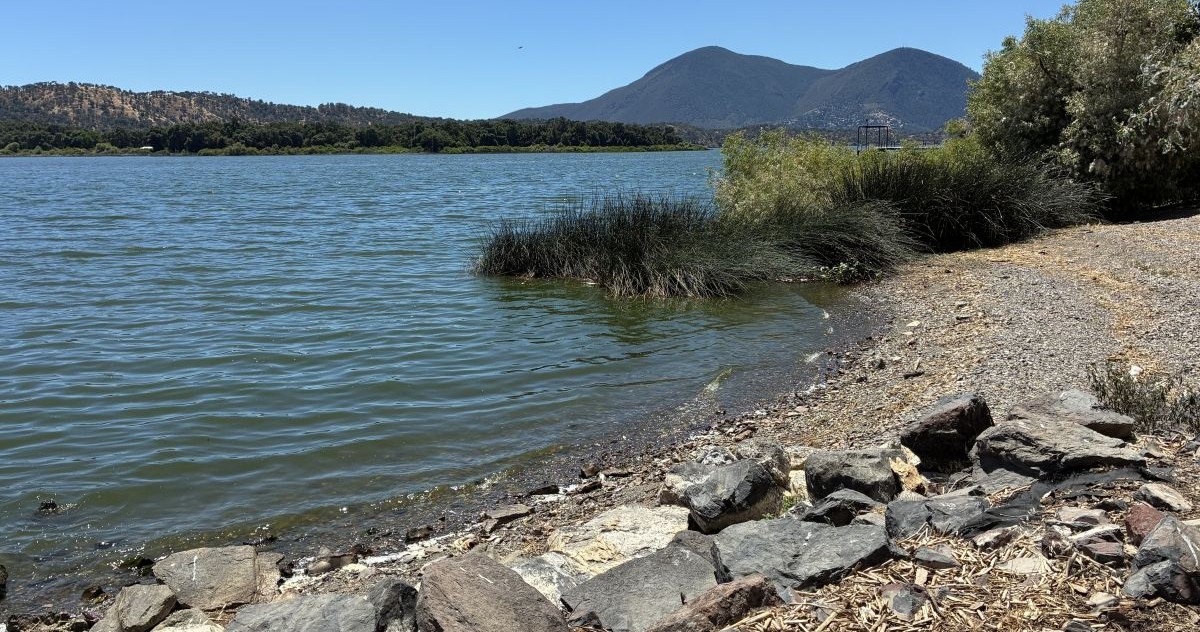
 Tribal, state, and local governments today gathered at Big Valley Rancheria to announce a landmark partnership to restore the Clear Lake watershed through shared stewardship of its lands, waters, and native species. Together, the partners will improve water quality, restore habitat, strengthen native fish populations, and support healthier ecosystems for future generations. One of the biggest agreements of its kind, this is California’s first watershed co-management agreement since the passage of AB 1284 (Ramos, 2024) and the state launched its Tribal Stewardship Policy in March.
“This partnership is unique – it brings together communities and purposes that have traditionally been disparate, if not oppositional, and finds common ground where it matters most: the lake itself,” said Governor Gavin Newsom. “There are different histories, different meanings, but it’s the same water. A healthier Clear Lake means stronger, healthier communities, no matter what role the lake plays in their lives, whether it’s a cultural touchstone, an economic engine, a social anchor, or an ecological lifeline.”
Clear Lake sits at the heart of the ancestral homelands of Pomo and Lake Miwok peoples, where generations of leadership and Traditional Ecological Knowledge have stewarded the watershed since time immemorial.
“The Habematolel Pomo of Upper Lake’s home is the Clear Lake watershed. Our tribal community has never stopped caring for these lands and waters, even through generations of hardship. This agreement honors that enduring connection and reaffirms our role as a sovereign partner in restoring the health of the watershed and the Clear Lake hitch”, said Habematolel Pomo of Upper Lake, Chairperson Executive Council, Daniel Cirell. “We remain committed to working alongside our tribal, state and local partners, and to being good neighbors to the entire Clear Lake community, as we carry this work forward for future generations.”
Since the disruption of this critical tribal stewardship, the Clear Lake watershed has experienced declining water quality, degraded wetlands, habitat loss, and the decline of native species, including the threatened Chi (Ṣátti), also known as the Clear Lake hitch.
“Healthy people need healthy watersheds,” said California Natural Resources Secretary Wade Crowfoot. “Our rivers, lakes and landscapes provide our clean drinking water as well as the water our communities and economy need to prosper. These water systems are also vital to fish and wildlife, enabling well-loved recreation. California state government is proud to join tribes and local governments to establish this historic partnership to restore the vital Clear Lake watershed. This landmark agreement demonstrates how shared stewardship – guided by thousands of years of tribal expertise and leadership – strengthens both conservation and our communities.”
This partnership builds on years of hard work and collaboration to address historical wrongs and environmental harms, prevent the extinction of the Chi, and rehabilitate the natural resources, cultural, social, and economic conditions of Clear Lake. It reflects a commitment to deepen and further institutionalize mutual respect, shared responsibility, and long-term relationships, bringing together 23 government parties under a shared framework to steward one of California’s oldest and most culturally significant freshwater ecosystems. And it puts tribal leadership back in the driver’s seat for Clear Lake – a landmark moment for the region as it works to restore the watershed.
“The future of Clear Lake cannot be separated from the tribes who have cared for it since time immemorial, or from the communities that depend on it today,” said California Environmental Protection Agency Secretary Yana Garcia. “Clear Lake is more than a body of water. It is home, history, culture, and a living connection between generations. This agreement honors that relationship and brings Tribal governments and local and state partners together to do the hard work of improving the health of the watershed and supporting the recovery of the Chi for generations to come.”
In addition to signing this historic agreement, the Blue Ribbon Committee for the Rehabilitation of Clear Lake, a committee housed in the California Natural Resources Agency, today celebrates the groundbreaking of the University of California, Davis Hypolimnetic Oxygenation System in the Oaks Arm of Clear Lake and BlueCycle Technologies’ and the City of Clearlake’s Algae Harvesting Demonstration Project.
The Hypolimnetic Oxygenation System adds oxygen into the deep waters of the Lake to target current conditions that repeatedly lead to harmful algal blooms that thrive in low oxygen and high phosphorus waters. Harmful algal blooms threaten public health, wildlife, and recreation. The Algae Harvesting Demonstration Project provides an innovative physical algae-harvesting and resource-recovery approach to remove the harmful algal blooms and return clarified oxygenated water back into Clear Lake. This serves as a study to evaluate pathways for beneficial reuse of the algal blooms and to inform potential lake-wide deployment of similar technology. These projects build on a broader foundation funded by CNRA through its Blue Ribbon Committee for the Rehabilitation of Clear Lake, California Department of Fish and Wildlife, the state and Regional Water Boards, and many other tribal, federal, state, and local initiatives with the goal of improving the water quality in Clear Lake.
The Committee has focused on reducing harmful algal blooms while advancing a broader approach to restoring Clear Lake. At the celebration, partners highlighted several Committee-recommended projects, including a EutroPHIX project to reduce phosphorus and harmful algae, long-term Chi monitoring led by the U.S. Geological Survey, community-led grebe monitoring sponsored by Pacific Union College, and local engineering work to address longstanding water quality issues in the Clear Lake Keys.
“Restoring Clear Lake requires collaboration among Tribal representatives, all levels of government, and local communities, said Blue Ribbon Committee Chair Eric Sklar. By working together and sustaining investments over time, we can improve the health of the Lake and the communities that depend on it. This agreement is an important step toward achieving that shared vision.”
The County of Lake is committed to restoring and protecting the entire Clear Lake watershed – and know that we cannot do it alone. This agreement creates the foundation of commitment to work together to coordinate restoration, improve water quality for beneficial uses, recover and protect native species – especially those with cultural importance to local Tribes – and assure benefits for all,” said Brad Rasmussen, Chair of the Lake County Board of Supervisors.

Why it matters
For thousands of years, Pomo and Lake Miwok people have cared for the Clear Lake watershed. This agreement acknowledges federally recognized tribal governments as sovereign partners whose leadership strengthens restoration efforts. Their knowledge and stewardship help guide the recovery of the watershed’s ecosystems, including one of its most culturally significant native species.
The Chi (Ṣátti) exists only in the Clear Lake watershed. For Pomo and Lake Miwok people, the fish is a cultural relative with deep connections to identity, ceremony, and tradition. Its decline reflects broader challenges facing the watershed. Recovering the Chi (Ṣátti) requires healthier streams, wetlands, water quality, and habitat, creating benefits for wildlife, local communities, and future generations.
How it works
Co-management is a shared approach to stewardship in which governments work together to make decisions, coordinate actions, and care for lands and waters. Through annual work plans, leadership summits, coordinated restoration projects, and shared decision-making, the partners will align priorities, improve communication, reduce duplication, and strengthen stewardship across the watershed. What makes this different is the scale. Rather than focusing on a single property or restoration project, Tribal, state, and local governments are establishing a shared approach to restoring and stewarding an entire watershed.
As the first watershed agreement developed under California’s Tribal Stewardship Policy, this partnership establishes a framework for future co-management agreements rooted in tribal leadership, shared stewardship, and government-to-government collaboration.

Government Partners
Tribal government
- Habematolel Pomo of Upper Lake
- Robinson Rancheria of Pomo Indians of California
- Big Valley Band of Pomo Indians
- Middletown Rancheria of Pomo Indians of California
- Scotts Valley Band of Pomo Indians
- Elem Indian Colony
- Koi Nation of Northern California
Local government
- City of Clear Lake
- City of Lakeport
- County of Lake
- Lake County Watershed Protection District
State government
- California Natural Resources Agency
- California Environmental Protection Agency
- California Conservation Corps
- California Department of Fish and Wildlife
- California Department of Parks and Recreation
- California State Lands Commission
- California State Water Resources Control Board
- Central Valley Regional Water Quality Control Board
- Department of Pesticide Regulation
- Department of Resources Recycling and Recovery
- Department of Toxic Substances Control
- Office of Environmental Health and Hazard Assessment
What they’re saying
Chairperson Sonja Poe, Robinson Rancheria of Pomo Indians of California
“For Robinson Rancheria, co-management means having a meaningful voice in the decisions that affect Clear Lake, its waters, and the fish and wildlife that depend on them. Our people have cared for this watershed since time immemorial, and this agreement provides an opportunity to bring Tribal knowledge, science, and stewardship together with our partners to restore the lake and its native species. We look forward to working together to ensure that Clear Lake and the Chi are here for generations to come.”
Chairman Flaman McCloud Jr., Big Valley Band of Pomo Indians
“For thousands of years, our people have cared for the Clear Lake watershed through stewardship grounded in survival, responsibility, and traditional and spiritual knowledge. This agreement recognizes tribal governments as equal partners in shaping the future of the watershed and reflects a shared commitment to protect these lands and waters for generations to come.”
Chairman Jose (Moke) Simon III., Middletown Rancheria of Pomo Indians of California
“The Middletown Rancheria people are committed to continuing there longstanding stewardship of Clearlake and all of its inhabitants. The Lake has provided for our people for thousands of years. The Hitch and all of the other resources it has provided have allowed us to coexist on this land. Today we stand with all the tribes and partners to acknowledge our responsibility to protect one of our most valuable resources.”
Chairman Shawn Davis, Scotts Valley Band of Pomo Indians
“This is an important moment for the Tribal governments participating in this agreement and for the future of the Clear Lake watershed. Our communities share a deep and enduring connection to these lands and waters, along with a responsibility to care for them for generations to come. This agreement creates an opportunity for Tribal, state, and local governments to bring together our knowledge, resources, and shared commitment to restoring and protecting the watershed. We are proud to celebrate this partnership and the work we will continue to do together for Clear Lake, our communities, and future generations.”
Mayor Dirk Slooten, City of Clearlake
“The City is proud to be apart of this co-management agreement it represents an important step forward for the Clear Lake region. By bringing tribal nations, the County of Lake, the cities of Lake county, and state agencies together, we are showing what can be accomplished when we work as partners with a shared commitment to protecting our watershed. Restoring water quality and safeguarding the native Clear Lake hitch, or ‘Chi,’ is not only about preserving an important part of our ecosystem—it is about protecting our natural heritage for generations to come.”
Professor Dr. Alexander Forrest, Project Lead, University of California, Davis – Hypolimnetic Oxygenation System
“After years of research and planning, it is exciting to see the Hypolimnetic Oxygenation System move from an idea to implementation,” said Dr. Alexander Forrest, UC Davis professor and lead investigator of the project. “By adding oxygen to one of Clear Lake’s deeper areas, we are addressing one of the underlying processes that contributes to excess phosphorus and harmful algal blooms. Just as importantly, this project will help us learn what works and provide valuable information to guide the long-term restoration of Clear Lake.”
Brandon Joanis, Acting Director, California Conservation Corps
“This landmark partnership ties in perfectly with the California Conservation Corps’ mission to protect and enhance our state’s natural resources and communities. Partnering with California Native American tribes around Clear Lake profoundly deepens that commitment,” said Brandon Joanis, Acting Director of the California Conservation Corps. “Corpsmembers will work alongside tribal partners and directly learn from tribes how they have sustained their lands for generations. By supporting restoration priorities involving the Clear Lake Hitch, and working with tribes exploring their own tribal corps, we’re developing the next generation of stewards, supporting our tribal partners, and helping protect a threatened species.”
Meghan Hertel, Director, California Department of Fish and Wildlife
“CDFW is proud to stand alongside Pomo and Lake Miwok tribal governments, local government and partners, and our state agency colleagues in this agreement,” said Meghan Hertel, Director of the California Department of Fish and Wildlife. “The Chi thrived in Clear Lake for thousands of years because tribes have cared for these waters far longer than this Department has existed, but recent impacts have caused a precipitous decline of this foundational fish. Recovering this species means restoring the habitat and water quality it depends on, and that work is stronger when it’s guided by the people who know this watershed best. This partnership gives us a real framework to do that together.”
Armando Quintero, Director, California Department of Parks and Recreation / California State Parks
“Joining critical tribal knowledge with state and local resources, this landmark co-management agreement represents a watershed moment to deliver meaningful, on-the-ground restoration across the Clear Lake watershed. State Parks is proud to stand alongside our tribal and local partners to protect critical tributary corridors at Clear Lake State Park and Anderson Marsh State Historic Park, advance aquatic habitat recovery, and honor our shared commitment to the survival of the Chi.”
Malia M. Cohen, State Controller, California State Lands Commission
“Protecting California’s natural resources and safeguarding its public resources go hand in hand,” said State Controller Malia M. Cohen, Chair of the California State Lands Commission. “This first-of-its-kind partnership brings together Tribal knowledge, scientific expertise, and coordinated public investment to restore Clear Lake. By acting together now, we can improve water quality, protect the Chi (Ṣátti), strengthen surrounding communities, and help prevent far greater environmental and economic costs in the future. That is responsible stewardship and it is how we deliver lasting value for Californians.”
Zoe Heller, Director, CalRecycle
“CalRecycle is proud to join this historic partnership to restore the Clear Lake watershed and the Chi (Ṣátti) through circular-economy solutions that will protect this resource for generations to come,” said CalRecycle Director Zoe Heller. “Building on Tribal communities’ longstanding leadership in recycling and composting, CalRecycle will work with Tribal partners to confront solid waste impacts and illegal dumping, expand zero‑waste and composting efforts, and better understand pollution impacts across the watershed.”
Chair E. Joaquin Esquivel, California State Water Resources Control Board
“We know more about the problems at Clear Lake than we ever have,” said E. Joaquin Esquivel, chair of the State Water Resources Control Board. “Decades of monitoring have shown us what drives the algal blooms and what the Chi (Ṣátti) need to survive. This agreement provides a structure for tribal, state and local governments to act on that knowledge together, sharing both the decisions and responsibility for the results.”
Patrick Pulupa, Executive Officer, Central Valley Regional Water Quality Control Board
“This co‑management agreement strengthens our collective ability to improve water quality in Clear Lake. By coordinating restoration efforts and aligning priorities across Tribal, state, and local partners, we can deliver meaningful results for the watershed and the communities that rely on it.” Patrick Pulupa, Executive Officer, Central Valley Regional Water Quality Control Board
Dr. Karen Morrison, Director, Department of Pesticide Regulation
“Today’s agreement recognizes the need for targeted, sustained action in a watershed with both ecological complexity and deep cultural significance,” said California Department of Pesticide Regulation (DPR) Director Dr. Karen Morrison. “DPR is committed to advancing this work by promoting sustainable pest management practices that reflect both Traditional Ecological Knowledge and the latest science to support native species and promote long-term watershed health.”
Katherine Butler, Director, Department of Toxic Substances Control
“With this co-management agreement, we commit to continuing DTSC’s work mitigating contaminated sites in the watershed that impact tribal cultural resources and the surrounding environment,” said Department of Toxic Substances Control Director Katherine Butler. “Through this partnership, we have the opportunity to collectively correct historic wrongs and the environmental harm in the Clear Lake watershed.”
Kris Thayer, Director, Office of Environmental Health and Hazard Assessment
“Since time immemorial, the Tribes of the Clear Lake region have cared for, learned from, and understood the deep connections between the health of Clear Lake, the environment, and their communities. Through this MOU, OEHHA is honored to build on that knowledge and relationship by brining science and Tribal knowledge together. We see this partnership as a model for the future: one where Tribes are honored and are partners in shaping the science that protects their lifeways and the places they have stewarded for generations.”
###

