
Several news sources featured in the Daily Digest may limit the number of articles you can access without a subscription. However, gift articles and open-access links are provided when available. For more open access California water news articles, explore the main page at MavensNotebook.com.
In California water news today …
Trump administration tells California its key water plan is ‘unworkable’
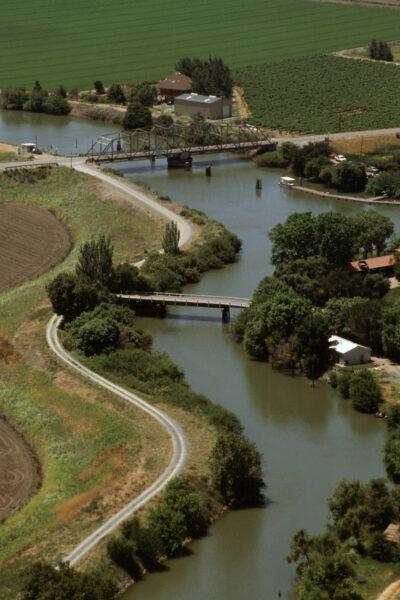
Paul Hames / California Department of Water Resources
“The huge inland body of water that is the heart of California’s water system is under major stress. That’s why state officials say they worked for years to come up with a plan to help halt the ecological decline of the San Francisco Bay and Sacramento-San Joaquin River Delta. Now that plan is under attack from the Trump administration and the largest irrigation authority in the Central Valley. In a letter, the U.S. Bureau of Reclamation says California’s plan for the Delta will shortchange farmers by restricting how much water the federal government pumps from the state’s largest rivers. The letter says the plan threatens the “entire fabric of California’s agricultural economy.” The bureau manages one of California’s two main water systems, including massive pumps that pull water from the Delta and send it flowing to farms and communities as far south as Bakersfield. The agency said that if California regulators don’t change the plan, the federal government won’t contribute funds to projects that restore habitat for fish and other wildlife, something endorsed by Gov. Gavin Newsom. … ” Read more from the LA Times. | Read via Yahoo News.
Voluntary agreements fail as federal and state partners pull out of updated Bay-Delta Plan
“The Bureau of Reclamation and the Westlands Water District have indicated they will not participate in the Voluntary Agreements (VAs) if the State Water Board approves the updated San Francisco Bay-Delta Water Quality Control Plan (“Bay-Delta Plan”), prompting renewed criticism from the Delta Tribal Environmental Coalition (DTEC)—consisting of the Shingle Springs Band of Miwok Indians, Winnemem Wintu Tribe, Little Manila Rising, and Restore the Delta. DTEC has long raised concerns about the Bay-Delta Plan’s reliance on VAs, privately negotiated deals allowing powerful water districts to offer limited flow commitments and funding in exchange for exemptions from stronger, enforceable regulatory requirements. The coalition has criticized the VA framework as scientifically inadequate and lacking enforceable protections needed to safeguard threatened fish species and address harmful algal blooms (HABs). The coalition has also consistently warned that the federal government cannot be relied upon as a partner in complying with state laws and regulatory decisions designed to protect Delta ecosystems, Tribes, and Delta communities. The Bureau of Reclamation’s decision to pull out of the agreements in this late stage, DTEC says, is further evidence of that pattern. … ” Read more from Restore the Delta.
Sacramento River captain showcases scenery as new proposal could change water uses
“The Sacramento River flows more than 400 miles from Mount Shasta through Sacramento to Suisun City, and a new state water proposal could change how the river water is used. A Sacramento-area captain said people need to pay attention to the river that he calls a gem in our backyard. He’s on a mission to put a stretch through the Delta in Clarksburg in the spotlight, using a former lobster boat. “There are no bad days on the river,” said Captain Emil Gagliargadi. What you may find is a lot of characters out on the river, and he is one of them. “I tell everyone my name is Emil Gagliargadi, but I go by Captain E,” he said. Captain E’s passion is showcasing several miles of the Sacramento River in Clarksburg. He said it’s peaceful with all the trees and egrets and a beautiful reflection. … ” Read more from CBS Sacramento.
Contested Delta Conveyance Project proceedings advance while questions remain regarding project implementation
“As the Newsom administration nears the end of its term, the Department of Water Resources (DWR) continues to seek key approvals for the Delta Conveyance Project (DCP), which would divert up to 6,000 cubic feet per second from the Sacramento River in southern Sacramento County and convey it via a 45-mile long, 40-foot diameter tunnel to the south Delta for export. The Delta Stewardship Council (Council) has scheduled a hearing on October 15, 2026, on the three appeals of DWR’s Revised Certification of Consistency with the Delta Plan on Remanded Items (Revised Certification) for the DCP. The Revised Certification responds to deficiencies identified in the Council’s April Decision D20257 on DWR’s October 2025 certification for the DCP; namely, that DWR failed to support findings (1) under Policy ER P5, Avoid Introductions of and Habitat Improvements for Invasive Nonnative Species, regarding the golden mussel, and (2) that it sited the approximately 600-acre proposed Twin Cities Complex (TCC) to avoid or reduce conflicts with Sacramento Area Sewer District’s (SacSewer) Harvest Water Program. … ” Read more from Somach Simmons & Dunn.
How does El Niño impact the weather?
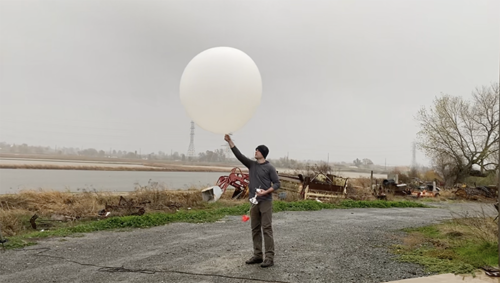
“The Pacific Ocean’s El Nino-Southern Oscillation (ENSO) occurs irregularly but can have major impacts on global temperature, weather patterns, coastal hazards, and marine ecosystems. While El Niño has often been associated with increased precipitation and La Niña with drier years, recent research from Scripps Institution of Oceanography at the University of California San Diego shows that is not always the case, and that atmospheric river events can often disrupt this cycle. In this article, experts from Scripps Oceanography answer frequently asked questions about El Nino’s impact on global and regional weather. … ” Read more from Scripps.
Sudden sea level rise — tied to El Niño — is about to hit the California coast
“The sea level along California’s coast will increase by about a foot by mid-October due to the influence of El Niño, which is driving a large volume of water northward from offshore of Mexico and Central America. This water is coming in the form of a coastal “Kelvin wave,” and it will mark the arrival of one of the first significant impacts of the powerhouse El Niño taking shape in the tropical Pacific. According to Dillon Amaya, an oceanographer at North Carolina State University, the wave is a clear signal that El Niño has arrived in California. “Typically, we think of El Niño and its impact on precipitation, but some of the first indications that El Niño is really occurring are the arrival of these coastally trapped waves,” he said. … ” Read more from CNN.
Supercharged sea levels this winter will forecast the future
“Earlier this year, king tides brought serious flooding to coastal San Francisco. This fall and winter, the highest tides in 18 years will meet what may be the strongest El Niño ever recorded in California. This combination of events could push sea levels to record-breaking heights. But what exactly are king tides and how will they interact with El Niño? We asked Michael Savarese, a professor at Florida Gulf Coast University, and PPIC Water Policy center director Letitia Grenier to explain. Q: Tell us about king tides—and why Florida is a good example for Californians to consider. A: Mike Savarese: King tides occur when the moon is closest to Earth and aligned with the sun, causing a strong gravitational pull on the ocean and extreme high tides. In Florida, we associate these extremely high tides with nuisance flooding: low lying coastal areas and city streets may flood but not from precipitation (aka “sunny day flooding”). El Niño, which will be especially strong this winter, piles ocean water up against the California coast. Combine this with a king tide and a winter storm surge and you have an even bigger problem. … ” Read more from the PPIC.
Edward Ring warns California must prepare for the next flood
“On a recent episode of the AgNet News Hour, Edward Ring, director of Water and Energy Policy at the California Policy Center, returned for Part 1 of a two-part conversation about California water and the infrastructure he believes the state needs to better prepare for both drought and flooding. Ring focused first on sediment buildup in the San Joaquin River and South Delta, warning that a future period of heavy rain could overwhelm the system. He pointed to the major flooding of 1997 and argued conditions could be worse today because meaningful sediment removal has not occurred in decades. His concern isn’t limited to flooded farmland. Ring said breached levees could mix contaminants with floodwater and potentially disrupt the ability to move water into California’s aqueduct system for an extended period. “The point is, if we don’t dredge that Delta, the South Delta, we’re going to have flooding that’s going to make 1997 look like nothing,” Ring said. … ” Read more from AgNet West.
California marine rescues sees surge in sea lions suffering from domoic acid poisoning
“California sea lions are facing a growing health threat: domoic acid poisoning. The Marine Mammal Center, the world’s largest marine mammal hospital, has reported “an unusually high number” of sea lions suffering from the poisoning, also known as toxicosis. So far this year, the center has rescued over 100 sick sea lions, the majority since July 1. “For context, The Marine Mammal Center’s average annual number of California sea lions rescued for domoic acid poisoning across our approximately 600-mile California response range is roughly 75–90 animals,” center officials told AccuWeather. “We have already surpassed that average as we enter September.” Cases of stranded animals have been seen primarily among sea lions but also in fur seals, the organization noted in a statement. The flare-ups have been heavily concentrated on the Monterey Peninsula, an area on California’s Central Coast of known for its scenery and rich history. “Since 1998, when we diagnosed the first case in marine mammals, this brutal disease has become much more unpredictable and intense,” the center said. … ” Read more from AccuWeather.
California revises draft water right decision for Sites Reservoir
“The California State Water Resources Control Board has released a revised draft water right decision and draft permit for the proposed Sites Reservoir, moving the state’s largest reservoir project in more than five decades a step closer to a final water rights ruling. The proposed facility would hold 1.5 million acre feet of water, drawn from the Sacramento River during periods of high flow and stored for use by farms, cities and the environment. The annual diversion cap stays at 986,000 acre feet, unchanged from the March draft, an amount the board says could supply roughly 8.4 million people annually. The board is set to consider adoption at its November 4 meeting, with written comments due October 5. … ” Read more from Smart Water Magazine.
Butte County seeks Oroville Dam accountability
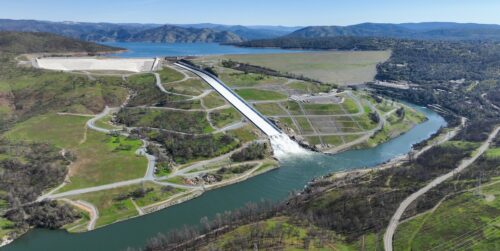
“Butte County officials took their concerns over the long-running Oroville Dam relicensing process to Washington, D.C., earlier this month, meeting with Federal Energy Regulatory Commission representatives as the county pushes for greater recognition of the costs associated with hosting the State Water Project facility. County representatives met with FERC leadership and staff, including the agency’s Office of Public Participation, to discuss the county’s role in the federal relicensing process. According to the county, FERC representatives provided guidance on how county officials and residents can participate as the process moves forward. The county argues that Butte County has carried financial, infrastructure and public safety costs associated with Oroville Dam for more than five decades while much of the economic benefit from the water stored there goes elsewhere in California. “For more than half a century, Butte County has shouldered the costs of hosting one of California’s most important water infrastructure projects, while the benefits have flowed south,” the county said. … ” Read more from the Gridley Herald.
Salmon raised on rice fields grow faster than any fish recorded in California
“Some of the best salmon habitat in California isn’t a wild river at all. It’s a rice field outside Sacramento in the dead of winter. Research from the UC Davis Center for Watershed Sciences has shown that when Central Valley rice fields flood after harvest, they transform into an all-you-can-eat buffet for baby salmon. The shallow, sun-warmed water and decomposing rice straw produce staggering amounts of zooplankton, in some measurements 53 to 150 times more than the adjacent Sacramento River channel. Juvenile Chinook released onto those flooded fields grow two to five times faster than fish confined to the river, posting some of the fastest freshwater growth rates ever recorded in California. Bigger juveniles become stronger smolts, and stronger smolts are far more likely to survive the gauntlet of the Delta and the open Pacific. … ” Read more from Active NorCal.
No one protested this controversial California project. Officials were stunned.
“The backlash against data centers in California has been growing. The facilities have been outright banned in Monterey Park and the city of Coachella, while several towns have issued temporary moratoriums as officials evaluate their stances. Meanwhile, public sentiment is souring, with 73% opposing the construction of data centers in their communities, according to a recent Public Policy Institute of California survey. … But at an Aug. 26 Southern California Fair & Events board meeting in Perris, no one showed up to oppose a potential data center on its premises. The public comment period was silent. So, the venue’s board of directors, a group of people chosen by the governor, went ahead and signed a nonbinding agreement to allow Global Stack, the company pitching the project, to further study the feasibility of a small data center on the state-owned land. … ” Read more from SF Gate.
Study unveils chemistry of destroying ‘forever chemicals’
“UC Riverside environmental engineers have identified key chemical reactions that occur when ultraviolet light is used to destroy “forever chemical” pollutants in water, providing a roadmap for developing more effective cleanup technologies. The discovery, published in the journal Nature Water, details the chemistry involved in using UV light to break down per- and polyfluoroalkyl substances, or PFAS, a large group of persistent pollutants commonly known as forever chemicals. Importantly, the researchers identified reactions and by-products that form as treatment breaks the exceptionally strong carbon-fluorine bonds that make PFAS so difficult to destroy, said Jinyong Liu, a UCR associate professor of chemical and environmental engineering and corresponding author of the study. “Knowing this degradation mechanism gives us a better understanding of how to optimize the conditions for PFAS destruction and achieve deeper degradation, and gives us a much better roadmap for improving the technology,” Liu said, who holds the university’s Won and Insook Yoo Endowed Chair in Environmental Engineering. … ” Read more from UC Riverside.
POLICY AND REGULATION
Sen. Hurtado secures funds for safe water
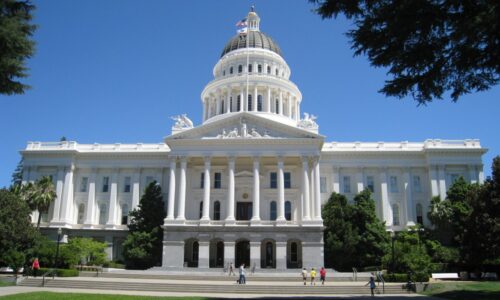 “Funds for safe water will be flowing in thanks to a state senator from the Central Valley. Announced in a Sept. 3 press release, State Senator Melissa Hurtado (D-Bakersfield) secured $171 million in the 2026–27 state budget package for the Safe and Affordable Funding for Equity and Resilience (SAFER) program, protecting critical drinking-water assistance for communities across California. According to the press release, SAFER helps meet that need through emergency water supplies, system repairs, technical assistance, infrastructure improvements and permanent solutions for struggling water systems. … ” Read more from the Foothills Sun-Gazette.
Advocates, community push for Newsom signature on pair of detention centers bills
“Over boxes of donuts and steaming coffee cups, faith leaders, immigrant rights advocates and community members gathered at the Capitol Tuesday morning to rally behind legislation that would impose financial penalties on private detention centers. Greeting each other with hugs as they arrived, the group of several dozen individuals sported colorful t-shirts printed with slogans: “People + Faith + Love = Power,” read the rainbow text on one shirt. “#Health4All,” another proclaimed. Attendees displayed signs reading “Keep Families Together” and “End Profit from Family Separation,” standing solemnly behind a podium on the Capitol steps as immigrant rights leaders and lawmakers gave speeches. Occasional prompts from the speakers led chants of “Si se puede” and “When we fight, we win” to ripple through the gathered crowd. … ” Read more from the Sacramento Bee.
Proposition 45 would overhaul parts of California’s environmental review process
“California voters will decide in November whether to change how the state reviews the environmental impacts of certain major projects. Proposition 45 would create new, expedited procedures under the California Environmental Quality Act, or CEQA, for projects including housing, transportation, water, clean energy, health facilities, wildfire mitigation, education and broadband. CEQA, enacted in 1970, requires state and local agencies to evaluate the potential environmental impacts of projects before they are approved. Existing law prevents public agencies from approving projects that could have significant environmental impacts if feasible measures could be taken to reduce them. … ” Read more from CBS Sacramento.
In commentary today …
Mono Lake still needs saving. Here’s what should happen next
Erin Ryan, the Charles and Ramona Hilliard Professor of Law at the University of Southern California’s Gould School of Law, writes, “The California State Water Resources Control Board is rightfully turning attention back to how much water the Los Angeles Department of Water and Power should take from the Mono Lake Basin. As climate change puts more pressure on water resources, it’s high time to reconsider that question. Los Angeles’ appropriation of water from remote places like Mono Lake is the desert metropolis’ original sin, with existential consequences for rural parts of the state. But in recent commitments to double down on municipal water reclamation, the city has made brave decisions to shift toward greater water security and stewardship. The state water board is also shifting in the right direction, holding new workshops on Mono Lake management. The workshops provide the city and state the opportunity to do right by still-vulnerable Mono Lake and fulfill promises the California Supreme Court and water board made to its preservation over 30 years ago. … ” Read more from the San Francisco Chronicle.
In regional water news and commentary today …
NORTH COAST
After more than a century of fragmentation, the Klamath River is flowing freely for the first time in generations after dam removal
“But the story of the Klamath didn’t end when the dams came down in 2024. Cal Poly Humboldt researchers are helping document the rebirth for a majestic river intertwined with the ecological health and cultural vitality of the region. Across the second-largest river in California and one of the most important salmon habitats on the West Coast, University scientists are studying one of the largest restoration efforts of its kind in U.S. history to understand what happens after a river this large is set free. For Keith Parker (’15, Fisheries Biology, ’18, M.S. Natural Resources), the removal of the dams carries generations of meaning. A member of the Yurok Tribe, Parker joined the Tribal communities that, along with environmental groups, advocated for the dams’ removal. … A large part of his work focuses on improving the Chinook spring-run salmon populations, which are culturally important to Klamath Tribes as part of a first salmon ceremony each spring. Following dam removal, he watched the river change almost immediately. “The algae was gone!” he says. “The water temperature dropped. Salmon poured in and didn’t spend five days acclimating to the warm and algal-filled estuary. They ran right up the river.” … ” Read the full article at Cal Poly Humboldt.
Cool water, rain spark Klamath salmon push
“Following some excellent salmon fishing in the Klamath estuary over the past few weeks, adult fall-run king salmon are now beginning to make their way upriver. There are a couple of reasons for the push. First, cool water releases from behind Lewiston Dam began last Friday to help reduce the risk of disease in the salmon. The other factor is the weather. Cooler outside temperatures, along with a fair amount of rain, can do wonders for river temperatures. Combined, these conditions should produce a steady stream of kings moving upriver and staging in the various holes throughout the lower river. But don’t give up on the estuary just yet—the fishing was reportedly pretty wide-open on last Monday. I think it’s safe to say we’re smackdab in the middle of what could be a pretty good run of kings. … ” Read more from Western Outdoor News.
Hoopa Valley Tribe and CDFW announce historic fishery restoration partnership
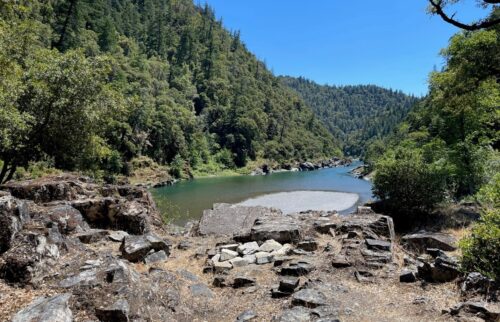
“The Hoopa Valley Tribe (Tribe) and the California Department of Fish and Wildlife (CDFW) are thrilled to announce a historic project that advances tribal Traditional Ecological Knowledge (TEK) and sustainable fishing with CDFW scientific monitoring — improving the health of salmon populations, supporting tribal practices and advancing the science that drives fishery management. The Tribe and CDFW have incorporated a selective harvest program into the Trinity River Restoration Program that along with other benefits, will foster Tribal harvest opportunities that are vital to the Tribe’s culture, community and economy. The centerpiece of the program is a weir in the Lower Trinity River on the Hoopa Valley Reservation that temporarily contains fish for both scientific examination and selective tribal harvest. The weir replaces two other weirs that the Tribe and CDFW had been operating independently at different sites on the river. … ” Read more from the Department of Fish and Wildife.
Trinity River weir consolidation streamlines salmon monitoring and opens new chapter for Tribal partnership
“A new chapter for Trinity River salmon begins this fall as the California Department of Fish and Wildlife and Hoopa Valley Tribe bring separate fish monitoring and harvest operations together at one jointly operated location. The Bureau of Reclamation joined its partners today to celebrate the milestone with a ribbon-cutting ceremony recognizing stronger collaboration, more efficient monitoring of Trinity River restoration efforts, and reduced stress on salmon when they are migrating up-river to spawn. Beginning this fall, CDFW and the Hoopa Valley Tribe will collaboratively conduct Reclamation’s run-size estimation activities at the tribe’s harvest weir rather than at a separate monitoring location farther upstream. Working at a single location allows partners to continue collecting critical information on Chinook salmon, coho salmon, and steelhead while reducing repeated capture and handling of migrating fish, streamline monitoring and reduce costs to Reclamation. This approach continues to support selective harvest activities at the Hoopa Valley Tribe’s existing harvest weir on the Hoopa Valley Indian Reservation. … ” Read more from the Bureau of Reclamation.
SEE ALSO: California, Hoopa Valley Tribe open joint Trinity River salmon monitoring site, from KRCR
SIERRA NEVADA
Underwater cleanup at High Sierra lake reveals 2,400 pounds of trash, including 2 guns
“Scuba-diving garbage collectors who scoured the bottom of a popular fishing lake in the Eastern Sierra removed 2,433 pounds of submerged litter, including 31 stray boat anchors, 24 tires and two old handguns. About 20 minutes southwest of Bridgeport (Mono County), and adjacent to Yosemite National Park’s northeastern boundary, is the resort community of Twin Lakes, an alpine getaway flanked by jagged peaks where visitors go to rent cabins, fish for trout and hike the backcountry. Over five days in August, an underwater trash-removal crew with Tahoe nonprofit Clean Up the Lake went to work at Upper Twin Lake, scooping up junk around the 4-mile shoreline down to a depth of about 25 feet. On 18 separate dives, scuba divers descended with mesh trash bags and removed items by hand. They came away with a haul of 4,999 pieces of trash. … ” Read more from the San Francisco Chronicle.
An ‘epic’ new 12-mile trail is being carved through Tahoe’s hidden old-growth forest
“There’s a stretch of Lake Tahoe’s West Shore so rugged and remote that even lifelong locals have never laid eyes on it. That’s about to change. Trail crews are actively building the Meeks Ridge Trail, a route that will climb from Meeks Bay to a secluded alpine gem called Lost Lake, passing granite boulders and rare pockets of old-growth forest along the way. The San Francisco Chronicle reported that a local couple, Kyle and Jessica Aster, donated $250,000 to fully fund this year’s construction season and push the project toward the finish line. The Tahoe Area Mountain Biking Association calls it one of the most ambitious builds in its history. The trail revives a historic route that faded into the forest decades ago from lack of maintenance, and it creates a rare east-west connection over the peaks west of the lake. … ” Read more from Active NorCal.
SACRAMENTO VALLEY
Shasta Lake drops to 55 percent as Northern California’s reservoirs trend downward
“Labor Day boaters may have noticed a little more shoreline than last year, but NorCal’s water picture is still miles from crisis territory. New California Department of Water Resources data from September 6 shows Shasta Lake holding 2.51 million acre-feet, about 55 percent of capacity. That’s down roughly 300,000 acre-feet from the same date last year, when the state’s largest reservoir sat at 62 percent full. Lake Oroville tells a similar story. The state’s second largest reservoir measured 1.89 million acre-feet, down from 2.26 million acre-feet and nearly 64 percent full a year ago. … ” Read more from Active NorCal.
Paradise parks district seeks public comment for Butte Creek Canyon Preserve site
“The Paradise Recreation and Park District is seeking public input on park and recreation opportunities at Butte Creek Canyon. The PRPD purchased 20 acres in Butte Creek Canyon in February 2026 with “substantial funding” from the Sierra Nevada Conservancy. According to the PRPD, public access to Butte Creek Canyon has been a goal of the district for many years, having been included in its 2010 master plan and reauthorized in 2016 and 2024. “Although we’re called the Paradise Recreation and Park District, the district goes much further than just the town of Paradise, it goes up past Magalia and over to Concow and down into Butte Creek Canyon as well,” Olivia Longstaff, PRPD’s marketing recreation specialist, said. “So many people already recreate in the canyon, whether it’s on public land or private land. There are people that are biking and hiking and horseback riding, all the different ways that people love to recreate across the greater PRPD. We’re really hoping to gather that input from the people who live there and recreate there and provide the best opportunities for safe and healthy outdoor recreation, whether that’s education or historical avenues. People love kayaking down the down the waterways, there’s so much that can happen.” … ” Read more from the Chico Enterprise-Record.
BAY AREA
After scandal and turmoil, Valley Water turns to 25-year veteran as its next CEO
“Aaron Baker, a 25-year veteran of the Santa Clara Valley Water District, on Tuesday was named CEO by the agency’s board, taking the helm of Silicon Valley’s largest water district after a year of political turmoil and as a winter looms that could be marked by extreme weather due to very strong El Niño conditions. Also known as “Valley Water,” the district, based in San Jose, is a government agency that provides drinking water and flood protection to 2 million people in Santa Clara County. With 876 employees and a $1.2 billion budget, the district is the fourth-largest government agency in Santa Clara County, behind Santa Clara County, the city of San Jose, and the city of Santa Clara. A wholesale water provider founded in 1929, the district purchases water from the State Water Project and the federal Central Valley Project, and manages local groundwater and reservoirs, then sells water to roughly a dozen cities and private companies that distribute it to homes and businesses. … ” Read more from the San Jose Mercury News.
SAN JOAQUIN VALLEY
San Joaquin County tanker crash sends asphalt into Delta slough
“A cleanup is underway after a tanker truck carrying asphalt went into a San Joaquin County slough over the weekend, spilling some of its load into the water. The crash happened Sunday at Trapper Slough in the San Joaquin River Delta, west of Stockton, according to the California Office of Spill Prevention and Response. Exactly what led up to the crash is unclear. OSPR said several vehicles were involved, including the tanker truck that partially entered the water. … ” Read more from CBS Sacramento.
SOUTHERN CALIFORNIA
What happened to L.A.’s ‘perfect’ Mediterranean weather? Humidity challenges a birthright
“Southern California was built on many myths — but its weather was not one of them. Generations were lured to the region with promises of perfect weather, that “mild Mediterranean-type climate” that could heal the sick and grow practically everything. The railroads advertised the L.A. climate as a last resort for the world’s sickly. It was the place where rained-out sporting events and umbrellas at the Rose Parade were so rare they were occasions for big news. Sure, it could get hot. But, as the boosters always said, “at least it’s a dry heat.” So what went so very wrong this year? The oppressive moisture in Southern California’s air this week has felt more like Florida and the Gulf Coast, with many remarking that this is the worst, most powerful humidity they’ve ever felt. Scientists suspect that the combination of high heat and a suffocating deep-tropical air mass will be considered the worst humidity the region has experienced in the modern era. … ” Read more from the LA Times. | Read via Yahoo News
Record humidity to create sweltering conditions in SoCal
“The National Weather Service has issued an extreme heat warning for much of Southern California from Wednesday morning through Thursday. The details: This week’s combination of heat and humidity could be worse than it has been all summer. Forecasters say temperatures will peak on Wednesday. Highs could get up to the triple digits. Overnight lows will also stay elevated. They may only get down to the 70s in places, offering little relief from the heat. The humidity: Climate experts say the humidity this week could be some of the highest on record in Southern California, even after a summer marked by repeated humid heatwaves. … ” Read more from LAist.
Sand-starved San Clemente updates coastal strategy
“The goal is simple: To walk along San Clemente’s shoreline any time of the day, no matter how high the tides. Under current conditions, when tides are high or the surf is big, the ocean covers the sand, with waves bouncing on rock structures and cutting off the ability to use the beach until the tides recede later in the day. The lack of beach isn’t just a problem for strolls along the sand or for people looking to sunbathe. Eroded beaches mean the ocean is closer to infrastructure — like the oceanfront train tracks, homes and parking lots — and waves can cause damage. No beach means an impact on tourism, city officials say. San Clemente officials were recently briefed on a buffet of potential solutions to the city’s ongoing erosion troubles with a presentation of the city’s updated Coastal Strategic Plan, first published in 2024. … ” Read more from the OC Register.
IMPERIAL/COACHELLA VALLEYS
Fourth District holds Imperial County’s EIR for Salton Sea geothermal power/lithium extraction project lacked CEQA-compliant water supply and air quality analyses
“In an opinion filed August 11, and belatedly ordered partially published on September 2, 2026, the Fourth District Court of Appeal (Div. One) partly reversed the trial court’s judgment denying a petition for writ of mandate challenging Imperial County’s (County) approval of a project consisting of a geothermal power plant, lithium extraction facility, and related facilities (project) near the Salton Sea and certification of the related EIR. The Court held that no substantial evidence supported County’s conclusion that the Imperial Irrigation District (IID) could supply adequate water for the project’s anticipated 50-year lifespan and that the EIR failed as an informational document because it did not adequately discuss mitigation measures for possible future mandated Colorado River supply reductions. Further, the EIR’s failure to address IID’s non-speculative concerns about the adverse air quality impacts caused by the Salton Sea’s recession due to foreseeable project-related reduction of water inflows to the sea also violated CEQA. Comite Civico del Valle et al. v. County of Imperial (Controlled Thermal Resources (US), Inc. et al., Real Parties) (2026) ___ Cal.App.5th ___. … ” Read more from the Miller Starr Regalia.
SAN DIEGO
‘Deeply concerning.’ What San Diego area officials say about Chollas Creek chemicals
“For years, the Chollas Creek community has been living and shopping among cancer-causing chemicals from a former aerospace factory. While state officials continue to oversee a mitigation program and work is ongoing, they say more tests are needed to determine the scope of the contamination of trichloroethylene and tetrachloroethylene (TCE and PCE, respectively). State officials believe it could stretch beyond the currently identified 7-acre parcel which includes one of the south San Diego neighborhood’s few grocery stores, Food 4 Less, as well as some units in Euclid Terrace apartments. Last week inewsource published its first story in an ongoing investigation into the contamination that the California Department of Toxic Substances Control ordered Magellan Aerospace and Market Creek Plaza to clean up. … ” Read more from iNewsSource.
San Diego County closes Coronado shoreline through North Beach due to pollution
“San Diego County health officials Monday closed the Coronado shoreline though North Beach because of sewage contamination from the Tijuana River. According to the Department of Environmental Health and Quality, the beach “will remain closed until sampling and field observations confirm these areas are safe for water contact.” … ” Read more from KPBS.
Along the Colorado River …
Troubled waters: Scarcity and the Colorado River battle
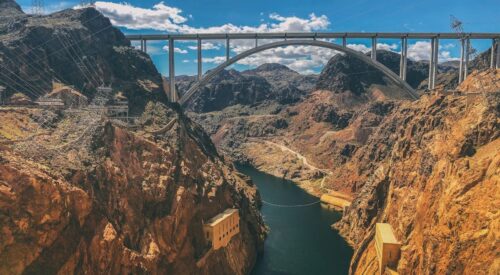 “The Colorado River has entered one of the most consequential periods in its history. As drought, climate change and historically low reservoir levels strain the system, the seven basin states have failed to agree on new rules for sharing the river. The federal government has now stepped in, adopting operating guidelines for 2027 and 2028 that impose major reductions on the Lower Basin states while leaving the Upper Basin without mandatory cuts for now. The federal framework keeps negotiations open for longer-term rules, but it also raises the prospect of deeper reductions and litigation if the states remain divided. Yet many of the most important decisions are being debated behind closed doors. Top negotiators from the basin states and federal government regularly meet in private, drawing criticism from transparency advocates and tribal leaders who argue that the public deserves a clearer view into decisions that will shape the future of the American West. Through public records requests and original reporting, this project examines how those decisions are made — and who is left out of the room. … ” Read more from KJZZ.
If Colorado River compact heads to Supreme Court, ‘everybody loses,’ experts say
“The drama engulfing the seven states in the Colorado River Basin could take another, more perilous, turn in a few weeks. Water experts are warning that by October, the river’s flow may cross a critical threshold at Lee’s Ferry, a bend in the river in Arizona that has been a bellwether of the river’s health for decades. The 1922 Colorado River Compact — the river’s foundational agreement — states that the river’s flow must stay above a certain level at Lee’s Ferry in order to provide enough water for downstream states. If the flow falls below that point, which some experts equate to a “tripwire,” it could trigger prolonged and expensive litigation at the Supreme Court, a turning point that could have terrible consequences for basin states. “I can’t imagine what the Front Range of Colorado would look like at that point,” said Darren Beck, a water program supervisor for Boulder County Parks and Open Space, of the prospect of huge cuts to their Colorado River water. … ” Read more from Colorado Public Radio.
As the Colorado River shrinks, states prepare for a future with less water
“It was 108 degrees as we motored across Nevada’s Lake Mead in our rented pontoon boat. Colby Pellegrino with the Southern Nevada Water Authority wanted to show us something we shouldn’t have been able to see. She pointed toward a rock island where a large metal pipe was sticking out of the water. “That is the first intake that was built to bring municipal water into the valley in 1970,” Pellegrino said. It is part of the system that takes water from Lake Mead and brings it to Las Vegas. It was designed to sit deep underwater. “It is no longer part of how we get water to Las Vegas because the lake has dropped too much for this piece of infrastructure to be operable,” Pellegrino told us. … ” Read more from Climate Central.
Congress holds a key to Navajo water and the Colorado River
“A century after Colorado River states divided the river, the Navajo Nation is still fighting to turn its water rights into water people can use. The gap is hard to miss. The Navajo Nation straddles the Upper and Lower Colorado River basins. Yet one in three households on the reservation lacks access to clean water. Dr. Crystal Tulley-Cordova, principal hydrologist with the Navajo Nation Department of Water Resources, said Navajo people are 67 times more likely than the average American to live without clean water and sanitation services at home. That distinction often gets lost in public reporting about the river. Drawing on Tulley-Cordova’s explanation that the Navajo Nation has recognized water rights but still needs infrastructure and funding to deliver that water, this report summarizes the divide in simple terms: “A legal right does not fill a kitchen tap.” Communities still need intakes, pipelines, treatment plants and connected water systems. Congress now has a bill that would address both sides of that problem. … ” Read more from Your Wyoming Link.
Colorado River cuts smaller than they seem: 5 things to know
“The cuts in Colorado River water use just approved by the U.S. government will not be as big as they seem — because in some cases Arizona, Nevada and California will still be allowed to use more water than they actually did in four of the last five years. Here are five takeaways about the limited impact of these cuts and why that matters … ” Read more from the Arizona Daily Star.
Water wisdom following the new Colorado River framework
“Everyone is a water stakeholder, according to Sharon Megdal, director of the University of Arizona’s Water Resources Research Center, WRRC for short. “But people tend to take water for granted. So, the WRRC does a lot of work to get information out to help people understand the water situation, the associated challenges, potential solutions and tradeoffs,” she said. Megdal spoke with Lo Que Pasa to provide insight and water-saving tips in the wake of the recently approved 10-year Decision Framework for water allocations from the Colorado River, which provides water to the seven basin states. More than 40 million people rely on the river for drinking water, agricultural irrigation, power generation, wildlife habitat and more. What should readers know about the new framework for Colorado River water? … ” Read more from the University of Arizona.
Hobbs, Biggs have wildly different water plans. Voters will choose conservation or augmentation
“Katie Hobbs and Andy Biggs, the Democrat and Republican nominees for governor, have wildly different plans for Arizona’s water future. That means the choice voters make this November will point the state in one of two approaches when it comes to managing the state’s water supply: conservation or augmentation. Whichever candidate wins will have a great deal of control over Arizona’s water future over the next four years — including representing the state in the next round of Colorado River negotiations in 2028. The governor also directs the state Department of Water Resources, and has the power to accept or reject water-related state legislation coming out of the state Legislature. … ” Read more from KJZZ.
Glendale has been preparing for Arizona’s biggest water crisis in decades. Here’s what that means for you
“The federal government has ordered cuts of 1.25 million acre-feet to Colorado River deliveries in both 2027 and 2028, and Arizona is expected to take the largest reduction of any Lower Basin state. But in Glendale, city leaders say they saw this coming, and they have spent decades getting ready. “Glendale did not wait for a crisis to begin planning,” Glendale Mayor Jerry P. Weiers and Glendale Chamber of Commerce President Zach Yentzer wrote in a joint op-ed. “Water security did not happen overnight, and it did not happen by accident.” About 55% of Glendale’s drinking water comes from the Salt and Verde rivers through the Salt River Project. Approximately 41% comes from the Colorado River through the Central Arizona Project, and 4% comes from groundwater. Reclaimed water is also used for industry, landscaping, and aquifer recharge. … ” Read more from Channel 15.
Grand Canyon water supply to be restored in weeks, not months
“National Park Service officials expect to restore a reliable water supply in the Grand Canyon in weeks — not months — as the deadly flash flood didn’t damage most of a near-complete pipeline project, they said Tuesday. Officials said that they were just over a month away from completing a major upgrade to the sole 12.5-mile-long (20-kilometer) Transcanyon Waterline, which supplied water for millions of visitors to the Grand Canyon’s South Rim and about 1,600 residents of Grand Canyon Village. Construction of a temporary water intake that matches the park’s pre-flood pumping capacity will start this week. Park officials encourage residents and tourists to continue conserving water as they work on a more than $200 million repair and upgrade project. … ” Read more from SF Gate.
In national water news today …
Bluefield analysis breaks down anticipated federal funding ‘cliff,’ factors
“A new analysis from global water market data firm Bluefield Research said U.S. federal water infrastructure funding is set to plummet roughly 63% between fiscal year 2026 and fiscal year 2027, dropping from $23.4 billion to an estimated $8.6 billion. But Bluefield said there’s more to the story behind the anticipated decline. The report, titled The U.S. Federal Funding Cliff: Sizing the Decline and Mapping the Exposures for States and Utilities, draws on Bluefield’s project-level analysis of 53,000 projects totaling $136 billion across four federal water funding programs: the State Revolving Fund (SRF), the Water Infrastructure Finance and Innovation Act (WIFIA), the American Rescue Plan Act (ARPA), and the Infrastructure Investment and Jobs Act (IIJA). … ” Read more from Water Finance & Management.
EPA seeks more public comments as it struggles to devise water rule that limits scope on wetlands
“The Environmental Protection Agency is seeking additional public comments as it tries to redefine the scope of the nation’s bedrock clean water law to significantly limit the wetlands it covers. The request, announced last week, comes nearly a year after the agency proposed a rule defining “waters of the United States,” or WOTUS, based on a 2023 Supreme Court ruling that removed federal protections for vast areas. The call for new information is highly unusual and reflects the complexity of the water rule, a contentious regulation that has been argued in the courts for decades and reached the Supreme Court twice since 2006. The latest proposal is a “supplemental” rule that EPA said will help it and the U.S. Army Corps of Engineers evaluate a wider range of options as they work toward a final rule that fully implements the Supreme Court’s decision in a case known as Sackett vs. EPA. … ” Read more from the LA Times.
NOAA Fisheries takes a ‘sharp turn away from science’
 “In July, the Trump administration relegated endangered leatherback turtles, sea lions and whales to mere collateral damage in its race to profit from the oceans. Now, fisheries science is in the government’s crosshairs. The National Oceanic and Atmospheric Administration (NOAA) announced new agency priorities last week that they say are a commitment to “cutting bureaucracy, modernizing our science, and putting our fishing communities first.” But experts say the agency’s actions will erode fish stocks, threaten endangered species and surrender marine habitats to destructive trawlers. The agency-level reforms serve as a self-proclaimed “operational roadmap” to fulfilling President Donald Trump’s “Restoring American Seafood Competitiveness” executive order, signed in April 2025. On the table: opening marine national monuments to commercial fishing operations, scaling back critical habitat designations to focus more on the downstream economics of conservation and weakening decades of peer-reviewed science. “If you asked AI to come up with a plan to hollow out marine ecosystems and impoverish coastal communities, it would look a lot like the one NOAA just put out,” said Andrea Treece, the senior attorney in the Oceans Program at Earthjustice, in an email to Inside Climate News. “The agency is taking a sharp turn away from science.” … ” Read more from Inside Climate News.
US datacenters face further backlash over wastewater pollution
“When officials in Wyoming conducted a routine test on the water that was being discharged from a massive under-construction Meta datacenter, it was a shock to find it contained a rare and potentially hazardous bacterium. While the wastewater flushed into sewers in Cheyenne, Wyoming, was never destined for the public drinking supply, the presence of Cupriavidus gilardii bacterium in 801,000 gallons of water ejected by a contractor for the datacenter earlier this year was still unnerving. Concerned that residents could be exposed to the bacteria if they inhaled evaporating droplets of the water used for irrigation, Cheyenne officials took until July before deciding to stop taking wastewater from Meta’s contractor, Goat Systems – a decision that is now being appealed. “It was a big surprise,” said Frank Strong, water resources manager at the city’s board of public utilities, about the discovery. “Out of a sense of caution we’ve shut it down until we can find out more information.” … ” Read more from The Guardian.

